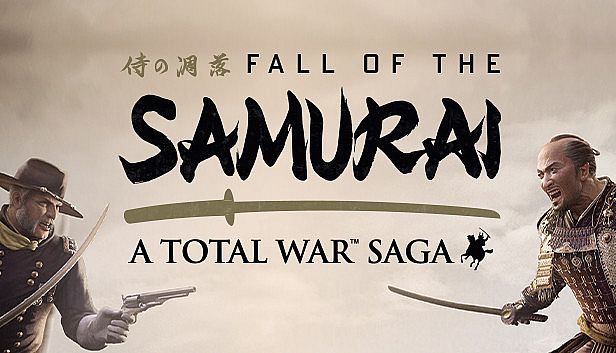














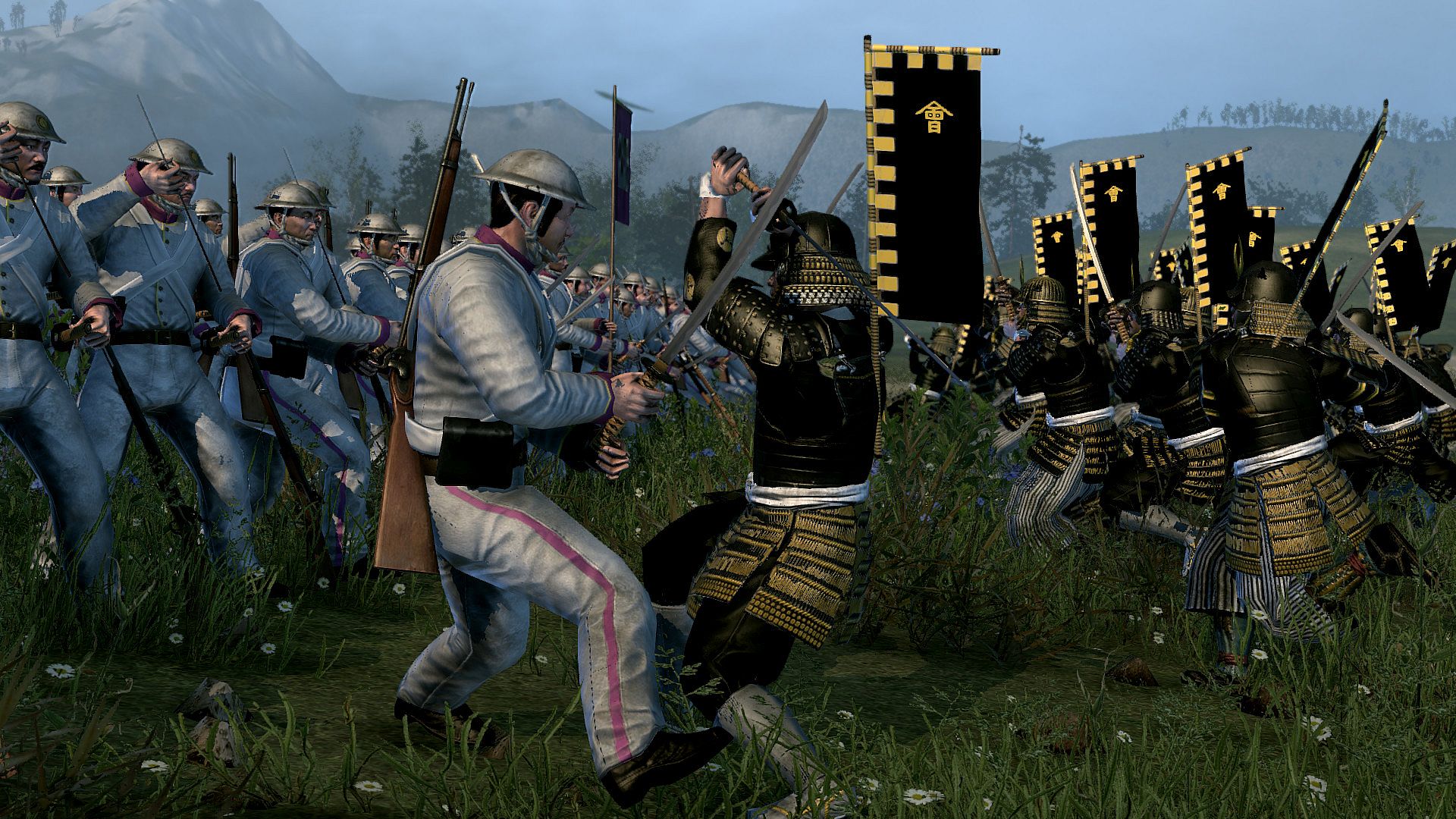
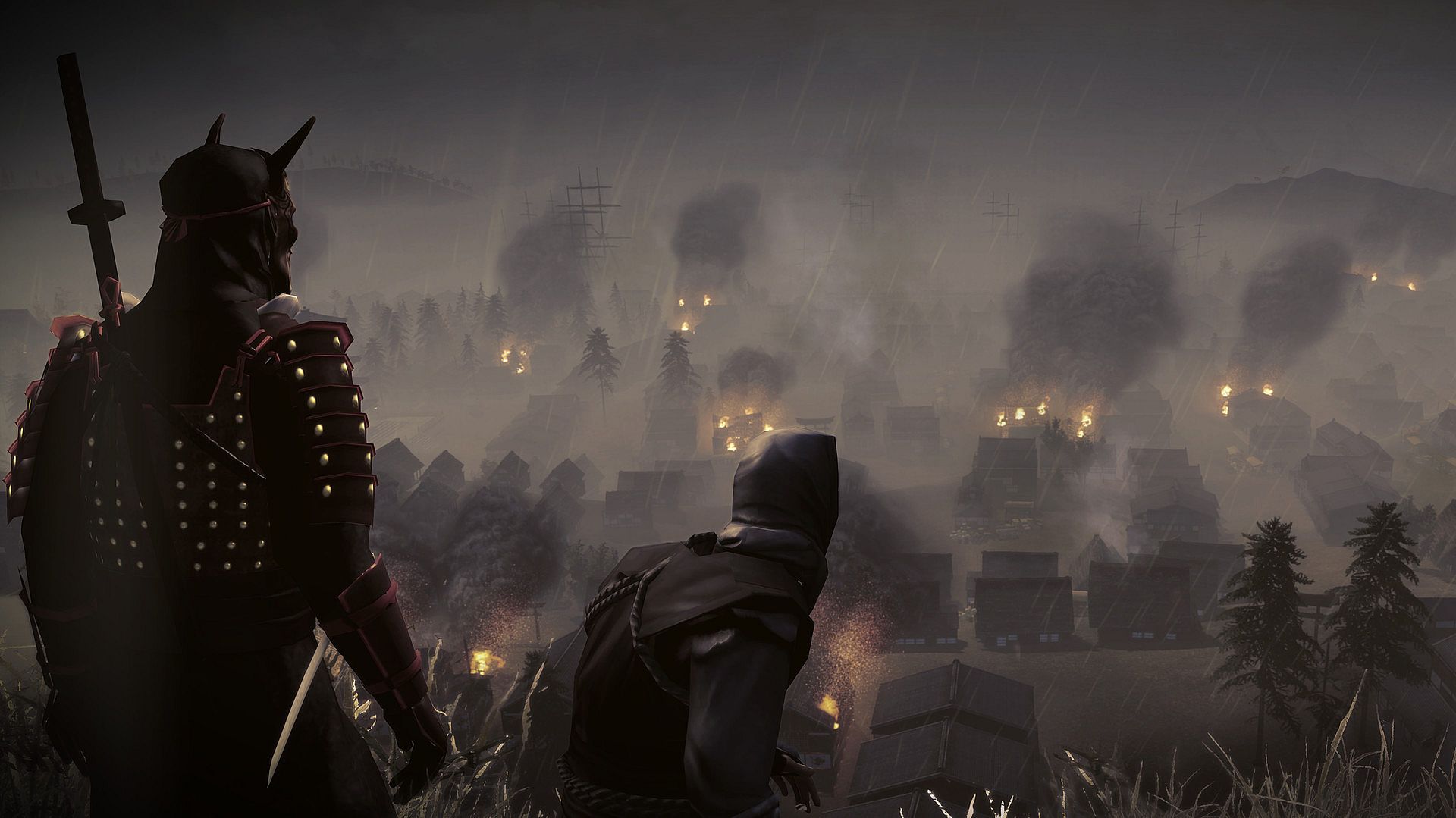
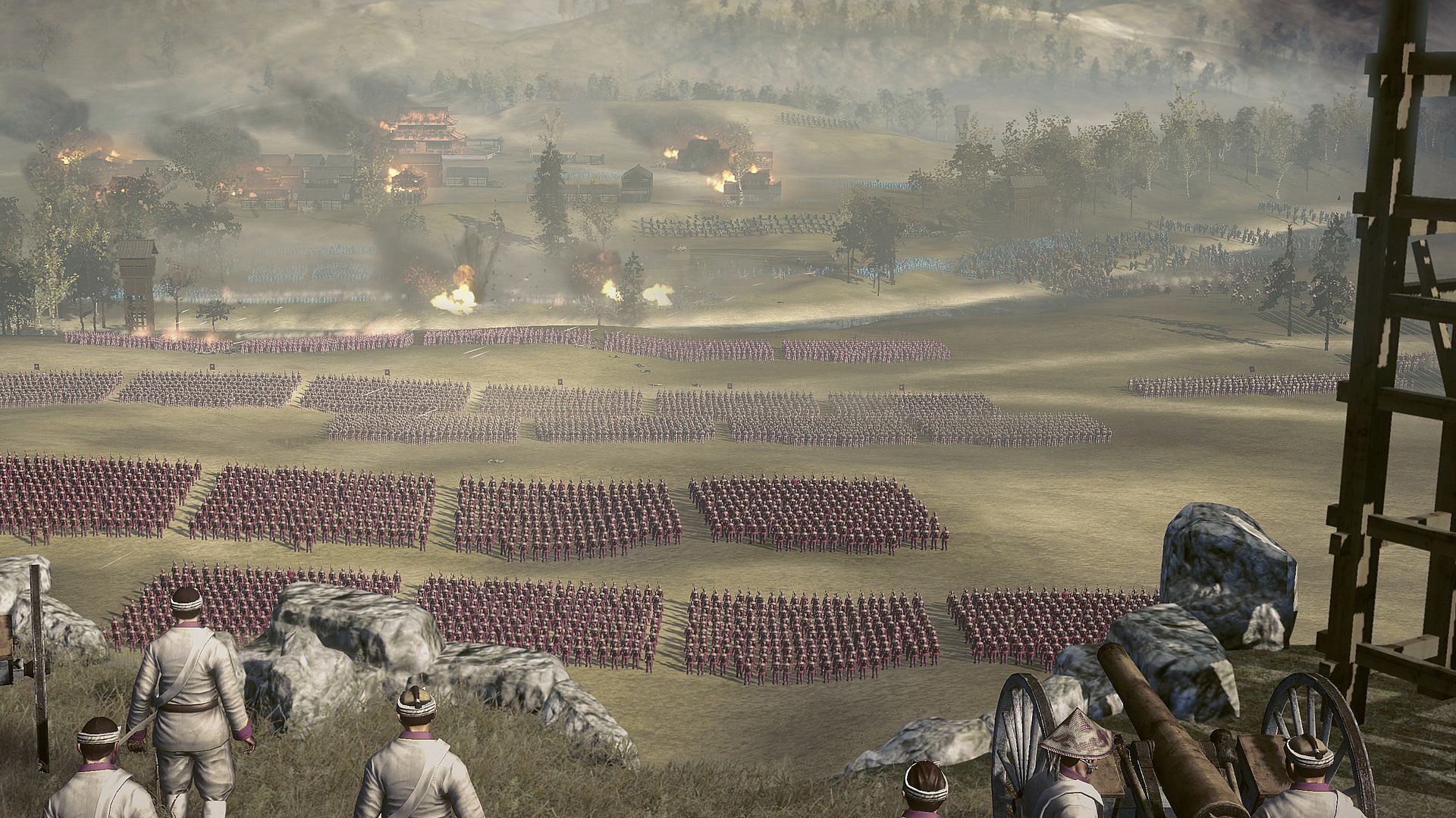
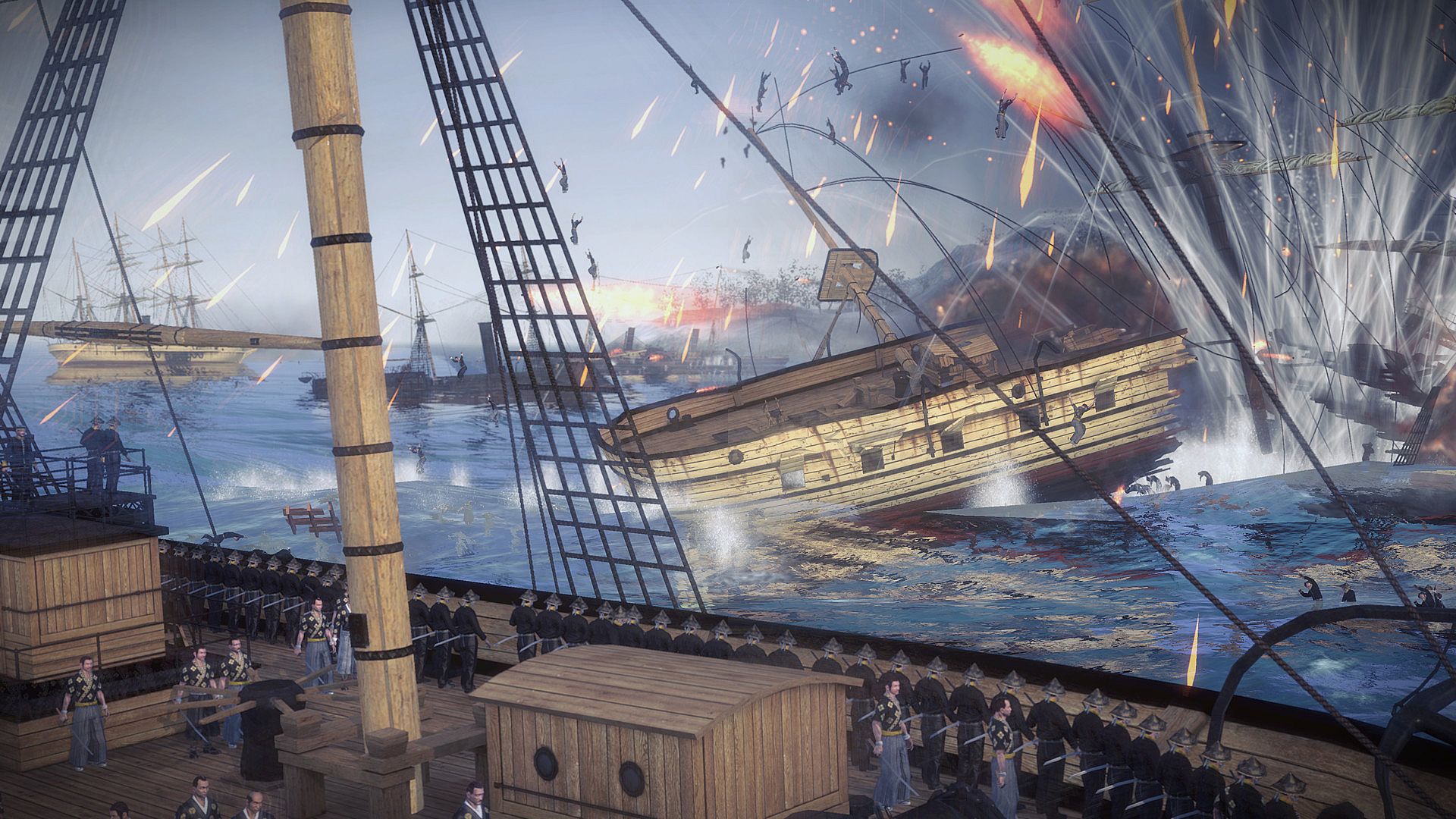
A Total War Saga: Fall of the Samurai is a strategy game set during the Boshin War in 19th century Japan. Players guide clans through a period of rapid modernization as Western powers influence the nation, pitting traditional samurai forces against emerging industrial and military technologies.
Gameplay
The core loop revolves around managing a clan on a large sandbox campaign map that represents 19th century Japan. Players expand territory, develop infrastructure, and balance internal stability with external threats. Technology trees advance through relations with American, British, and French nations, unlocking modern units such as artillery and improved naval vessels alongside traditional samurai and ashigaru troops.
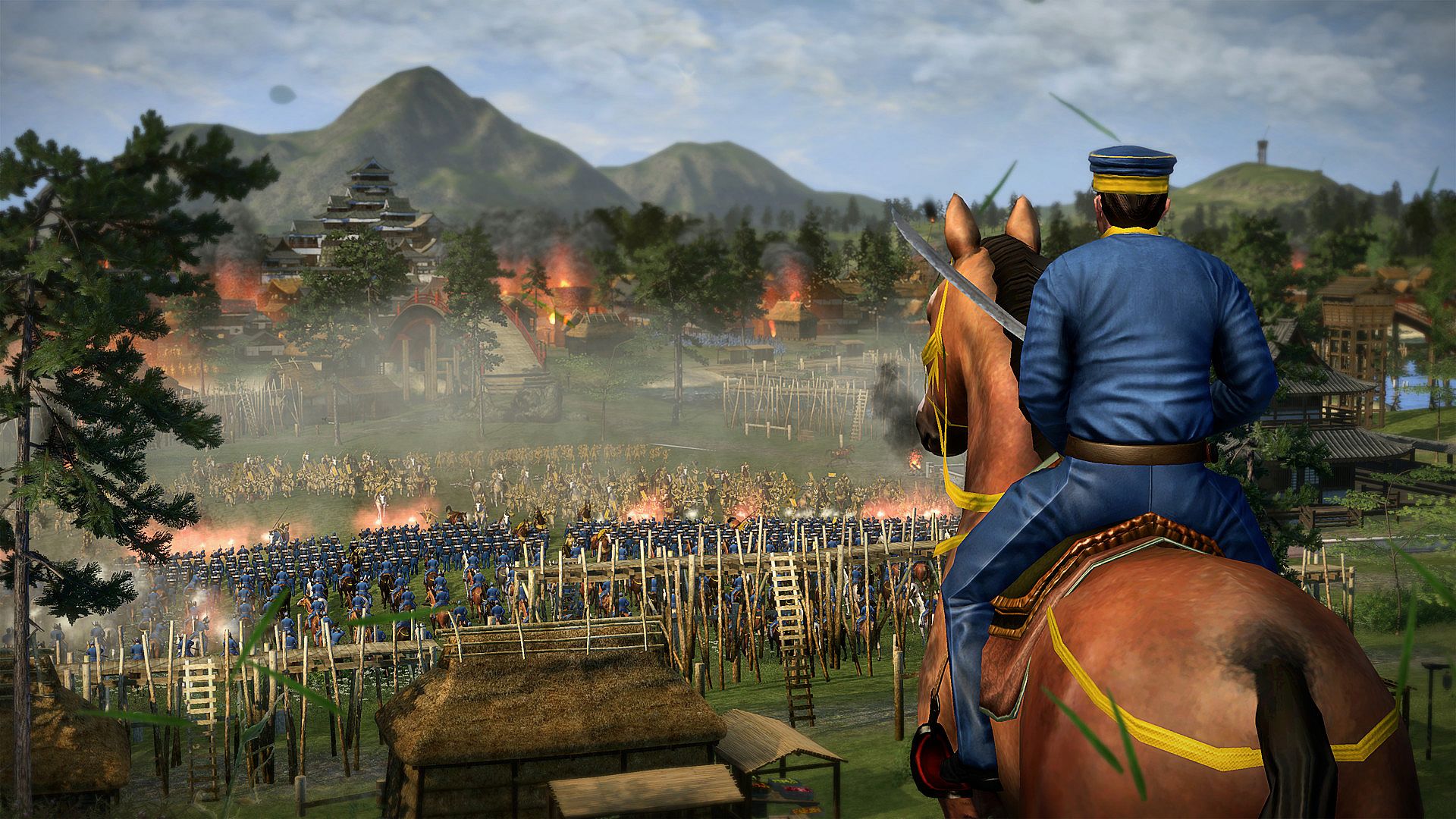
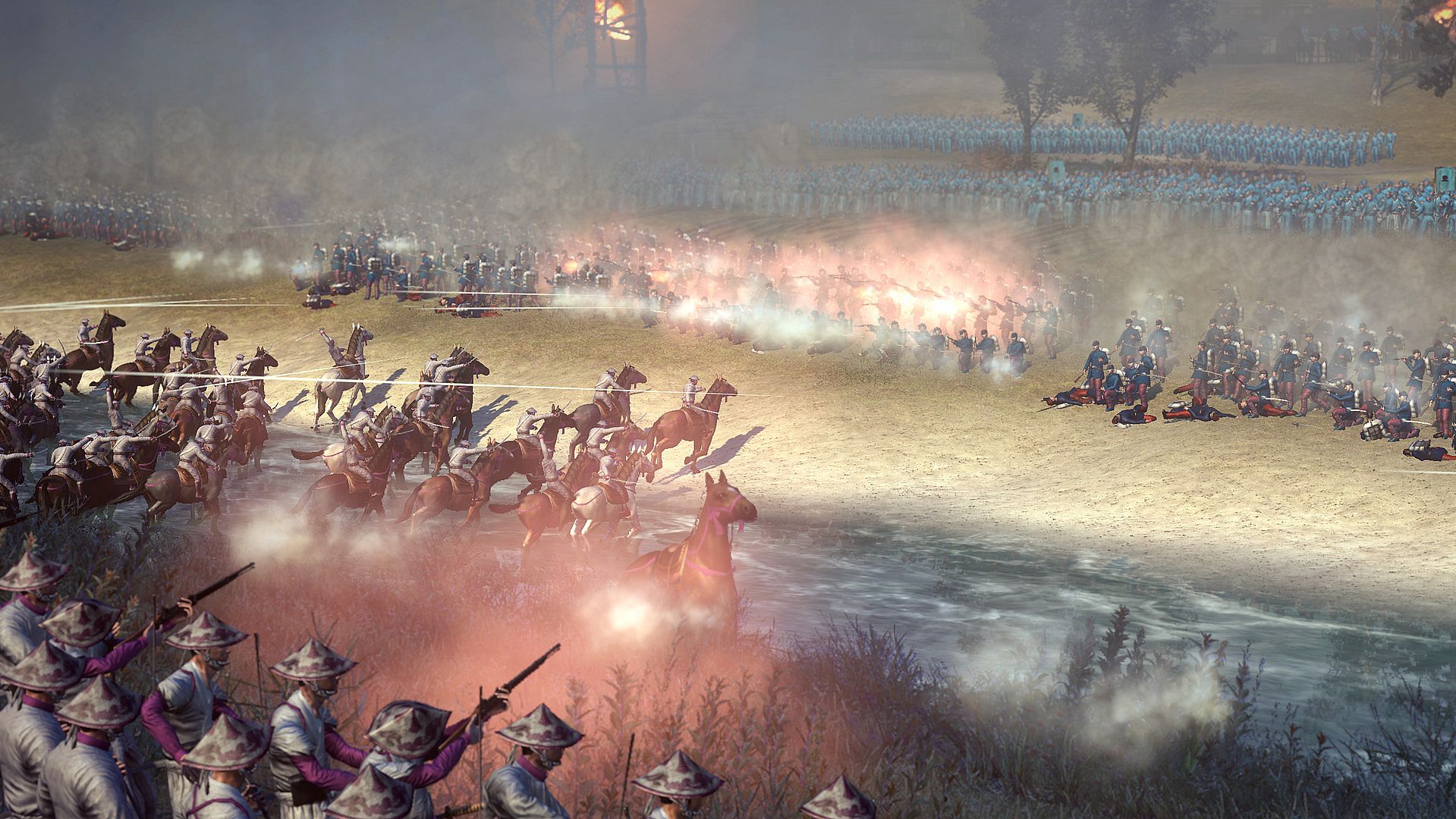
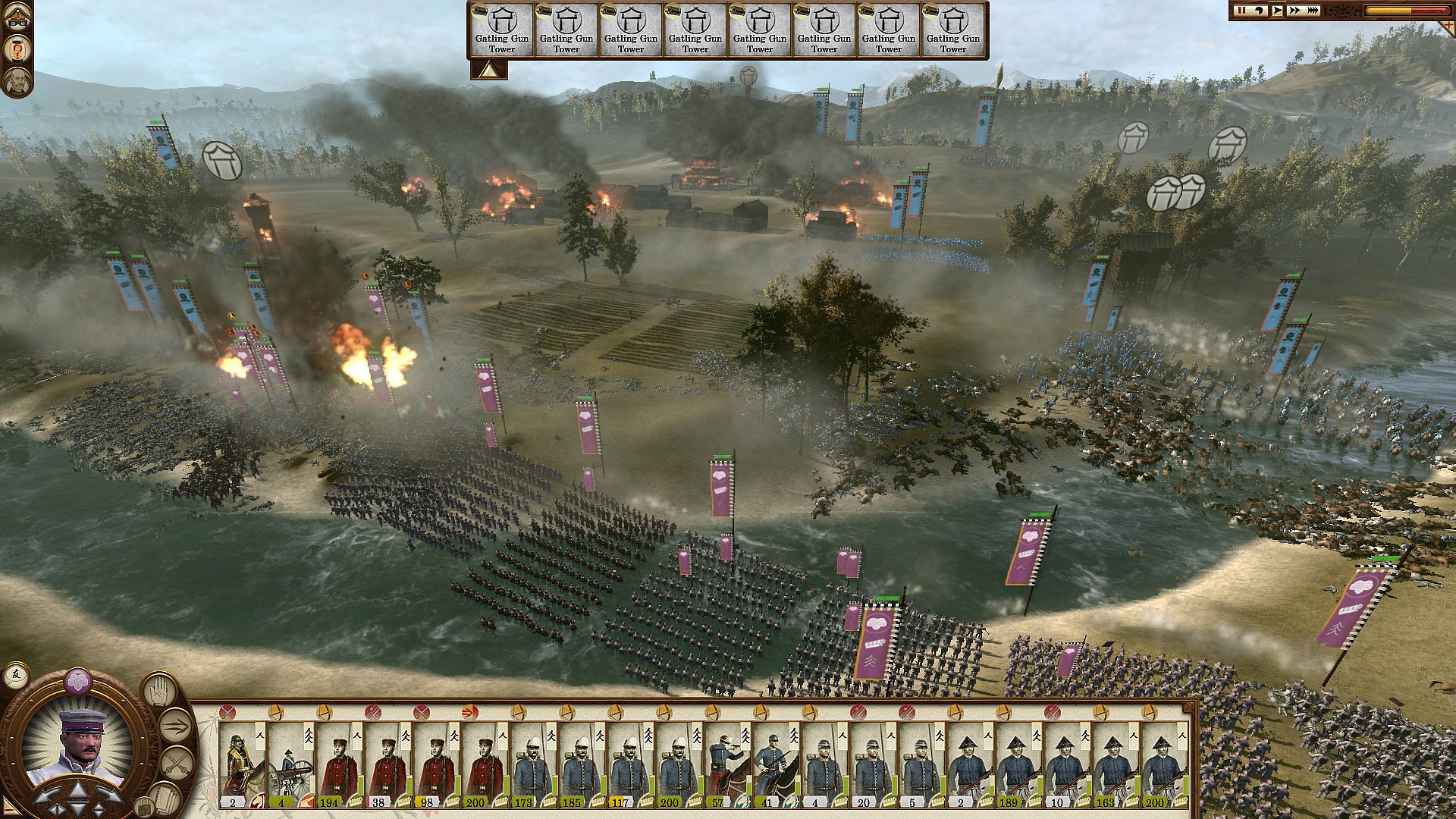
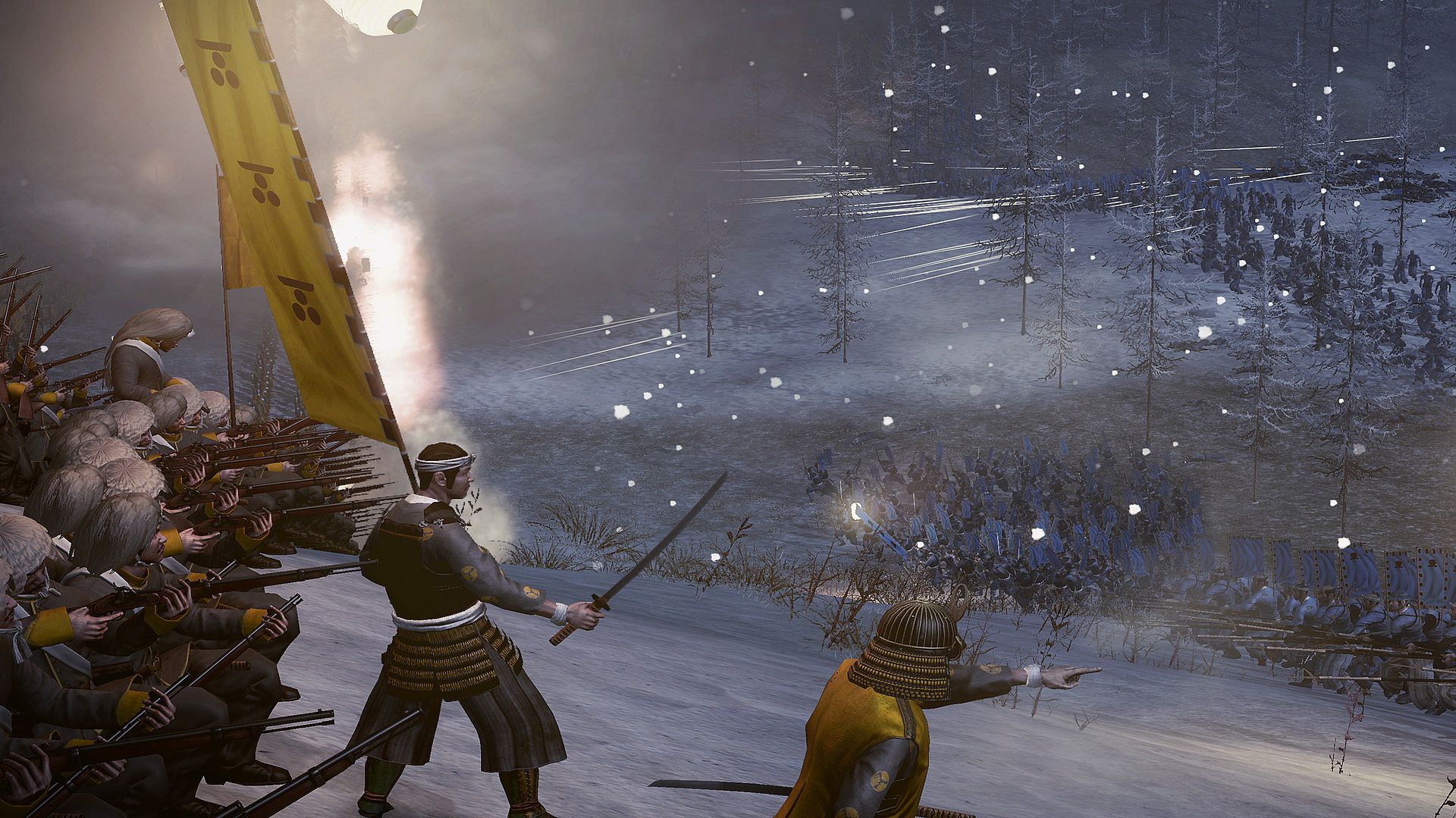
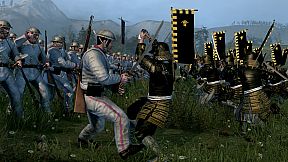
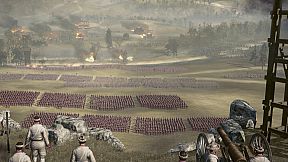
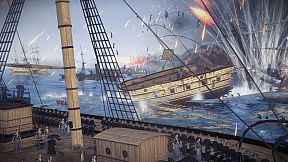
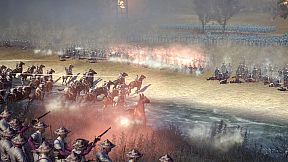
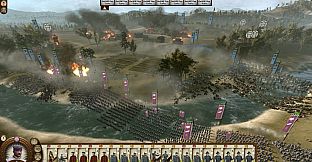
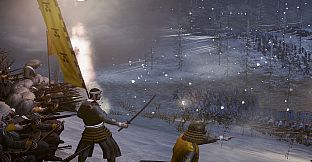
Combat occurs on detailed battlefields where line formations, artillery barrages, and naval support determine outcomes. Faction-specific bonuses shape strategies, with some clans excelling in rapid adoption of foreign weaponry while others leverage administrative control or covert operations. Resource management includes taxation, repression of unrest, and upkeep costs that vary by clan traits.
Diplomacy plays a central role, as alliances or conflicts with foreign powers directly affect unit availability and research progress. The campaign spans from 1864 onward, reflecting the historical tensions between imperial supporters and shogunate loyalists.
Game Modes
The primary experience centers on the single-player sandbox campaign, where players select from imperial or shogunate aligned clans and pursue victory through conquest or political maneuvering. Battles resolve as real-time engagements on maps that incorporate period-appropriate terrain and fortifications.
Additional depth comes from the included faction packs, which expand playable options without altering the fundamental campaign structure. These additions introduce specialized mechanics such as enhanced artillery focus, population management efficiencies, superior ninja deployment, and diplomatic advantages that influence both campaign progression and battlefield performance.
Factions and Historical Context
Base clans divide between imperial supporters including Choshu, Satsuma, and Tosa, and shogunate defenders such as Aizu, Nagaoka, and Jozai. Each brings distinct starting positions and unit preferences on the campaign map.
The Saga faction emphasizes Western trade connections and artillery expertise, benefiting from early access to industrial and naval advancements. Obama focuses on administrative control, offering taxation bonuses, reduced unit upkeep, and high-quality garrison forces. Tsu leverages strategic flexibility and elite ninja units for battlefield and covert advantages. Sendai provides diplomatic strengths and battle timing benefits that extend offensive windows while shortening defensive requirements.
Is It Worth Playing?
The game launched in 2012 and remains available as a standalone title that includes all faction packs. Steam user reviews stand at mixed with 69 percent positive from over one thousand ratings, while Metacritic assigns a score of 86. It suits players interested in historical strategy campaigns that blend traditional and modern warfare elements.
Those who enjoy managing large-scale maps, developing technology through foreign relations, and commanding mixed-era armies will find consistent depth across multiple playthroughs with different clans. The absence of ongoing seasonal updates means the experience stays fixed at its original scope, appealing most to fans of deliberate, turn-based campaign planning paired with tactical battles.