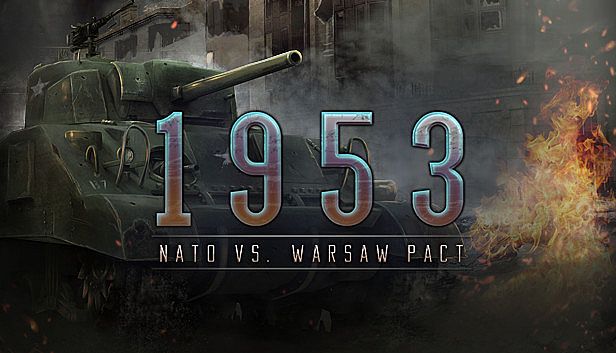










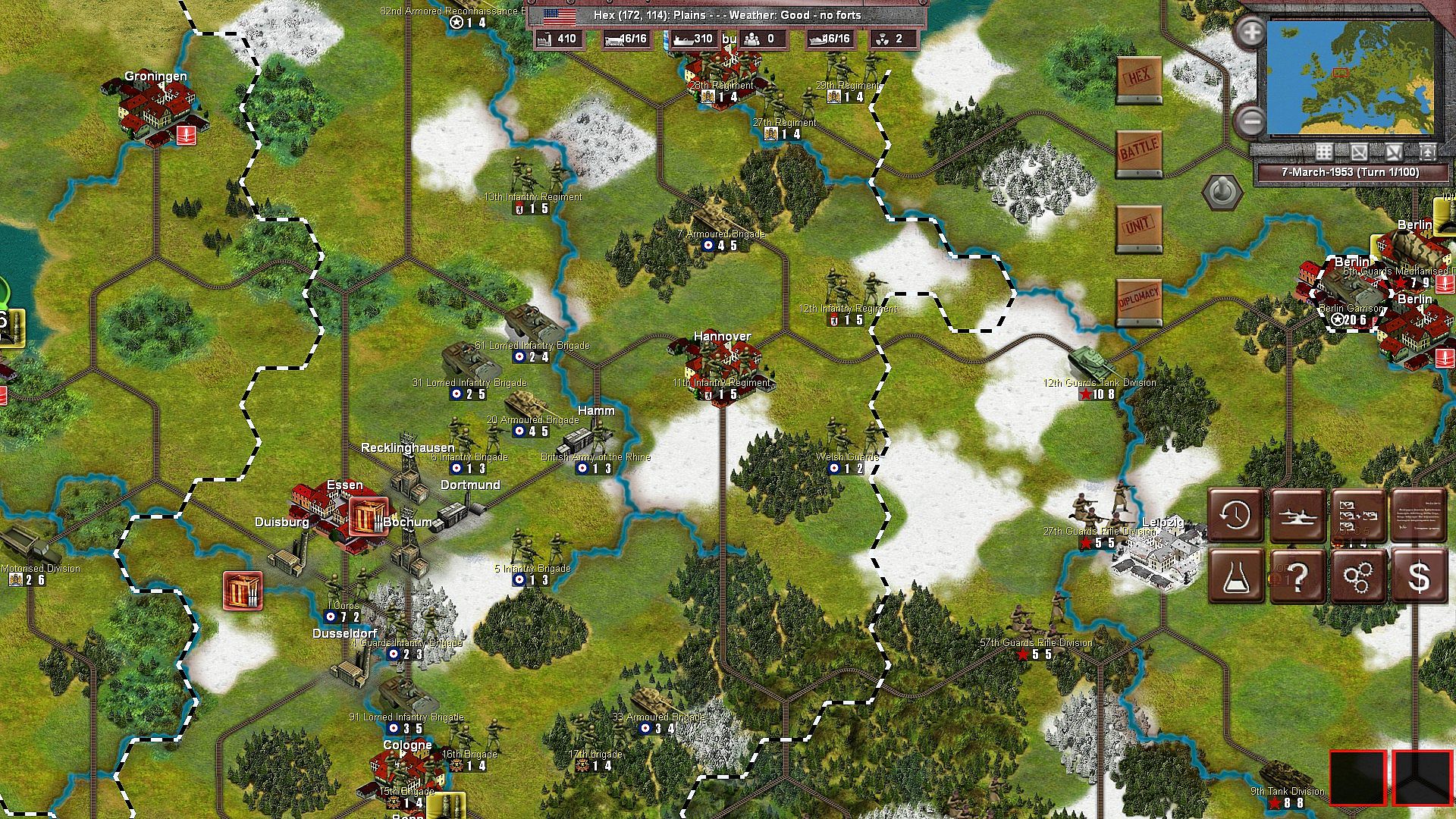
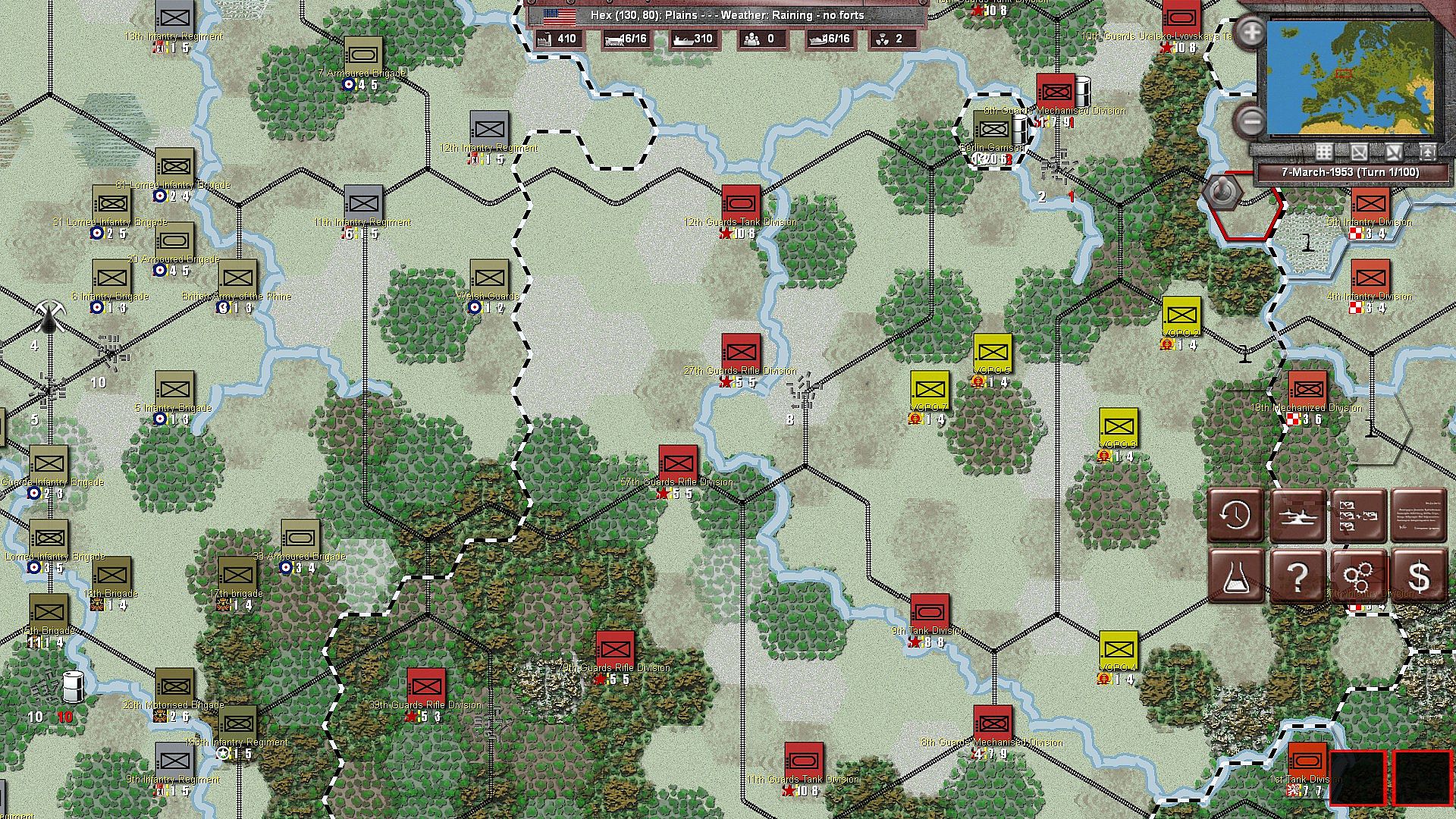
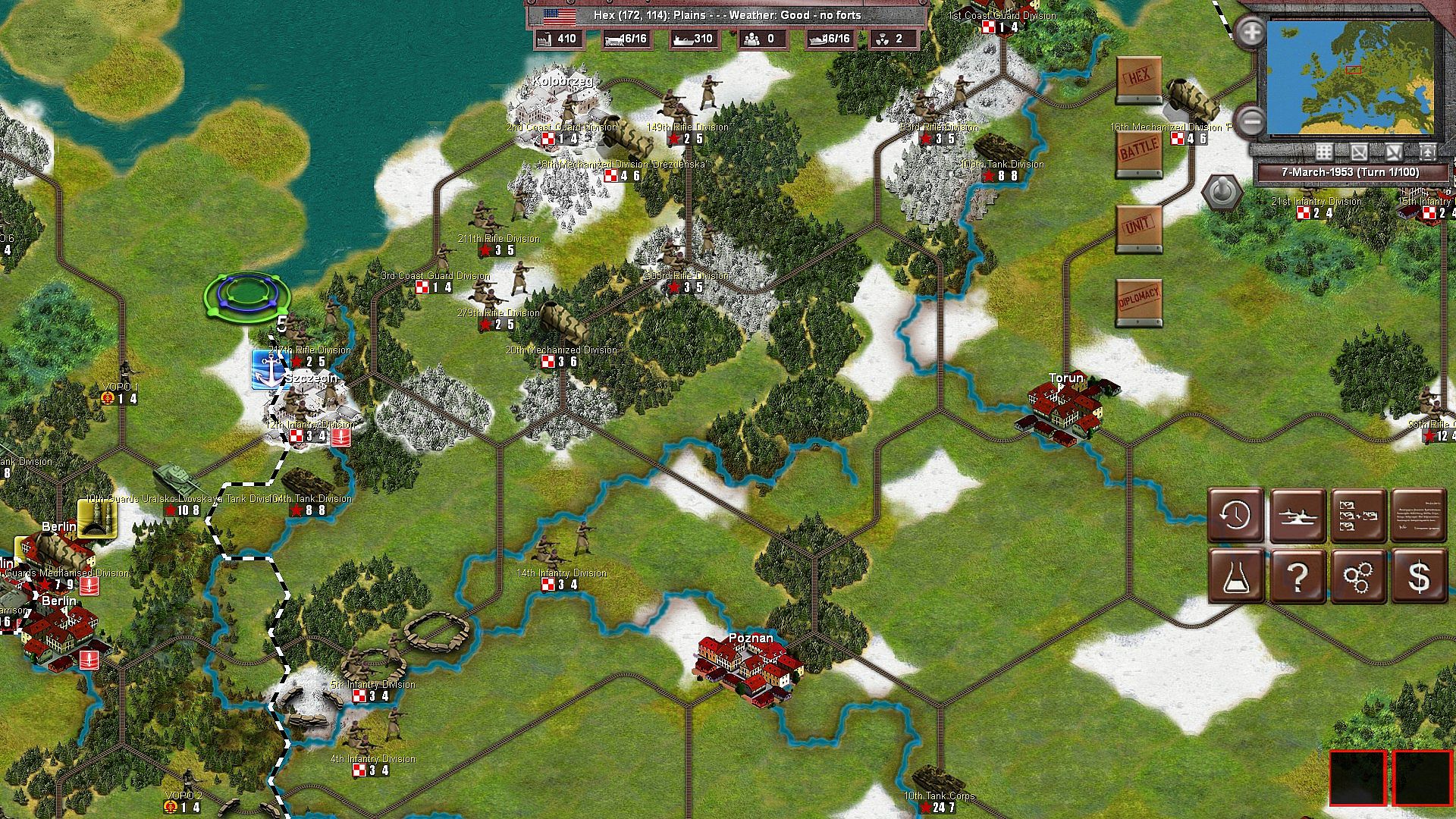

1953: NATO vs Warsaw Pact is a turn-based strategy wargame set in an alternate history where the Cold War erupts into open conflict shortly after Stalin's death. Players direct the armed forces of NATO or the Warsaw Pact across a vast hex grid representing Europe, managing logistics, diplomacy, and escalation toward nuclear options in a campaign of attrition.
Gameplay
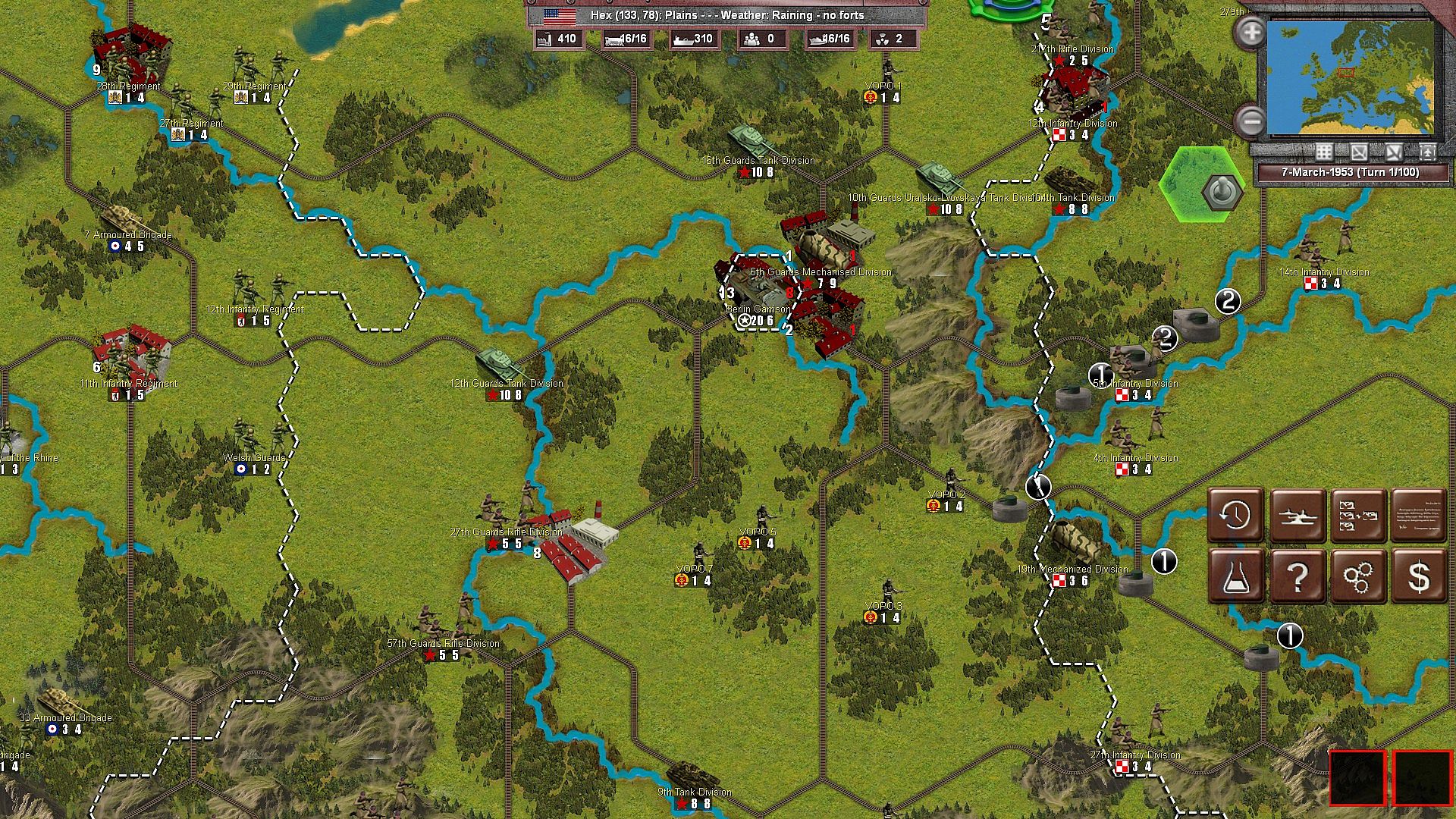
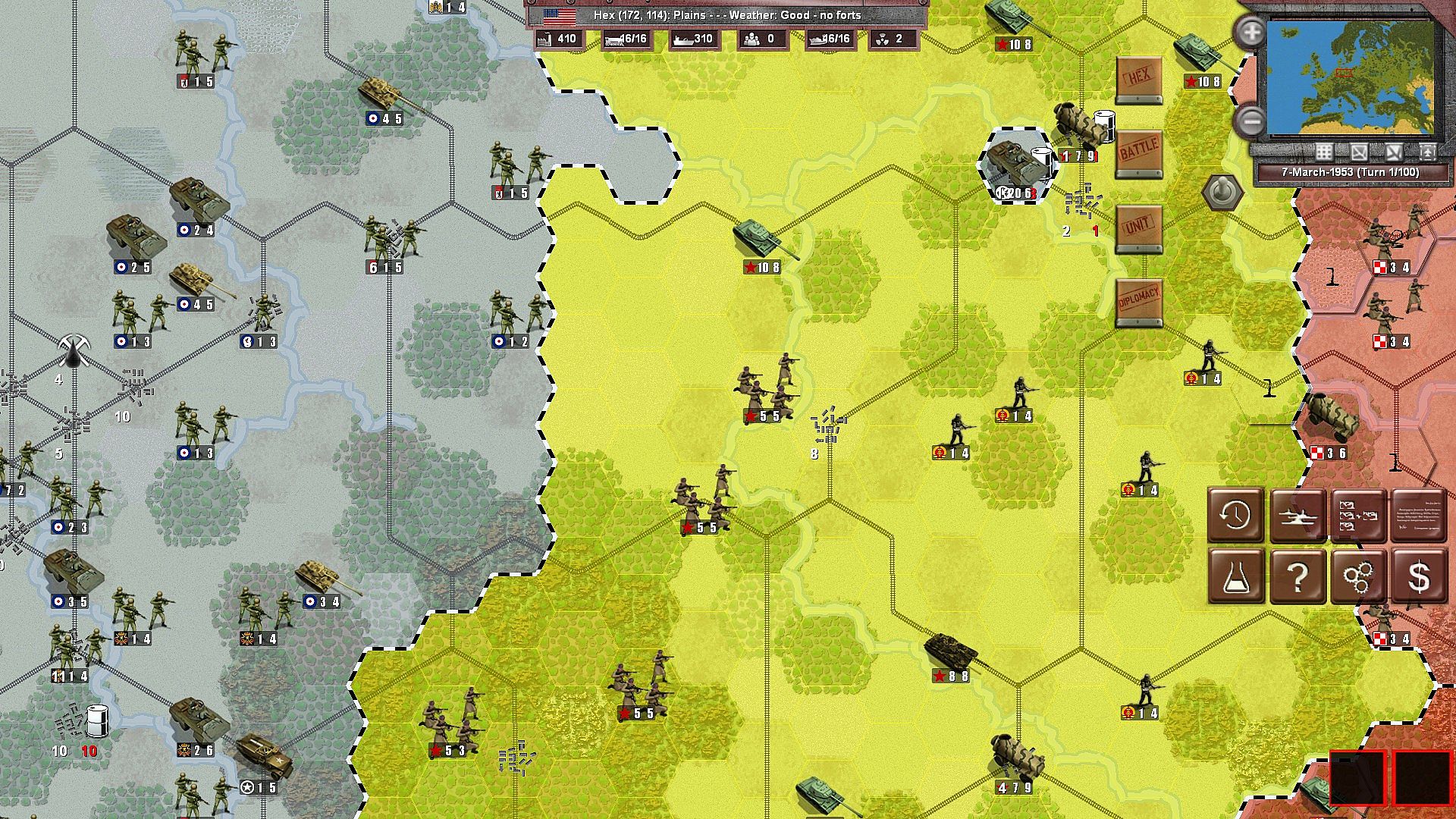
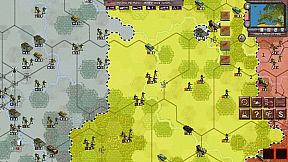
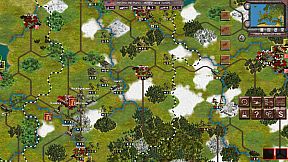
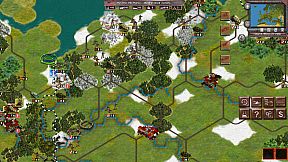
The core loop centers on commanding units across more than 40,000 hex tiles that reflect historical geography and national borders. Each turn involves positioning forces, allocating resources, and responding to supply constraints that incorporate weather effects, fuel availability, unit morale, and limited visibility from fog of war. Over 30 nations are playable, with major powers such as the United States, United Kingdom, France, Soviet Union, East Germany, and Poland leading larger coalitions.
Progression occurs through five distinct tech trees that cover nuclear weapons development, logistics improvements, and upgrades for air and naval units. Additional layers include covert actions such as sabotage operations and political coups aimed at swaying neutral states or undermining enemy stability. These systems create a dense decision space where every move affects long-term sustainability rather than immediate tactical gains.
The interface follows classic hex wargame conventions, emphasizing manual oversight of supply lines and diplomatic influence. Turn resolution can require significant processing time due to the scale of calculations involved in tracking resources and unit interactions across the entire map.
Game Modes
Hotseat play forms the primary supported format, allowing one person to manage a full session alone or to alternate turns with another player on the same computer. This setup supports both solitary campaigns against the artificial opponent and direct head-to-head contests without requiring network connections.
Singleplayer sessions unfold as extended strategic campaigns where the player directs one side through the fictional Third World War scenario. The emphasis remains on managing the full breadth of military, economic, and political factors rather than on short skirmishes or separate competitive ladders.
Setting and Scale
The alternate timeline begins in 1953 with the collapse of East-West relations following Stalin's passing. The resulting conflict spans the European theater at a grand strategic level, where control of territory, industrial output, and alliances determines the outcome. Historical borders and terrain features shape movement and defensive positions, while the presence of nuclear options introduces high-stakes brinkmanship that can alter entire fronts.
Command responsibilities extend beyond frontline combat to include coordination of air and naval assets alongside ground forces. Neutral countries serve as potential targets for influence operations, adding a layer of indirect competition that can shift the balance of power without direct military engagement.
Is It Worth Playing?
Player feedback on the title stands at mixed overall, with 41 percent of 68 reviews rated positive. The experience suits dedicated enthusiasts of traditional hex-based wargames who appreciate detailed supply modeling, tech progression, and the absence of simplified tutorials or automated assistance. Those seeking fast-paced action or modern production values may find the classic presentation and extended processing times less appealing.
The game remains available on PC and continues to offer the full scope of its hex map, nation roster, and mechanics as originally presented. Prospective buyers should weigh their tolerance for system complexity and deliberate pacing against the depth of strategic choices available in the Cold War alternate history setting.