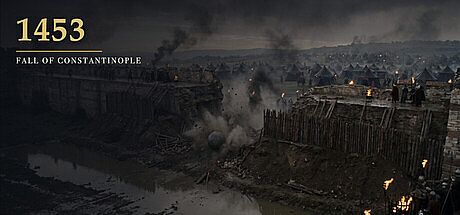


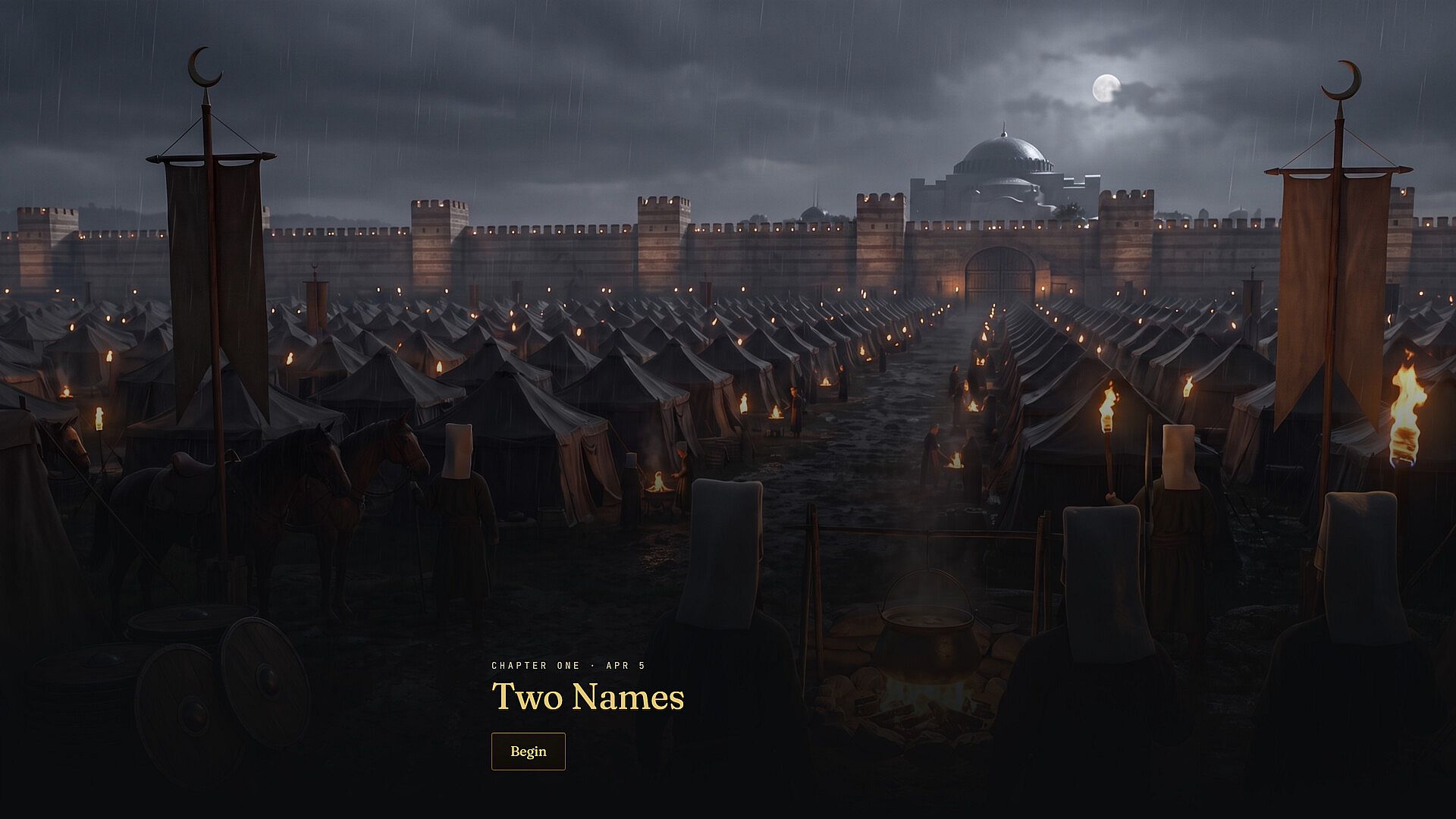
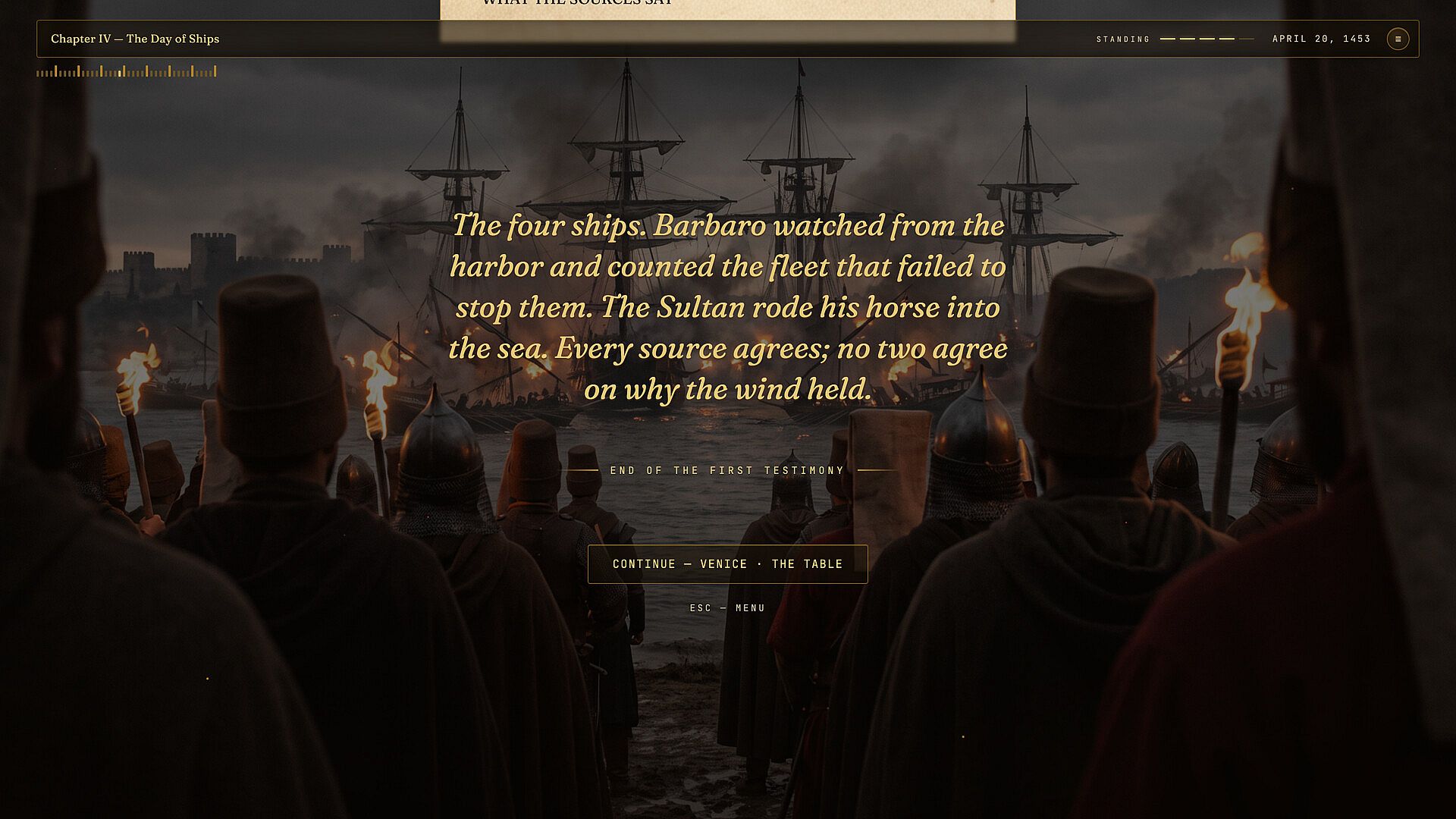
1453: Fall of Constantinople is an indie adventure game built around a choice-driven narrative experience on PC. Set during the historic siege of the Byzantine capital, the title places players in the role of Anna Notaras as she records four separate accounts from witnesses on opposing sides of the conflict. The story unfolds across a fixed timeline from April 6 to May 29, with decisions that ripple across the interconnected tales rather than altering the known outcome of the siege itself.
Gameplay
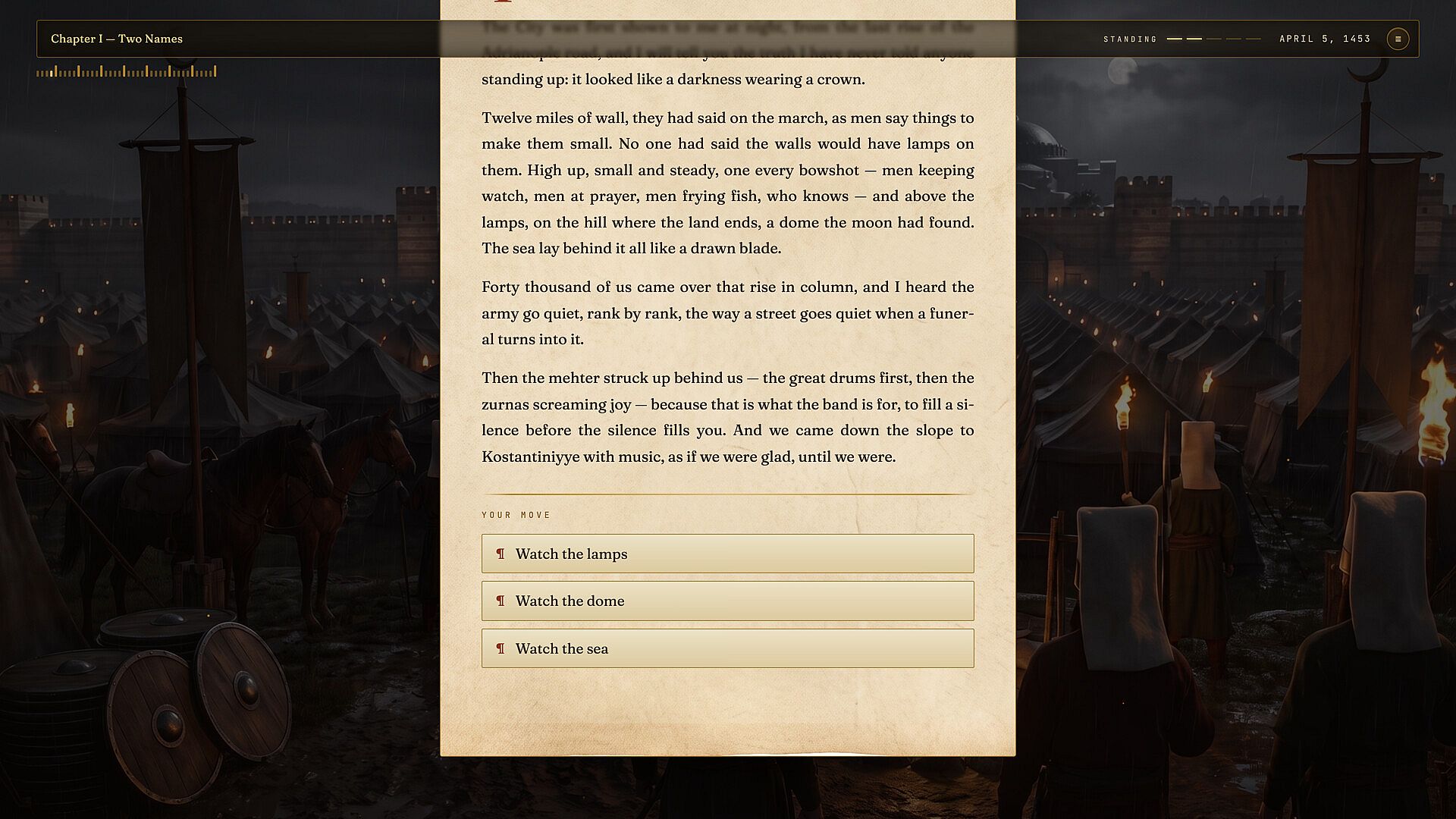
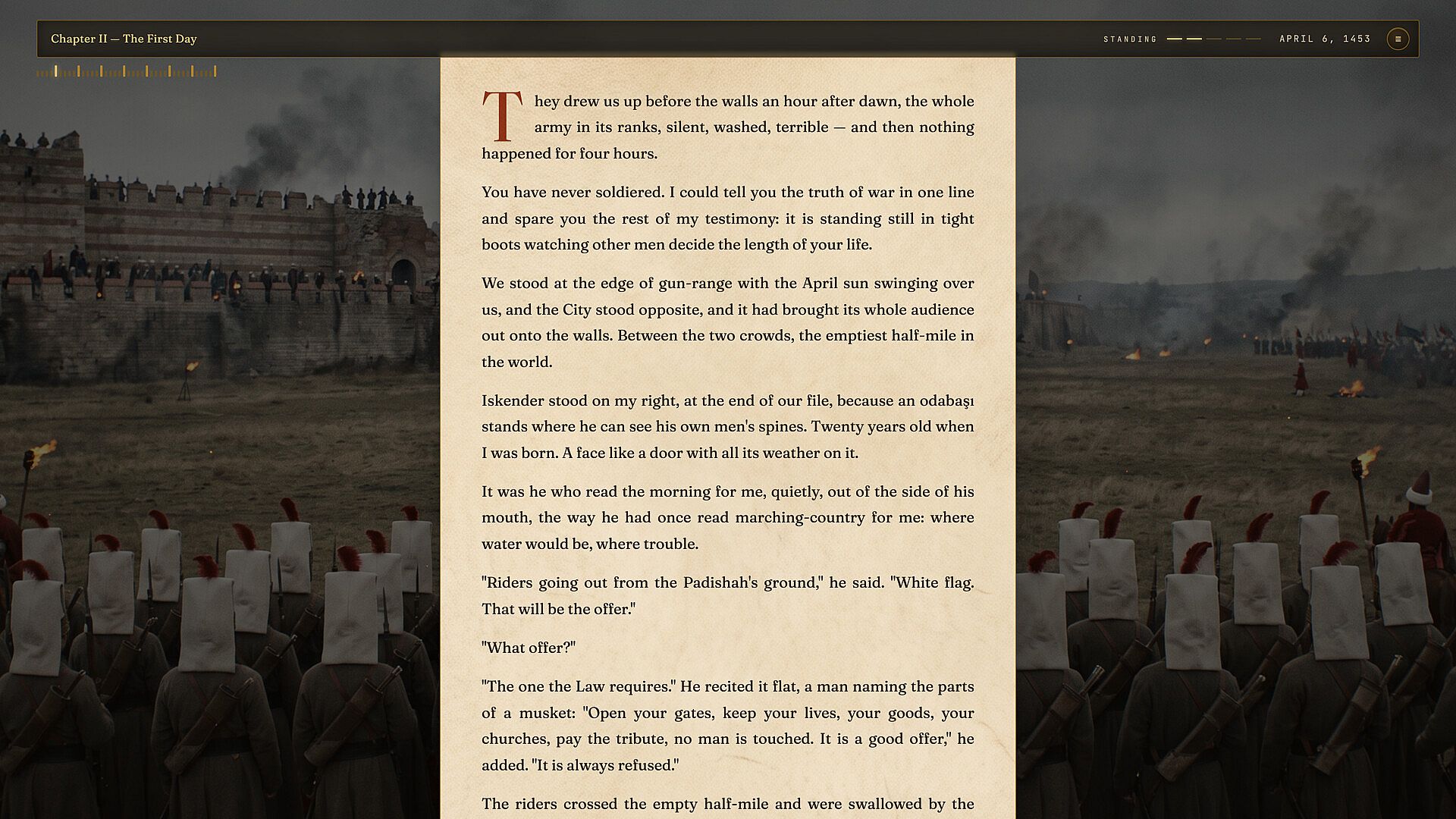
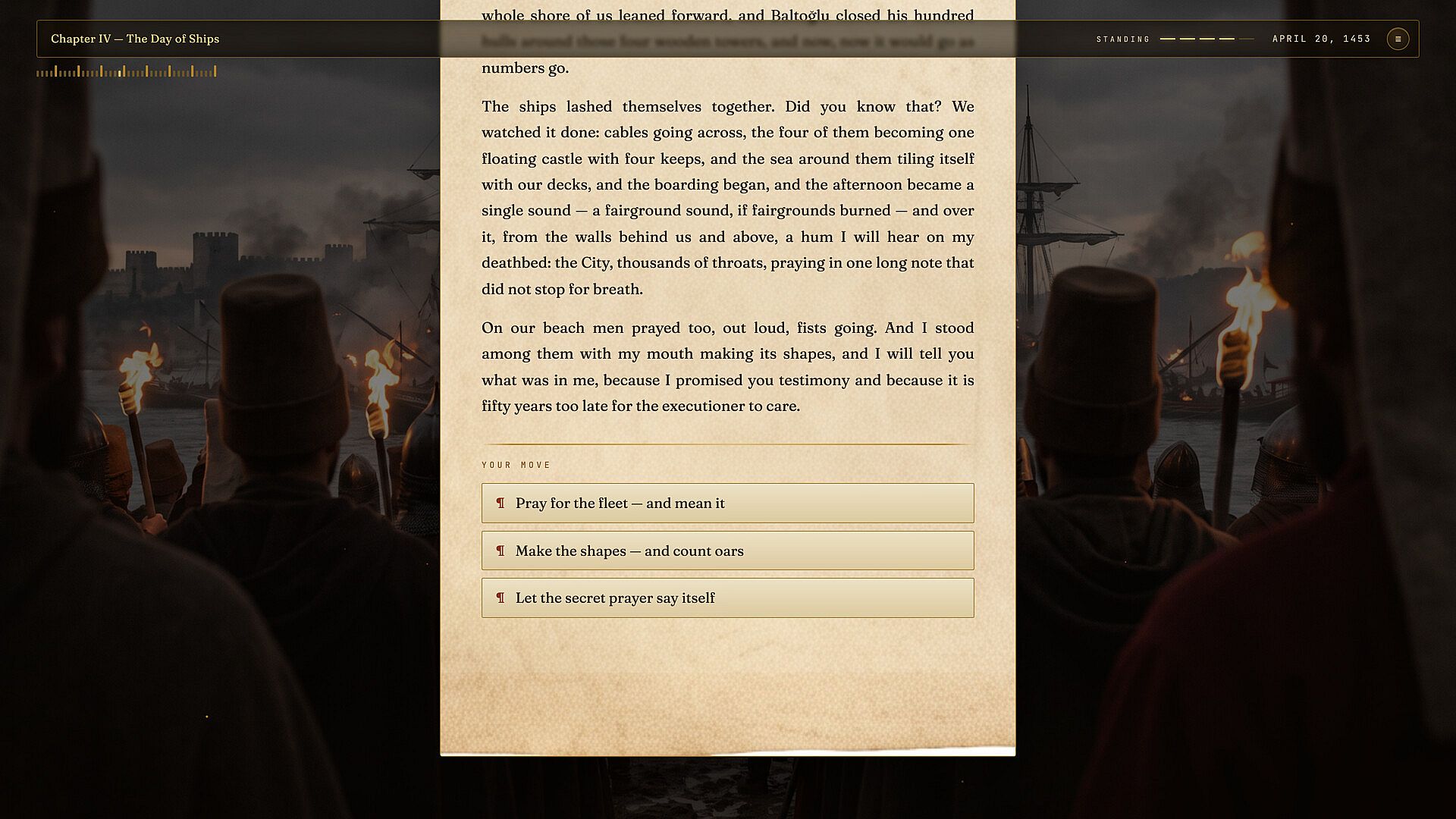
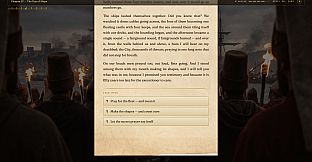
Players advance through illustrated chapters by selecting dialogue options and actions that reflect the perspectives of four central figures. Each choice influences later scenes in the same testimony and can alter events or outcomes in the other three stories through a cross-story memory system. The frame narrative ties the accounts together as Anna compiles them in Venice decades later, adding layers of reflection on memory and conflicting records.
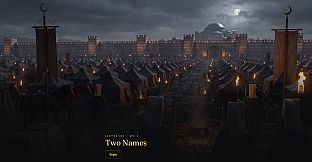
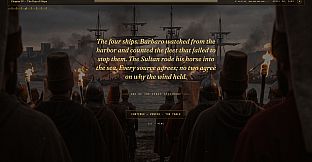
Progression follows a shared calendar that builds tension through daily events, from supply shortages to military maneuvers. Visual elements include over one hundred painted-realism illustrations accompanied by short ambient motion vignettes. An adaptive soundtrack shifts between Ottoman military rhythms and Byzantine choral elements to match the deteriorating conditions inside and outside the walls.
Game Modes
The experience centers on four primary narrative routes, each centered on one witness: the Janissary who was taken from a Greek family as a child, the Baker's Daughter managing daily life in the Petrion quarter, the Engineer directing defensive engineering efforts, and the Noble handling court matters and the emperor's directives. These routes run in parallel on the same timeline and feature five to six distinct endings per route.
A binding frame story follows Anna Notaras as she gathers and records the testimonies. Completed routes visibly modify available choices, scenes, and conclusions in the remaining accounts, creating layered replay paths without traditional branching trees.
Narrative Structure and Historical Context
After each chapter, the game presents a sources codex that labels events as attested in eyewitness accounts, later chronicles, rumors, or later legends. This system highlights the contested nature of historical records without claiming any single path as definitive. Both Ottoman and Byzantine viewpoints receive equal narrative weight, with no route presented as the canonical version of events.
All main text is written by humans. Illustrations and brief ambient sequences were created under human direction and historical review using pre-generated AI tools, while the score incorporates AI assistance guided by the author. Nothing generates during active play sessions.
Is It Worth Playing?
1453: Fall of Constantinople suits players who enjoy narrative-driven adventures focused on historical fiction and moral ambiguity. The interlocking stories reward multiple playthroughs as decisions in one route reshape the others, producing varied endings across the four testimonies and the frame narrative. Those interested in detailed period settings, source transparency, and character-focused choices will find the structure engaging. Availability is limited to PC, with no additional modes or ongoing seasonal content confirmed at this time.