

FORCE OF NATURE
Force of Nature brings a whole new world to your city, literally. Real weather, real water and real disasters, and everything your city needs to see them coming, ride them out and rebuild. Force of Nature is free for all Early Access players.
Weather that changes your city
The weather now comes in spells that last from a few hours to a few days: clear skies, overcast, rain, thunderstorms, fog, high winds, heat waves and cold snaps. What you get depends on the season and your map. The coast sees more storms and fog, the highlands more wind and cold, and the flatlands more thunderstorms.
A three-day forecast, with severe storms and heat waves announced in the city feed before they arrive
A new Weather row in City Hall showing the weather now, the temperature and the wind
Storm clouds roll in over the city as the weather turns
Winter storms come down as snow, from steady snow up to full blizzards with whiteouts and snow days, and winter thunderstorms bring thundersnow
Traffic reacts to the weather: drivers slow down and leave more room in rain, storms and fog, crashes become more likely, and people stay home when a warning goes out
Water, rain, and more water
The water system has been rebuilt from the ground up. The same Scorpion engine that runs The City now runs your city’s water.
Rain falls on your streets, puddles on the roads and runs along them
Every street comes with built-in drains
Place curb drains wherever you need extra drainage, and pipe the water anywhere you choose: a pond, a lake, open ground, or a hole you dug yourself
Storm drains and drainage ditches carry flood water away
Retention ponds can be dug from your terrain tools, and you can click one to see how full it is
Streets flood when the drains can’t keep up, and flooded roads close until the water goes down
Fires in the forest
Your forests now have more depth to them.
A lightning strike in dry weather, or a spark in a hot spell, can start a forest fire
Fires spread from tree to tree, fastest downwind and faster still in a drought or a heat wave, and can reach your city
Your fire stations send crews to the fire line, along with a water-bomber helicopter that drops water on the worst of it
A fire lookout tower spots a fire the moment it starts, so it’s fought while it’s still small
Rain slows a fire and a downpour puts it out. Burnt trees stand black for a few weeks, then the forest grows back.
Did someone say storms?
Lightning can strike at any time, hitting the tallest buildings most, and set them on fire
Hail from severe thunderstorms damages roofs and hurts people caught outside
Tornadoes from EF0 to EF5, from thin rope funnels to wide, dark wedges. They tear up buildings, snap trees, flip cars and leave wreckage across the roads. Over 150 new assets show the damage, from downed traffic lights to destroyed homes.
Hurricanes on the coast, with gales, torn roofs, fallen trees and a storm surge that floods the shore
Floods from rivers and lakes after days of heavy rain or the spring thaw
Tsunamis after a great earthquake out at sea
Earthquakes, which can come any day without warning
Landslides in the hills after heavy rain or a quake
Sinkholes, where the ground opens up under a lot without warning
Comet strikes: astronomers spot the fragment days ahead, it leaves a crater, and people come to see it for weeks after
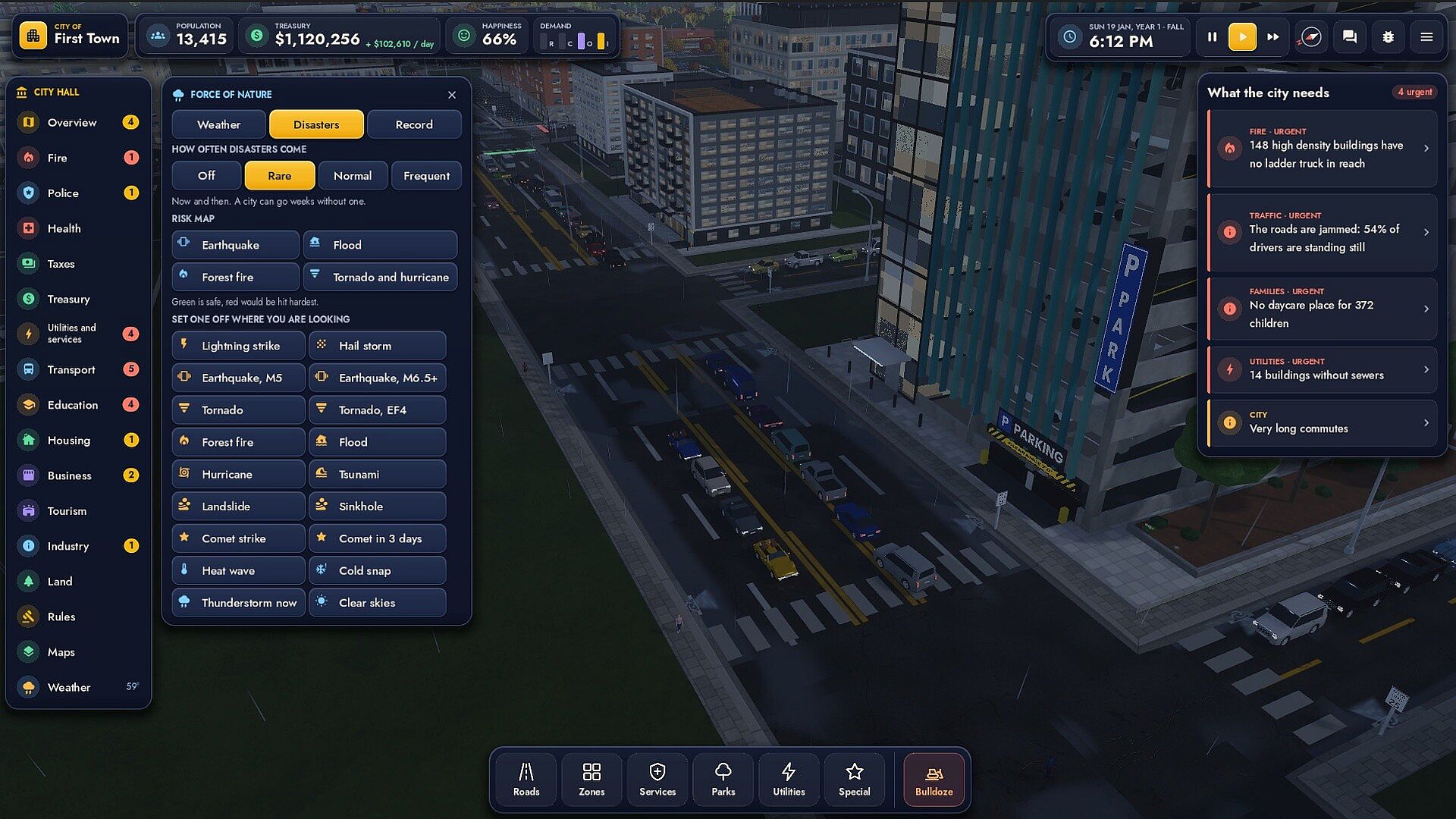
You choose how often disasters come: Off, Rare, Normal or Frequent. You can also set one off yourself, right where your camera is looking.
Power cuts
Hail, tornadoes and gales bring down power lines. Windows go dark, and shops, offices, factories and schools shut until crews restore power. Hospitals, police, fire stations, utilities and hotels keep running on generators.
Be ready
New buildings under Services > Emergency Services:
Emergency operations center: repairs go a quarter faster, and fewer people are hurt in every disaster
Warning sirens: half as many people are hurt when a tornado, flood or tsunami is coming
Storm shelters: you can watch your residents walk to them and take cover, then head home when it’s over
Weather station: severe weather is warned of six hours ahead instead of three, and hail does less damage
Levees and floodgates hold back flood water
Seawalls hold back storm surges and tsunamis
Quake retrofits brace a building so it shakes but doesn’t fall
Road department: crews with dump trucks and loaders clear wreckage and repair broken roads
A risk map shows every building from green to red for earthquakes, floods, fire and wind, and it takes into account everything you’ve built to protect them.
Damage, repairs and rebuilding
Damaged buildings show torn roofs, wreckage and broken fences, then scaffolding, a skip and blue tarps while the crews work. You can click one to see how far the repair has gotten.
New businesses in your city: an insurance office, a roofing company, a window and glass company, and a general contractor
Homes and businesses can be insured. Insured owners pay a small deductible and get repaired right away. Uninsured families pay the whole bill themselves, or live with the damage and may sell up and move away.
After a big disaster, a relief camp of tents and supplies goes up for people who lost their homes, and relief money arrives over the following days
A record of every disaster: what it cost, how many buildings it brought down, and where
Sound
Rain, wind, thunder, sirens and the roar of a tornado, plus City Radio breaking-news flashes and advisor warnings as disasters unfold.