


















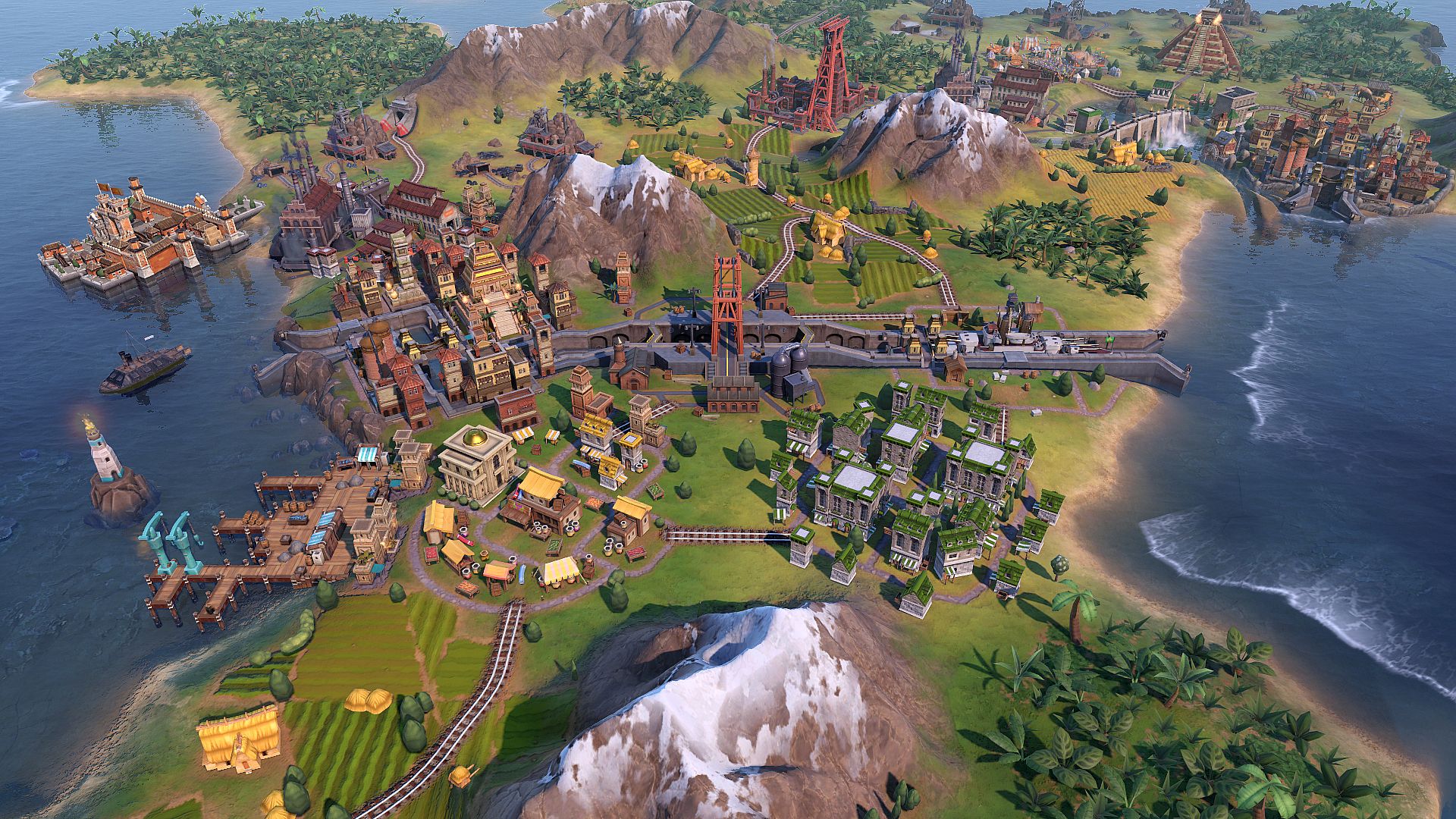
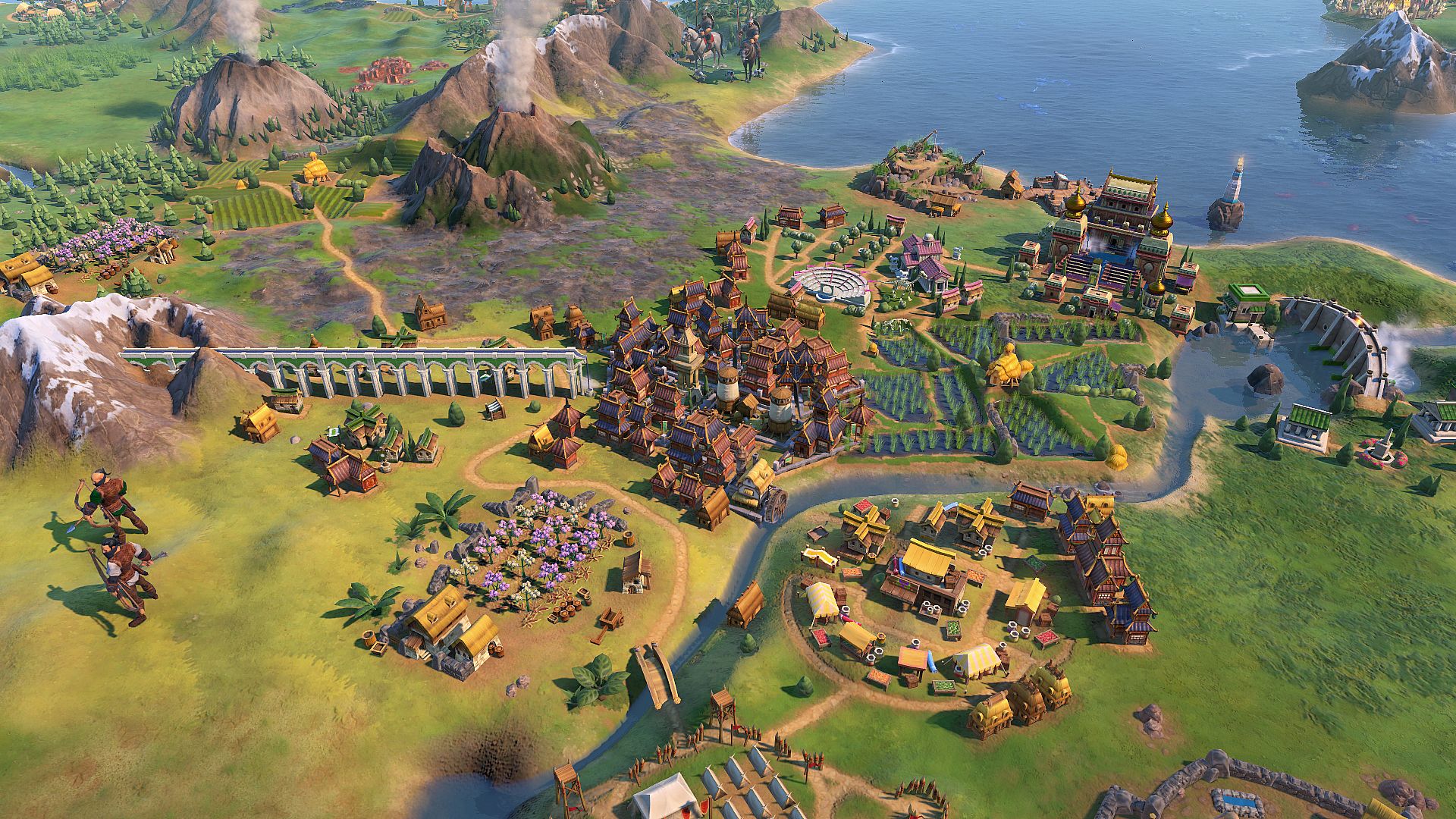
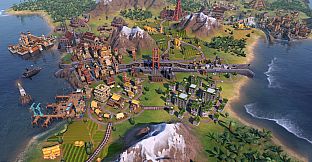
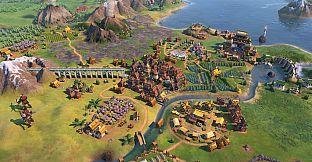
Sid Meier's Civilization VI: Gathering Storm is a strategy expansion that adds environmental systems, diplomatic mechanics, and engineering options to the core turn-based empire-building experience on PC. Players guide a civilization from ancient times toward one of several victory conditions while managing resources, terrain, and global interactions in single-player campaigns or multiplayer matches.
Gameplay
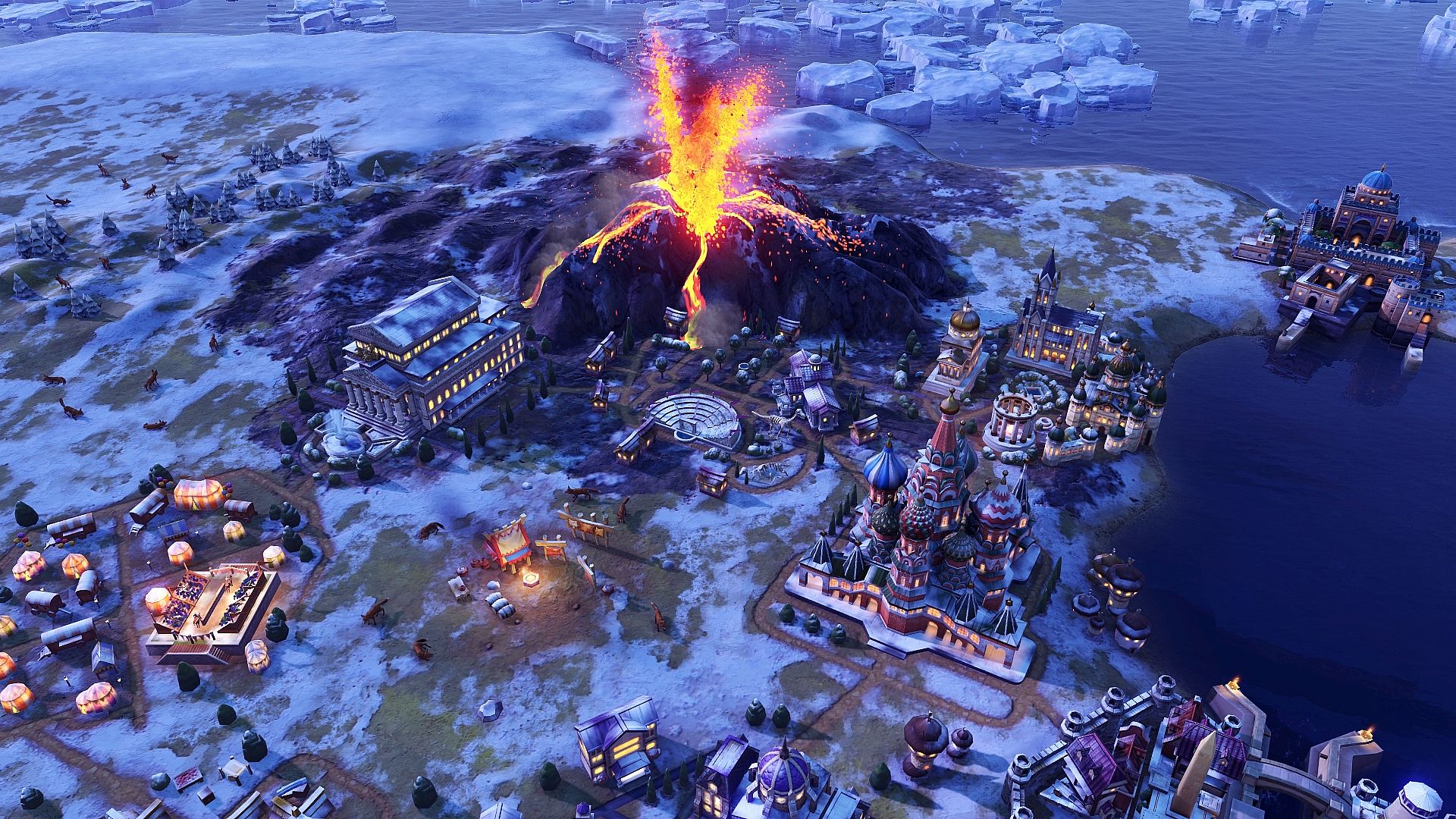
The expansion centers on an active world where natural events shape empire development. Volcanoes erupt and damage nearby improvements, while storms such as blizzards, sandstorms, tornadoes, and hurricanes can destroy districts or refresh soil afterward. Floods and droughts further alter coastal and arid lands, forcing players to weigh settlement risks against long-term gains.
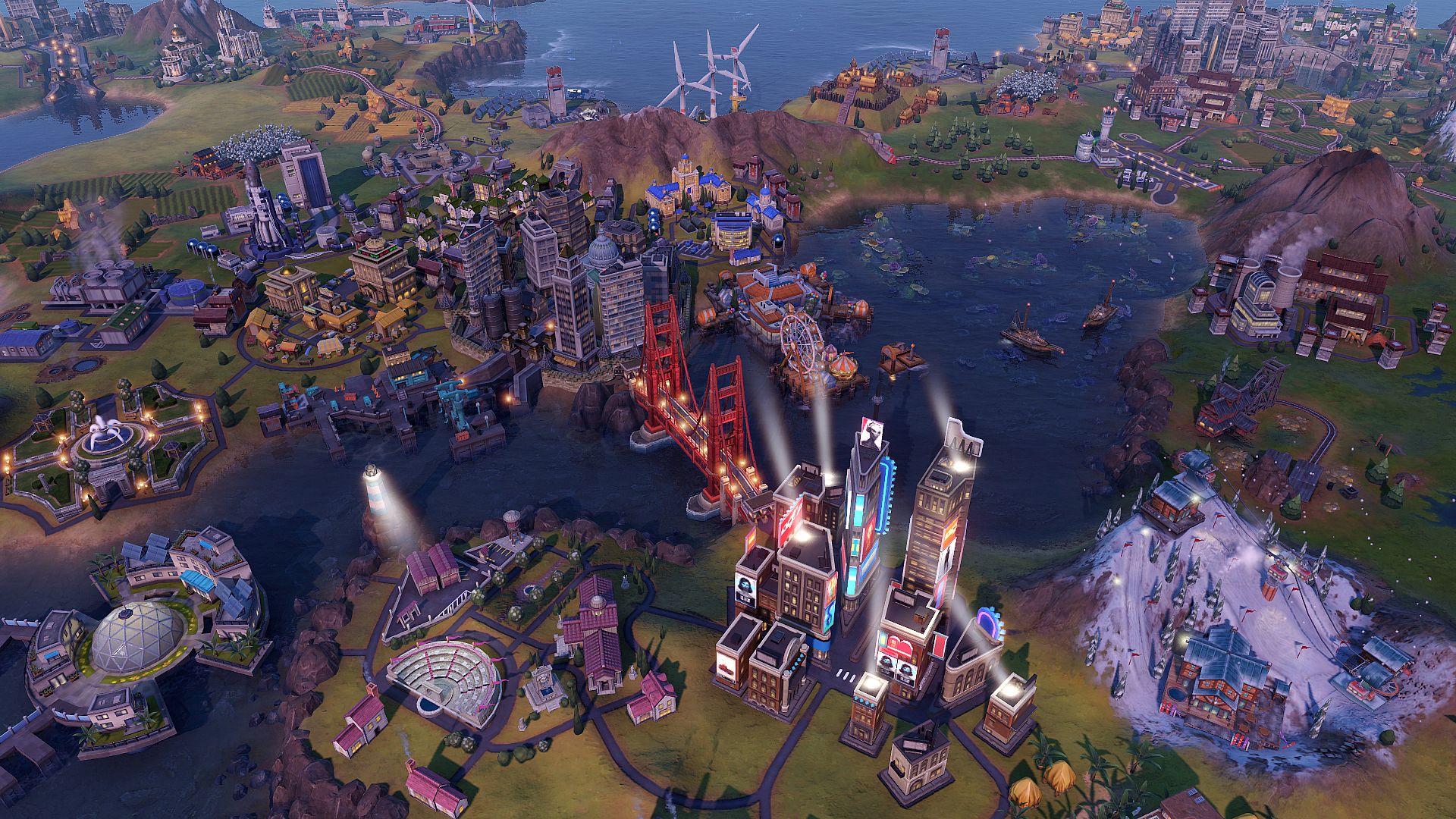
Strategic resources gain new importance as they fuel power plants that supply electricity to advanced buildings. Early reliance on coal and oil gives way to renewable options unlocked through later technologies, with resource choices directly influencing global temperature, ice cap melt, and sea level rise. These climate effects can submerge low-lying tiles unless countered by late-game solutions.
Engineering projects let players reshape terrain through canals, dams, tunnels, and railroads. Flood barriers protect vulnerable coastal areas once the necessary technologies appear. The World Congress provides a diplomatic arena where leaders earn favor via alliances and city-state influence, then spend it on resolutions, emergency sessions, or vote weighting to pursue a dedicated diplomatic victory path.
A new era extends the technology and civics trees with 21st-century options focused on carbon recapture and seastead relocation. Espionage receives additional tools, culture and science victories gain refinements, and historic moments expand the narrative layer of gameplay.
Game Modes
Two dedicated scenarios test specific historical challenges. In The Black Death, players manage population survival, economic stability, and religious cohesion during the 14th-century pandemic that devastated Europe and western Asia. War Machine places participants in World War I as either Germany racing to capture Paris or France defending against that advance under tight time constraints.
These scenarios operate within the expanded ruleset and highlight the new environmental and diplomatic layers while restricting the usual open-ended campaign structure.
New Civilizations and Content
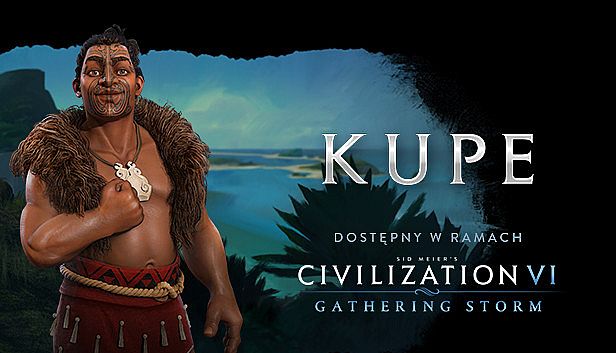
Eight new civilizations arrive with nine leaders, each carrying distinct bonuses. Accompanying them are nine unique units, four unique buildings, three unique improvements, two unique districts, and one unique governor. Seven world wonders and seven natural wonders join the roster alongside 18 new units, 15 improvements, nine buildings, five districts, two city sets, nine technologies, and ten civics.
These additions integrate with the environmental and power systems, allowing new playstyles centered on resource management and climate adaptation.
Is It Worth Playing?
Gathering Storm suits players who enjoy deep strategic planning around resources, terrain, and long-term global consequences. The added systems reward careful city placement and forward-looking technology choices, while the diplomatic victory offers a fresh path distinct from domination or cultural routes.
Multiplayer sessions benefit from the World Congress negotiations and shared environmental pressures. The scenarios provide focused alternatives for shorter sessions. Overall reception highlights the expansion's success in making the world feel more dynamic without overcomplicating the established formula, making it a strong choice for those seeking extended campaigns with meaningful late-game decisions.