



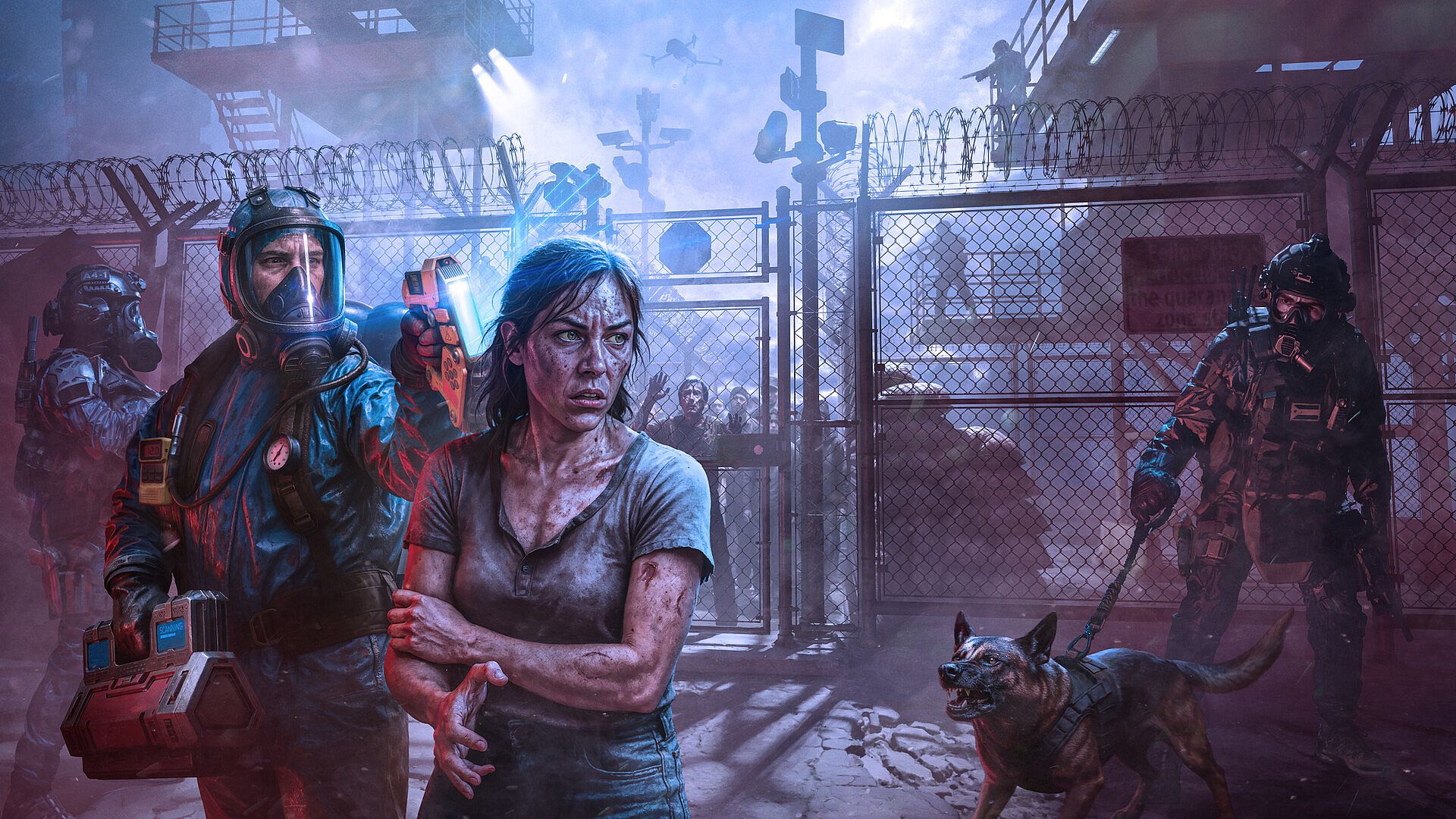
Quarantine Zone: The Last Check is a single-player simulation game set during a zombie outbreak. Players take control of a government checkpoint and must screen incoming survivors while balancing limited resources and preventing infection from spreading.
Gameplay
The core loop centers on daily inspections at the checkpoint. Survivors approach one by one, and the player uses a growing set of screening tools to check for symptoms of infection. These tools include basic visual checks as well as more advanced scanners that reveal hidden signs such as irregular vital signs or internal anomalies. Decisions follow a clear system: healthy individuals move forward to safety, those showing suspicious symptoms enter quarantine for observation, and confirmed threats face liquidation by checkpoint security.
Between inspection shifts, attention shifts to base management. Resources like food, fuel, and defense supplies must be allocated carefully to keep operations running. The checkpoint expands over time, unlocking additional staff positions, upgraded equipment, and better facilities. When alarms sound, players can deploy an armed drone for ranged defense or handle close threats directly with a sidearm. Quarantined areas require ongoing monitoring because infected individuals may turn, at which point samples can be collected for research that yields new upgrades and staff experience.
Every choice carries weight. Letting an infected person through risks a larger outbreak, while overly strict policies can leave the safe zone short on essential personnel. The simulation emphasizes careful observation, resource trade-offs, and the human cost of survival decisions in a collapsing city environment.
Game Modes
The game offers a structured story campaign that follows the progression of the outbreak and the checkpoint's role in the larger crisis. This mode introduces new tools, survivor types, and escalating challenges across a series of shifts that build toward key narrative moments.
An endless mode provides an alternative for players seeking longer sessions without a fixed endpoint. In this format, the focus remains on sustaining the checkpoint indefinitely as waves of survivors and threats continue. Resource management and defense become more demanding over time, rewarding consistent performance with further upgrades and base improvements.
Both modes share the same core inspection and management systems, allowing players to practice decision-making skills in different contexts. The campaign provides guided progression while endless play tests long-term strategy and adaptability.
Base Development and Defense
Expanding the checkpoint involves constructing new facilities and improving existing ones. Additional quarantine blocks, laboratories, and living quarters increase capacity and efficiency. Research from collected samples directly feeds into these upgrades, creating a feedback loop between inspection work and infrastructure growth.
Defense integrates with daily operations. Drone patrols handle distant hordes, while on-site security manages immediate breaches. Effective resource allocation determines how well the checkpoint withstands pressure during peak periods of activity.
Audio and Atmosphere
The game features an original soundtrack composed by Dawid W. Mika. The music supports the tense atmosphere of checkpoint operations with tracks available separately in mp3 and high-quality wav formats. Sound design emphasizes the mechanical clicks of scanners, the murmurs of survivors, and the sudden alerts that punctuate each shift.
Is It Worth Playing?
Quarantine Zone: The Last Check appeals to players who enjoy deliberate simulation experiences built around inspection, resource allocation, and moral decision-making. The gameplay loop rewards attention to detail and careful planning rather than fast reflexes.
Recent player feedback on the platform has been largely positive, with many appreciating the unique setting and the way it combines bureaucratic mechanics with zombie survival elements. The title launched in early 2026 and continues to receive updates that add new survivors, quests, and refinements.
Those who like thoughtful single-player simulations with clear cause-and-effect systems will find the most satisfaction here. The campaign offers a complete narrative arc while endless mode extends the experience for those who want to test their management skills over longer periods. Availability on PC makes it accessible for anyone interested in this style of gameplay.