











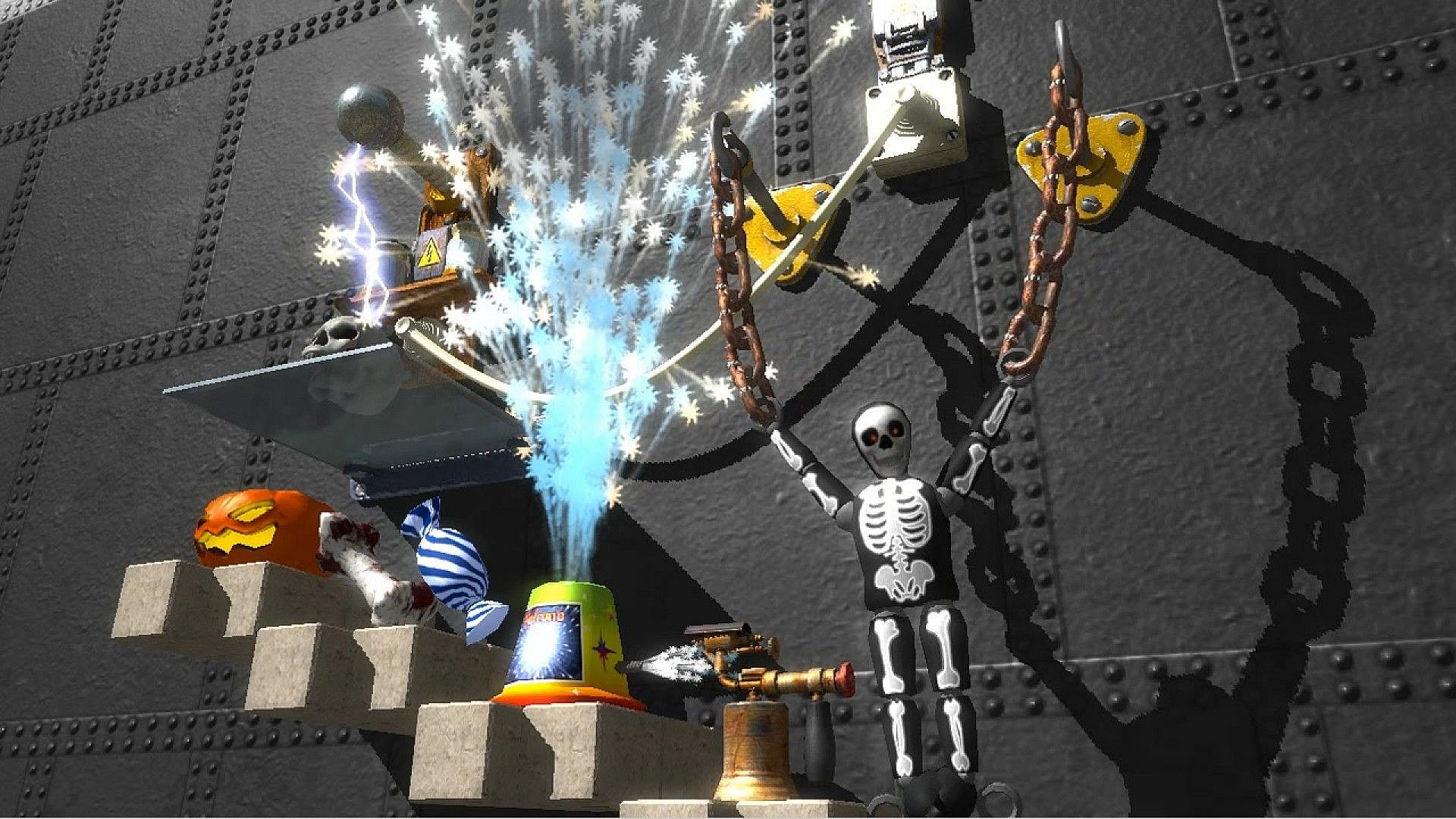
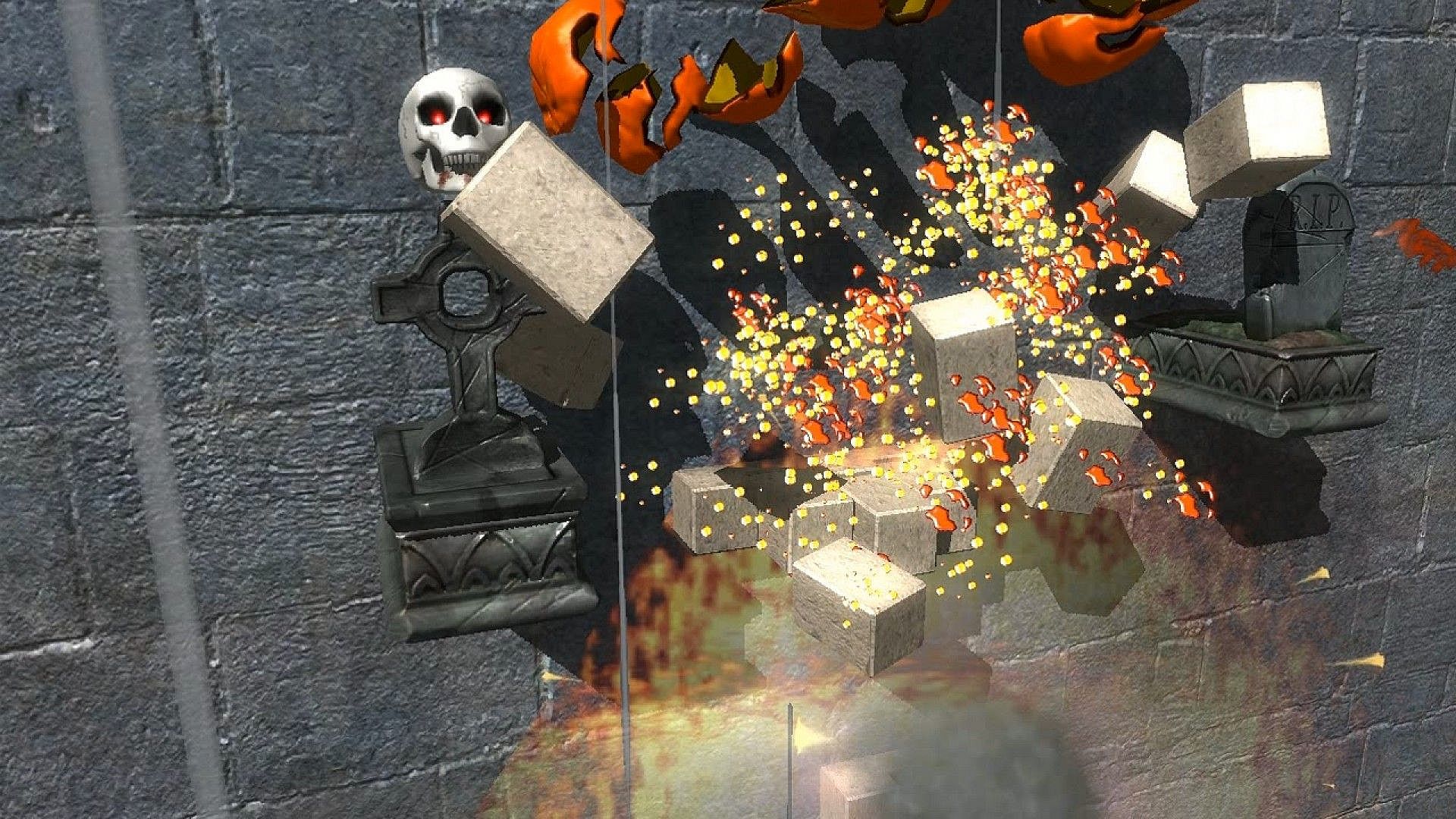
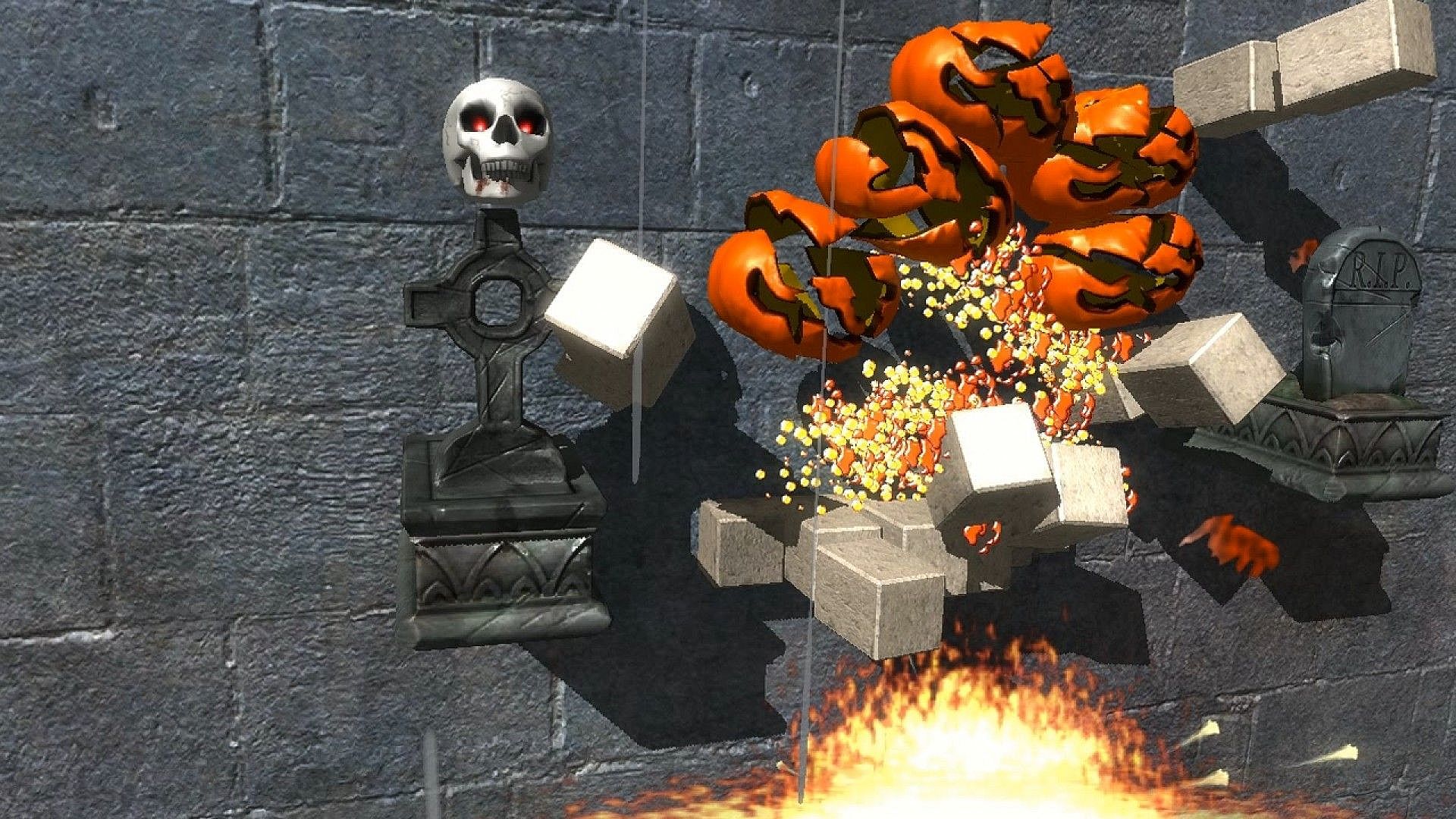
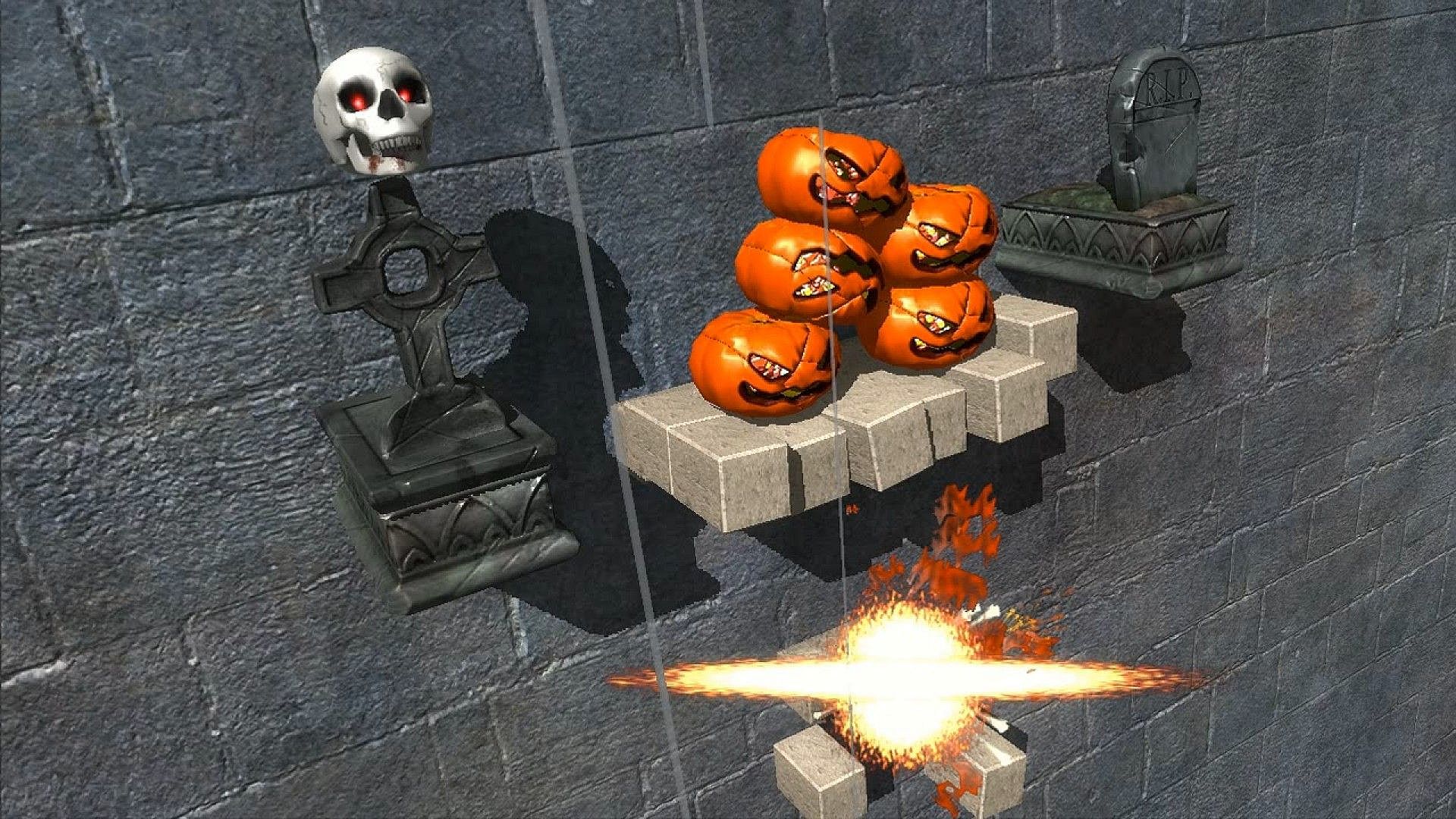
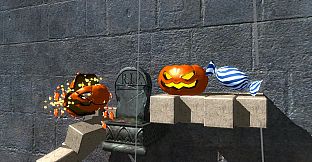
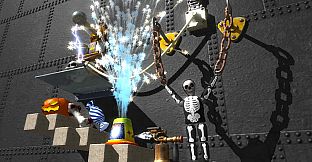
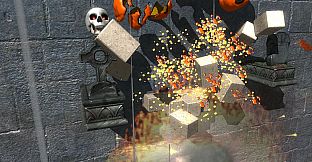
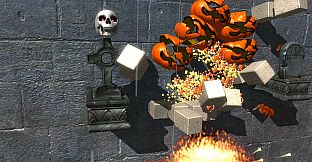
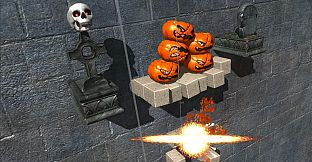
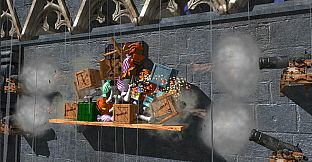
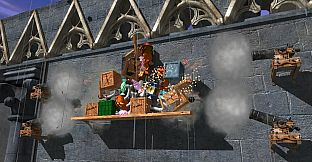
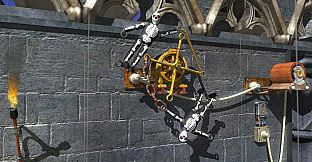
Crazy Machines 2: Halloween is a casual simulation game built around physics-based puzzle solving. Players construct elaborate contraptions using a variety of Halloween-themed objects to complete specific tasks set by the crazy professor.
Gameplay
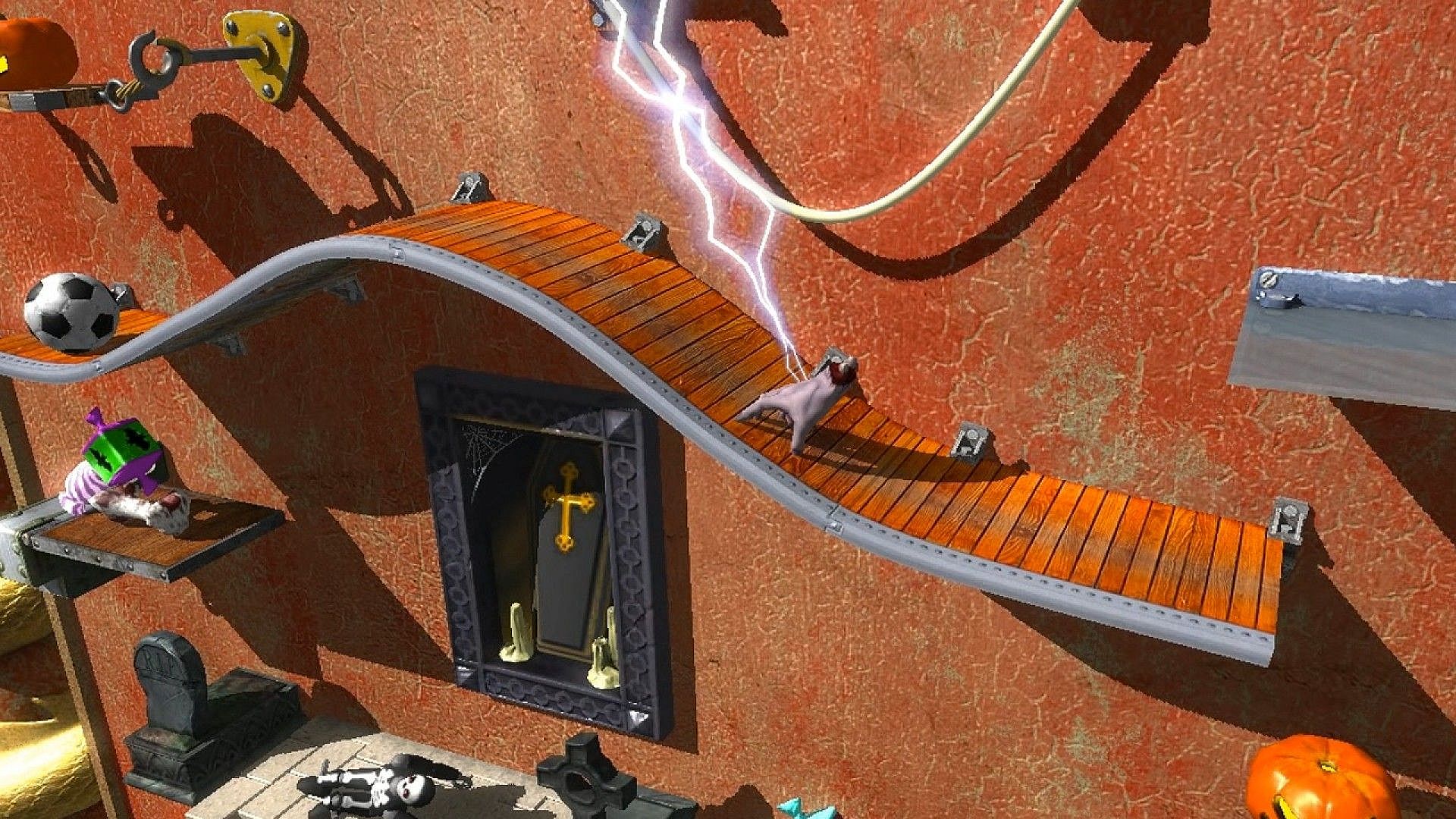
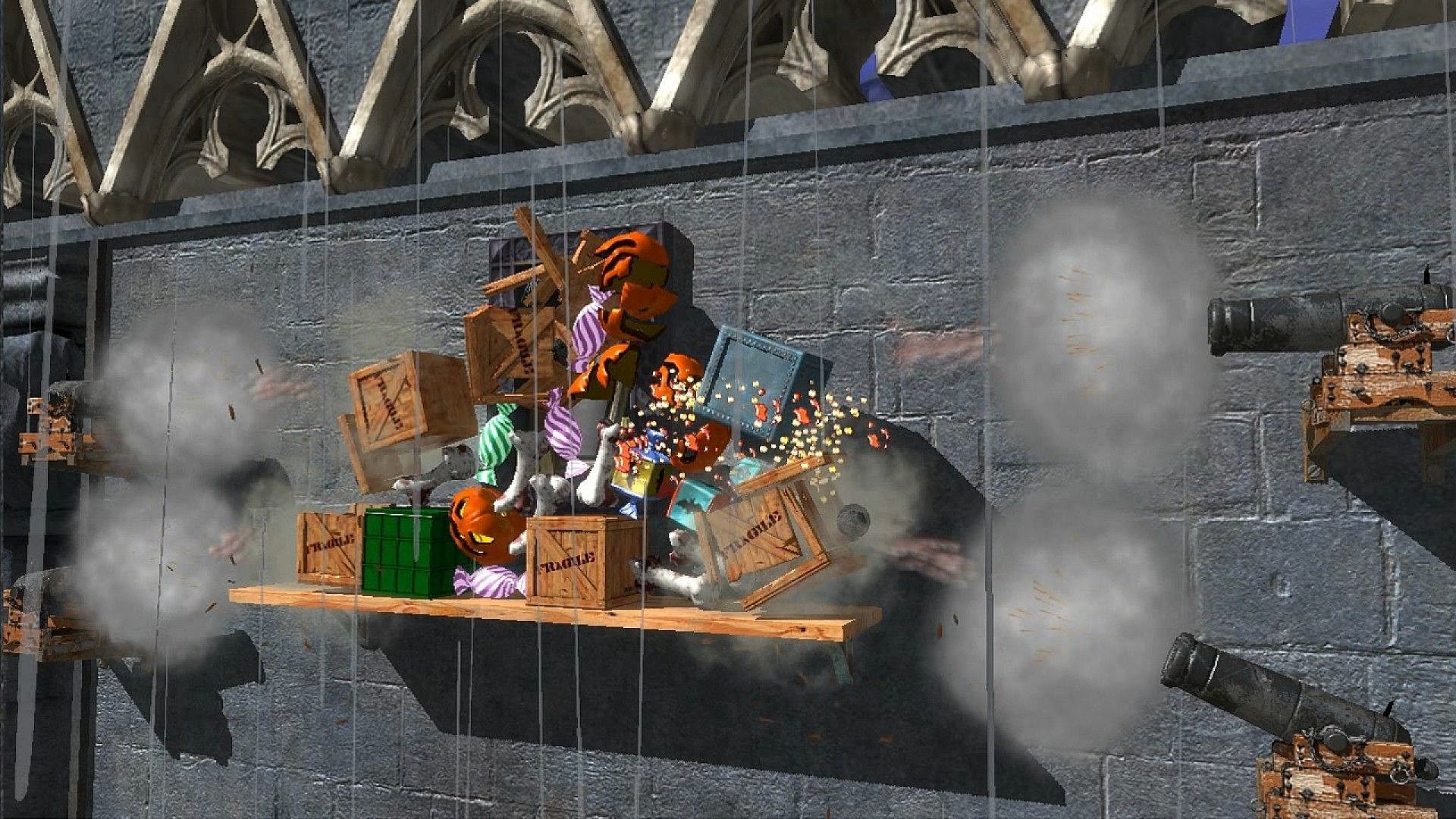
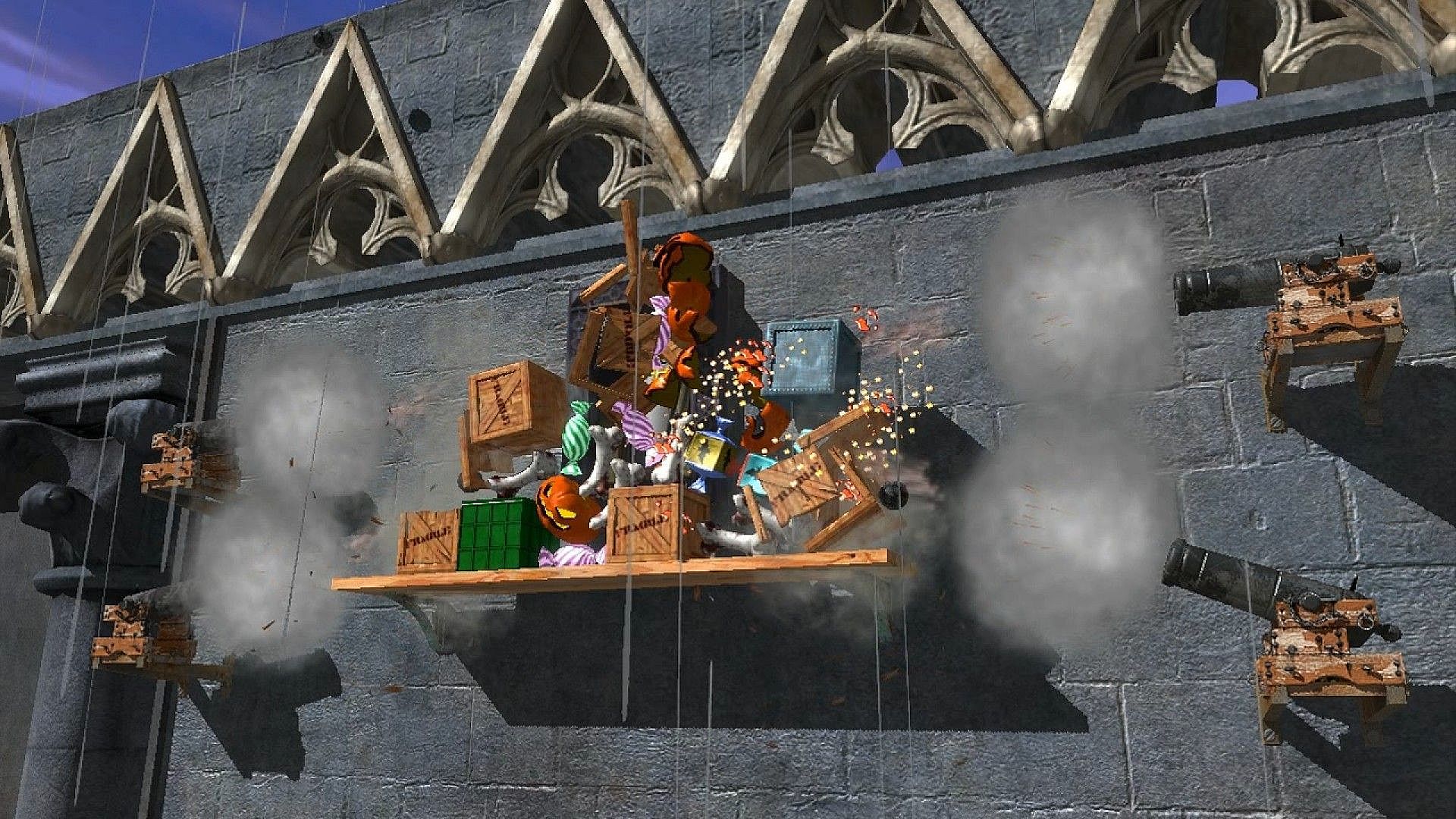
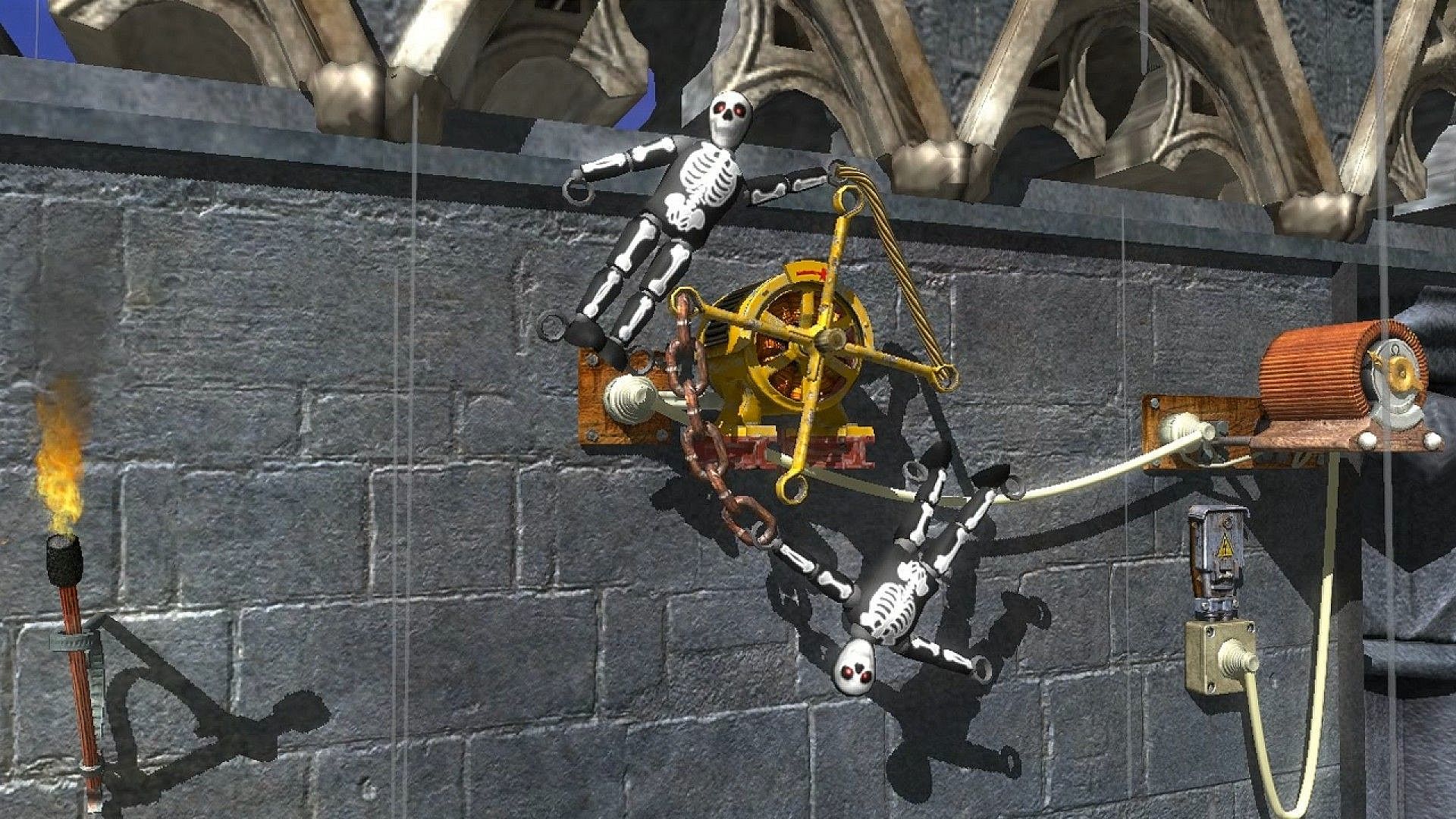
The core loop centers on experimenting with physics interactions. Users select from available parts and position them in a level to trigger chain reactions that achieve the goal. Halloween elements such as bats, skulls, zombie bones, and coffins interact with standard tools including catapults, teleporters, and laser beams. The zombie hand serves as a movable creature that players activate to manipulate objects or reach distant switches.
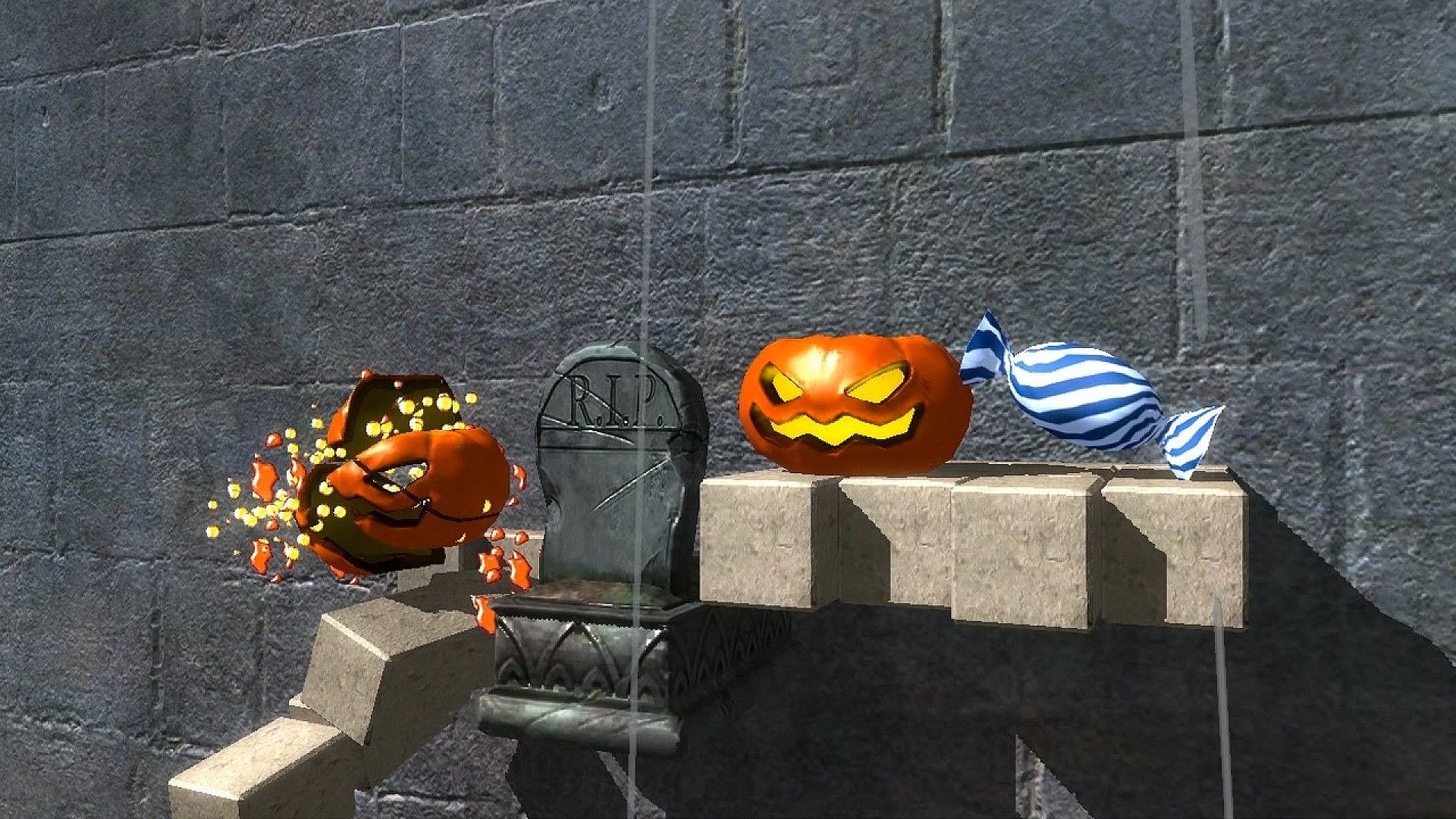
Each challenge requires precise placement and timing. Gravity, momentum, and collisions determine success, so small adjustments often produce dramatically different outcomes. Pumpkin smashing appears as a recurring objective that rewards creative destruction alongside the main task completion.
Creativity plays a central role. Multiple solutions exist for most setups, encouraging players to test unusual combinations rather than follow a single path. The simulation engine handles realistic reactions, rewarding careful observation of how parts connect and move.
Game Modes
Structured challenges form the main experience. Specific tasks include Iron Jack, The Swarm, and Skeleton Grill, each presenting unique constraints that demand inventive use of the new creepy components.
Sandbox mode provides an open environment for free creation. Players assemble machines without time limits or objectives, then test them to see how the physics behaves. This mode supports experimentation with every available Halloween part and tool.
Community features allow sharing of custom puzzles. Completed creations can be uploaded for others to download and attempt, while leaderboards track performance on official and user-generated levels. Achievements recognize milestones such as efficient solutions or particularly inventive builds.
Key Features and Mechanics
The expansion introduces a focused set of new parts that expand the contraption possibilities. Zombie bones, coffins, and the zombie hand add organic movement and interaction options not present in the base game. These elements combine with existing mechanics to produce ghoulish results, such as animated limbs triggering switches or skulls rolling into precise positions.
Physics remains the foundation. Every object responds to forces in consistent ways, so players learn to predict outcomes after repeated trials. The system supports both delicate timing puzzles and chaotic chain reactions that smash multiple targets at once.
Progression involves tackling increasingly complex experiments. Early levels introduce the new parts gradually, while later ones combine them with teleporters and lasers for multi-stage solutions. The emphasis stays on problem solving rather than combat or narrative elements.
Is It Worth Playing?
This title suits players who enjoy building and testing physics contraptions in a lighthearted setting. The Halloween theme supplies a fresh visual style and thematic parts that refresh the familiar formula without altering the core simulation.
Those who appreciate sandbox creation and sharing will find value in the community tools and leaderboards. The game runs on PC and functions as an add-on that integrates directly with the base title's editor and online features.
Reception for the series highlights solid physics and relaxing puzzle sessions. The Halloween content delivers additional experiments that extend playtime for existing fans while remaining accessible to newcomers comfortable with trial-and-error design. It offers a focused, self-contained set of challenges without ongoing seasonal updates or live service elements.