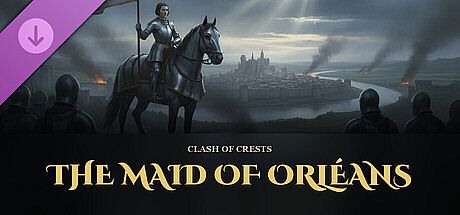


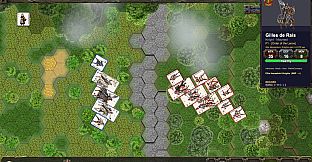
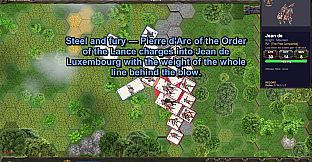
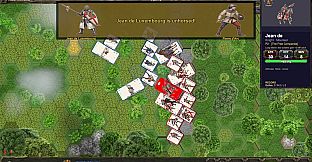
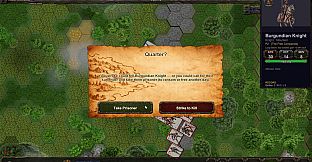
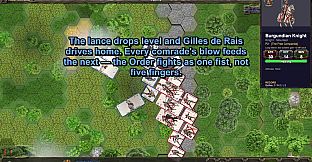
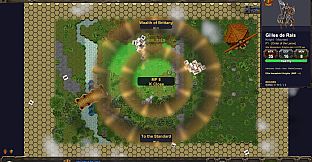
Clash of Crests - The Maid of Orléans is a turn-based strategy wargame set during the Hundred Years' War. Players command historical forces through the campaigns of Joan of Arc in 1429 and beyond, directing units across hex-grid battlefields with a structured sequence of phases each turn.
Gameplay
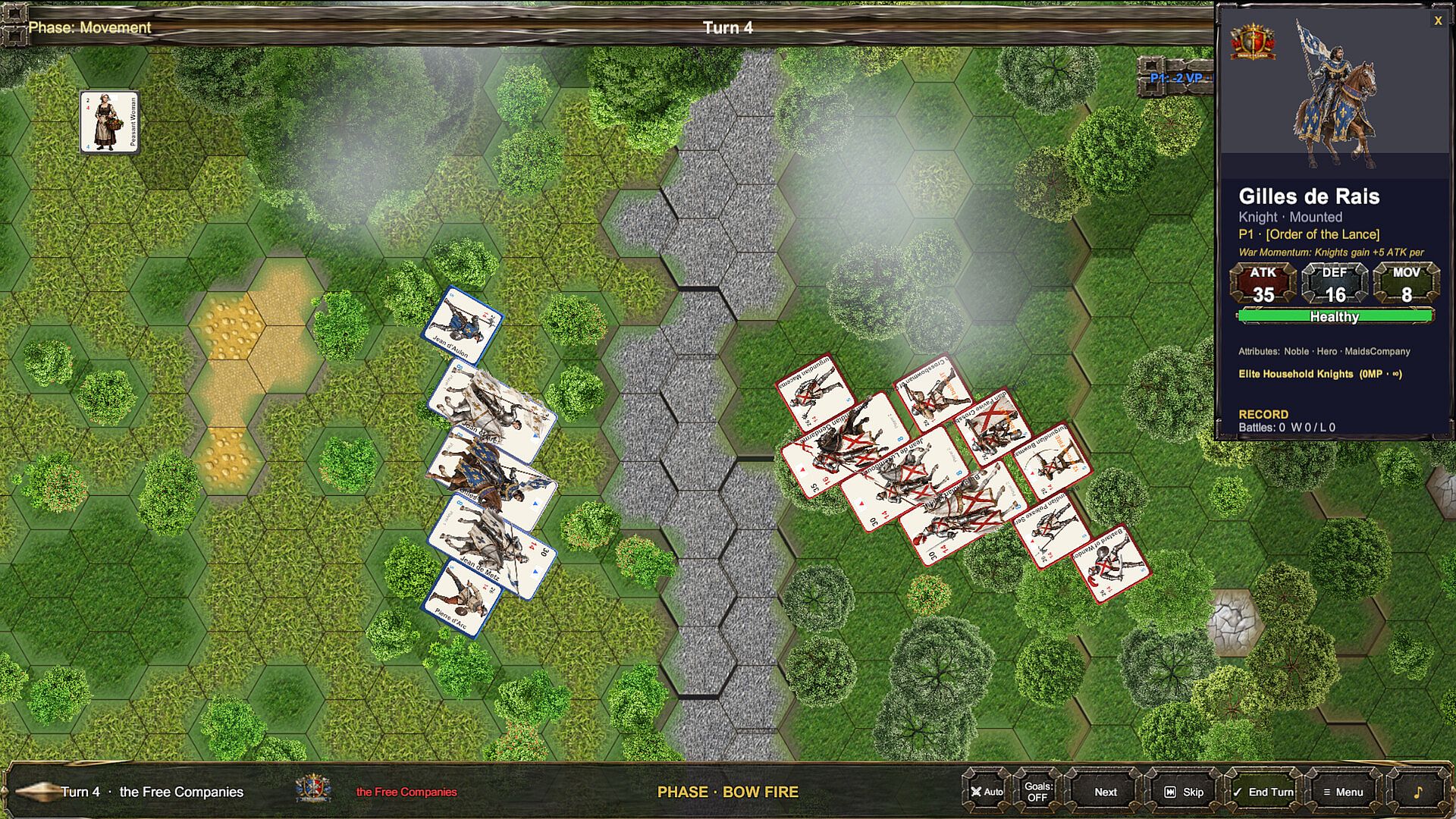
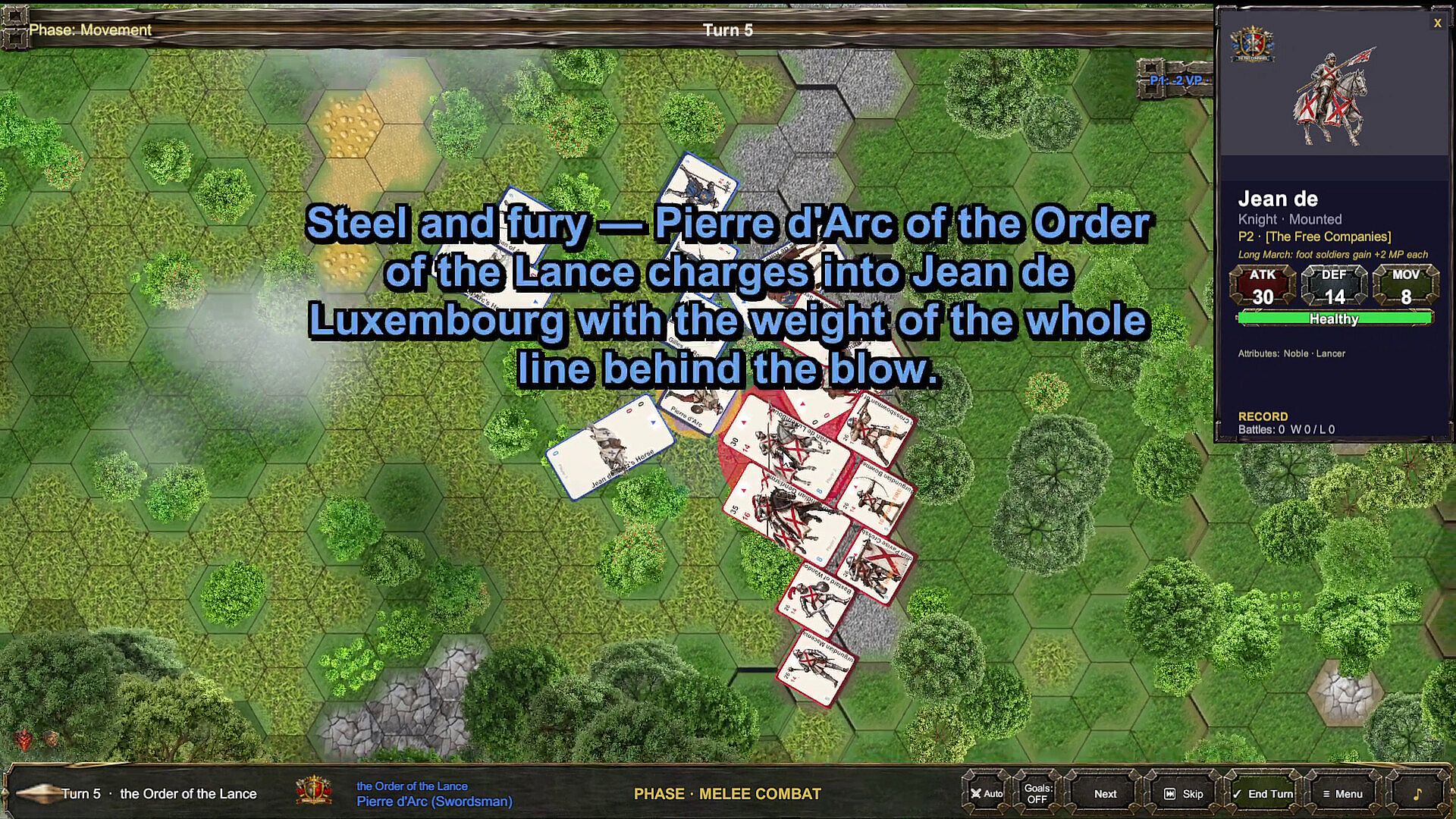
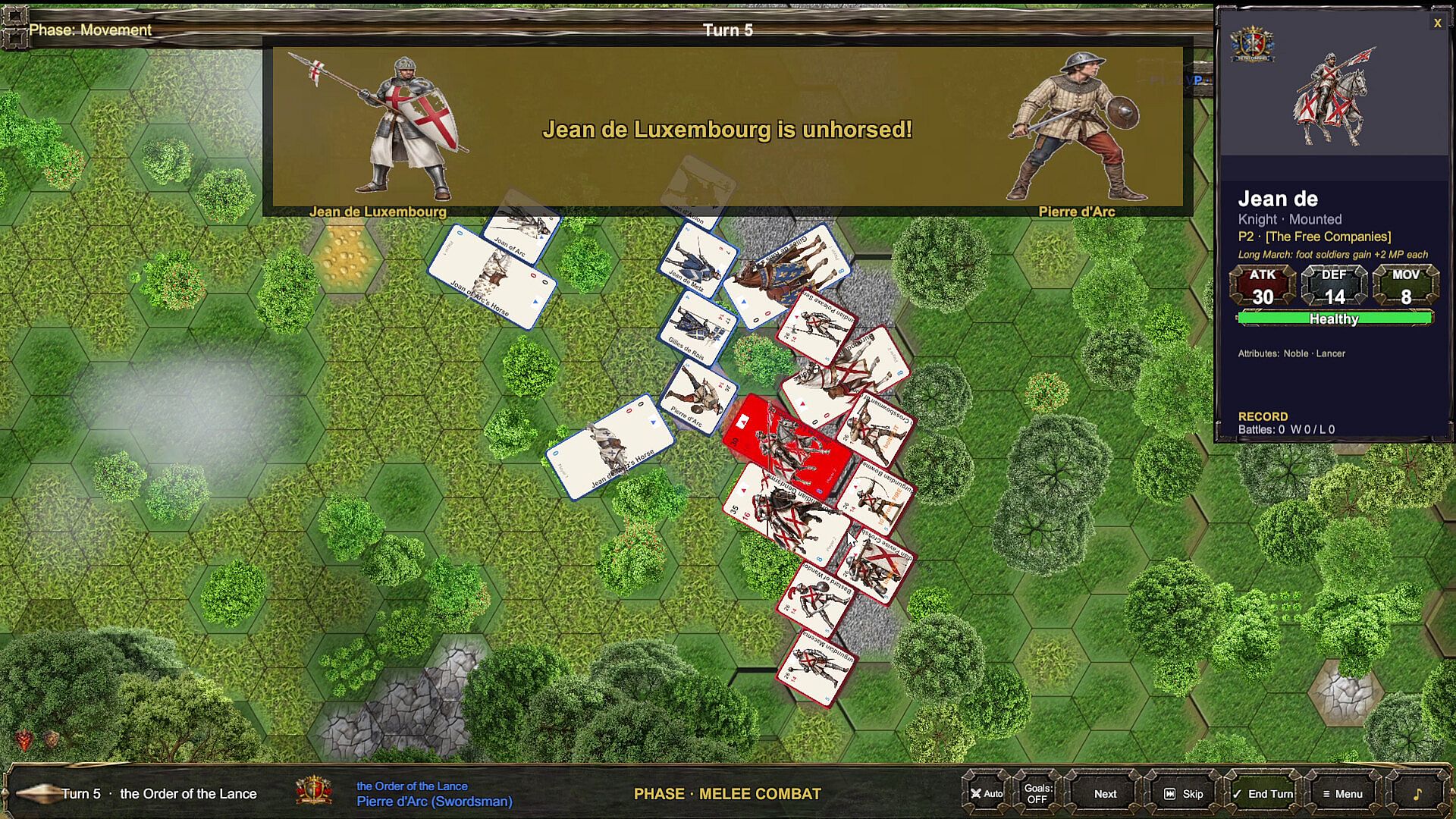
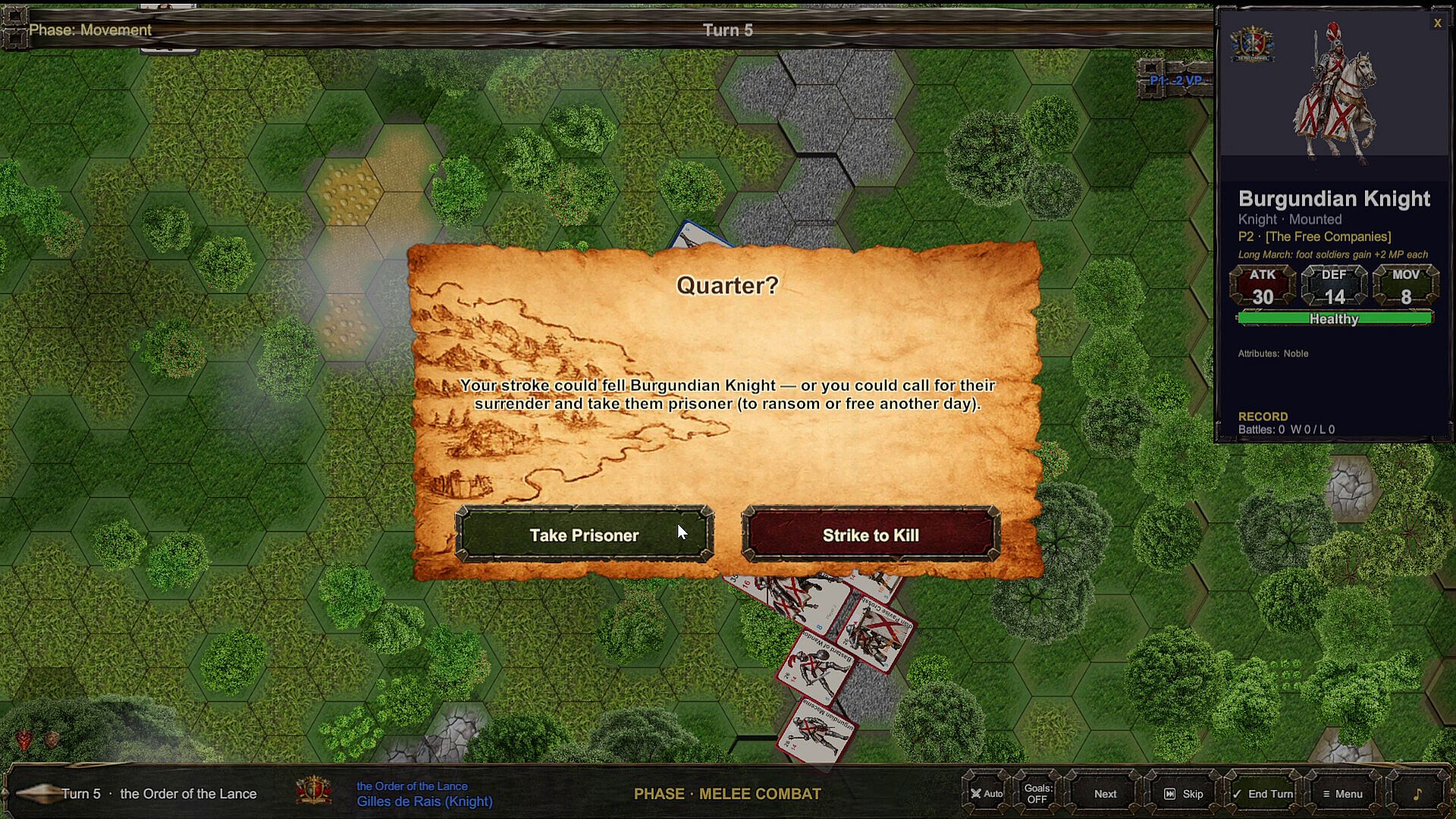
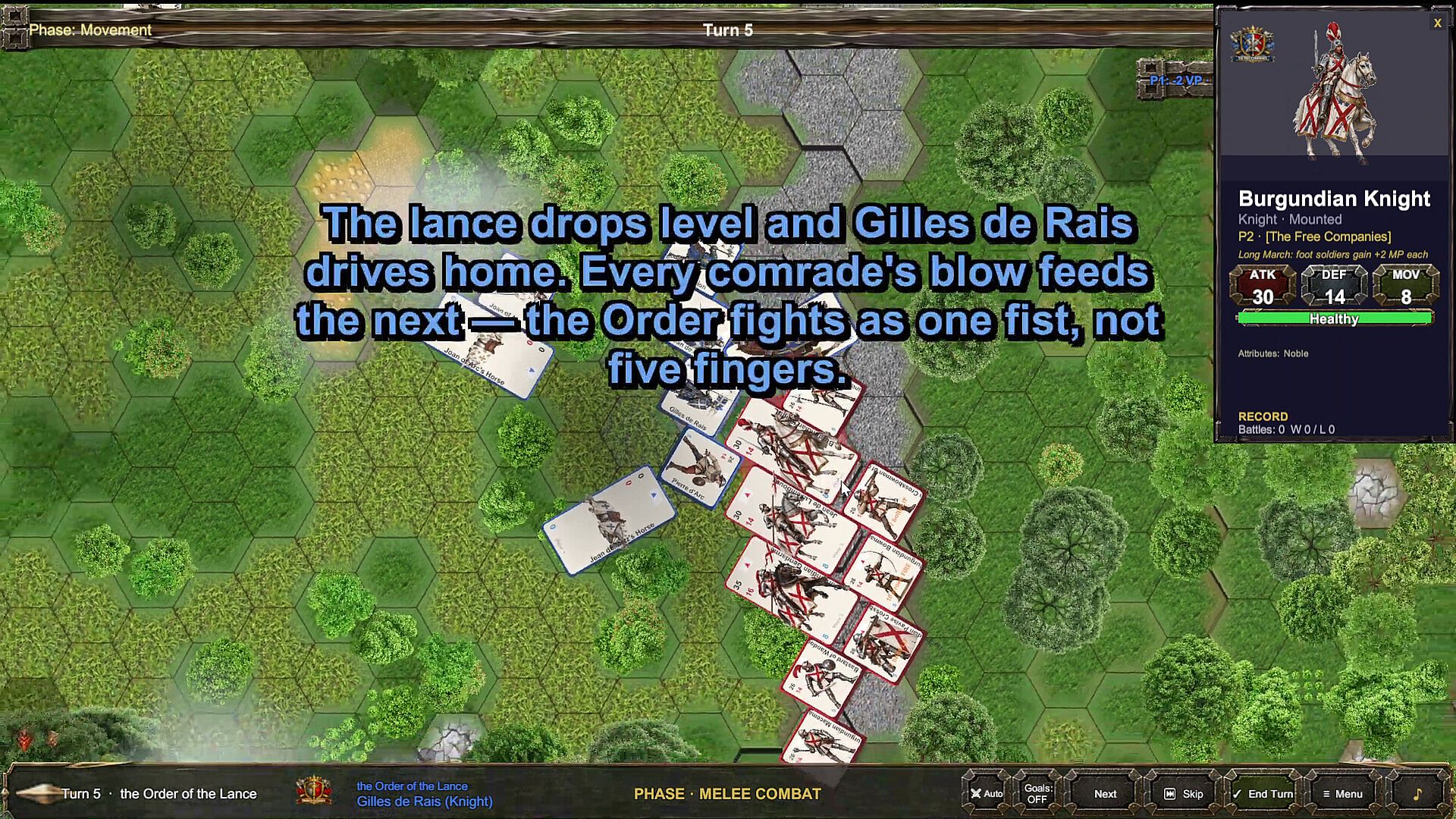
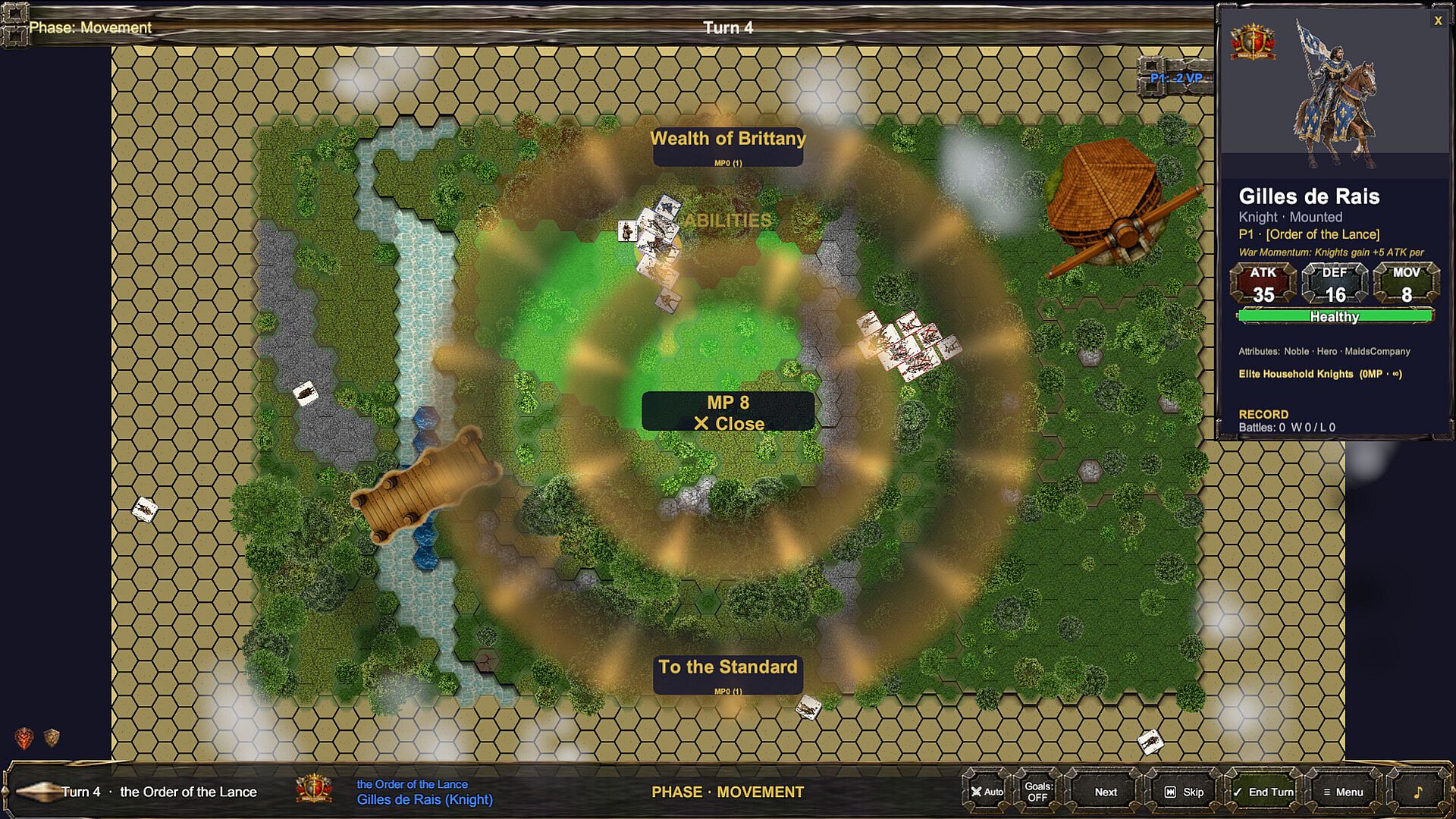
The core loop centers on managing armies of knights, archers, pikemen, and siege engines in detailed tactical encounters. Every turn follows seven fixed phases in order: bow fire, crossbow fire, siege weapons, movement, a second bow volley, melee combat, and recovery. Units that move during their phase lose the ability to fire in subsequent volleys, which forces careful positioning and timing. Terrain height provides combat advantages through column bonuses, while formations and facing affect outcomes in melee. Players plan actions across multiple phases because lines can break if pikemen are bypassed or if archers are left exposed.
Joan grows stronger across the campaign chapters, unlocking new abilities after successful battles. Armies draw from four factions with a total of 97 units, including named leaders such as La Hire, the Bastard of Orléans, Gilles de Rais, and Jean d'Alençon on the French side. Siege tools like the great bombard La Bergère, covered rams, scaling ladders, pavises, archers' stakes, and herring wagons add specialized options for assaults on fortifications. Twenty-four battlefields recreate locations from the Loire forts to the streets of Reims and the moors of Gerberoy.
Game Modes
The main experience consists of two linked campaigns. The historical path follows fifteen chapters that cover the Voices guiding Joan through Burgundian territory, the audience at Chinon, the relief of Orléans with its convoy from Blois and assaults on the siege forts, the victory at Patay, the march to Reims for the coronation of Charles VII, the fighting at Paris and Compiègne, the trial at Rouen, and later battles including vengeance at Gerberoy and the field of Castillon in 1453. An alternate-history branch opens in six additional chapters if players choose differently at Compiègne, allowing Joan's rescue and a new campaign that spans the tower of Beaurevoir, a divided Burgundy, her return, operations in Normandy, a crossing of the Channel, and a climactic battle before London.
Three standalone battles provide focused scenarios: the Day of the Herrings centers on protecting or intercepting a Lenten supply convoy defended by barrel walls; the Walls of Jargeau recreates ladder assaults and a dramatic moment where the Maid is struck by a stone yet returns to the fight; and the Siege School teaches the use of bombards, pavises, fascines, rams, and ladders one turn at a time. Skirmish, hotseat, and LAN multiplayer support up to eight players with any of the four armies, while the full set of units and tools remains available outside the campaigns.
Campaign Structure and Progression
Campaigns link battles so that losses and gains carry forward, encouraging adaptation of army composition between chapters. Joan's personal development ties directly to chapter victories, granting abilities that alter unit performance or battlefield options. The alternate path diverges at a single key decision point and expands the scope to new regions and a larger strategic objective. All content requires the base game Clash of Crests, which supplies the underlying rules and unit roster.
Is It Worth Playing?
This title suits players who enjoy deliberate, phase-driven tactical wargames with historical themes and branching narratives. The fixed seven-phase structure rewards foresight and punishes reactive play, while the mix of historical fidelity and alternate-history options gives two distinct paths through the same core systems. Multiplayer modes extend the experience to hotseat sessions or LAN matches with custom army builds. As a recent release with no accumulated player reviews available at this time, its appeal rests on the depth of the phase system, the variety of siege mechanics, and the detailed recreation of Joan of Arc's campaigns rather than on community consensus. Those seeking fast-paced action or open-world exploration will find the rigid turn structure and hex-grid focus less suitable, but enthusiasts of classic hex wargames will recognize the deliberate pacing and layered decision-making that define each engagement.