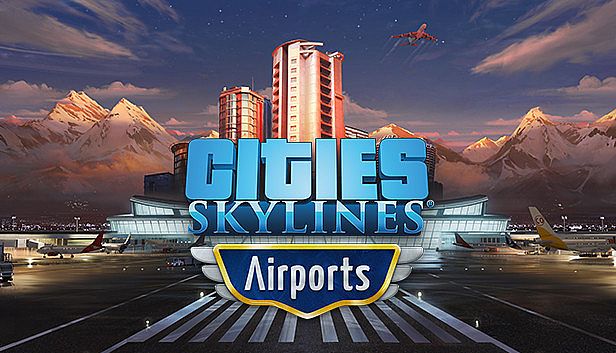


















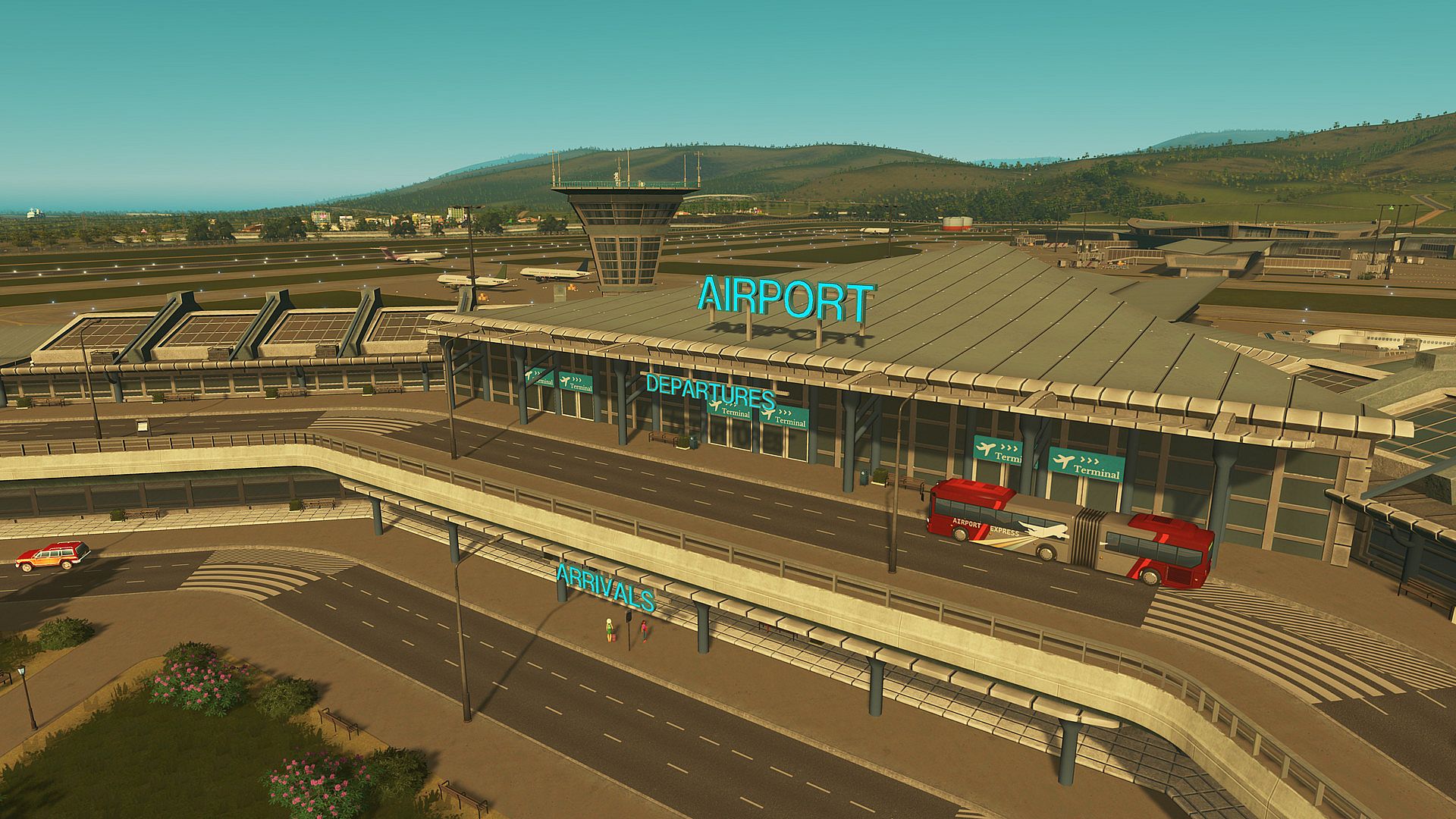
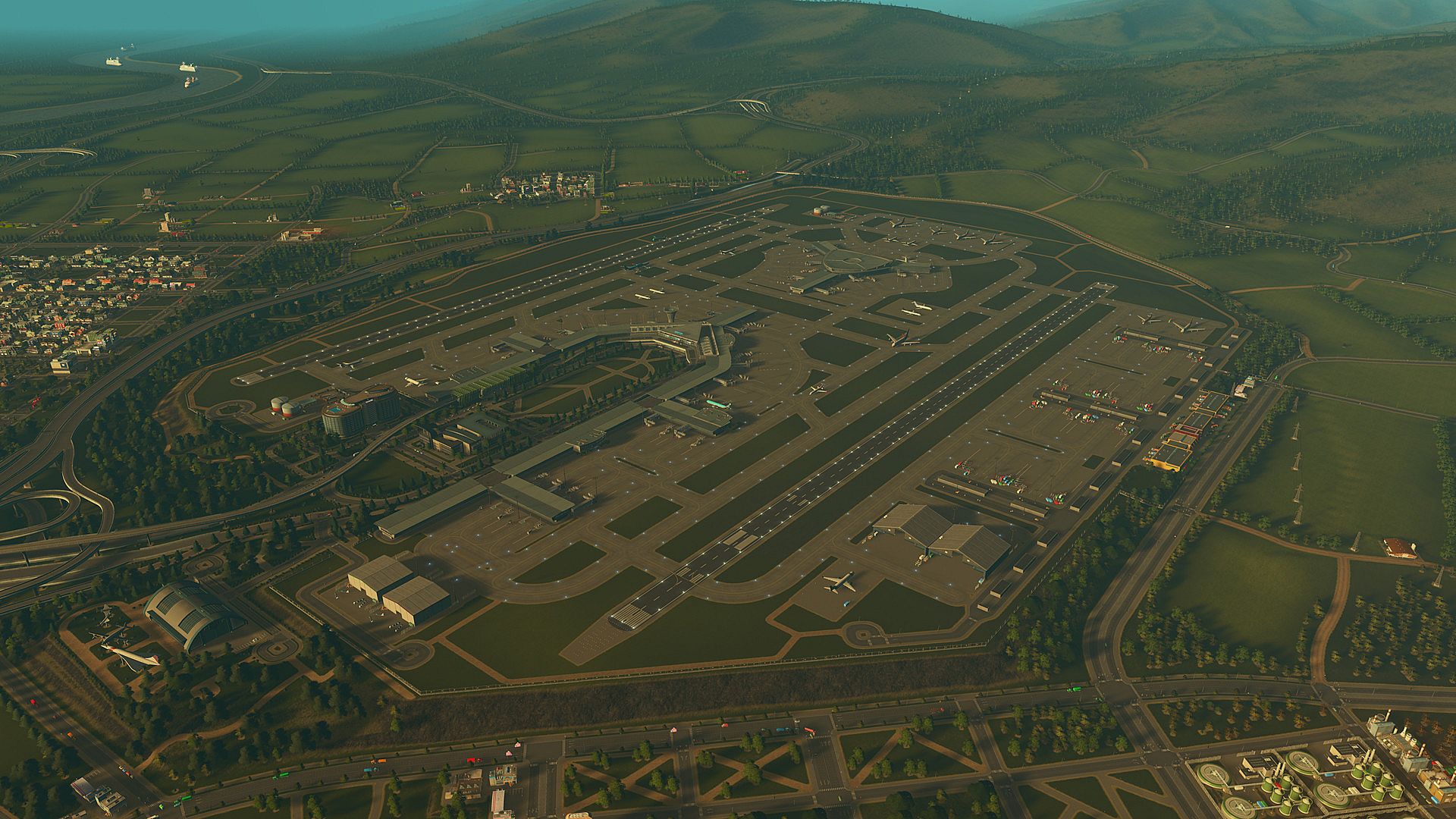
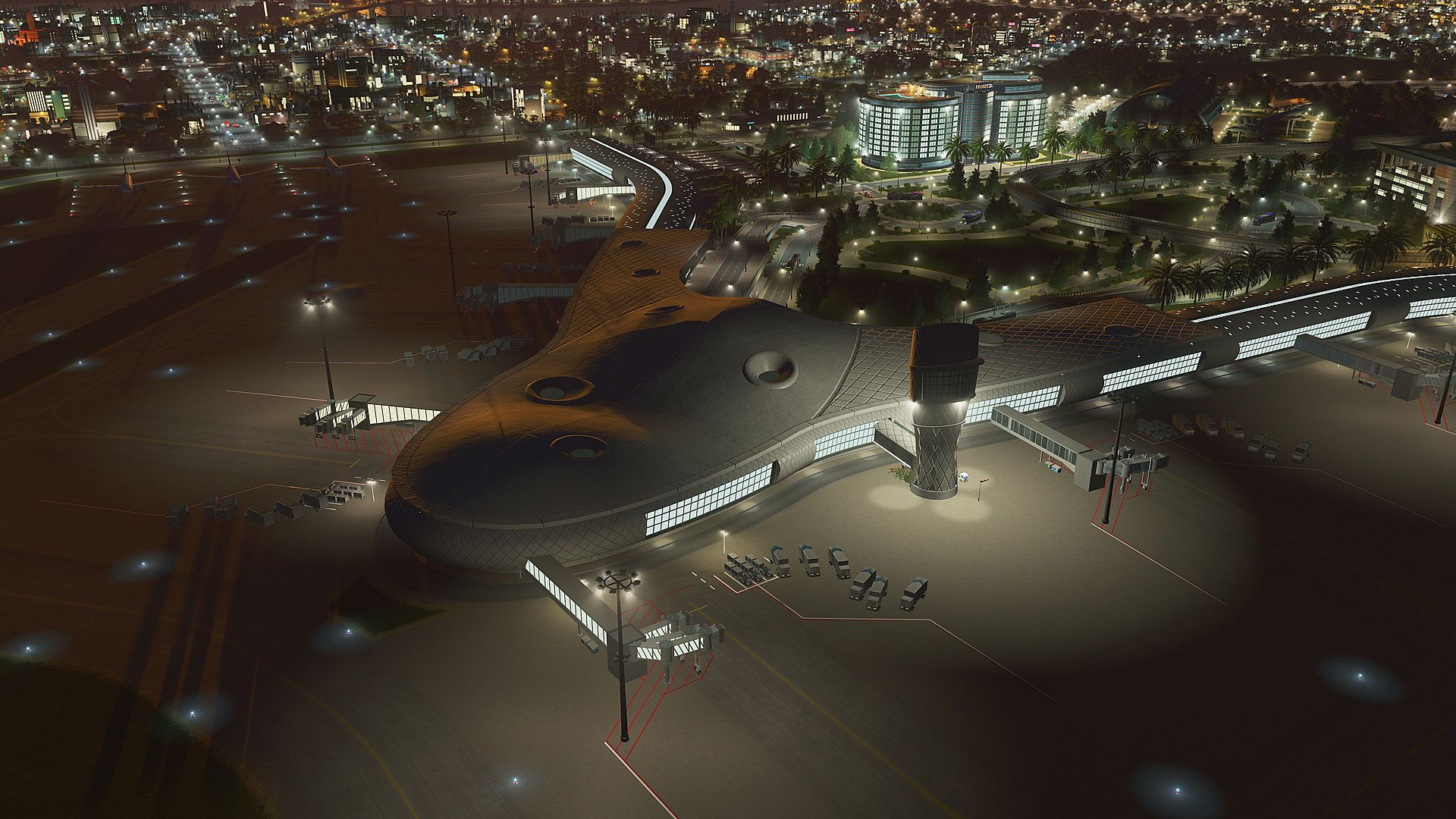
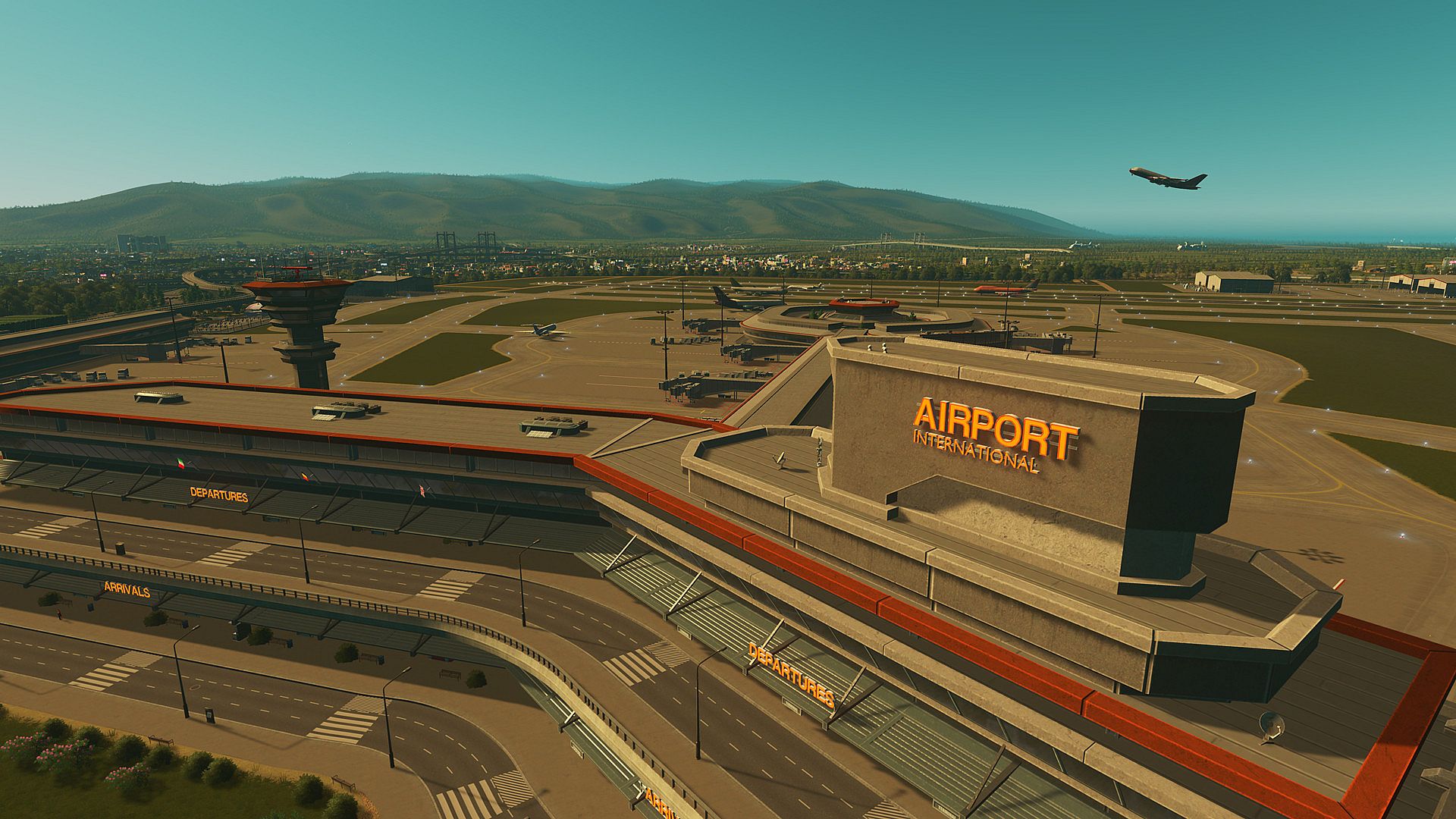
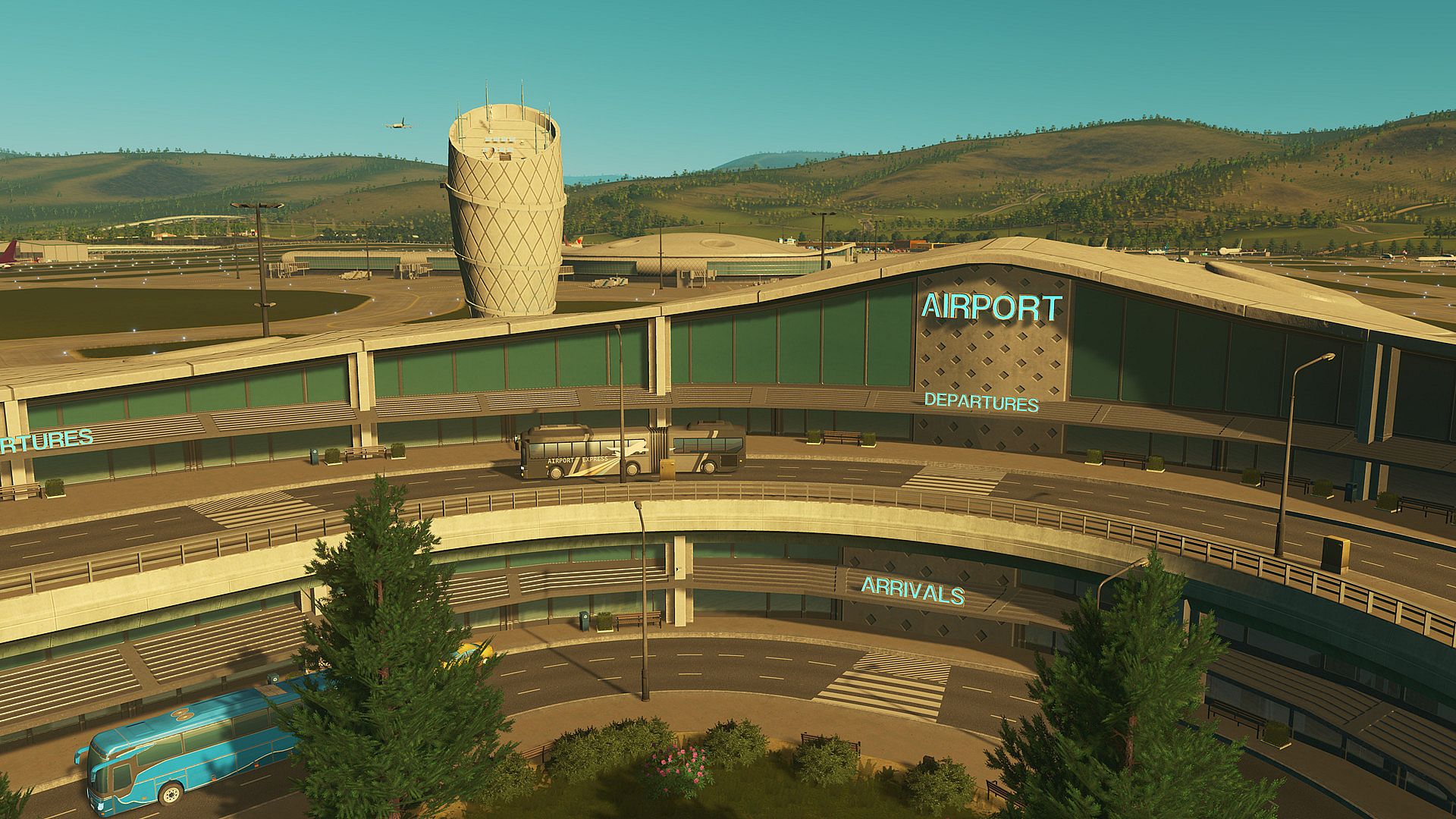
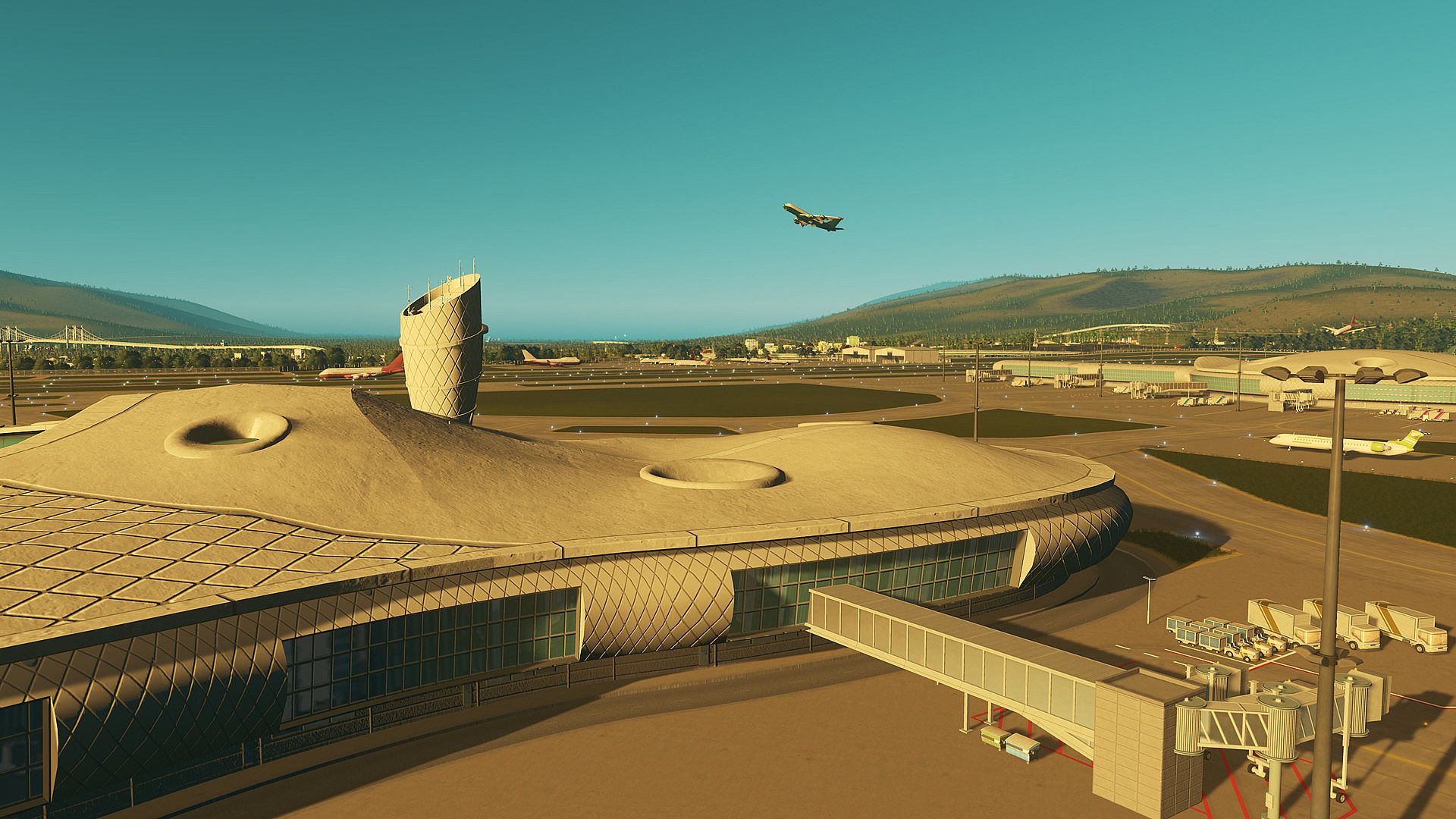
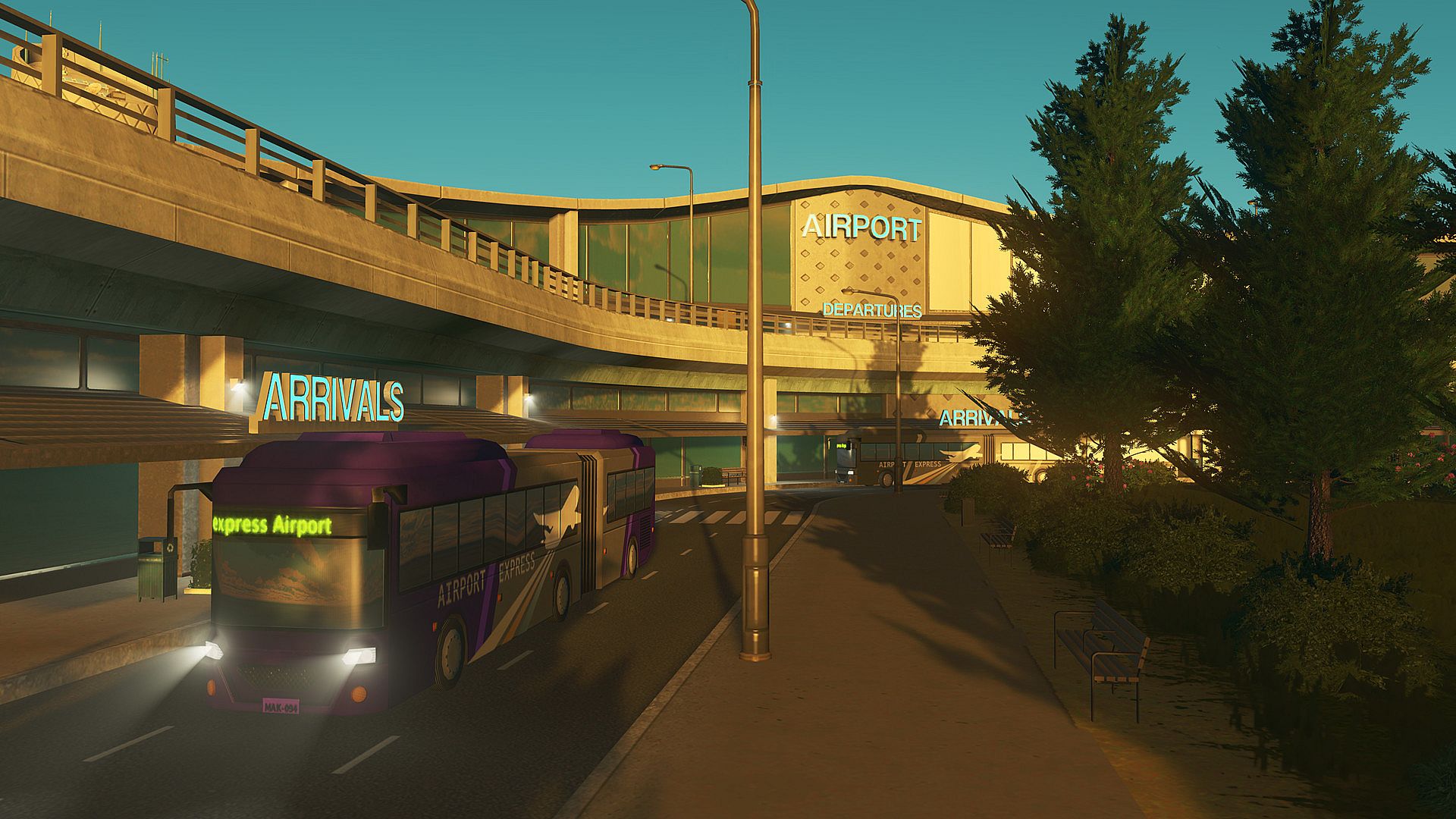
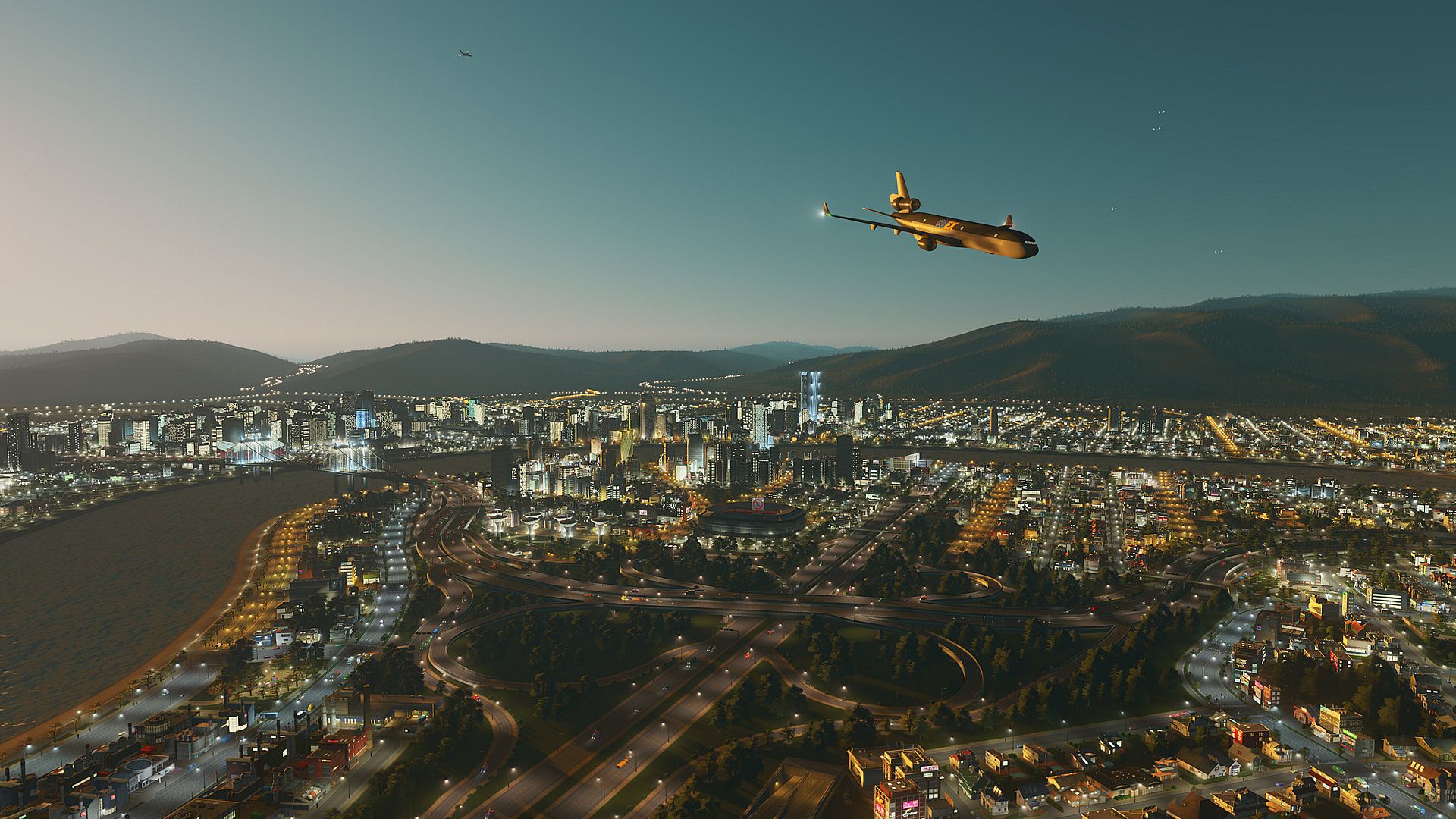
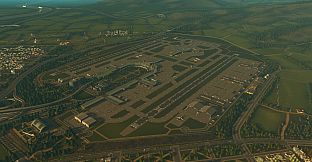
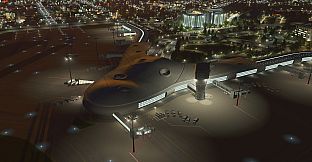
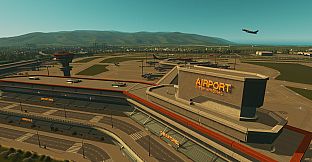
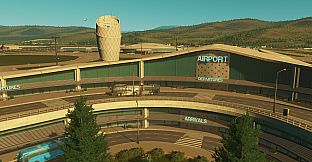
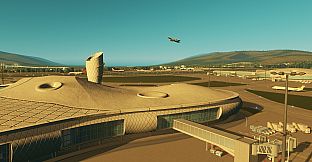
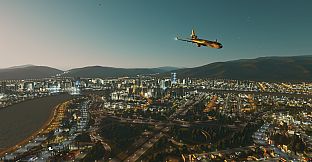
Cities: Skylines - Airports is a strategy and simulation expansion that adds airport construction and management to the core city-building experience. Players develop their urban areas by incorporating aviation infrastructure that supports tourism and industry while linking into established transport networks.
Gameplay
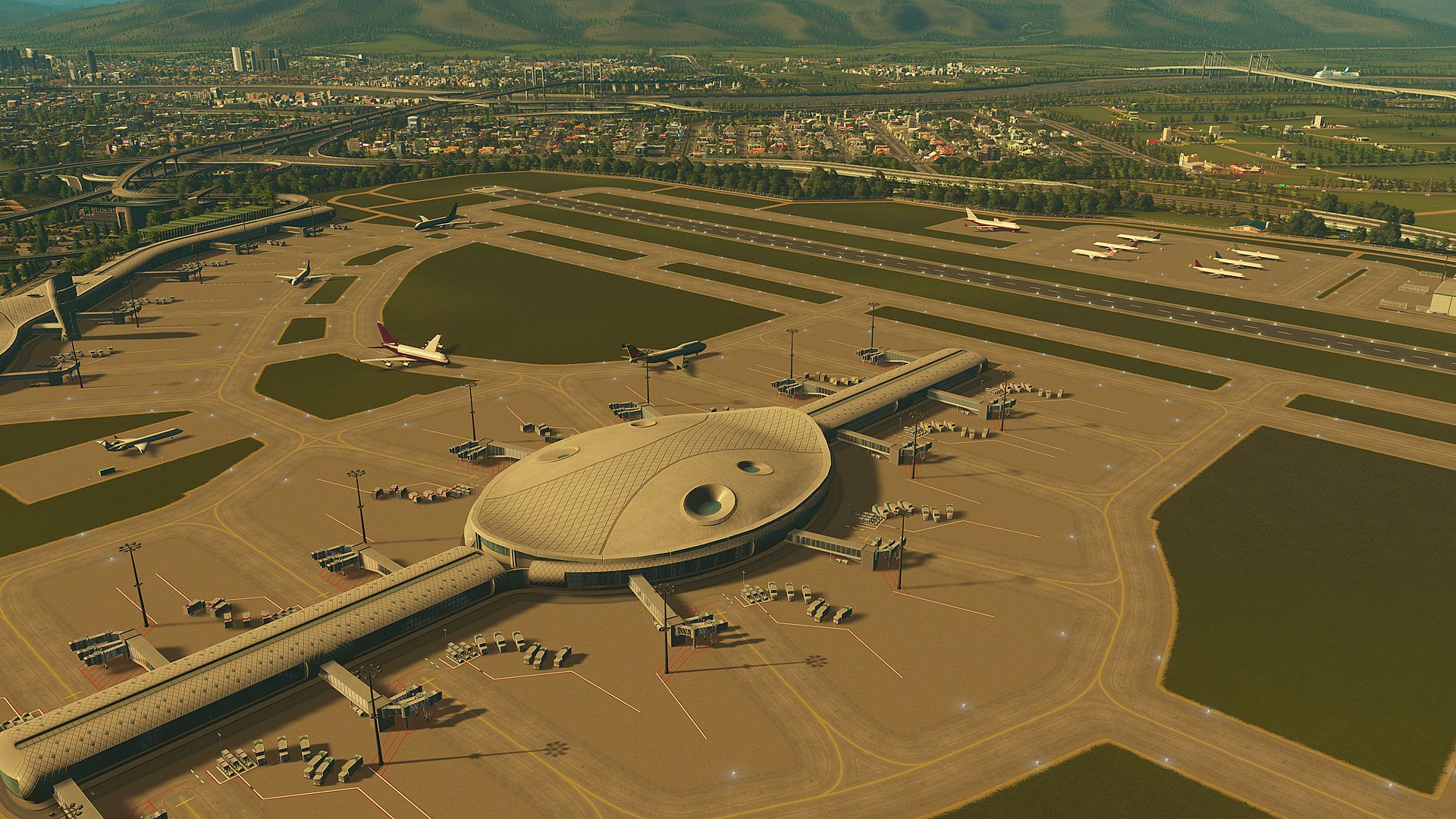
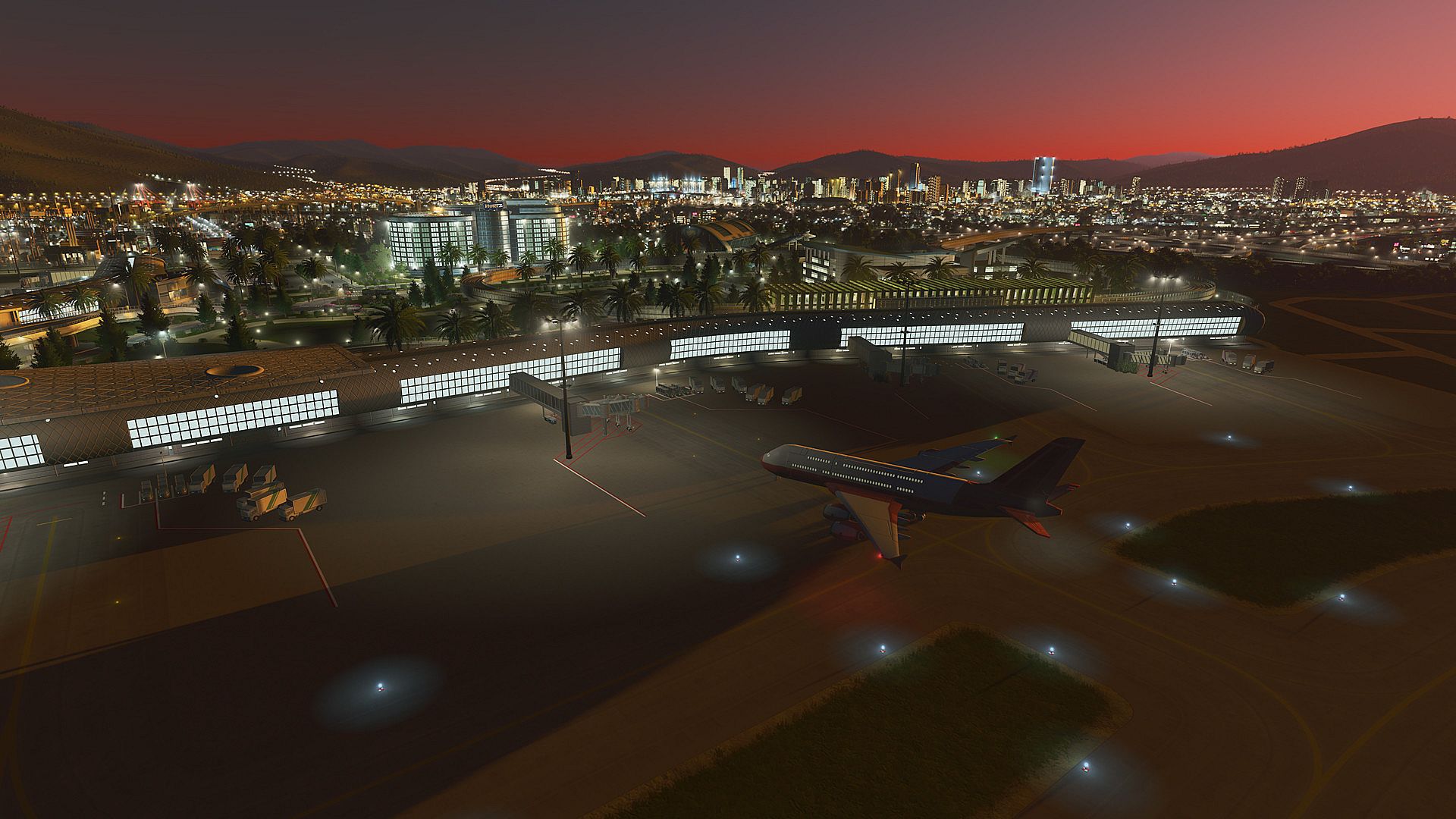
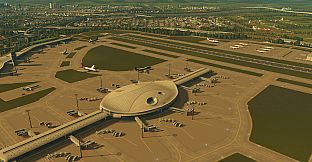
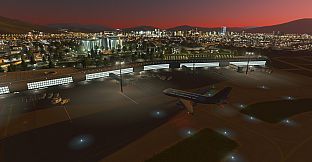
The expansion centers on creating functional airports that scale from modest airfields to major international facilities. Builders place modular terminals, gates, and support structures, then link them through concourse networks that allow efficient passenger flow. Airplane types vary in size and capacity, with larger models becoming available as the facility grows.
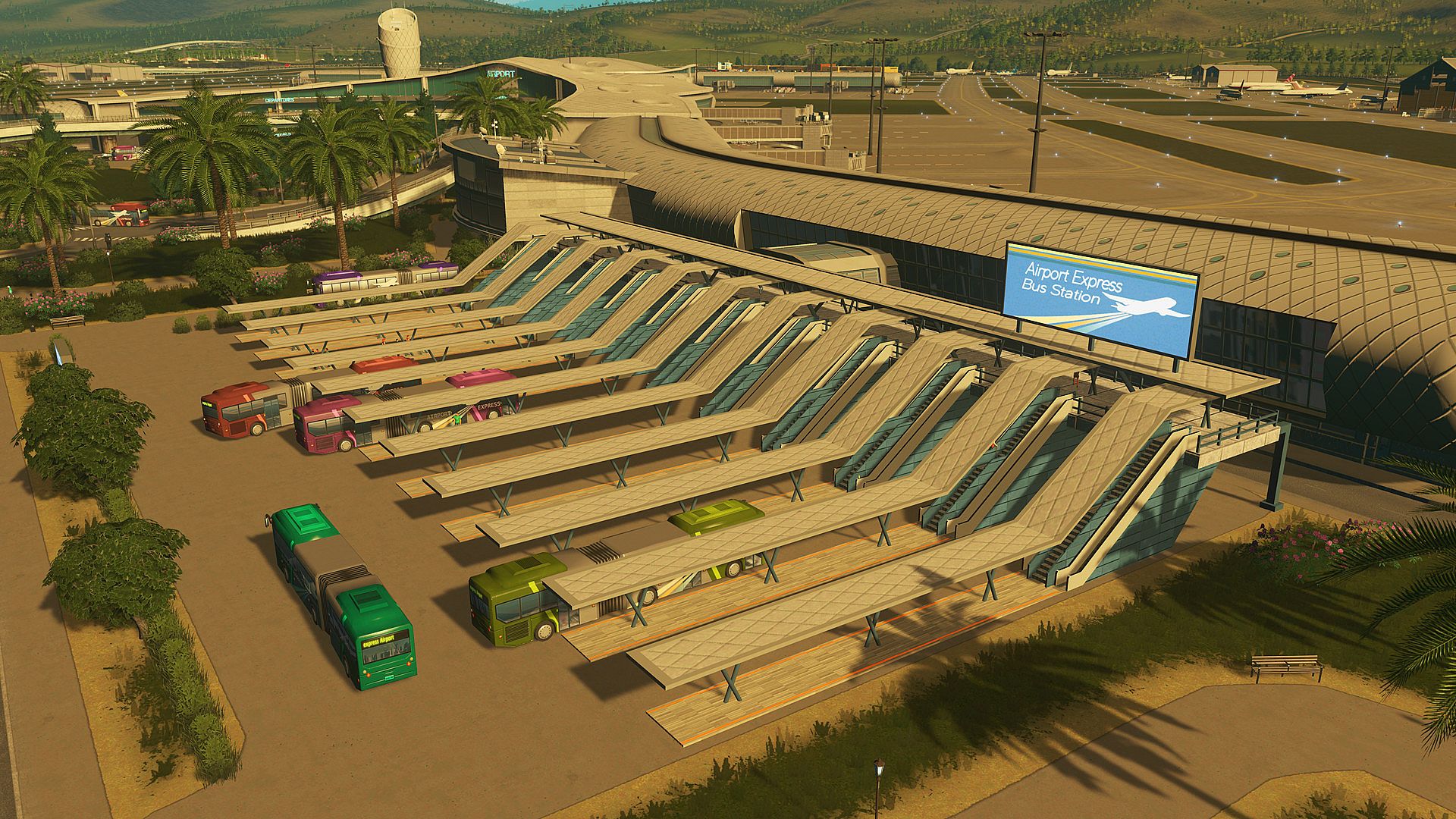
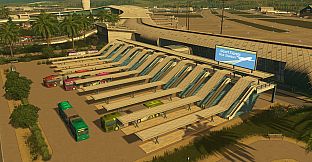
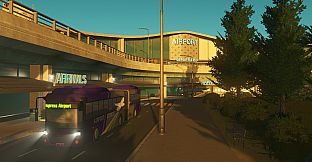
Management extends to ticket pricing and gate allocation, which influence passenger volume and revenue. These choices affect how the airport performs within the wider city economy. Public transport connections receive dedicated airport buildings that tie into existing bus, metro, and rail lines, helping move travelers between the facility and surrounding districts.
Custom airline creation lets players design logos and set operational parameters, adding a layer of personalization to the transport hub. The systems interact directly with tourism and industry mechanics already present in the base simulation, so airport activity can boost visitor numbers and cargo movement without requiring separate setups.
Game Modes
Cities: Skylines - Airports functions entirely within the single-player city simulation framework. No separate game modes are introduced. Players continue building and managing their city in the established sandbox style, with the new airport tools available from the start of a session or added to existing saves.
Progression occurs naturally as passenger satisfaction and business traveler approval increase. Higher approval unlocks additional building options and larger aircraft, expanding the airport's capacity and visual variety over time. This growth remains tied to the overall city development rather than any distinct campaign or competitive structure.
Airport Design and Management
Design work focuses on both large-scale layout and fine details. Multiple terminals and concourse connections let builders shape passenger movement patterns, while modular pieces allow customization of building footprints and appearances to fit the surrounding urban style. Ticket pricing and gate management require ongoing attention as traffic grows, testing the ability to balance capacity against demand.
Integration with public transport encourages thoughtful placement of stations and routes that feed directly into the airport. This creates a cohesive system where air travel supports broader city goals like attracting tourists or supporting industrial exports. The progression system rewards steady improvement, granting access to more advanced assets only after the facility demonstrates consistent performance.
Is It Worth Playing?
The expansion suits players who already enjoy detailed transport and economic management in city simulations. It adds focused tools for aviation that connect meaningfully with tourism and industry without overhauling the core loop. Those seeking deeper airport-specific mechanics will find value in the modular building options, concourse networks, and custom airline features.
Reception among existing players has been mixed, with some appreciating the added visual and functional variety while others note it as a more modest addition compared to larger expansions. The content remains available as a one-time purchase for PC users running the base game, and it continues to function with the current version of the simulation. Players who prioritize comprehensive city infrastructure will likely find the airport systems a worthwhile extension of their existing builds.