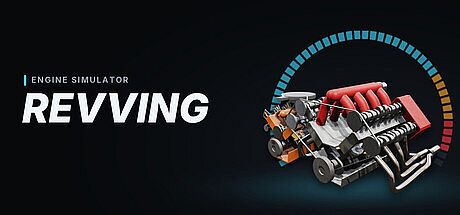



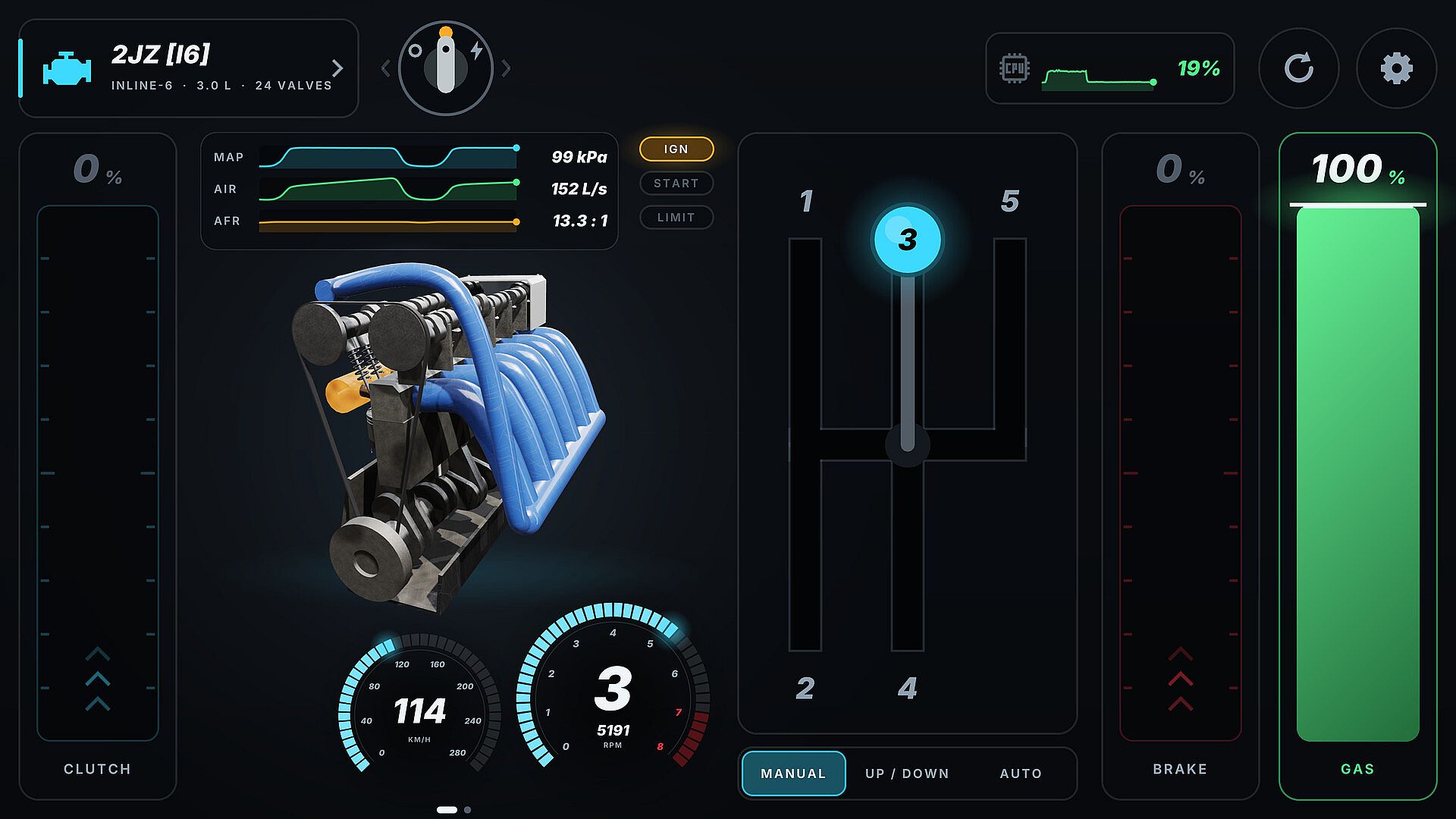
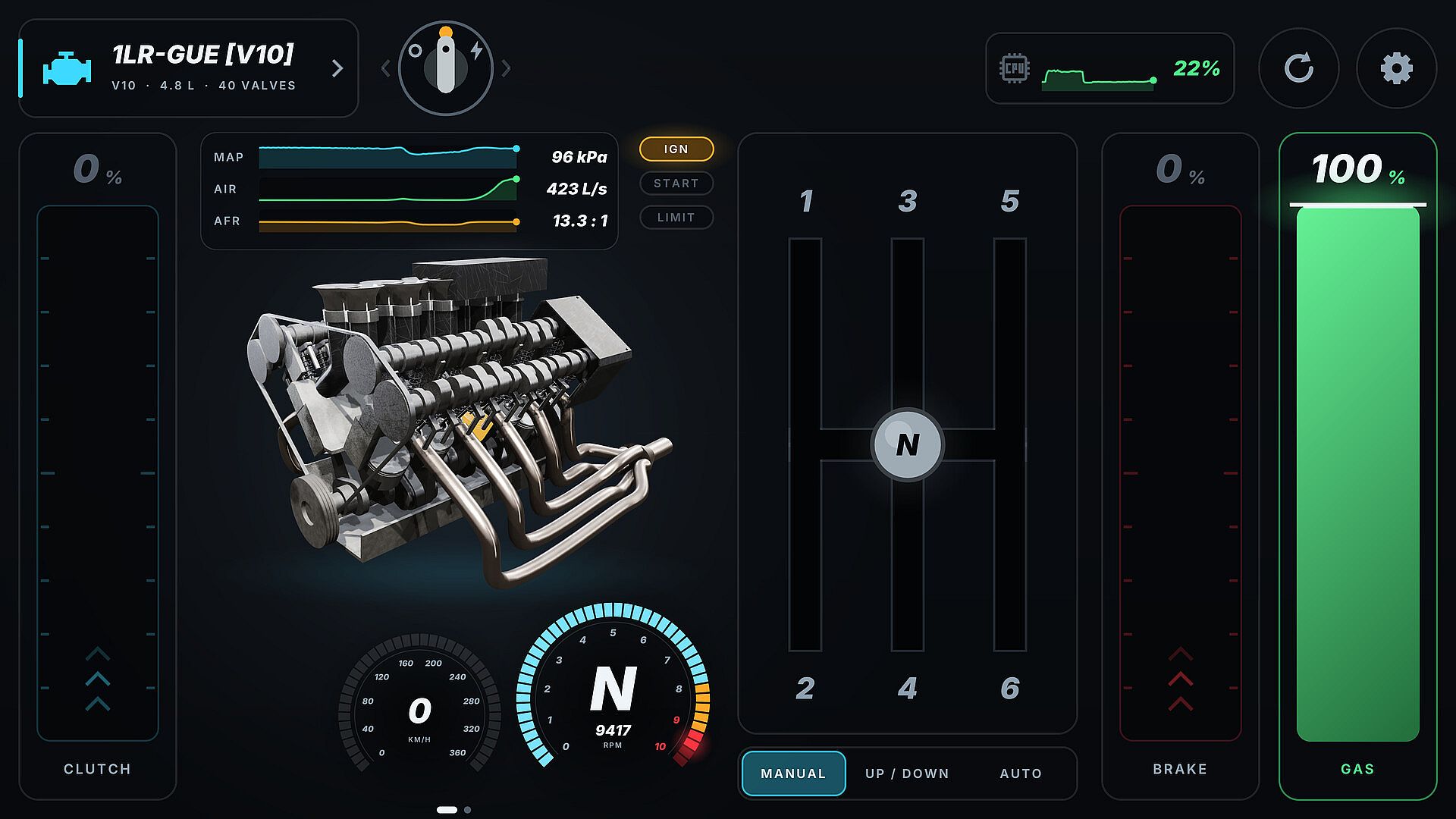
Revving: Engine Simulator is a free-to-play PC simulation game centered on realistic engine operation and driving. Players interact directly with detailed 3D engines that respond to controls in real time through computed physics rather than pre-recorded audio.
Gameplay
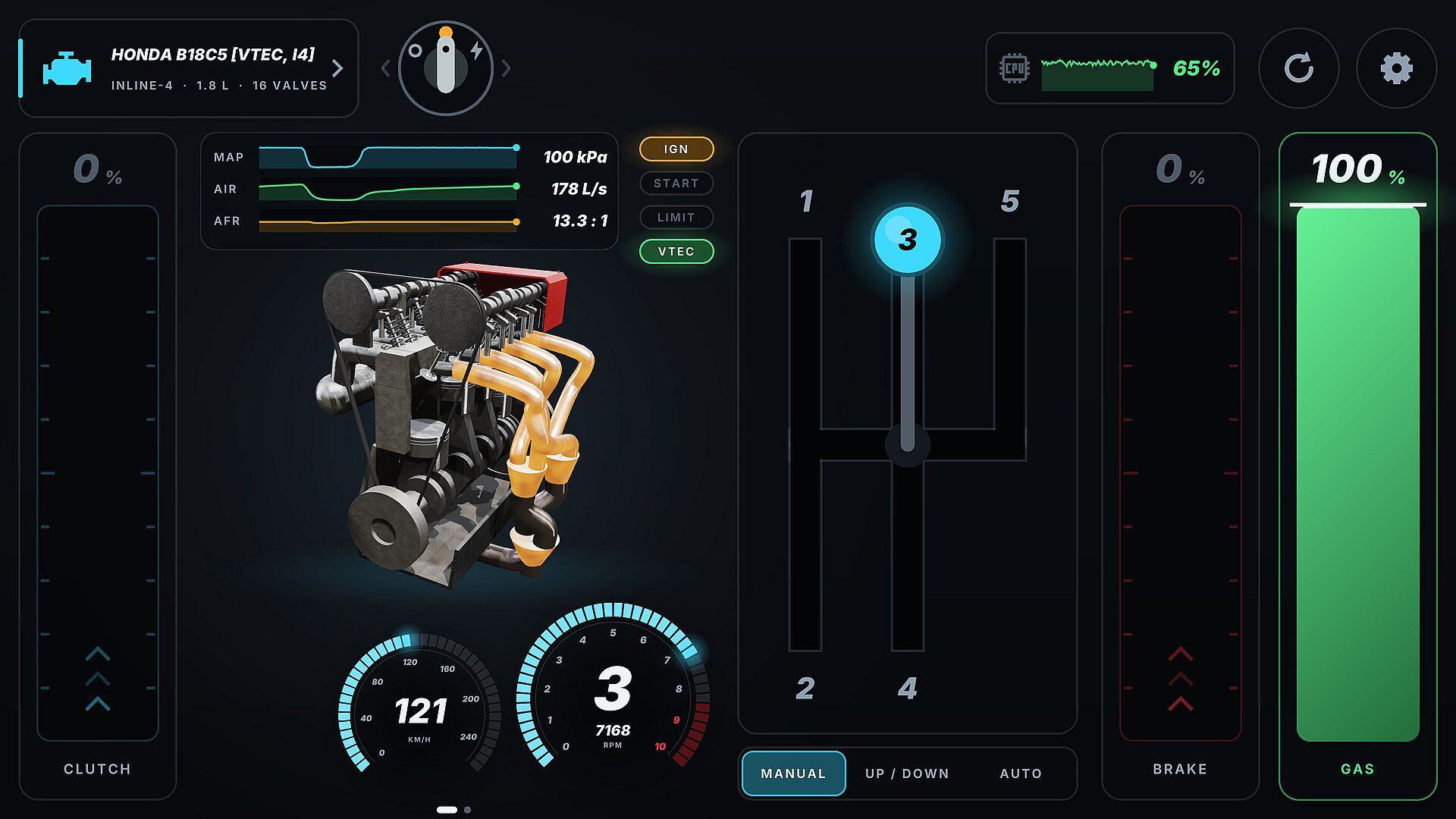
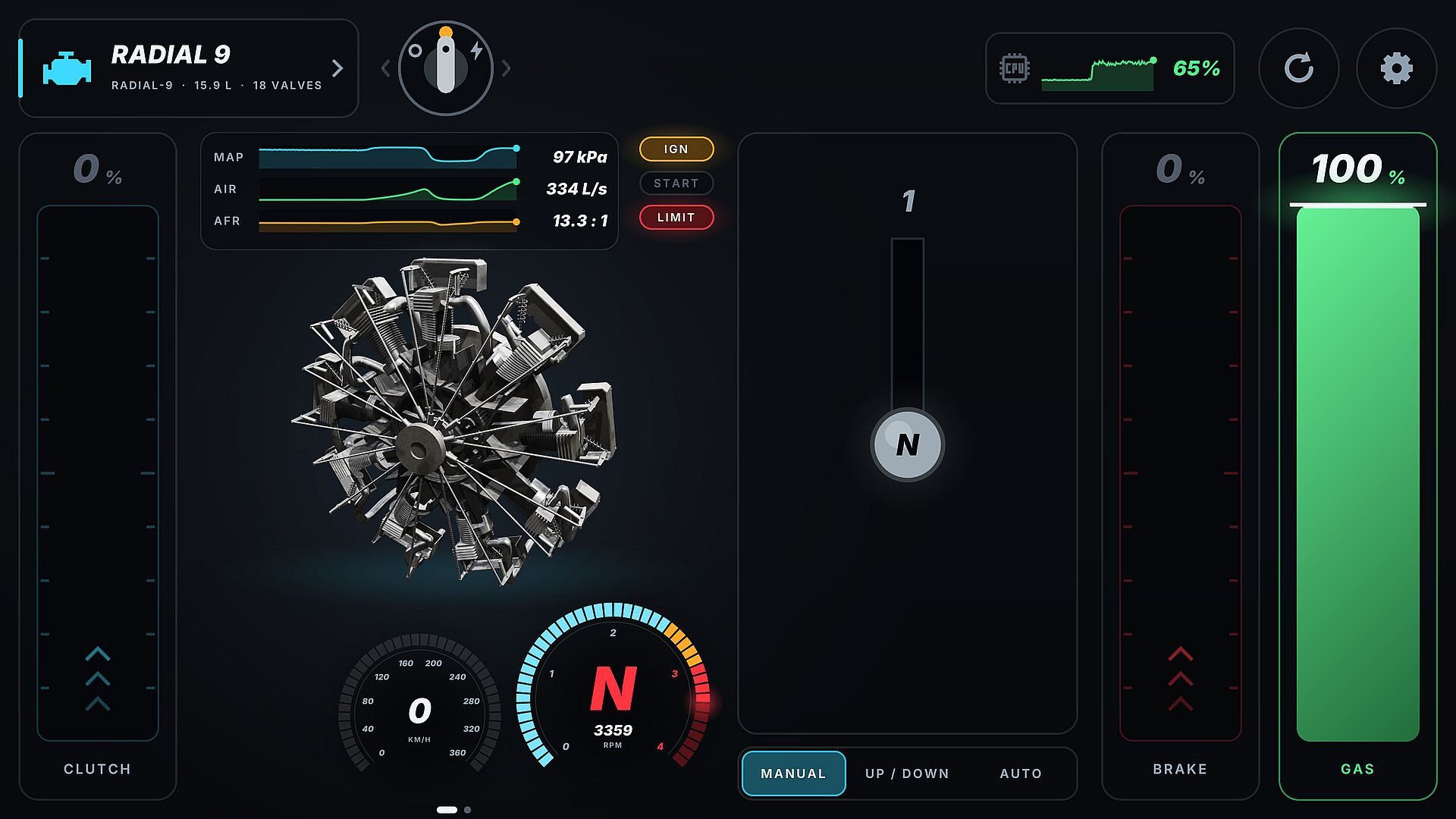
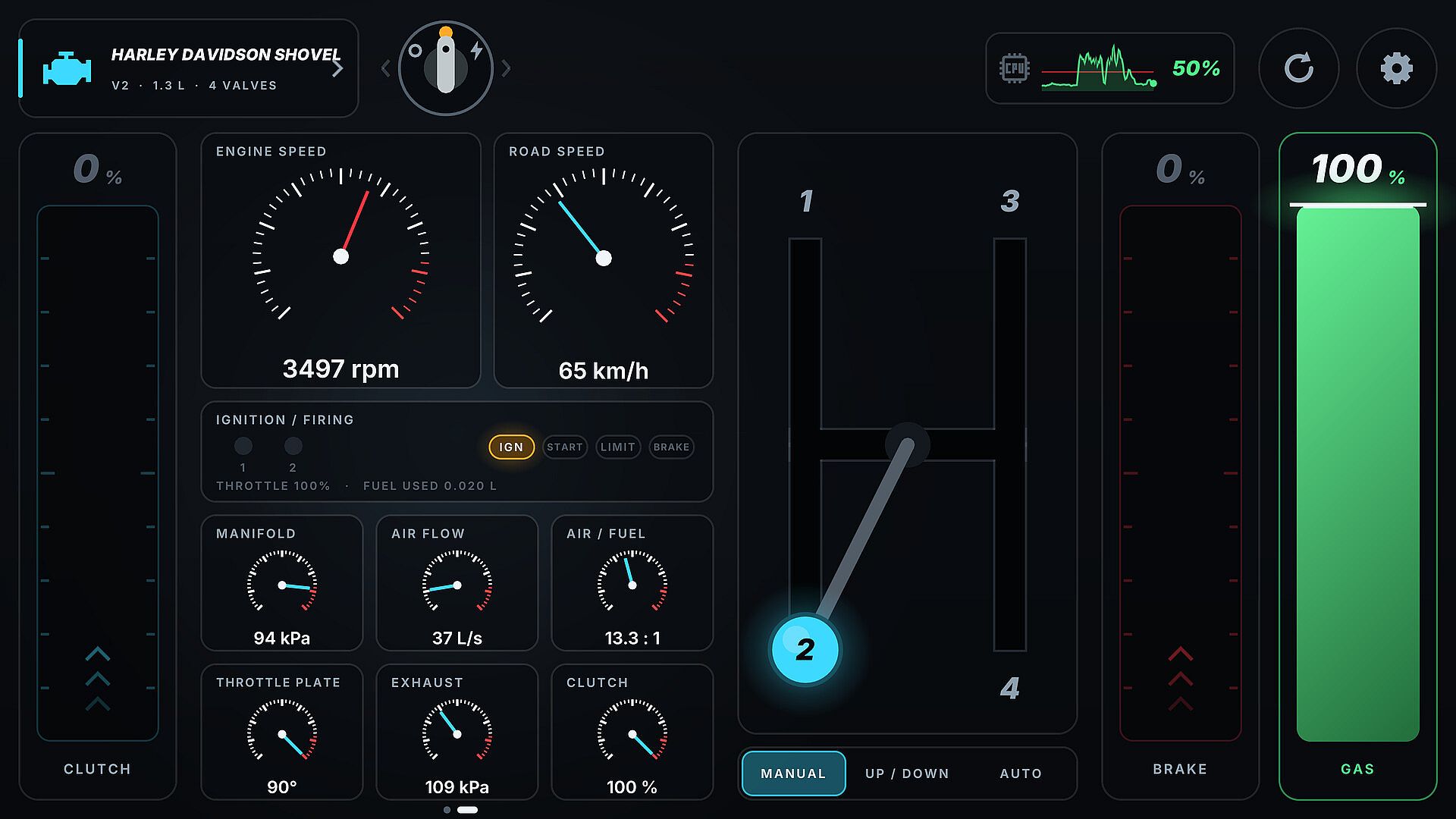
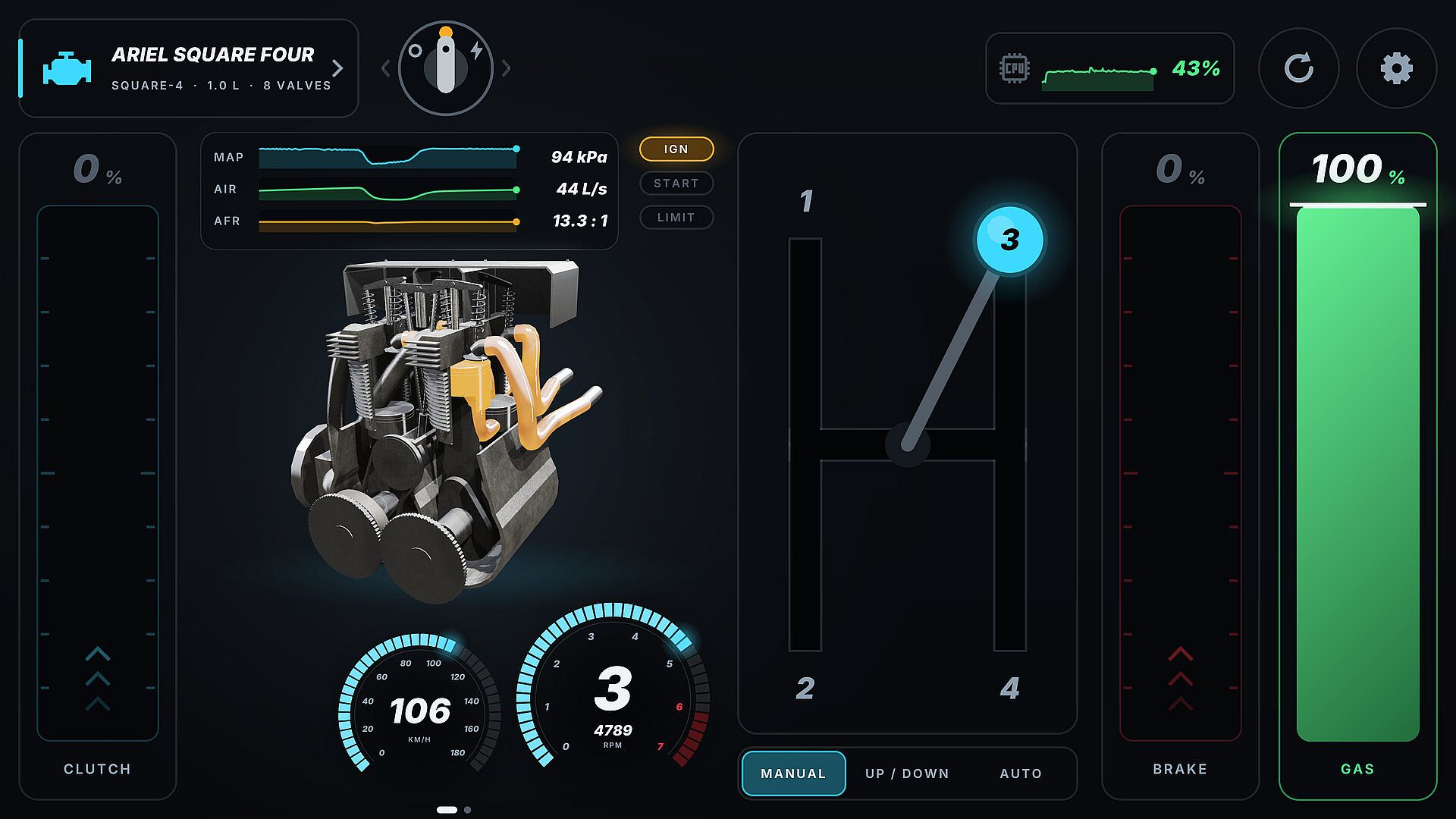
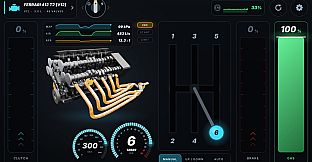
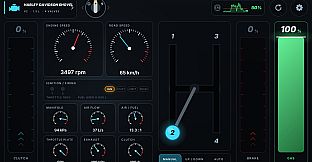
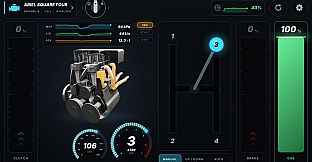
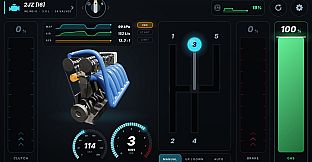
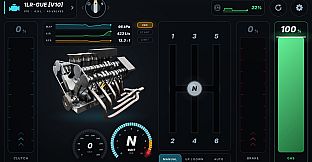
The core loop involves starting an engine with the ignition and starter, then managing throttle, clutch, brake, and gear selection to bring it up to operating speeds. Controls support keyboard and mouse or gamepad inputs, with analogue options for gas and brake. An H-pattern shifter requires clutch use to avoid grinding gears, while sequential or automatic options provide alternatives. The engine reacts to load, RPM, rev limiter engagement, and specific features like VTEC crossover.
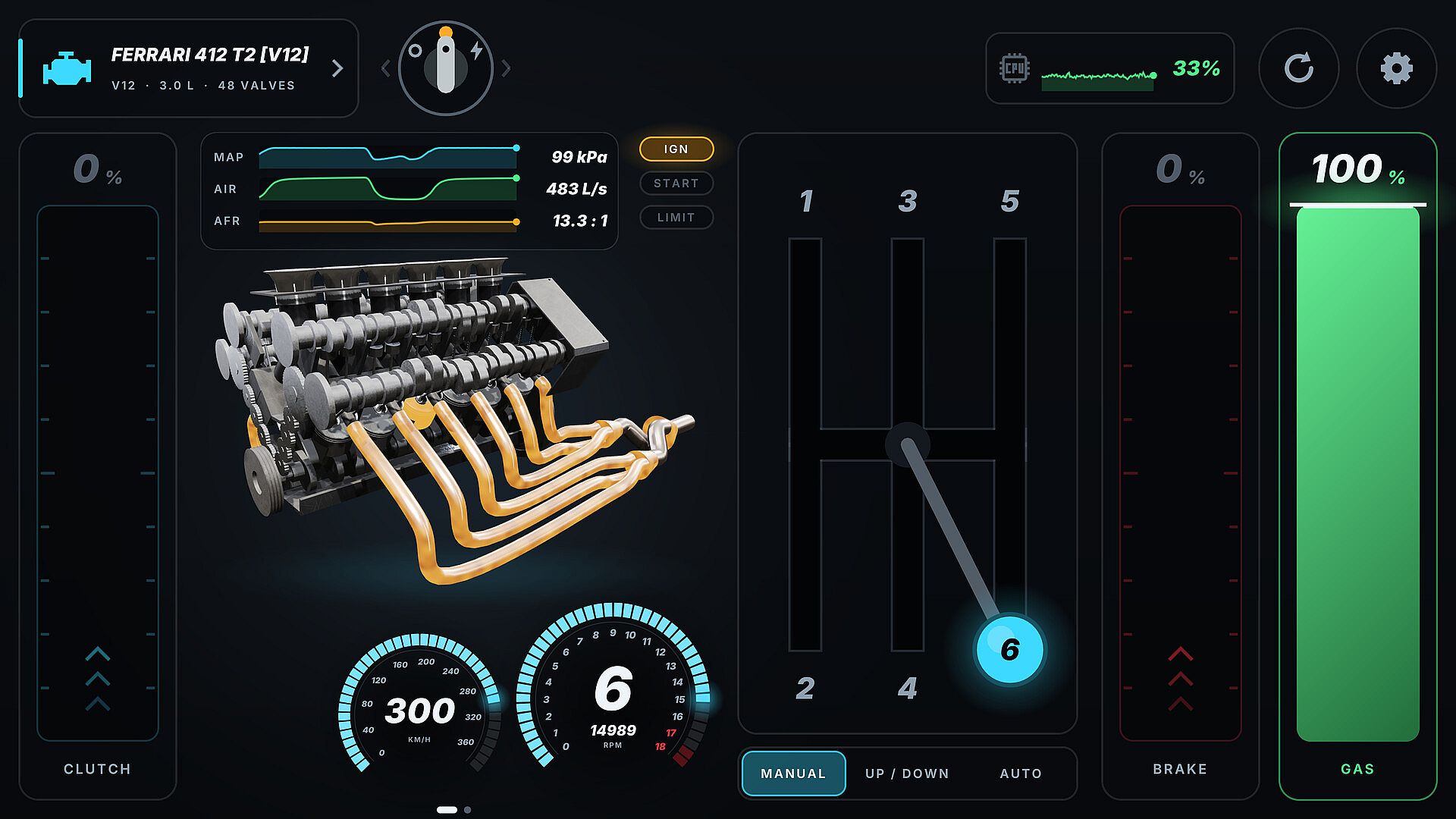
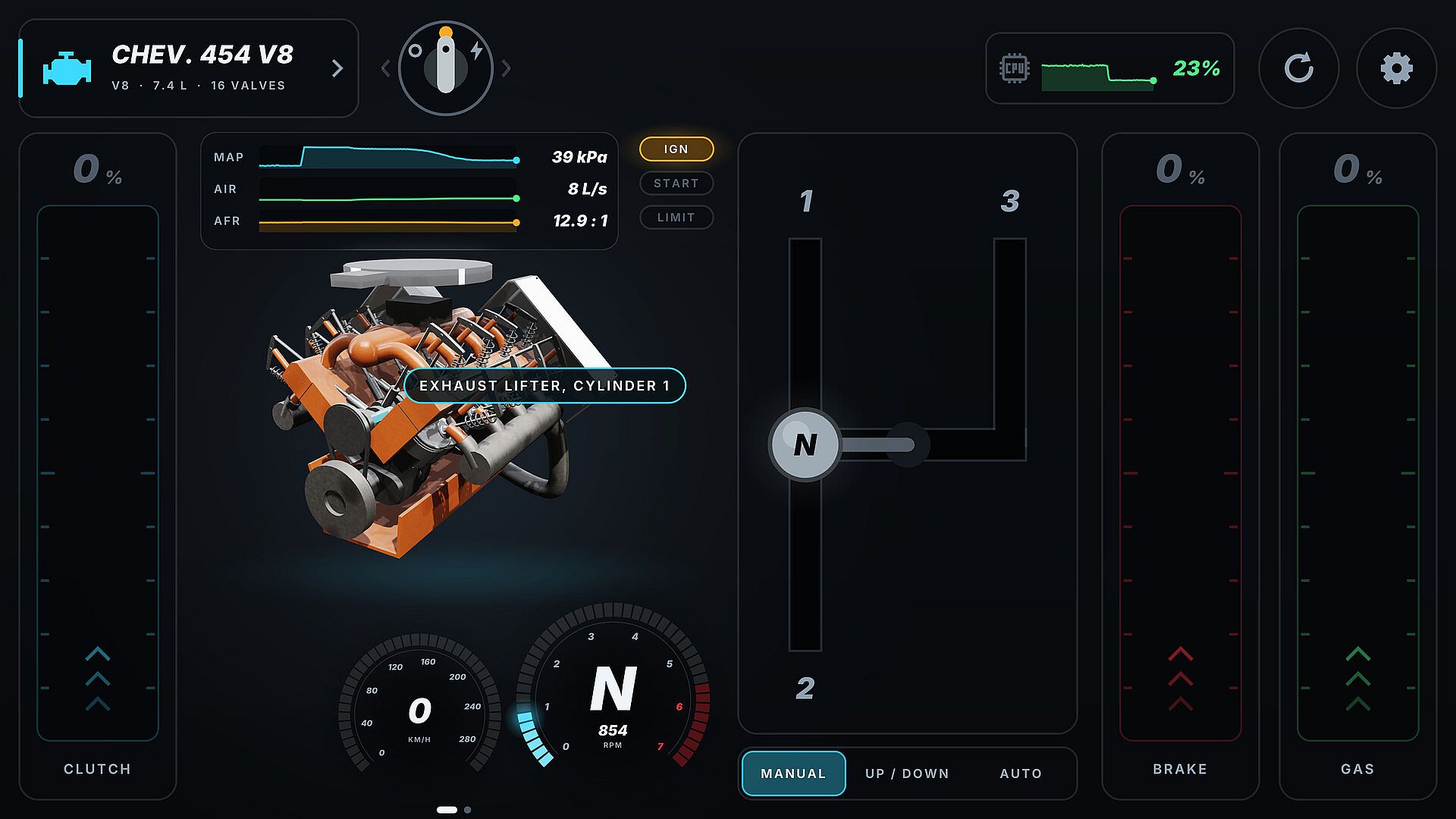
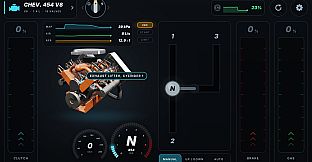
Visual feedback shows the engine components turning in sync with the sound output. Pistons, crankshaft, cams, valves, and headers move according to the simulation. Color coding highlights intake and exhaust flows. A HUD displays RPM with shift lights, vehicle-specific speedometer, manifold pressure, airflow, air-fuel ratio, and cylinder firing indicators. Players can point at parts for labels and monitor live data charts.
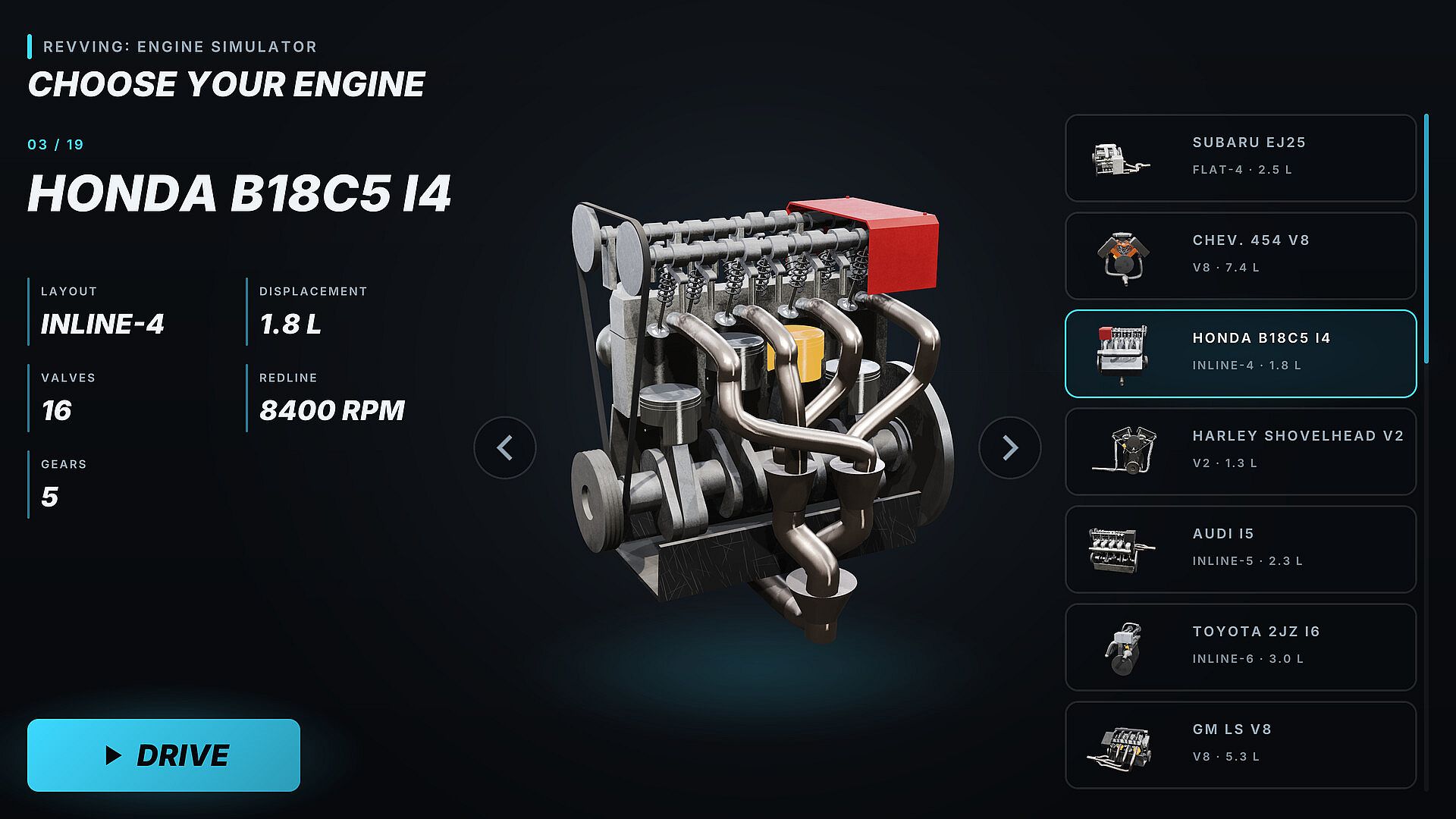
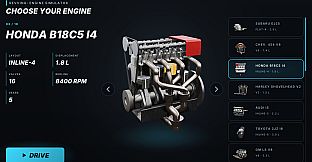
Each of the 19 engines matches its real-world vehicle application, including gearing, weight, aerodynamics, redline, and top speed. Free options include the Honda B18C5 inline-4 in an Integra Type R and the Chevrolet 454 big-block V8 in a 1978 C20 pickup. The simulation accounts for gas flow, fuel combustion, and exhaust pulses to generate sound that varies with every input.
Game Modes
Revving operates as a single-player experience without separate named modes. The focus remains on selecting and operating individual engines across their associated vehicles. Players switch between engines to compare behaviors, from high-revving units like the Ferrari F136 V8 or Lexus LFA V10 to unusual layouts such as the Napier Deltic or BRM H16.
Interaction centers on manual starting, shifting, and driving within the limits of each powerplant and chassis. Settings allow adjustment of audio simulation detail and graphics quality, with a load meter tracking CPU usage during higher-fidelity sound generation. Metric or imperial units and support for 75 languages accommodate different preferences.
Engines and Simulation Depth
The lineup spans inline, flat, V, radial, and exotic configurations drawn from cars, motorcycles, aircraft, and locomotives. Examples range from the Subaru EJ25 flat-4 and Toyota 2JZ inline-6 to the Rolls-Royce Vulture X24 and Junkers Jumo 205 opposed-piston diesel. Sound synthesis derives directly from exhaust pulses and mechanical events, changing with throttle position, gear, and RPM.
Graphics options scale from basic to detailed renderings that include worn metal textures, shadows, and smooth edges. The engine model updates in real time to match audible output, providing immediate visual confirmation of mechanical events like valve operation or flow patterns.
Is It Worth Playing?
Revving suits players interested in mechanical simulation and engine behavior without racing or combat elements. The free base content with two engines allows direct testing of the physics and audio systems before considering the DLC for additional options. Controls emphasize precise inputs that mirror real driving actions, including stalling or limiter hits.
Headphones enhance the synthesized audio detail. The game runs on modest hardware with scalable settings, making it accessible for focused sessions exploring different powerplants. As a coming-soon title with no published reviews yet, its appeal rests on the described real-time simulation approach for enthusiasts of automotive and mechanical detail.