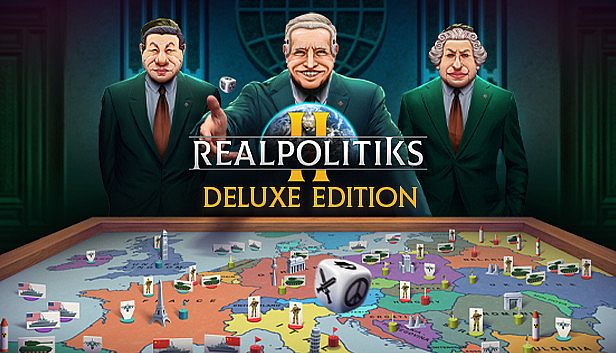


















Realpolitiks II is a grand strategy simulation game set in the modern world. Players take control of any nation and guide it through economic management, diplomatic negotiations, military actions, and internal development across a detailed geopolitical map.
Gameplay
The core loop centers on balancing multiple interconnected systems to advance a chosen country. An expanded economic framework allows construction of buildings, setting of trade policies, and deployment of advisor abilities to boost production and stability. Over 700 projects and technologies provide long-term progression options that influence infrastructure, research, and national capabilities.
Diplomacy receives significant attention through reworked artificial intelligence and new favor and investment mechanics. These tools help influence other nations without direct confrontation. Espionage adds another layer for covert operations that can shift alliances or gather critical intelligence. A redesigned combat system brings direct unit control on the battlefield, factoring in variables such as weather, terrain, and equipment quality. Naval combat extends this control to sea provinces, making maritime dominance a viable path to broader influence.
More than 1000 events introduce unpredictable developments ranging from local provincial issues to global threats. These occurrences require timely decisions that affect ongoing strategies. The overall experience emphasizes methodical planning over rapid action, rewarding sustained attention to detail across economic, political, and military fronts.
Game Modes
Three distinct starting scenarios alter the initial conditions and objectives, providing variety in how campaigns unfold. Each scenario presents different geopolitical challenges that encourage repeated playthroughs with new nations or adjusted priorities.
Beyond structured scenarios, the game supports open-ended sandbox sessions where players pursue custom goals without fixed endpoints. This flexibility lets users experiment with various nation choices and long-term strategies at their own pace. The single-player focus keeps attention on individual decision-making rather than competitive elements.
Core Mechanics and Systems
Management extends to cabinet selection and advisor oversight, which directly impact policy effectiveness. Infrastructure development ties into technology unlocks, creating chains of improvements that strengthen a nation's position over time. Events interact with these systems, sometimes forcing trade-offs between short-term gains and long-term stability.
The interface organizes these elements into accessible menus, though the volume of options demands familiarity. Performance remains stable on supported hardware, allowing uninterrupted sessions focused on strategic depth rather than technical interruptions.
Is It Worth Playing?
Realpolitiks II appeals most to enthusiasts of grand strategy simulations who enjoy detailed country management and have substantial time available for learning its systems. The modern setting and emphasis on diplomacy alongside combat offer a focused alternative to broader historical titles.
Reception highlights the depth of its sandbox elements and replay value through multiple scenarios, while noting a steep learning curve and occasional interface complexities. Recent patches have addressed earlier stability concerns, supporting continued play on PC. Those drawn to methodical political and economic simulation will find meaningful engagement, whereas players seeking quicker sessions or extensive guidance may encounter frustration. The game suits dedicated strategy fans comfortable with self-directed exploration of its mechanics.