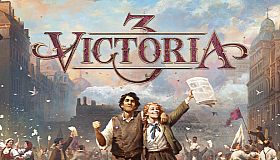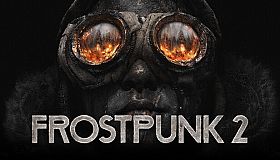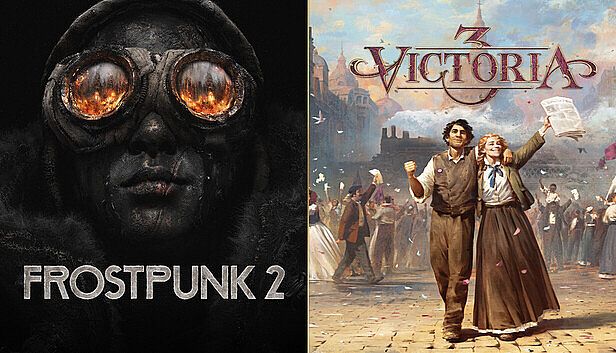


Frostpunk 2 x Victoria 3 brings together two distinct strategy and simulation experiences on PC. One centers on guiding a city through extreme environmental hardship and internal divisions. The other focuses on steering a nation through economic and political transformations in a historical setting. Together they provide complementary approaches to managing resources, populations, and competing interests over extended play sessions.
Gameplay
The first title emphasizes district-based construction in a large-scale urban environment. Players allocate space for housing, production, and support structures while monitoring heat distribution and supply chains. Political tensions arise through council interactions where different groups push for laws that affect daily operations and long-term stability. Resource scarcity forces ongoing adjustments to priorities as the city expands.
The second title operates at a national level with systems for tracking population needs, trade networks, and legislative changes. Players balance economic output against social demands while responding to events that shift power dynamics among interest groups. Expansion decisions influence diplomatic relations and internal cohesion across multiple regions.
Both titles share a core loop of planning infrastructure, responding to shortages or unrest, and making choices that carry consequences for future turns. Progress comes from iterative refinement rather than rapid conquest, rewarding careful observation of feedback from the simulation systems.
Game Modes
Story-driven campaigns present structured sequences of challenges that introduce core mechanics gradually. These sequences highlight narrative elements tied to leadership decisions and societal outcomes.
Open-ended sandbox options allow players to set custom parameters for starting conditions and objectives. These modes support longer sessions focused on experimentation with different policy combinations and expansion strategies without a fixed endpoint.
Additional scenarios or challenges appear through post-release content that layers new constraints or goals onto existing systems. These keep the simulation fresh by altering resource availability or introducing new faction behaviors.
Core Mechanics and Systems
Population management forms a central pillar in both experiences. Needs such as shelter, sustenance, and stability must be met while accounting for growth or decline based on prior choices. Laws and regulations serve as tools to steer behavior, though each carries trade-offs that ripple through the simulation.
Resource flows require constant attention. Production chains link raw materials to finished goods, and disruptions in one area quickly affect others. Players learn to build redundancy and adapt layouts as demands evolve.
Faction or interest group interactions add depth through negotiation and compromise. Supporting one group often strains relations with another, creating ongoing tension that influences available options and city or nation health metrics.
Is It Worth Playing?
This bundle suits players who enjoy deliberate, systems-driven strategy where outcomes depend on sustained attention to interconnected mechanics. Those drawn to city-scale survival challenges will find one title rewarding, while fans of broader political and economic modeling will engage with the other. The combination offers variety within the same overarching genre without requiring separate purchases.
Both games receive ongoing support through updates that refine balance and add content. Availability on PC ensures access to community tools and modifications where applicable. The package appeals most to those comfortable with long-term planning and willing to learn layered interfaces rather than seeking immediate action or simplified controls.
Reception centers on the depth of simulation and the weight of decisions, though some note the learning curve involved in mastering the full range of systems. For players matching that preference, the bundle delivers substantial playtime across two complementary titles.