











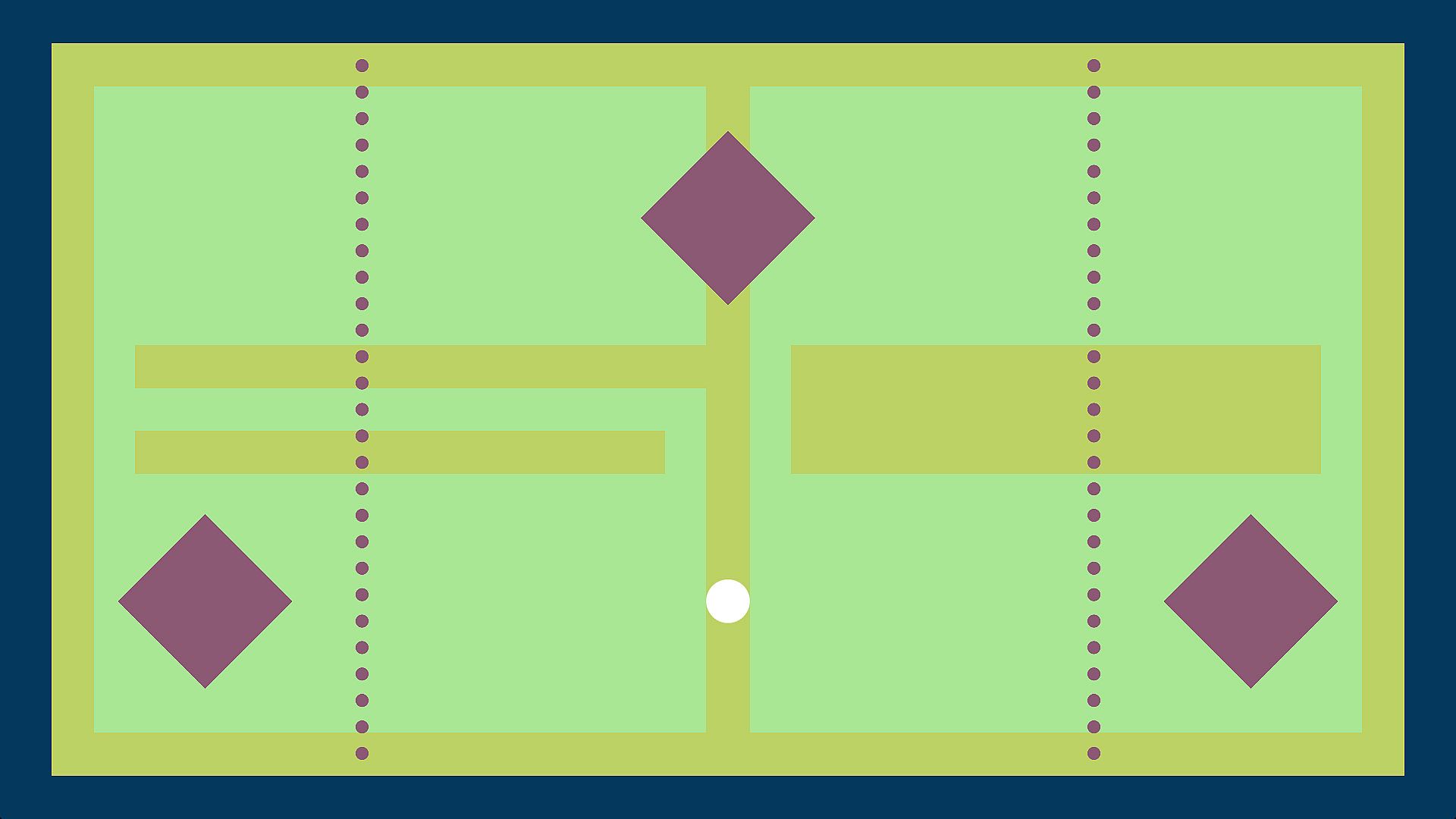
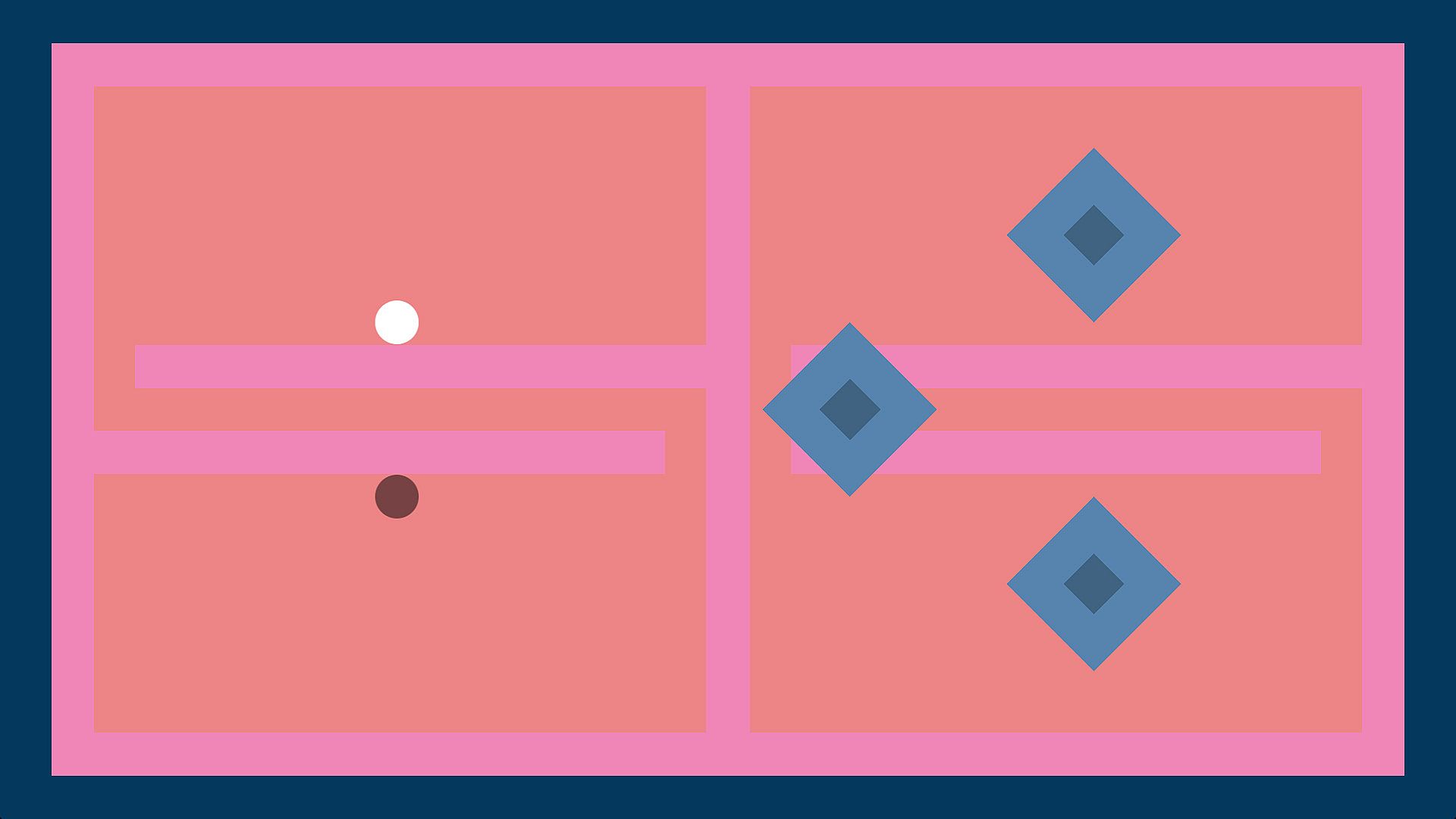
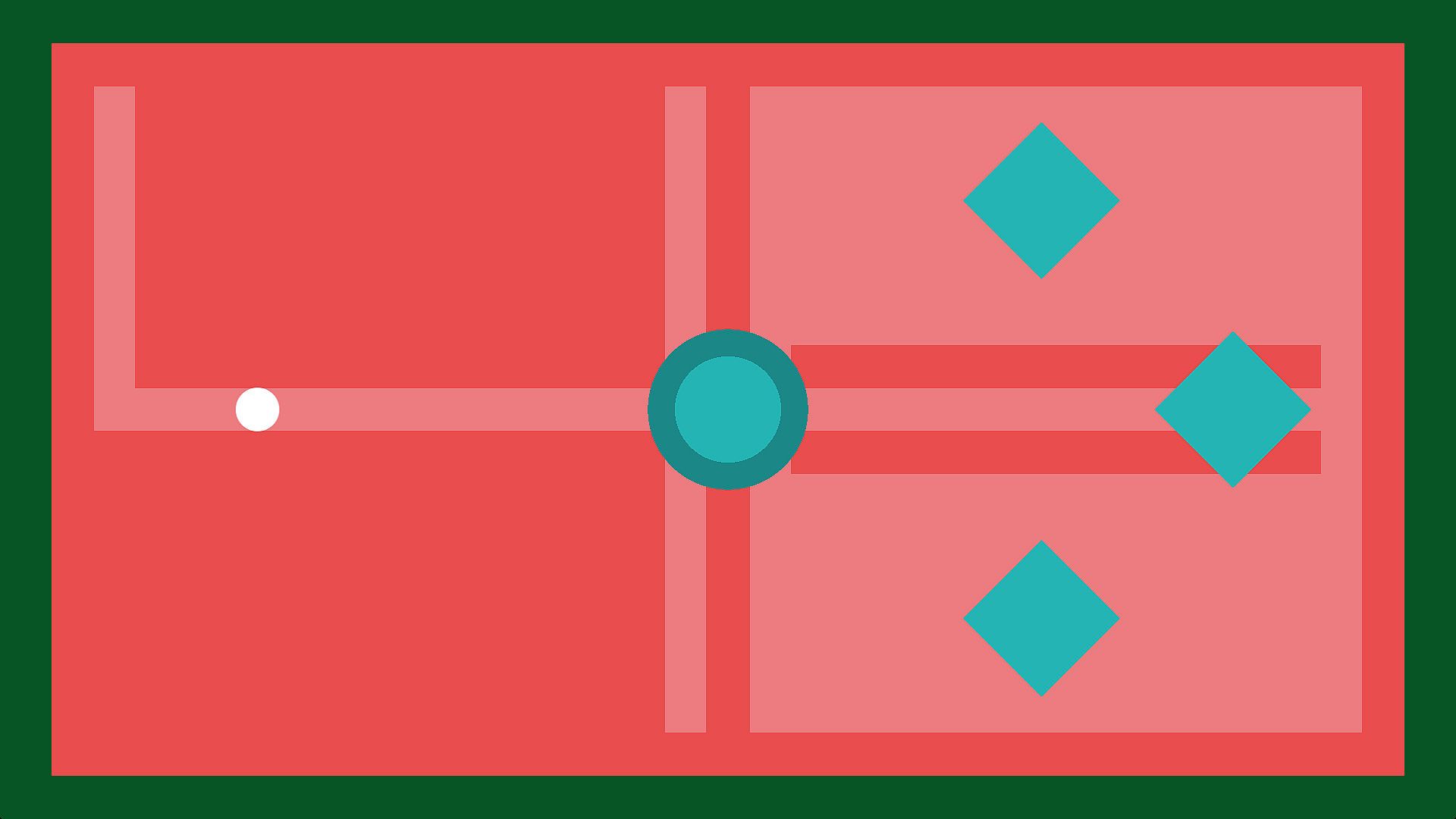
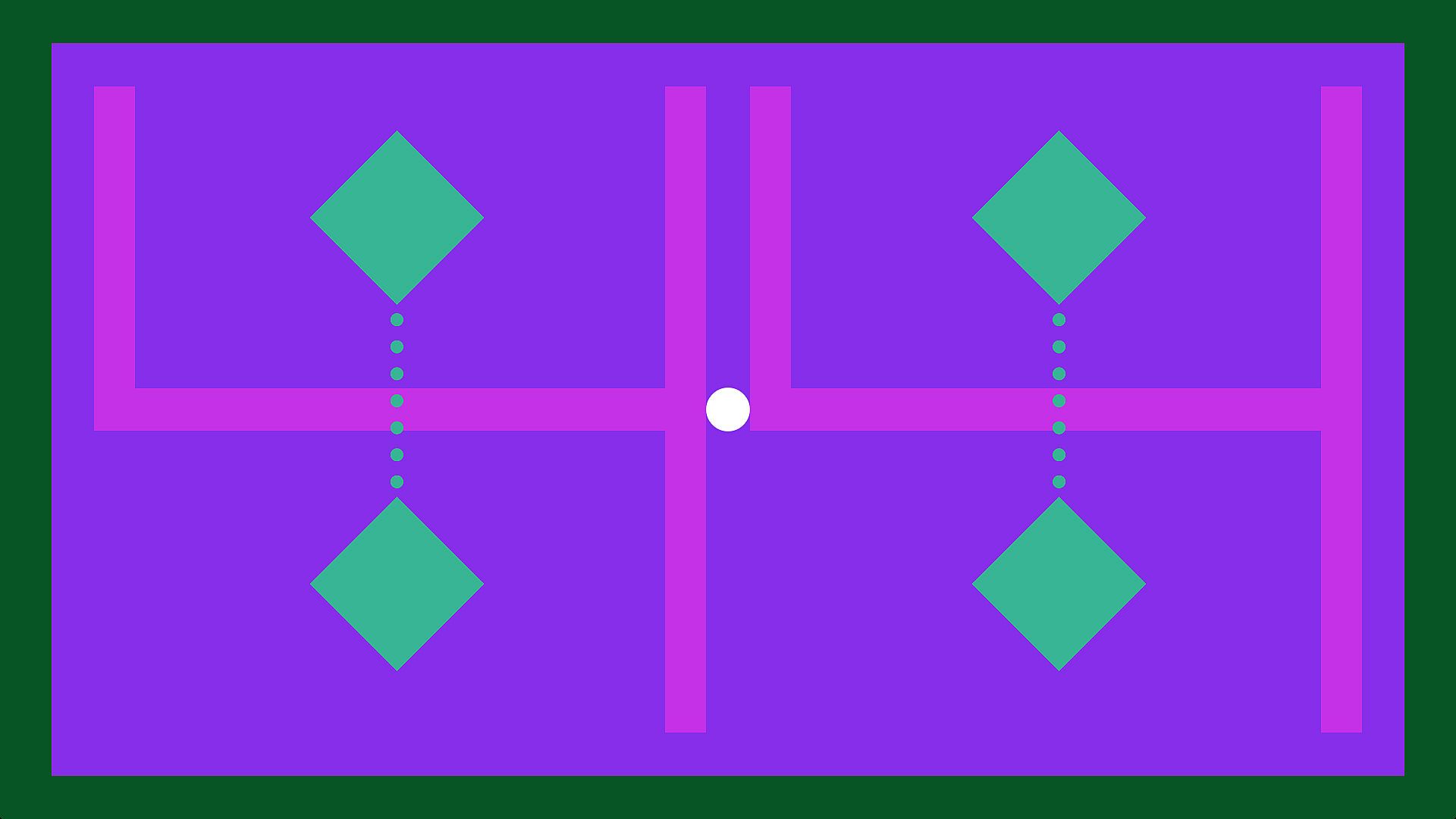
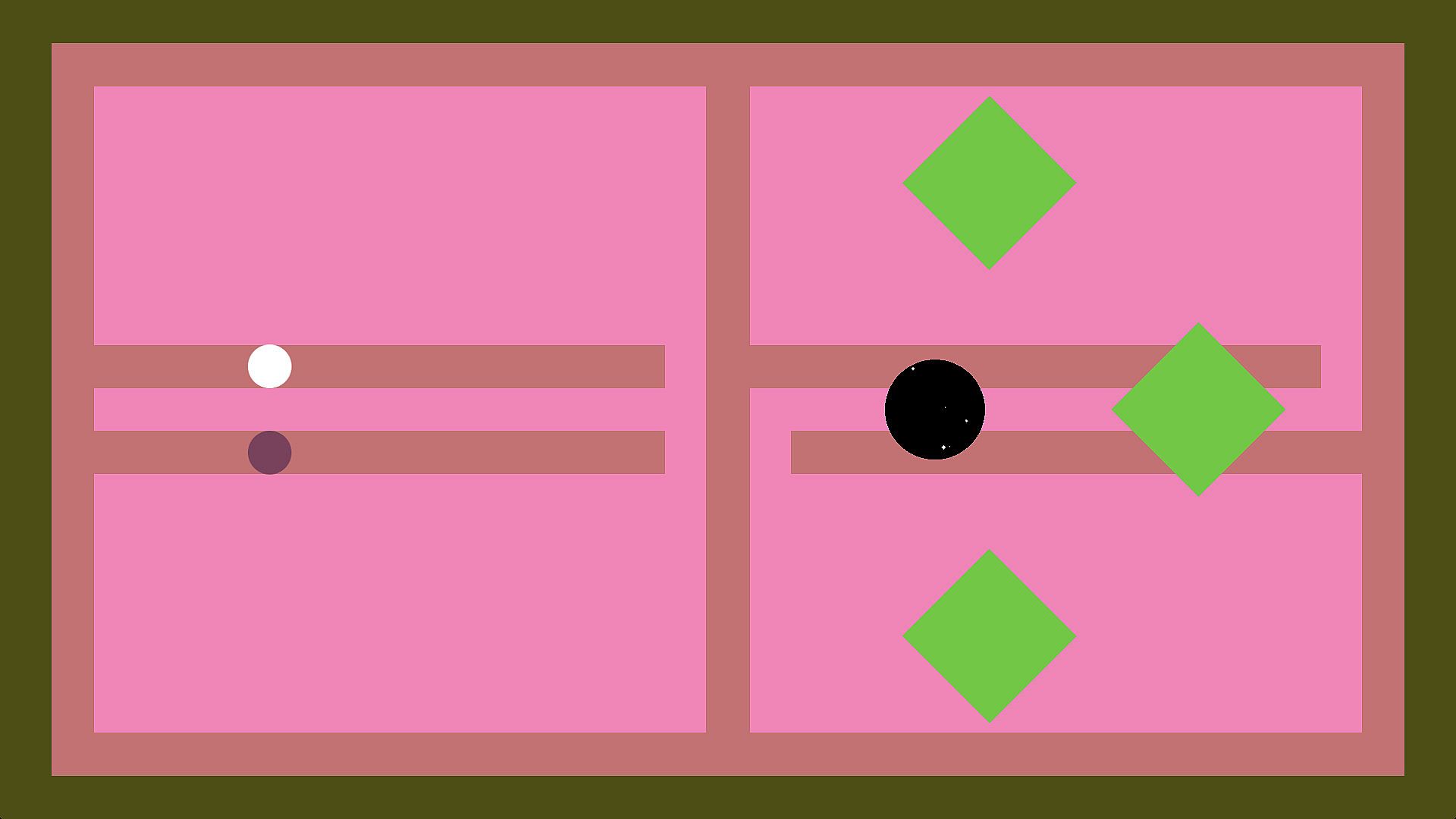
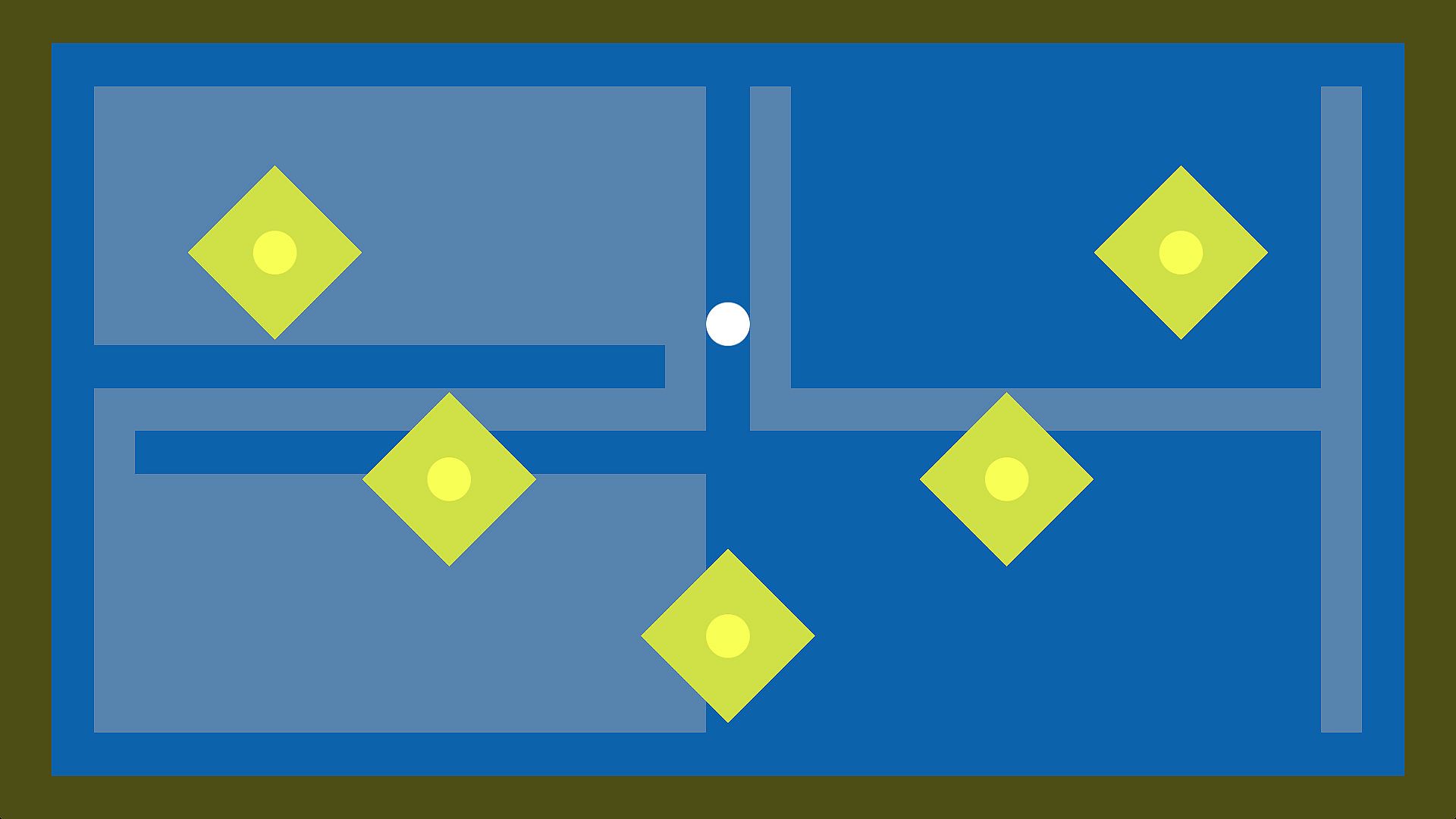
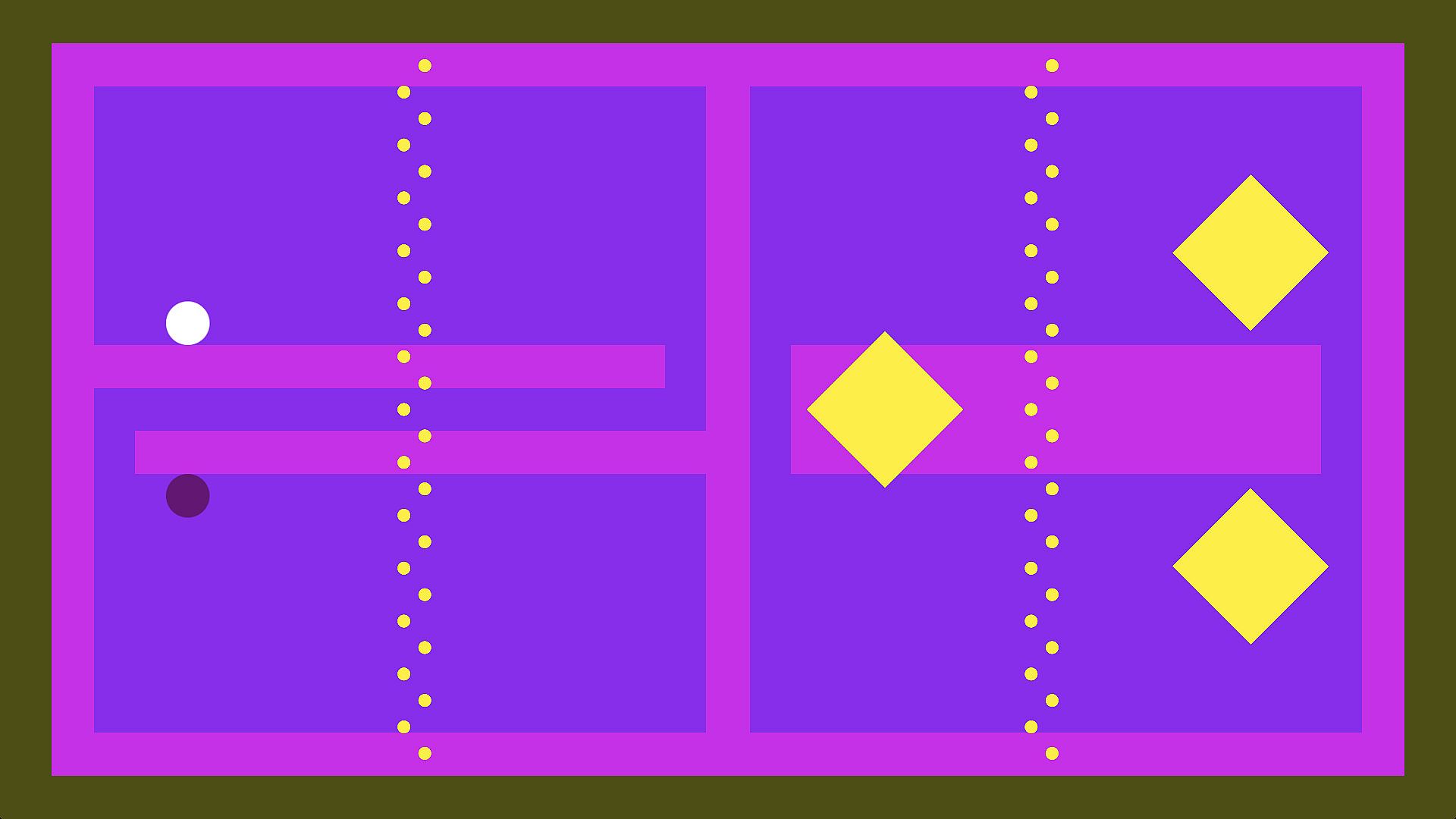
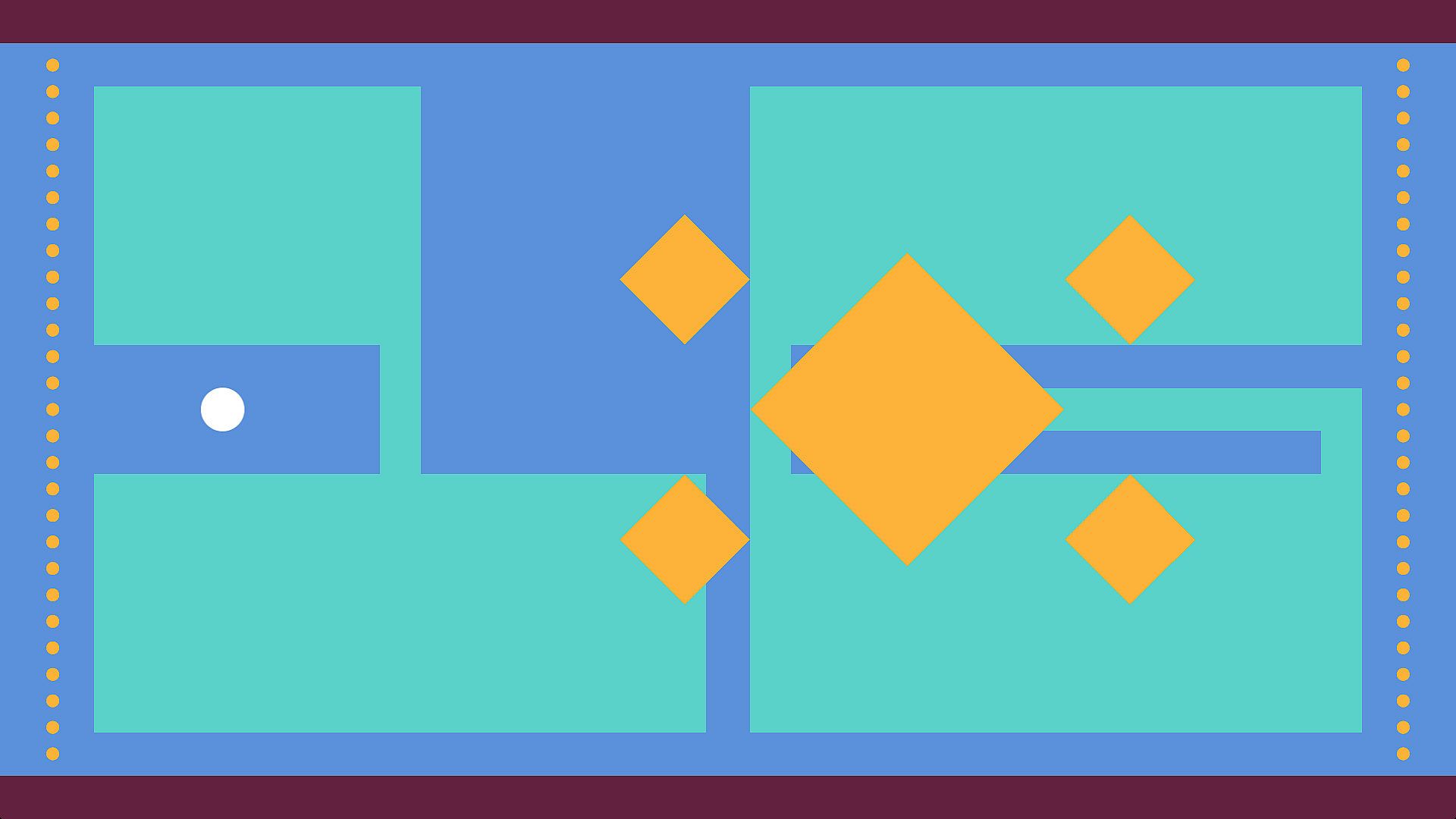
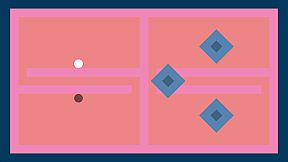
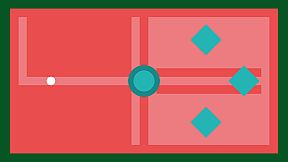
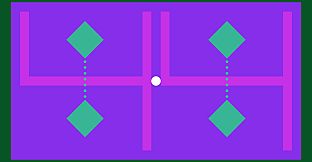
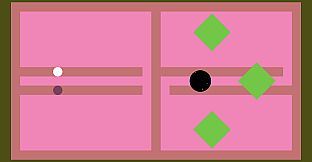
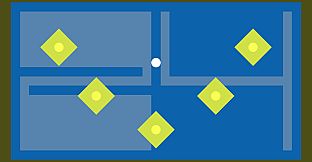
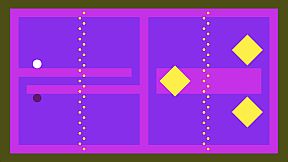
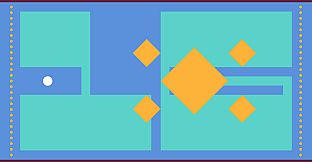
THOTH is a twin-stick shooter developed for PC that blends fast-paced shooting with deliberate puzzle elements. Created by Jeppe Carlsen, the former lead gameplay designer at Playdead, the game strips the genre down to its essentials while introducing handcrafted stages that demand both precision and strategic thinking. Players control a simple avatar through abstract arenas filled with geometric shapes, where success depends on eliminating threats without becoming trapped by their transformed remnants.
Gameplay
The core loop centers on clearing every enemy from each handcrafted stage. Shooting an opponent causes it to dissolve into a ghostly void that immediately begins pursuing the player. This transformation turns every successful shot into a new hazard, forcing constant movement and careful positioning to avoid collisions while continuing to fire. Movement slows when shooting, which adds tension and encourages players to plan firing angles rather than relying on constant motion.
Levels introduce new enemy types and mechanics in groups of four, building complexity gradually. Early stages focus on basic dodging and targeting, while later ones layer in obstacles and patterns that require timing shots around void paths. The minimalist design leaves no on-screen text or tutorials, so players learn rules through direct experimentation within each arena. This approach rewards observation and adaptation over raw reflexes alone.
Positioning becomes critical because voids inherit momentum and pursue relentlessly. Players must navigate tight spaces, use the arena edges strategically, and time bursts of fire to clear clusters without creating inescapable pursuit patterns. The result is a gameplay loop that alternates between aggressive clearing and defensive maneuvering, often within the same stage.
Game Modes
THOTH supports single-player sessions where one person manages all threats and voids independently. The experience emphasizes personal mastery of each stage's unique layout and enemy behaviors.
Cooperative play allows two players to tackle stages together on the same screen. When one player is eliminated, that character transforms into an additional void that hunts the remaining survivor. This mechanic turns co-op into a high-stakes partnership where communication and complementary positioning help manage the growing number of pursuers. Local co-op remains the only multiplayer option, keeping the focus on shared screen coordination rather than online matchmaking.
Level Design and Progression
Stages are divided into sets that introduce fresh mechanics while reusing core principles. Each set builds on previous knowledge, presenting variations that test how well players have internalized earlier patterns. The total campaign spans dozens of these handcrafted arenas, culminating in increasingly intricate combinations of shooting, dodging, and void management.
Progression feels deliberate rather than linear. Completing a set unlocks the next group, but many players revisit earlier stages to refine routes or attempt cleaner clears. The absence of procedural generation ensures every layout has been tuned for specific challenges, creating consistent yet escalating demands on spatial awareness and reaction timing.
Aesthetics and Atmosphere
Visuals rely on bold colors, repeating shapes, and shifting patterns against minimal backgrounds. A large numeral often dominates the scene, reinforcing the abstract, almost mathematical quality of each arena. The soundtrack pairs electronic compositions with the action, creating an intense auditory layer that matches the relentless pace without overpowering the focus on visual cues.
This stripped-back presentation removes distractions, directing attention entirely toward enemy movements and void trajectories. The result is an environment that can induce a focused, almost meditative state during extended play sessions as patterns become familiar yet remain demanding.
Is It Worth Playing?
THOTH delivers a complete, self-contained experience for players who enjoy twin-stick shooters that prioritize precision and puzzle-like problem solving over power-ups or narrative elements. Its handcrafted stages and co-op twist provide meaningful replay value, especially for those who appreciate mastering tight mechanics in short, intense bursts.
The game suits fans of abstract action titles that reward experimentation and spatial reasoning. Those seeking ongoing updates or expansive content may find the fixed 2016 release sufficient for its focused scope, while newcomers to the genre can use its deliberate difficulty curve to build skills. Overall, the combination of challenging single-player runs and cooperative tension makes it a strong choice for anyone drawn to intense, minimalist twin-stick gameplay on PC.