


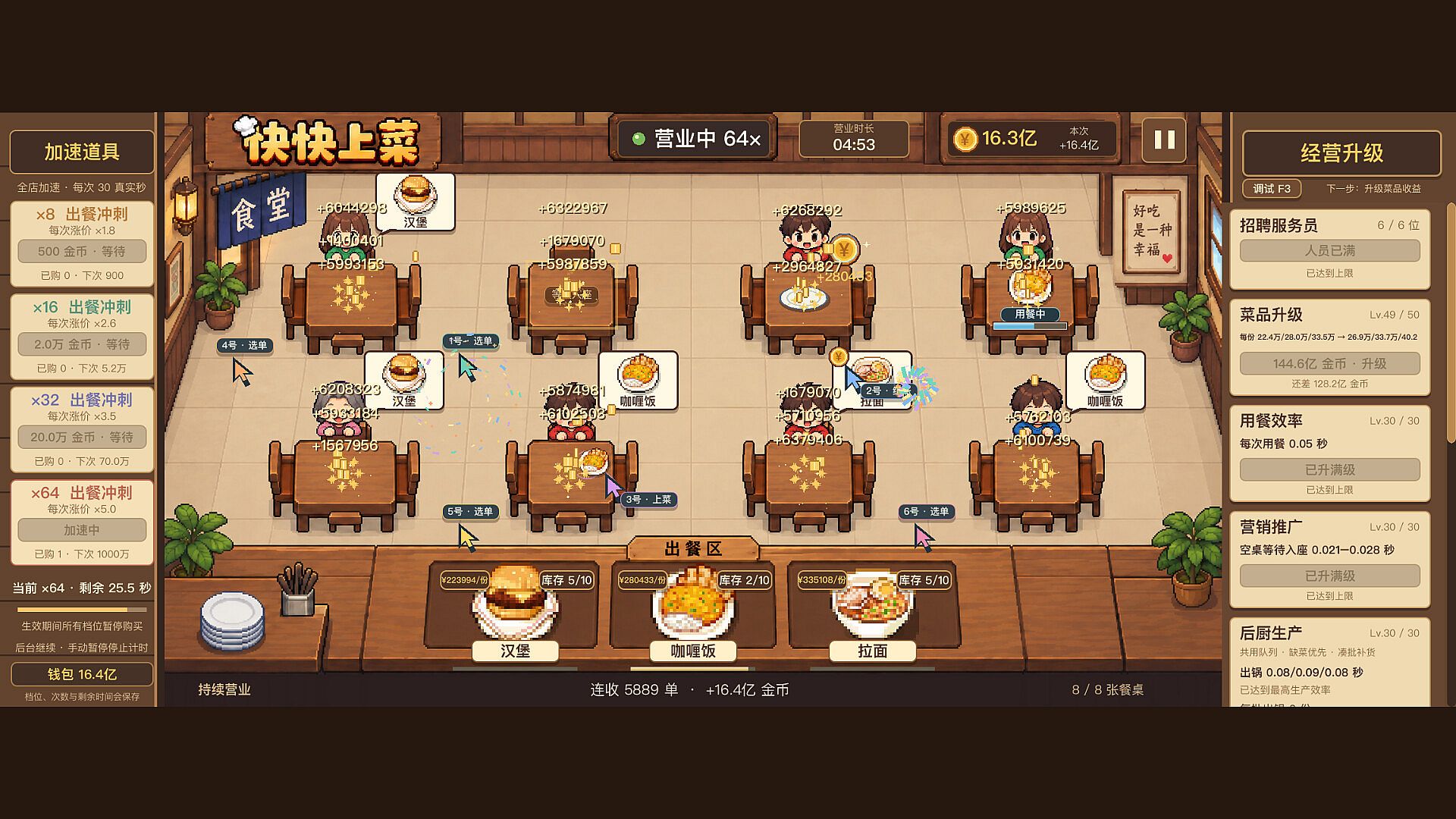
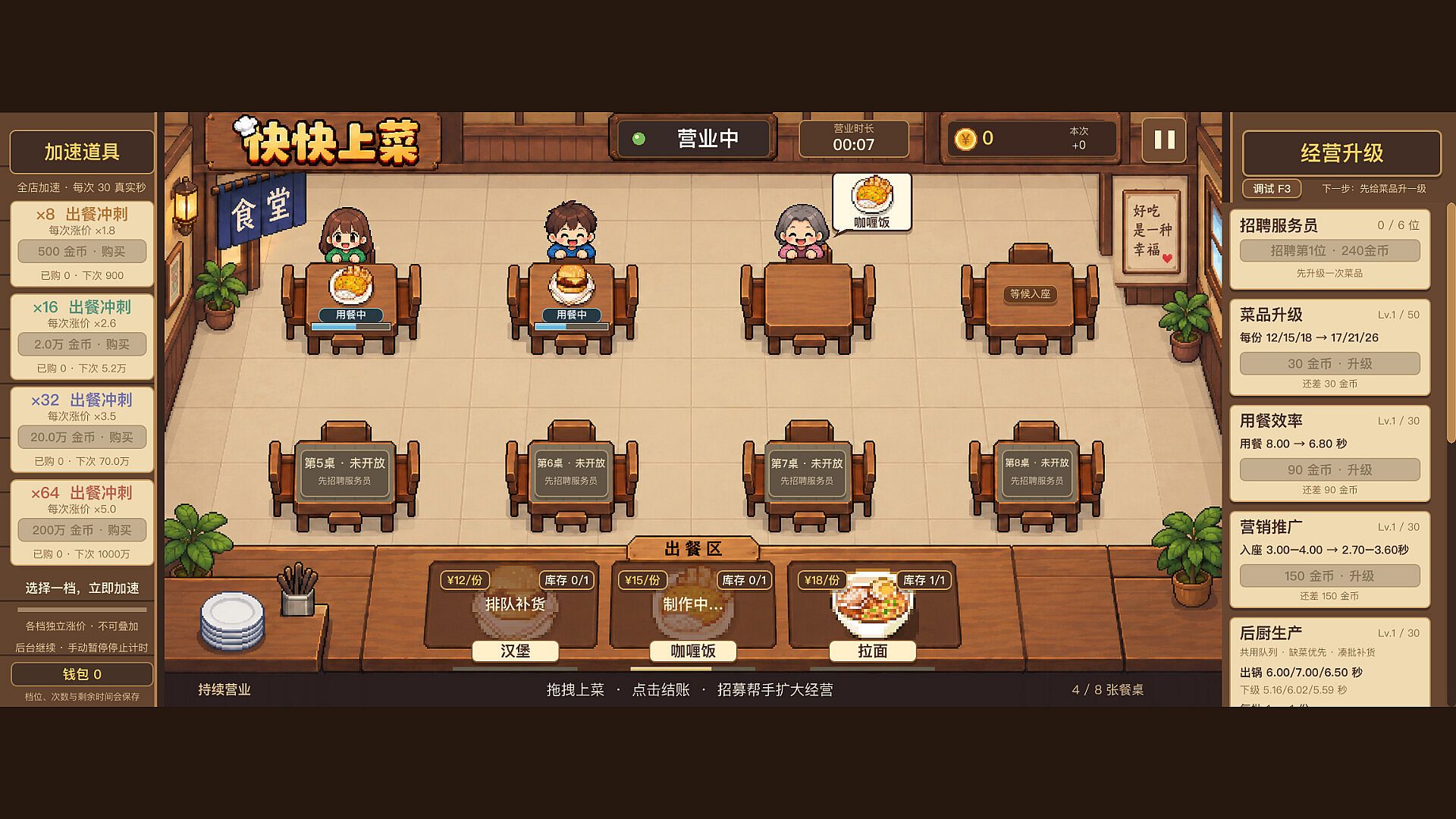
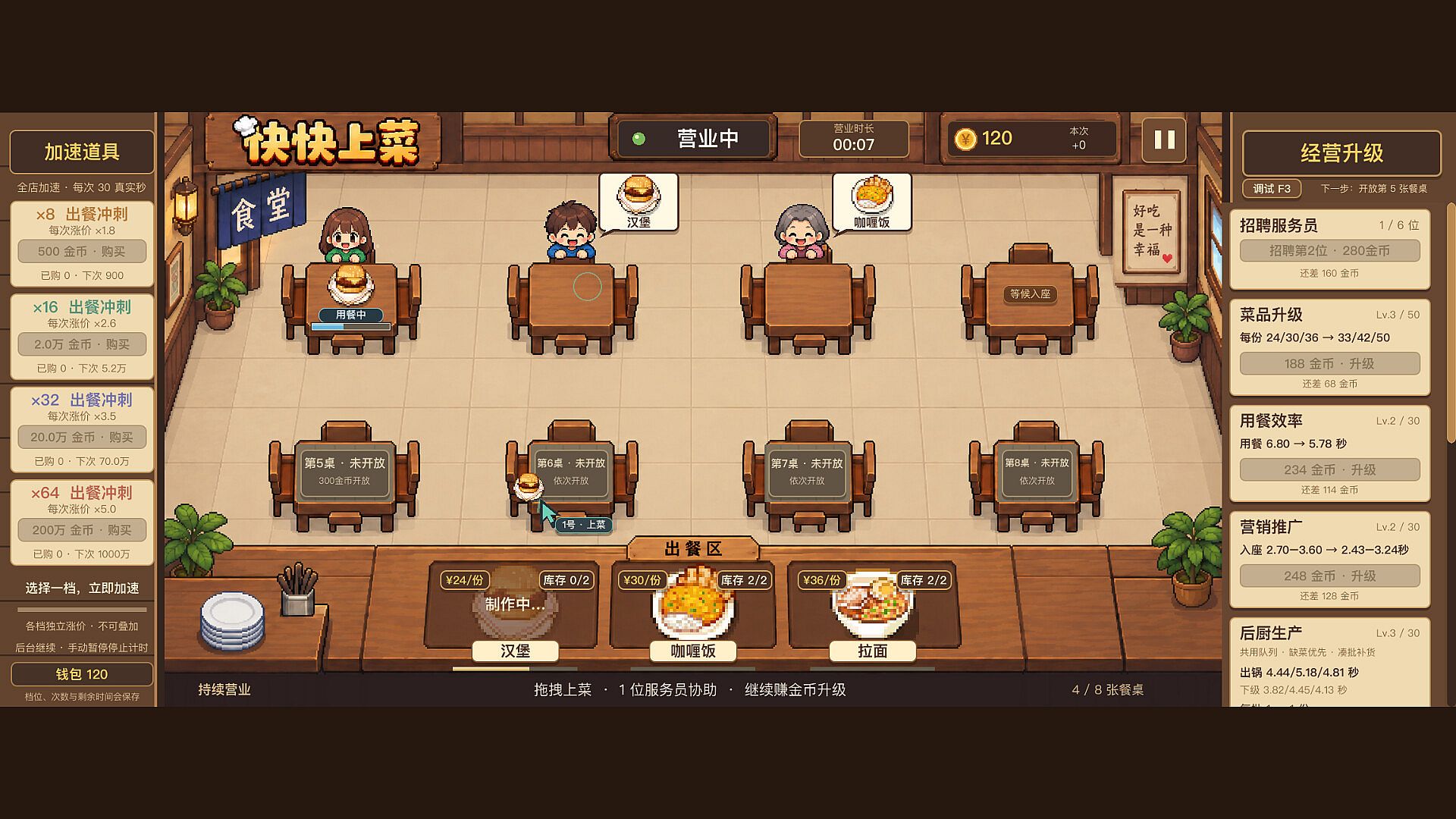
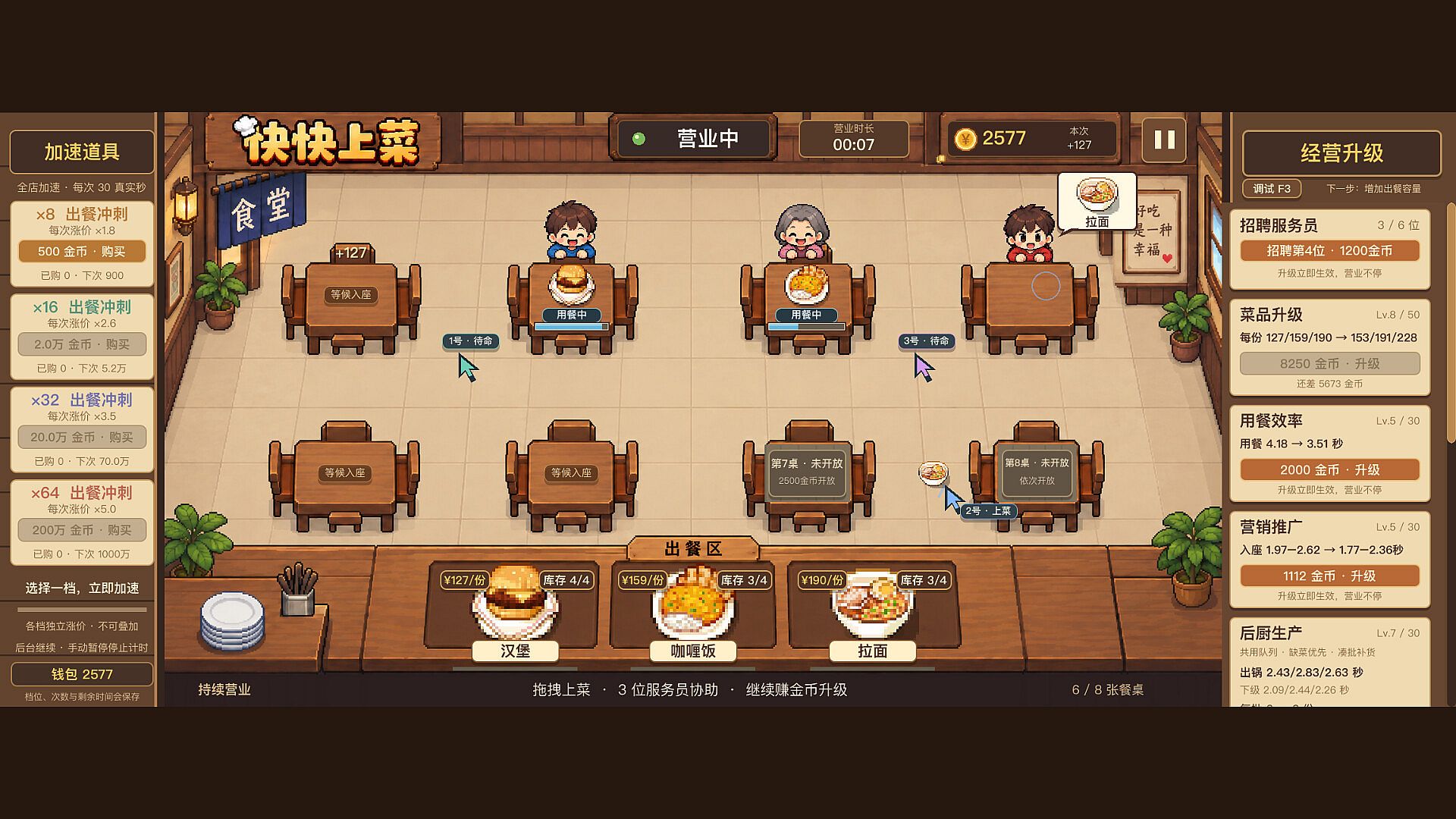
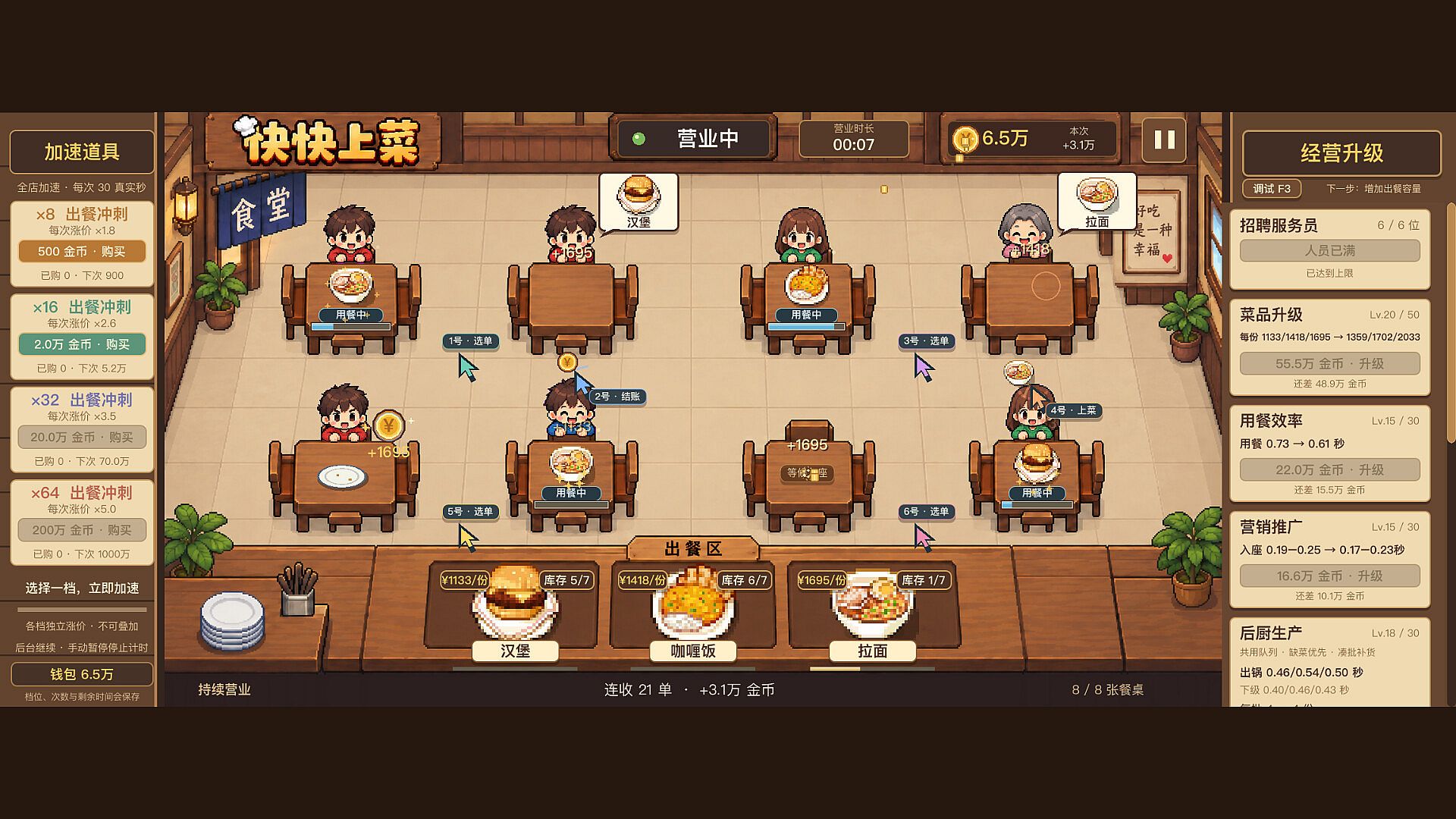
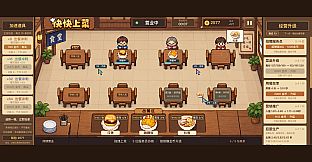
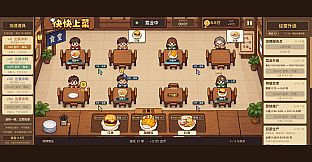
Quick Quick Serve! is a casual simulation idle game set in a single small diner on PC. Players begin with four tables and no employees, personally serving dishes like burgers, curry rice, and ramen while collecting payment after each meal. The experience centers on gradual expansion through earnings, with a focus on steady progression rather than high-pressure timing.
Gameplay
The core loop starts with hands-on service. Drag prepared dishes to the correct customers and click to collect coins once they finish eating. Early stages require direct involvement in every step, from kitchen output to table delivery. As coins accumulate, permanent upgrades become available to boost dish earnings, kitchen speed, counter storage, customer arrivals, and overall service pace. Expansion options include growing from four tables to eight while deciding how to allocate resources between hiring staff or improving facilities.
Staff management adds depth once the first waiter is hired. Up to six waiters can be employed, each with separate training paths for serving efficiency and checkout speed. Trained employees handle daily operations independently, allowing the player to step back or intervene as needed. This shift turns the initial manual effort into a supervisory role focused on upgrades and occasional assistance.
Temporary boosts purchased with in-game coins provide short-term help during busy periods. These tiers accelerate the flow of orders and coin collection without altering permanent systems. Customers remain patient regardless of wait times, removing any risk of lost sales and supporting a relaxed planning approach to upgrades.
Game Modes
The game operates as a single continuous service session in one diner. There are no separate named modes or competitive elements. Instead, the experience builds through repeated service cycles where the player balances kitchen output, table capacity, and staff performance. Idle functionality allows the restaurant to continue running in the background once service begins, though pausing or closing the game halts progress and no earnings accumulate offline.
Progress carries over across sessions until the player chooses to complete the save. A final minute of service leads to a completion screen after all permanent upgrades are maximized. This structure emphasizes long-term incremental growth over distinct gameplay variants.
Progression and Upgrades
Earnings flow directly back into the restaurant through a choice-driven upgrade tree. Options cover earnings multipliers, faster cooking, expanded storage at the serving counter, quicker customer arrivals, and improved service speeds. Each decision influences how quickly the diner scales, with players weighing whether to prioritize more tables, additional waiters, or kitchen improvements to match rising demand.
The system supports flexible pacing. Because customers do not leave due to delays, upgrades can be considered without immediate pressure. Temporary boosts supplement this by providing bursts of activity when desired, creating moments of heightened coin collection amid the steady baseline.
Is It Worth Playing?
Quick Quick Serve! suits players who enjoy relaxed idle simulation with visible numbers growth and light management layers. The shift from manual serving to automated team operations provides a clear sense of progression within a contained single-diner setting. Those seeking chaotic co-op cooking or high-stakes time management may find the patient customer behavior and background idle feature too gentle, while fans of incremental restaurant builders will appreciate the focused upgrade choices and staff training mechanics.
The game preserves completion records for each save, allowing returns to finished runs or continued play on new ones. With three dishes, up to eight tables, and six individually trained waiters as the main systems, the experience remains straightforward yet satisfying for short or extended sessions on PC. The Simplified Chinese interface matches the provided English description without confirmed additional language support.