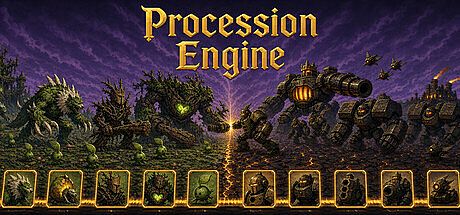


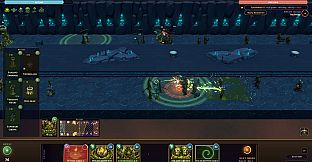
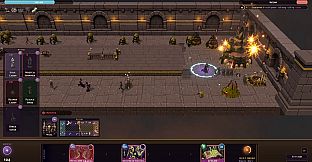
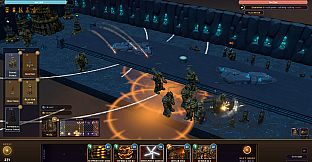
Procession Engine is a strategy indie game in early access on PC that blends real-time action with roguelike deck building. Players manage a moving conveyor belt of cards while directing armies across two lanes in a tug-of-war format between strongholds. The core loop revolves around placing buildings, timing card plays from the belt, and adapting to constant enemy pressure without traditional turns.
Gameplay
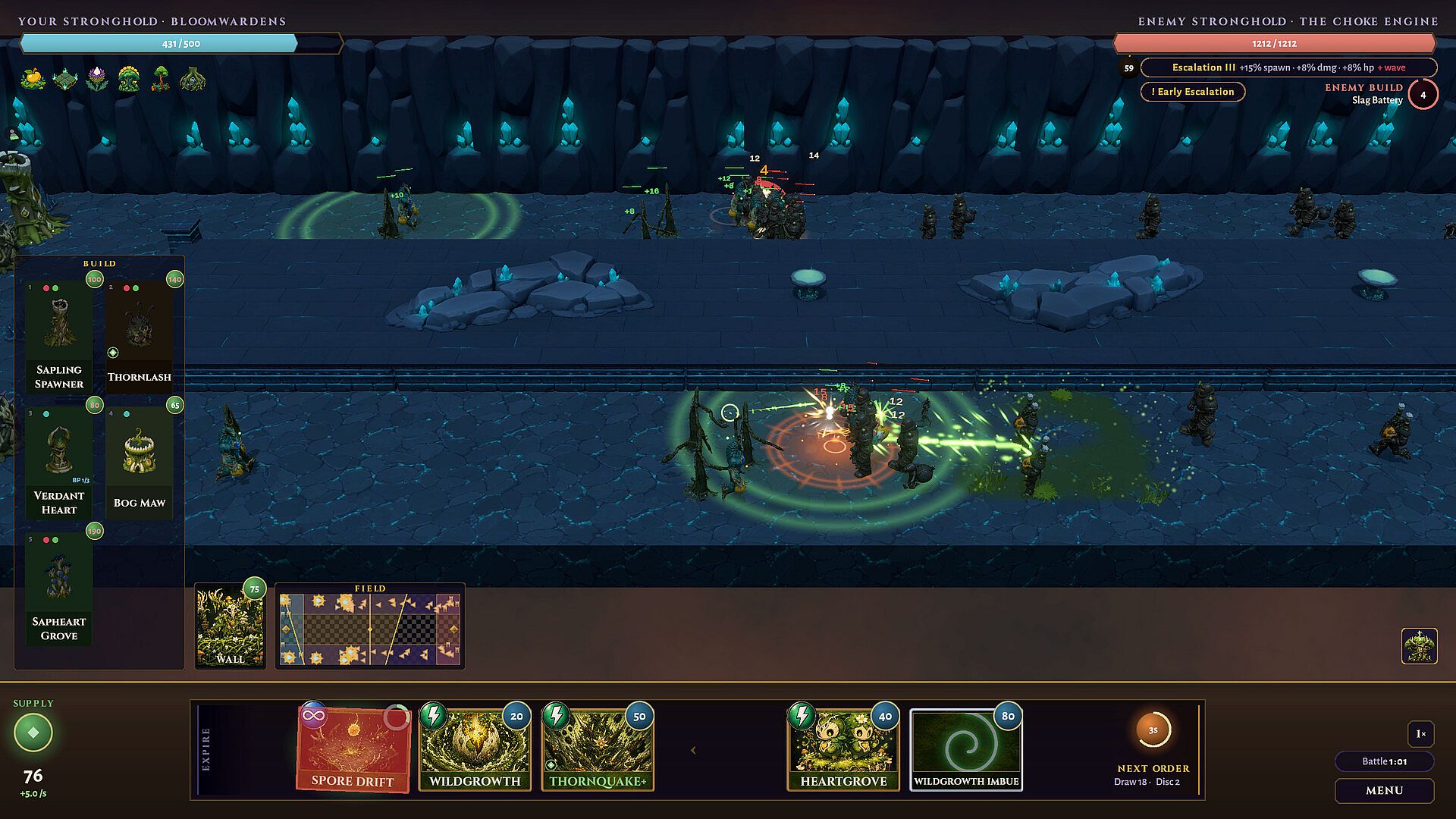
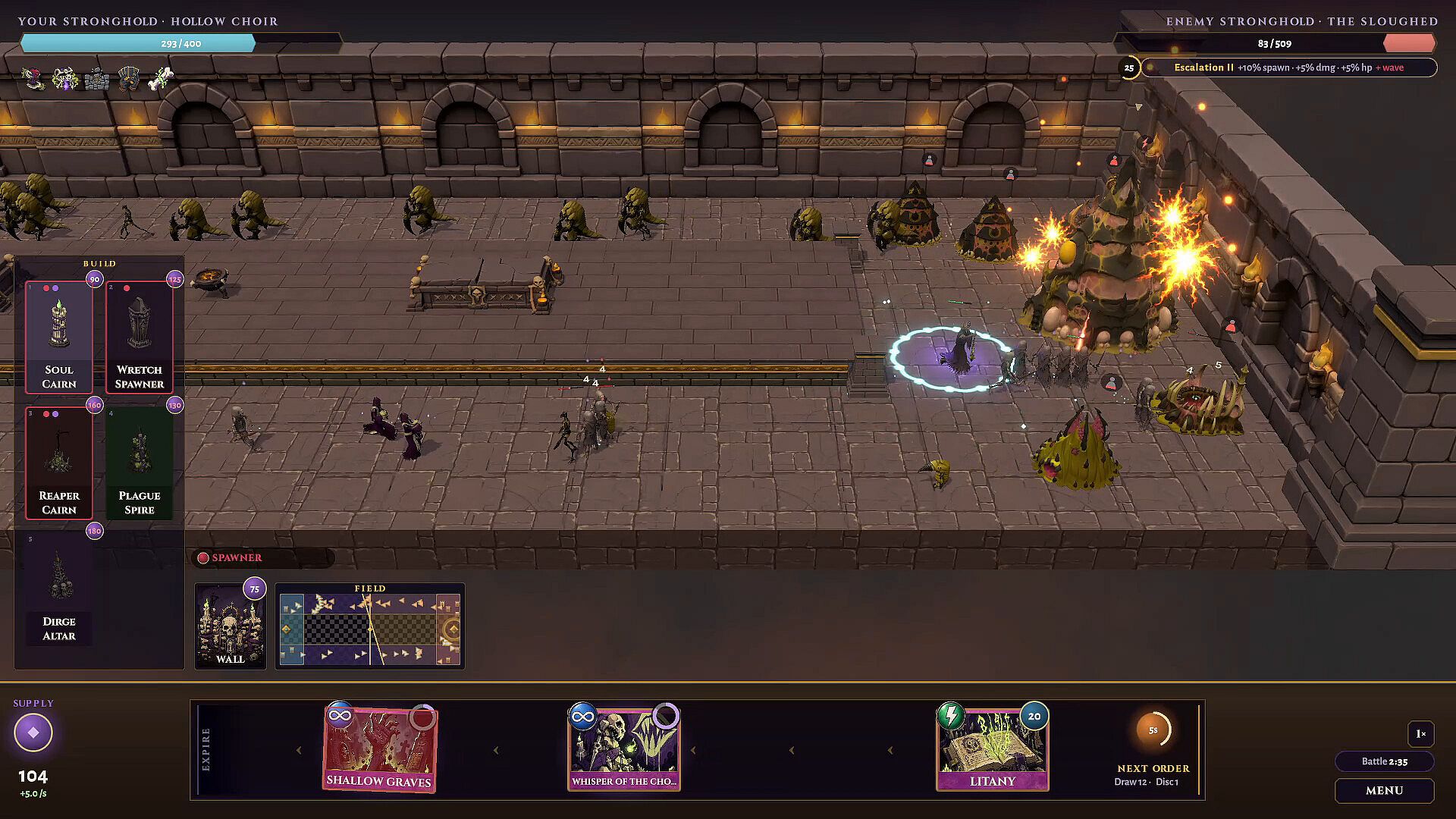
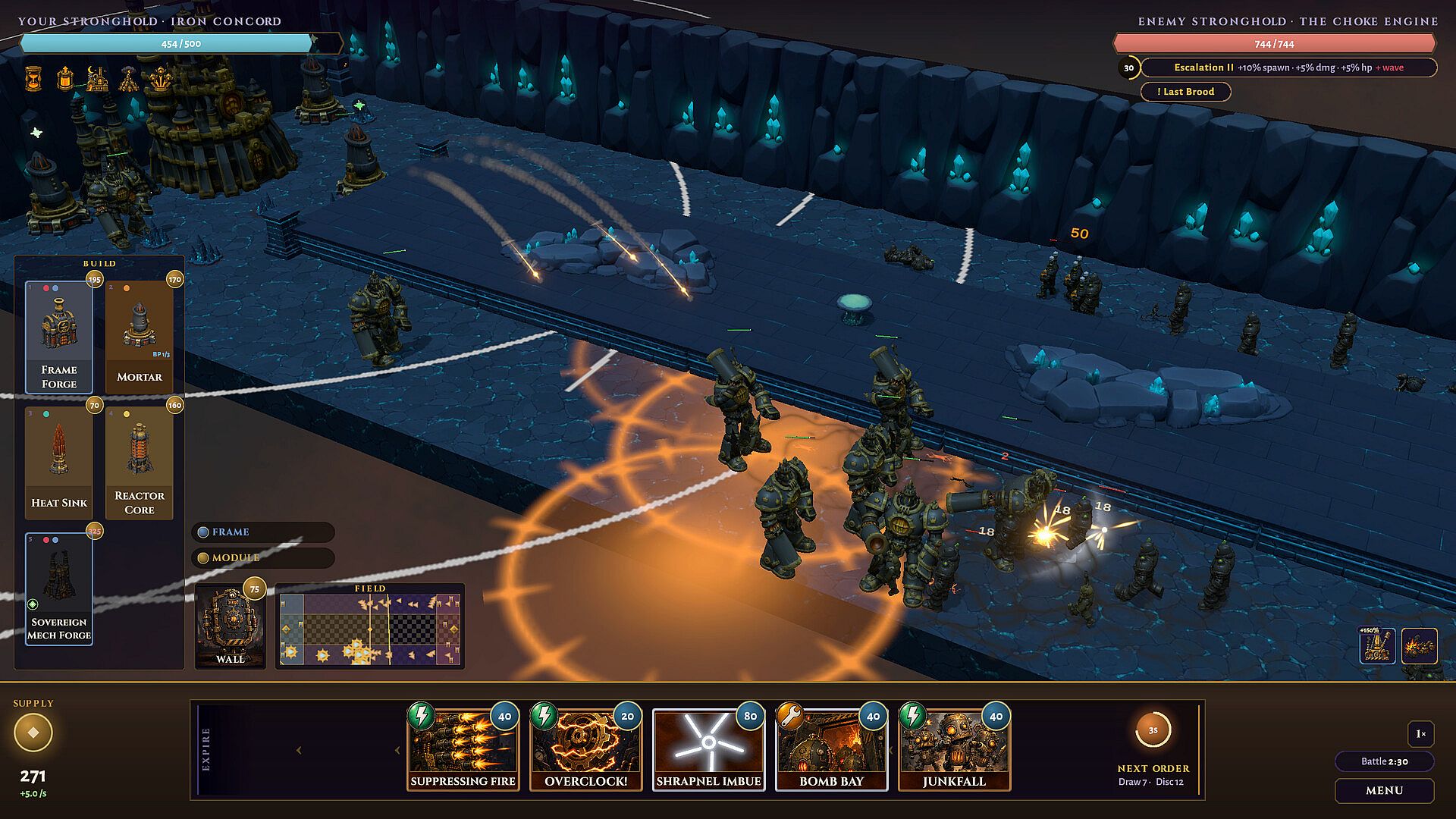
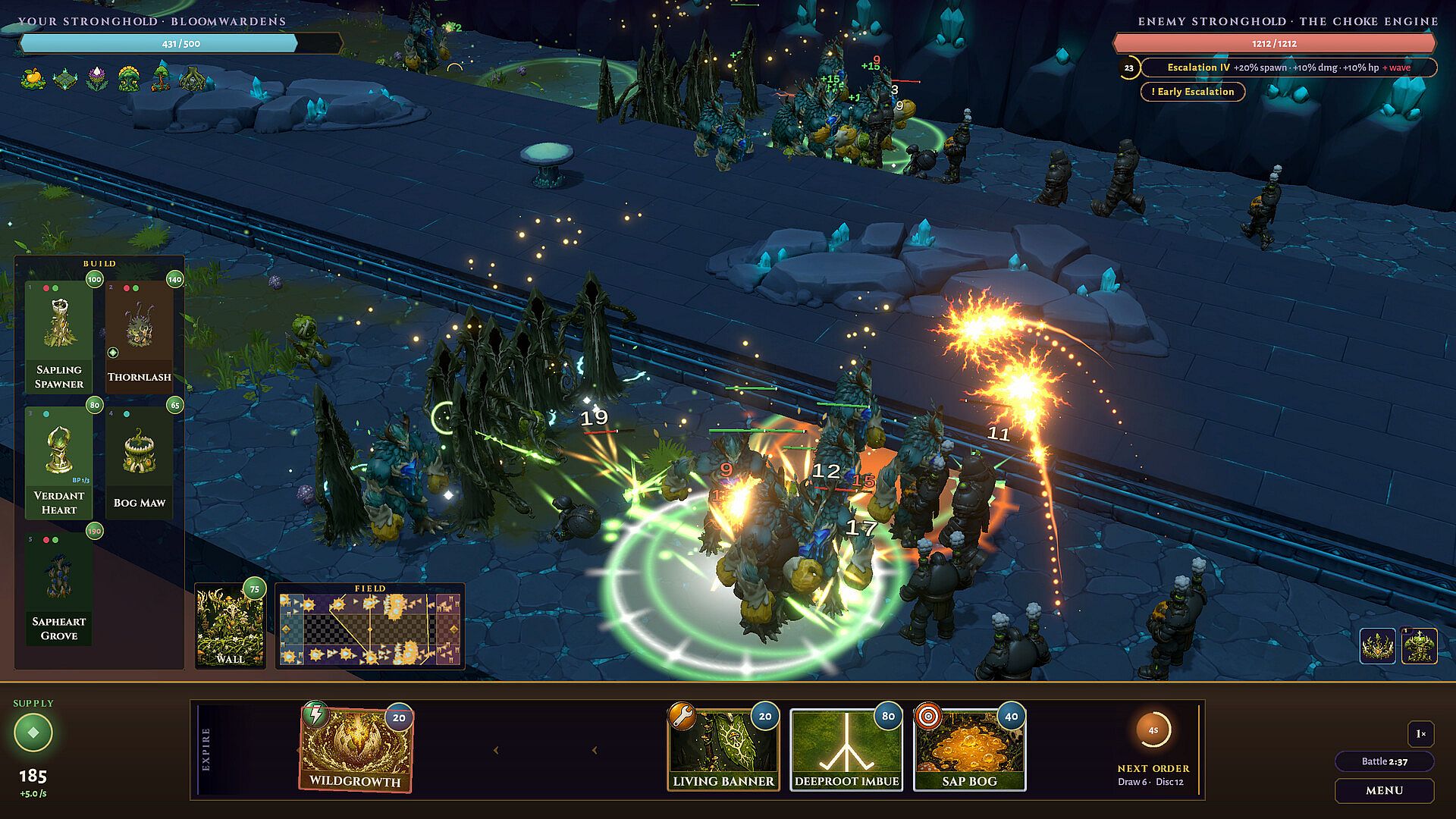
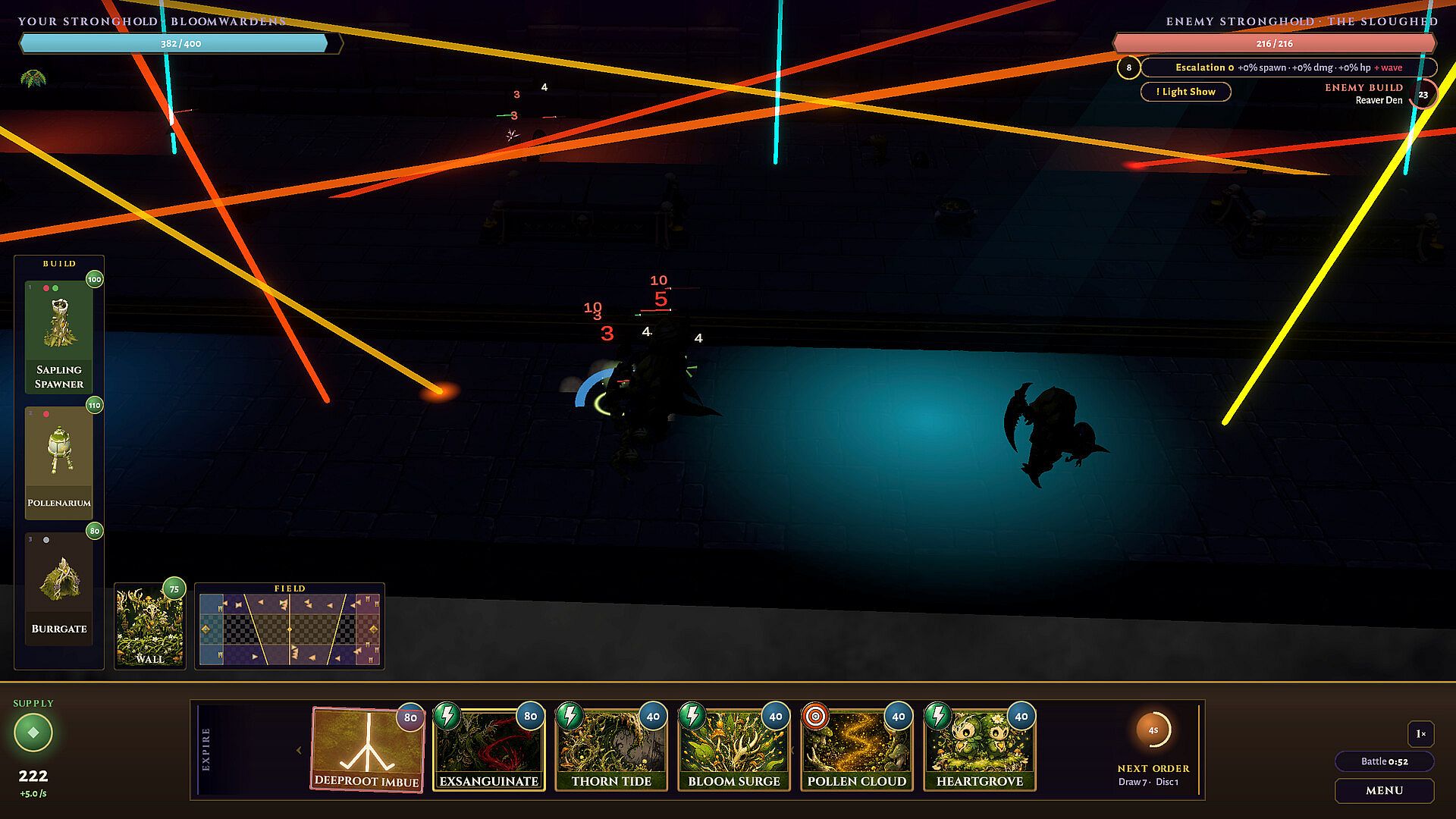
The central mechanic places cards on a conveyor belt that advances toward the play edge. Players must decide in the moment whether to deploy a card immediately, bank it for later use, or let it expire. Passive effects on the belt generate resources over time, keeping the economy in motion even during lulls. This system turns deck management into a timing puzzle where hesitation carries real costs.
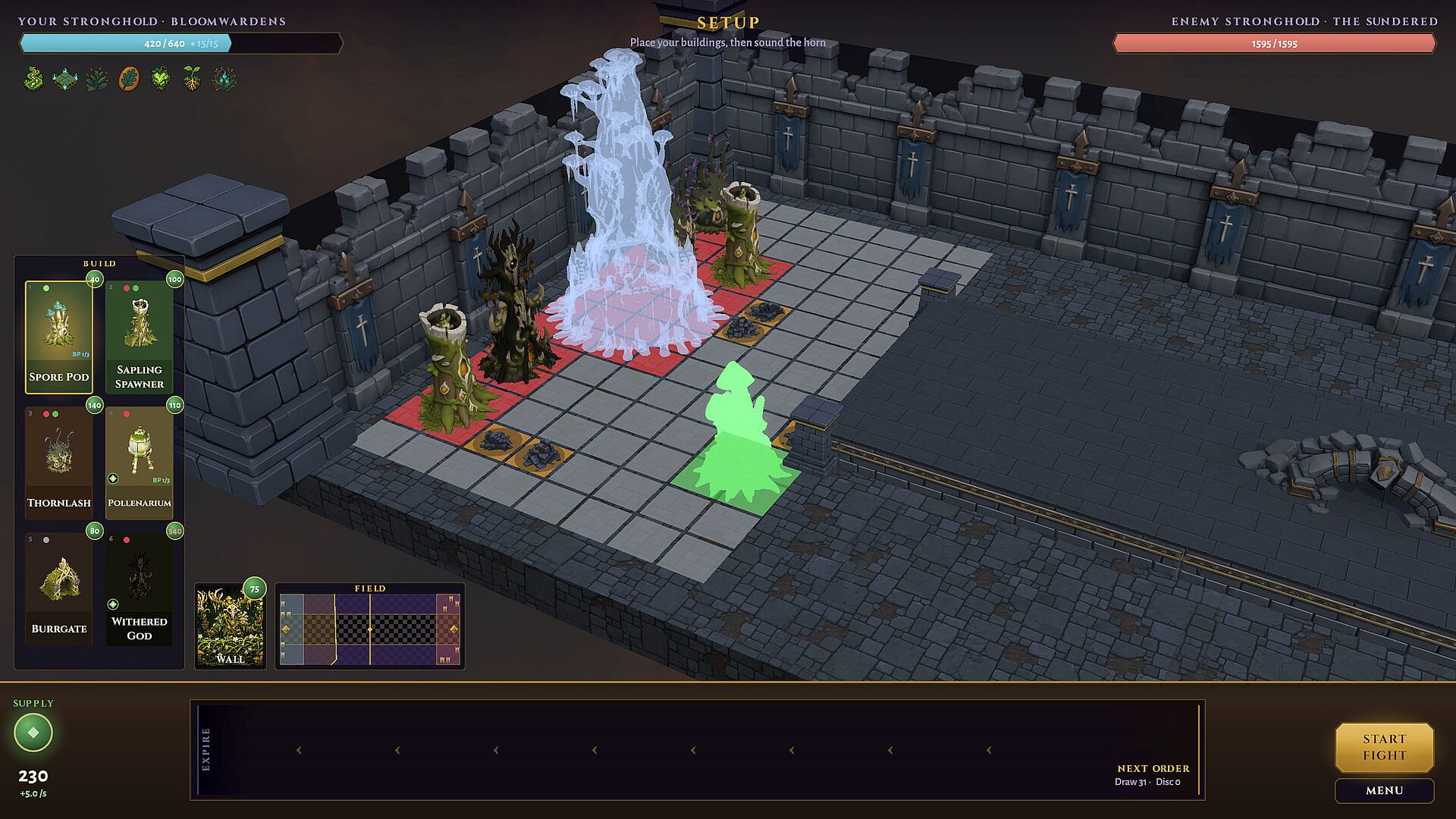
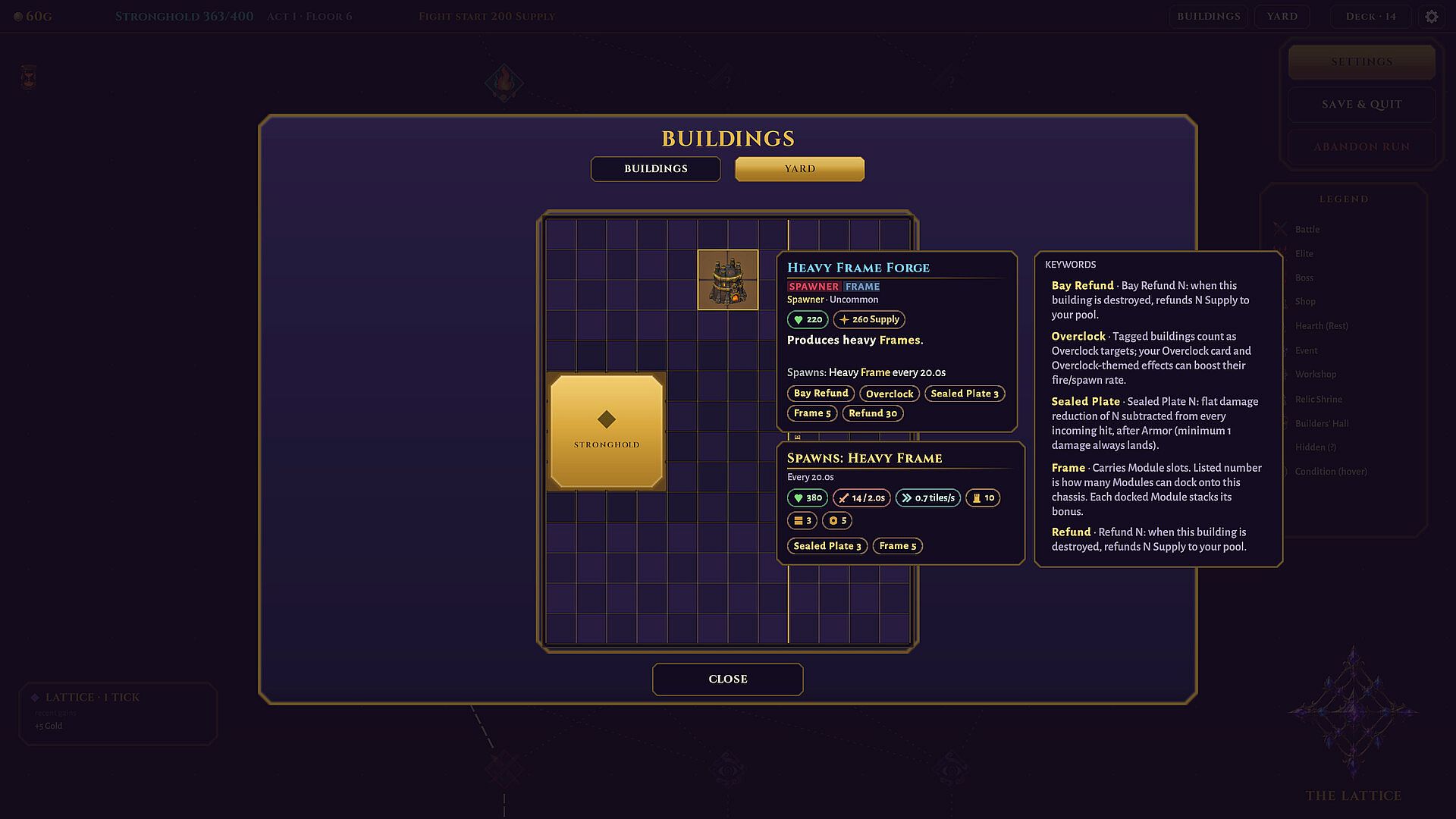
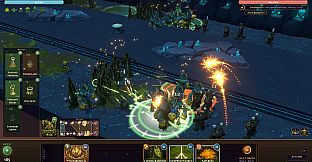
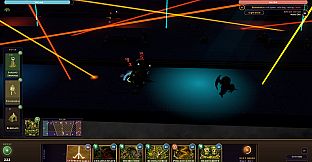
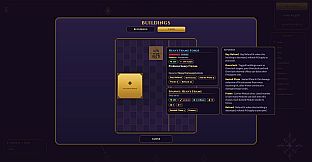
Combat unfolds across two lanes between opposing strongholds. Armies march forward automatically once spawned, and the objective is to break the enemy stronghold before your own falls. Buildings placed in the yard generate units, provide artillery support, or apply buffs, with 54 base structures available. Each building supports three blueprint variants that players discover and upgrade across runs. Elemental imbues attach to buildings and create orbiting sigils that alter behavior, with certain element pairs combining into enhanced effects.
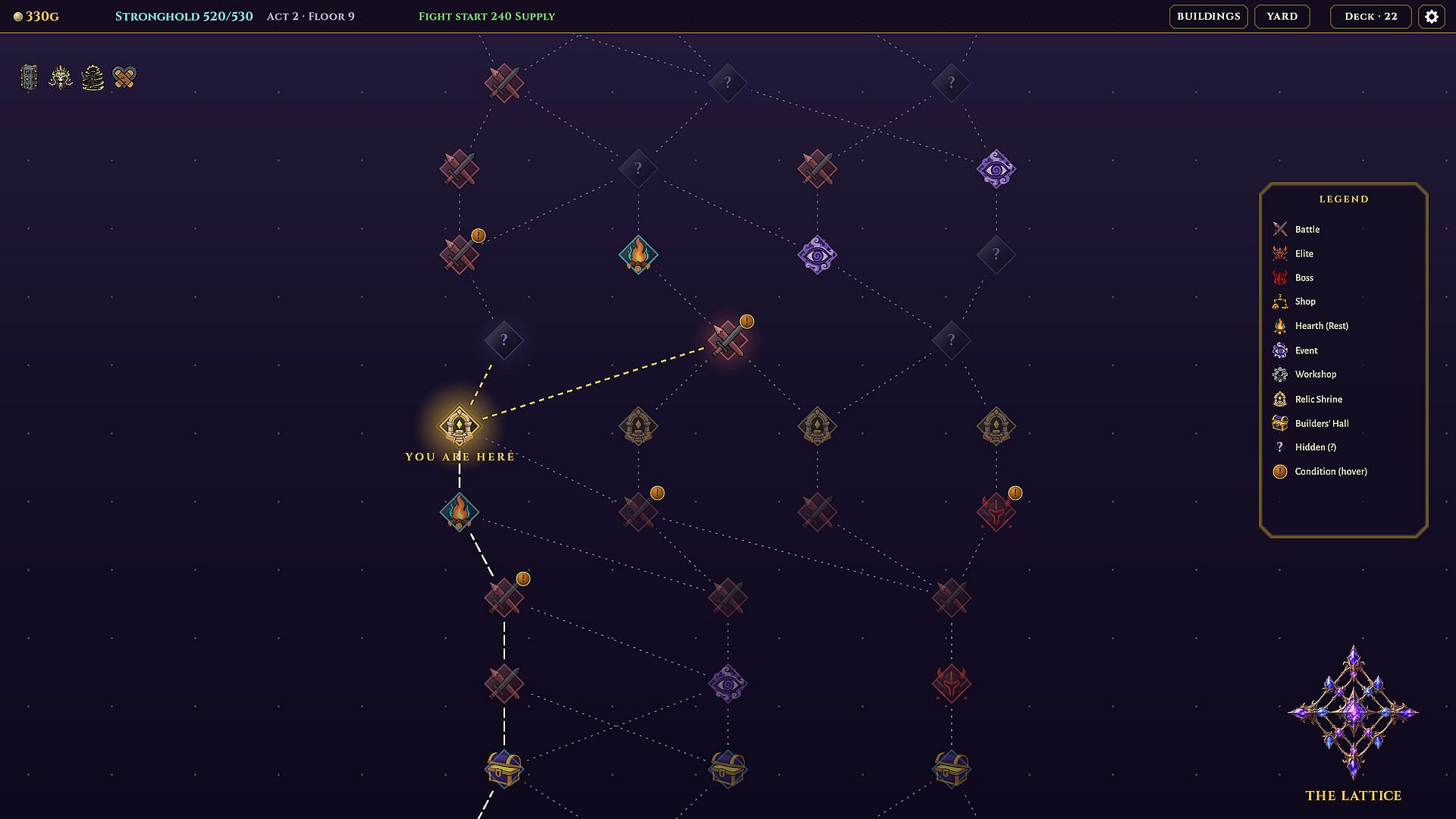
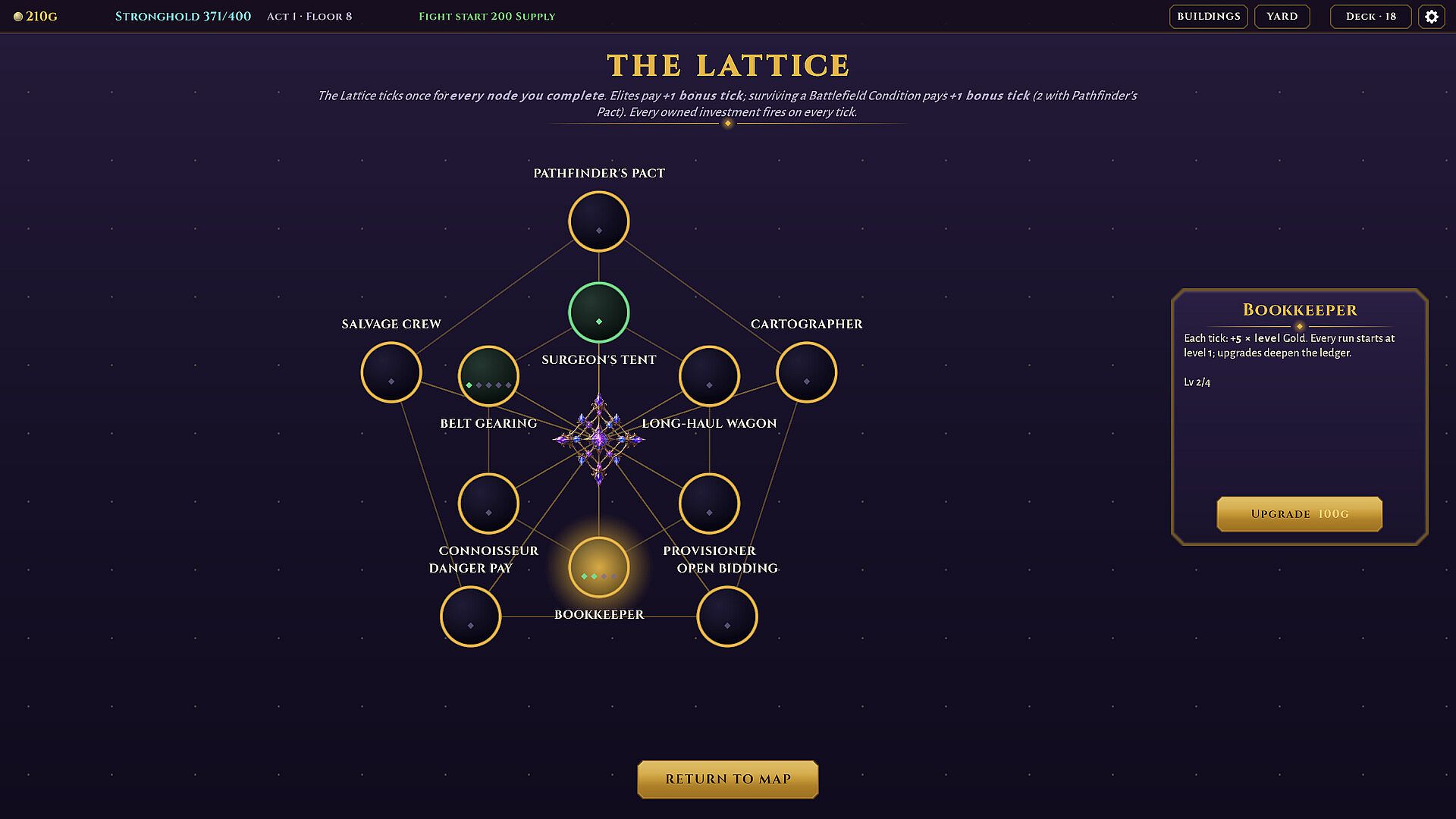
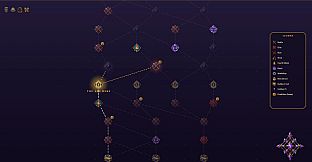
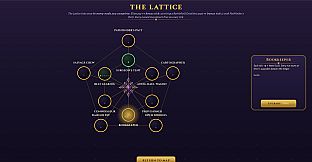
A persistent Lattice system tracks progress across an entire run. Clearing nodes advances the Lattice and unlocks compounding benefits such as extra starting resources or improved card rarity. Choices made early in a run scale into significant advantages by the final act. The result is a deck builder where the physical layout of the yard and long-term investments matter as much as the cards themselves.
Game Modes
The main experience follows a campaign divided into three acts. Each act pits the player against a different enemy faction and features skirmishes, elite encounters, resource bazaars, random events, relic shrines, and workshops. Stronghold damage persists between fights, and map forks present meaningful choices about which path to take next. The campaign ends with a boss encounter after the third act.
After completing a run, players can enter Trials. This mode applies ten stacking difficulty modifiers that progressively alter core rules. Higher Trial levels test mastery by removing safety nets and amplifying enemy strength, turning successful clears into a distinct achievement.
Factions and Builds
Three factions shape available strategies. Bloomwardens focus on living forest themes, using bloom effects to sustain titans and swarms. Iron Concord emphasizes mechanical production, assembling frames and deploying artillery alongside drone units. Hollow Choir centers on soul collection and plague mechanics, raising fallen units while trading health for power. Each faction offers distinct card pools and building synergies that encourage repeated runs with different approaches.
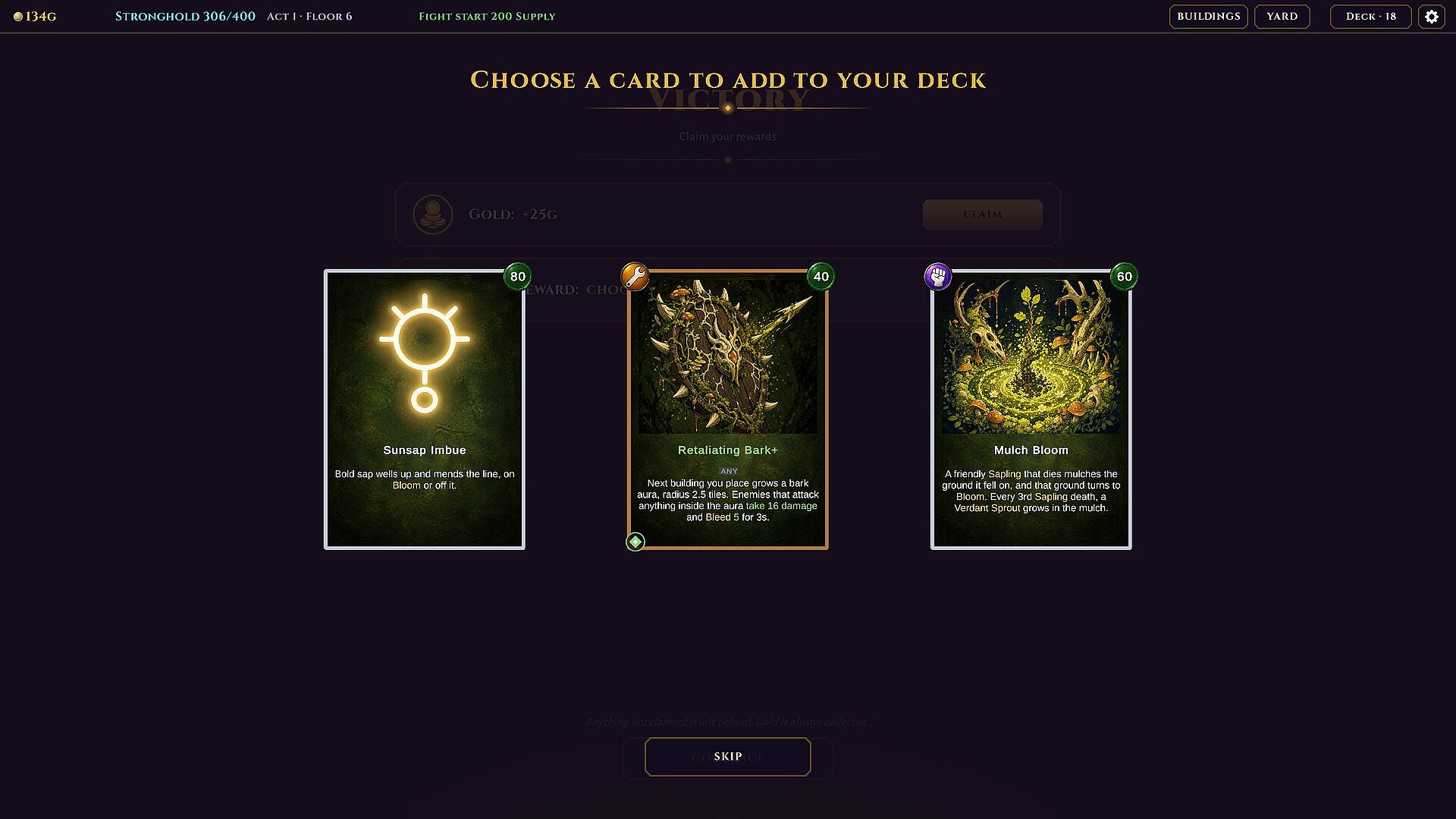
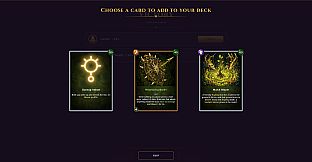
Customization extends beyond the deck. Relics, card rewards, blueprint upgrades, tempering options, and etched buildings all feed into the same run. With 250 cards and over 250 relics available, combinations rarely repeat exactly. The Lattice further personalizes each attempt by letting players invest in gold, provisions, or card quality over multiple fights.
Is It Worth Playing?
Procession Engine suits players who enjoy roguelike deck builders that replace turn-based pacing with continuous real-time pressure. The belt system and lane combat create a distinct rhythm that rewards quick decisions and long-term planning. Those who prefer methodical deck construction or static base building may find the constant movement and lack of pauses less appealing.
The game remains in early access, so the full scope of content and balance continues to evolve. Its current structure already delivers a complete campaign loop plus escalating Trials for players seeking repeated challenges. Fans of the described mechanics will find a focused experience centered on yard customization and faction-specific synergies rather than broad open-world exploration.