




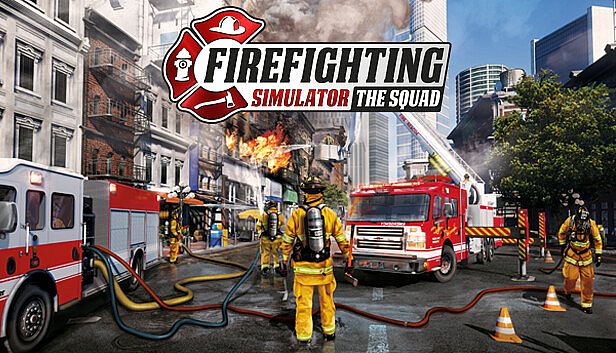




















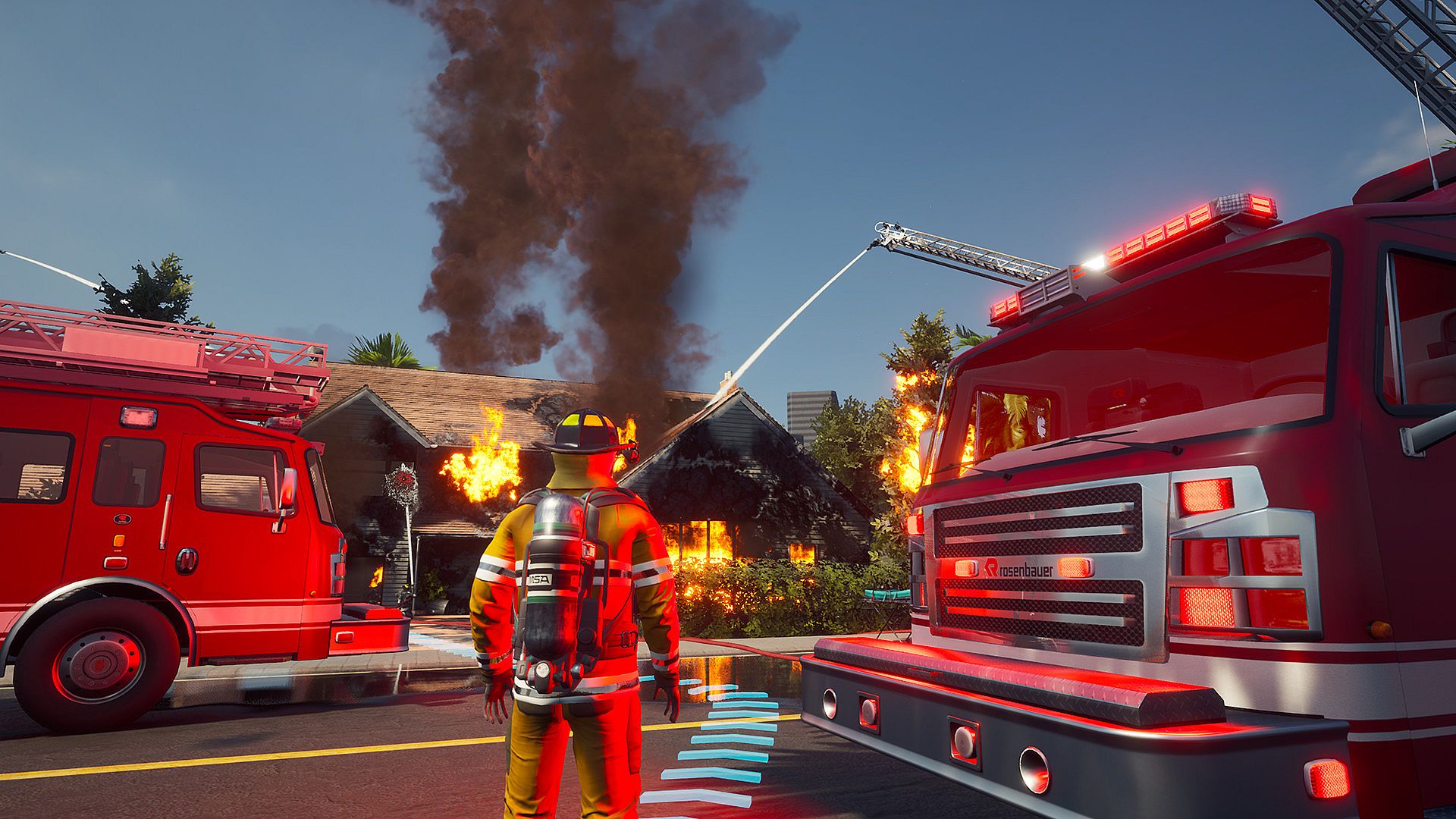
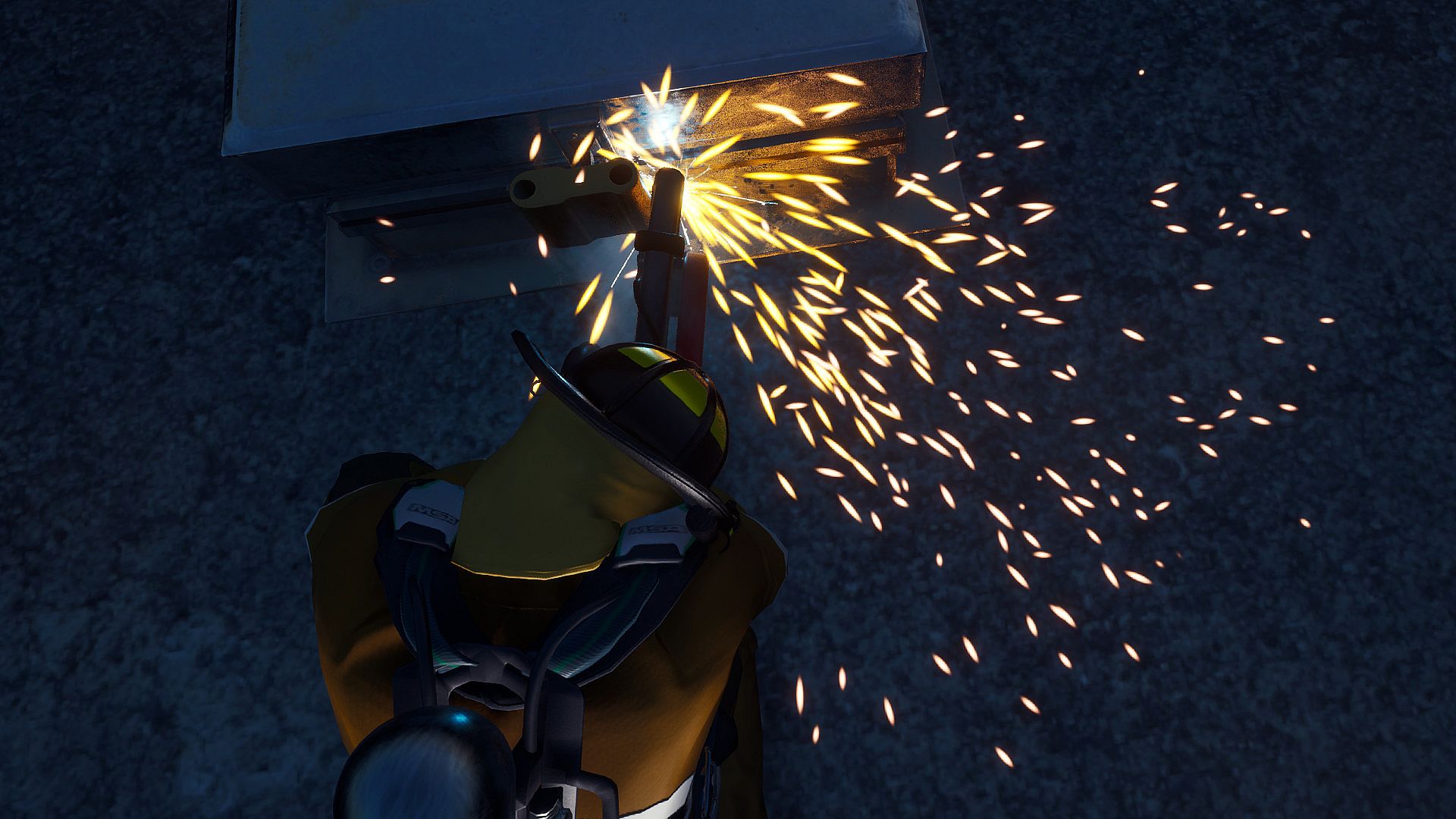
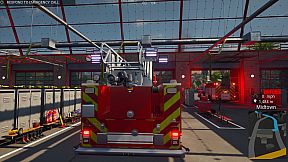
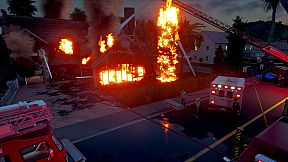
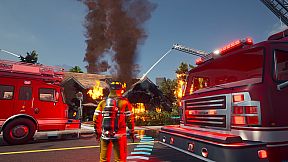
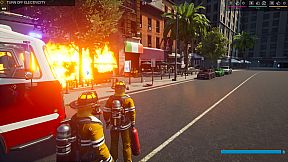
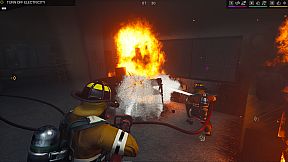
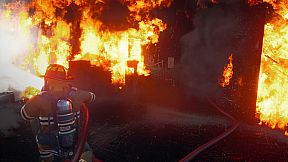
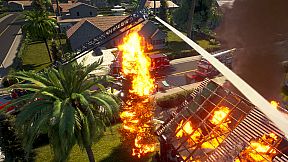
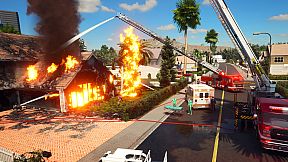
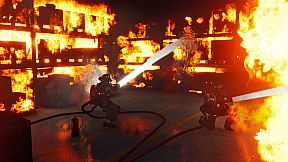
Firefighting Simulator - The Squad is an action simulation game that places players in the role of a firefighter tackling realistic emergencies across a large urban environment. The experience centers on operating fire apparatus, managing fires with authentic equipment, and coordinating responses in a setting inspired by North American West Coast cities. Players handle everything from vehicle operation to direct intervention at incident scenes, with attention to environmental factors like smoke and structural damage.
Gameplay
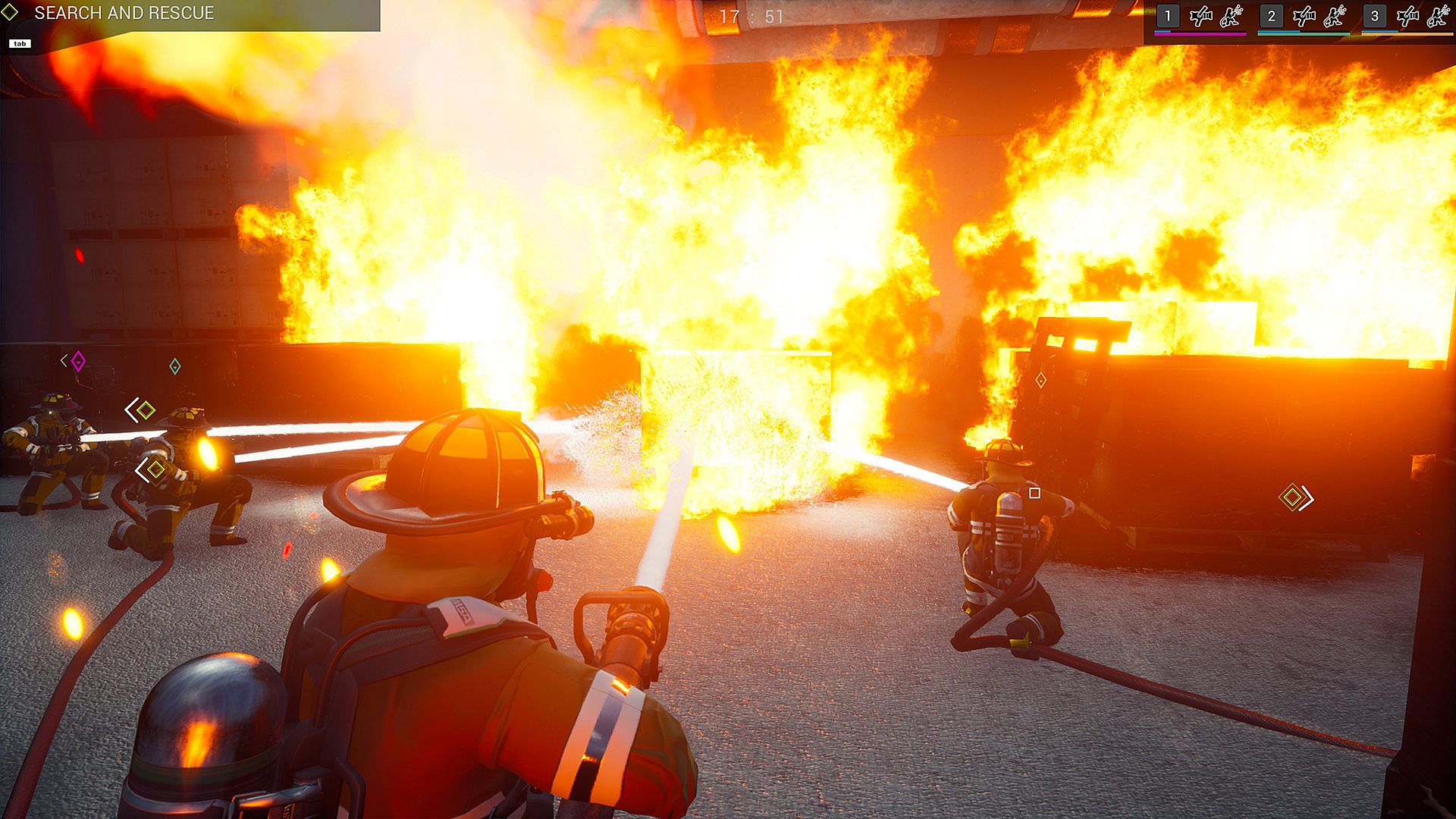
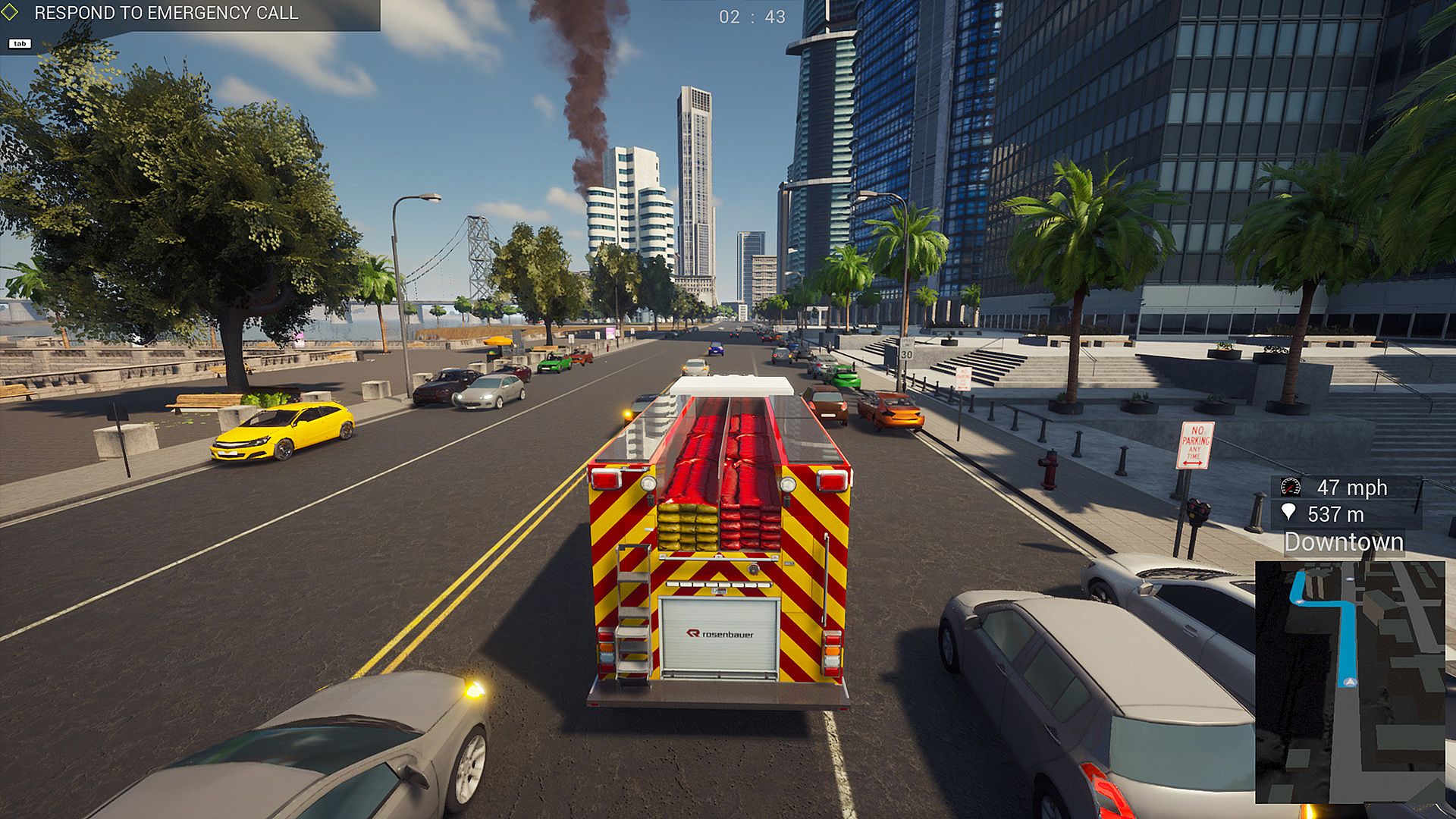
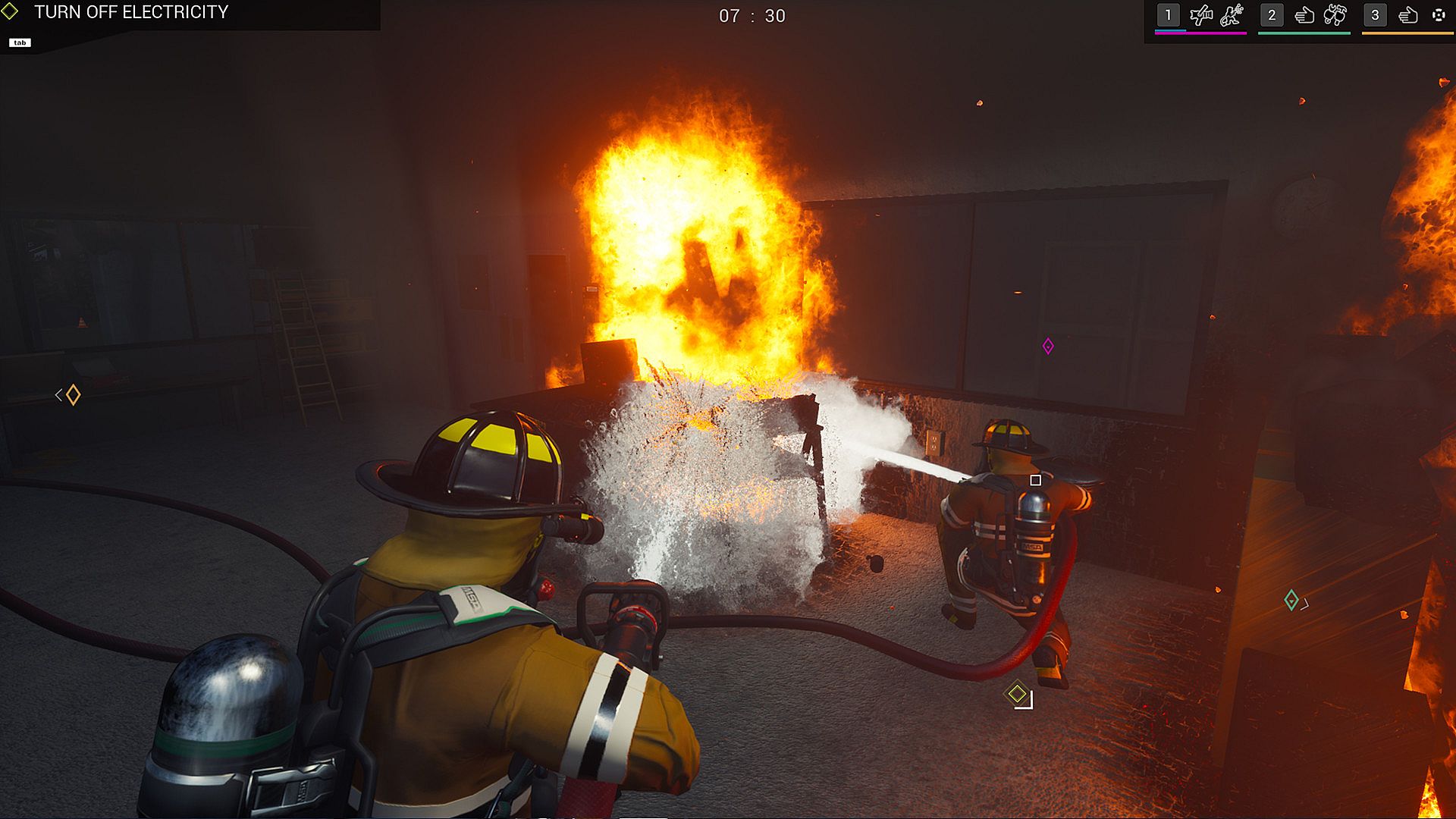
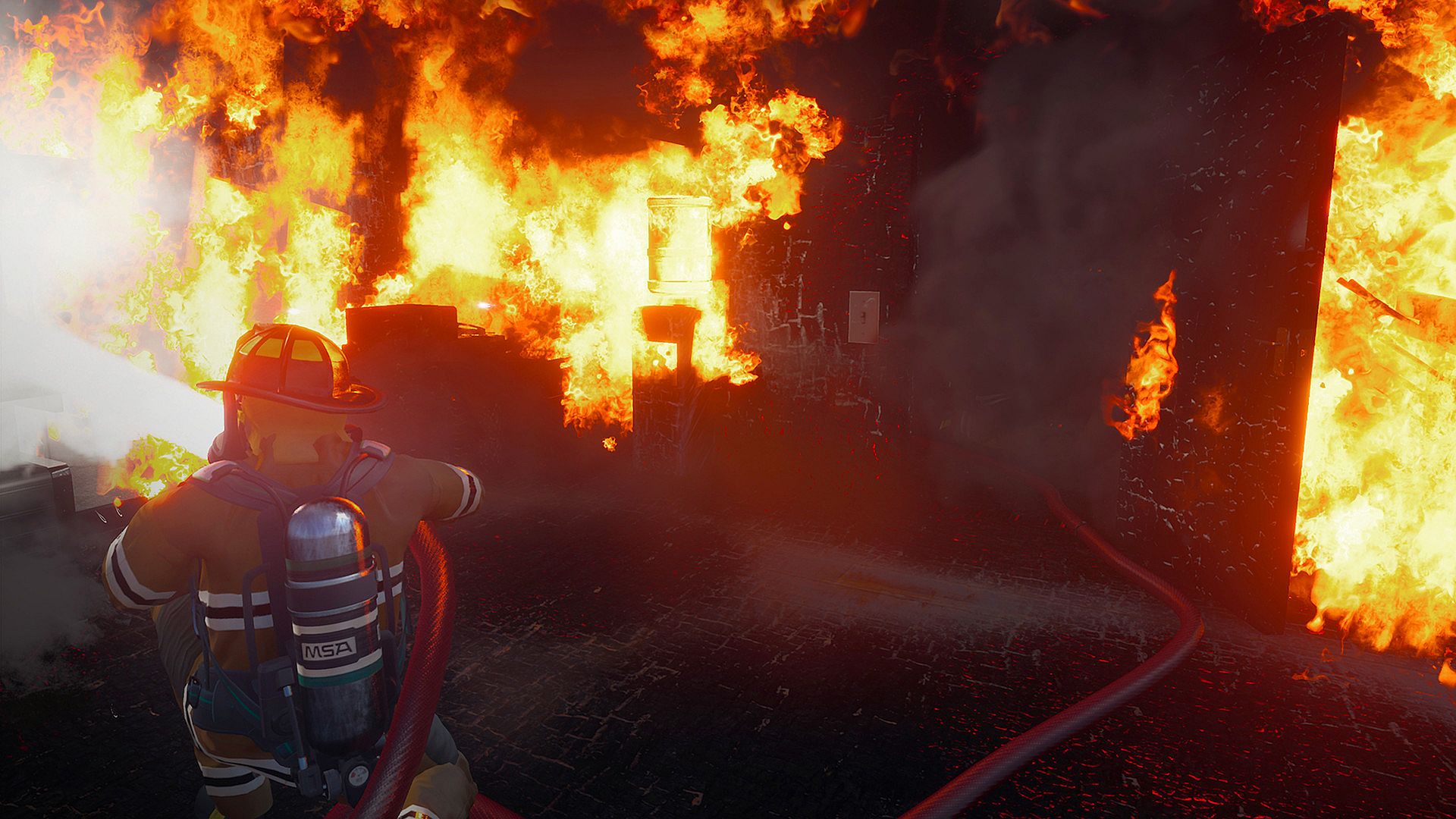
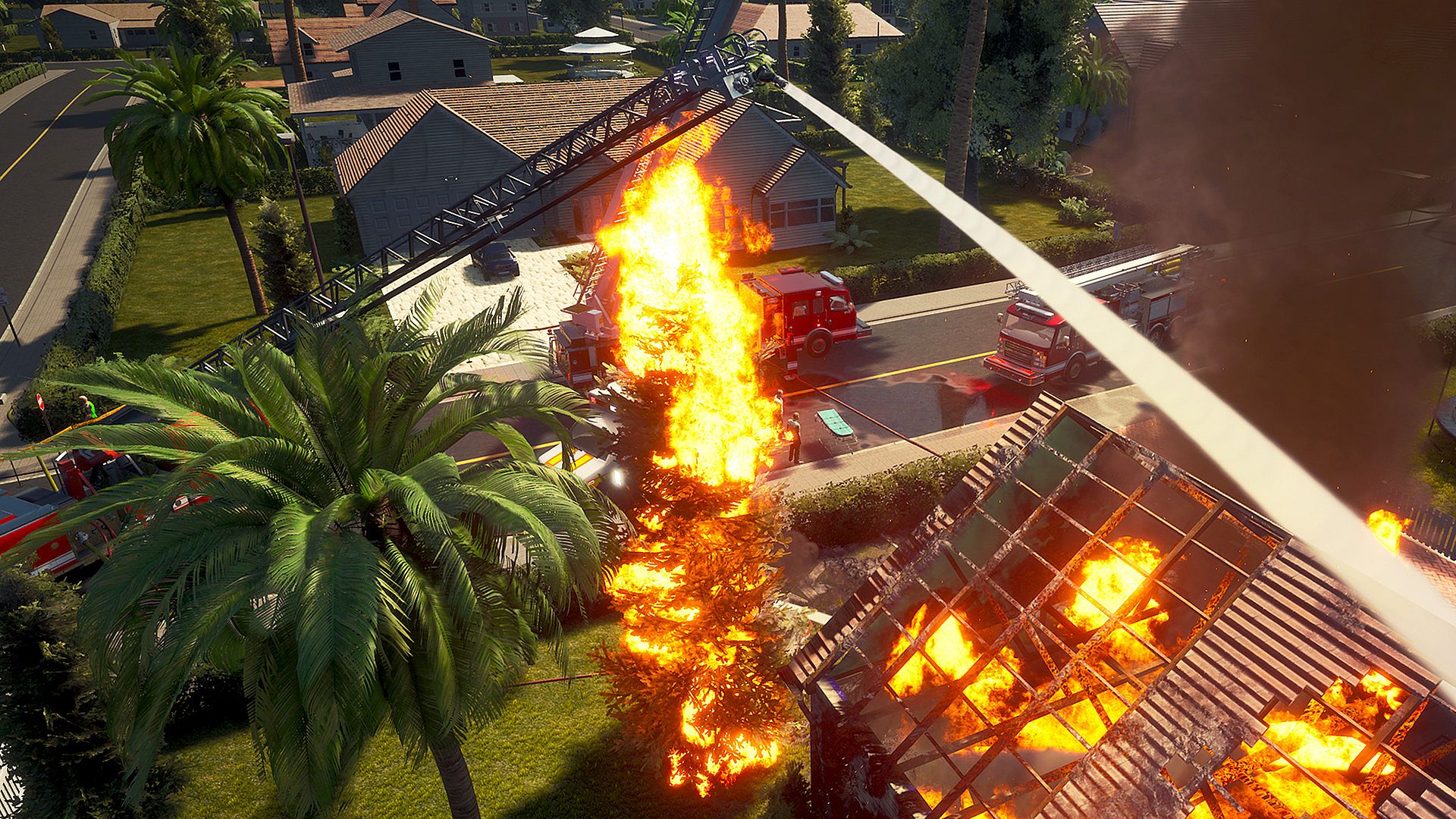
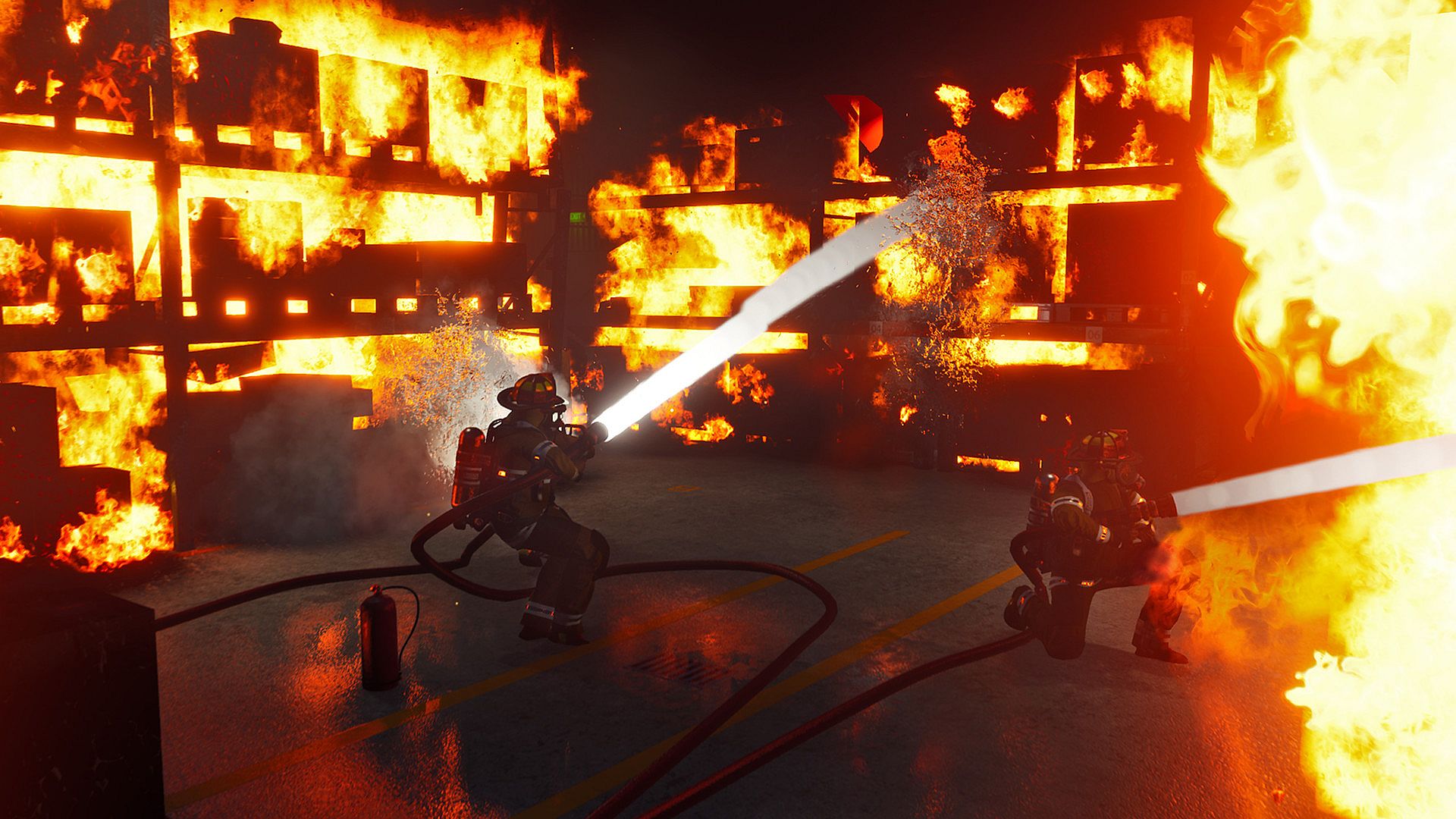
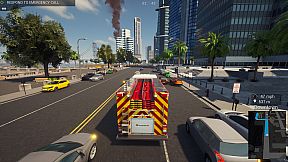
The core loop involves responding to calls, navigating a detailed 15,000-acre city map, and applying firefighting techniques at over 40 distinct locations. Fire behavior includes spreading flames influenced by water application, smoke density, heat buildup, backdrafts, flashovers, and specific ignition sources such as electrical faults, chemical reactions, or explosions. A physics system governs how structures degrade and debris interacts with the environment during incidents.
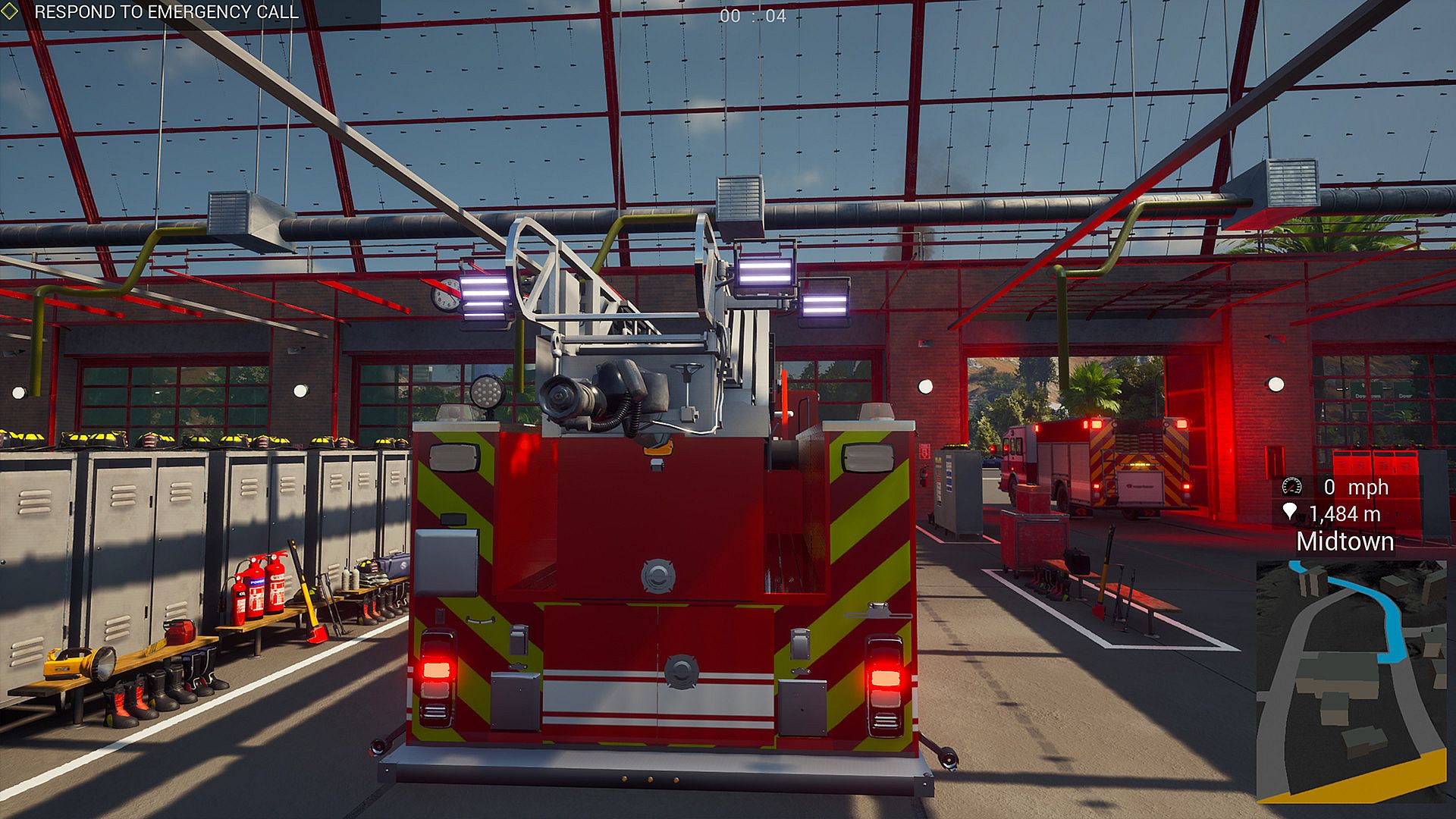
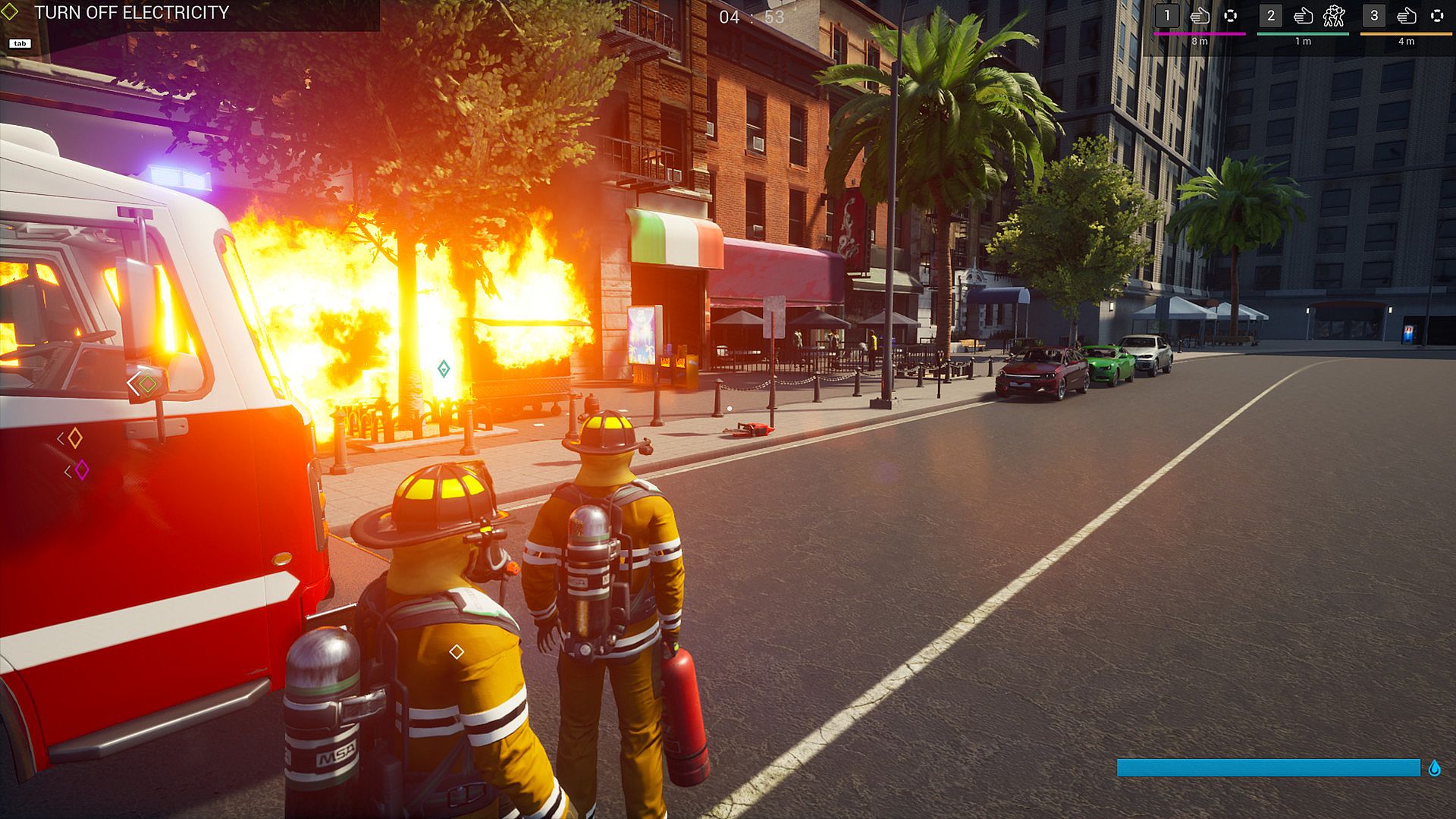
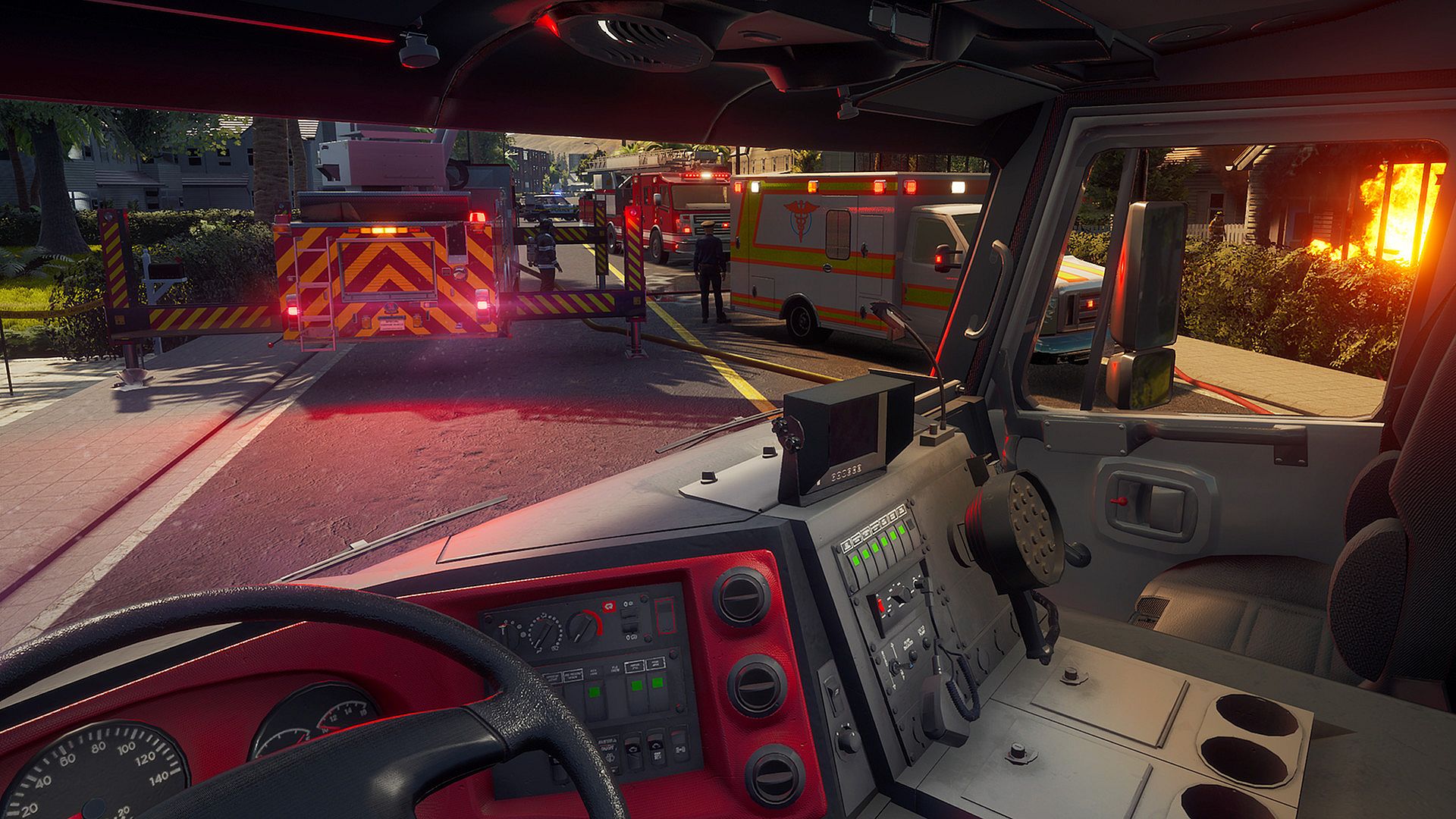
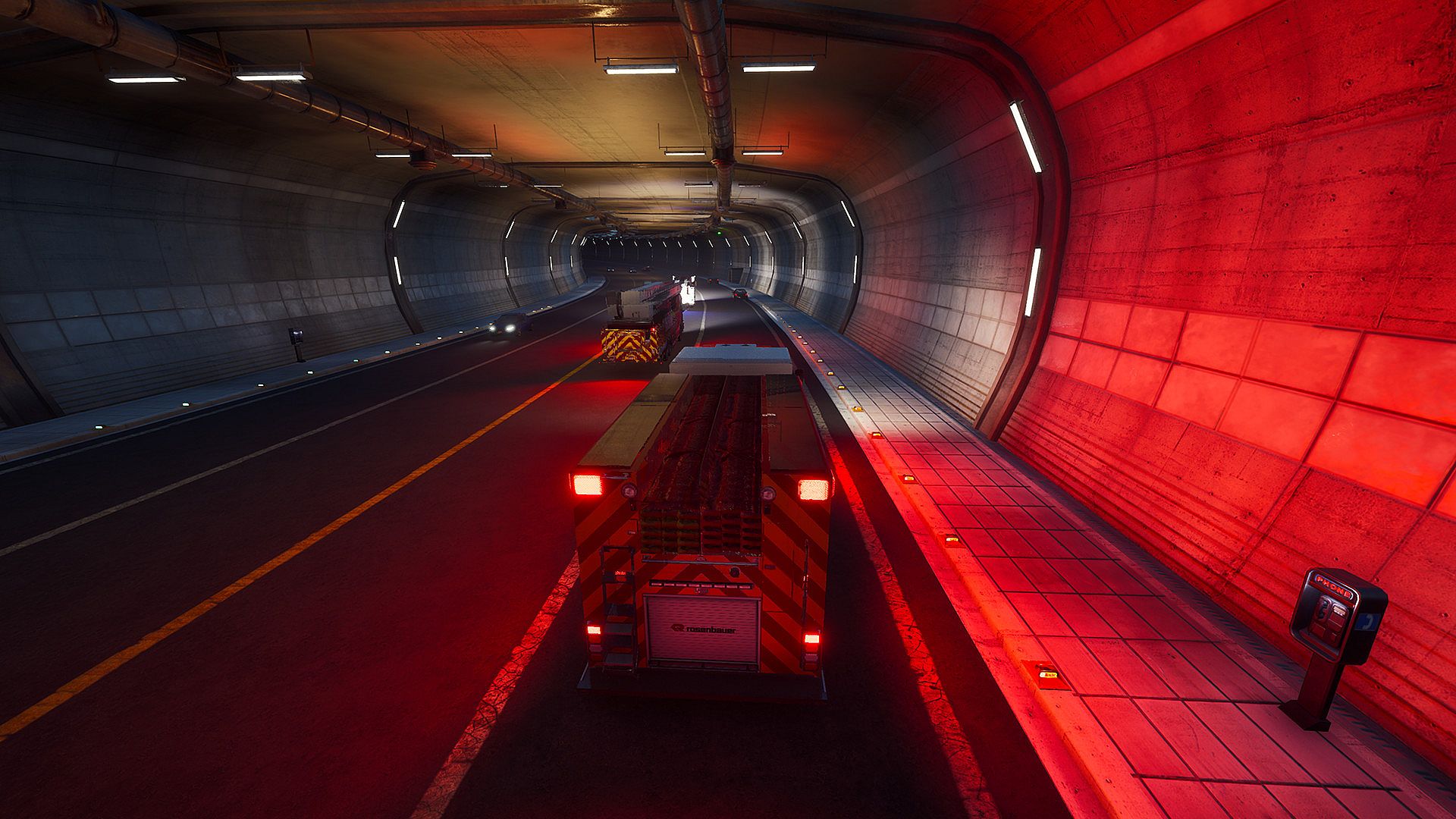
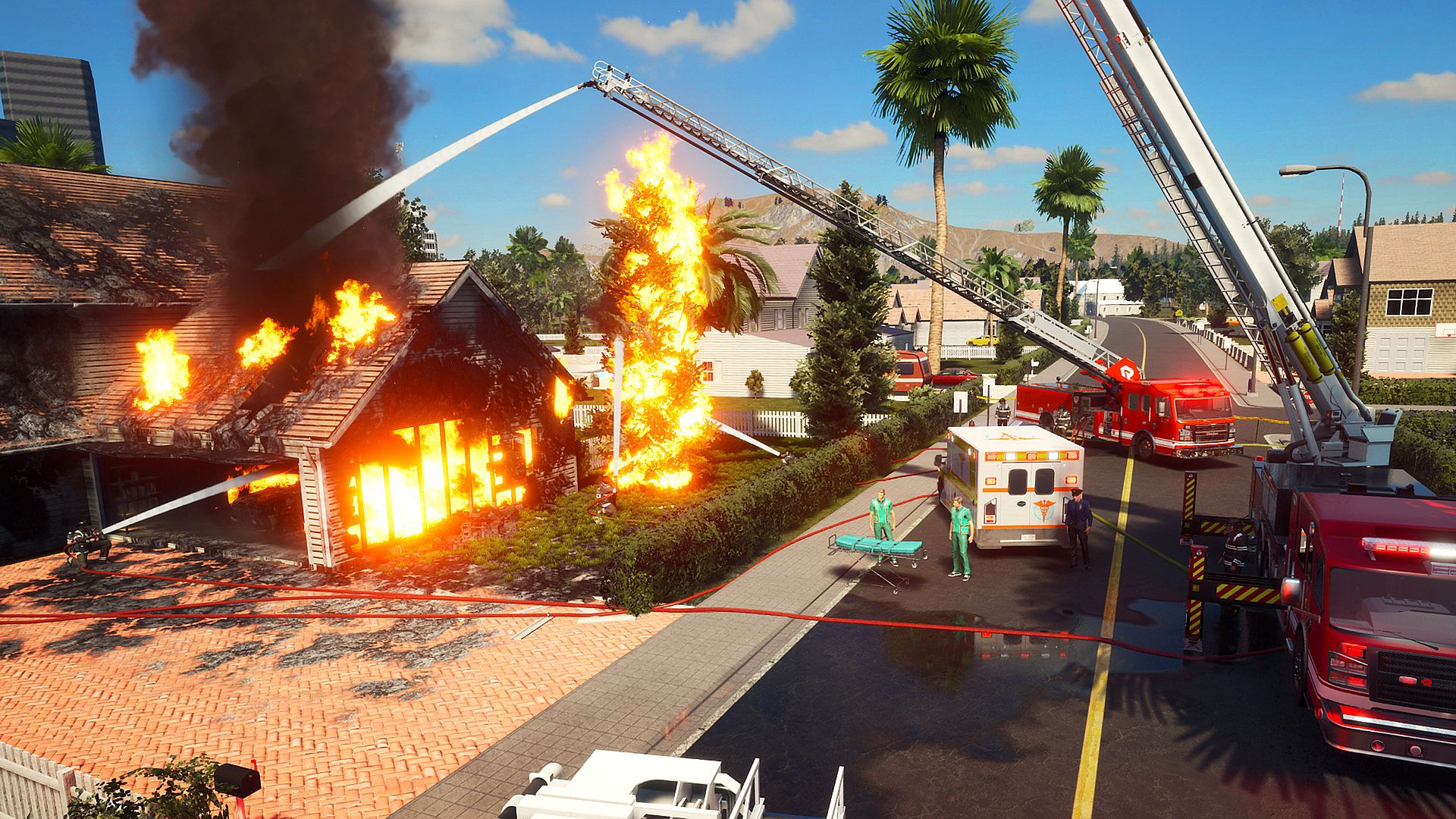
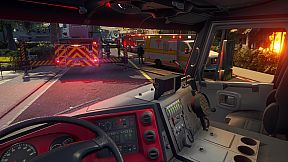
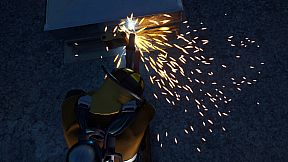
Players drive five licensed Rosenbauer America vehicles, including models like the TP3 Pumper and T-Rex hydraulic platform, with options for cockpit views during transit. Standard controls support steering wheels and gamepads. Authentic gear from brands such as Cairns, MSA G1 SCBA, and HAIX adds to the operational detail, covering helmets, boots, and breathing apparatus. Radio communications and character voice lines enhance the operational atmosphere, while day and night cycles alter visibility and mission demands. A comprehensive tutorial covers fundamentals before players enter active deployments.
Game Modes
Single player mode lets users lead an AI team through missions, using an intuitive command interface to assign tasks to squad members while personally engaging with the incident. This setup supports solo progression through the full range of deployment sites and fire scenarios.
Co-op multiplayer supports up to three additional players, allowing teams to divide roles such as driver, nozzle operator, or command lead at each scene. Sessions emphasize coordination to contain fires and assist civilians, with flexibility for players to switch responsibilities mid-mission. Both modes share the same core mechanics and location variety, including industrial zones, suburban areas, and downtown districts.
Deployment Variety and Simulation Depth
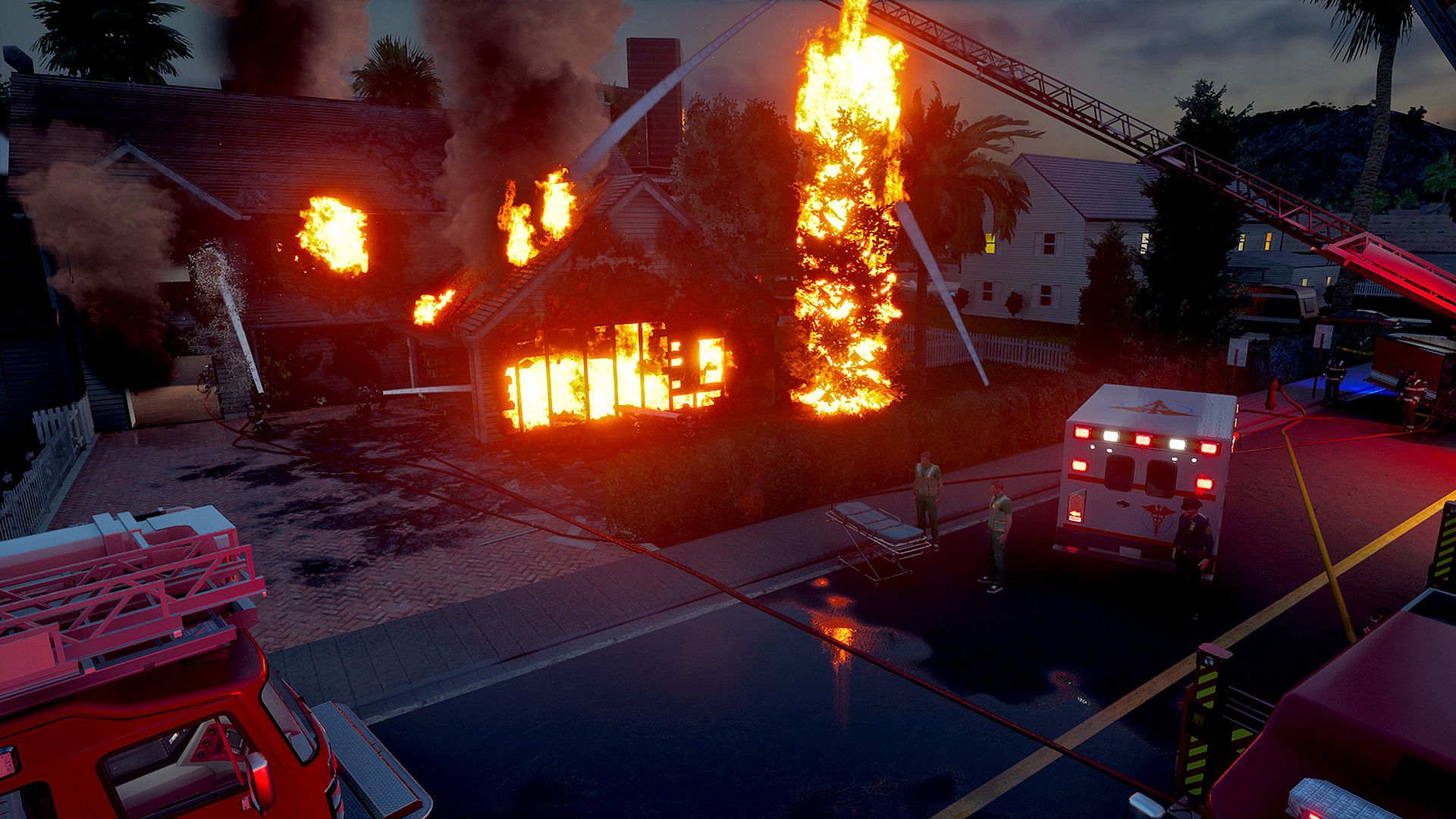
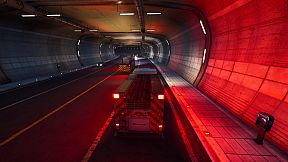
Each of the 40 locations offers multiple approaches to resolution, encouraging different strategies depending on fire cause, building layout, and available resources. Missions occur in both daylight and nighttime conditions, which affects navigation and tactical decisions. The simulation extends to secondary effects like grease fires and chemical incidents, requiring players to adapt equipment and tactics accordingly.
Engine sounds are faithfully recreated to match real apparatus, contributing to immersion during responses. The city layout spans diverse districts, providing a consistent backdrop for repeated playthroughs with varying outcomes based on player choices.
Is It Worth Playing?
The game maintains Very Positive ratings on its primary platform, with 81 percent of over 2,300 reviews rated positively and recent feedback remaining in the same category. It received a Mission Update that added two new random scenarios along with various improvements and bug fixes, indicating ongoing support for the title.
This simulation suits players who enjoy methodical, team-oriented experiences focused on realistic emergency response rather than fast-paced action. Those interested in co-op coordination or detailed single-player command systems will find the mechanics rewarding, especially when combined with the variety of vehicles, equipment, and environmental interactions. The positive reception and continued updates make it a solid choice for fans of the genre seeking an authentic firefighting experience.














