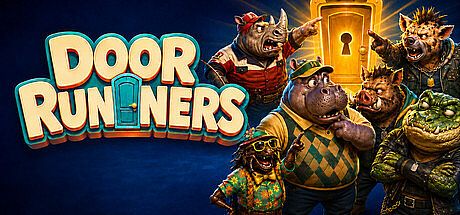




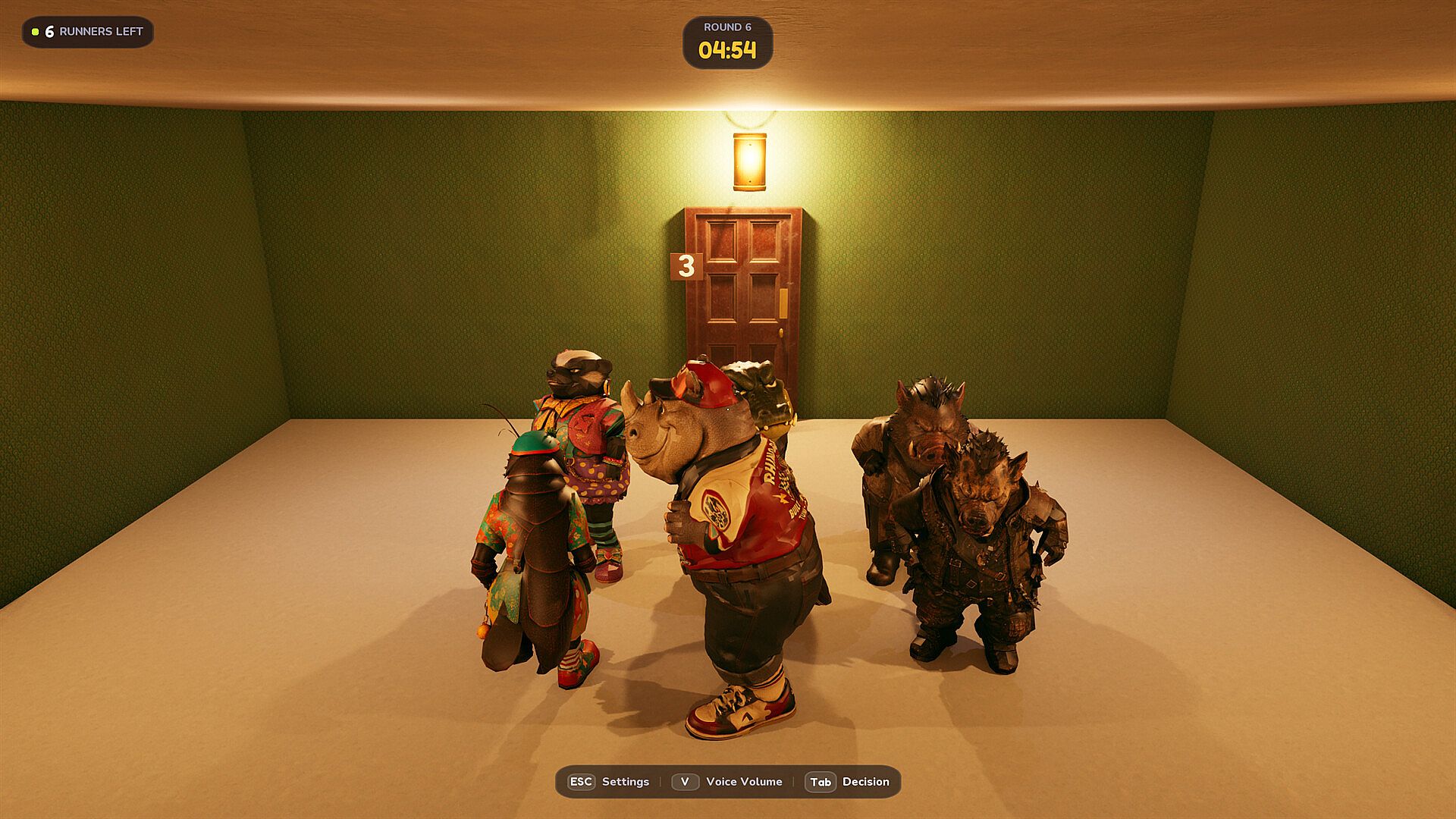
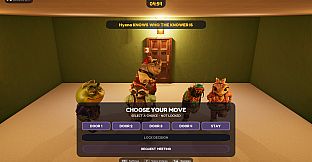
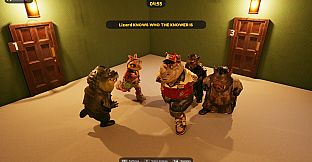
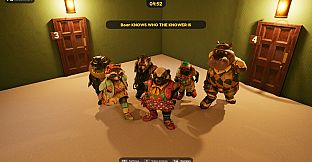
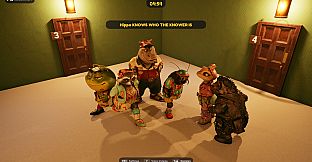
Door Runners is a 4 to 10 player online social deduction party game available on PC in Early Access. Players gather in a series of rooms where each contains four doors and only one leads to safety. The setup forces constant discussion and second guessing as participants try to identify the correct exit while managing limited information and shifting alliances.
Gameplay
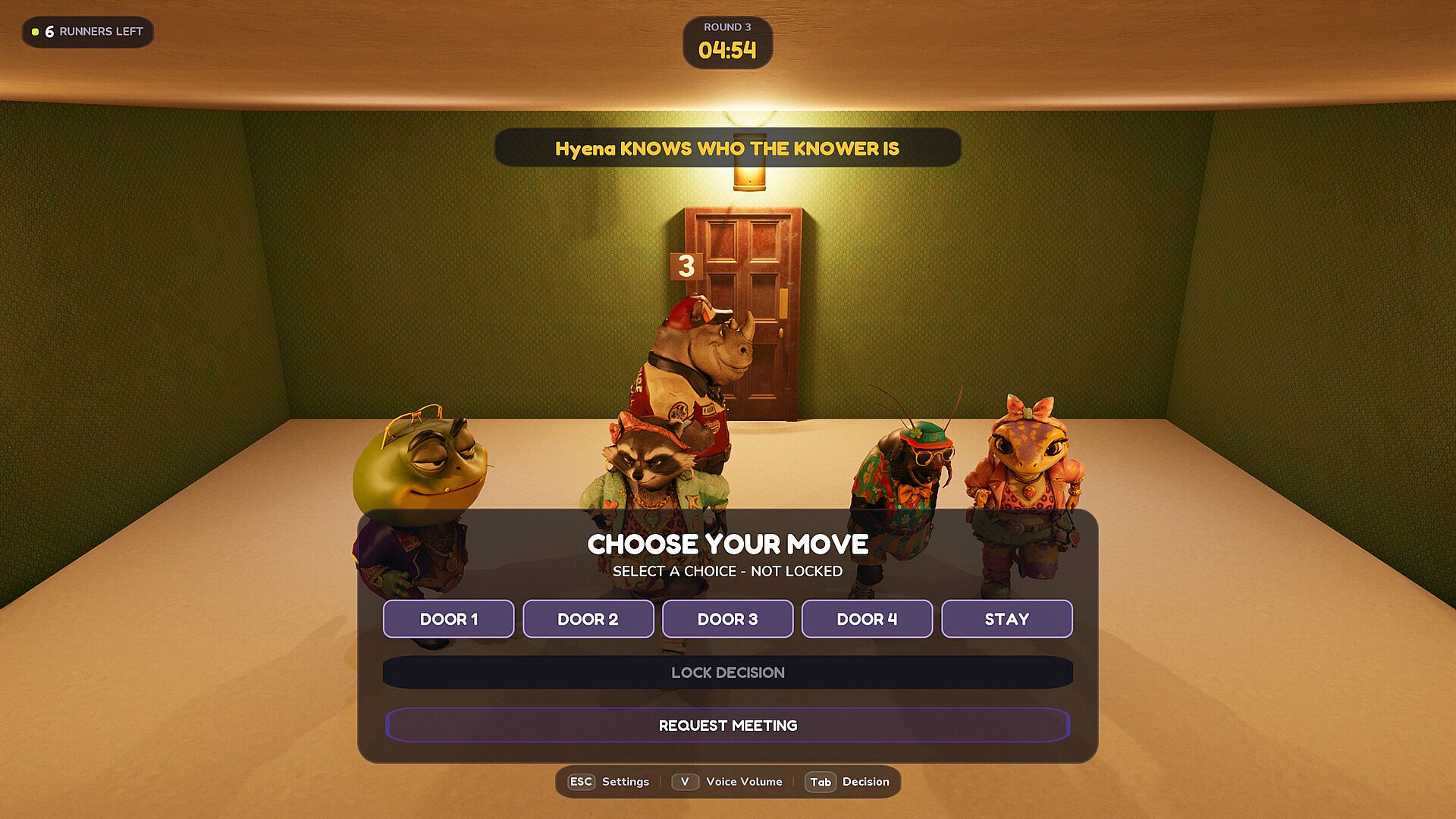
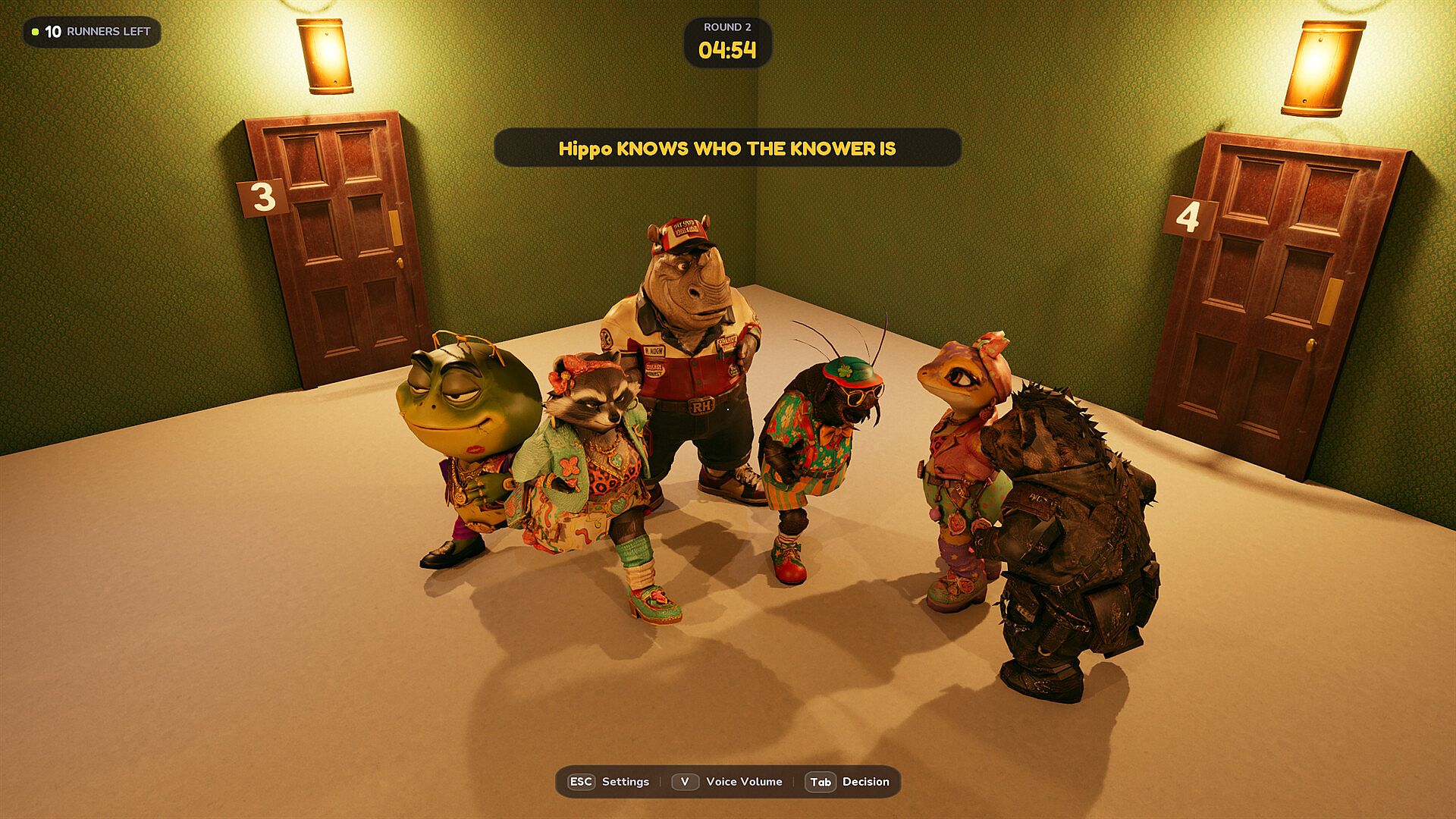
The core loop centers on live negotiation inside each room. One designated player knows the safe door from the start but cannot pass through it without company. Everyone else must decide whom to trust based on arguments, timing, and behavior. Proximity voice chat carries all communication, allowing groups to form, information to trade, or accusations to fly in real time before the timer expires.
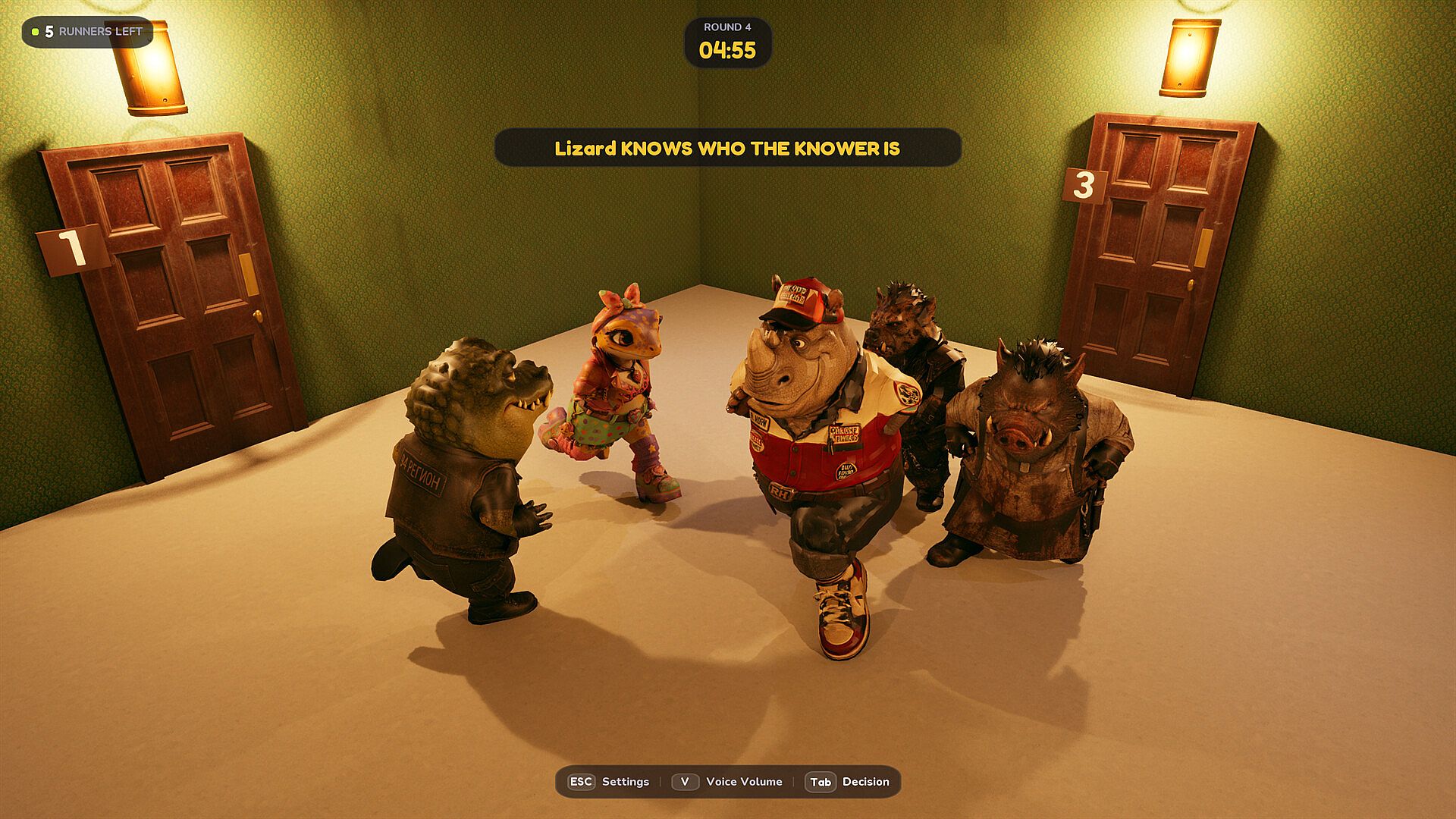
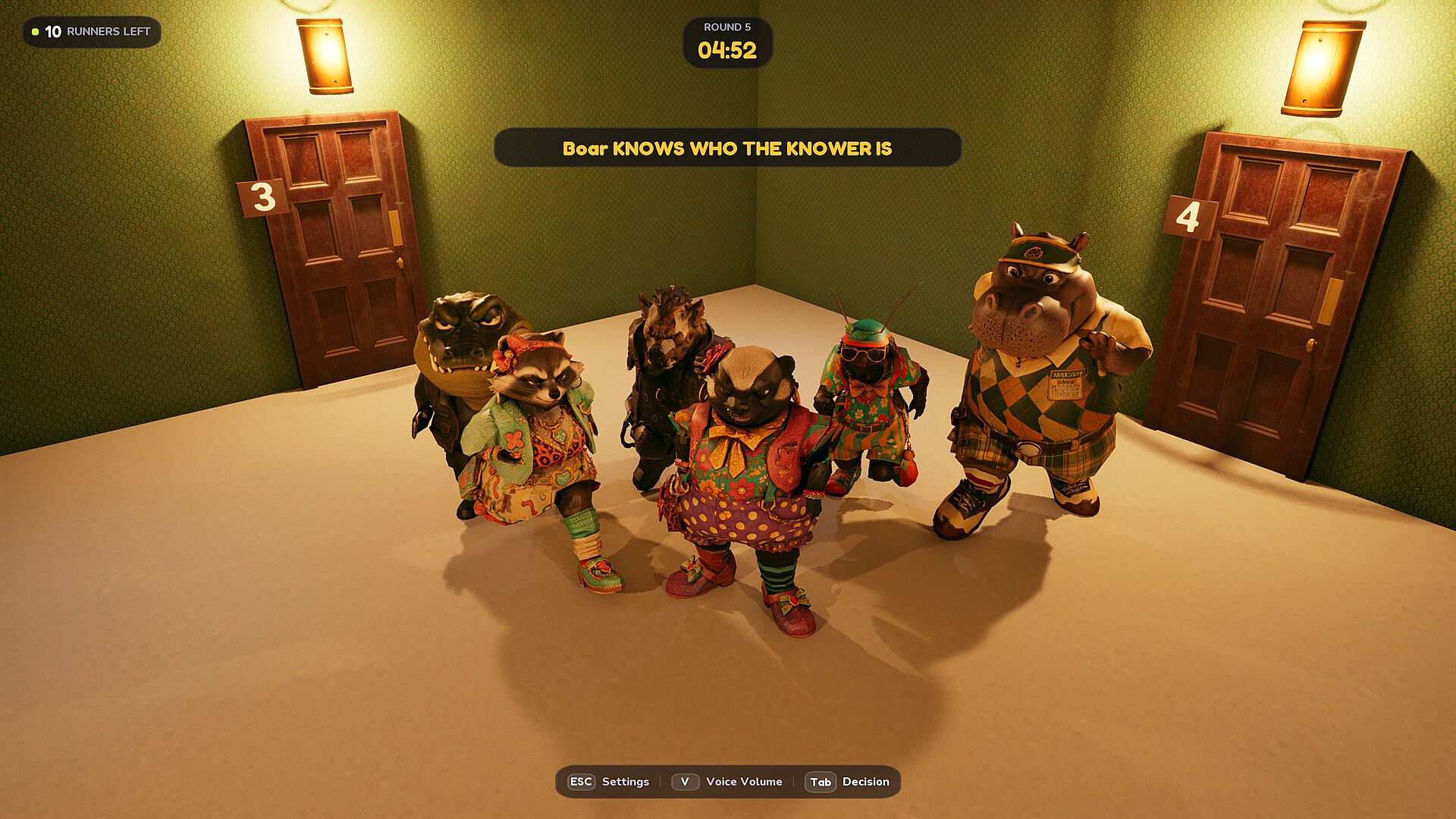
Once three or more players remain active, a second role appears. The Witness knows the identity of the Knower, while the rest of the group can identify the Witness. This addition creates new layers of observation and misdirection as two key figures become focal points for scrutiny. Rounds continue until enough players survive to reach the endgame phase.
The final stage narrows to two doors and two remaining players. With no larger group for cover or a Witness to redirect blame, the confrontation becomes direct. Each decision carries immediate consequences without the buffer of additional voices or roles.
Game Modes
Door Runners structures its experience around progressive rounds that build tension through repeated door selections. Early rounds emphasize group dynamics and persuasion among the full player count. Mid rounds introduce the Witness role once the field narrows, shifting focus toward protecting or exposing specific individuals.
Later rounds strip away support structures entirely. The game reduces to head to head choices between the final pair, testing raw judgment and prior alliances without external interference. This progression creates a natural escalation from crowded negotiation to isolated confrontation.
Core Mechanics and Roles
Central systems revolve around the Knower and Witness roles. The Knower holds critical knowledge but requires cooperation to act on it. The Witness adds visibility and risk once activated, as their presence becomes public knowledge. Proximity voice chat underpins every interaction, enabling quick team formation or betrayal depending on the moment.
Room layouts remain consistent in structure, with four doors per space and a single safe option. Timing and group consensus determine outcomes before each round concludes. Survival across multiple rounds determines who reaches the stripped down finale.
Is It Worth Playing?
Door Runners suits players who enjoy social deduction experiences built on voice communication and shifting trust. The emphasis on live negotiation and role based information makes each session dependent on group chemistry and quick thinking rather than mechanical skill alone.
Early Access status means the game continues to develop, with the provided systems already delivering focused rounds of deduction and confrontation. Those who prefer party games that reward persuasion and observation over combat or progression loops will find the structure engaging. The reduction to final two player standoffs offers a distinct payoff after earlier crowd based rounds.
Reception depends heavily on finding compatible groups comfortable with voice chat. The game rewards participants who adapt arguments on the fly and read social cues accurately during each door selection. For casual multiplayer sessions centered on deduction and bluffing, the current build provides a complete loop worth exploring.