




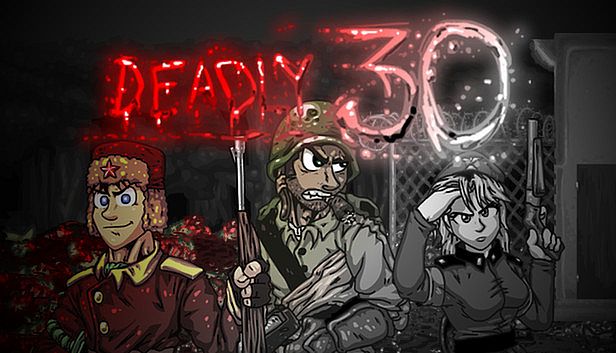
















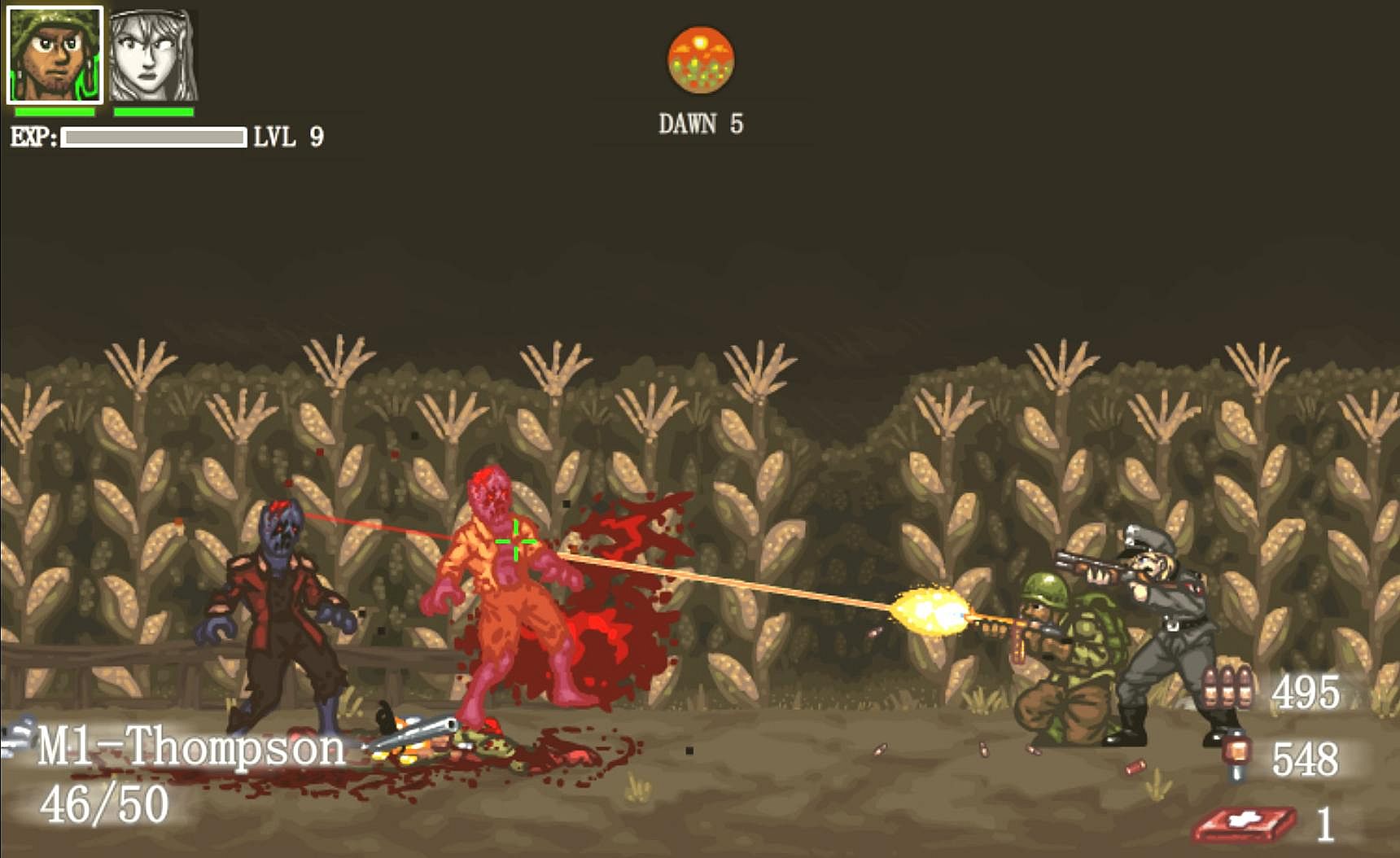
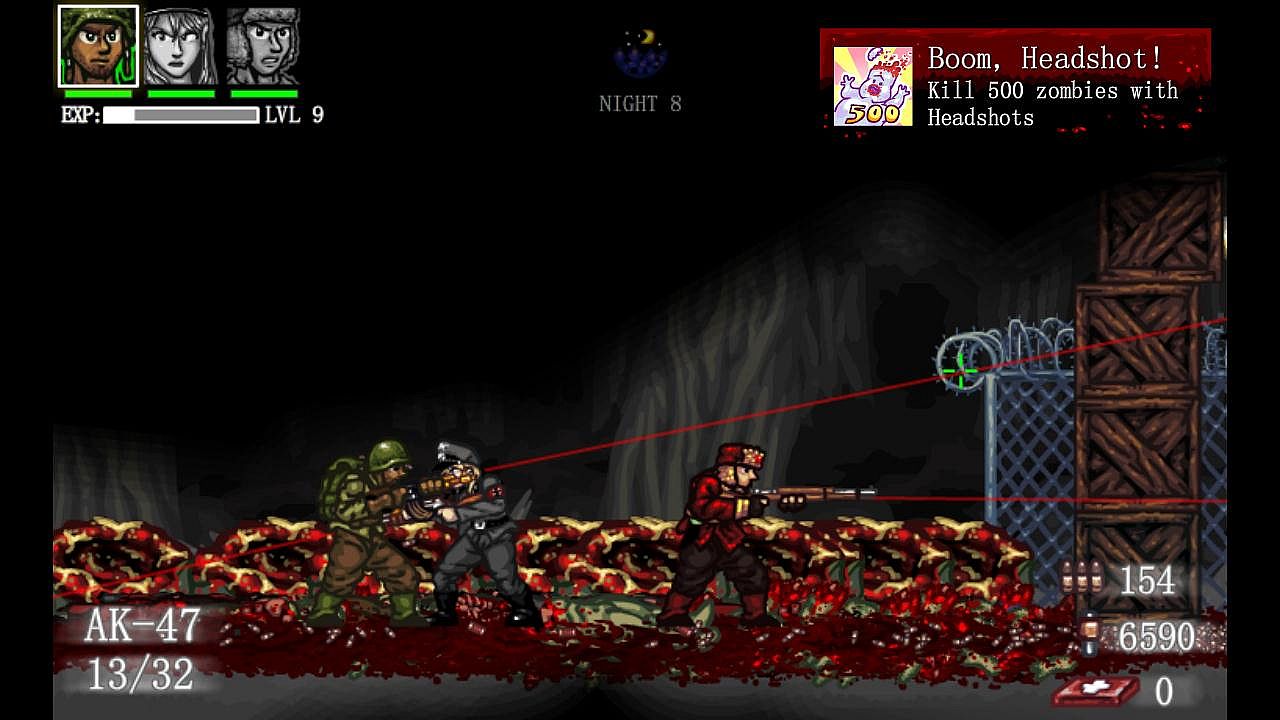
Deadly 30 stands as a compact retro-style survival horror title that blends side-scrolling action with defensive strategy. Players take control of a small team in a zombie-infested setting and must endure a full cycle of thirty days and nights on PC. The game draws from classic 2D shooter mechanics while incorporating base management and resource collection to create a tense loop of preparation and combat.
Gameplay
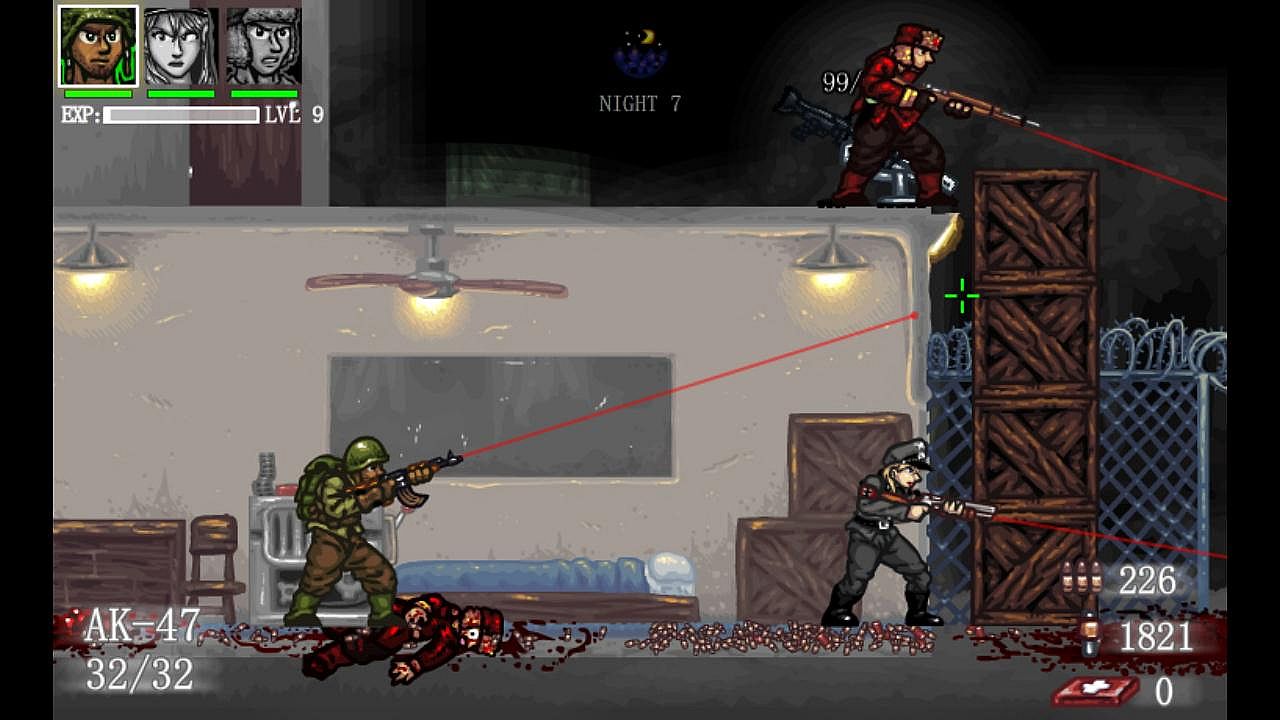
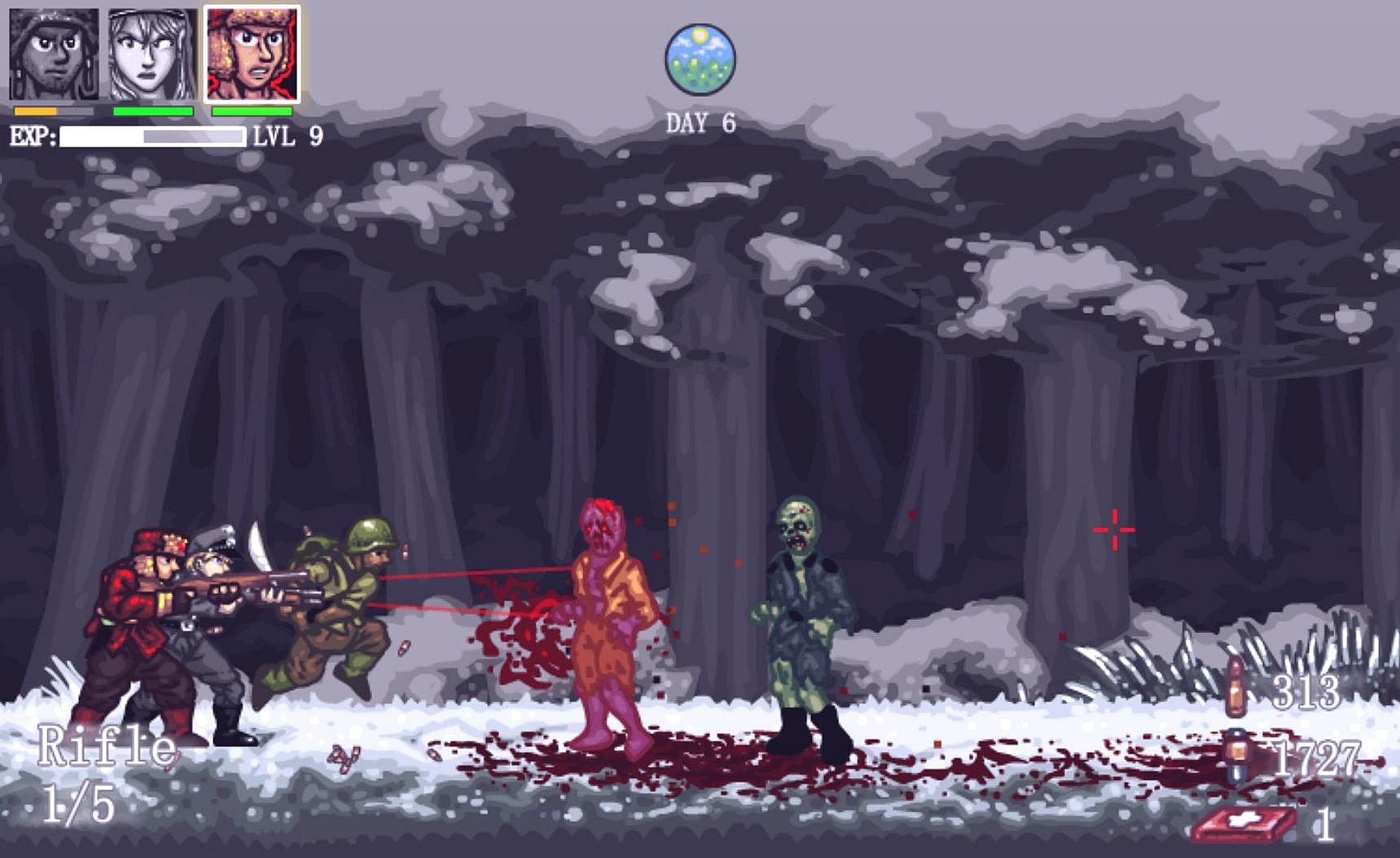
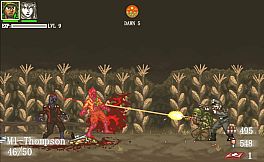
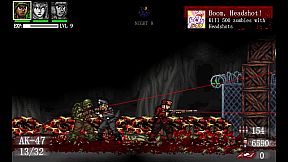
The core loop splits between daylight hours and nighttime threats. During the day, survivors gather supplies, scout the surrounding area for items, and reinforce structures around the base. These activities build toward stronger positions before darkness falls. At night, waves of zombies approach, forcing players to hold the line with direct shooting and automated defenses.
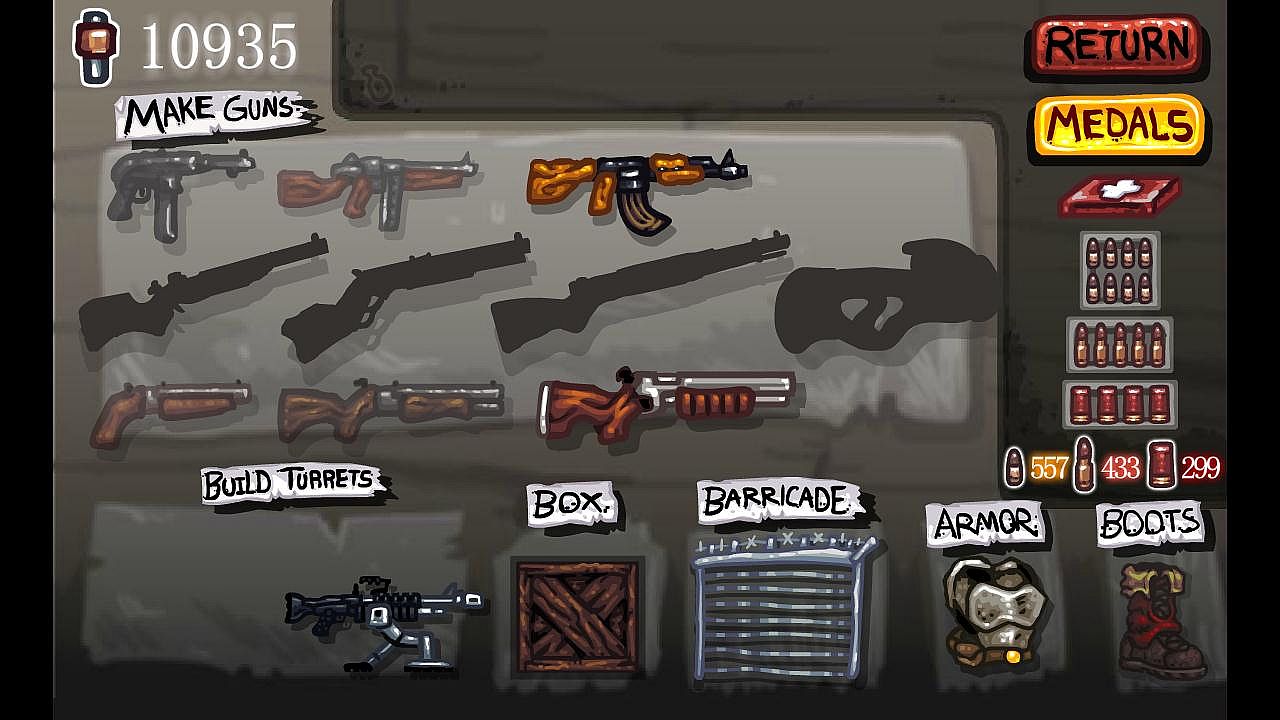
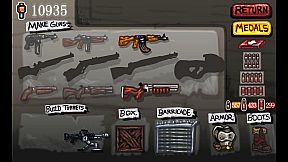
Three distinct characters operate simultaneously under player direction. One character receives direct control while the others follow AI routines that engage enemies automatically. Each soldier carries unique weapons that accept upgrades for increased damage, range, or special effects. Base fortifications also receive improvements that slow or damage incoming hordes. The side-scrolling perspective echoes classic run-and-gun titles, requiring precise movement and positioning amid gruesome enemy types that vary in speed and resilience.
Tactical decisions matter throughout. Leaving the base after sunset carries heavy risk, and poor planning during daylight quickly leads to overwhelming attacks. Upgrades and companion recruitment expand options over the thirty-day span, turning early vulnerability into a more capable defensive setup.
Game Modes
Deadly 30 centers on a single extended survival challenge. The experience unfolds across thirty consecutive day-night cycles without branching campaigns or separate competitive formats. Success depends on balancing exploration, construction, and combat within this fixed timeframe.
Progression remains linear in structure yet flexible in execution. Players choose which areas to explore each day and which upgrades to prioritize, creating different paths through the same overarching goal of lasting the full duration. Achievements track specific accomplishments such as weapon mastery or base improvements, adding replay incentive for those seeking completionist goals.
Key Mechanics and Features
Resource management drives much of the strategy. Collected materials fuel weapon enhancements and defensive structures that prove essential against escalating zombie numbers. The AI teammates handle flanking or covering fire while the player focuses on priority targets, creating a hybrid of manual skill and automated support.
Enemy variety keeps encounters fresh. Different zombie forms demand adjusted tactics, from fast runners that test positioning to tougher variants that require concentrated fire. Deadly weapons available through upgrades deliver satisfying feedback in the retro pixel style.
- Daytime resource runs and base expansion
- Nighttime wave defense with mixed manual and AI combat
- Character-specific weapon upgrades
- Fortification improvements for layered protection
Is It Worth Playing?
Deadly 30 appeals most to players who enjoy short, focused indie experiences that combine shooter action with light tower defense elements. Its retro presentation and straightforward systems deliver a complete package without modern bloat or ongoing live-service demands. The title reached Mostly Positive status on its platform, with 79 percent of 1,156 user reviews rated positively, reflecting appreciation for its atmosphere and core loop among fans of classic-style survival games.
Those seeking lengthy campaigns or frequent content updates may find the fixed thirty-day structure limiting. However, the game suits sessions where quick restarts and experimentation with different upgrade paths provide repeated enjoyment. Its small scope and clear objectives make it accessible for anyone interested in zombie survival mechanics executed through 2D side-scrolling combat and base fortification on PC.















