
















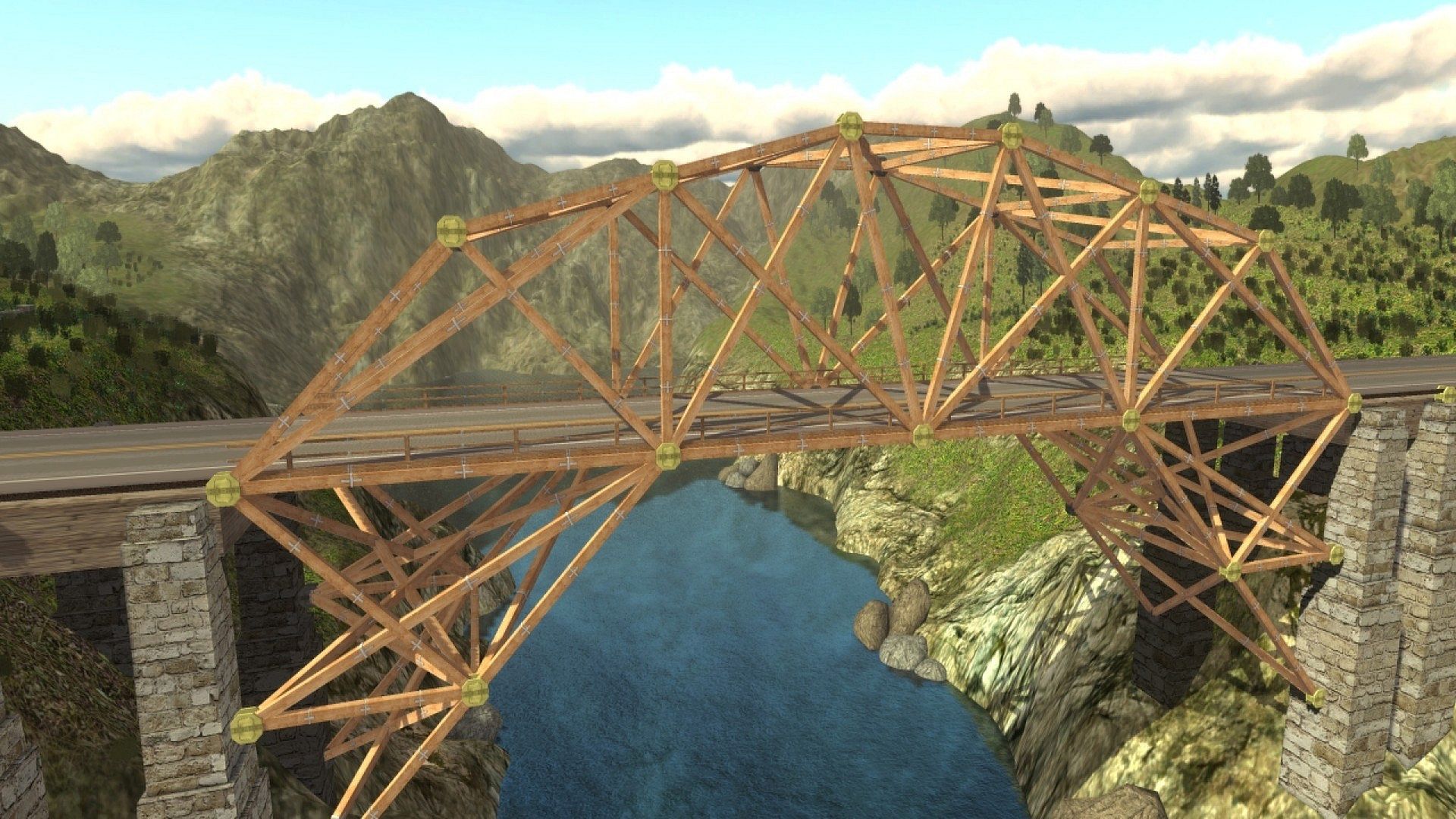
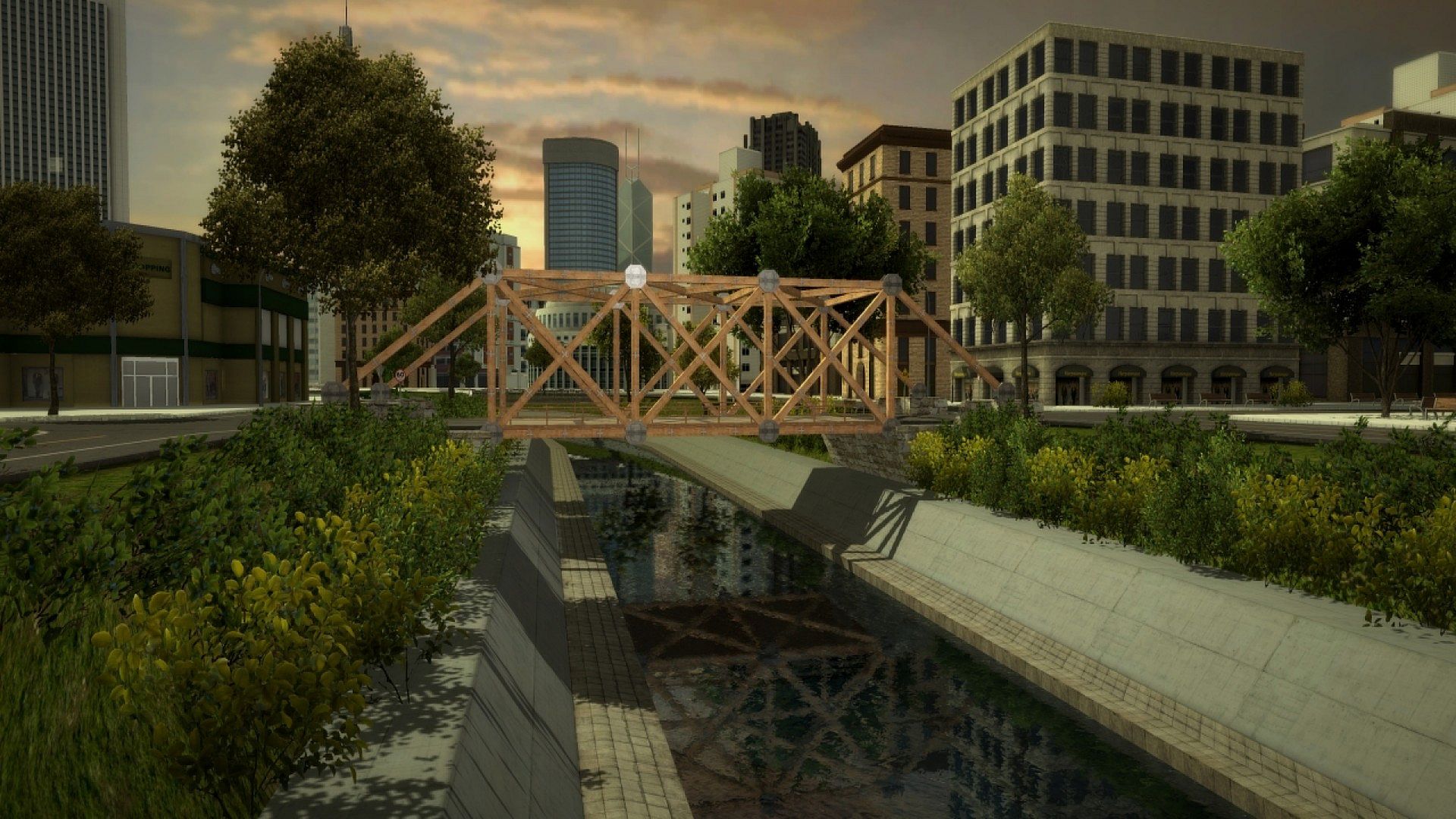
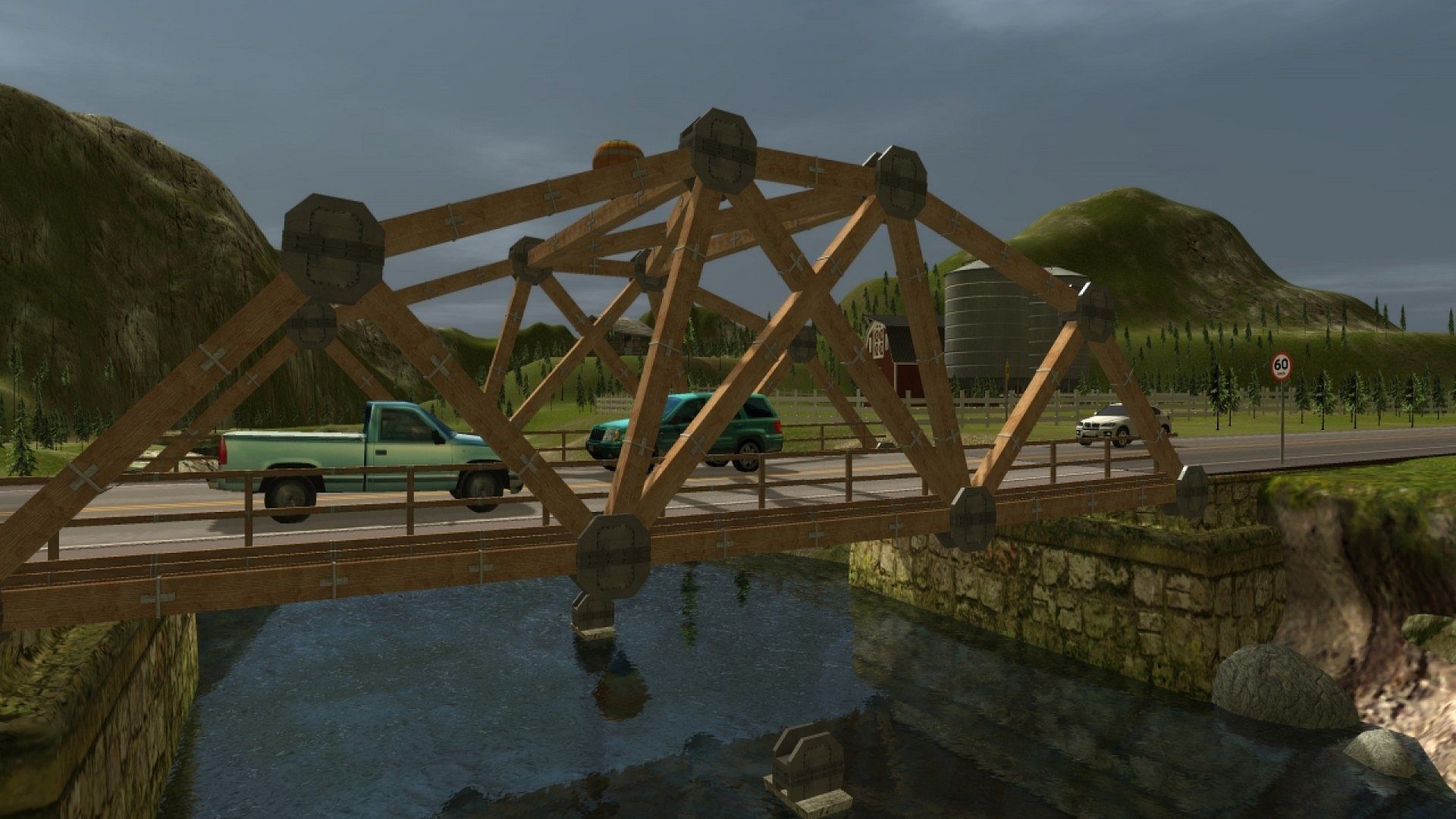
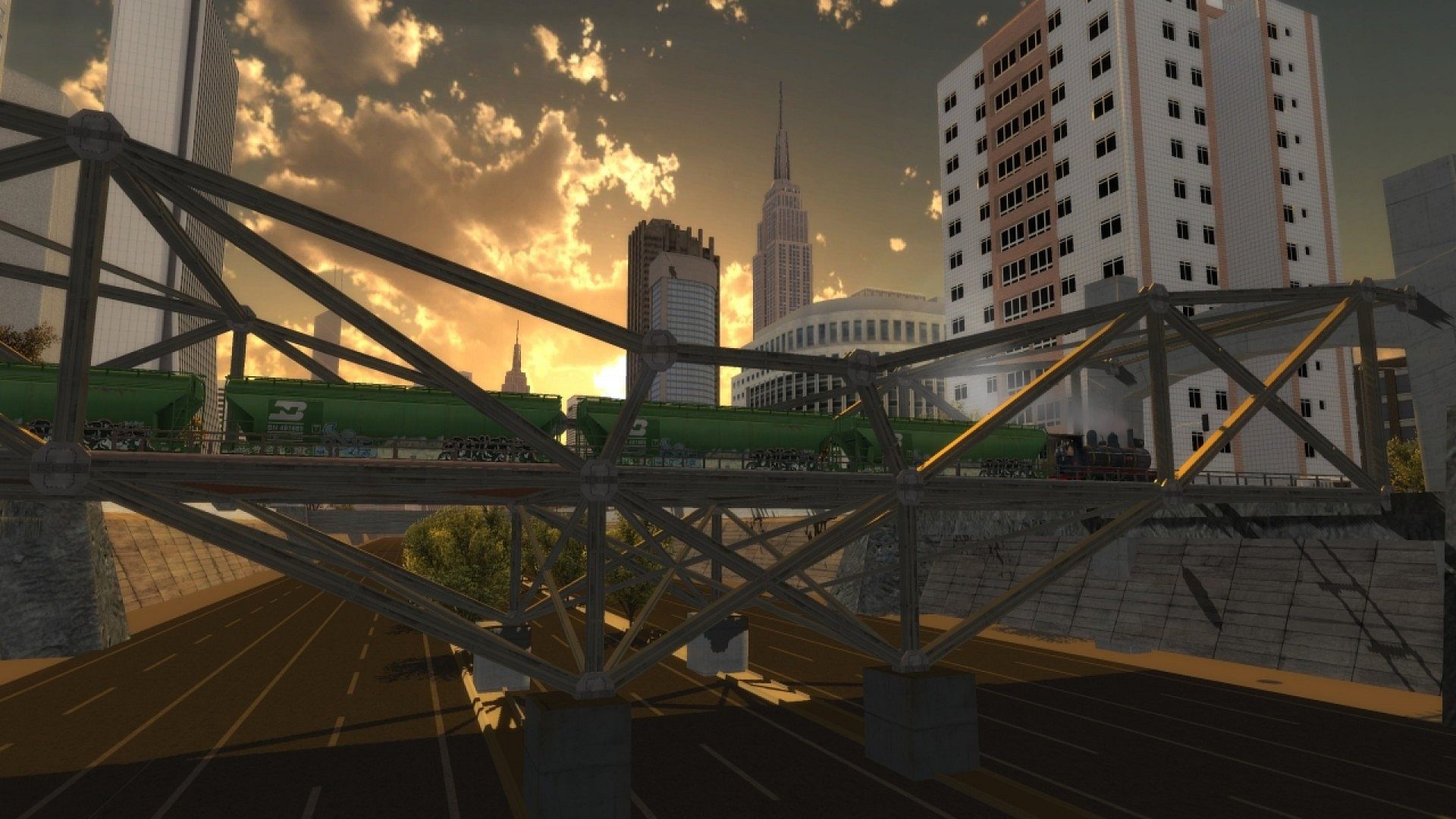
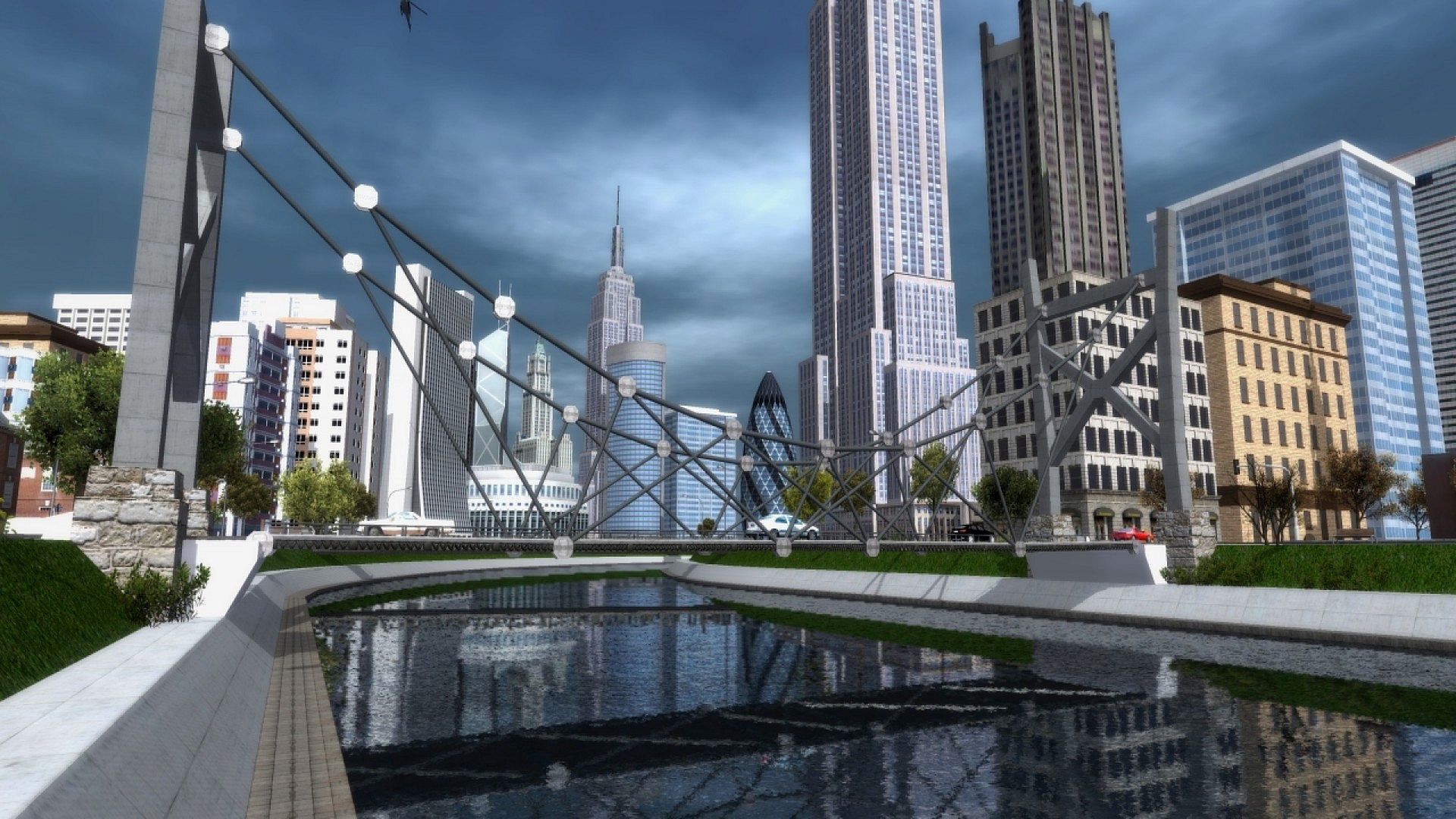
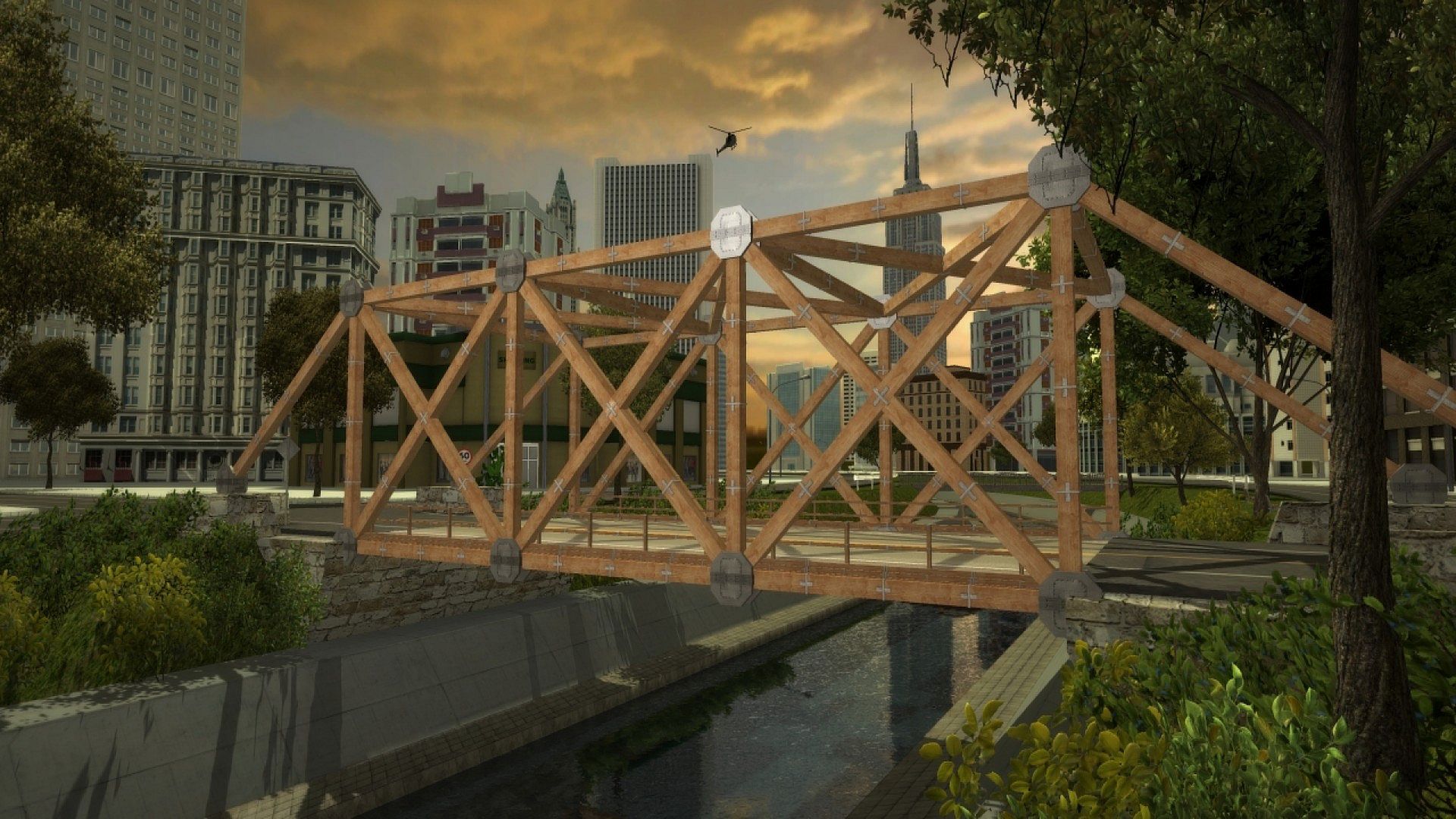
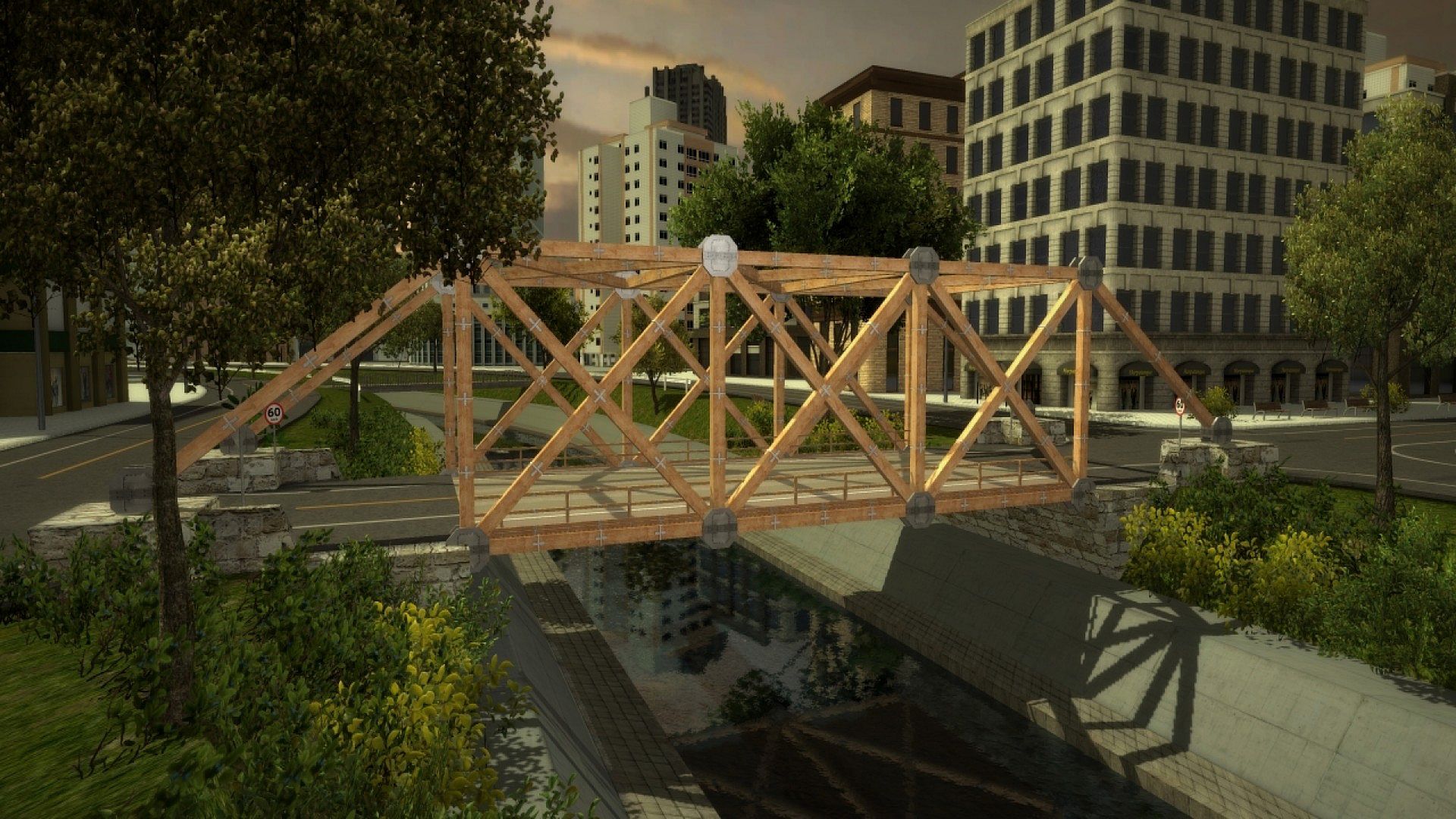
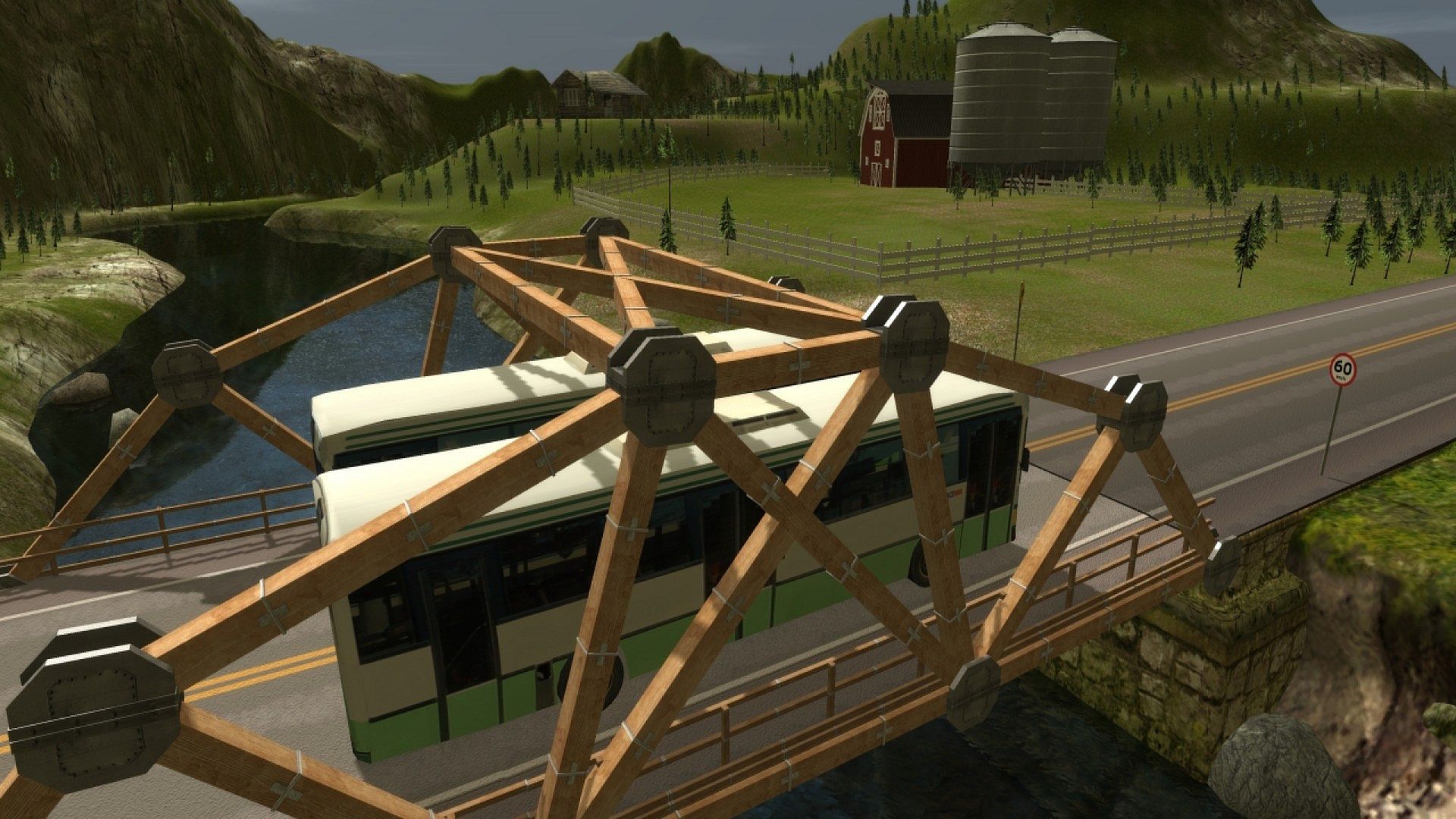
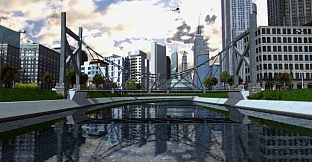
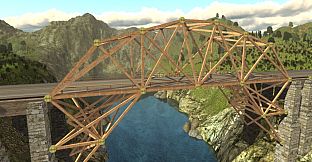
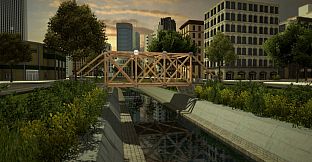
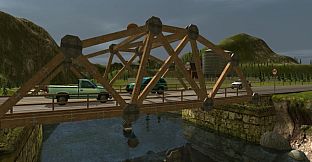
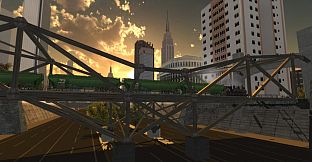
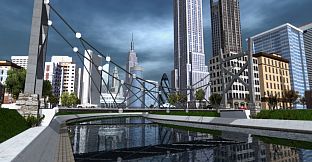
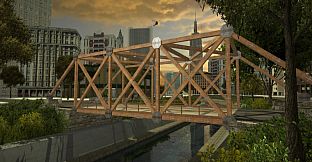
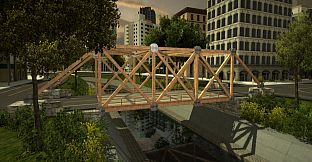
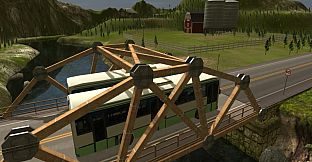
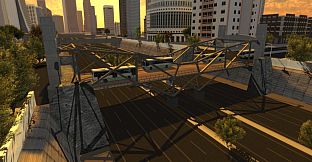
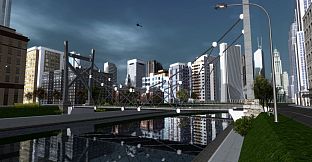
Bridge Project is a bridge construction simulation game developed for PC. Players take on the role of structural engineers tasked with designing and building functional bridges across varied environments. The game emphasizes realistic physics and material properties, requiring careful planning to ensure stability under different loads and conditions. Released in 2013, it expands on earlier bridge-building concepts with updated visuals and an improved engine for testing structures against vehicles and environmental stresses.
Gameplay
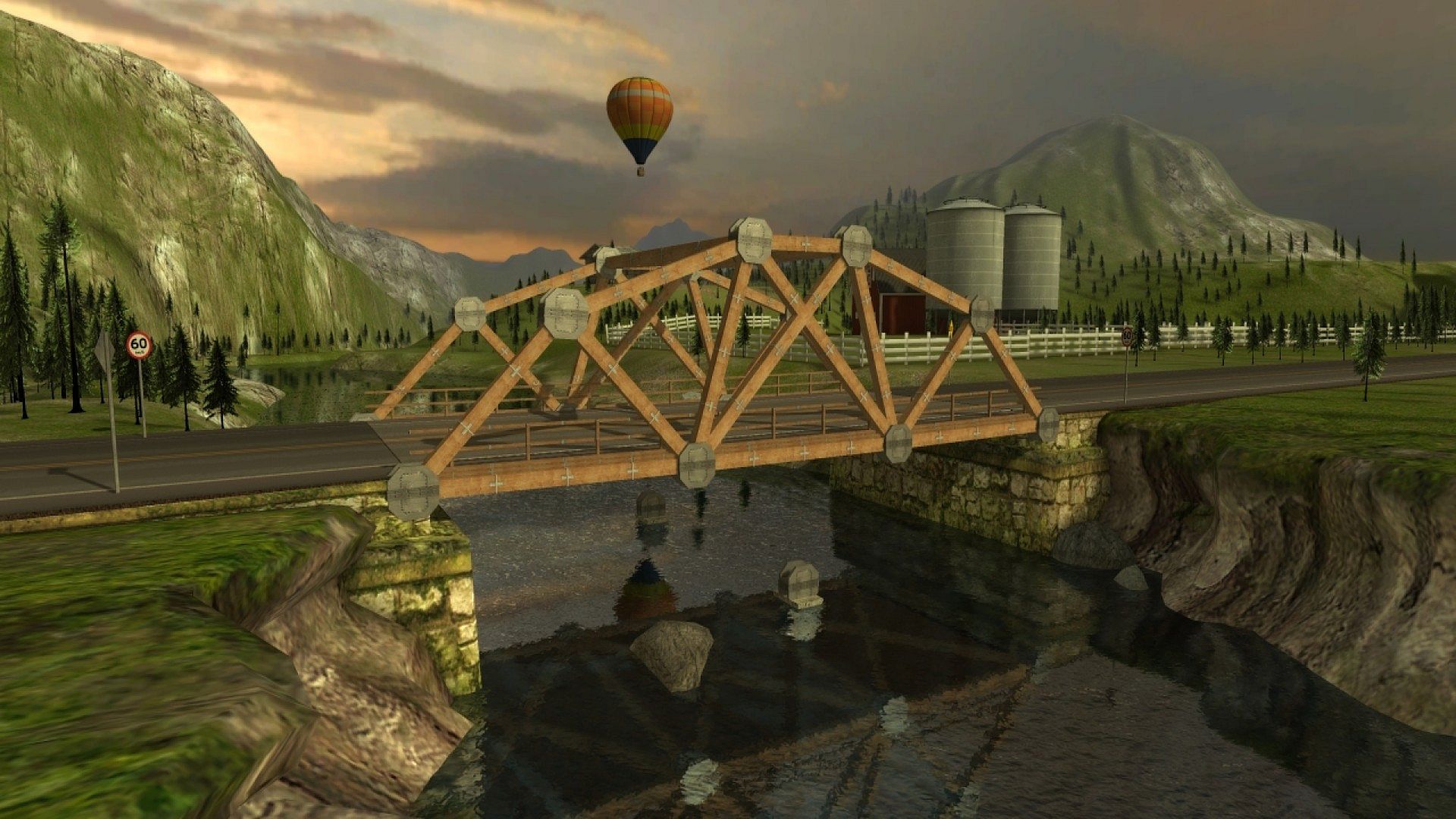
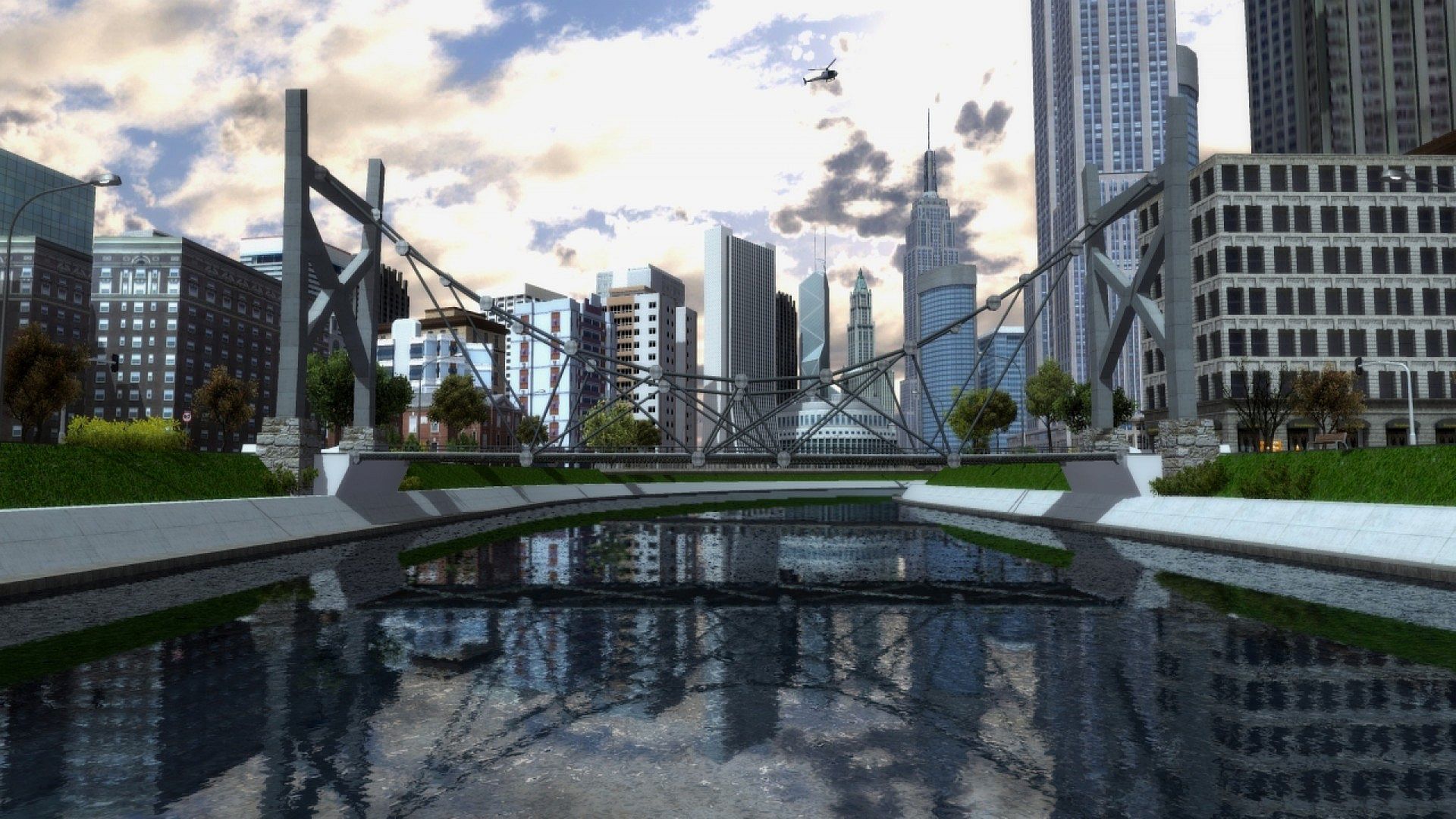
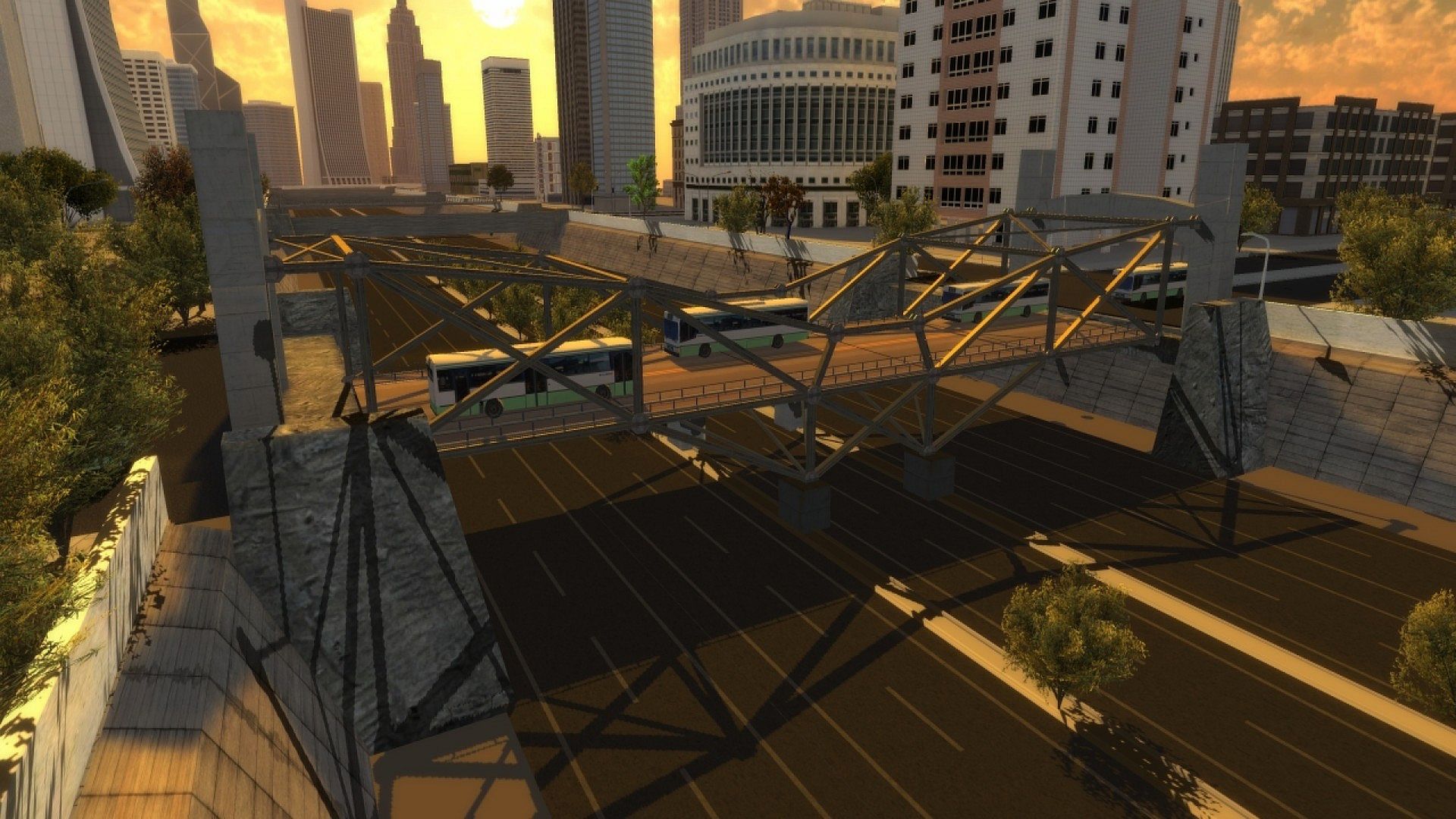
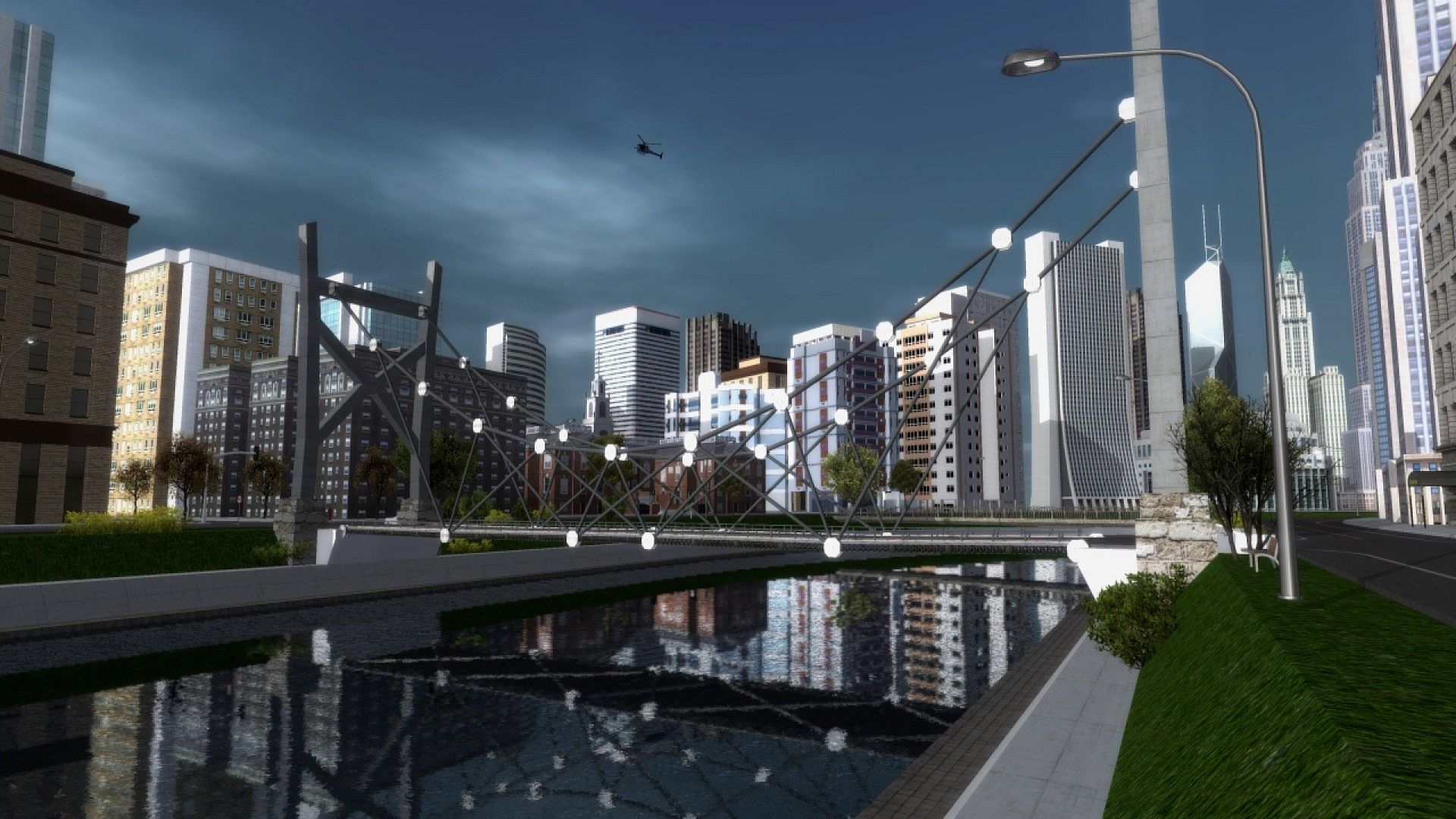
The core loop involves selecting a construction site and assembling a bridge using available materials such as wood, steel, concrete, cables, and stone. Builders position elements to span gaps in landscapes that include urban settings, rural areas, and canyons. Once assembled, the structure undergoes testing with passing vehicles including cars, trains, buses, and tanks, as well as ships in some scenarios. Additional challenges come from simulated natural events like storms and earthquakes that apply dynamic forces to the completed bridge.
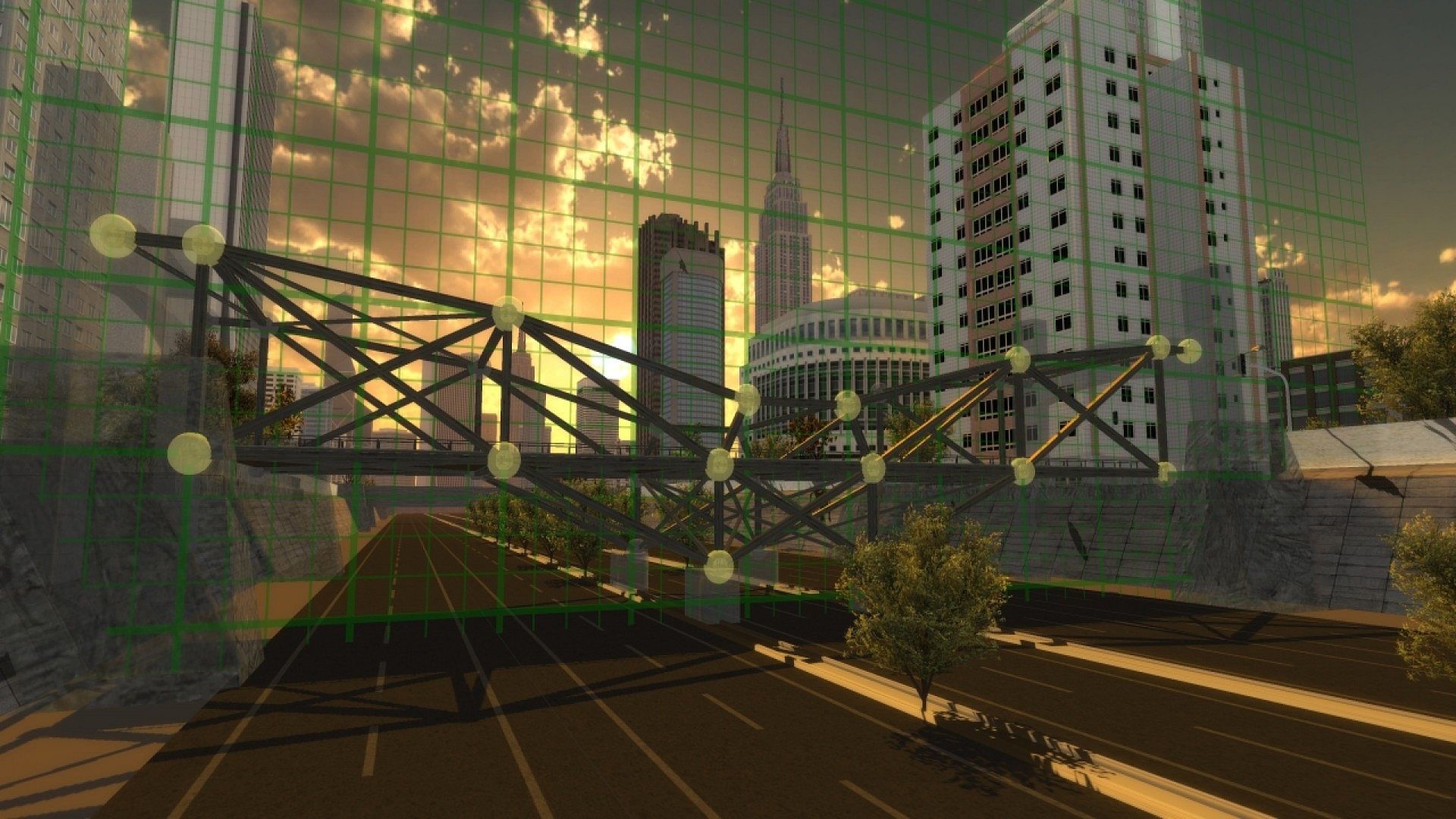
Success depends on balancing cost, weight, and durability while meeting the specific requirements of each task. The physics system evaluates how the bridge handles stress, with failures resulting from excessive deflection or collapse. Players refine designs iteratively, removing or adding components until the bridge passes all tests. Detailed 3D environments provide context for placement, and the interface supports precise adjustments during the building phase.
Game Modes
Design tasks can be approached in simple mode for more forgiving parameters or expert mode for stricter constraints on materials and tolerances. These settings alter the difficulty of meeting stability and budget goals without changing the fundamental building tools. A dedicated simulation mode allows switching from construction to active testing, where vehicles traverse the bridge and external forces are applied in real time.
An editor mode provides full freedom to create custom levels from scratch. Users define the terrain, objectives, and testing parameters before sharing their creations. This extends the experience beyond the included content by enabling community-driven challenges and variations on standard bridge types such as suspension, draw, or railway structures.
Levels and Challenges
The game includes 48 levels divided across four themes, with twelve scenarios each in rural, city, canyon, and varied settings. Each level presents unique terrain obstacles and vehicle requirements that demand different bridge configurations. Progress involves completing these in sequence, with performance measured by factors like material efficiency and structural integrity.
Challenges scale in complexity, starting with basic spans and advancing to multi-section designs that must accommodate mixed traffic or withstand repeated stress tests. The variety encourages experimentation with different material combinations and support layouts to achieve reliable results across all environments.
Community and Sharing
Players can upload custom levels for others to download and attempt. A global ranking system tracks performance metrics such as lightest successful bridges or fastest completion times, allowing comparison against the broader player base. Competitions organized through the community provide additional goals focused on specific design constraints or record attempts.
These features foster ongoing engagement for those interested in creative problem-solving and optimization. The editor supports detailed customization, making it possible to replicate real-world bridge concepts or invent entirely new scenarios for personal or shared use.
Is It Worth Playing?
Bridge Project appeals primarily to fans of construction and physics-based simulations who enjoy methodical design work over fast-paced action. Its mixed reception stems from an older interface and occasional inconsistencies in level difficulty, yet the core building and testing mechanics remain engaging for the right audience. The game offers substantial content through its 48 levels plus the ability to create and share more, providing long-term value for dedicated players.
Those seeking a focused single-player experience centered on engineering principles will find it delivers consistent challenges without requiring ongoing updates. Availability on PC makes it accessible for anyone with an interest in bridge design simulations, particularly if they appreciate iterative refinement and realistic failure states. Overall, it suits patient builders looking for a specialized title rather than broad entertainment.