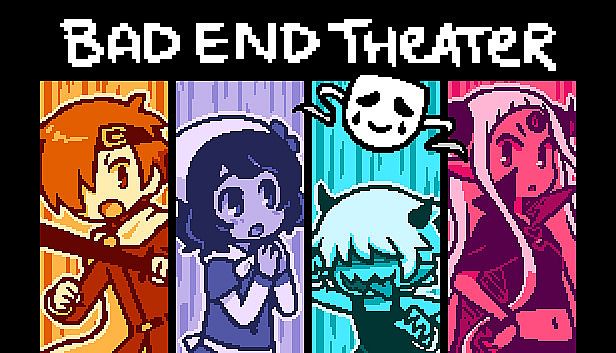
















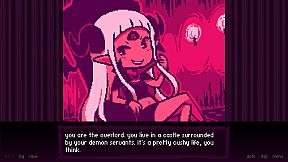
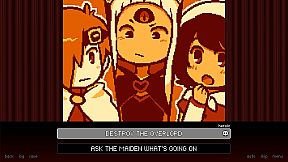
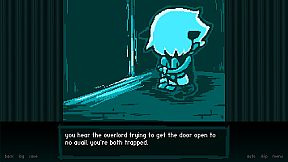
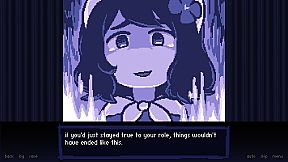
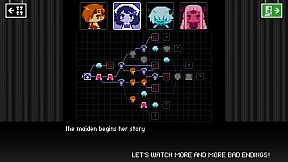
BAD END THEATER is a simulation game built around interconnected stories and deliberate choices that shape multiple character arcs at once. Players select different protagonists and navigate scenarios where every decision carries consequences across separate narratives. The core appeal lies in experimenting with outcomes while accepting that most routes end poorly for the cast.
Gameplay
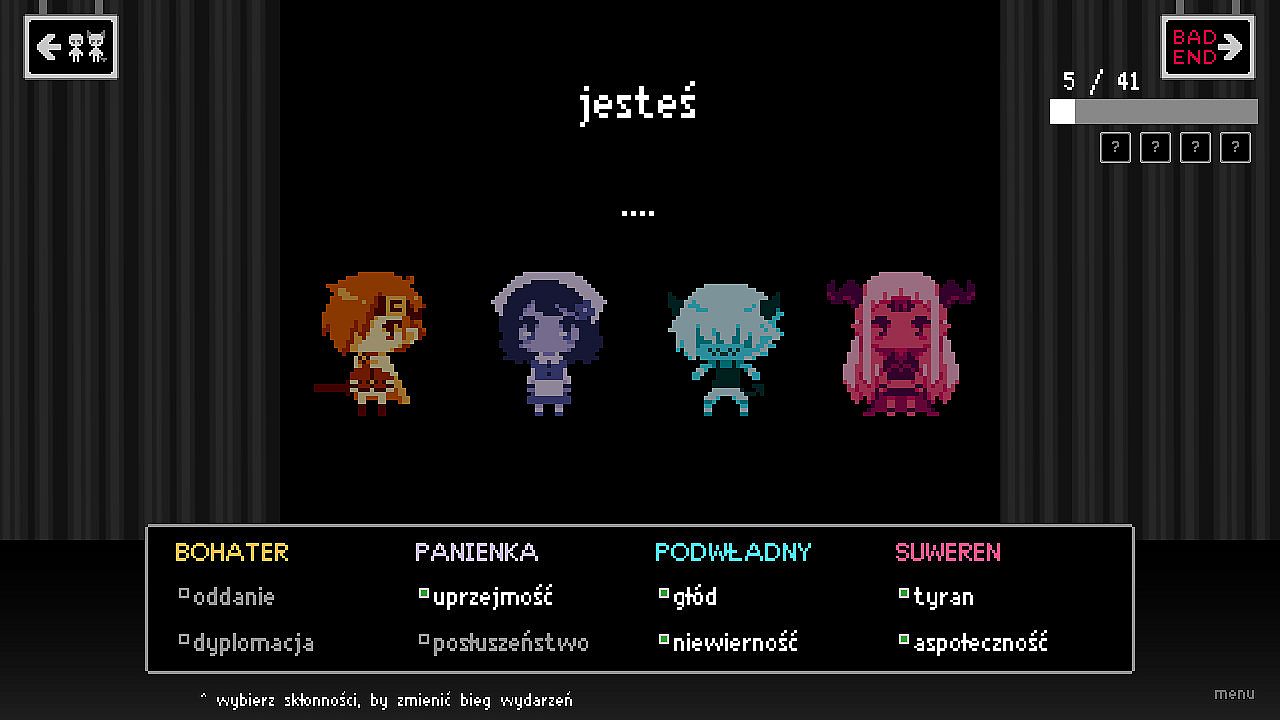
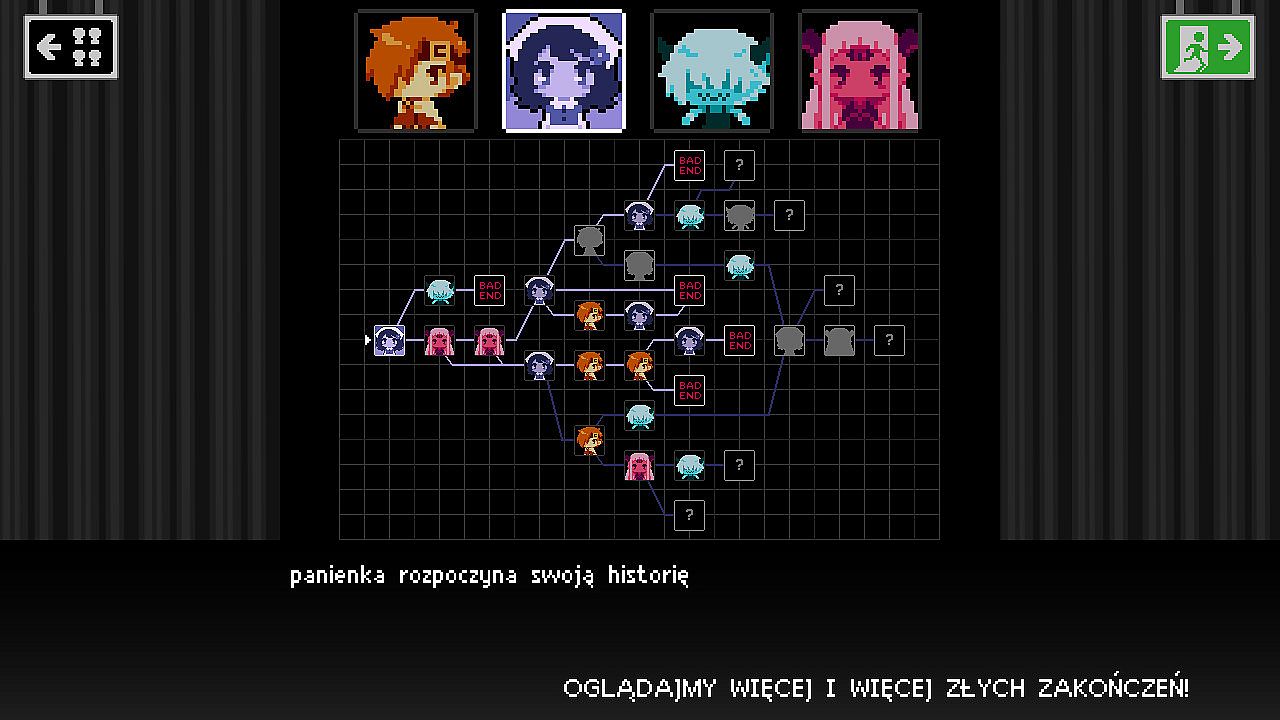
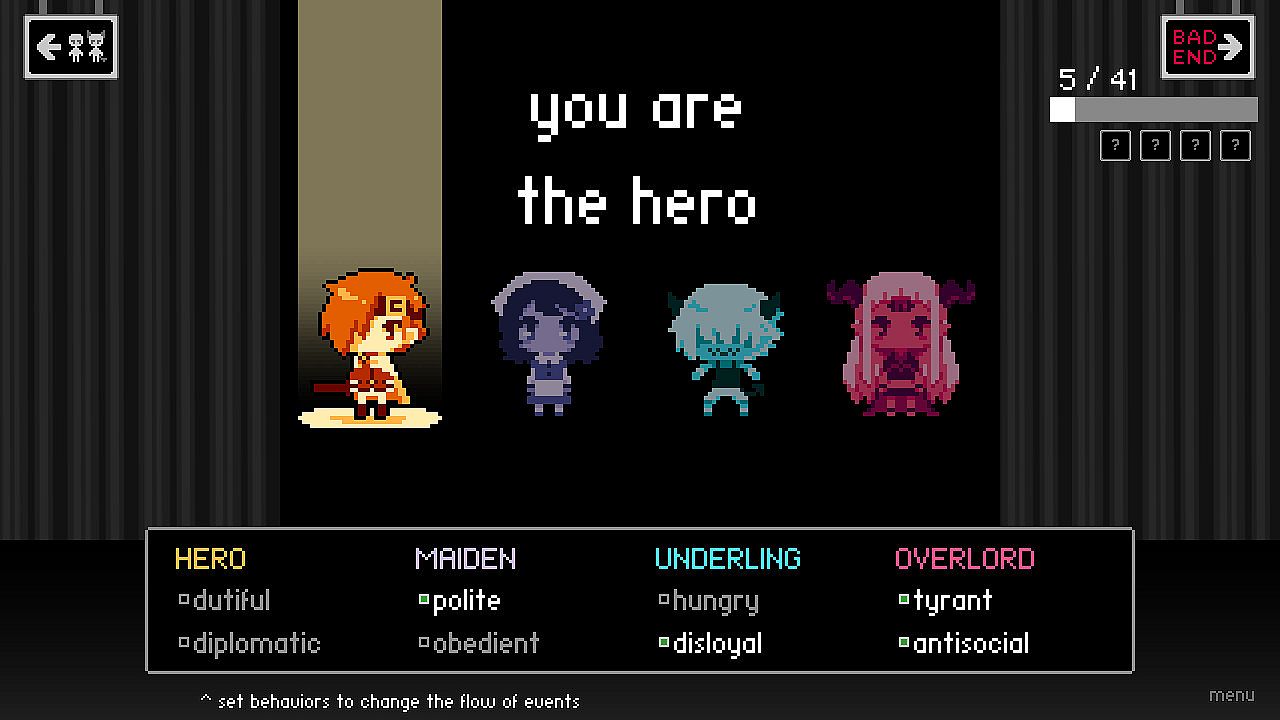
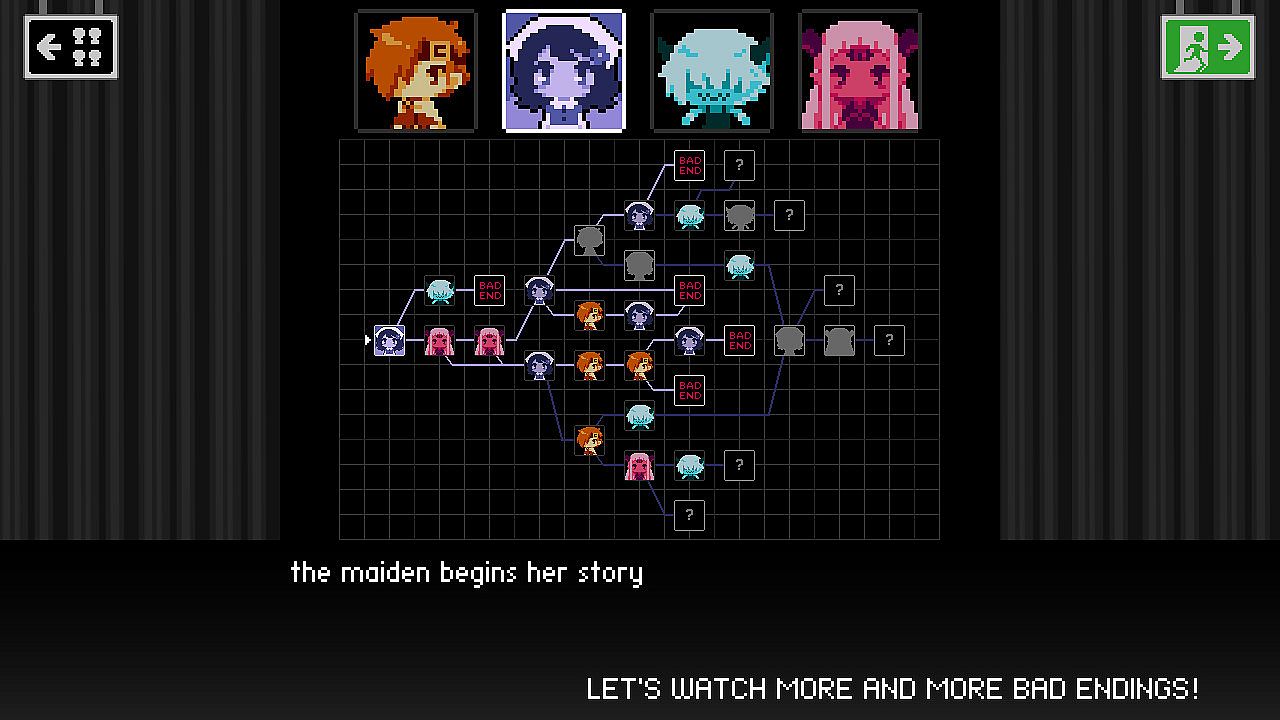
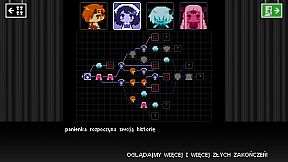
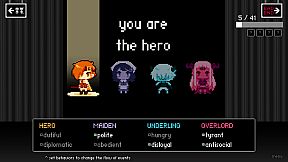
The experience centers on a decision system where choices made in one protagonist's story directly influence events in others. Players can toggle specific behaviors or traits for characters to unlock alternate paths. This creates a web of cause and effect that rewards careful tracking of how small adjustments ripple outward. The game emphasizes puzzle-like deduction as players test combinations to reach new conclusions, even though the overarching theme remains one of unfortunate resolutions.
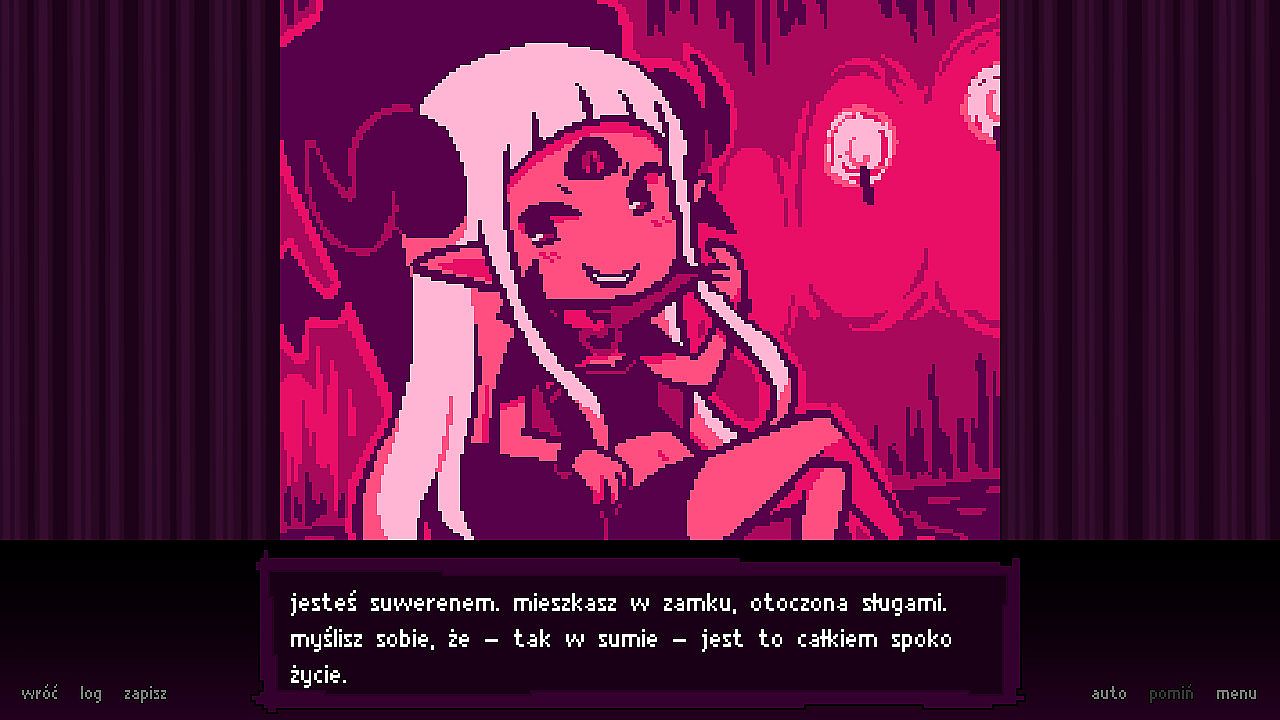
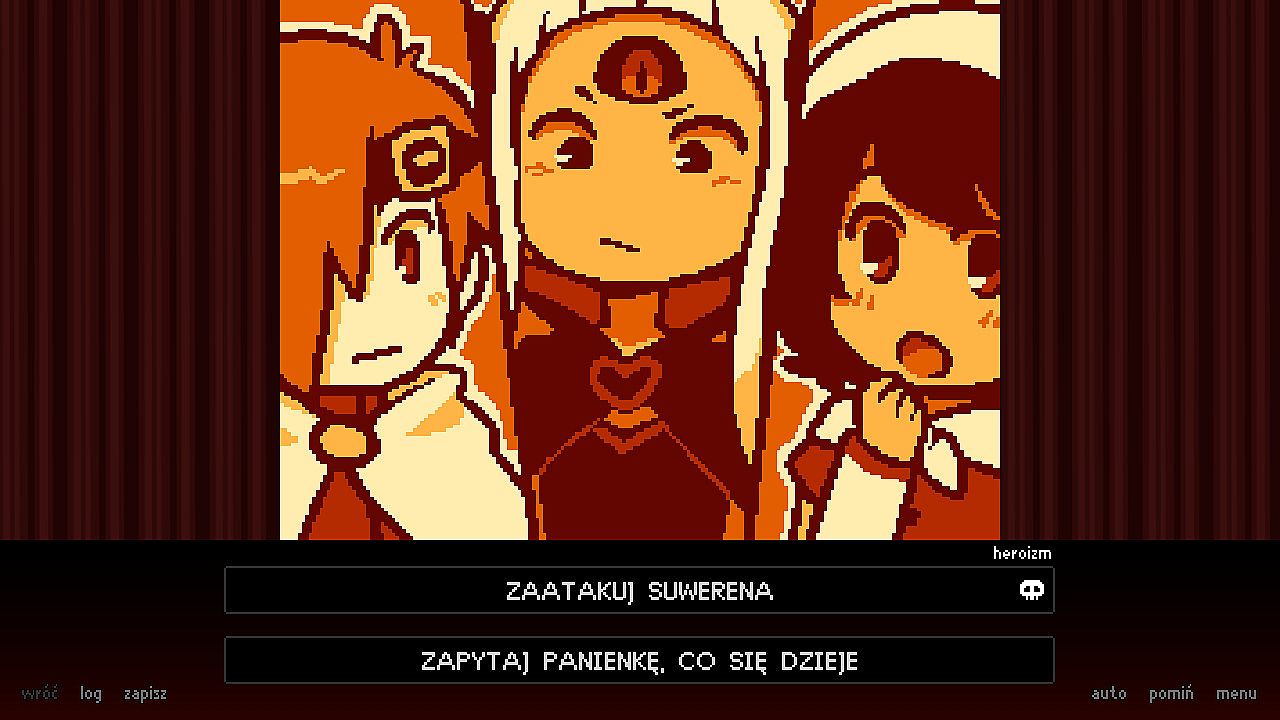
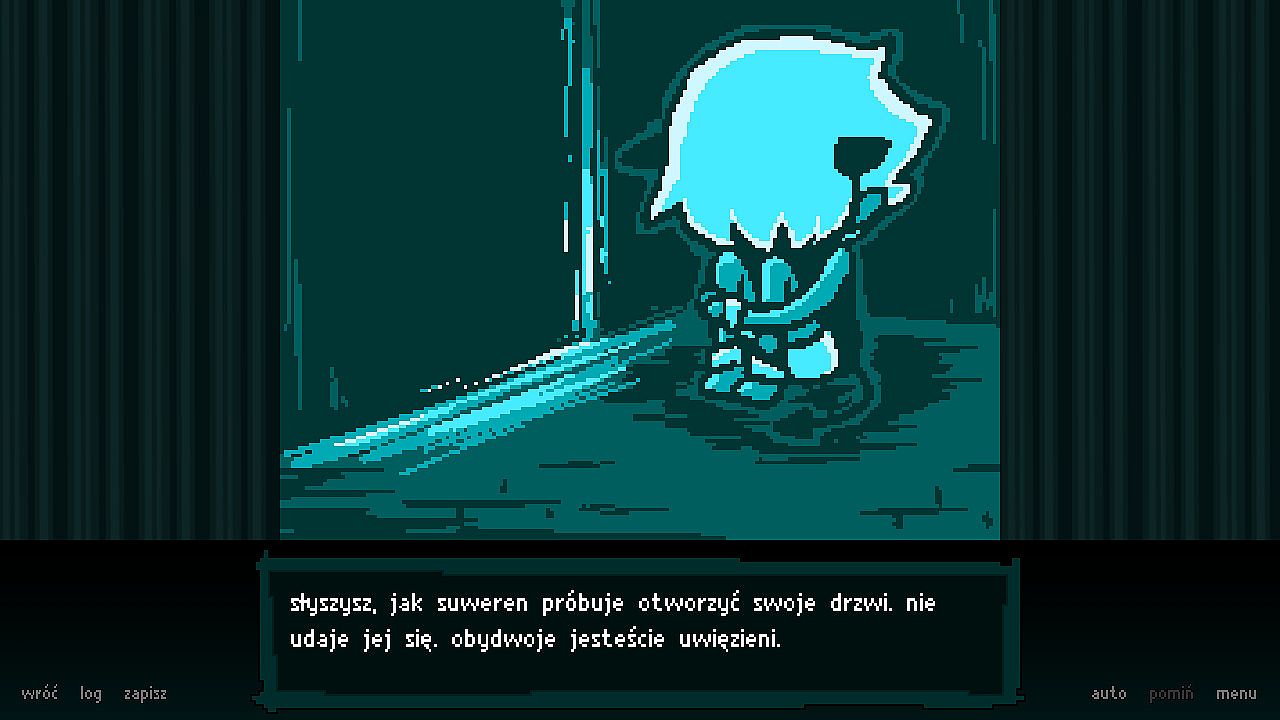
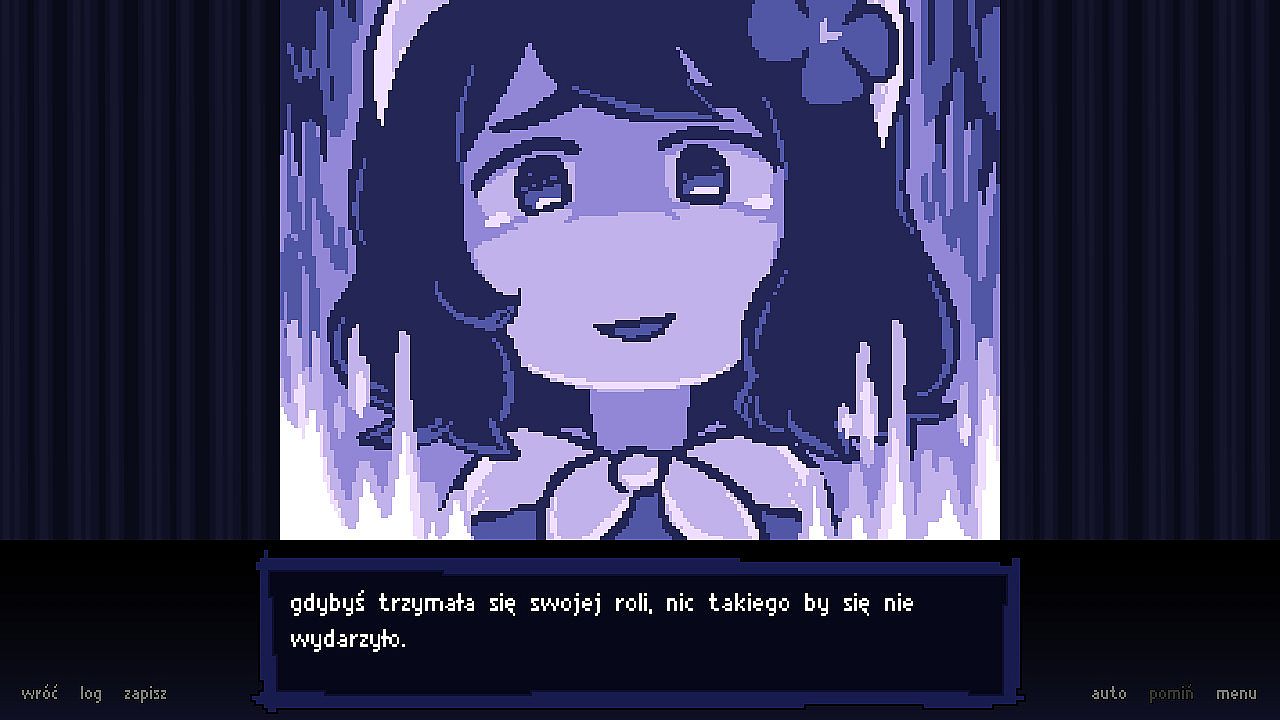
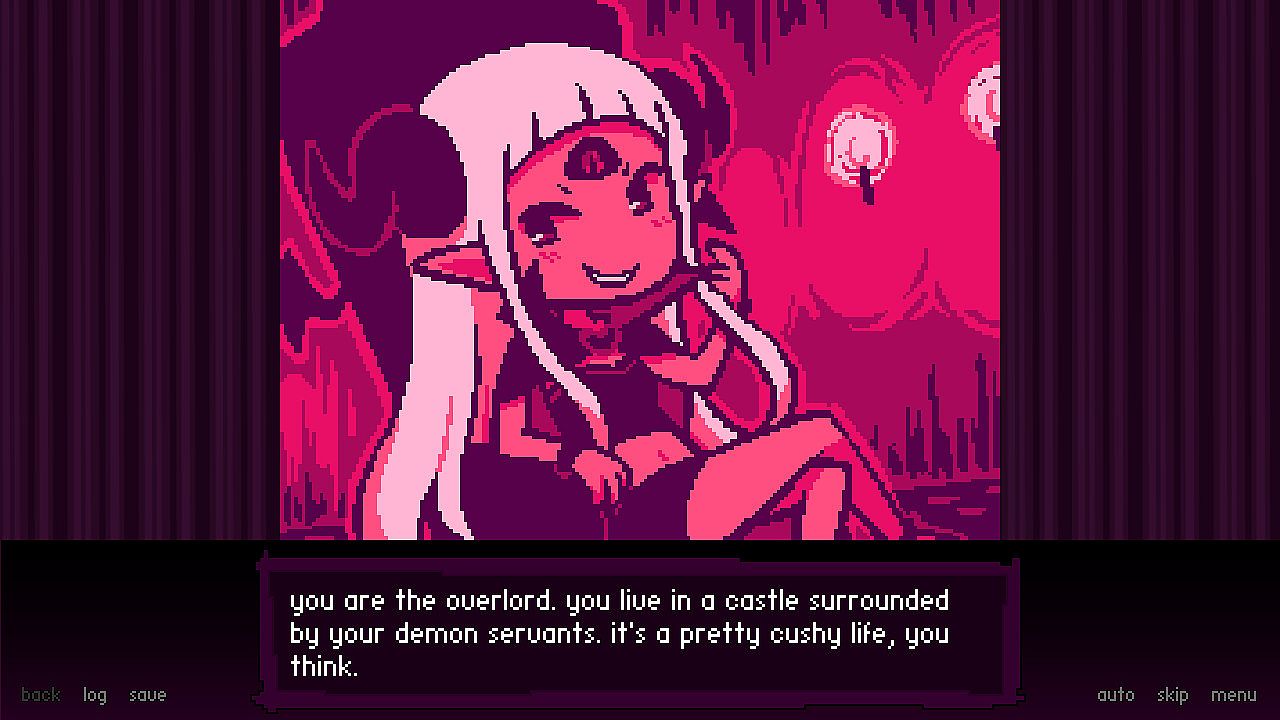
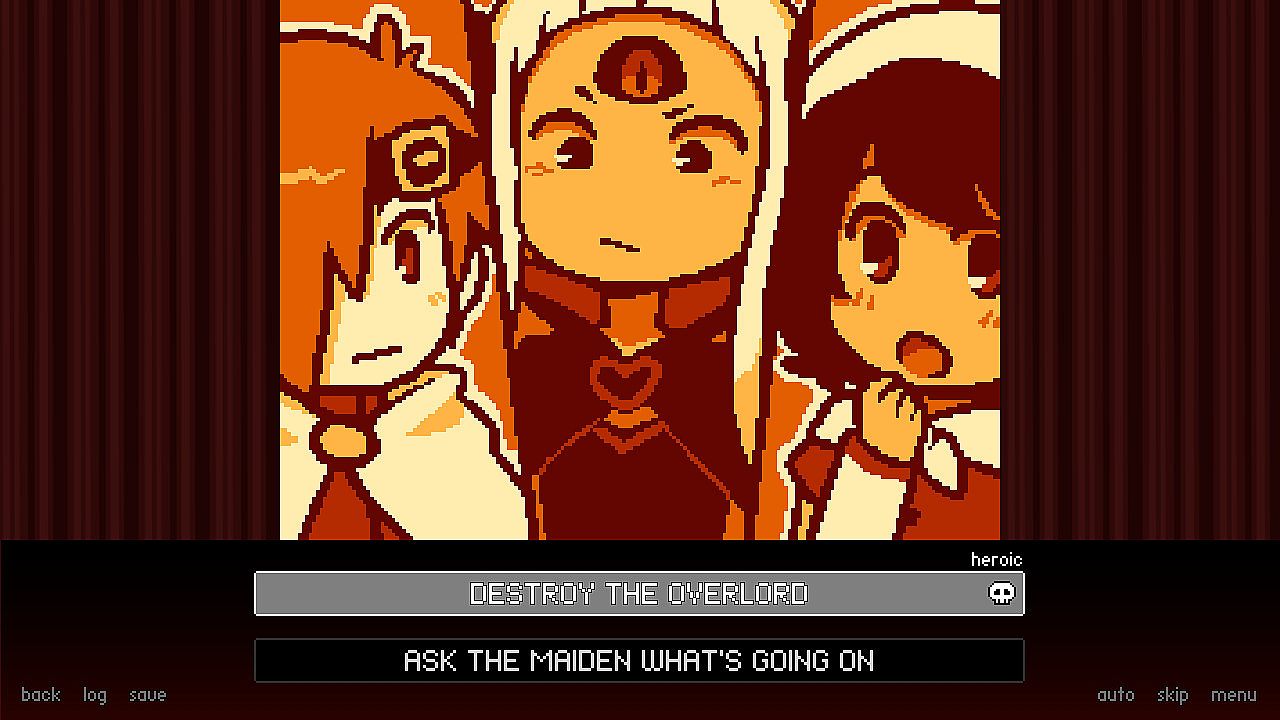
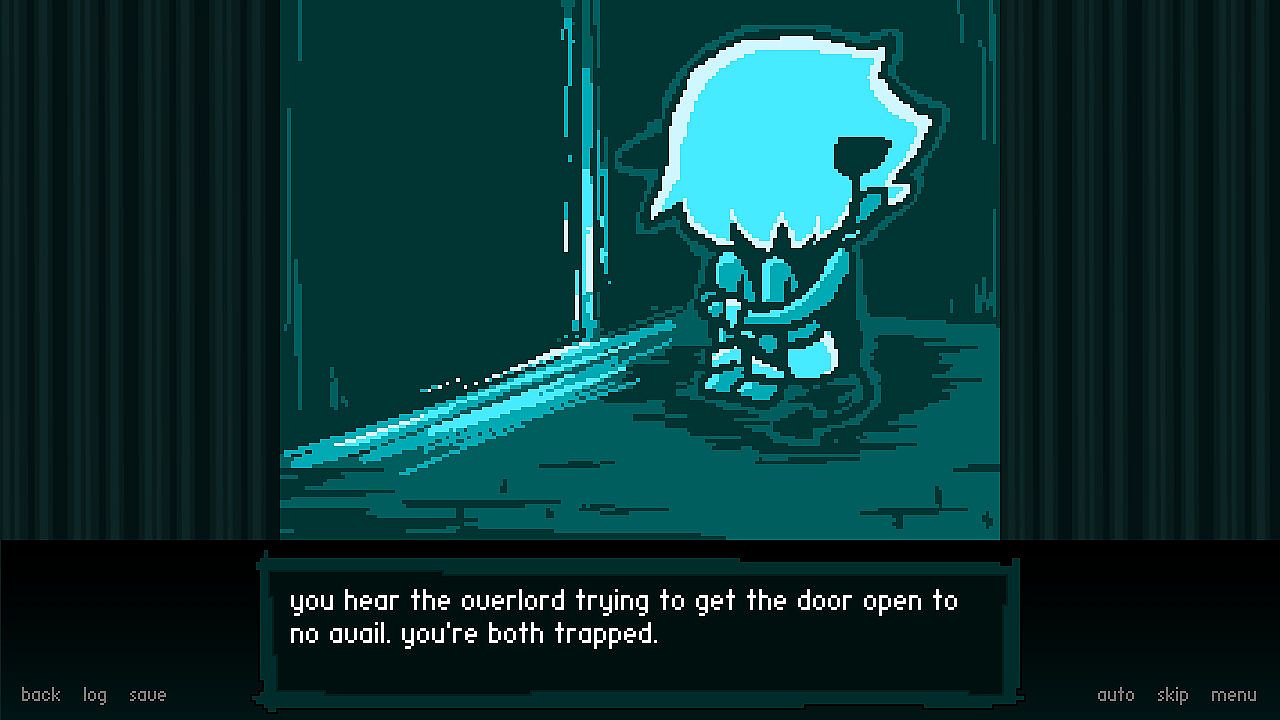
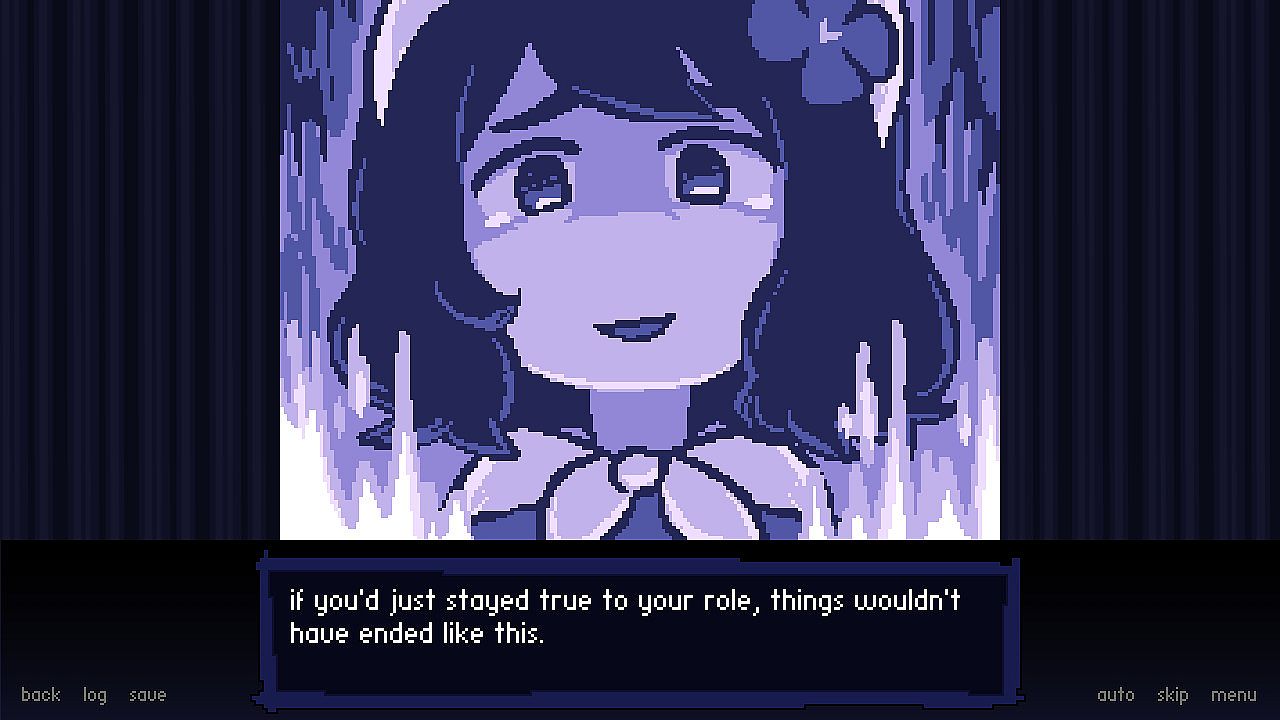
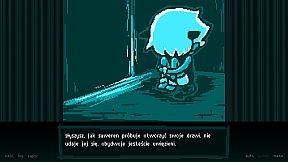
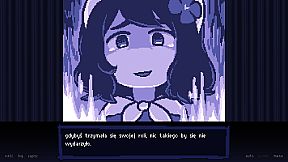
Visual presentation relies on hundreds of illustrations that depict key moments and character expressions. Text passages advance the narrative in a straightforward manner, with limited dialogue but clear descriptions of actions and results. Music supports the tone without overpowering the focus on the branching structure. The entire package fits a compact scope designed for repeated play sessions that build toward a fuller picture of the cast's possibilities.
Game Modes
The game operates as a single continuous experience without separate modes or difficulty settings. All content revolves around the protagonist selection and story interconnection system. Players progress by revisiting scenarios, applying different toggles, and observing how prior choices alter later events. This unified structure encourages methodical exploration rather than competitive or timed elements.
Progression tracks through the collection of distinct endings. The design supports short individual runs that can be chained together to map out connections between characters. No additional layers such as separate campaigns or online features exist, keeping the focus tightly on the decision and outcome mechanics.
Story and Endings
Multiple characters each receive their own viewpoint, yet their fates remain linked through the player's interventions. Every complete path concludes in one of the many available endings, most of which are unfavorable. The challenge involves identifying whether any combination of toggles and choices can produce a more favorable result for the group as a whole. The narrative avoids traditional resolution in favor of highlighting how interconnected decisions compound into varied disasters.
With a substantial word count and extensive artwork, the stories unfold through repeated viewings rather than linear progression. Players gradually piece together the full scope of interactions by testing different starting points and behavior adjustments. This approach turns the collection of endings into the primary goal.
Is It Worth Playing?
Reception has been strongly favorable across thousands of user reviews, with recent feedback maintaining an overwhelmingly positive rating. The short overall length makes it accessible for those interested in a focused puzzle experience centered on narrative branching. Players who enjoy experimenting with cause-and-effect systems in a single-player format will find the mechanics engaging without requiring long commitments.
The game suits individuals who appreciate visual storytelling paired with systematic exploration of outcomes. Its compact design and emphasis on interconnected choices provide clear value for completionists seeking all endings. Availability on PC supports straightforward access, and the absence of ongoing seasonal content keeps the experience self-contained. Those drawn to simulation titles that prioritize decision consequences over action or combat will likely appreciate the structure.