



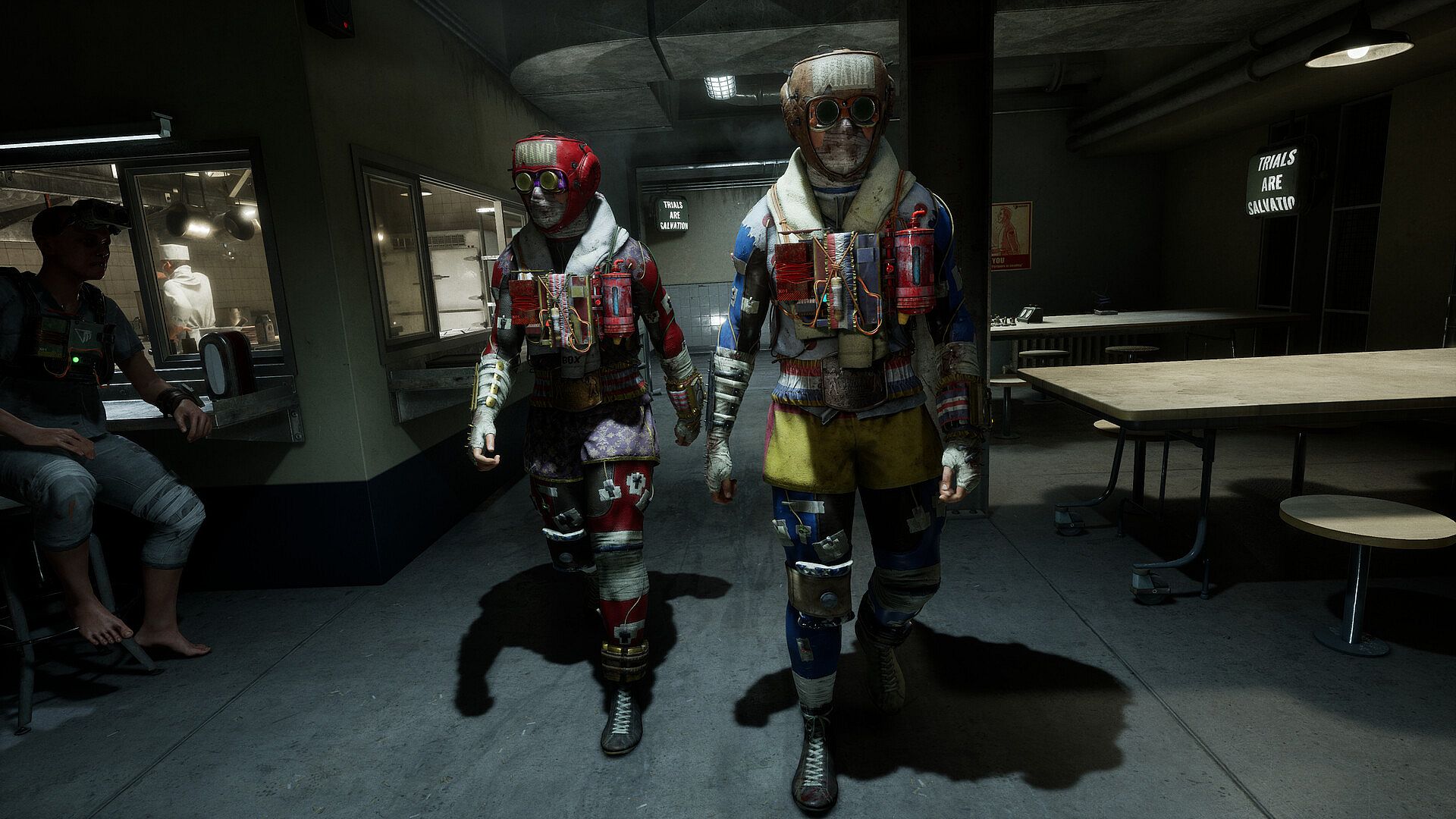
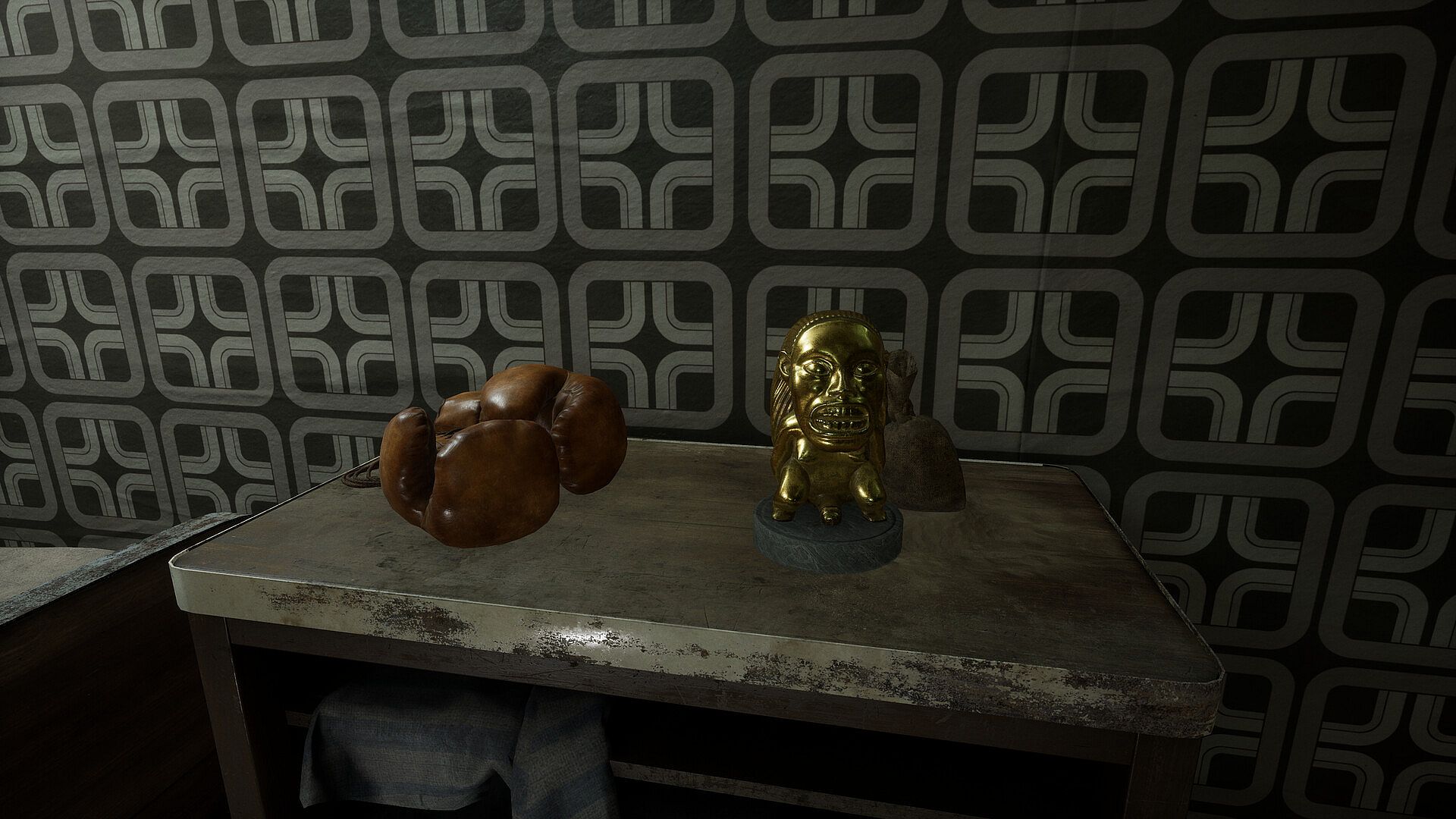


The Outlast Trials is a first-person survival horror game that places players in the role of Reagents subjected to experimental therapies by the Murkoff Corporation during the Cold War era. Participants must navigate dangerous facilities, complete assigned objectives, and evade hostile entities while managing limited resources and maintaining stealth. The experience supports solo play or cooperative sessions with up to three additional players, emphasizing teamwork without requiring it for core objectives.
Gameplay
Core mechanics revolve around avoidance rather than direct confrontation. Players rely on environmental awareness, hiding spots, and distraction tools such as throwable bricks or bottles to lure enemies away or briefly stun them. Noise management plays a critical role, as loud actions can alert pursuers and escalate encounters. Rigs serve as key tools unlocked through progression; these include devices for detecting threats through walls, deploying area healing, placing blinding mines, stunning foes at range, or erecting temporary barricades on doors.
Objectives typically involve puzzle-like tasks within themed environments, such as manipulating machinery or collecting specific items under pressure. Secondary goals offer grade bonuses that contribute to experience and upgrades. The first-person perspective heightens tension during chases and close calls, with no traditional combat options against the facility's inhabitants. Resource scarcity forces careful planning, and co-op allows shared responsibilities like one player scouting while others handle tasks.
Game Modes
Trials form the primary long-form content, consisting of story-driven sequences that require sustained focus and coordination to finish. These sessions unfold across varied maps with multiple objectives and potential variations in enemy placement or environmental hazards. MK-Challenges provide shorter alternatives set in altered sections of existing maps, allowing quicker sessions focused on specific skills or routes.
Escalation Therapy structures extended playthroughs into progressive tiers. Early stages emphasize character building, mid-levels increase pressure through modifiers, and higher thresholds introduce the permanent Breaking Point variator, which adds deadlier enemies, reduced resources, and non-recharging rigs for heightened difficulty. Invasion operates as a permanent experimental therapy mode accessible via the Sleep Room terminal. Players select Reagent or Imposter roles, with Imposters disguising themselves among the group to eliminate targets using knife attacks that include quick slashes or charged stabs. Limited numbers of Imposters deploy at once, supported by surveillance observation, while Reagents use their standard tools to survive and complete objectives. The mode supports solo or small groups and rotates roles between matches.
Progression and Customization
Experience gained from trial completions and grades unlocks new rigs, upgrades, and abilities. Players return to personal cells between sessions for rest and preparation. Seasonal programs introduce limited-time events with altered conditions, such as increased hallucinations or aggression, alongside new MK-Challenges. Ongoing updates maintain variety through fresh content additions and balance adjustments to existing systems.
Is It Worth Playing?
The Outlast Trials delivers consistent updates that expand its core loop with new modes and events, including the recent addition of Invasion and refinements to Escalation Therapy. Player reception remains strongly positive across platforms, reflecting appreciation for the stealth-focused horror and cooperative elements. It suits those who enjoy tense, objective-driven sessions that reward careful movement and communication over action-oriented combat. Availability on PC supports both solo attempts at full therapy completion and group play for shared survival challenges. Those seeking ongoing horror experiences with evolving content will find the current state of active development and community engagement aligns well with repeated play.