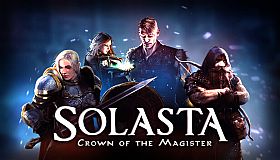
















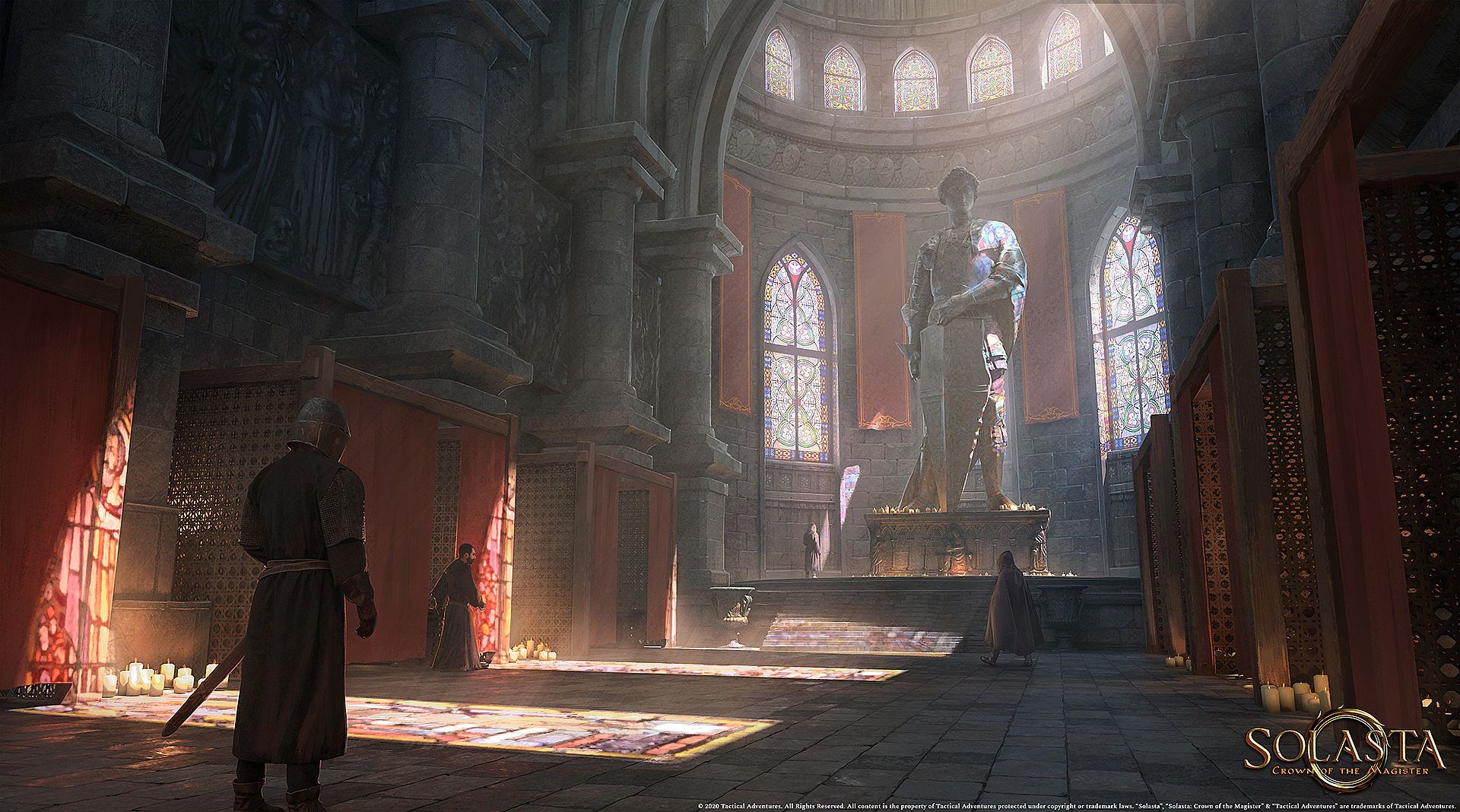
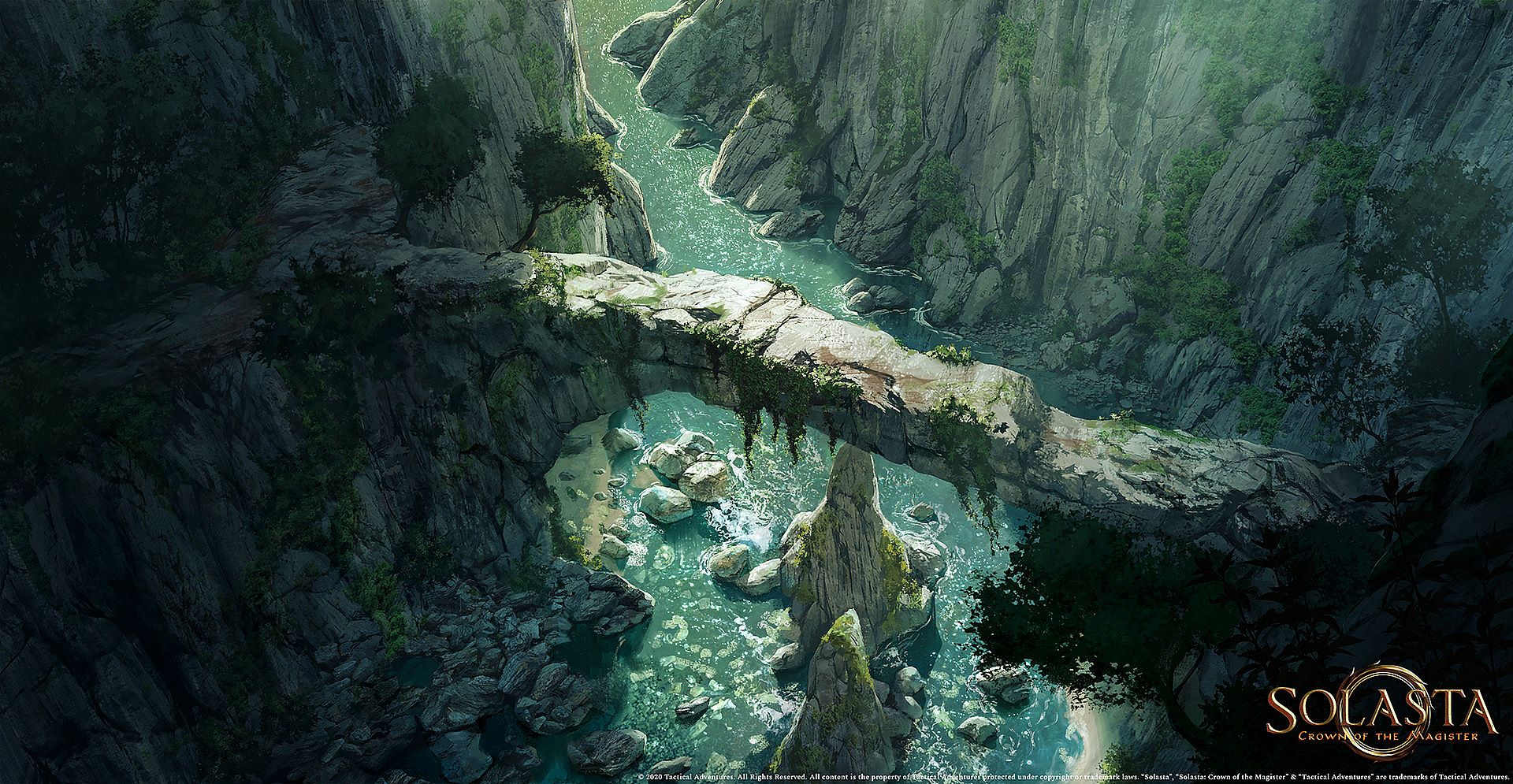
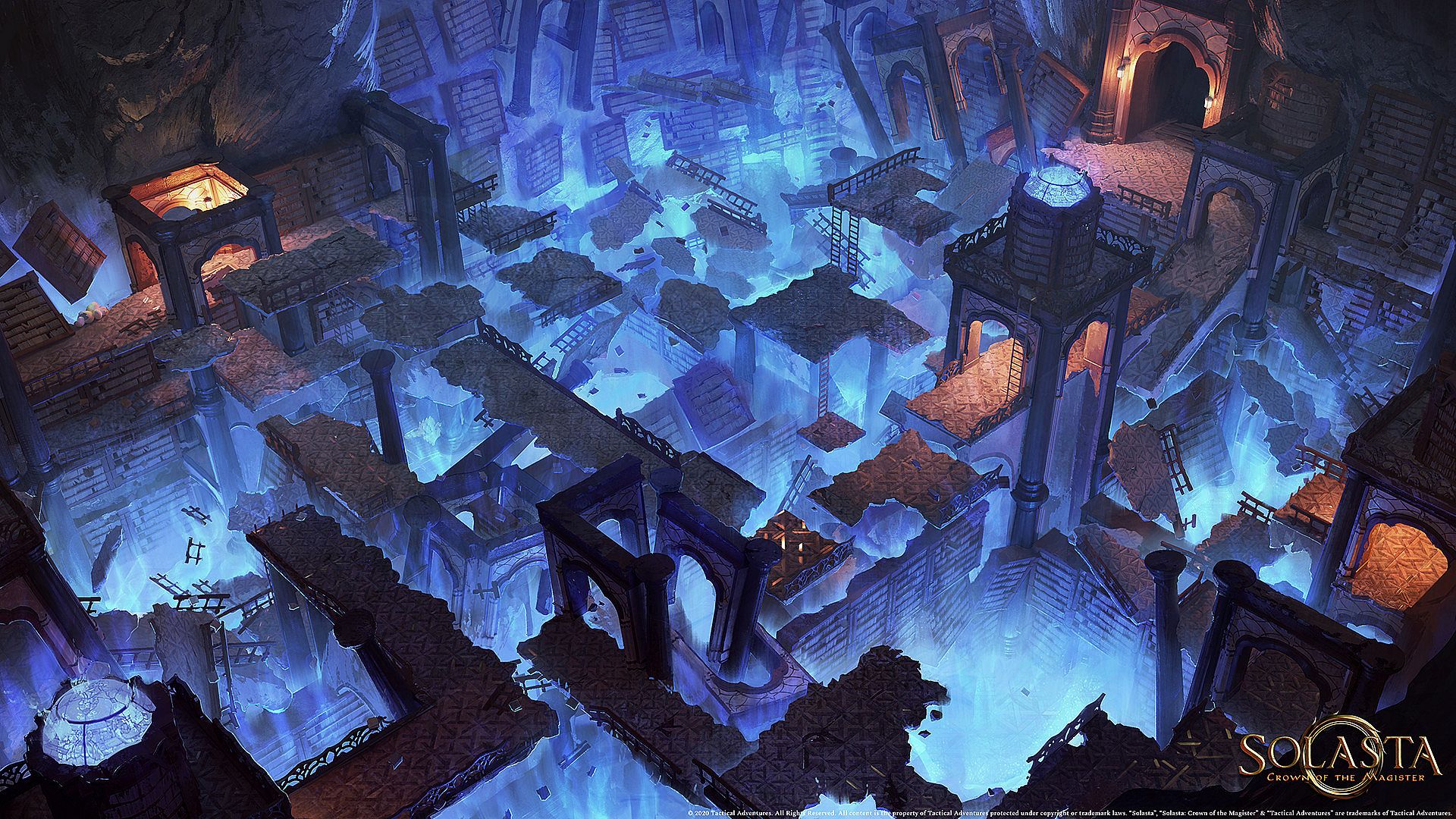
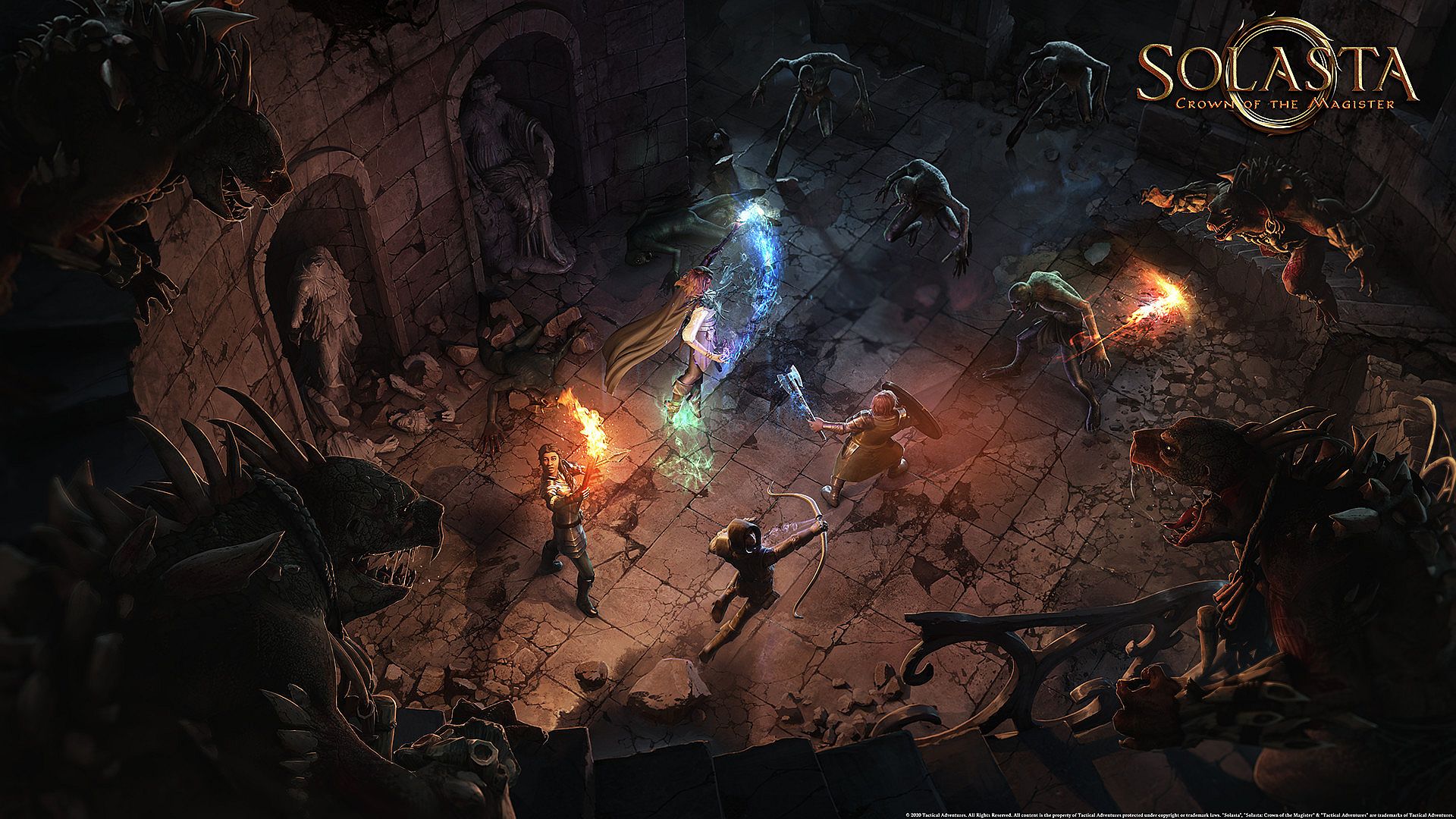
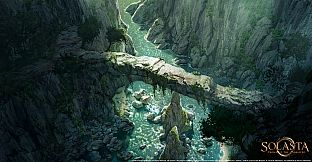
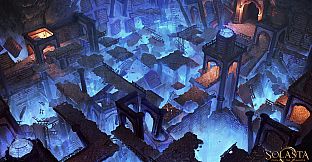
Solasta: Crown of the Magister stands as a turn-based tactical role-playing game developed for PC that draws directly from the Dungeons and Dragons fifth edition ruleset. Players form a party of four adventurers and navigate a post-apocalyptic fantasy setting where an ancient elven empire has fallen, sending them into ruined landscapes in search of powerful artifacts. The experience emphasizes strategic decision-making during encounters while incorporating light narrative elements through party banter and occasional dialogue choices.
Gameplay
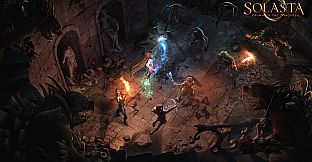
Combat unfolds on a grid-based battlefield that incorporates verticality, allowing characters to climb, jump, or fly to gain tactical advantages over enemies. Each turn involves rolling initiative to determine order, selecting actions such as attacks or spells, and managing positioning to trigger opportunity attacks or exploit environmental features. The system stays faithful to tabletop mechanics with true random dice rolls that influence hit chances, damage, and saving throws without artificial modifiers in the core experience.
Exploration occurs through a linear main campaign that guides the party across varied locations, with opportunities for short rests and long rests to recover resources between fights. Character progression follows standard fifth edition rules, where leveling unlocks new abilities and subclasses while party members interact with one another through voiced lines that reflect their personalities. Environmental interactions add layers to battles, such as using elevation for ranged superiority or forcing enemies into disadvantageous spots.
Game Modes
The primary single-player campaign delivers the core story across multiple acts, with adjustable difficulty settings that alter enemy behavior and player bonuses. Story mode reduces overall challenge for those focused on narrative flow, while Explorer mode introduces moderate resistance. Authentic mode removes all assists for a pure rules-as-written feel, Scavenger mode heightens resource scarcity, and Cataclysm mode presents the highest level of opposition for experienced groups.
Multiplayer co-op supports up to four participants who control individual party members together during the campaign and combat sequences. This mode integrates seamlessly with the single-player structure, allowing shared control without altering core mechanics. An optional Iron Man variant deletes save files upon total party defeat, adding permanent consequences for those seeking extra tension.
Character Creation and Progression
Creation tools let users select from multiple races and classes that align with the licensed ruleset, complete with backgrounds and feats that shape starting capabilities. Party composition influences both combat effectiveness and dialogue interactions, encouraging experimentation across playthroughs. Progression systems reward careful resource management and ability synergy rather than linear power curves.
Is It Worth Playing?
The game appeals most to players who enjoy deliberate, grid-based tactical combat rooted in established tabletop systems. Its strengths lie in the satisfying execution of fifth edition rules during encounters, where positioning and vertical movement create memorable moments. Reception highlights the combat depth and replayability through varied party builds, though some note the campaign length and narrative focus as secondary to the mechanical core.
Support continues through post-launch updates that expanded options and added cooperative features. Those drawn to strategic RPGs with authentic dice-driven outcomes will find consistent value in repeated campaigns, particularly when adjusting difficulty or trying new compositions. The experience suits solo adventurers and small groups alike who prioritize tactical planning over open-world freedom.