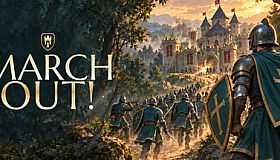



March Out! blends real-time strategy with third-person action in a focused siege experience set on PC. Players build and command armies across three technology eras while stepping into the role of a commander who fights directly on the battlefield. The game emphasizes kingdom management between fights and direct participation in castle assaults or defenses, whether in a solo campaign or small-group matches.
Gameplay
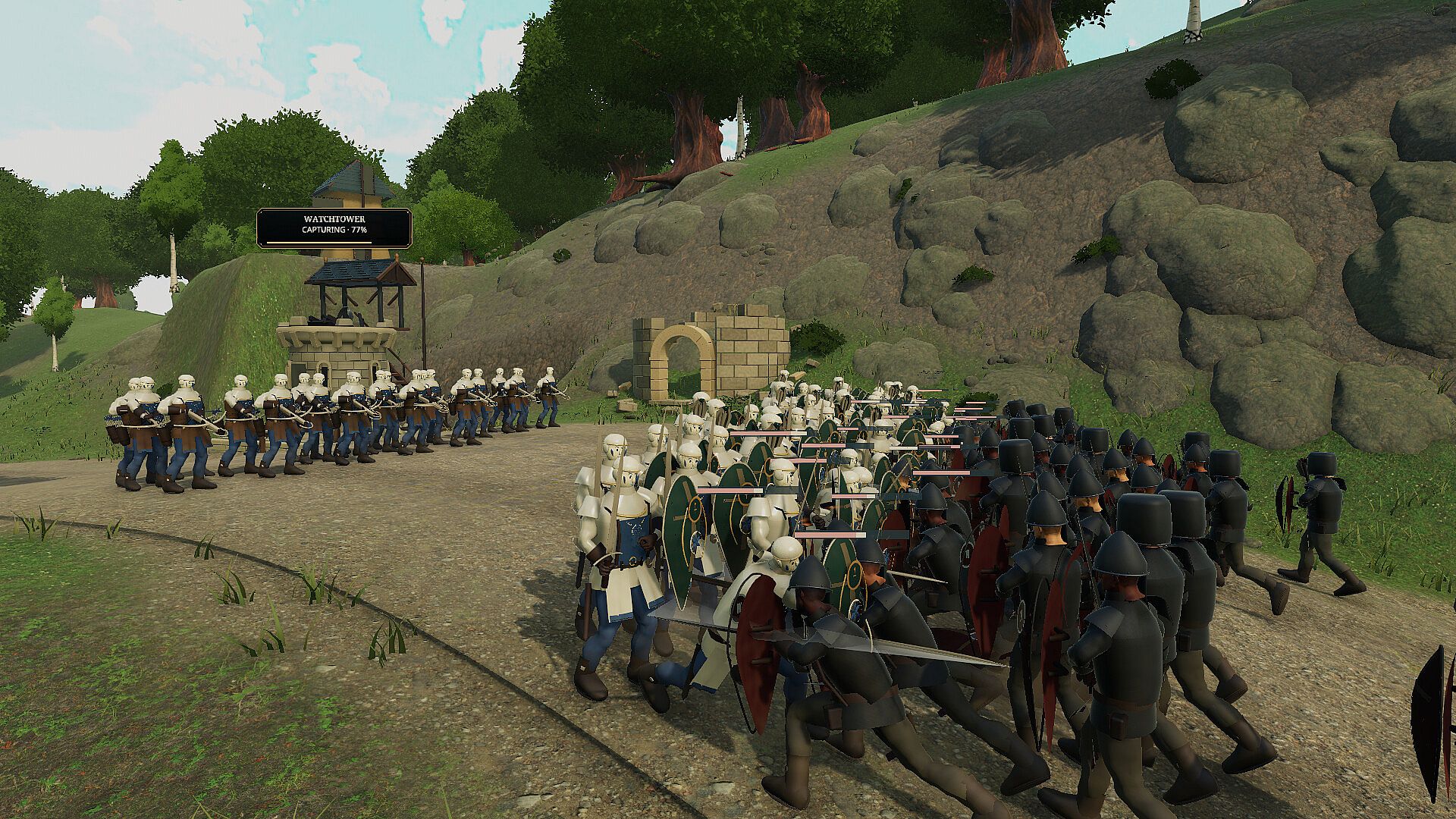
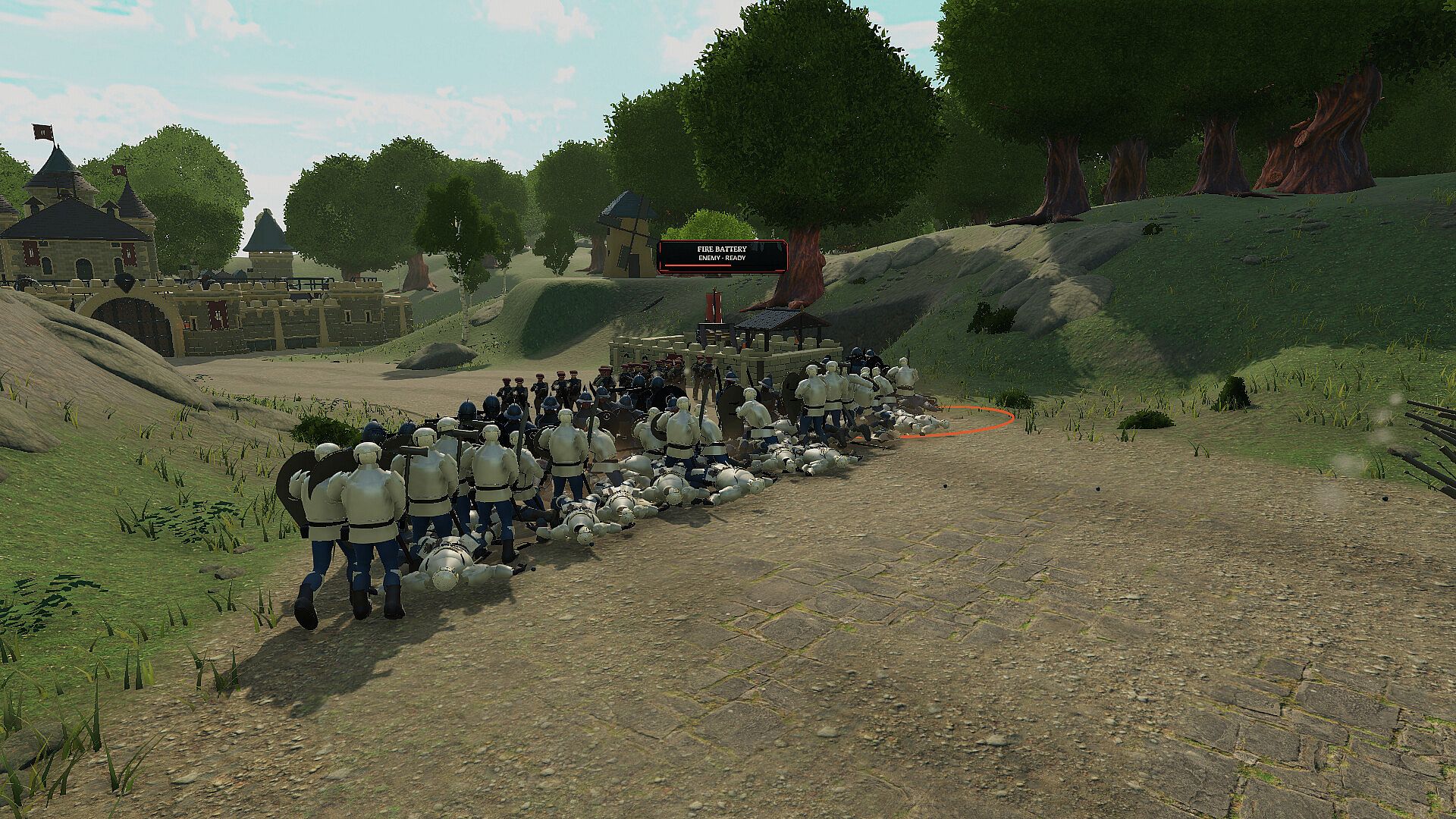
Core play centers on recruiting troops, advancing through eras that unlock new unit types and equipment, and issuing orders from a command perspective before switching to hands-on combat. Commanders can rally nearby soldiers, retreat to safety behind gates, or man wall weapons during enemy approaches. Battles feature artillery support, defensive constructions like towers, and economic elements tied to farms and villages that influence income when contested or occupied.
Between sieges, the walkable castle serves as a hub for preparation. Players explore halls, manage outfits at the armory, view miniature battles on a war table, and handle recruitment or kingdom upgrades. Persistent details such as wear on structures and battlefield cleanup crews add to the sense of ongoing conflict. Optional visual layers like day-night cycles and weather affect atmosphere without altering core rules or unit performance.
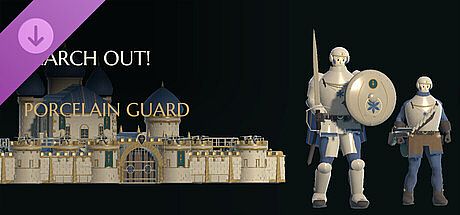
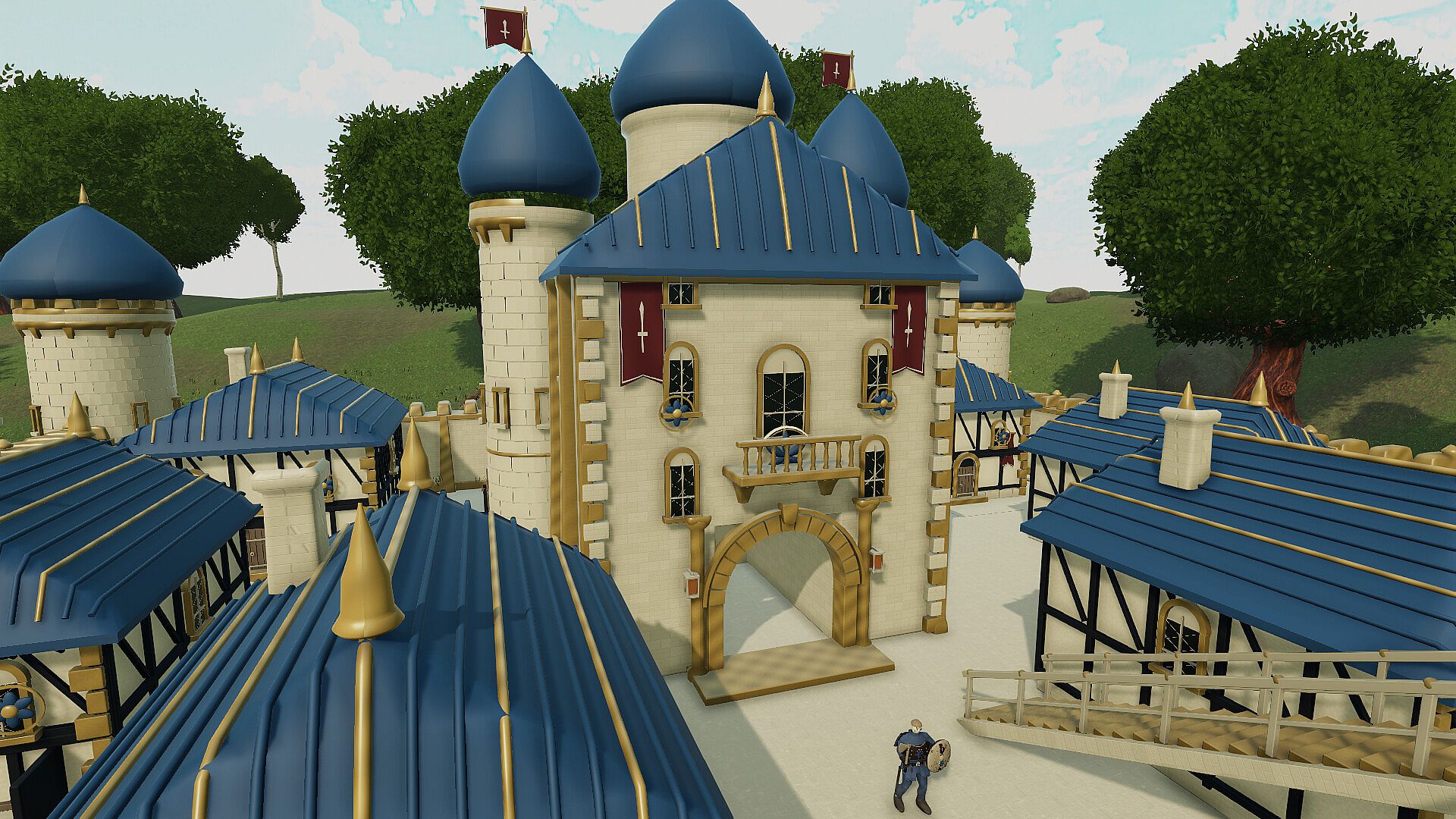
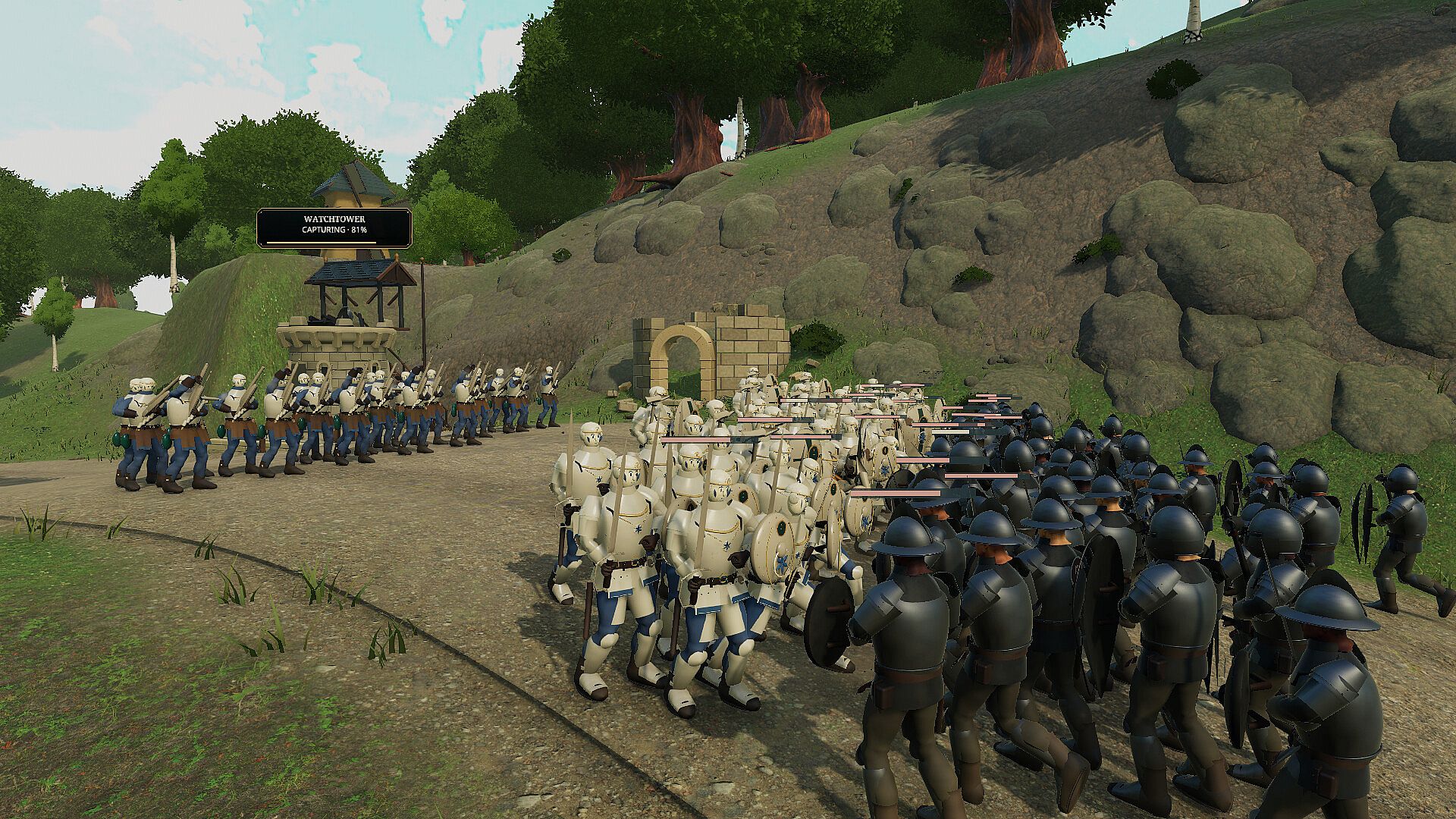
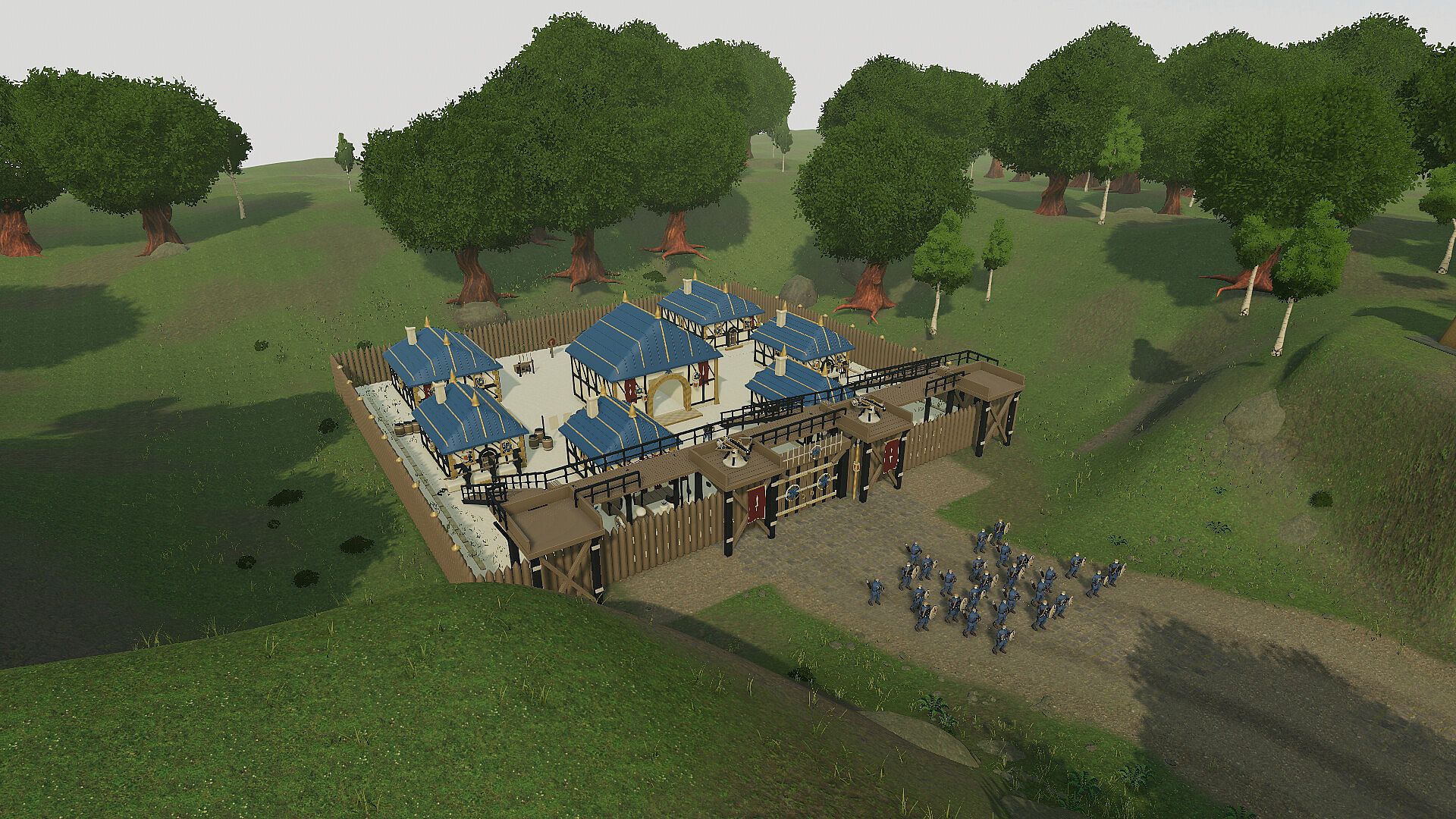
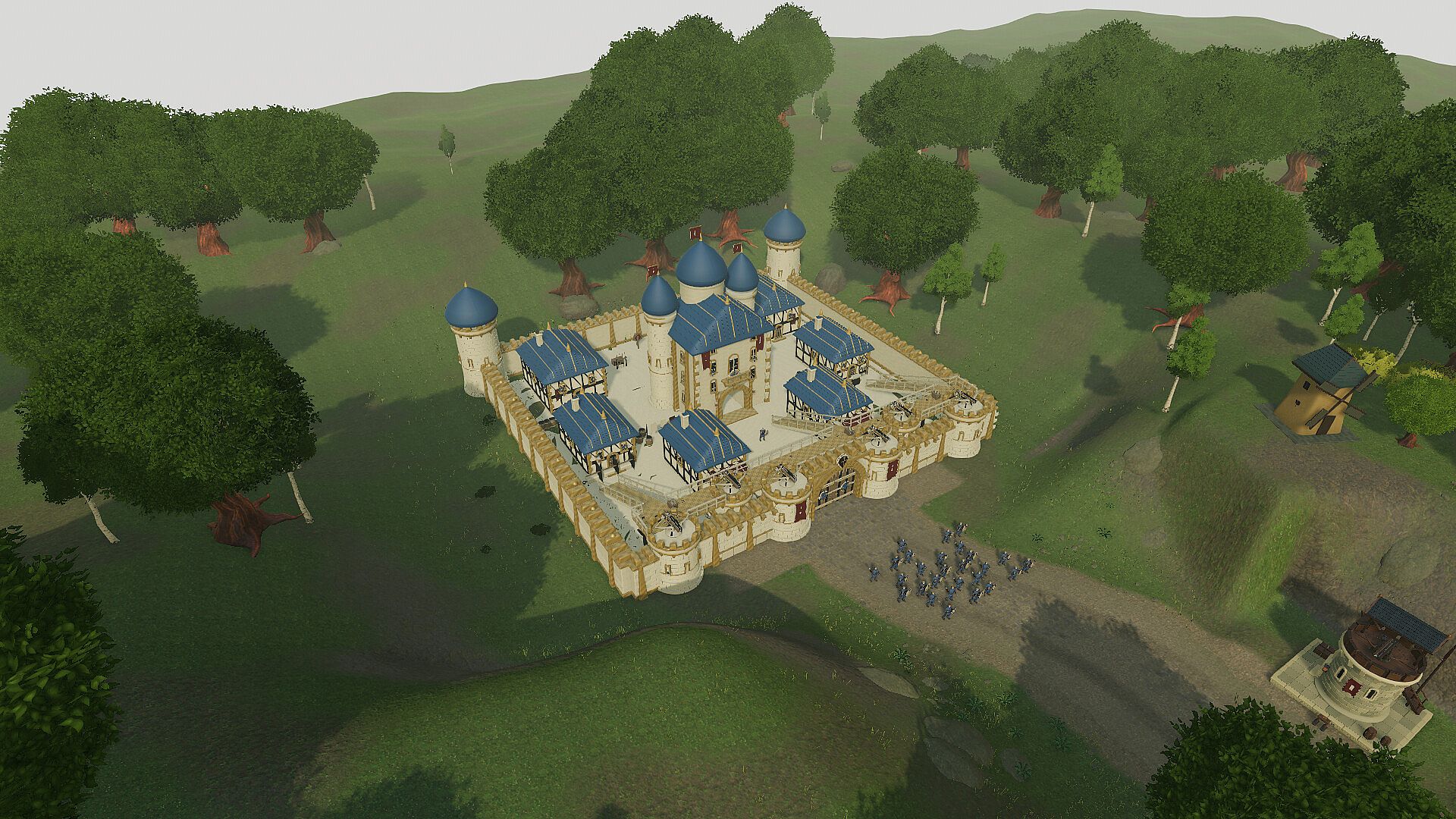
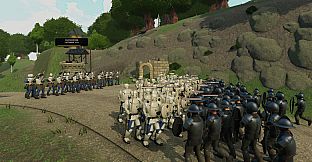
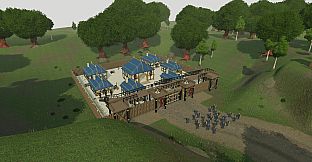
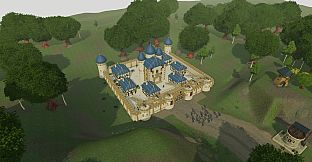
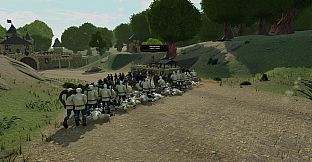
The Porcelain Guard theme equips a complete kingdom collection featuring a matching commander alongside melee, ranged, and heavy troops that span all three technology eras. Castle architecture, gates, wall details, and fortifications receive the same cobalt-and-ivory treatment with visible wear, damage, and destruction that persists through fights. This cosmetic set applies across single-player and multiplayer without affecting unit strength, costs, or match rules.
Game Modes
Single-player progress unfolds across a six-siege campaign where surviving forces carry forward into subsequent challenges. Multiplayer supports up to four participants in several distinct formats. Castle War pits two players in an extended contest between opposing castles. King of the Keep involves two to four kingdoms competing to seize and hold a central fortress. Capture the Banner tasks teams with transporting a contested banner to their base. Last Castle Standing requires kingdoms to defend their home while eliminating rivals.
Co-op Last Stand allows two to four players to defend a shared castle together. A weekly siege challenge provides additional structured play. All modes accommodate the full range of army customization and kingdom visuals, including themed collections like Porcelain Guard that remain visible to others regardless of ownership.
Kingdom Customization and Progression
Unlockable armies pair with matching kingdom aesthetics that extend from troops to fortifications. Earned currency supports permanent upgrades and displays such as trophies or standings on a physical leaderboard inside the command hall. Roadside tower foundations add defensive planning options in campaign and select multiplayer formats, with shared sites in co-op play.
Settlements expand the battlefield in experimental or standard configurations, introducing villages and productive farms that tie into economic pressure during advances. These elements reward protection of territory while punishing neglect, integrating into both solo progression and competitive matches.
Is It Worth Playing?
March Out! suits players who enjoy hybrid strategy-action gameplay with an emphasis on castle sieges and small-scale multiplayer. The single-player campaign offers structured progression through repeated sieges, while multiplayer modes deliver varied objectives for groups of two to four. Recent updates have refined visuals, added quality-of-life features like battlefield attendants and a walkable hub, and introduced optional atmospheric settings.
Those drawn to commanding armies then fighting alongside them, combined with cosmetic kingdom personalization that carries across all content, will find consistent depth here. The game remains actively supported with ongoing refinements following its recent release. It appeals most to fans of deliberate pacing and tactical decision-making in a contained multiplayer environment rather than large-scale battles or purely passive strategy.