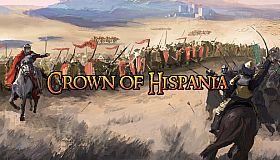


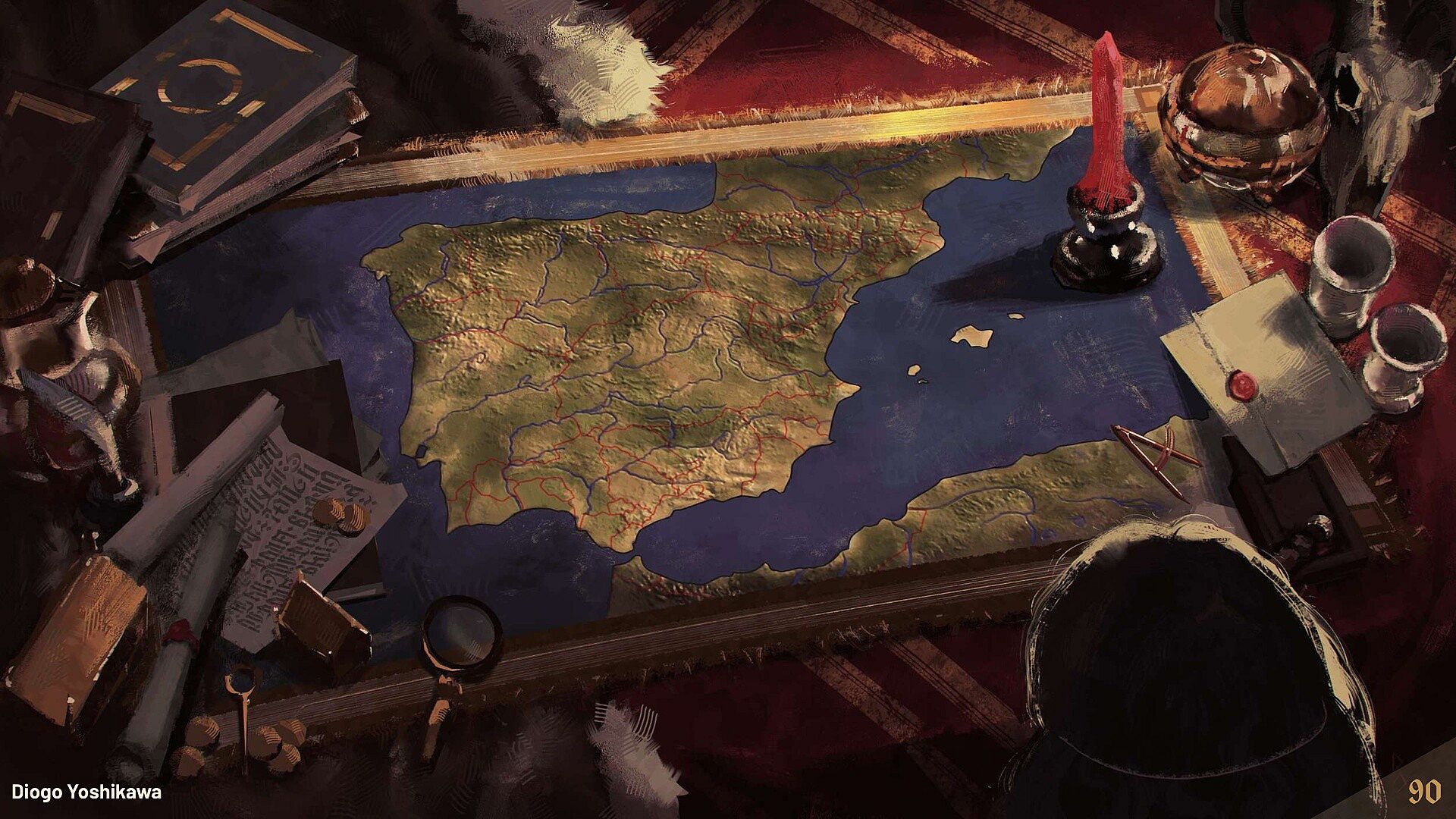
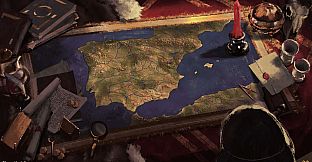
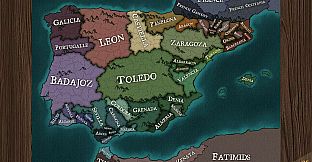
Crown of Hispania is a grand strategy game set in eleventh-century Iberia. Players take control of a noble house in a fragmented peninsula where Christian kingdoms in the north compete with rival Muslim taifas in the south following the death of Sancho III of Navarre in 1035. The title emphasizes detailed simulation of a single region rather than a broad global map, with more than three hundred hand-built provinces shaped by real terrain features.
Gameplay
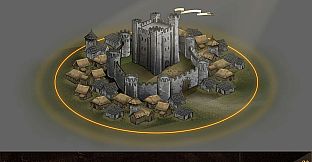
The core loop centers on managing a medieval realm through intertwined systems of economy, population, diplomacy, and military action. Armies move freely across the map without being restricted to province borders, allowing players to position forces for flanking or to account for terrain effects on movement speed and combat outcomes. Battles open a preparation screen where scouting, army composition, and tactical choices influence the engagement before resolution. Sieges require outnumbering a city garrison, typically around five percent of the local population, and draining its morale over time while factoring in fortifications, engineers, and supplies.
Population mechanics track culture, religion, and migration at the province level, with player decisions on conversion, urbanization, or neglect shaping long-term stability and resource output. Economic development involves construction projects, trade enhancement, and decree issuance to support growth. A court system handles internal politics, while a Council assigns missions that add objectives beyond simple expansion. Diplomacy operates on a diplomatic power resource, making every alliance or agreement carry a tangible cost. Technology progression and realm management round out the available systems in the current build.
Game Modes
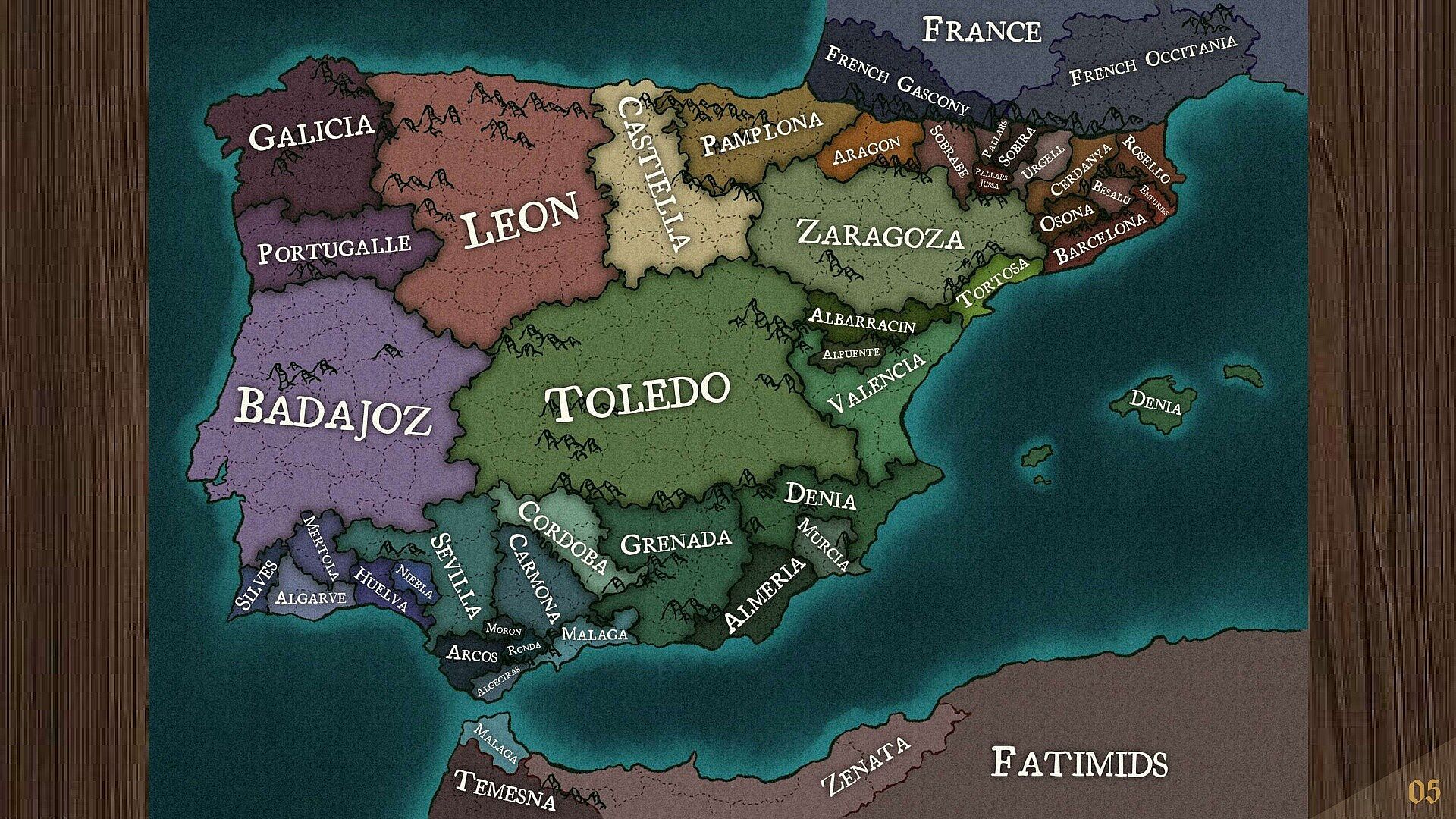
The game runs in a single-player format with real-time progression that can be paused at any moment. Campaigns begin in the immediate aftermath of Sancho III's death, placing the player amid divided Christian kingdoms such as Leon, Castilla, and Navarra alongside southern taifas including Cordoba, Sevilla, and Granada. Over thirty nations appear on the opening map, and the experience focuses on rewriting the balance of power through a combination of warfare, dynastic marriages, and political maneuvering. No separate multiplayer or alternate modes exist beyond this core campaign structure.
The Setting and Visual Style
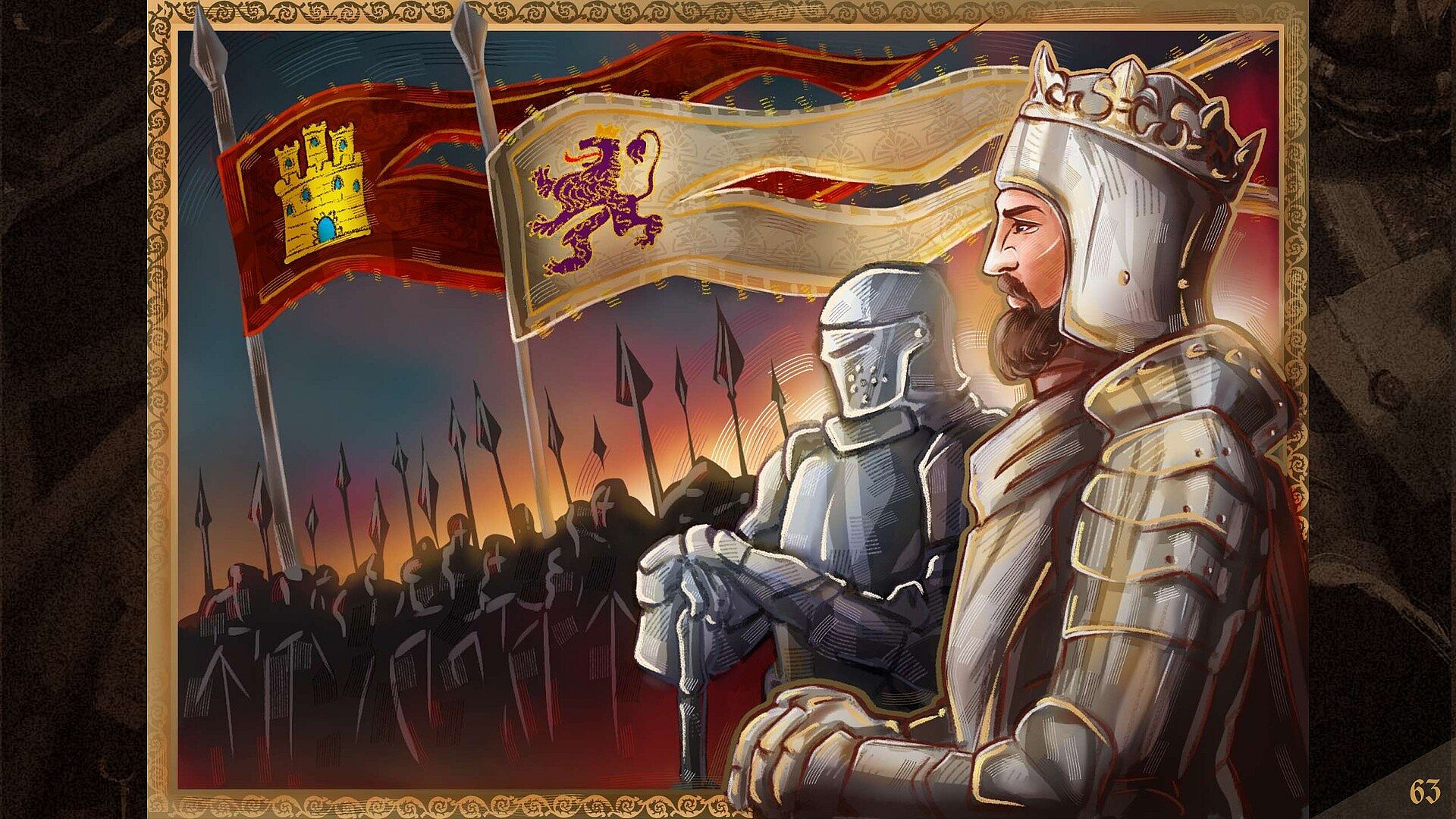
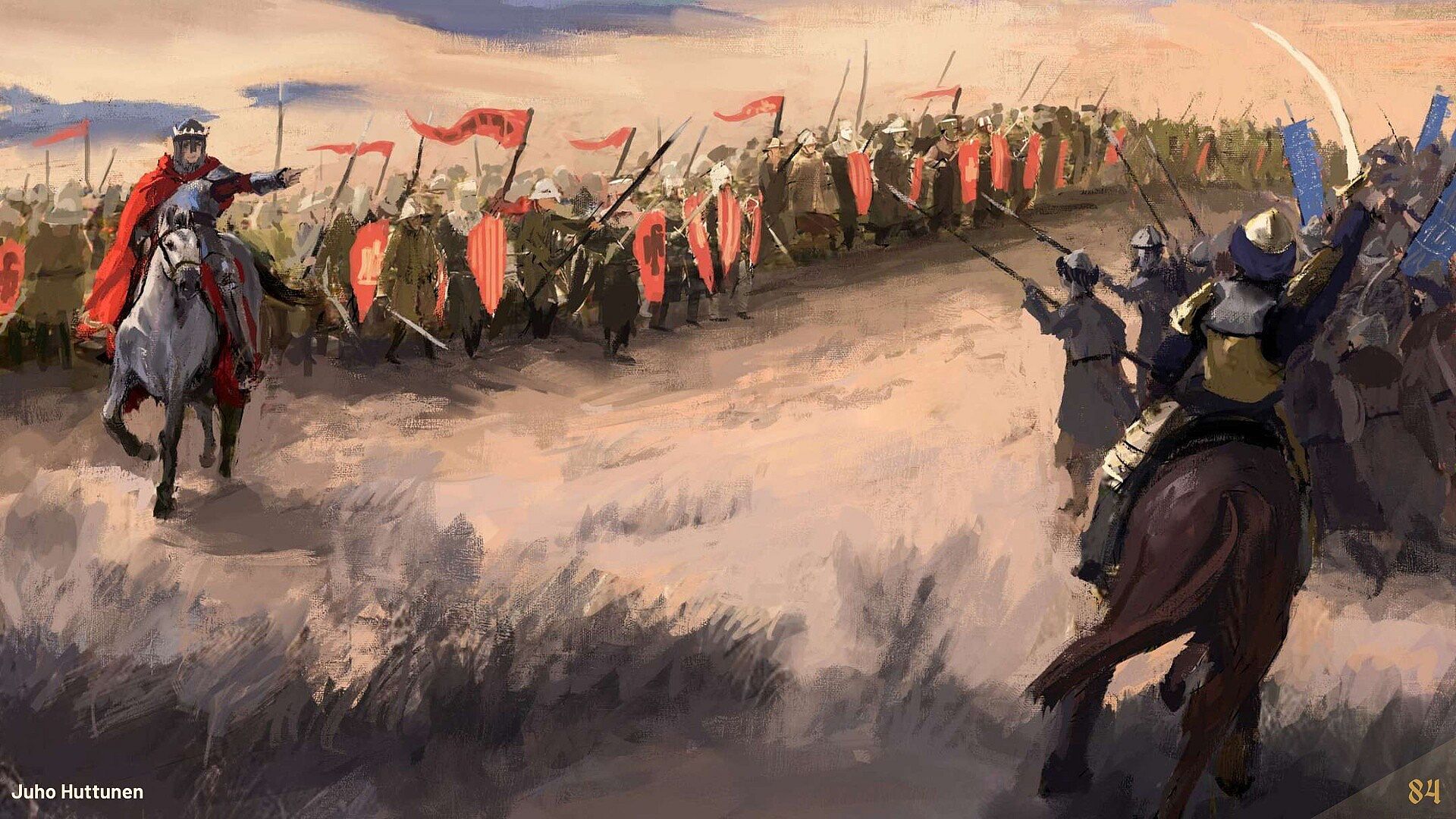
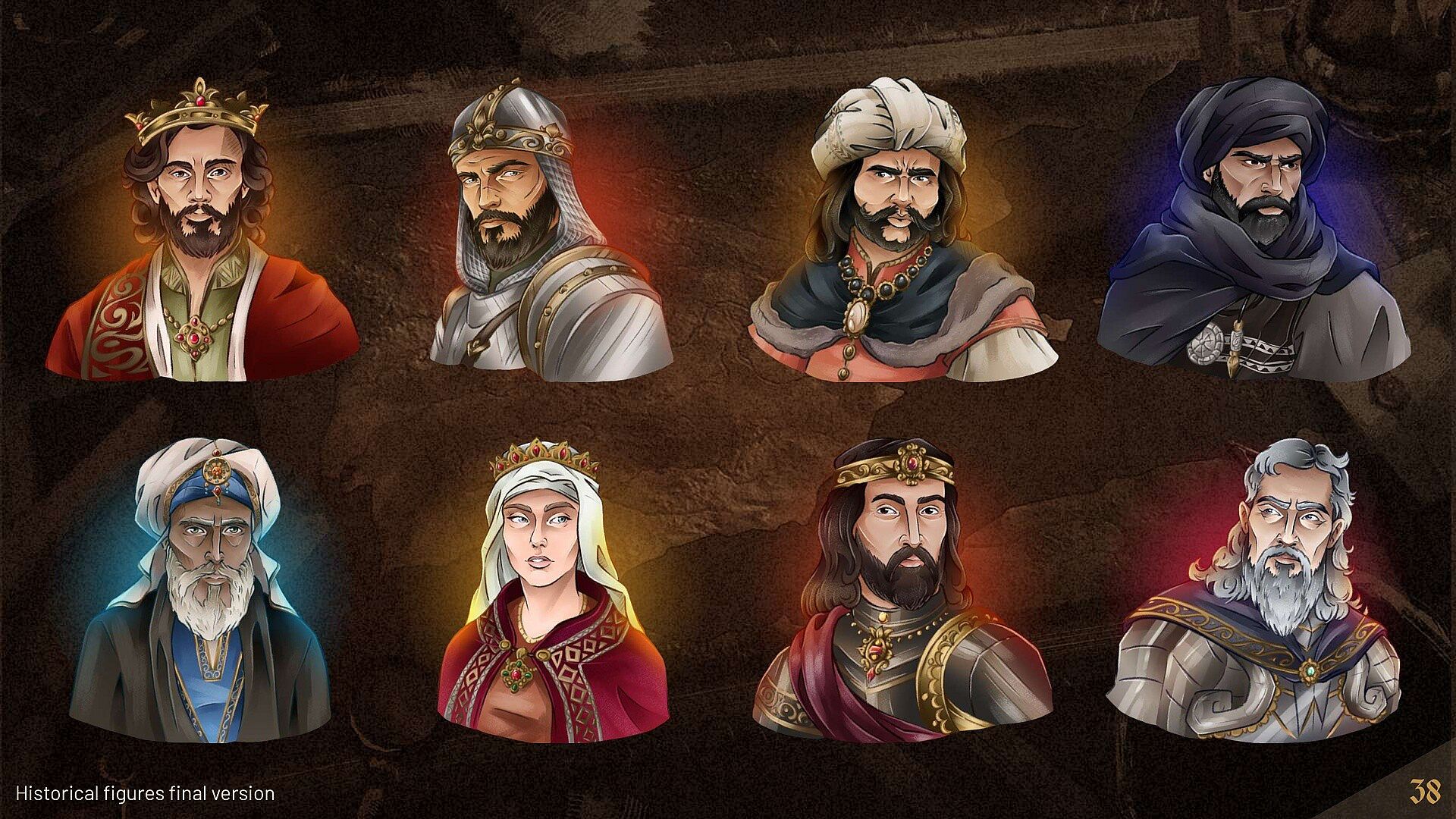
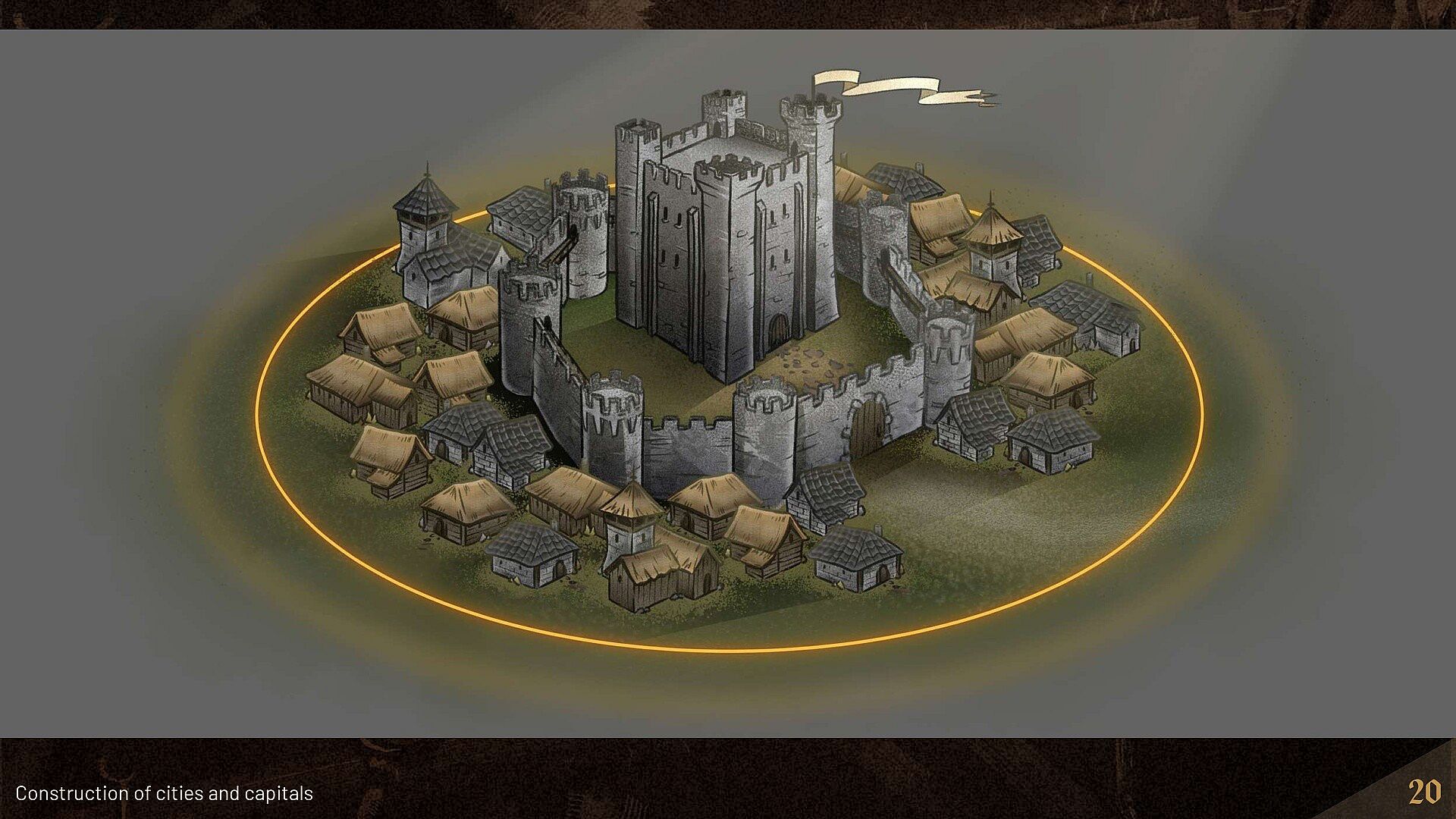
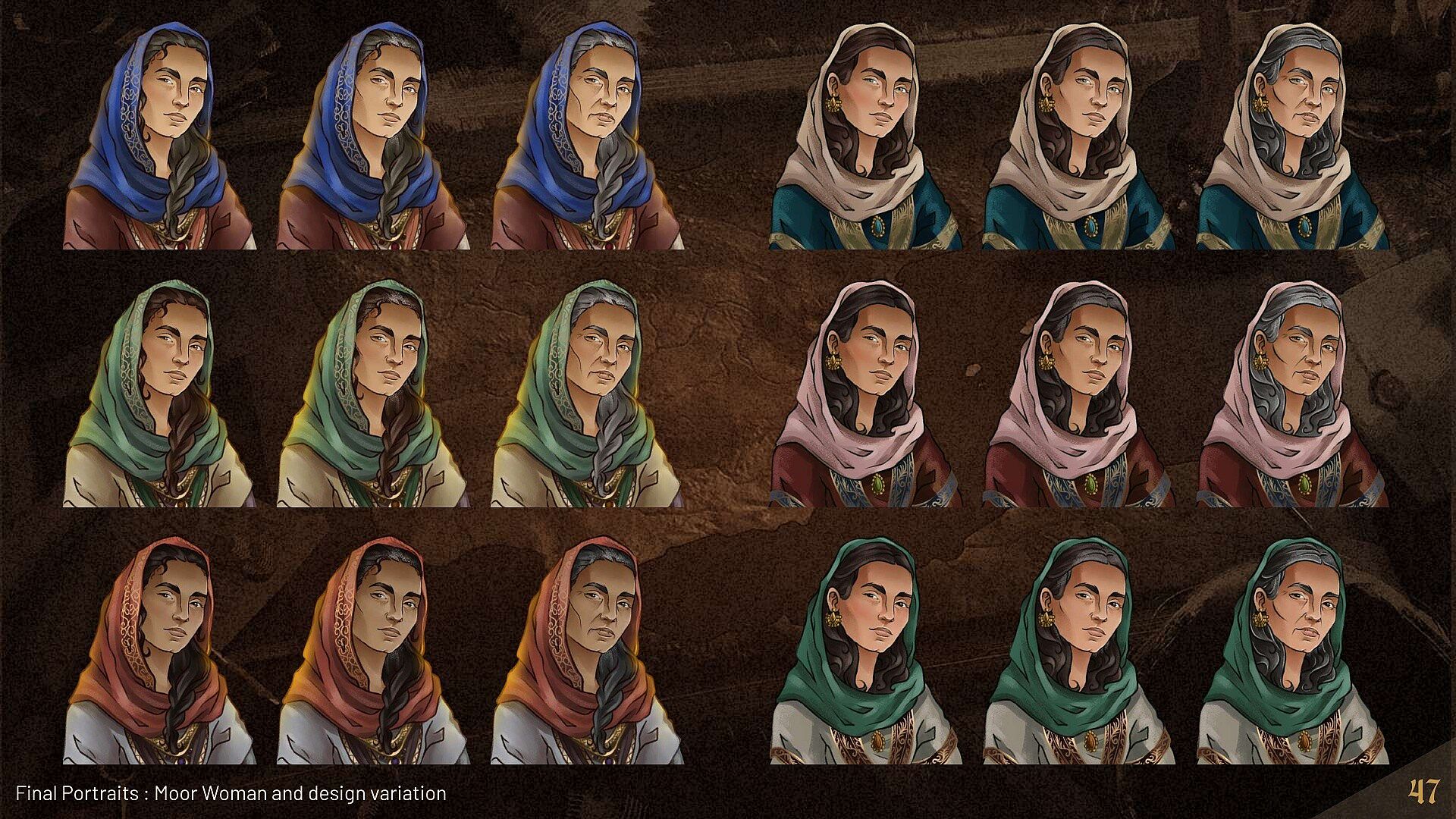
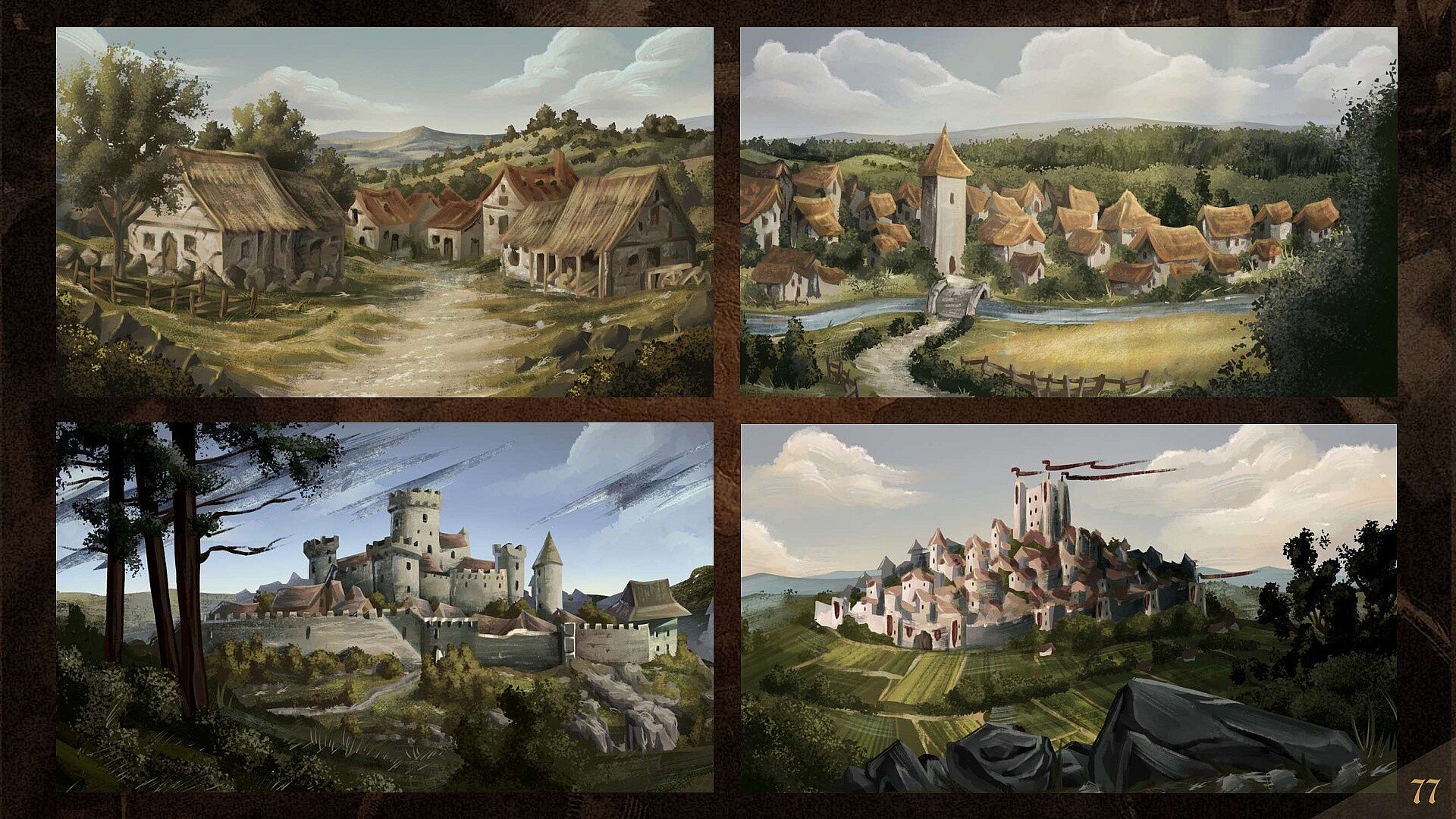
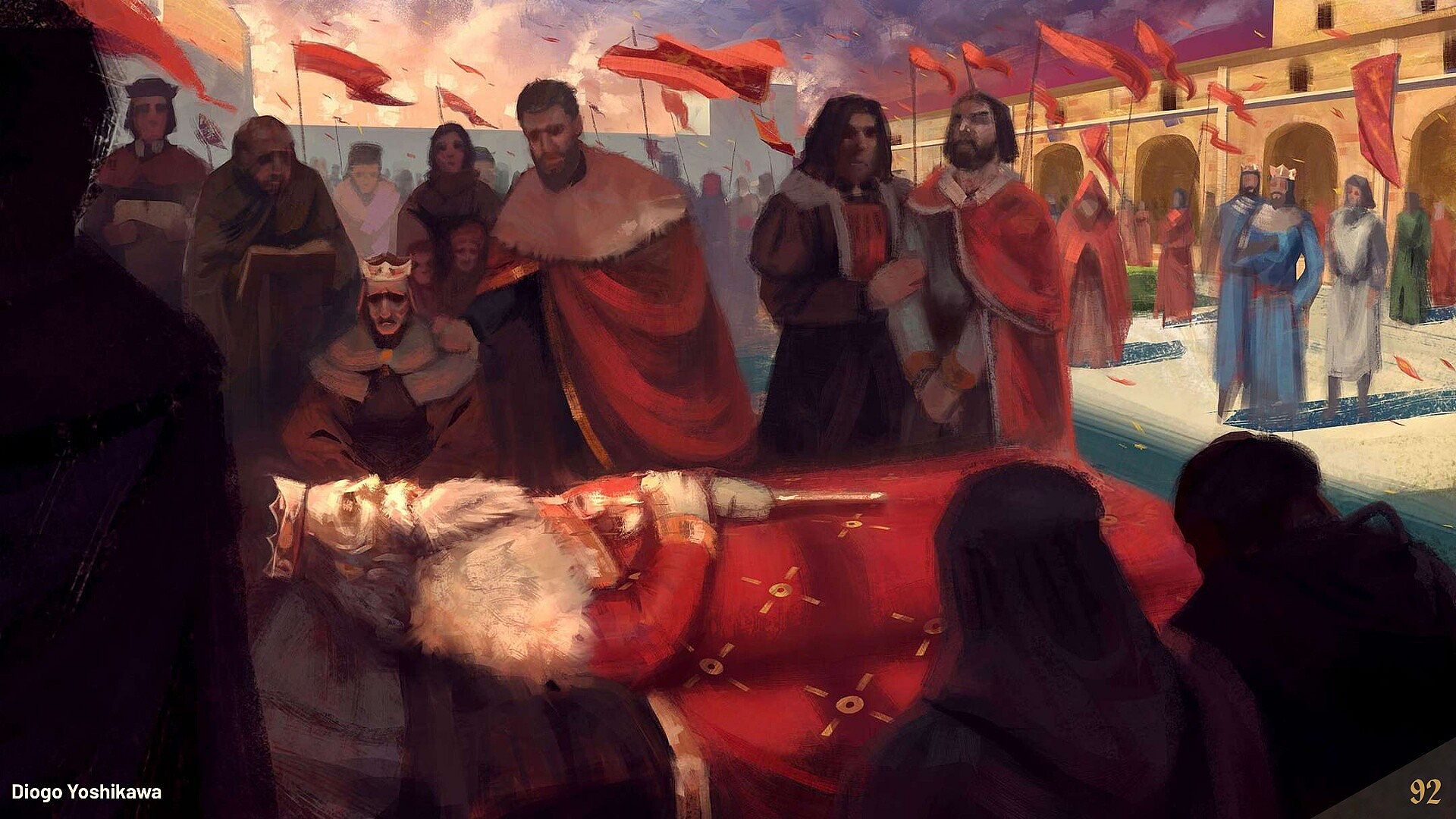
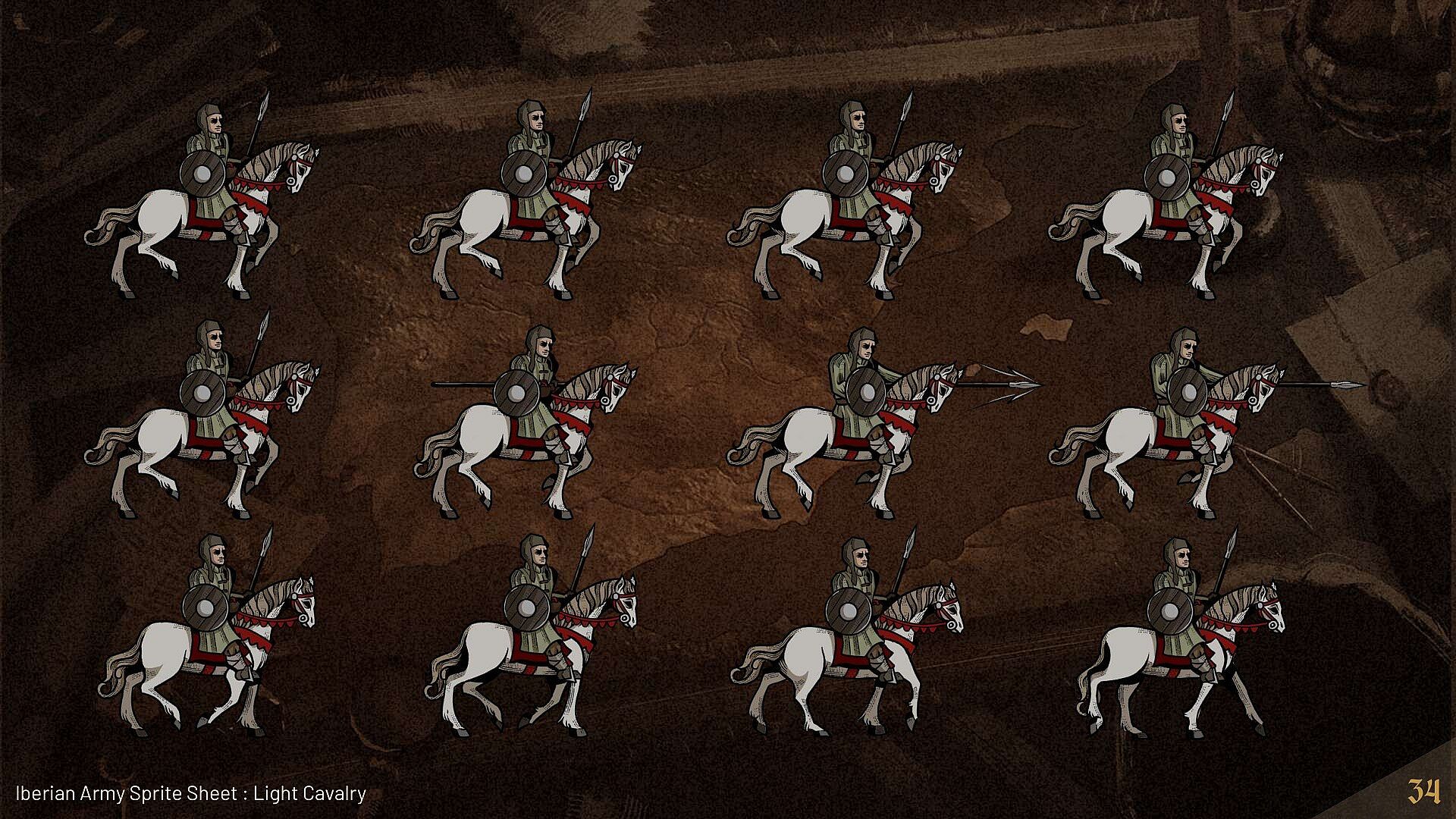
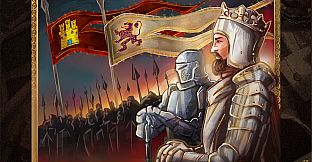
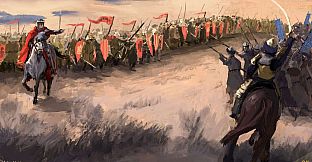
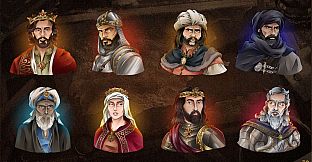
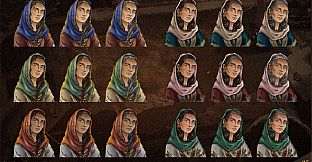
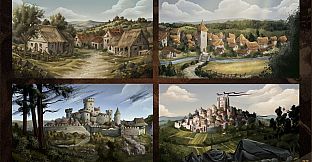
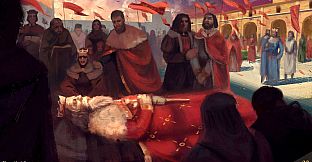
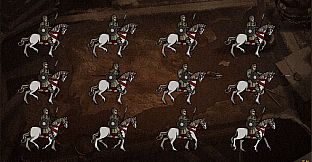
Eleventh-century Iberia forms the exclusive focus, rendered with attention to historical manuscripts, architecture, and peninsula landscapes. The visual language unifies characters, maps, and interface elements through consistent research into period sources. Early concept boards and revisions sit alongside final artwork, illustrating the progression from initial sketches of water edges, city layouts, and army sprites to polished illustrations of events such as the death of Sancho III and the coup in the Caliphate of Cordoba. Portrait sets cover Basque, French, Slavic, Moorish, Iberian, and Berber figures across different ages, while coats of arms, flags, trait icons, and event windows maintain the same cohesive aesthetic.
Development and Current State
Crown of Hispania entered Early Access on September 22, 2026, after a Kickstarter campaign and demo feedback period. Economy, country management, technology, court, and land warfare systems launched complete, while cultural and religious mechanics remain basic and slated for expansion. The developer plans ongoing AI improvements based on player input, with expectations for at least twelve months of updates that will add intrigue, espionage, rebellions, and expanded events. A short tutorial addresses one of the most requested features from earlier testing.
Is It Worth Playing?
Early player feedback shows strong approval, with an overall positive rating on the primary distribution platform. The focused scope on Iberia delivers a denser simulation of population dynamics and terrain than many broader grand strategy titles, appealing to those who enjoy character-driven politics alongside state management. A free demo lets prospective players test the economy, court, and army systems with a limited campaign before committing. The title suits fans of deliberate, region-specific strategy who value proactive AI opposition and the interplay between military positioning and internal realm development. Those seeking a finished product with all planned systems may prefer to wait for further updates, while Early Access participants can influence the direction of cultural, religious, and AI refinements over the coming year.