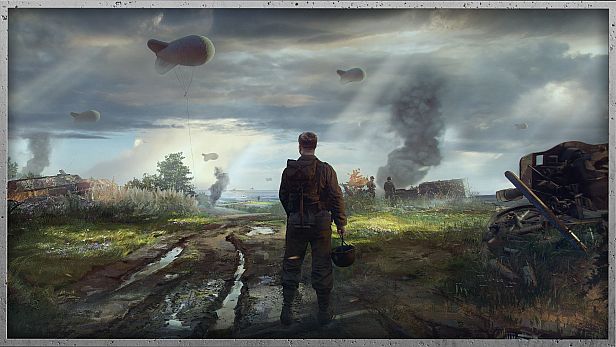



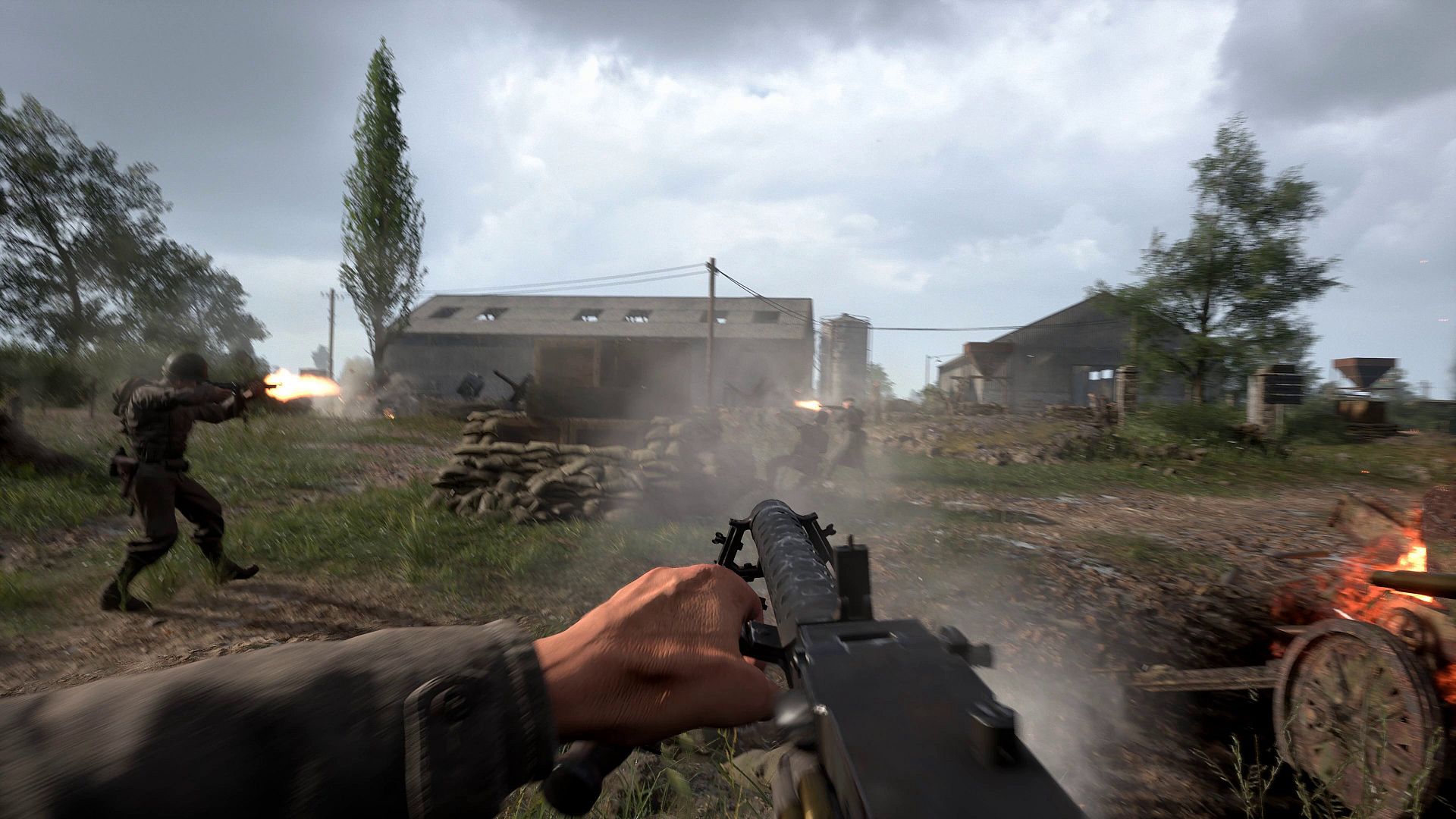
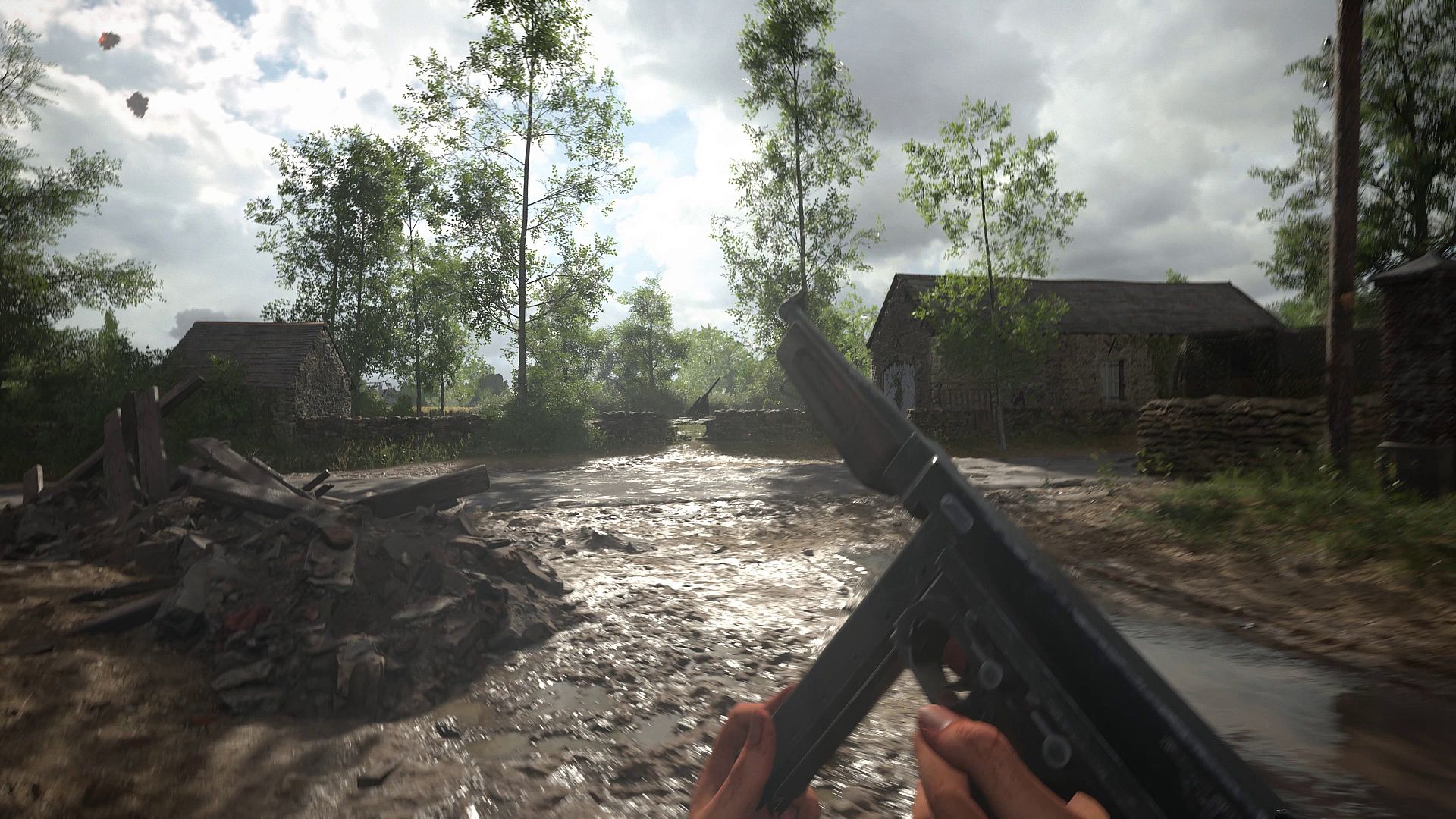
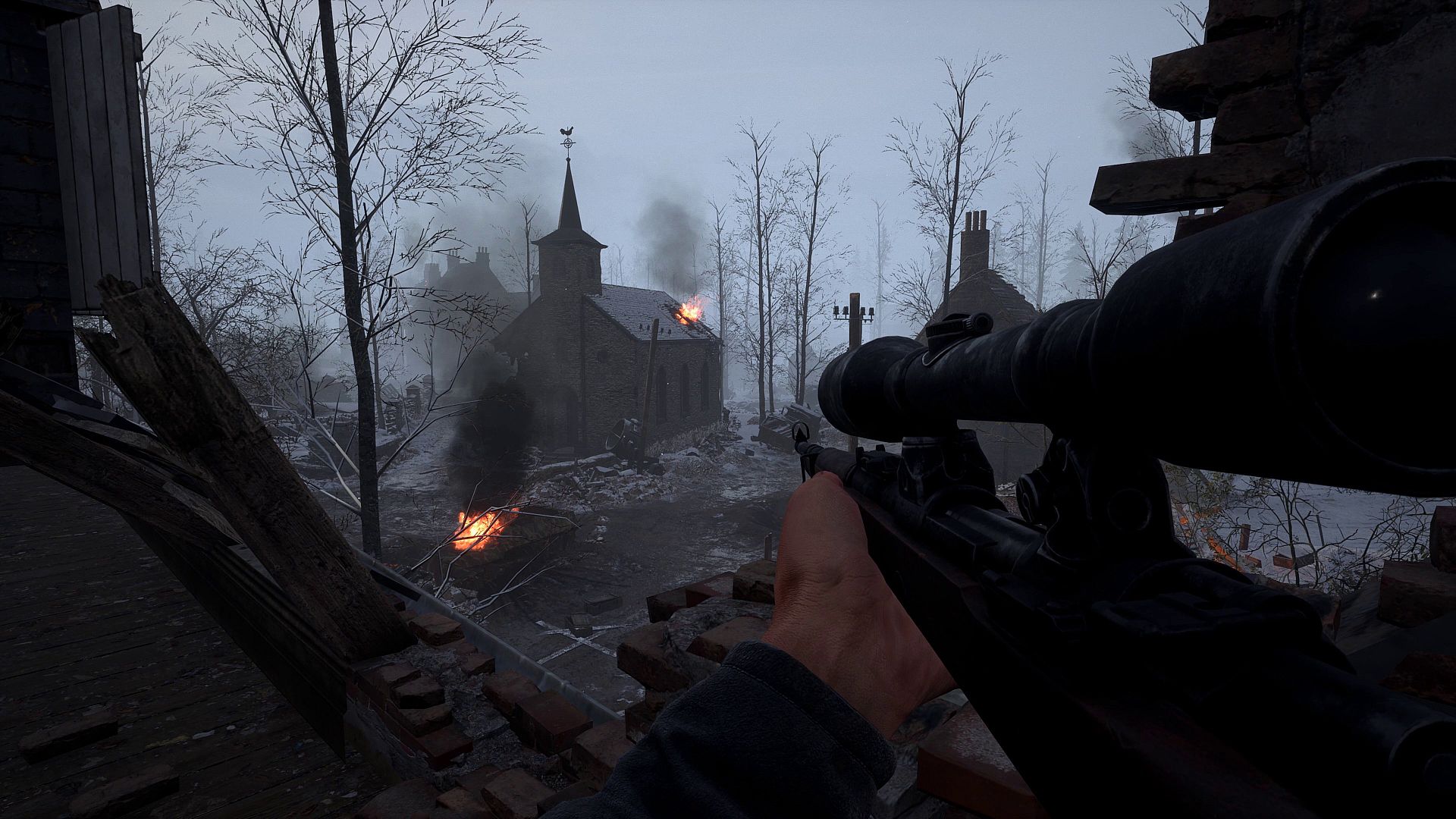
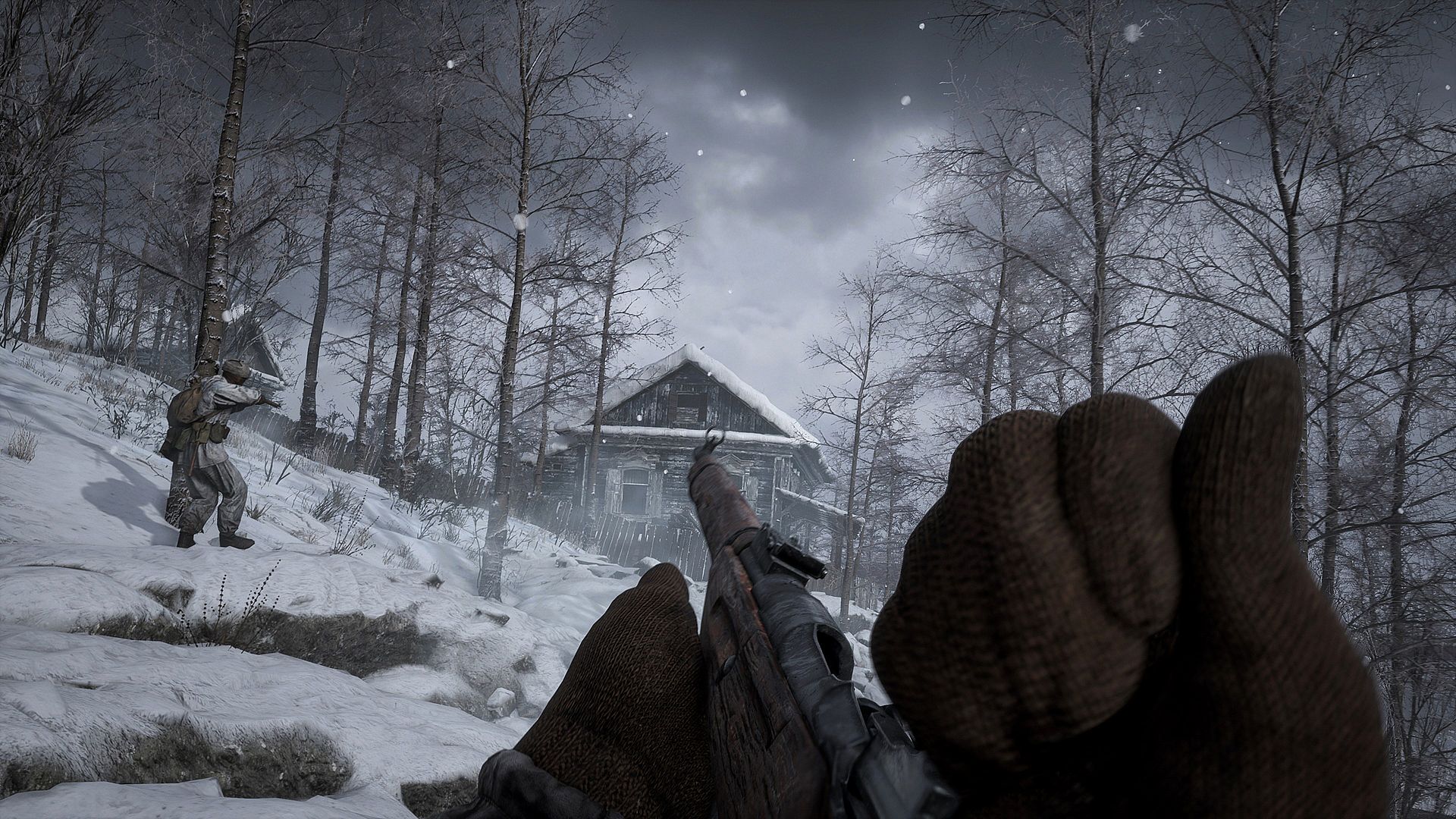
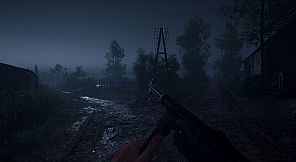
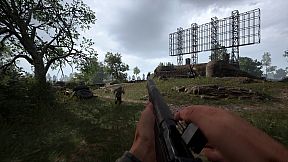
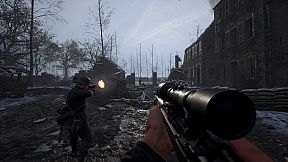
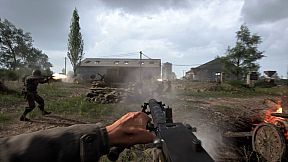
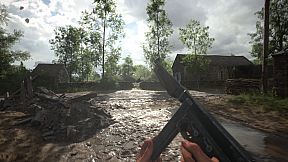
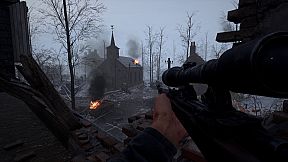
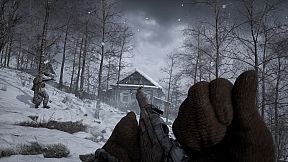
Hell Let Loose is a large-scale multiplayer first-person shooter set during World War II. Matches pit two teams of 50 players against each other across expansive maps where the front line shifts based on territorial control. Success depends on coordinated teamwork, clear voice communication, and strategic planning rather than individual heroics. Players select from fourteen specialized roles that range from basic riflemen to engineers, medics, anti-tank specialists, and the single commander who oversees the entire effort.
Gameplay
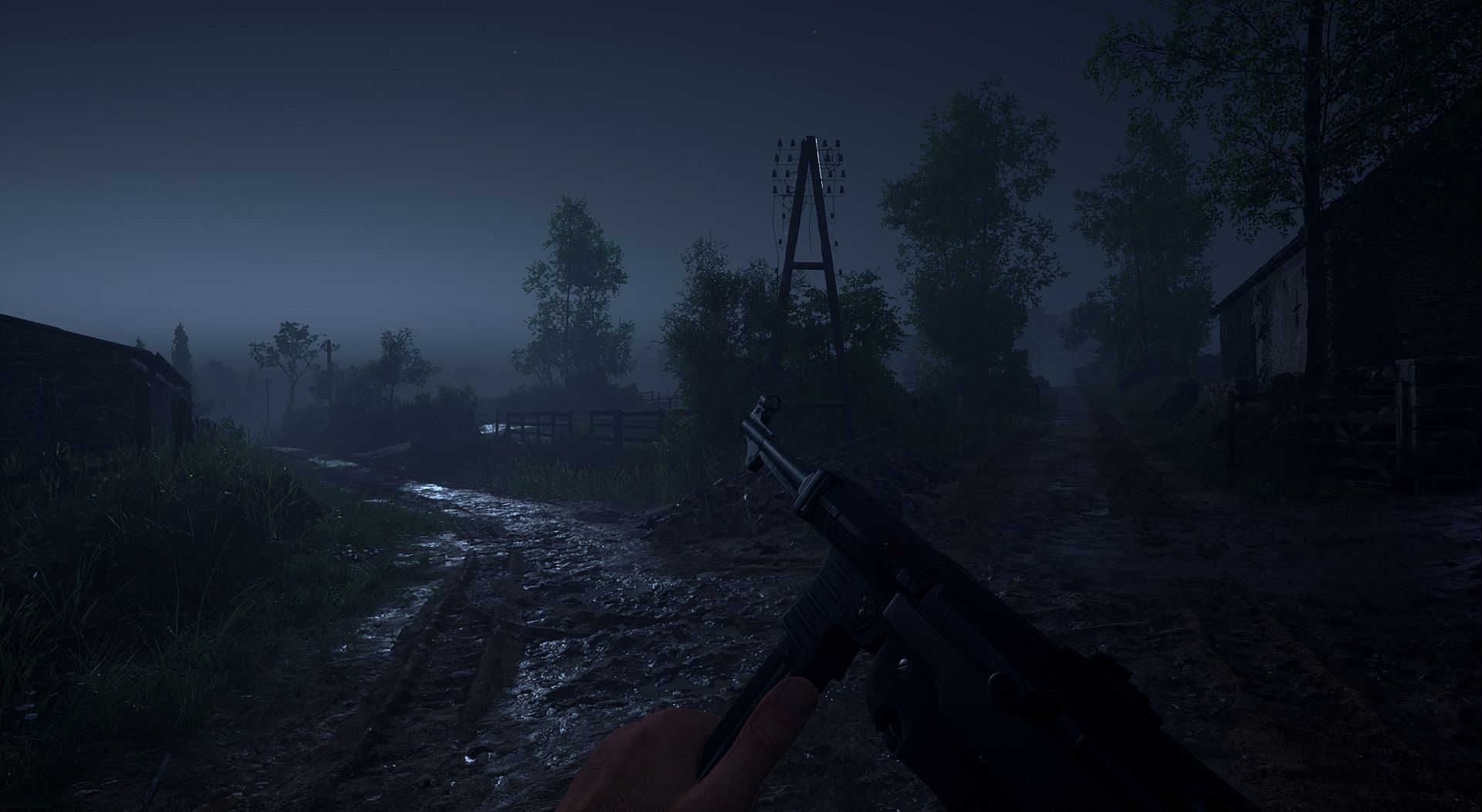
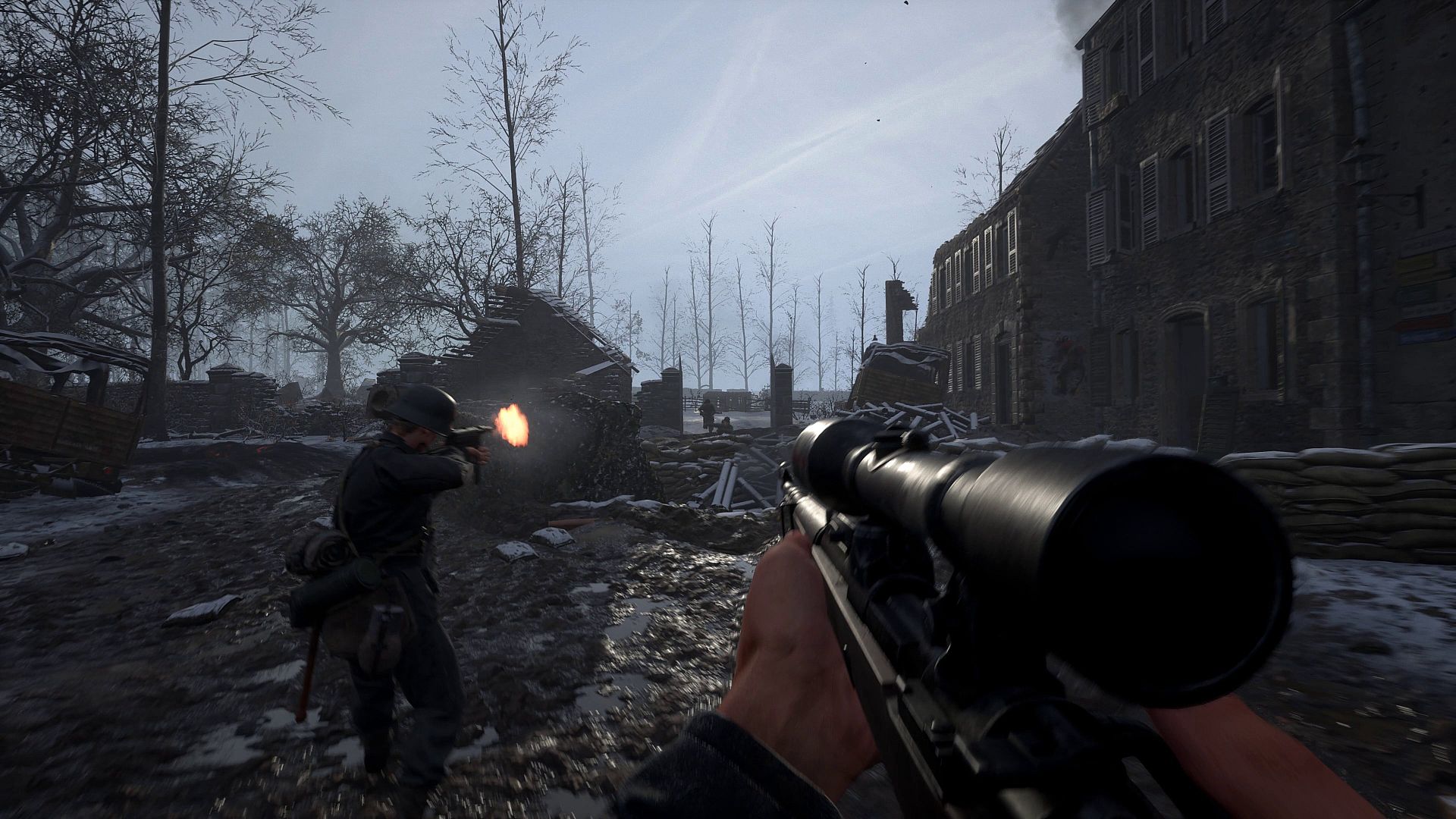
Combat emphasizes realism and lethality. A single well-placed shot often ends an engagement, and the absence of a traditional HUD forces reliance on sound cues, a compass, and direct observation. Squads of up to six players operate under an officer who can establish spawn points known as garrisons or outposts. These points require supplies to build and maintain, turning logistics into a core part of every match.
Resource management adds another layer. Maps contain nodes that generate manpower, munitions, and fuel. The commander draws on these reserves to call in artillery strikes, supply drops, reconnaissance flights, or vehicle reinforcements. Engineers construct the nodes while other roles protect them or use the generated resources for defensive structures and additional spawn locations. Vehicles such as tanks and half-tracks appear when fuel allows, and crews must coordinate internally while infantry provides spotting and protection.
Roles carry strict limits within each squad to encourage variety. Riflemen serve as the unlimited backbone, while limited slots cover machine gunners, grenadiers, support troops delivering supplies, and recon teams with snipers and spotters. The commander sits above the squad structure, communicating exclusively through officer channels to direct pushes or defensive stands.
Game Modes
Warfare forms the core experience. Two teams begin holding opposite halves of the map with a neutral central sector between them. Capturing sectors requires more players inside the hard cap radius than the opposition, with the soft cap area contributing at a reduced rate. Matches run up to ninety minutes and end when one side seizes the enemy headquarters or holds the majority of sectors at the timer.
Offensive shifts the dynamic into a clear attacker versus defender setup. One team must push through five sectors to reach the opposing headquarters, with thirty minutes allotted per active sector. Defenders win by holding any contested sector until its timer expires. The attacking side starts with extra manpower, but defenders gain access to artillery support to blunt advances.
Both modes feature a grid-based sector system where the active front line determines which areas remain playable. Spawn points behind the lines become critical targets for destruction, and coordinated squads often flank through neutral or weakly held territory to establish new outposts.
World War II Authenticity
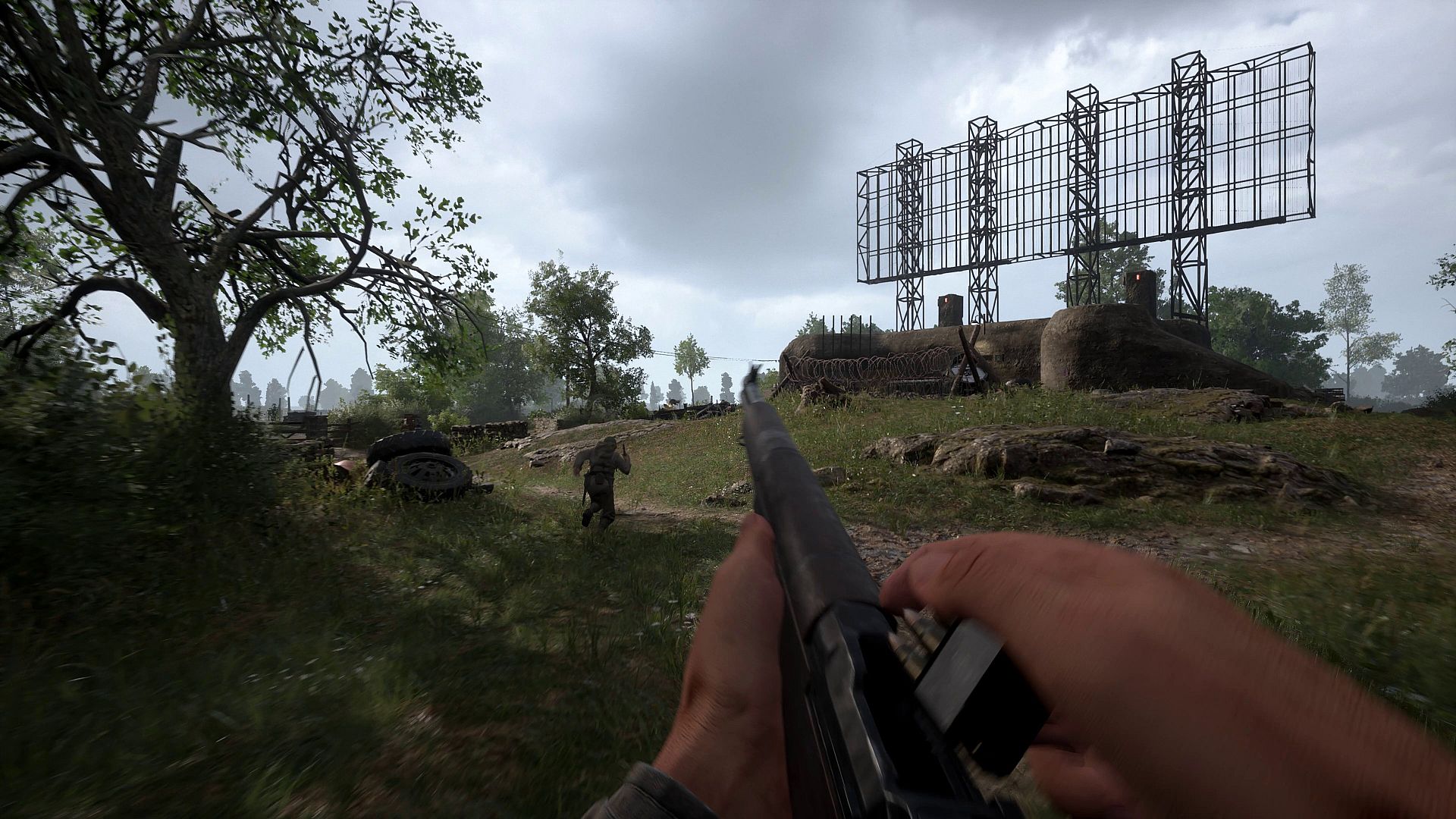
Every weapon, vehicle, and piece of equipment draws from historical records. Bolt-action rifles, submachine guns, machine guns, and anti-tank launchers behave according to their real-world ballistics and reload procedures. Tanks offer different armor profiles and armament options, requiring crews to manage positioning and ammunition types carefully. Sound design captures the distinct report of each firearm and the distant rumble of artillery, reinforcing the sense of scale during prolonged engagements.
Maps recreate key battlefields with attention to terrain features that influence tactics. Open fields favor long-range engagements and vehicle movement, while built-up areas and forests reward close-quarters coordination and defensive setups. The shifting front line means players frequently transition between attacking and defending within the same match.
Is It Worth Playing?
Hell Let Loose maintains a Very Positive rating on Steam from well over one hundred thousand reviews. The player base remains active with consistent server populations, and ongoing updates continue to refine balance, add maps, and improve performance. Matches reward patience and communication, producing tense, memorable moments when squads execute a coordinated push or hold a vital sector against overwhelming odds.
The game suits players who prefer deliberate, team-oriented multiplayer over fast-paced arcade shooters. Those willing to use voice chat and follow squad leaders will find the most satisfaction, while solo players or those seeking quick matches may encounter frustration from the slower pace and reliance on group coordination. With its emphasis on strategy within large battles, Hell Let Loose delivers a distinctive experience for fans of realistic World War II combat.