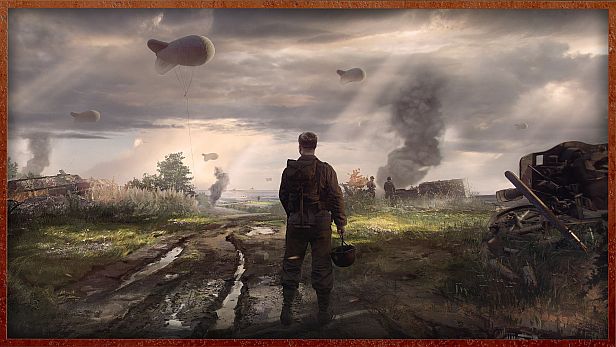



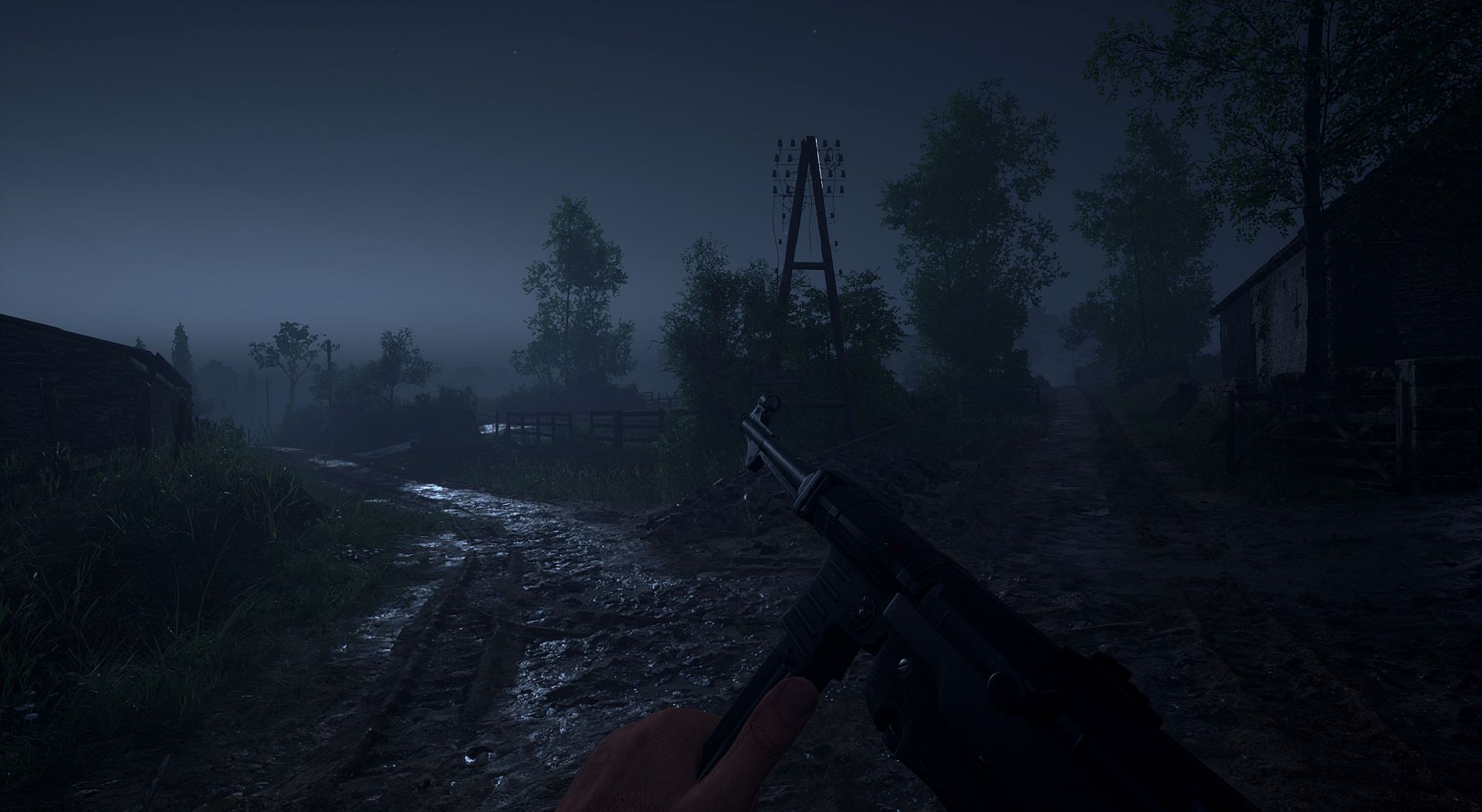
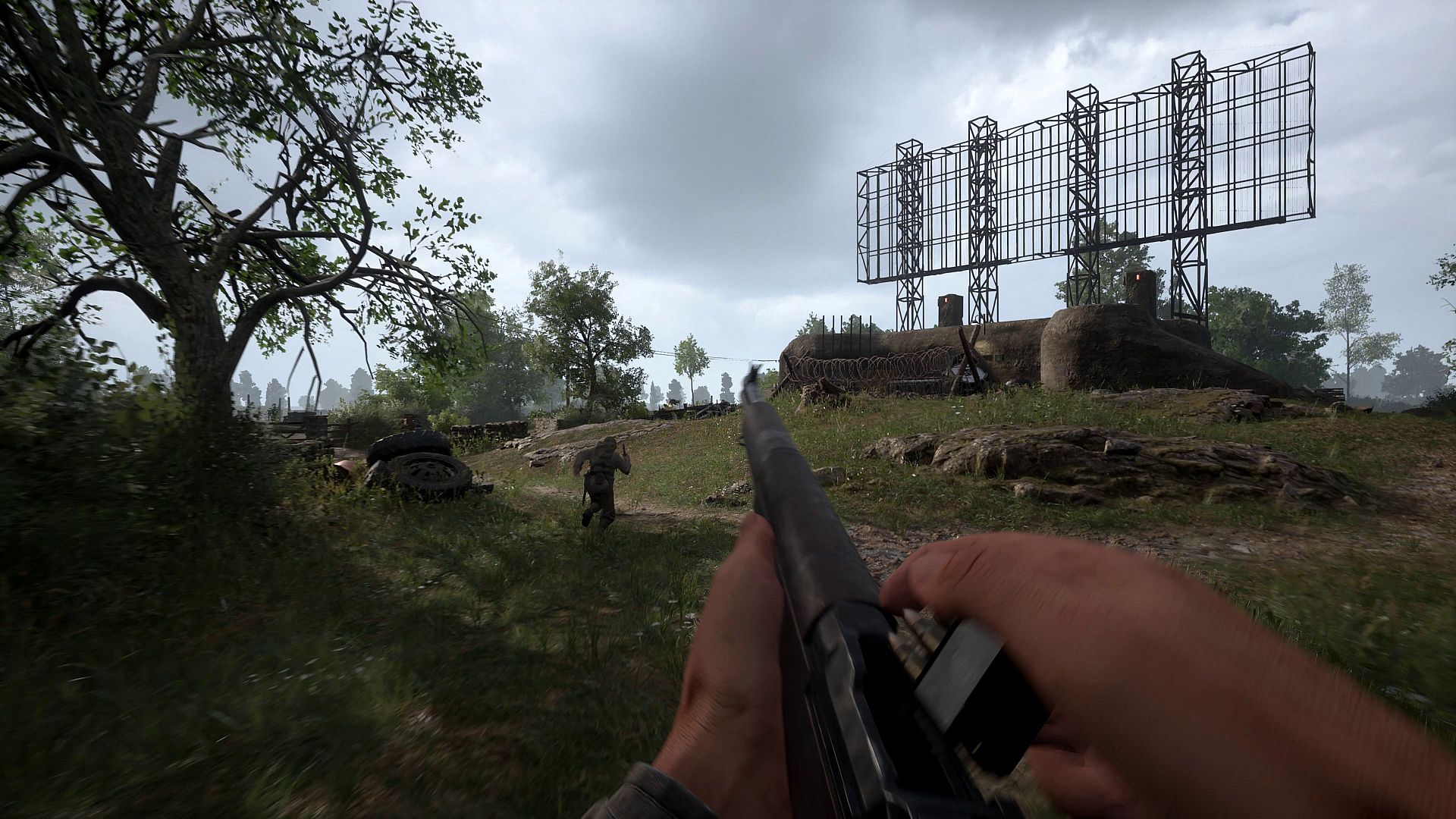
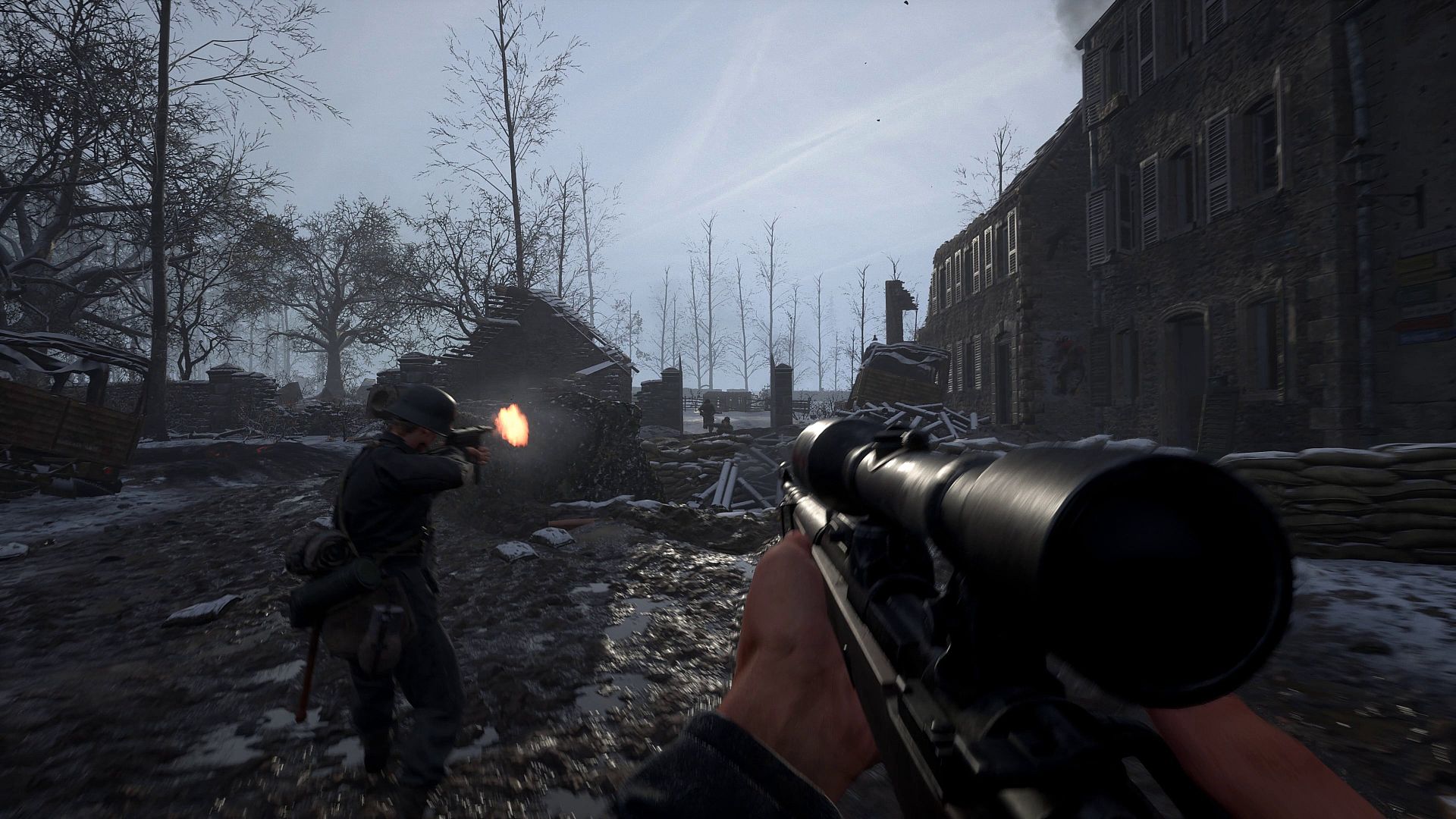
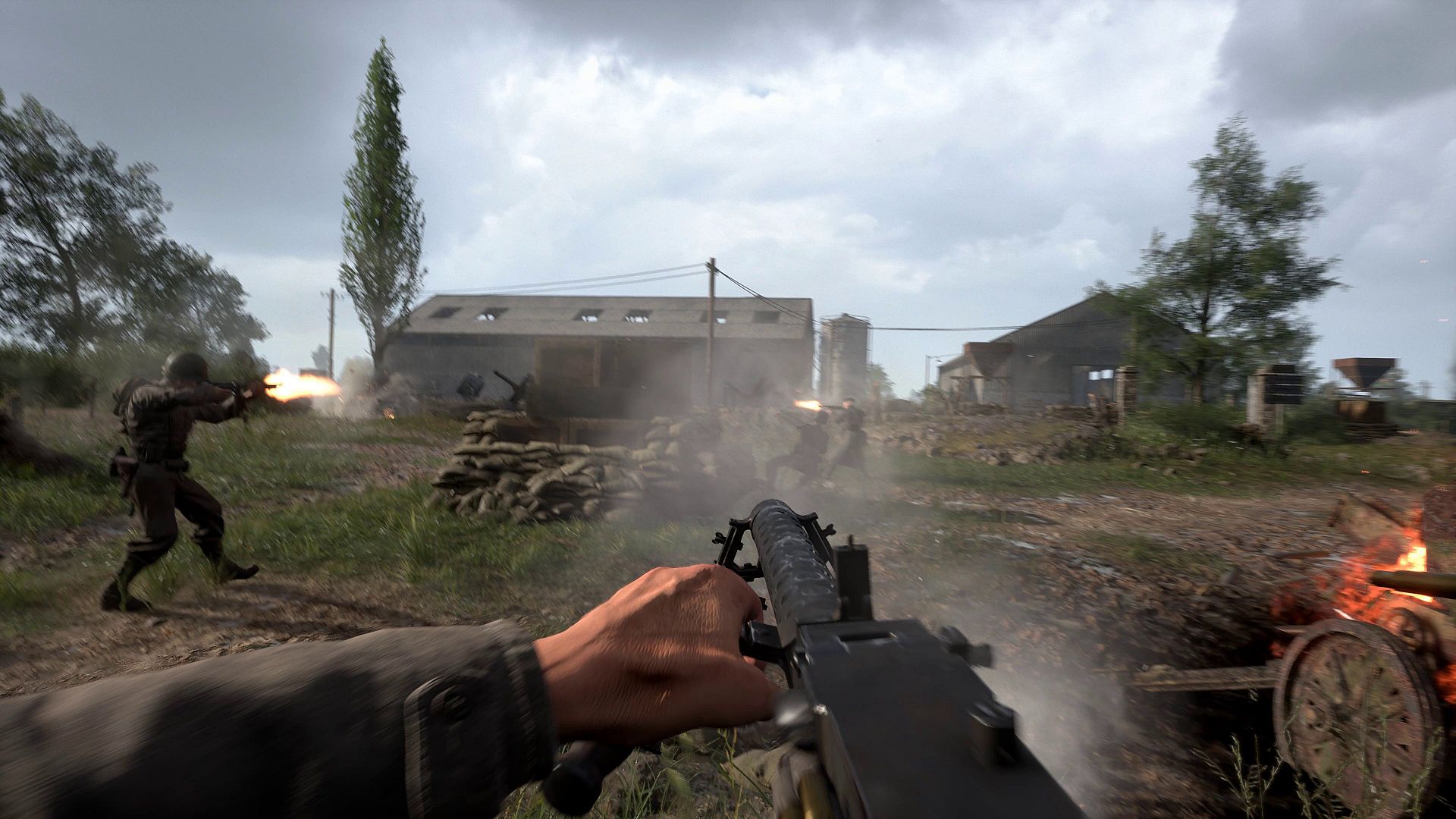
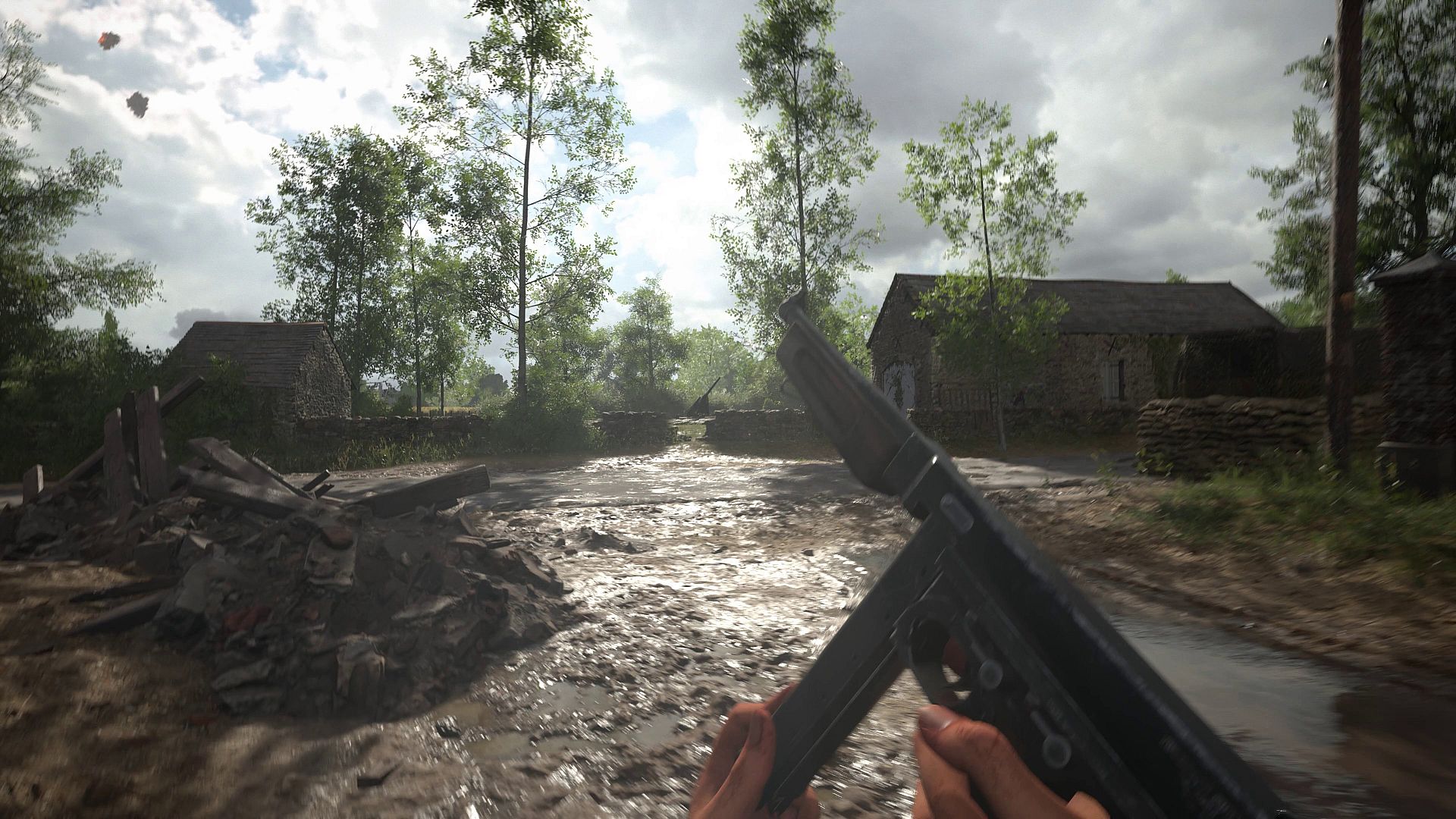
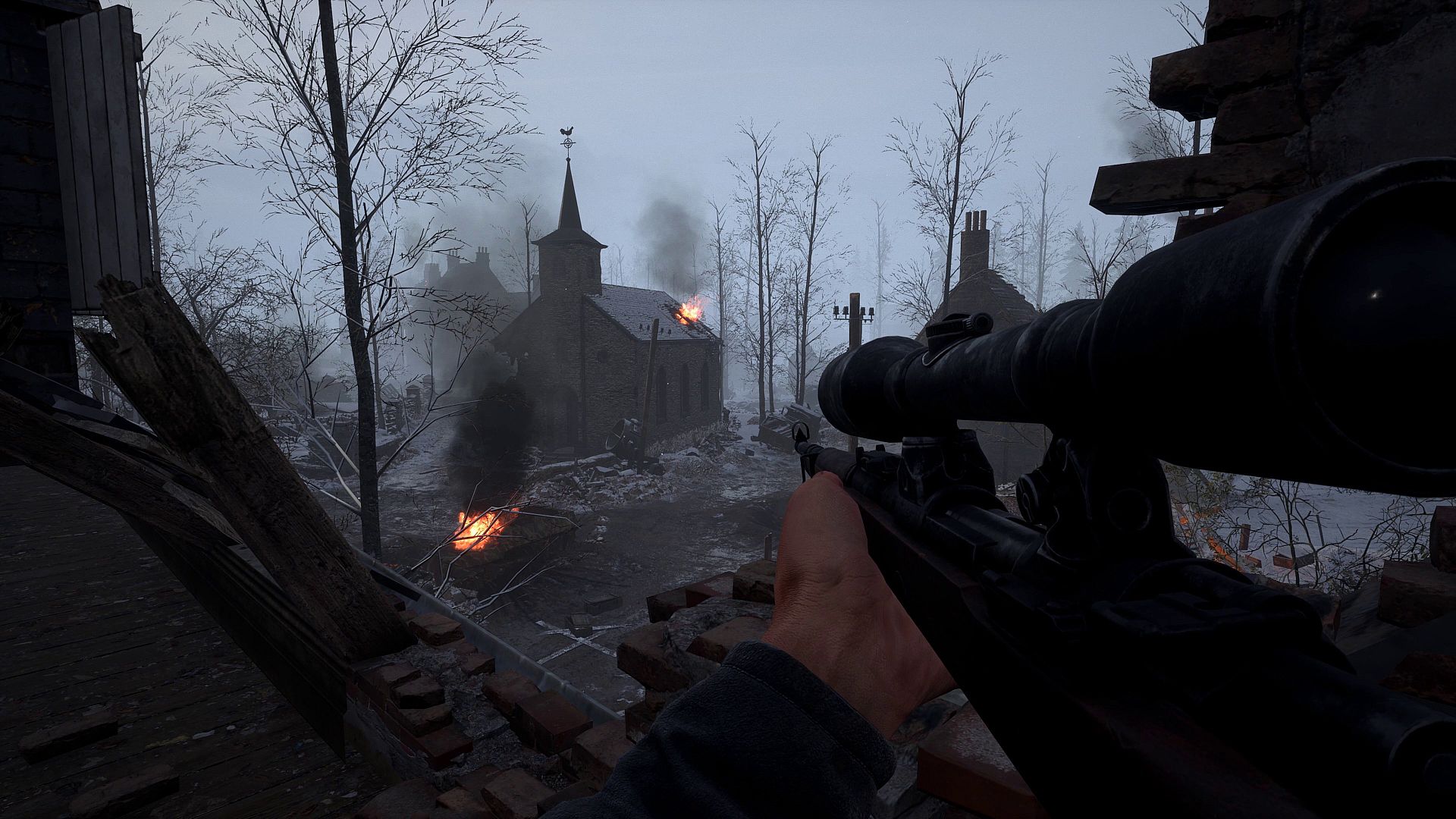
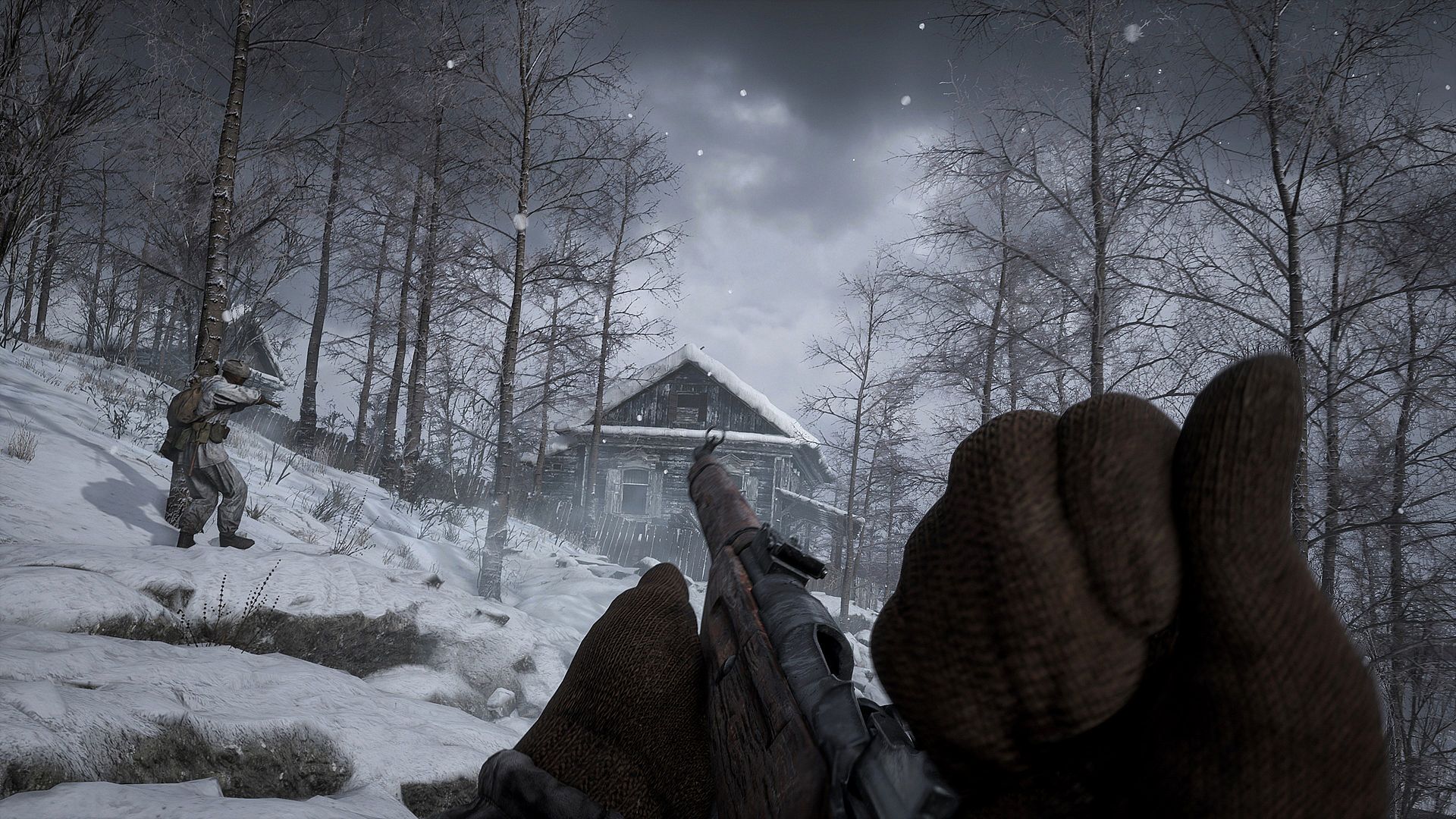
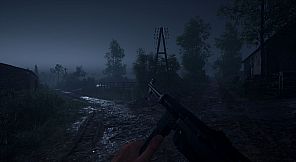
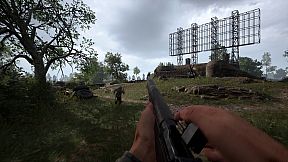
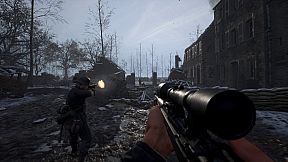
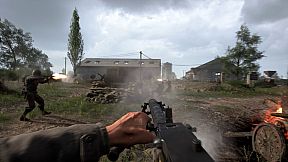
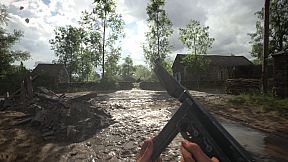
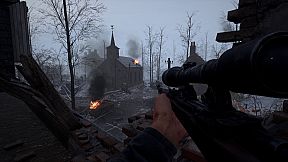
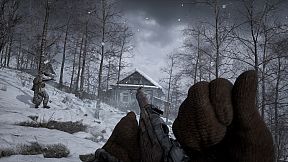
Hell Let Loose is a multiplayer first-person shooter set in World War II that places teams of 50 players against each other on expansive battlefields. Matches emphasize coordination among squads, resource management, and control of territory rather than individual heroics. The game runs on Xbox Series consoles and PC, with cross-platform play supporting consistent matches across those systems.
Gameplay
Core action revolves around large-scale combined arms combat where infantry, armor, and support elements interact on maps modeled after historical locations. Players select from 14 specialized roles that include rifleman, machine gunner, medic, engineer, anti-tank specialist, sniper, spotter, tank commander, and crew positions. Each role carries distinct equipment and responsibilities that influence team effectiveness.
Squads of six operate under an officer who can mark positions and coordinate with a commander. The commander oversees broader strategy by calling in artillery, supply drops, and vehicle reinforcements. Voice communication channels separate squad talk from leadership discussions, encouraging players to relay information about enemy movements and objective status. Captured sectors generate resources that teams use to sustain their forces and unlock additional support options.
Weapons and vehicles receive detailed modeling that affects handling, reload times, and damage output. Movement and positioning matter heavily because open fields, hedgerows, and urban areas create natural lines of sight and cover. Matches often last up to 90 minutes, during which the front line shifts based on which team secures and holds key points.
Game Modes
Warfare serves as the standard format. Two teams begin on opposite sides of the map with a neutral central sector. The objective is to push the front line forward by capturing successive sectors until one side controls the enemy headquarters or holds the majority of sectors when the timer expires.
Offensive assigns clear attacker and defender roles. The attacking team must capture sectors in sequence, with each successful capture preventing defenders from retaking it. Defenders win by holding any active sector for the full duration of a 30-minute timer per objective. This structure creates focused pushes and defensive stands.
Additional modes such as Conquest and Domination expand options by introducing morale systems or multiple simultaneous objectives that require teams to split attention across the map. These variations maintain the same emphasis on territory control and squad coordination while altering the pace and strategic demands.
Team Composition and Strategy
Effective play depends on balanced role selection within squads and clear communication between officers and the commander. Infantry roles handle close-quarters fighting and objective captures, while recon units provide spotting and long-range fire support. Armor crews manage vehicle deployment and protection of key routes.
Resource nodes tied to captured sectors feed into a meta layer where teams decide whether to reinforce positions, request new vehicles, or call strikes. Poor coordination often leads to isolated fights that fail to advance the overall line. Successful teams maintain overlapping fields of fire and rotate spawns to keep pressure on objectives.
Is It Worth Playing?
Hell Let Loose maintains an active player base with several thousand concurrent users on Steam at peak times and consistent matches available on Xbox Series. Reviews on Steam rate the game Very Positive based on more than 149,000 submissions. The experience rewards players who value tactical decision-making and group coordination over fast-paced arcade shooting.
Those who enjoy large-scale multiplayer shooters that require voice chat, role specialization, and long-term map control will find repeated value in the shifting front lines and varied maps. Ongoing updates continue to add content and refine mechanics, supporting the game's longevity for dedicated groups. New players benefit from starting in smaller practice sessions or with established squads to learn the systems before full matches.