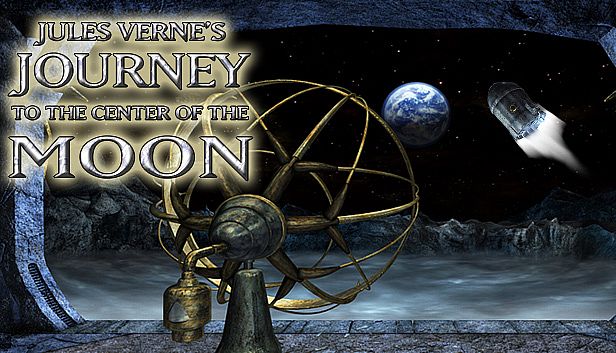













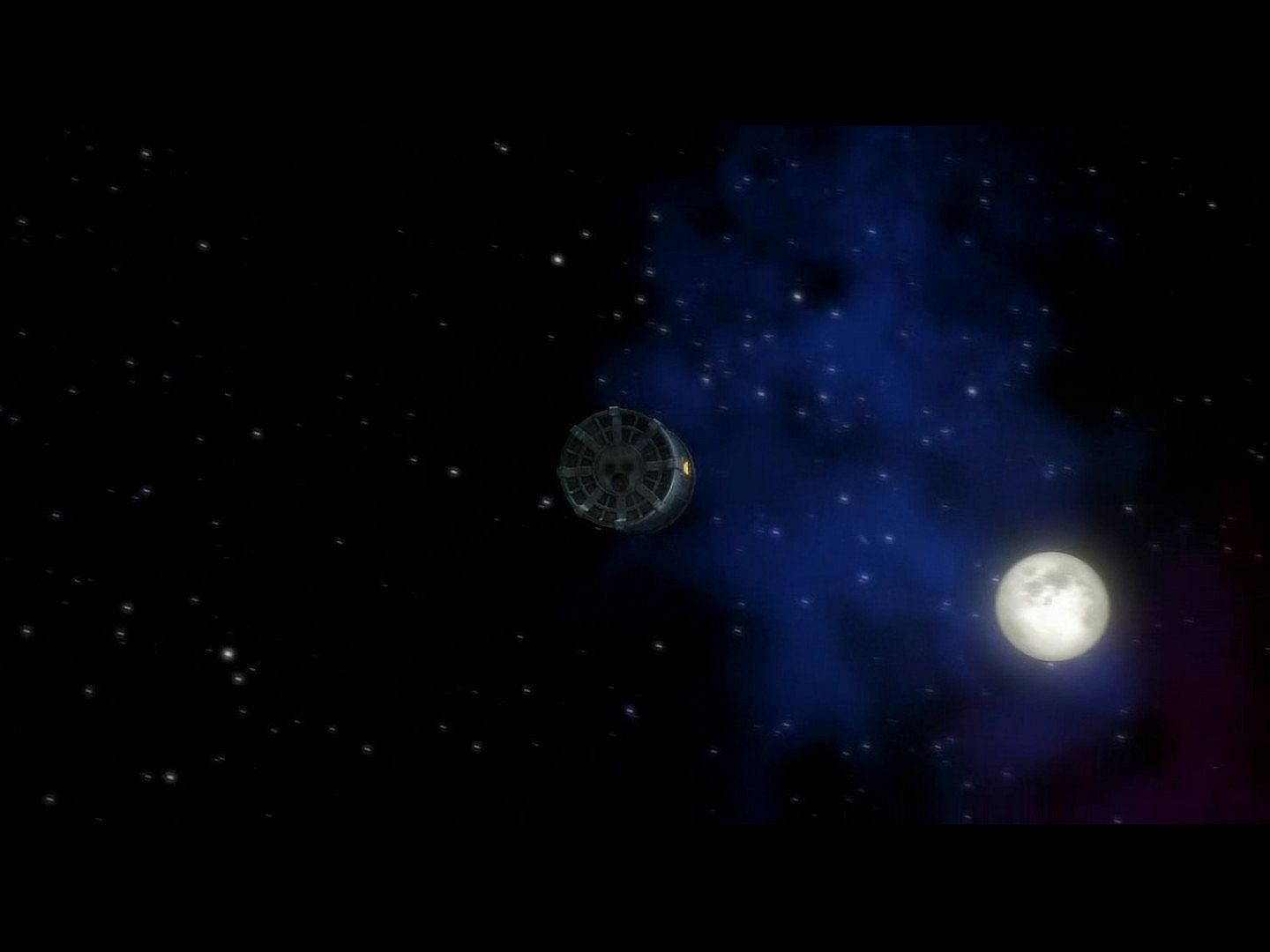


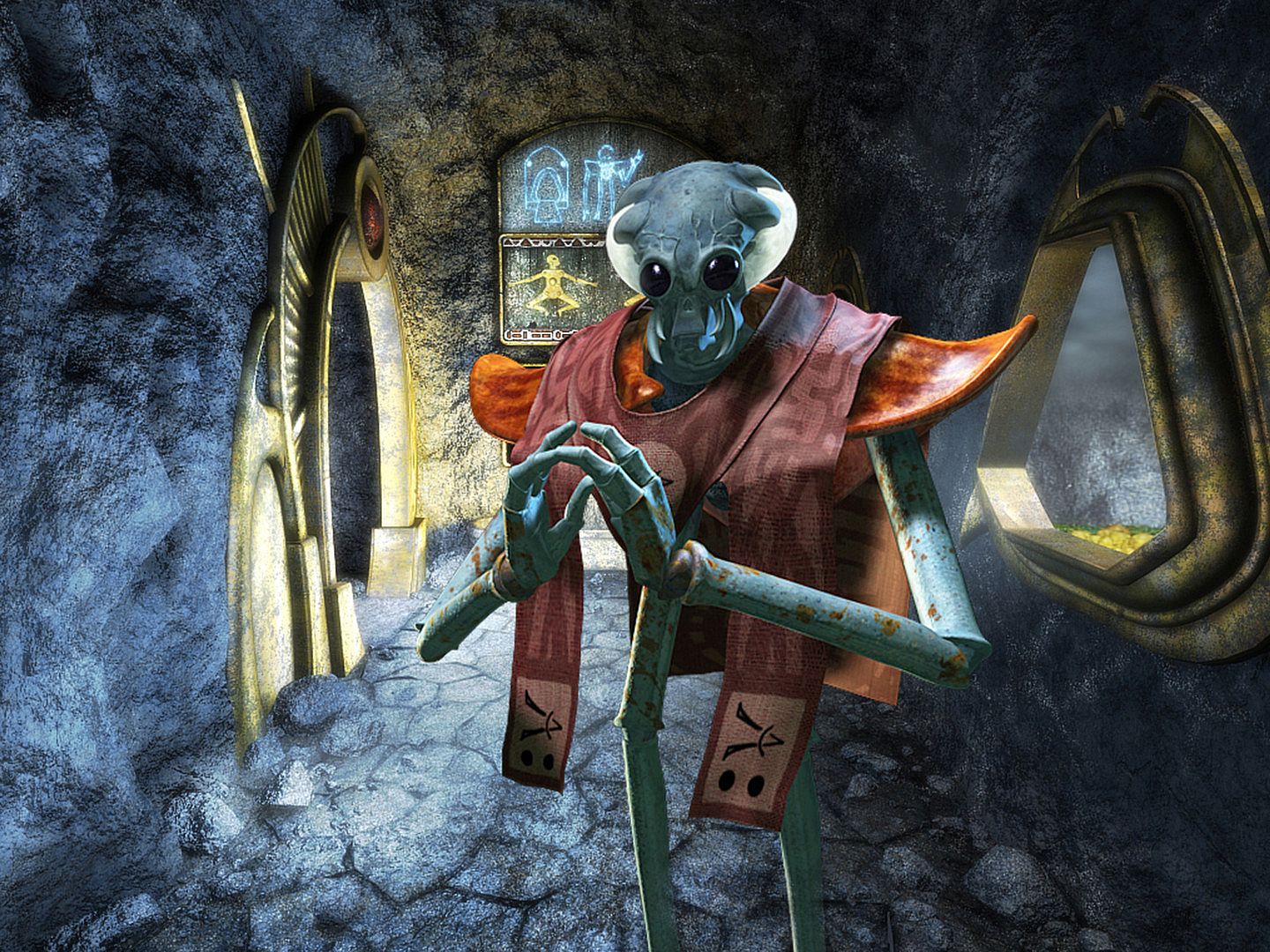
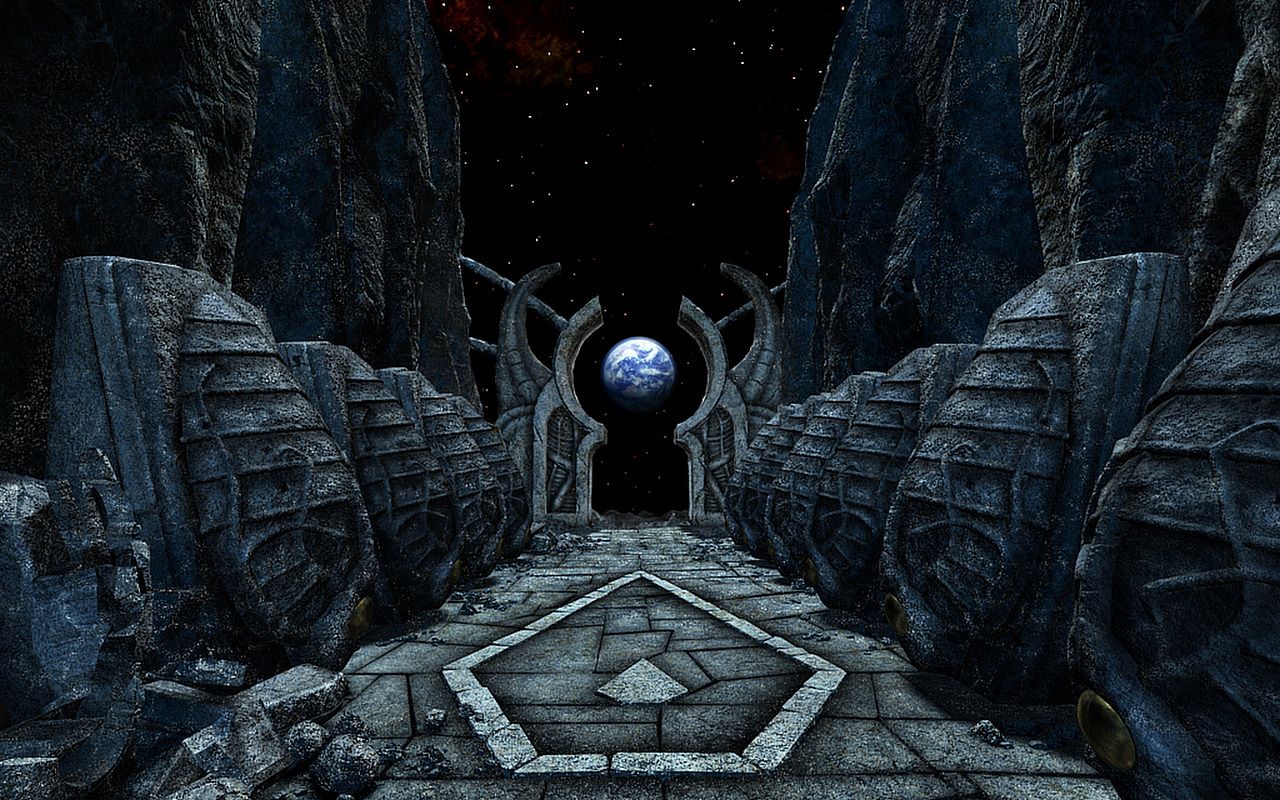
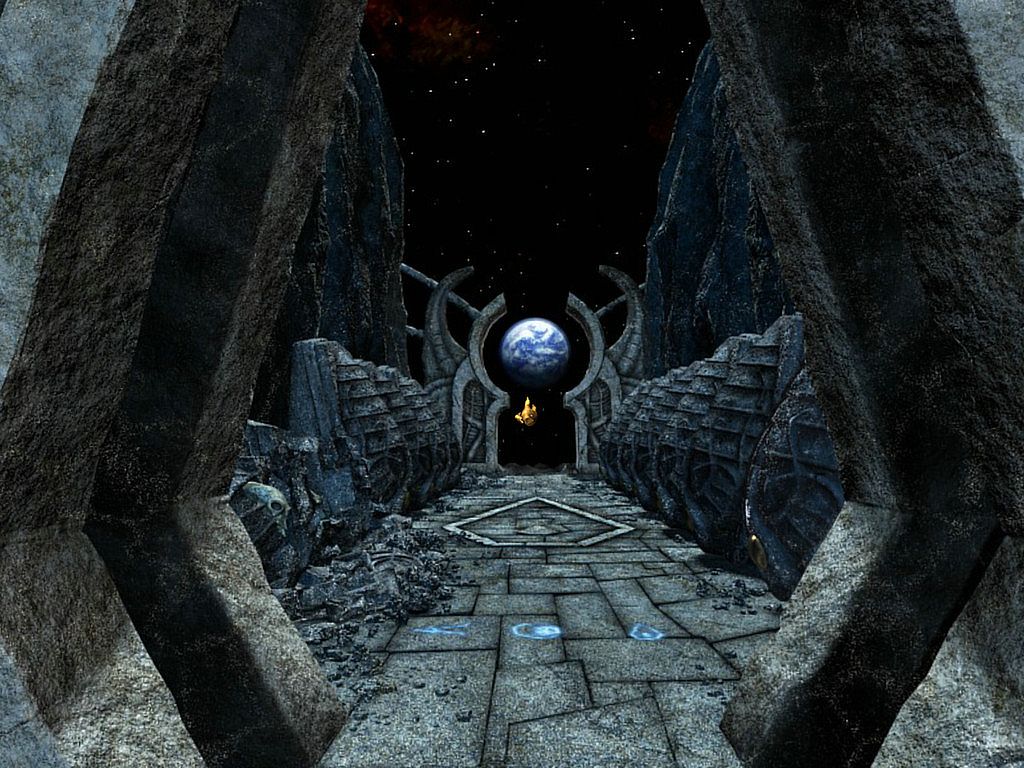
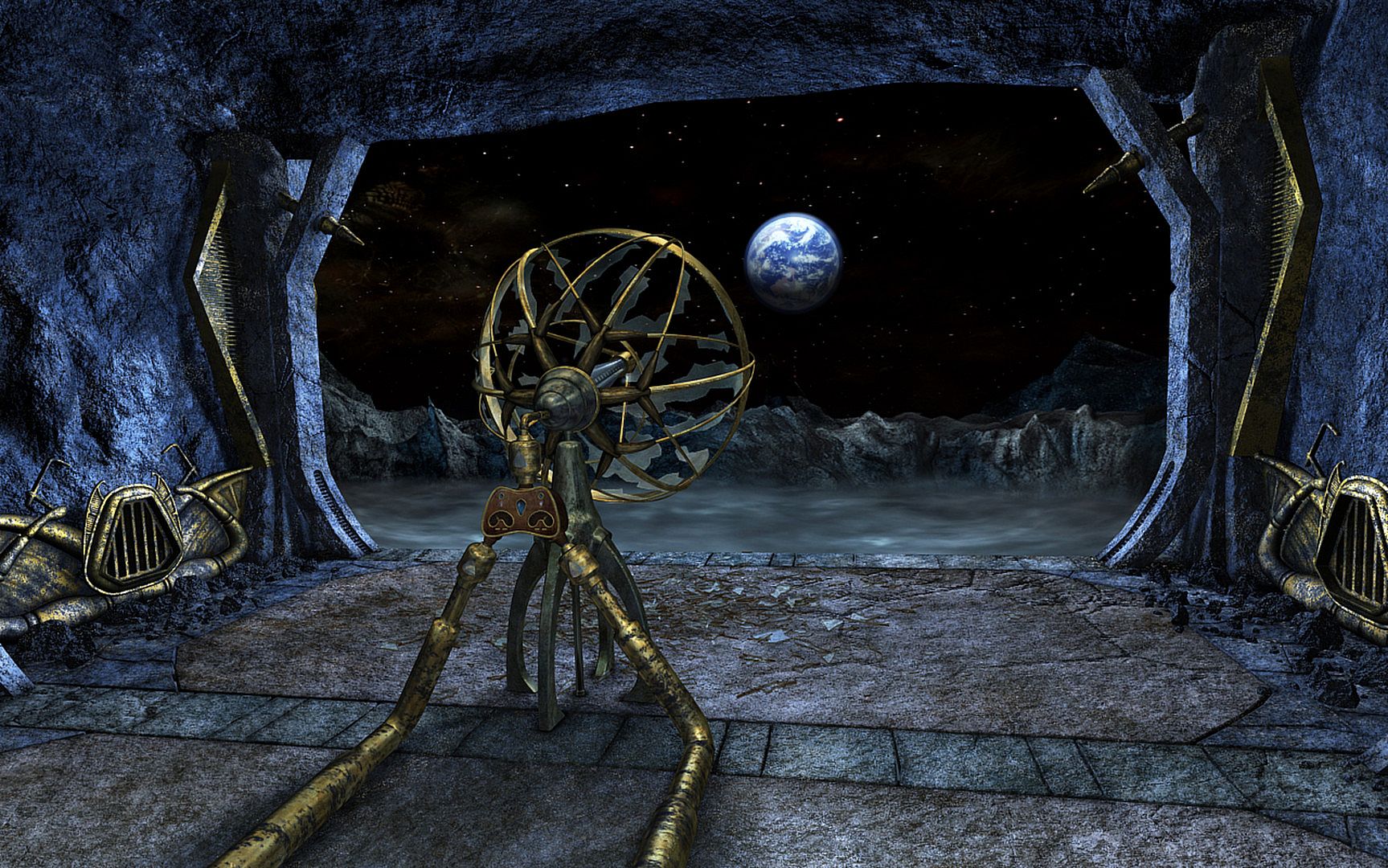




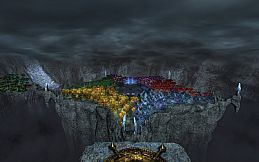

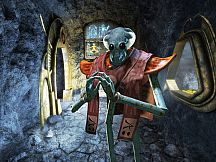
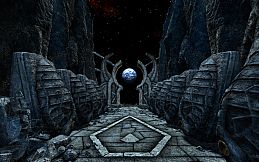
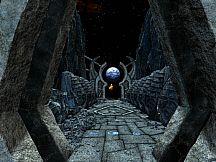
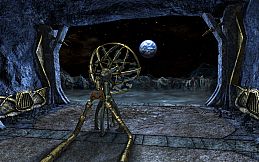

Voyage: Journey to the Moon is a point-and-click adventure game released in 2005 for PC. Players take on the role of Michel Ardan, an eccentric explorer who arrives on the hidden side of the moon and must navigate its mysteries to find a way back to Earth. The experience centers on exploration of dream-like lunar environments, including temple ruins and deeper underground areas, combined with puzzle-solving that draws from the game's non-linear narrative structure.
Gameplay
The core loop involves clicking to move through scenes while freely rotating the camera 360 degrees to examine surroundings. An extensive inventory system lets players collect and combine dozens of items gathered from the environment. Puzzles draw on multiple disciplines, such as interactions with lunar plant life, mechanical devices, audio elements, and mathematical challenges. Some sequences incorporate low-gravity dexterity tasks, including capturing floating bubbles or executing large jumps across the surface. Timed puzzles appear at key moments, where failure results in death but allows immediate replay of the section. Incorrect story choices can also lead to fatal outcomes, encouraging careful observation and experimentation throughout the journey.
Game Modes
The game operates entirely as a single-player experience with no separate multiplayer or competitive options. Progress follows the main narrative thread, which incorporates branching paths and multiple solutions for many puzzles. Exploration spans the moon's surface and subterranean regions tied to an ancient civilization, with the focus remaining on puzzle resolution and story advancement rather than combat or resource management systems. The structure supports replay through its non-linear scripting, allowing different approaches to the same objectives without altering the fundamental single-player format.
Story and Setting
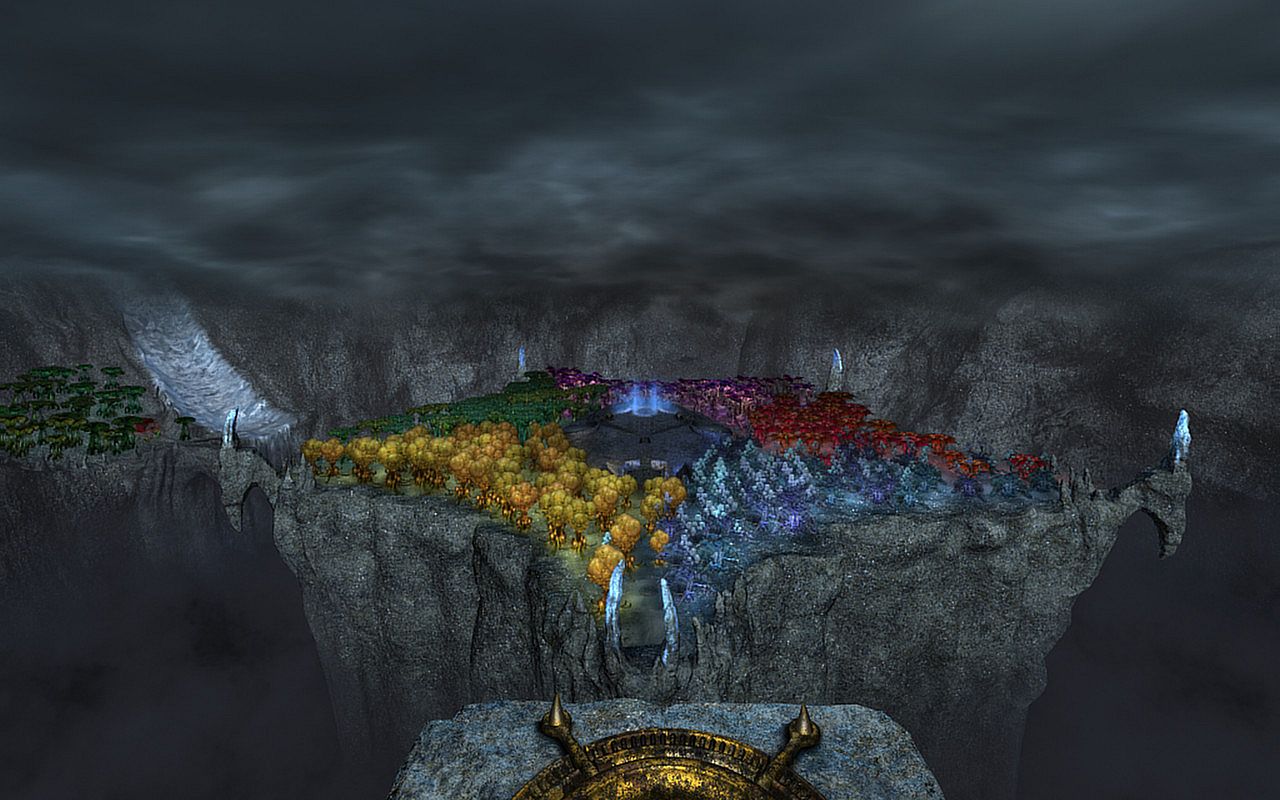
The narrative places players in the shoes of Michel Ardan as he confronts isolation on the lunar surface. Events unfold around an abandoned temple and deeper lunar depths, revealing surprising occurrences and hidden elements that question whether the explorer is truly alone. The setting emphasizes atmospheric, dream-like visuals across varied locations, supporting a script that prioritizes discovery and problem-solving over linear progression. This approach creates opportunities for players to uncover details at their own pace while piecing together the path back to Earth.
Is It Worth Playing?
Steam user reviews rate the game Very Positive based on 139 ratings, with 84 percent positive feedback. Players highlight the challenging puzzles, engaging story, and distinctive art direction as strengths. The title suits those interested in classic point-and-click adventures that reward patience and logical thinking. Average playtime ranges from roughly nine to fourteen hours depending on puzzle familiarity and completion goals. As a 2005 release still available on PC platforms, it offers a self-contained experience without ongoing seasonal content or updates. Those who enjoy inventory-based puzzles and atmospheric exploration in a compact single-player package will find it aligns well with their preferences.