


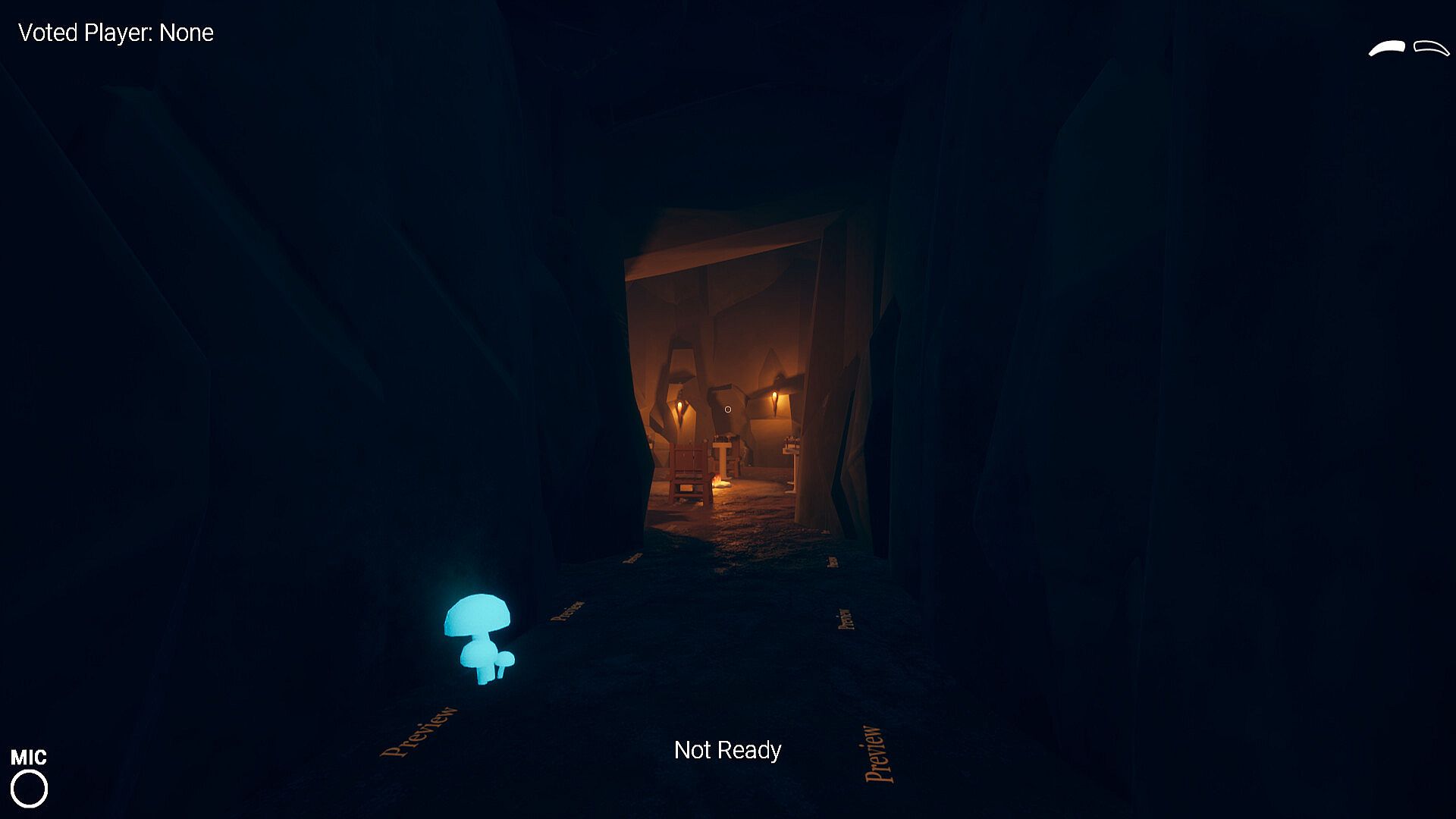
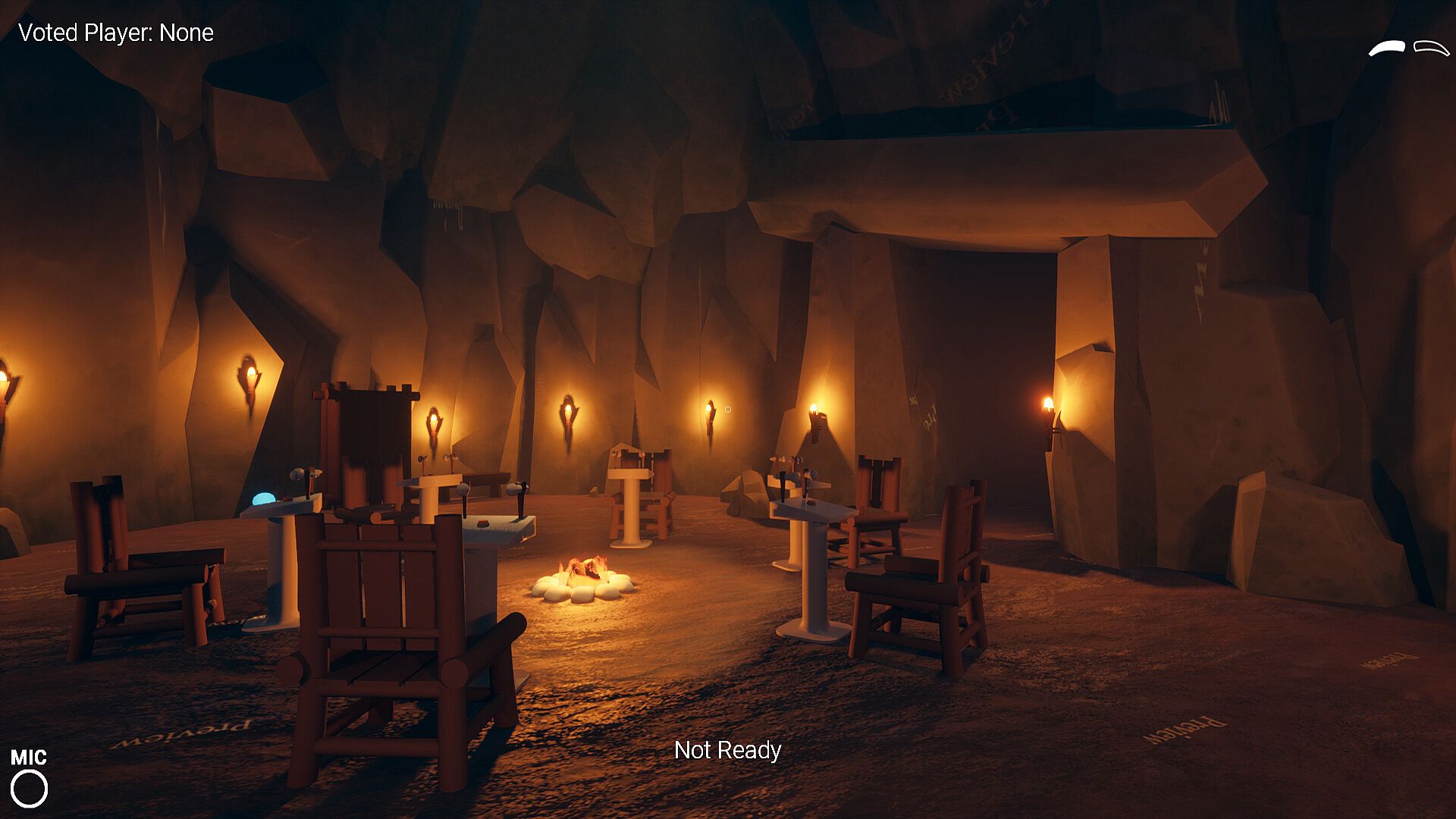
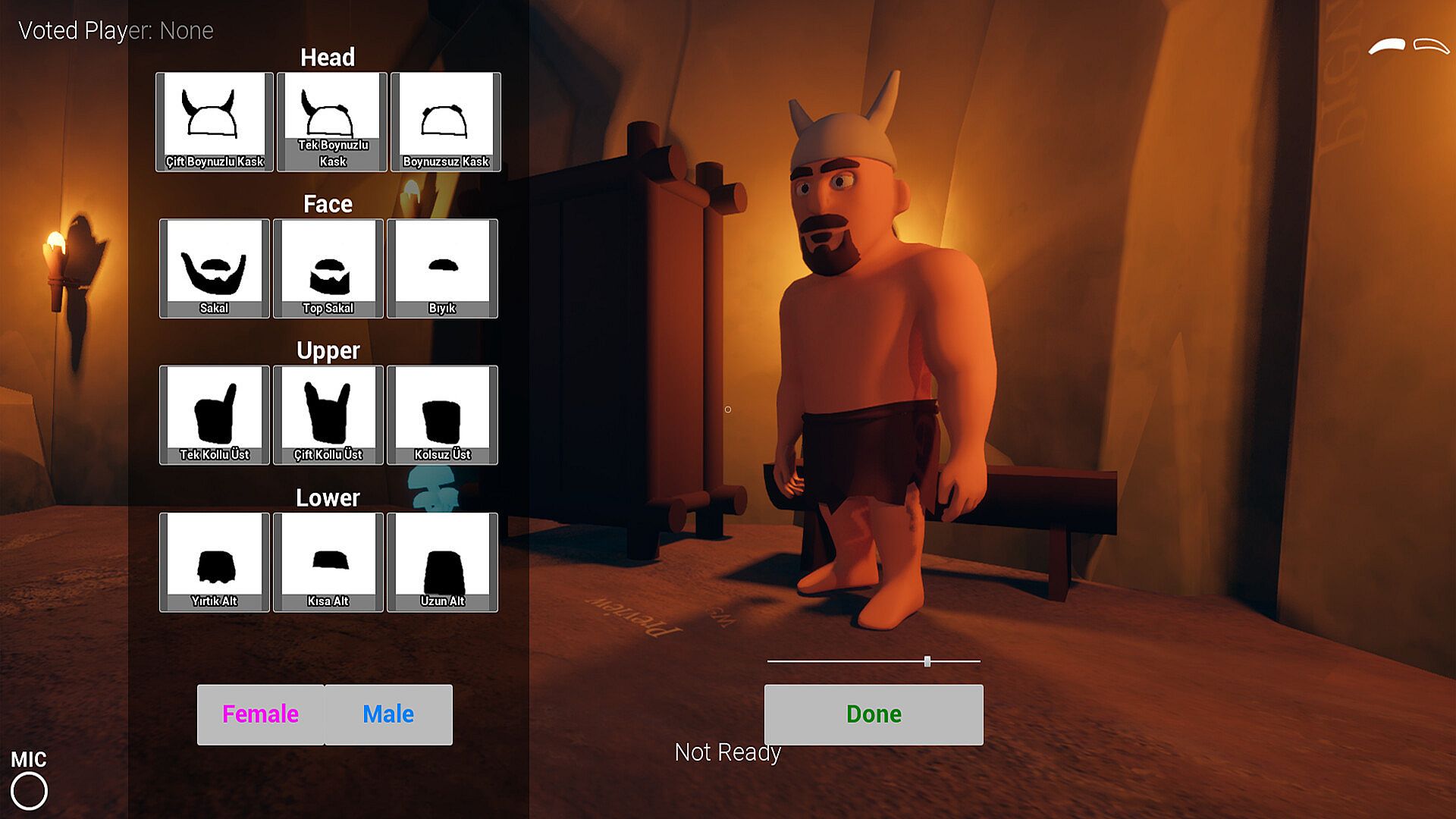
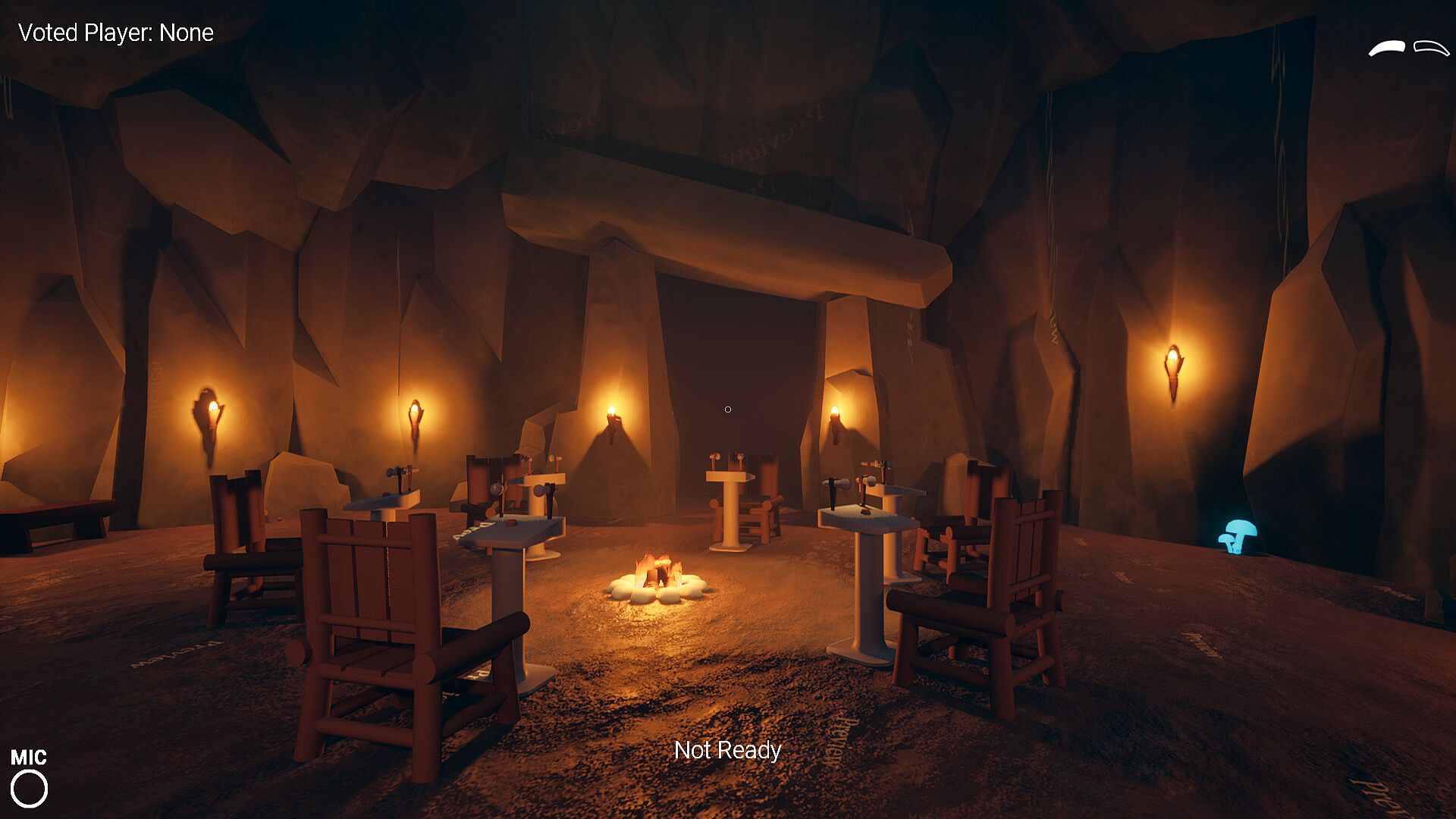
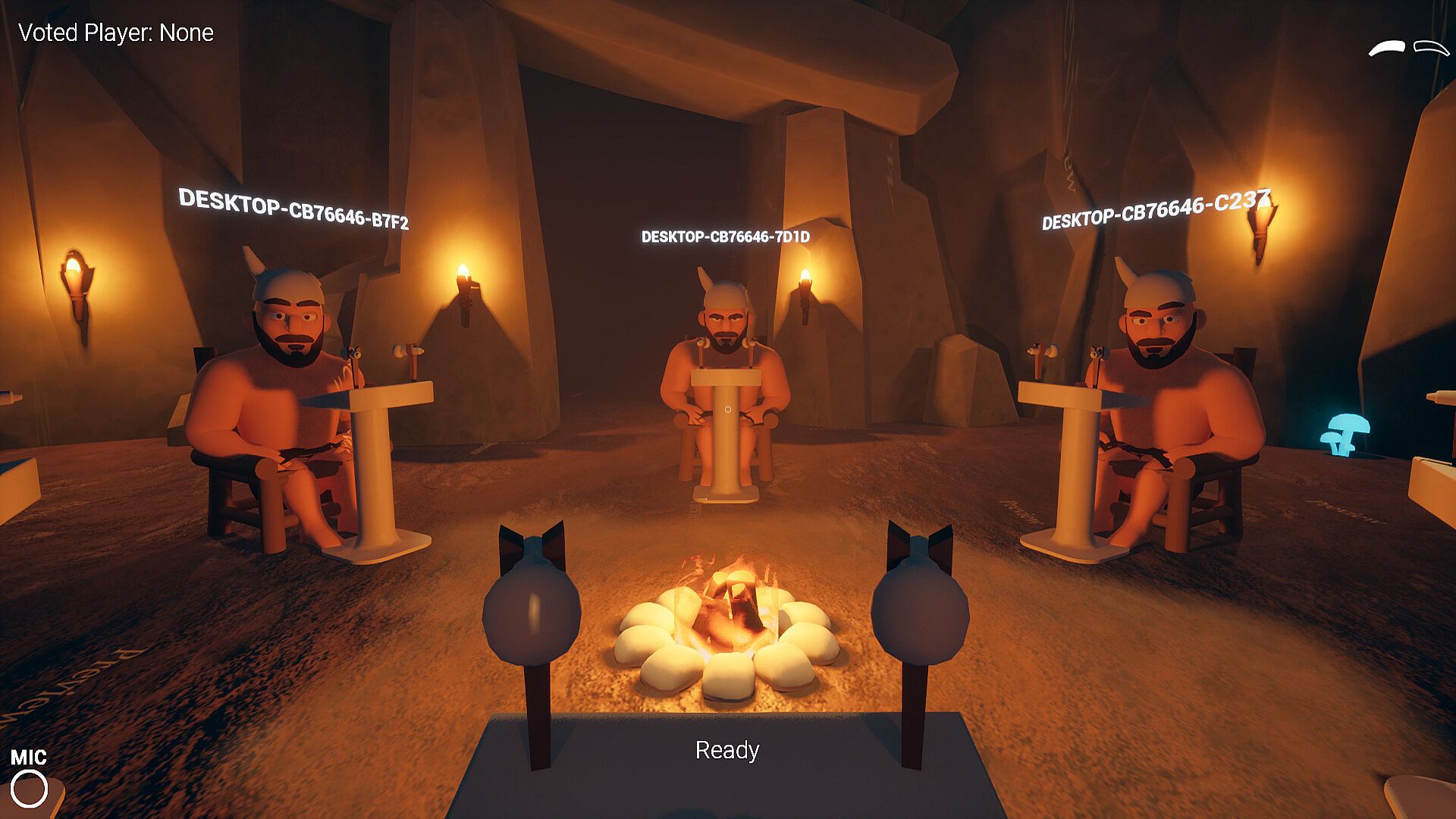





Uga Buga! is an indie casual bluffing game for PC that puts players in a Stone Age setting where they must identify the hidden bluffer among a group of friends. Designed for sessions with 4 to 12 participants, the experience centers on social deduction, subtle communication through voice chat, and careful observation of facial cues like eyebrow and eye movements to uncover deception.
Gameplay
Roles are assigned at the start of each round. Fans work to spot and expose Bluff players. Bluff players aim to blend in by mimicking clues without standing out. Agents attempt to identify the Bluff while providing indirect support without alerting the Fans. A secret word is shared only with Fans and Agents, leaving the Bluff player in the dark.
Players then take turns offering clues about the word in mixed order. The Bluff player must craft a plausible clue based on what others say to avoid suspicion. Agents may drop more direct hints to aid the Bluff while staying hidden from Fans. Suspicion can trigger a Discussion round where Fans debate identities, Bluff and Agent players deflect blame, and votes accumulate to eliminate the top suspect.
Victory conditions hinge on the balance of roles. Bluff and Agent players win if their numbers equal or exceed the Fans after eliminations. Fans prevail by correctly identifying and removing all Bluff players through the voting process.
Game Modes
The game operates through a single core multiplayer loop built around role assignment, clue-giving, and timed discussion phases. Rounds flow from secret word distribution into clue rounds, optional Discussion triggers, voting, and elimination until one side meets its win condition. This structure supports repeated play with the same group as players refine their ability to read indirect signals and manage suspicion.
Roles and Mechanics
Three distinct roles drive the tension. Fans focus purely on detection and exposure. Bluff players emphasize survival through misdirection and pattern matching. Agents add a layer of hidden assistance that can shift the balance without immediate detection. Voice chat becomes essential for sharing subtle hints, while visual cues from webcams or in-person play add another dimension to the deduction process.
Elimination happens only through majority votes during Discussion rounds. The process encourages strategic accusations from Bluff and Agent sides to protect their numbers while Fans push for accurate reads. The Stone Age theme influences clue styles but does not alter the core social mechanics.
Is It Worth Playing?
Uga Buga! suits groups that enjoy social deduction and bluffing games where communication and observation matter more than reflexes or strategy spreadsheets. Its support for up to 12 players makes it suitable for larger gatherings, and the emphasis on voice chat and facial cues rewards attentive participants who like reading people.
Players seeking quick rounds with high replay value through shifting alliances and misdirection will find the structure engaging. Those who prefer solo experiences or games without heavy social elements may find the reliance on group interaction limiting. The indie casual focus keeps sessions light yet competitive, centered on the thrill of successful bluffs and accurate exposures.