















True Crime Engine is an indie simulation and adventure game built for players who enjoy piecing together mysteries from raw materials. On PC, it places the focus on independent investigation rather than guided narratives or combat sequences. Each case begins with a collection of documents, photos, recordings, messages, and witness statements supplied by the case author. Players decide what to examine next, cross-reference details, and pursue leads that may extend beyond the game itself into web searches or external references.
Gameplay
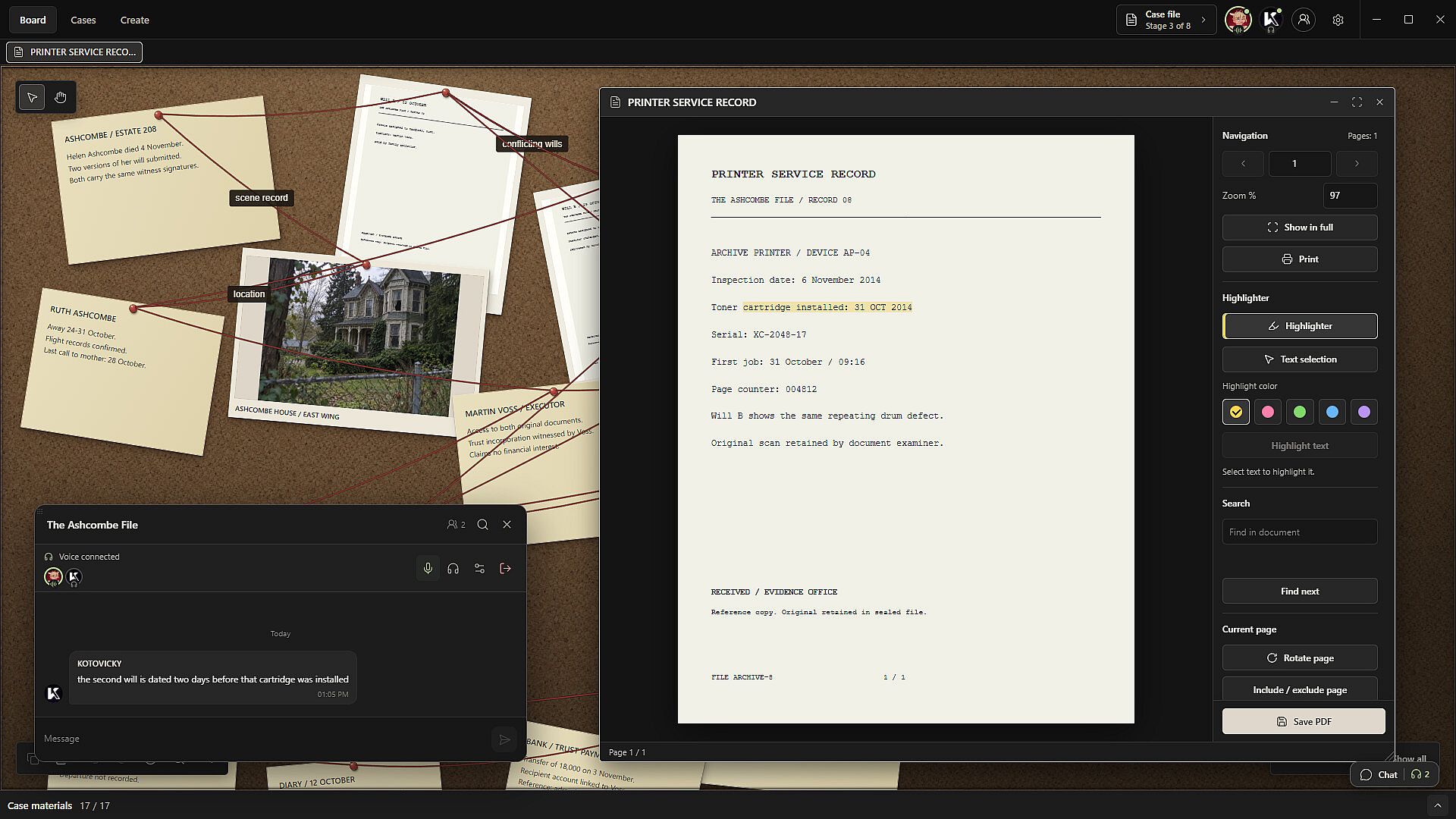
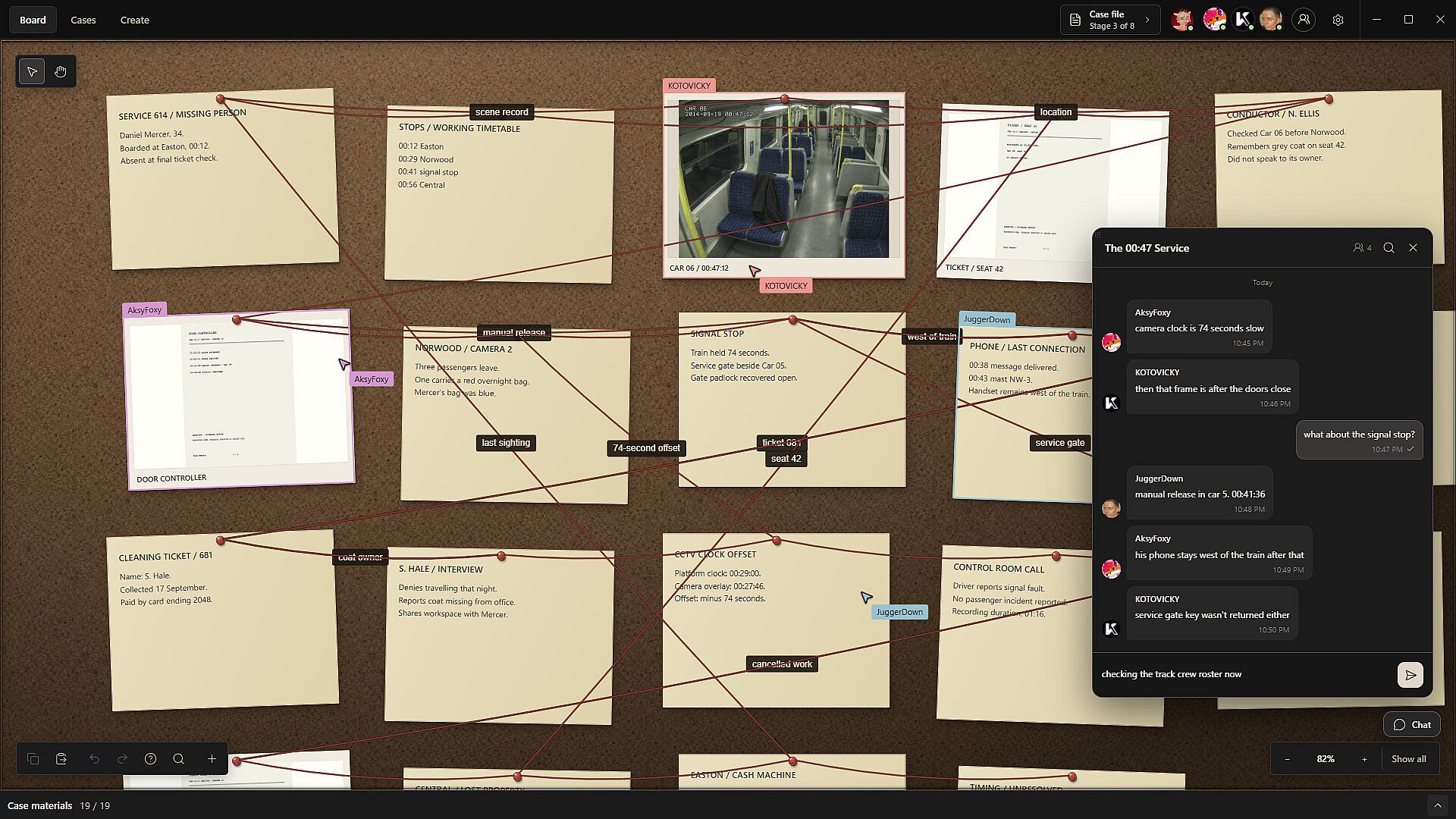
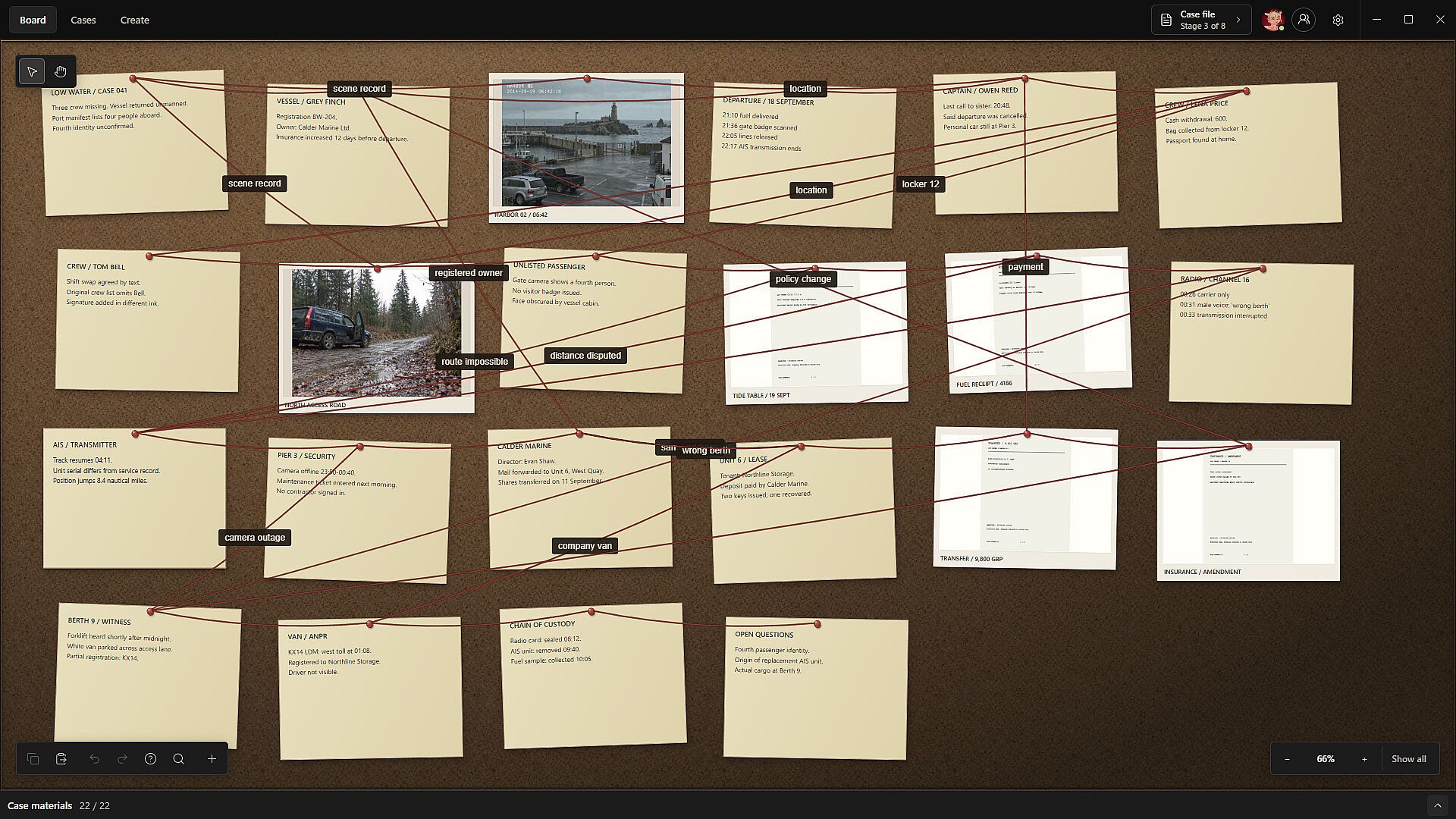
The core loop centers on gathering evidence and organizing findings on a dedicated investigation board. Users add images, videos, sound clips, screenshots, documents, and personal notes to the board, then rearrange items, draw connections between pieces of evidence, and track evolving theories. There is no prescribed layout or required structure, so the board reflects whatever approach feels most useful at the moment.
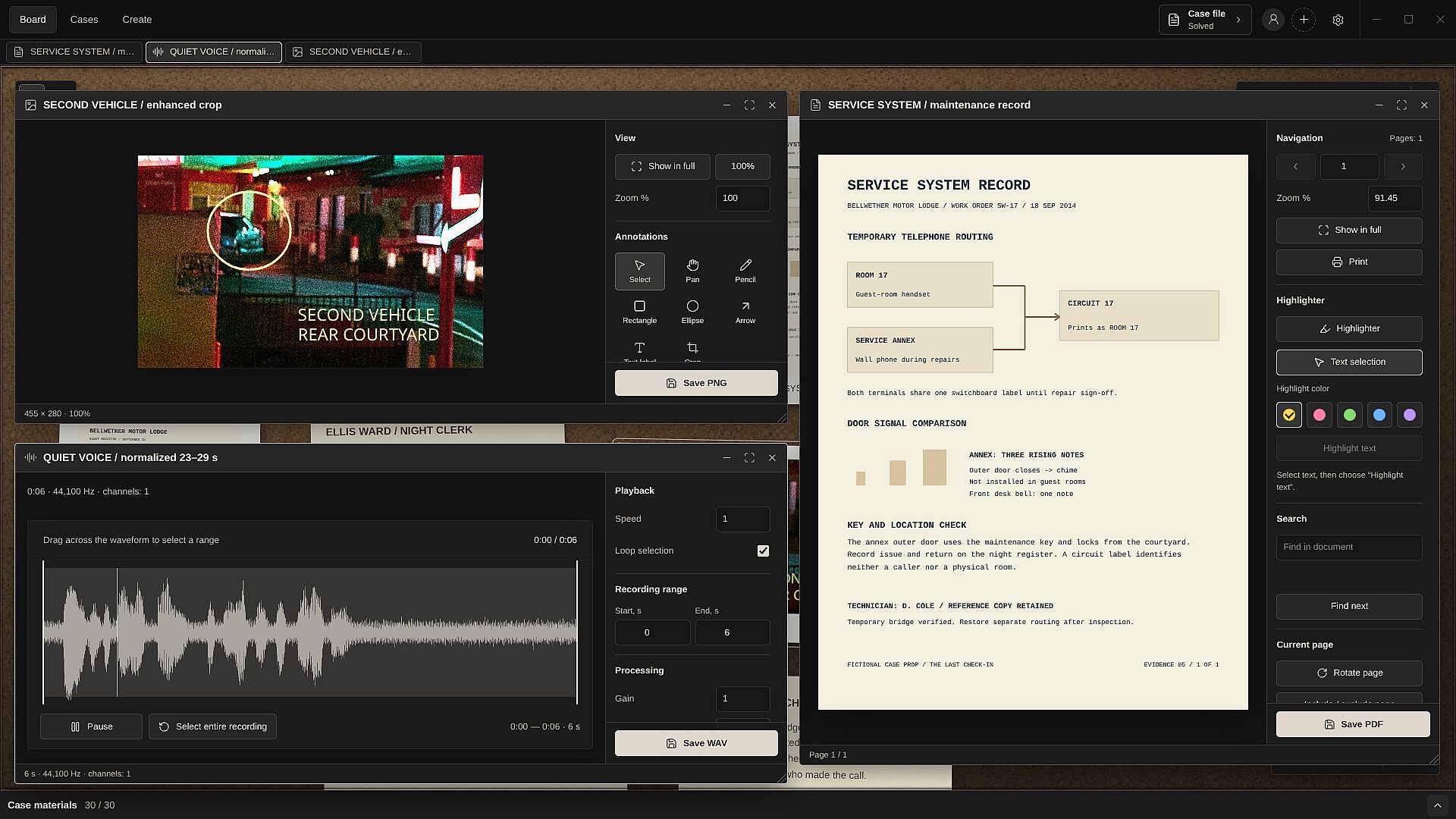
Evidence handling extends past static viewing. Players can open PDFs inside the game, zoom and crop images for closer inspection, play audio and video files with controls for specific segments, and examine other file types without switching applications. Basic tools support detailed scrutiny, such as replaying portions of recordings or spotting subtle details hidden in documents or images. This system rewards careful observation and comparison across multiple sources.
Cooperative play supports up to eight participants working on the same case simultaneously. Everyone contributes to a shared board, where cursors from other players appear in real time. Participants can divide research tasks, explore separate leads at once, or debate interpretations through built-in text and voice chat that keeps discussion inside the game environment.
Game Modes
The primary experience revolves around downloadable cases that function as self-contained investigations. These can be played solo or in the cooperative format described above. Cases vary widely because they originate from different creators rather than a single fixed campaign.
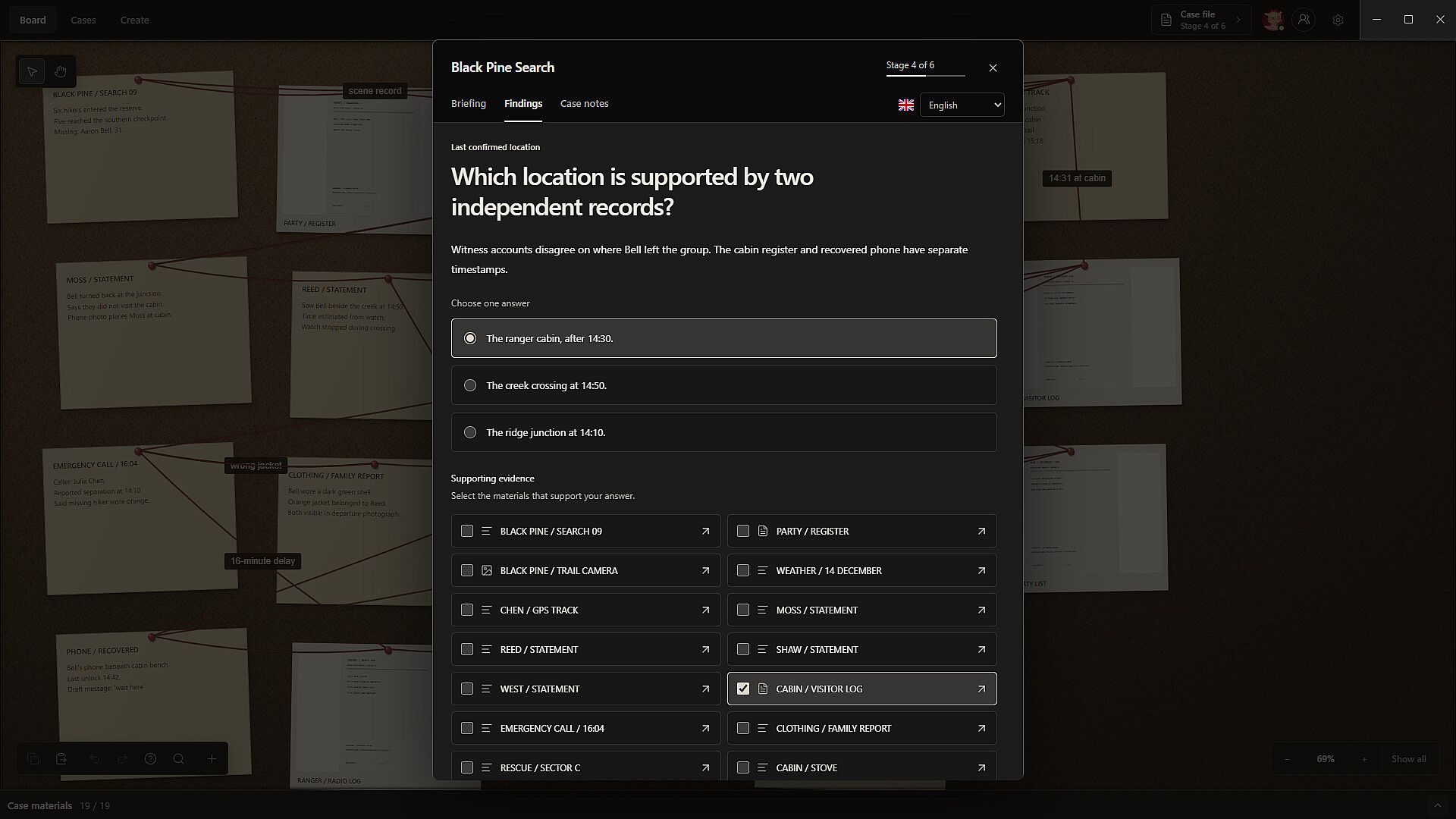
Players also have access to a creation mode that lets them build and publish their own cases. A case can incorporate text, images, documents, audio files, questions, external links, and other materials. The author controls the starting materials, the elements players must discover independently, and the conclusions required to progress. Completed cases can be shared through the Steam Workshop for others to investigate.
Case Variety and Community Content
Because the game relies on user-generated content, the range of investigations spans crime stories, missing person cases, internet mysteries, fictional scenarios, and ARG-style experiences. Each author determines the initial evidence set and the discovery process, which keeps the format flexible across different mystery types. The Steam Workshop serves as the distribution hub, allowing new cases to appear regularly without developer intervention.
Creation tools emphasize flexibility. Authors supply the starting materials and decide which information players receive upfront versus what must be uncovered through research or deduction. This approach supports both straightforward mysteries and more intricate setups that require external verification or hidden-file analysis.
Is It Worth Playing?
True Crime Engine suits players who prefer open-ended deduction and evidence management over linear storytelling or action mechanics. The emphasis on a customizable board and flexible evidence tools provides a hands-on simulation of real investigative work. Cooperative support up to eight players adds a social layer for groups that enjoy collaborative problem solving and real-time discussion.
The Early Access status means the core systems for case handling, board organization, and multiplayer are in place, with ongoing potential for new community cases through the Workshop. Those interested in creating their own mysteries will find direct tools for publishing and sharing. Reception centers on the freedom of the investigation process and the variety enabled by user content rather than polished single-player campaigns. If the appeal lies in methodical evidence review and group analysis, the game delivers a focused experience in that niche.











