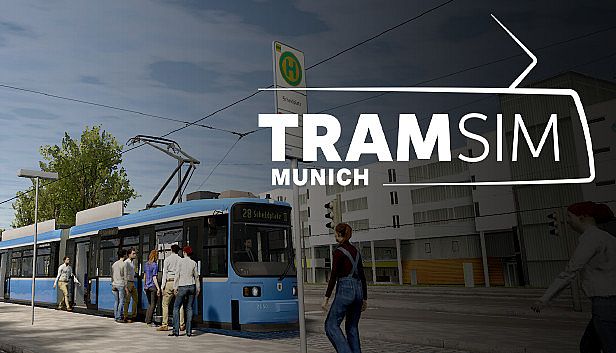


















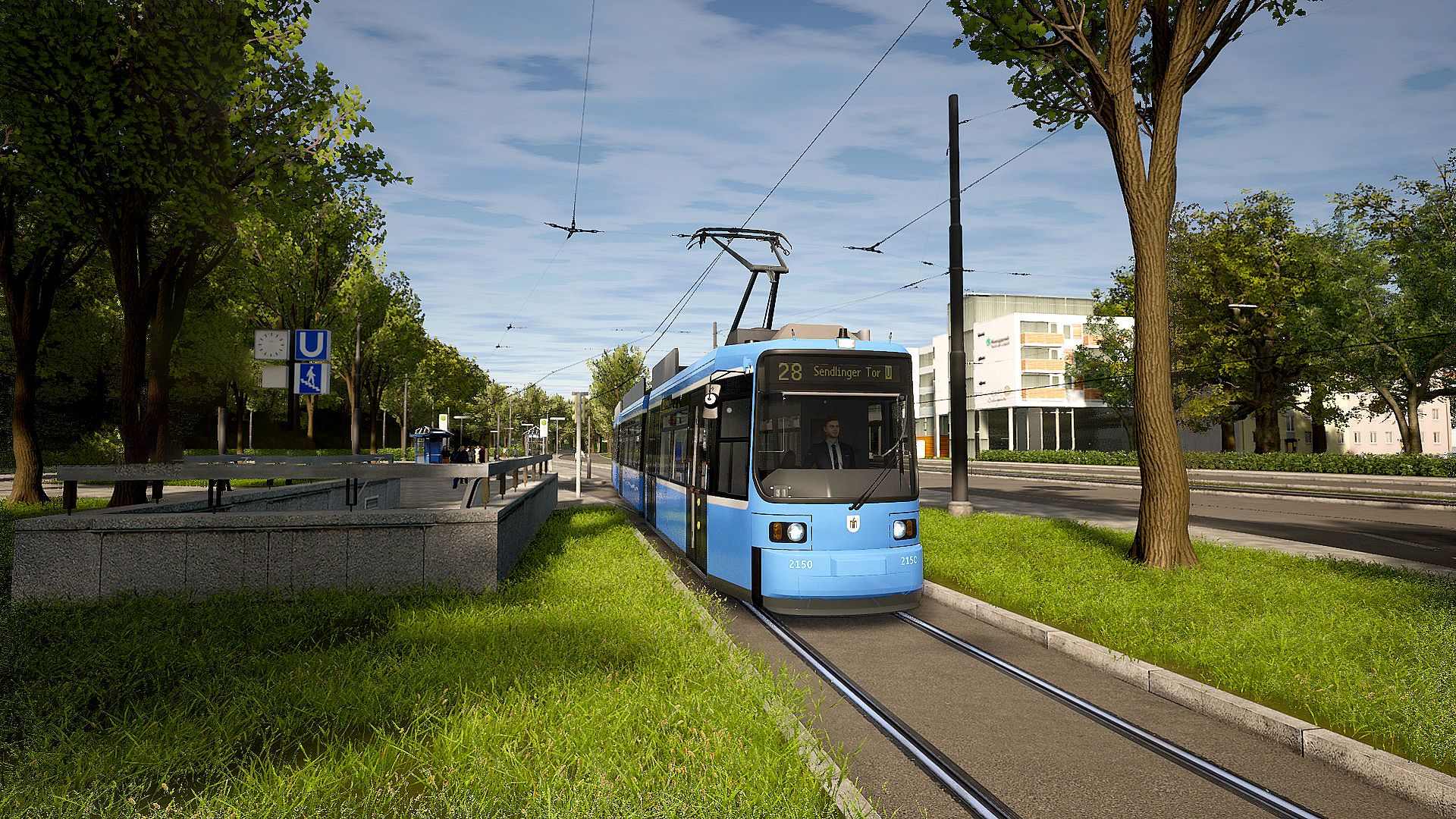
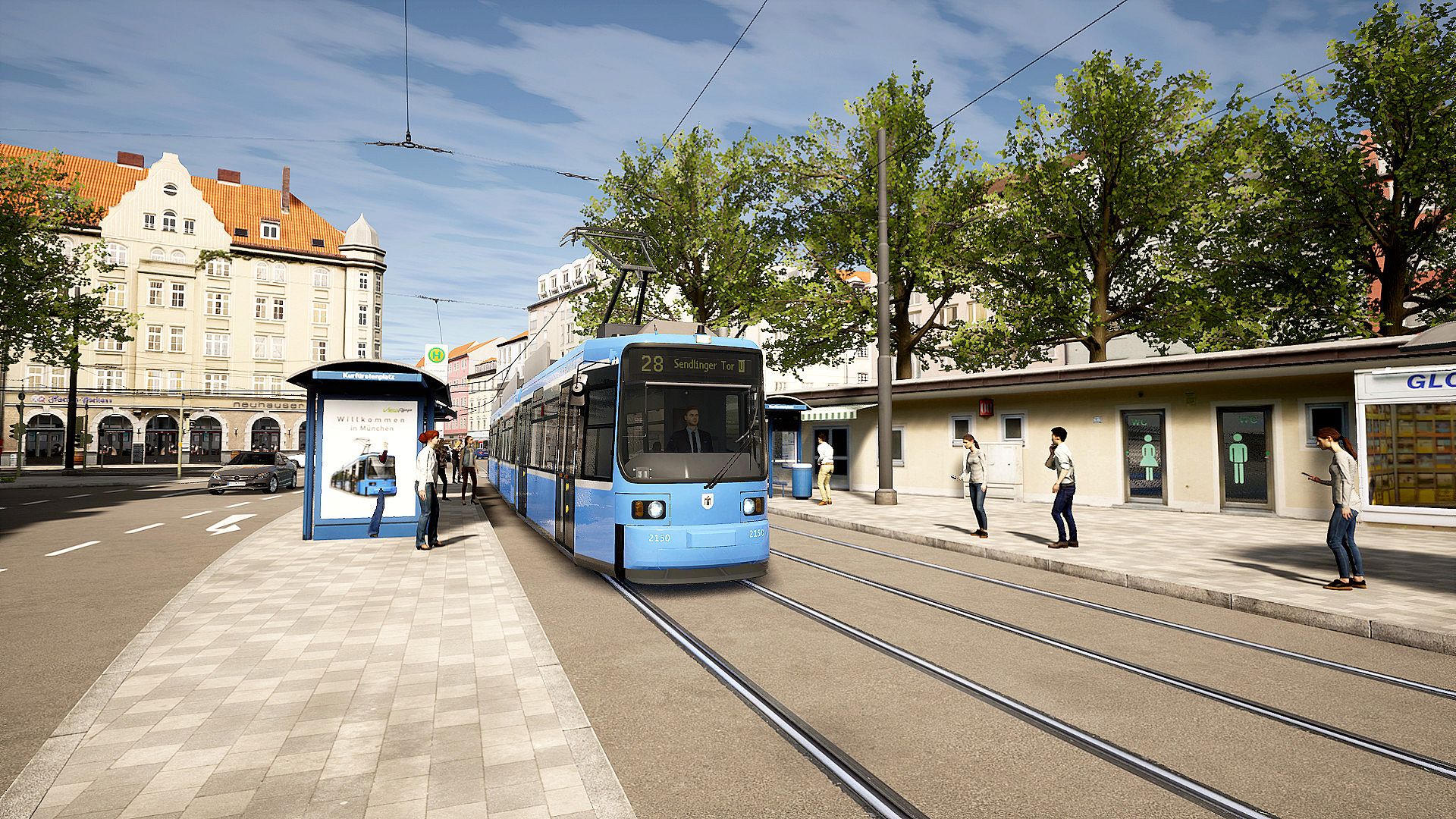
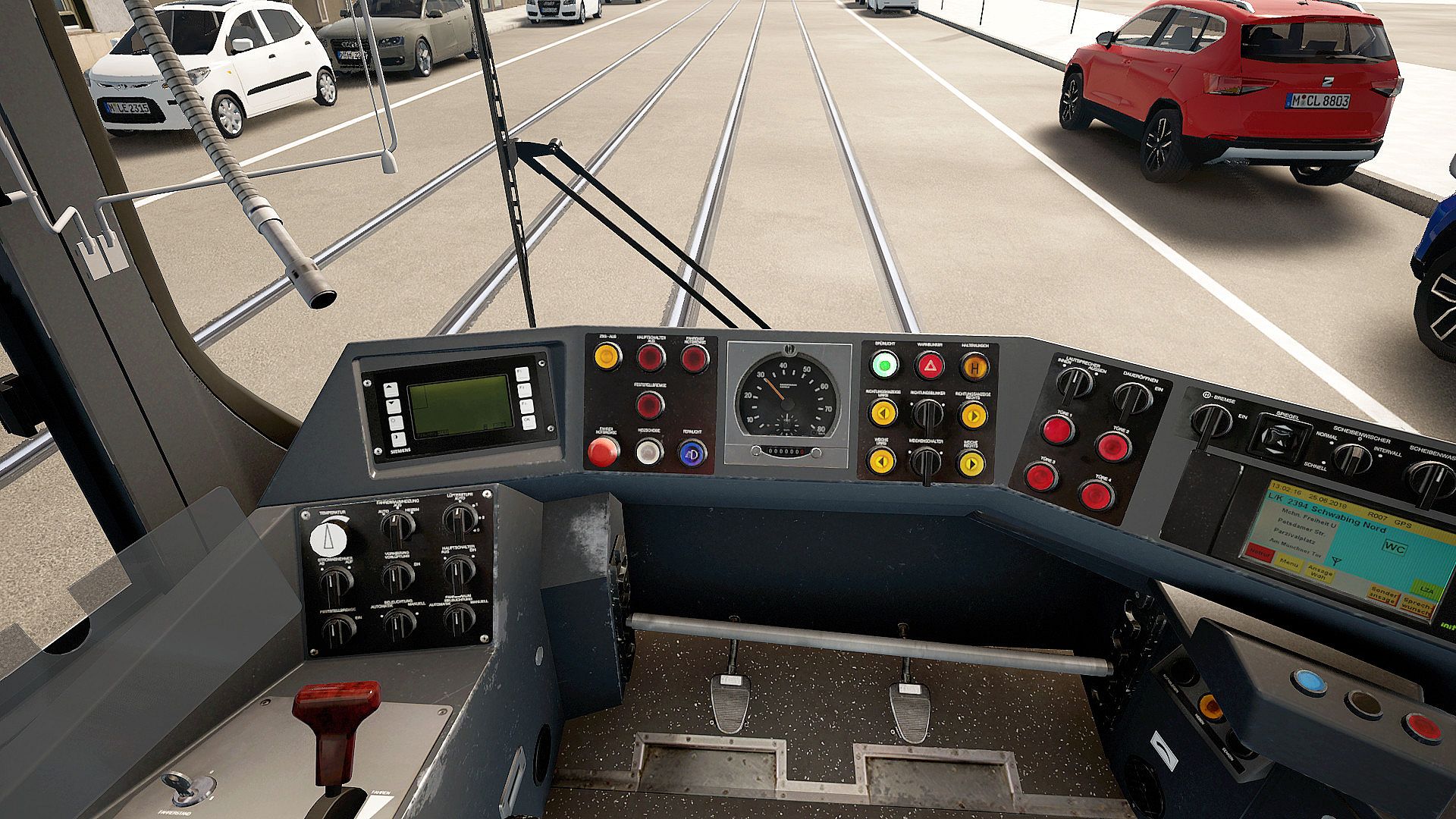
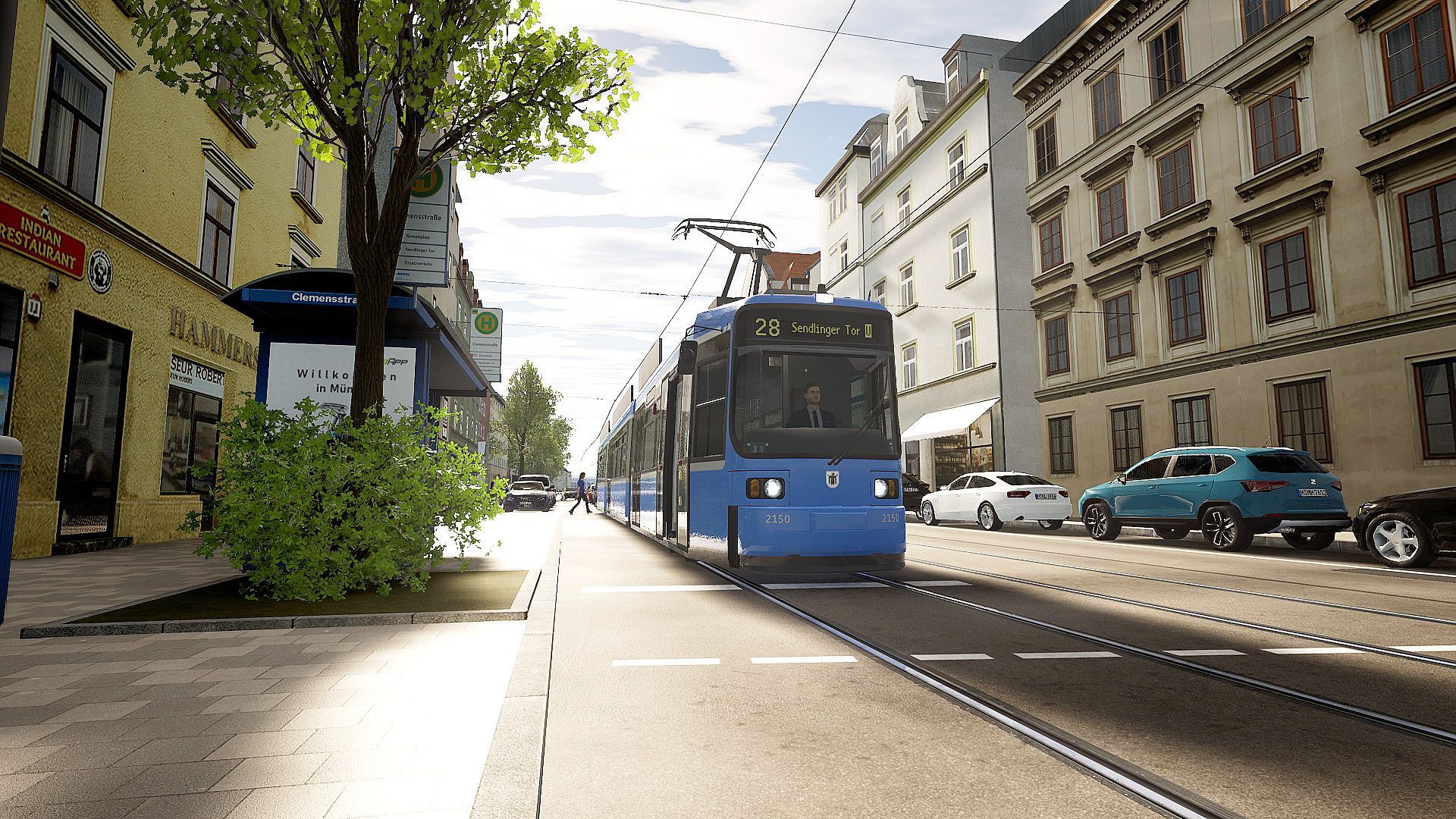
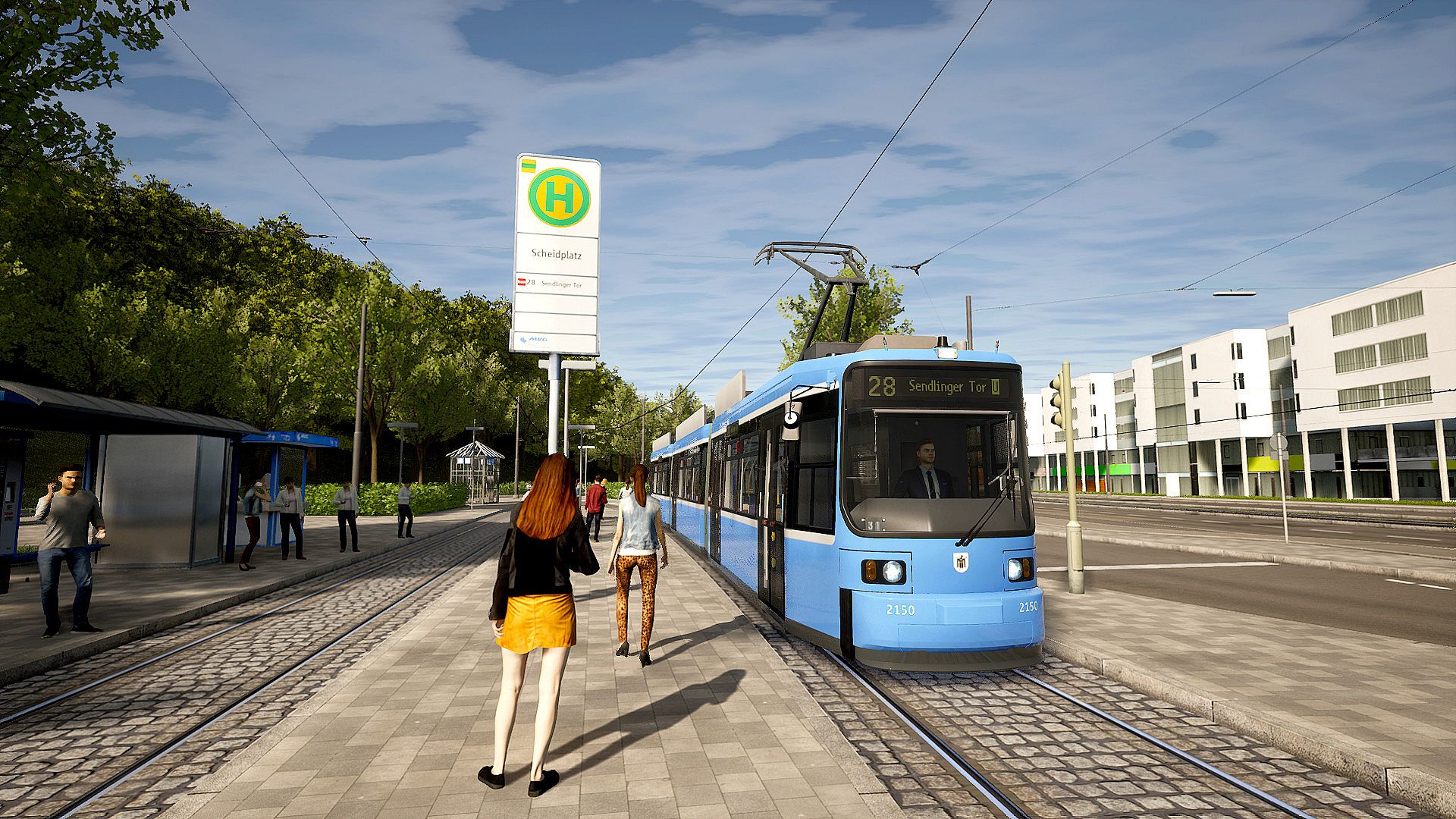
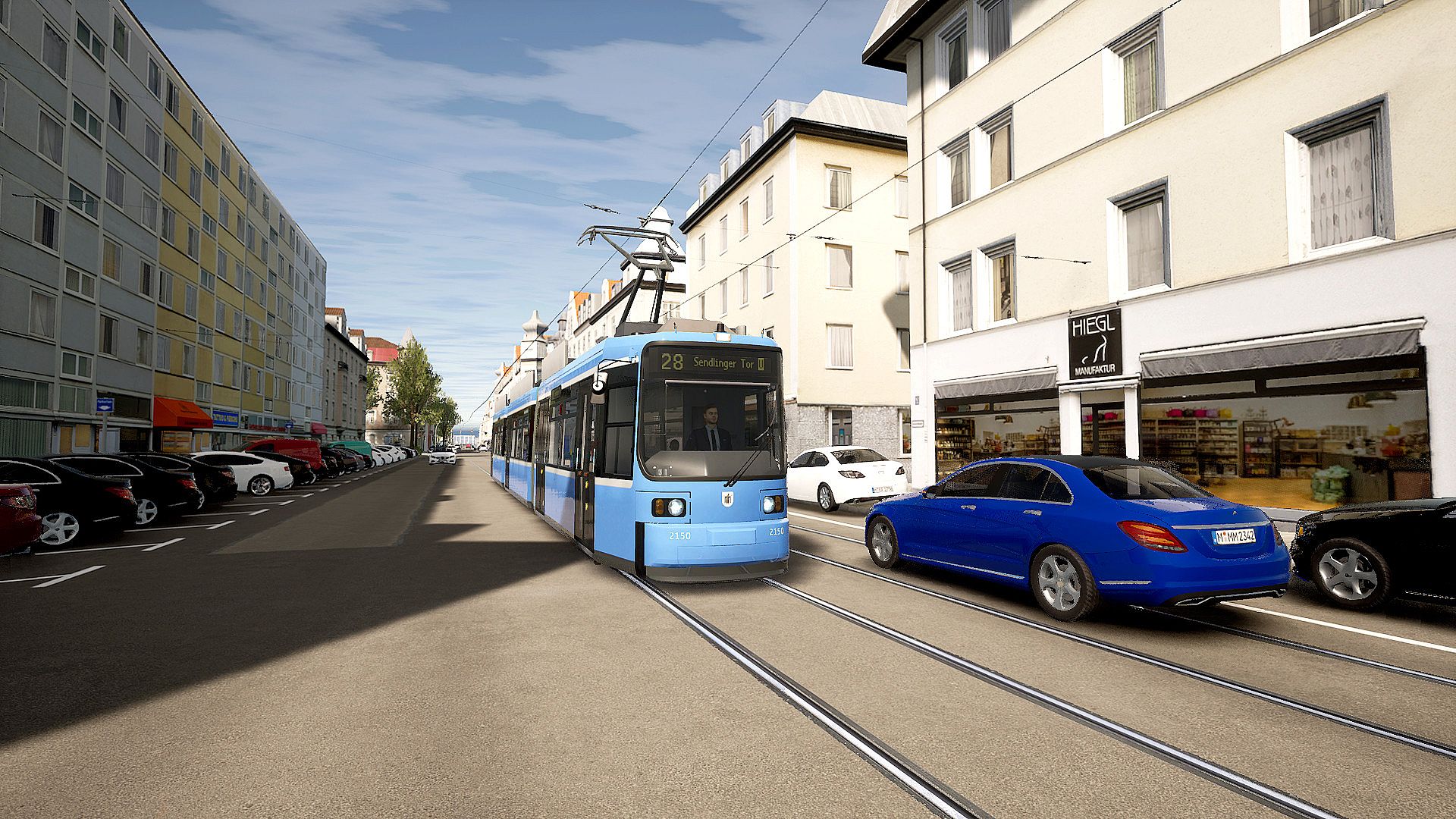
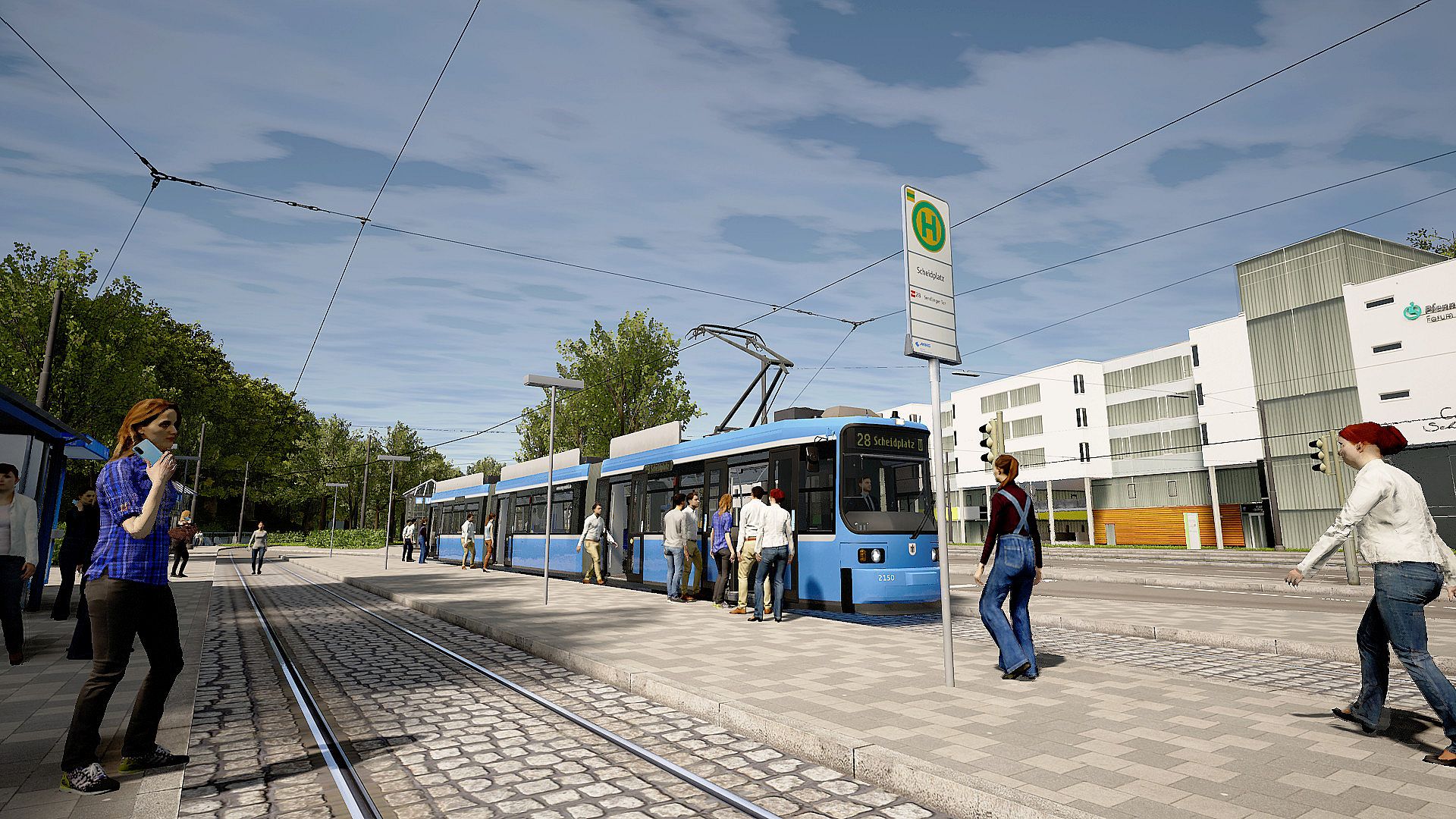
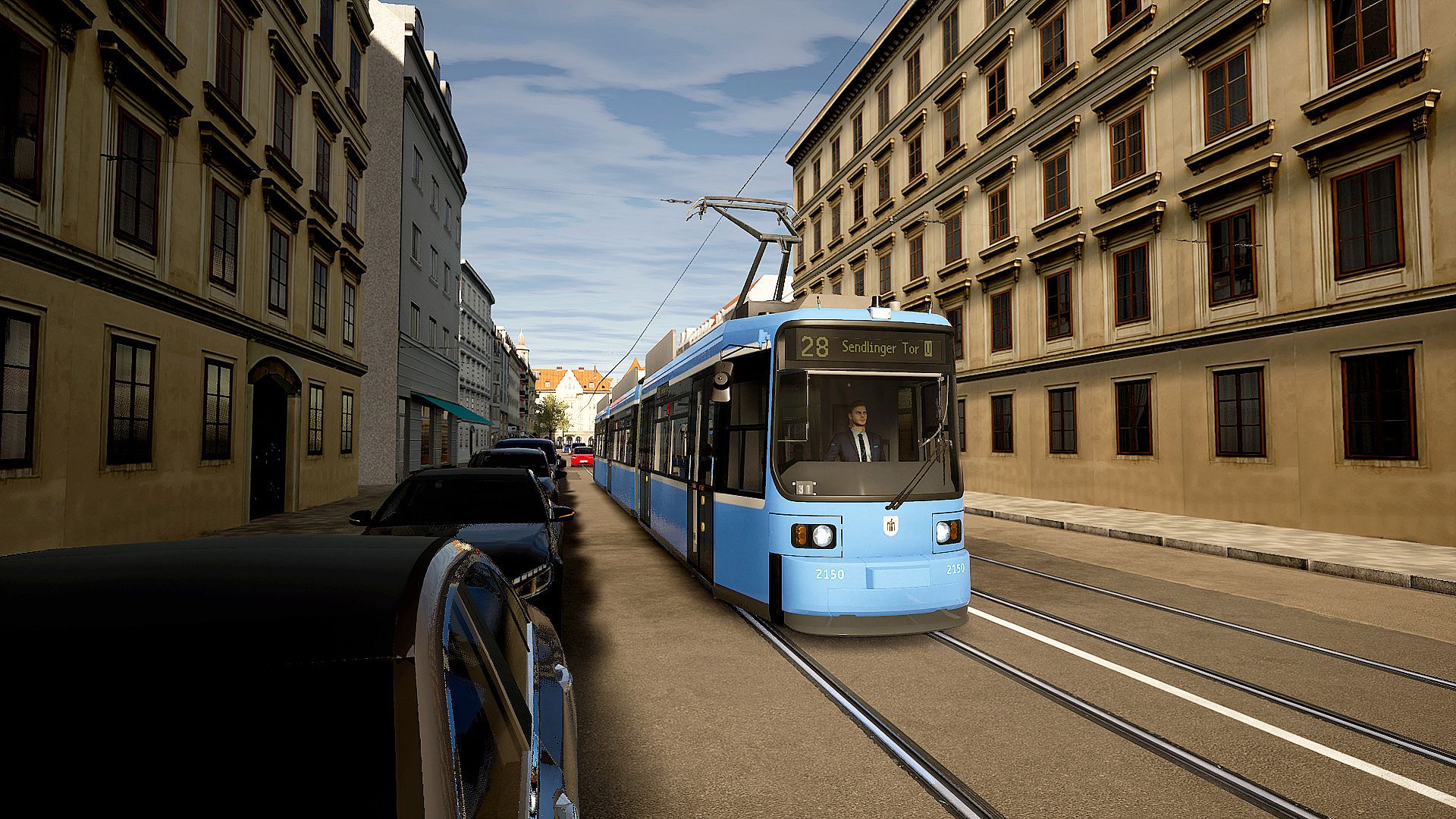
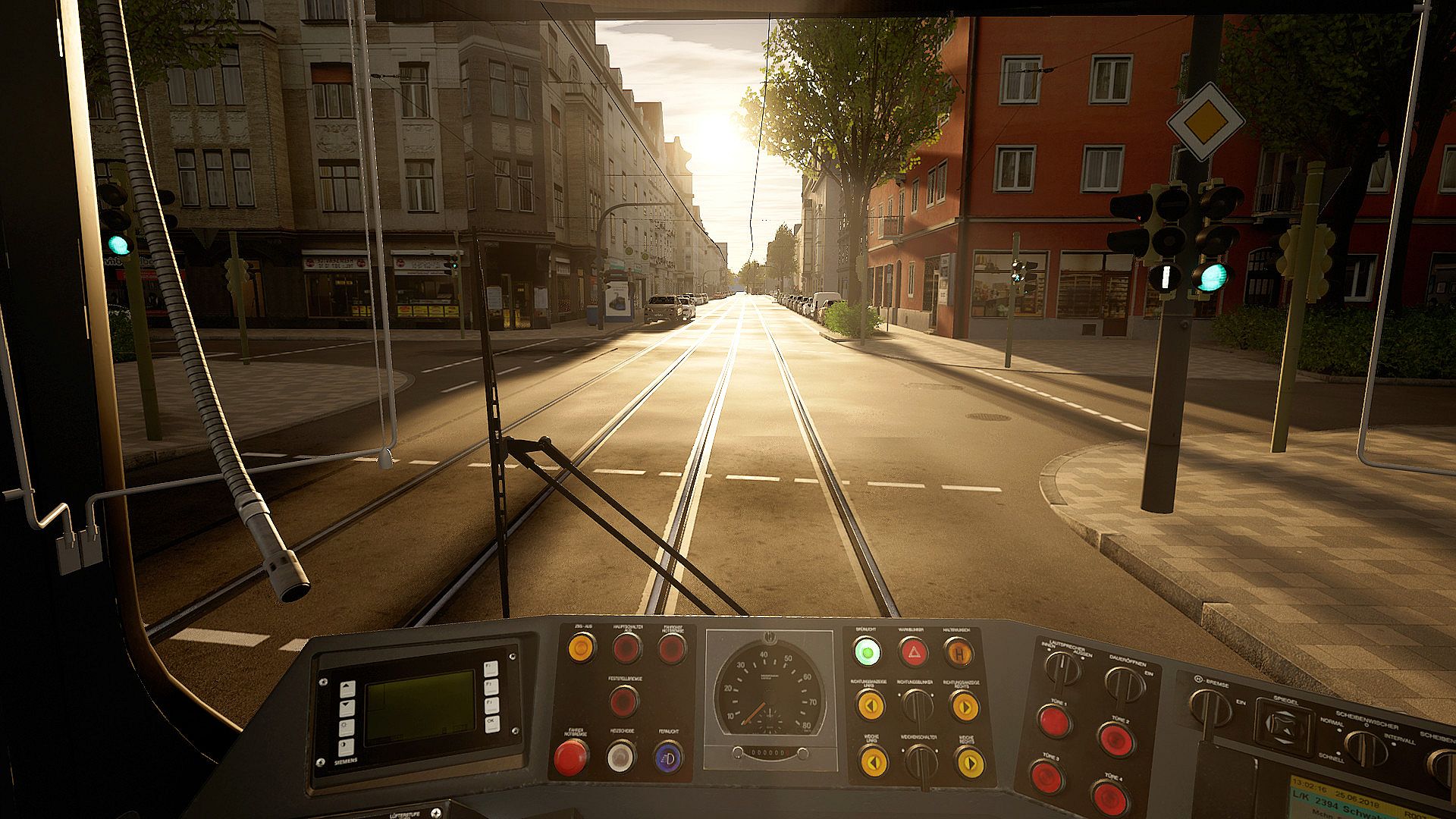
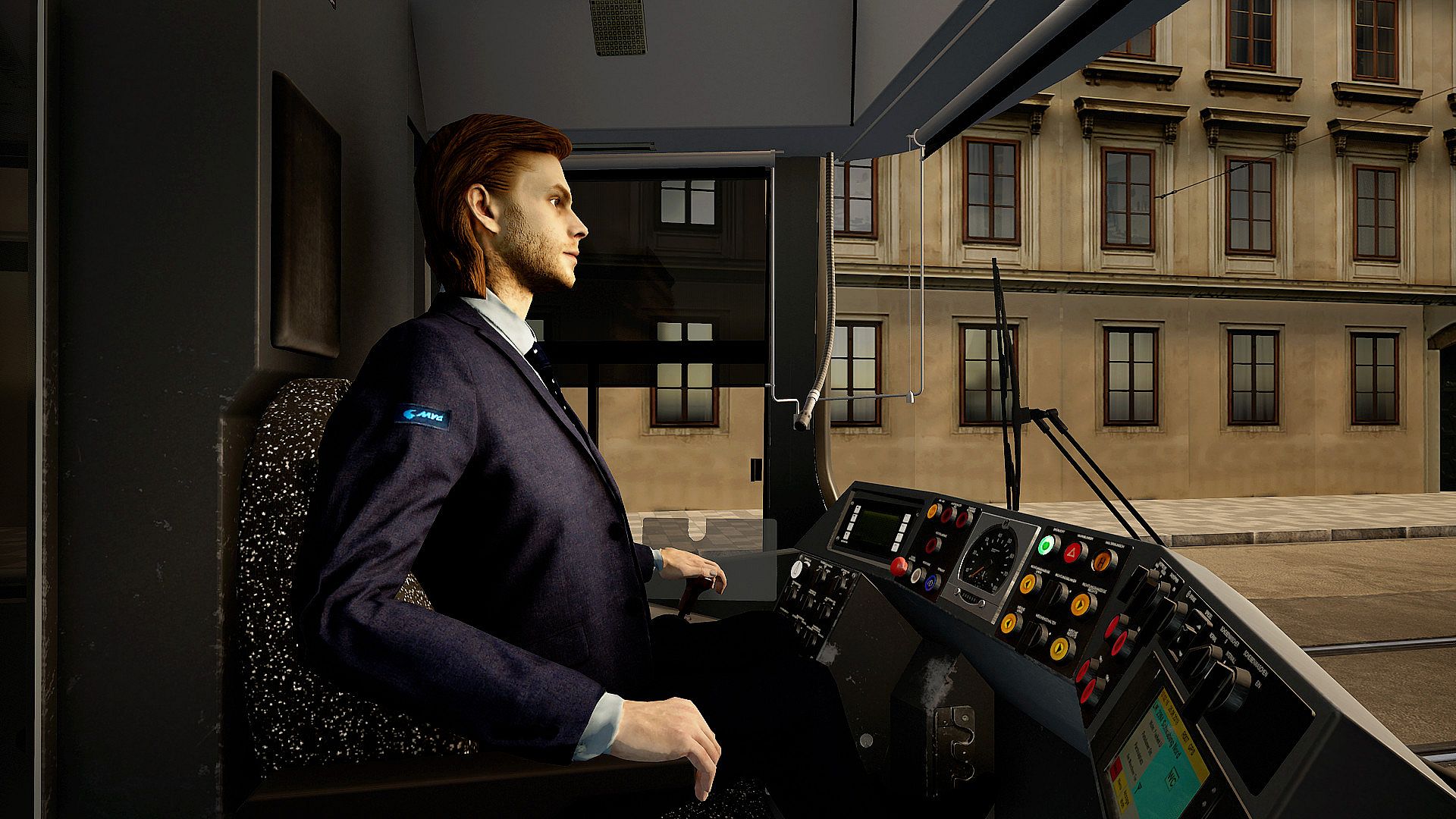
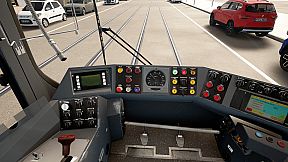
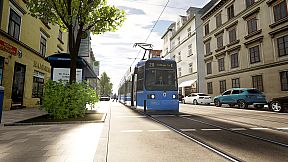
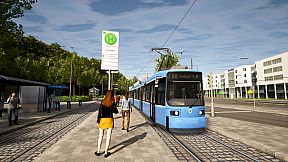
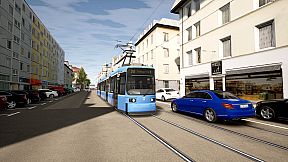
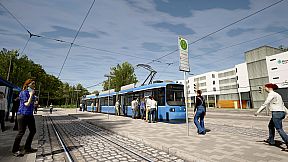
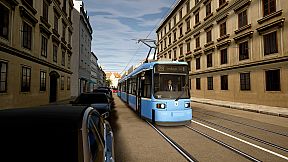
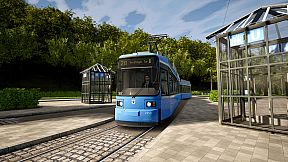
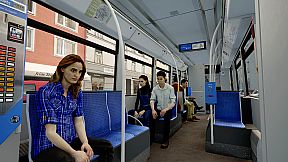
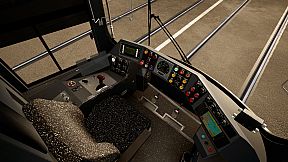
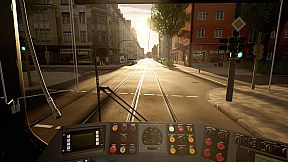
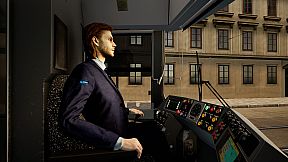
TramSim Munich The Tram Simulator is a single player simulation game focused on operating trams through the streets of Munich. Players take control of the R2.2b low floor tram model and handle passenger transport across three detailed routes in the Bavarian capital. The experience centers on realistic driving mechanics, authentic route operations, and a living city environment with AI traffic and pedestrian activity.
Gameplay
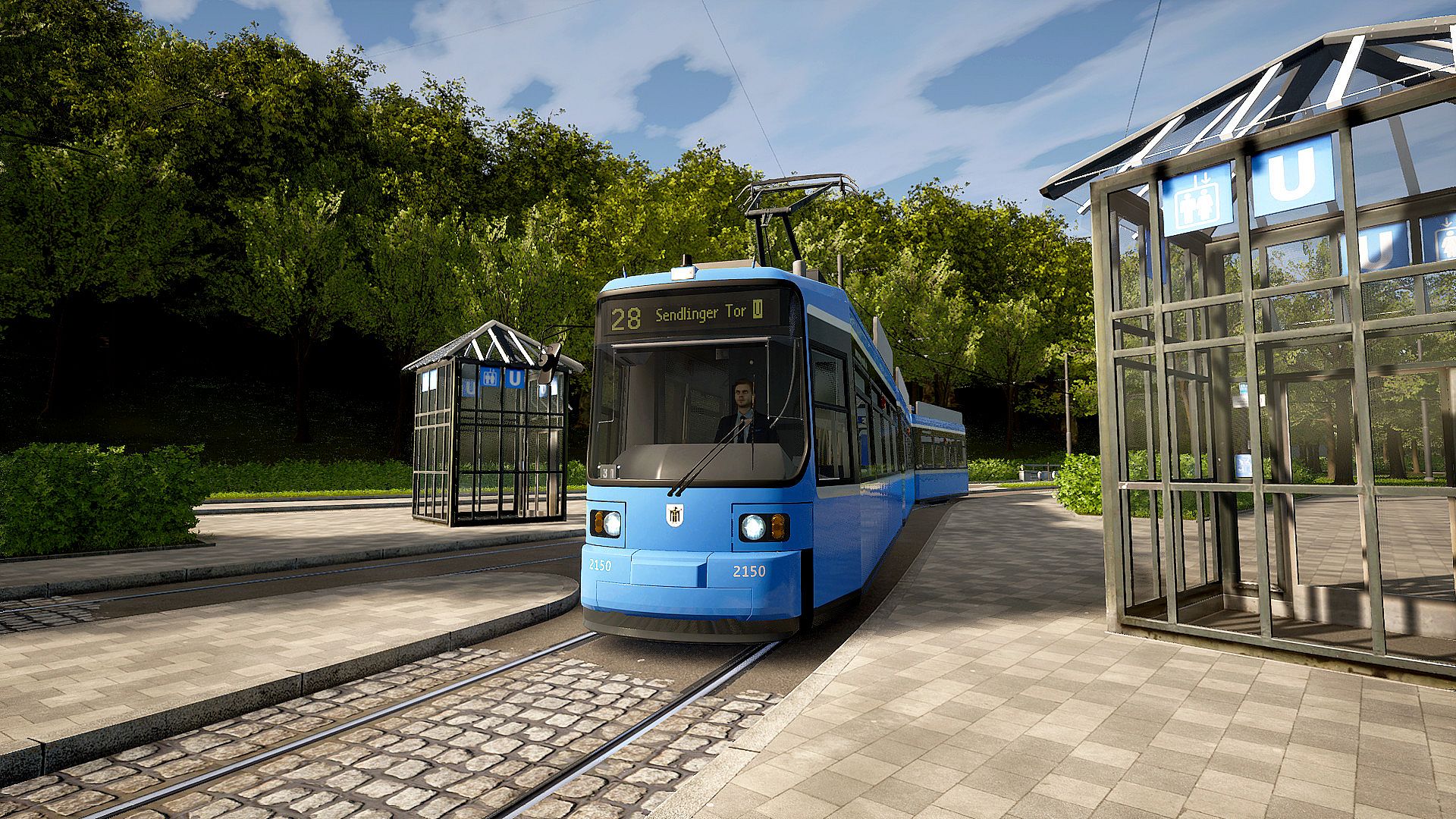
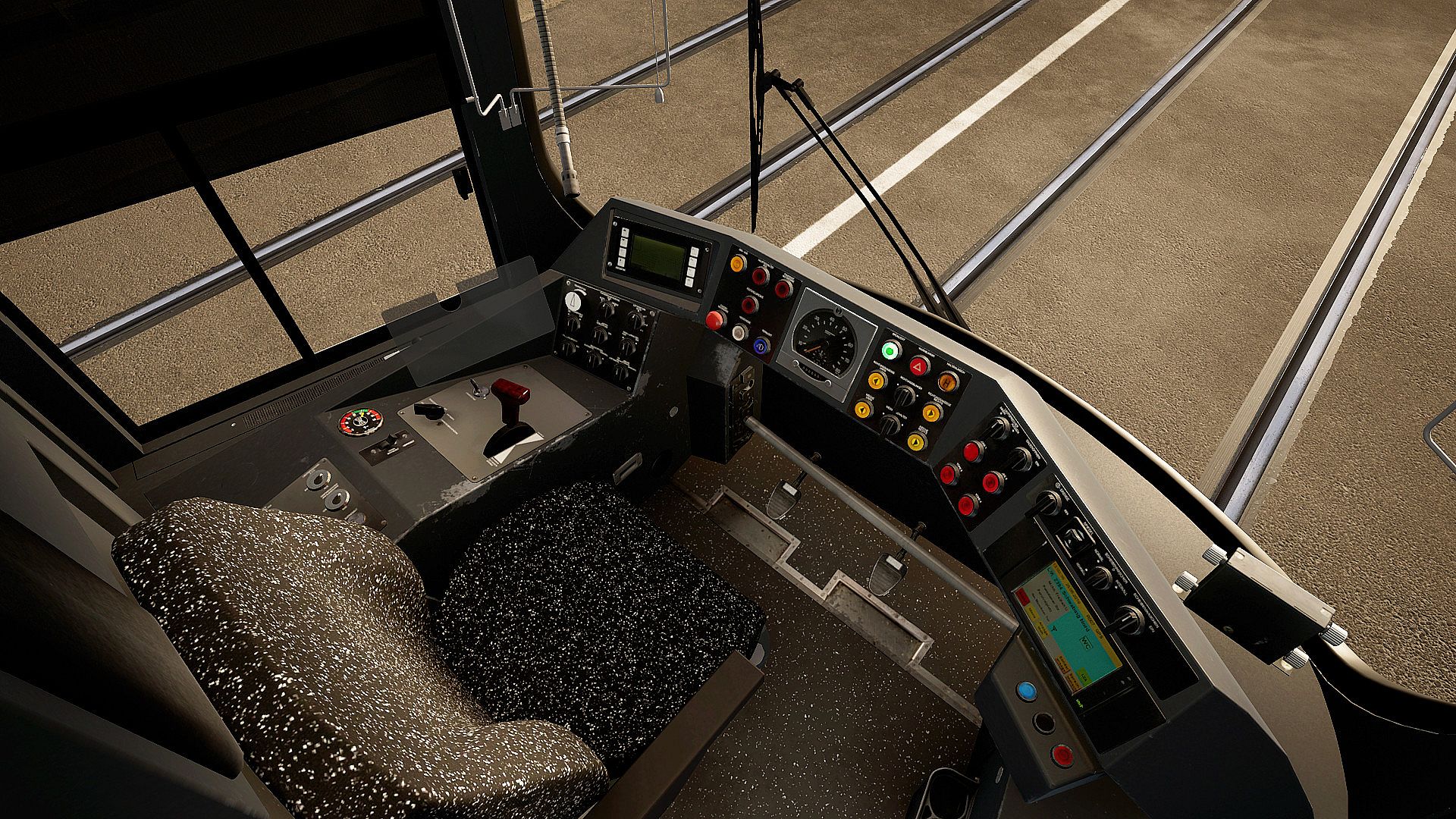
The core loop involves piloting the highly detailed R2.2b tram, a modernized version of the original R series vehicles used by Munich's public transport operator. This model features unique driving dynamics where the articulated sections influence each other, causing a noticeable sway at the end of curves that requires careful handling. Players manage acceleration, braking, and navigation while respecting signal systems, stop equipment, and overhead catenary infrastructure.
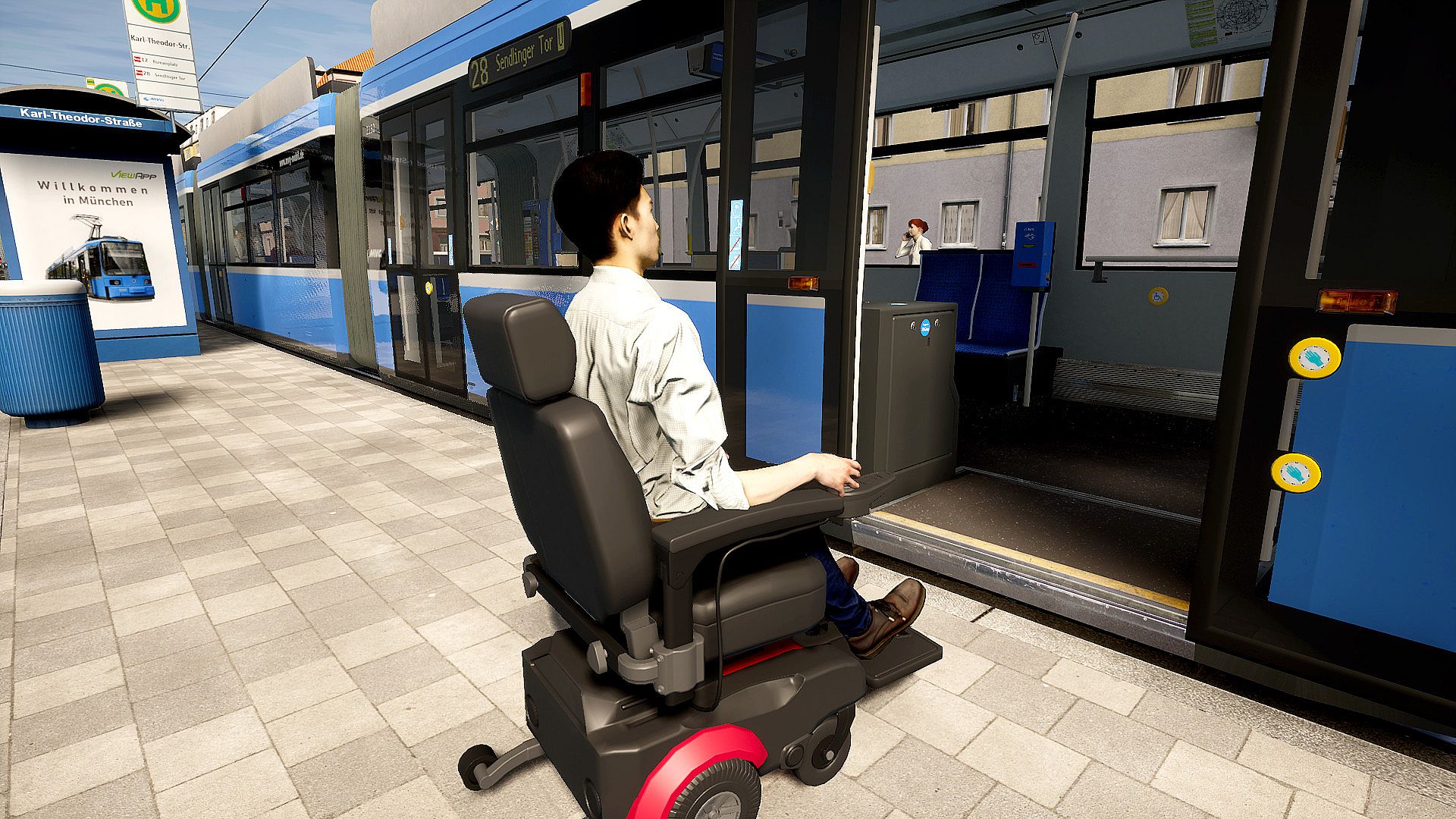
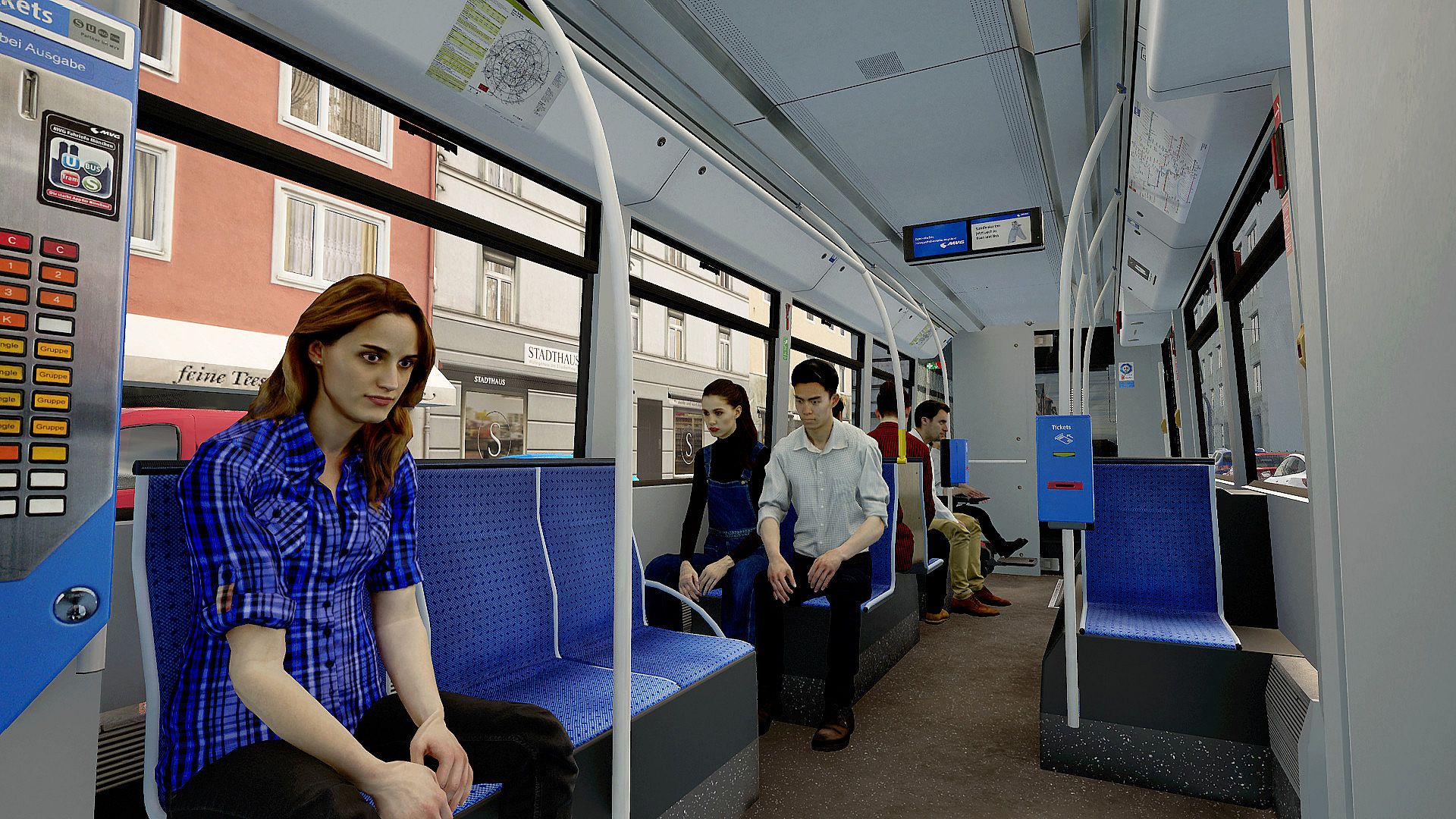
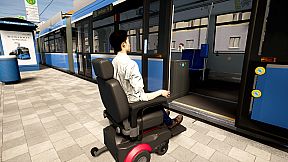
The city recreation includes historic buildings, squares, and museums rendered with attention to real world proportions. Dynamic passenger behavior includes boarding and alighting at stops, while pedestrians and individual vehicle traffic add to the urban flow. Original announcements play at appropriate points, and the tram supports full repaint options to match liveries from other German cities. A dynamic weather system further affects visibility and traction during runs.
Route 23 begins at Münchner Freiheit and travels through Schwabinger Tor to Schwabing Nord on an independent track body with its own bridge structure. Route 27 starts at Sendlinger Tor, passes landmarks such as the Pinakotheken and Alte Börse, and continues to Petuelring. Route 28 shares the initial segment with route 27 before diverging toward Scheidplatz. Each line incorporates realistic operating procedures and equipment found in actual Munich service.
Game Modes
TramSim Munich supports two primary ways to experience the route network. Open World mode allows free exploration and driving without time constraints, giving players the chance to practice handling the tram's distinctive movement characteristics across any of the three lines. Scheduled service with timetable mode requires adherence to published departure times and route sequences, mirroring real operational demands.
Both modes incorporate the full set of vehicle functions, including line alternating operation and passenger interactions. The timetable option adds structure for longer sessions, while open world suits shorter practice runs or experimentation with different weather conditions and traffic densities.
Routes and Vehicle Details
The three lines provide varied lengths and scenery. Line 23 covers seven stops with an approximate travel time of eight minutes per direction. Line 27 includes fifteen stops and takes around twenty minutes to complete. Line 28 features twelve stops and requires about sixteen minutes. All routes run through central Munich with authentic stop placements and track layouts.
The R2.2b stands out for its sliding doors, updated passenger information displays, and support bars introduced during the 2011 modernization. Its construction allows the bodies to interact during turns, a behavior replicated in the simulation. The vehicle remains fully functional with realistic responses to track conditions and control inputs.
Is It Worth Playing?
TramSim Munich delivers a focused simulation experience for players interested in tram operations and detailed urban rail driving. The combination of accurate vehicle physics, multiple route options, and environmental details creates consistent engagement for those who enjoy methodical, realistic gameplay sessions. Recent patches have addressed AI and vehicle issues, maintaining the title's stability on PC.
Those seeking precise control challenges and authentic Munich landmarks will find the routes rewarding. The single player format emphasizes personal skill development over competitive elements, making it suitable for repeated playthroughs on different lines or under varying conditions. Players who appreciate simulation titles with strong attention to operational procedures and vehicle behavior will likely value the depth provided here.