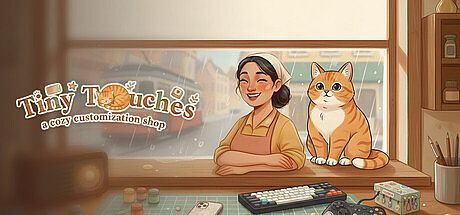


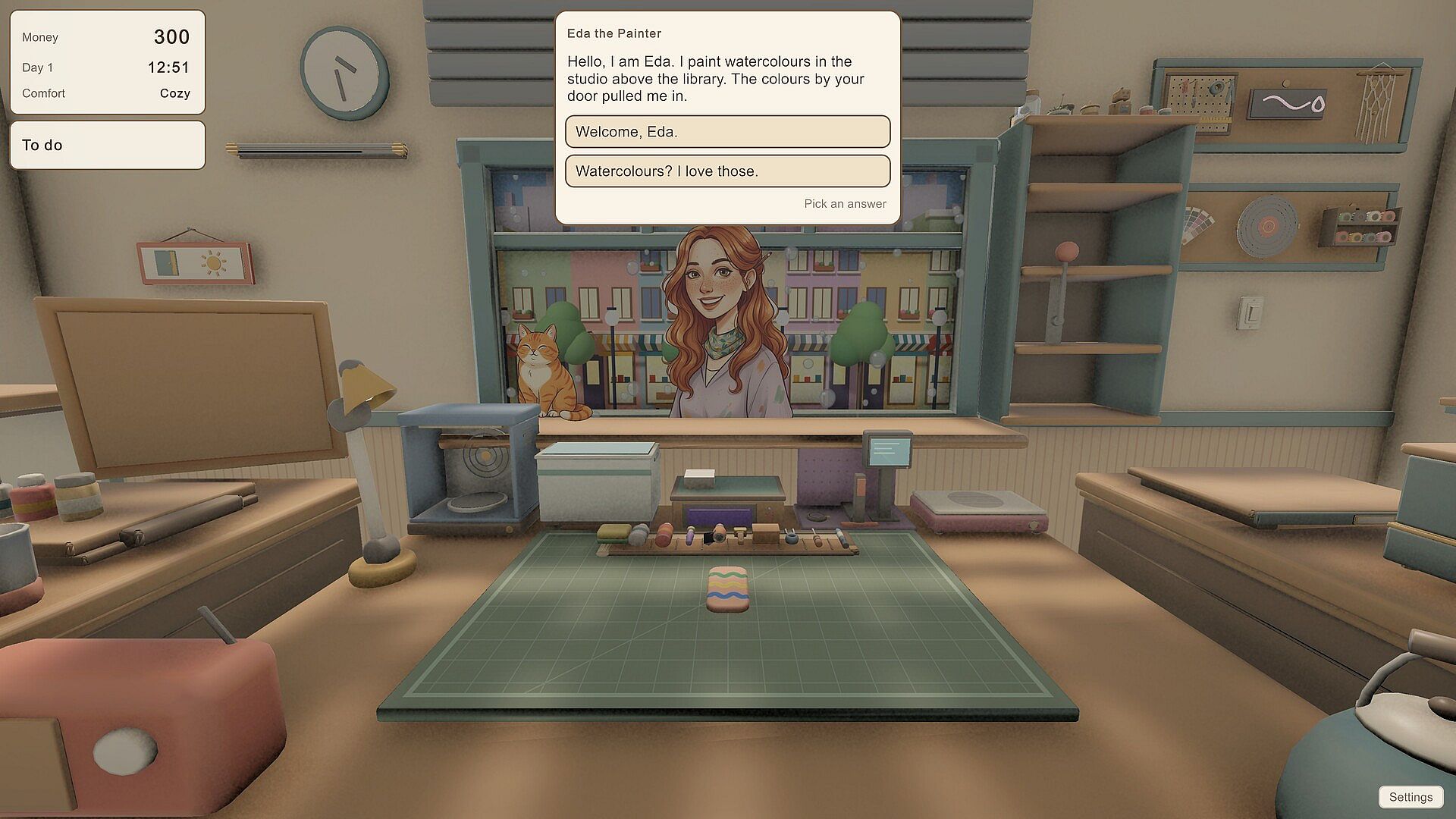
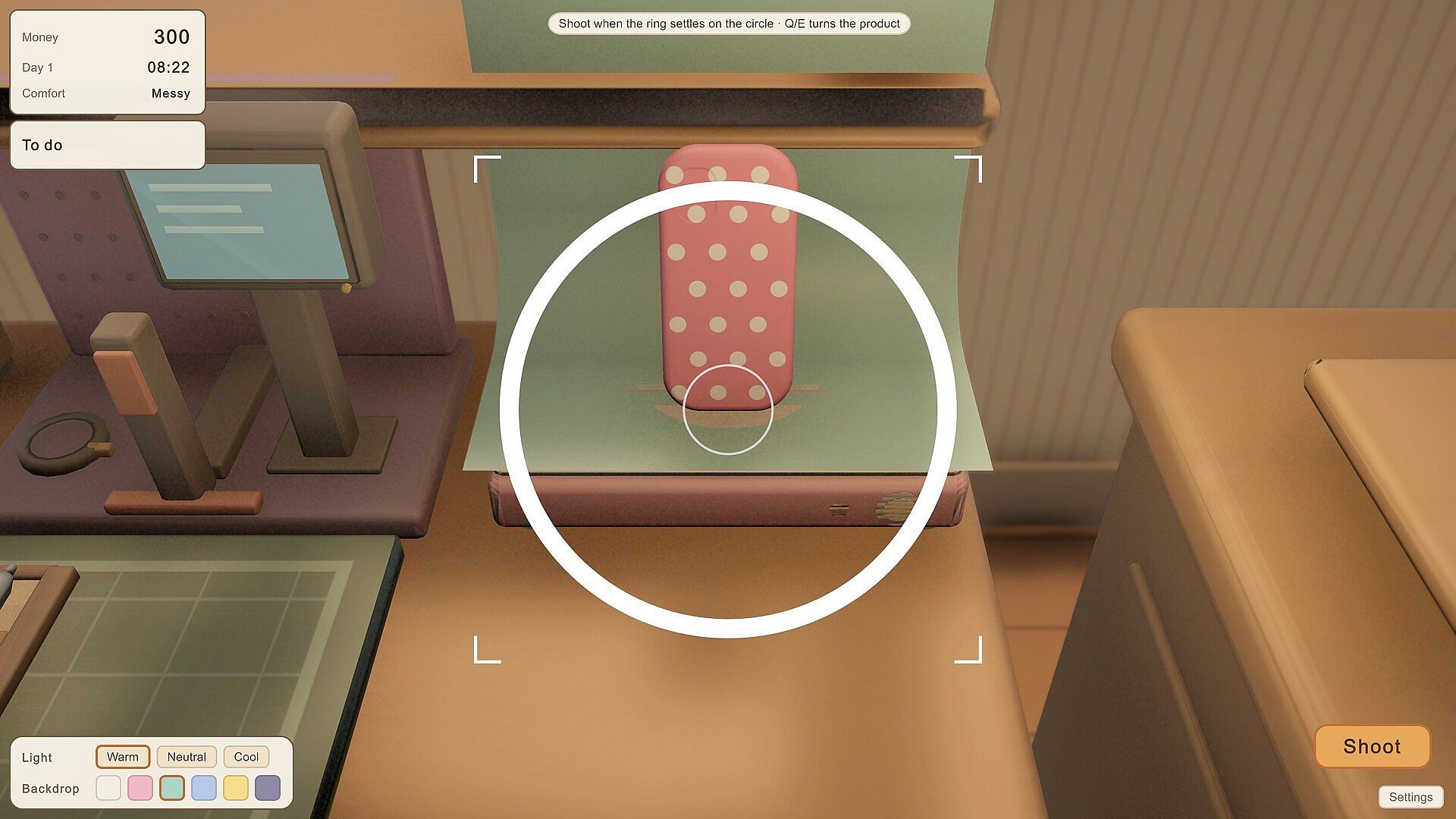
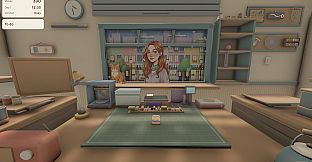
Tiny Touches - A Cozy Customization Shop is a single-player indie simulation game centered on running a small workshop where players customize everyday tech items for local customers. The experience emphasizes relaxed creative work without timers or penalties, letting players focus on detailed hand-crafted modifications to phone cases, mechanical keyboards, and game controllers.
Gameplay
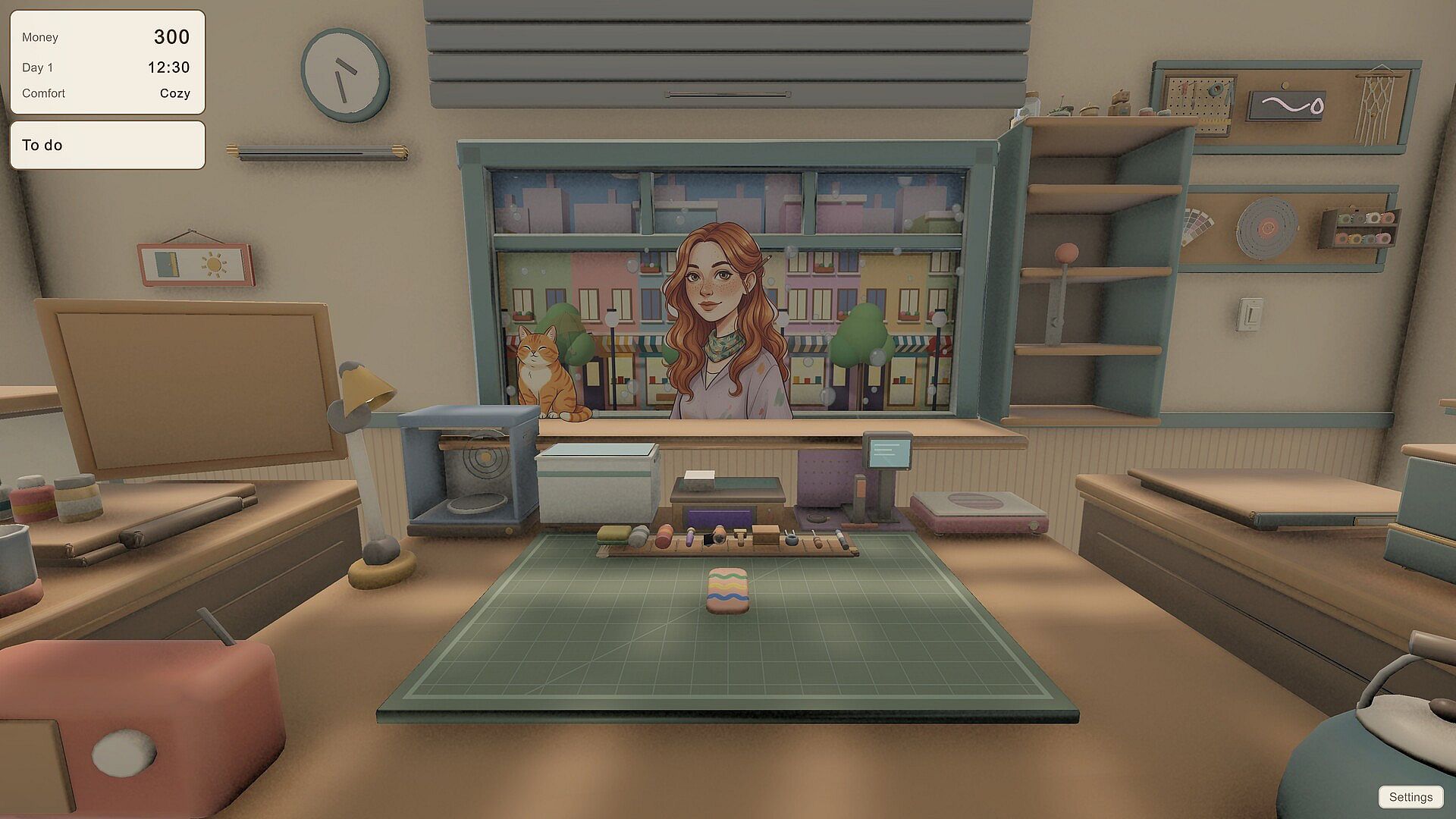
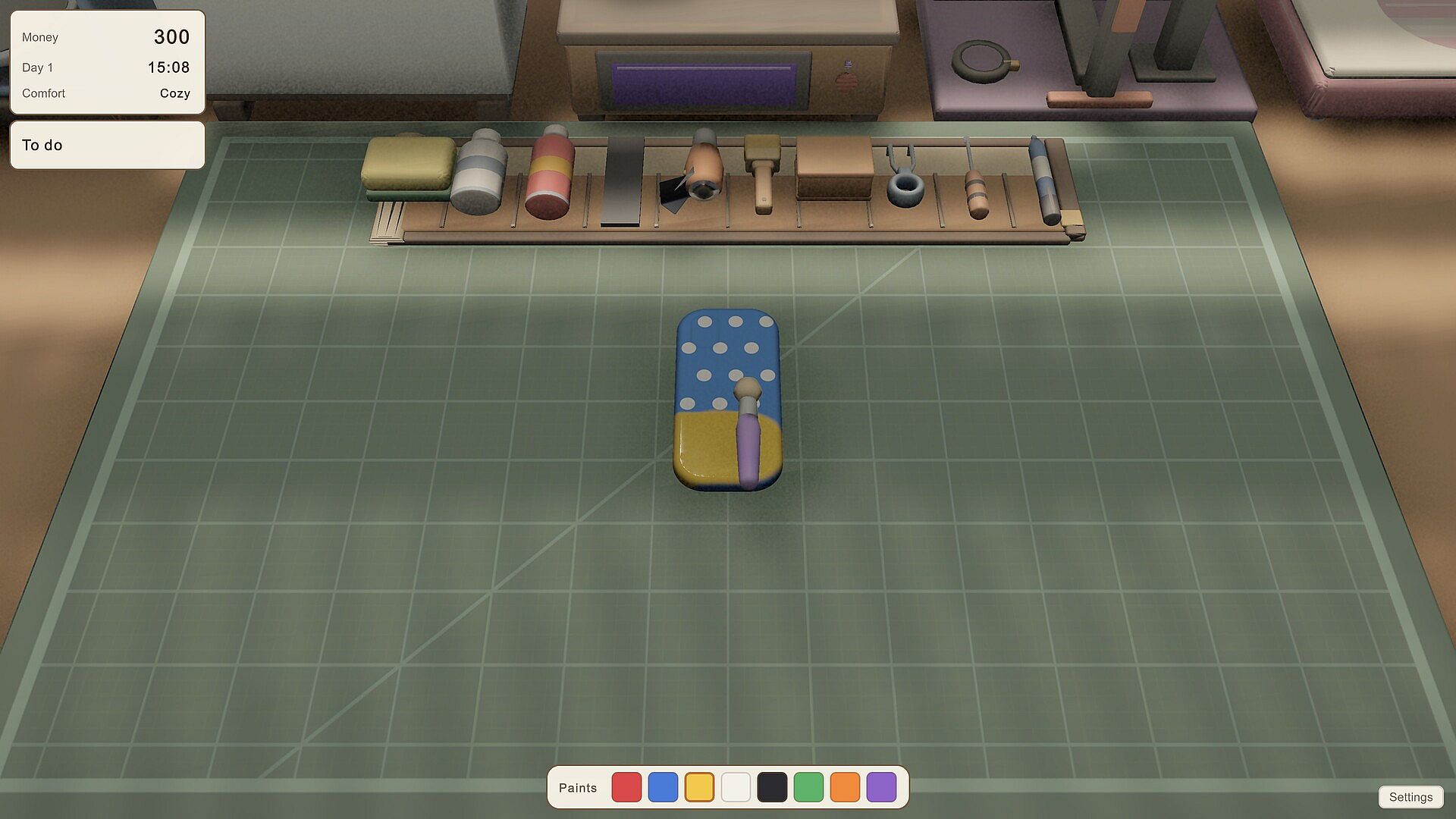
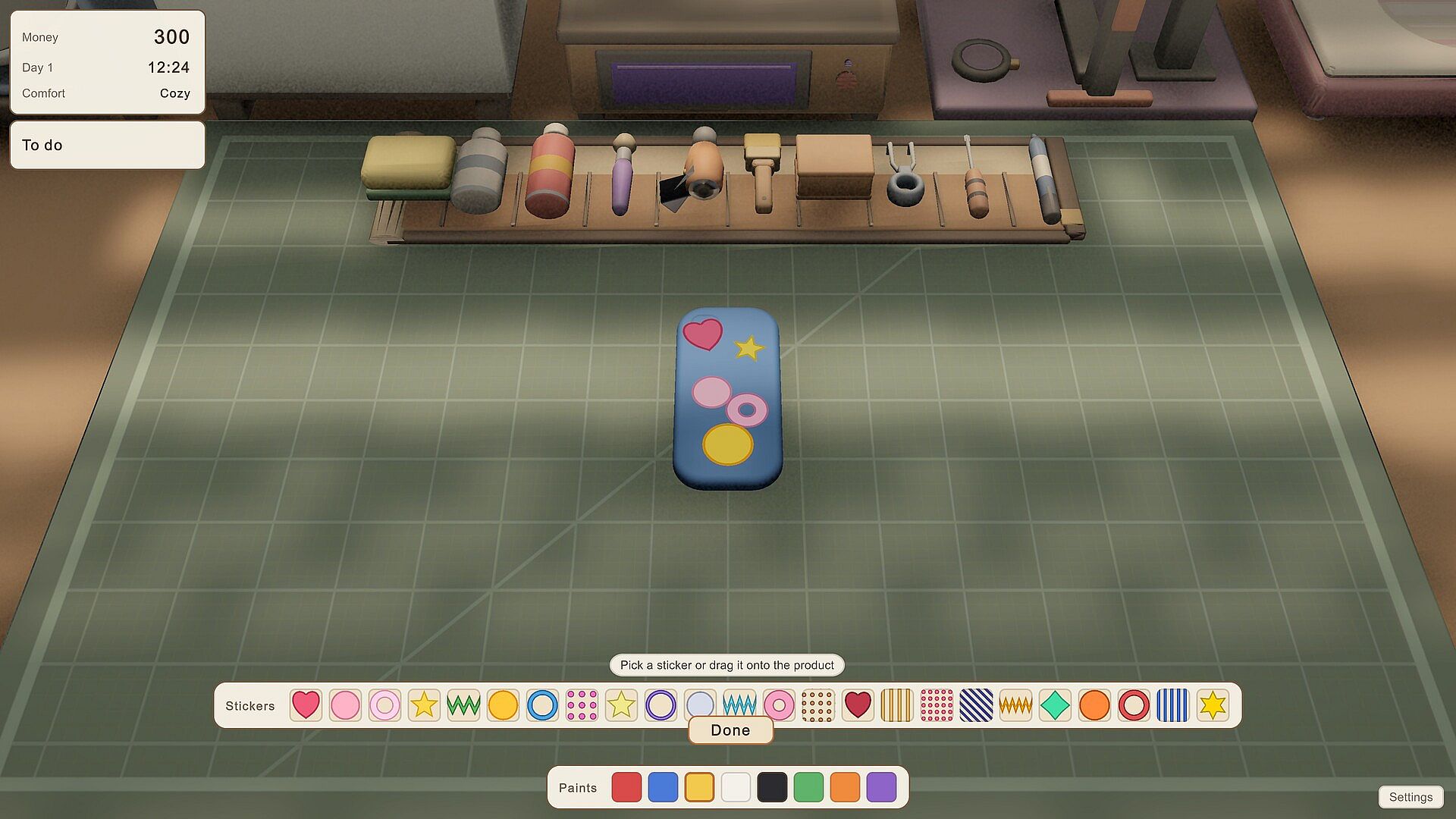
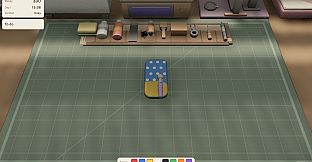
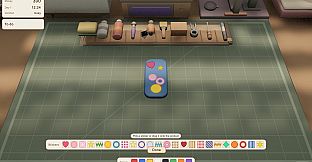
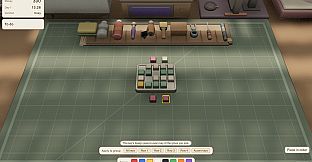
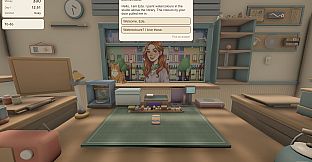
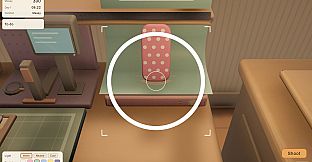
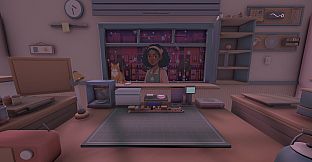
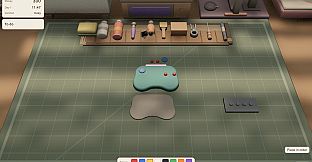
Players begin each day by opening the shop shutter and greeting neighbors who arrive at the service window with specific requests. Work happens directly with the mouse or a gamepad's virtual cursor across several stations. Cleaning and priming surfaces leads into spraying colors, applying stencils, laying masking tape, and creating marbled effects by dipping items into patterned water. Pattern films transfer designs, while stickers, charms, and resin casting add final details. Mistakes undo easily at any stage.
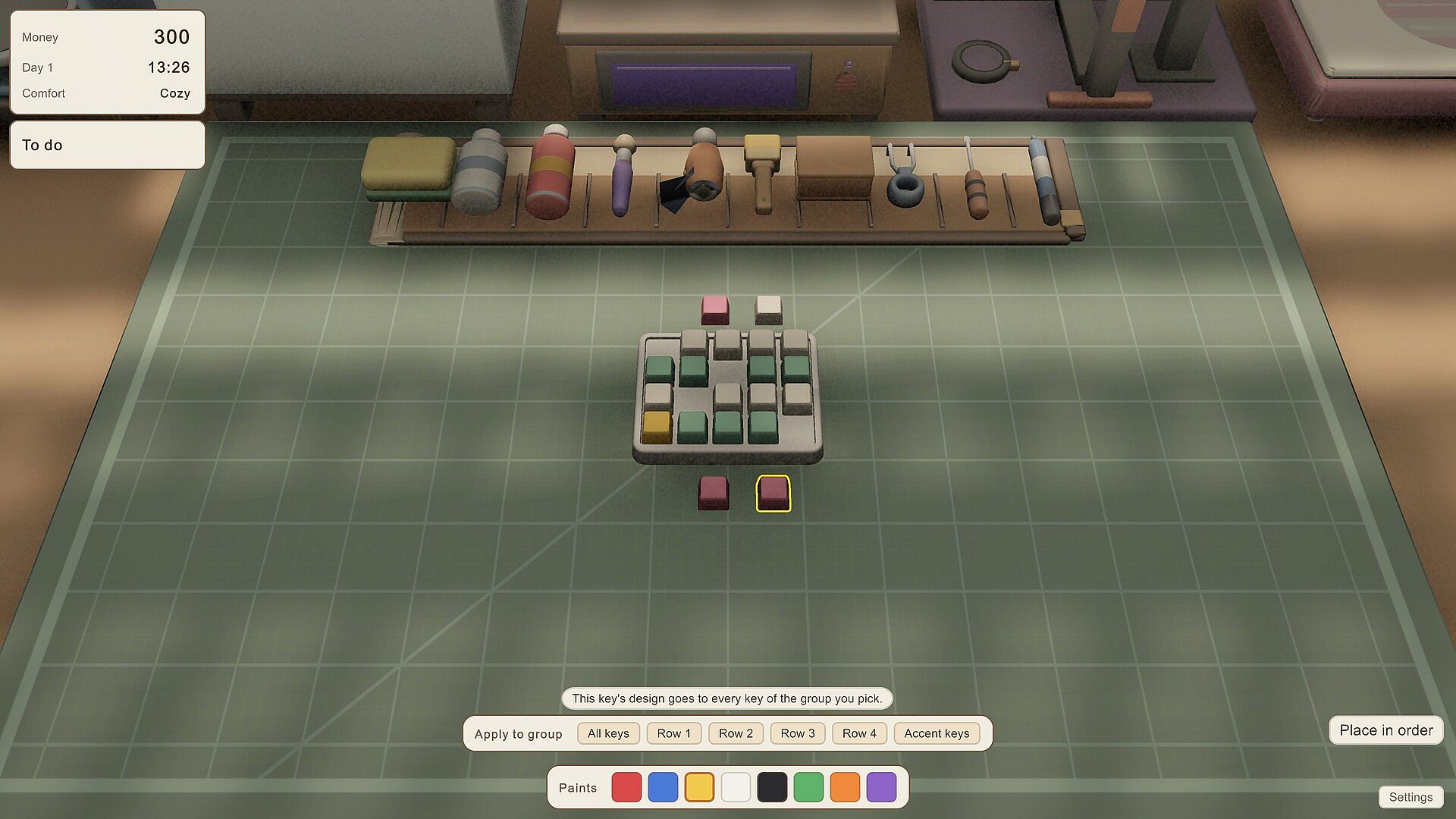
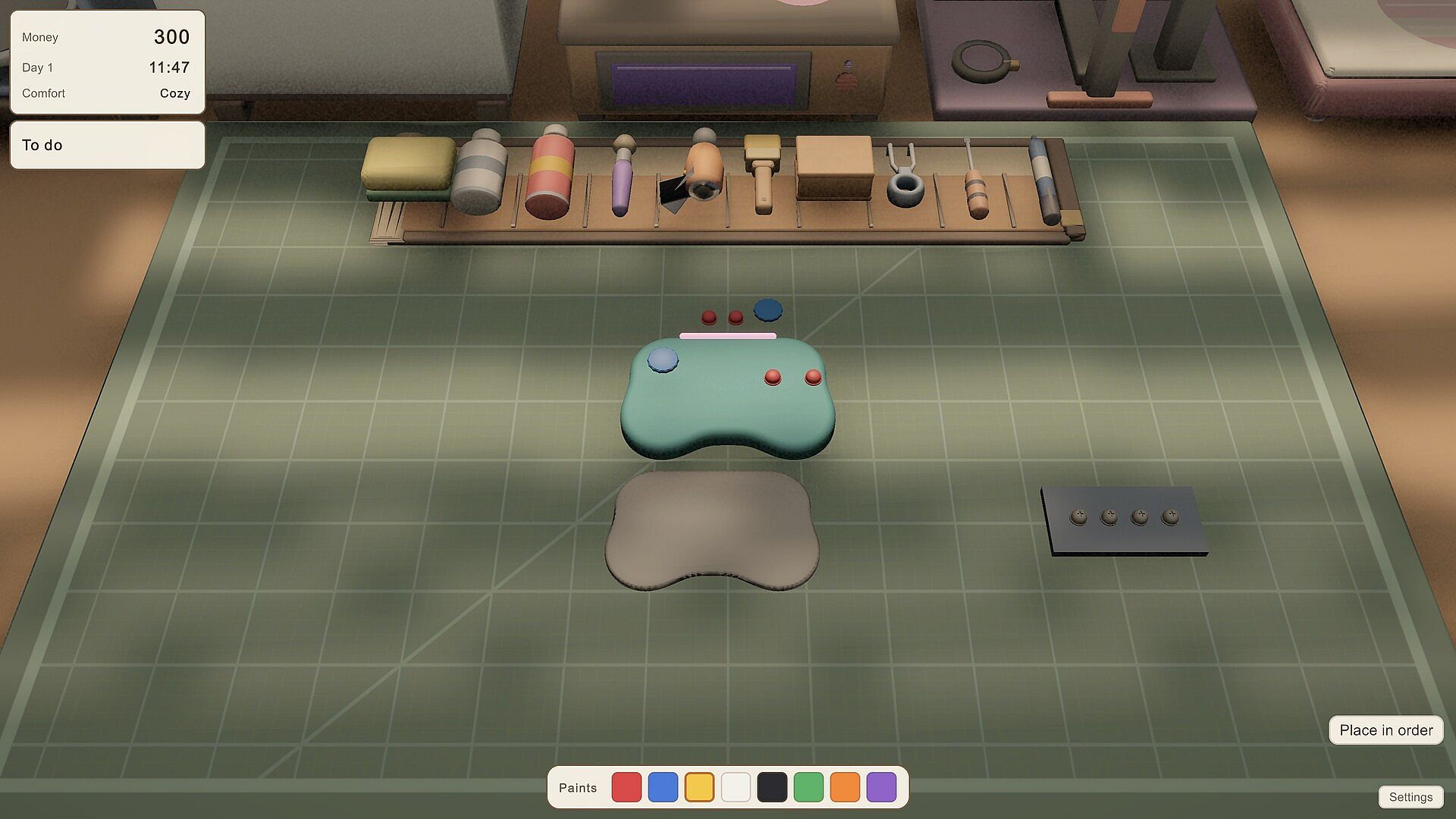
Keyboard jobs involve pulling and reseating keycaps, painting groups of caps for consistency, and testing the finished layout on a connected real keyboard. Controller work requires unscrewing panels, swapping button sets, attaching caps and light strips, then verifying function on a dedicated test stand. Resin pours into molds, cures under UV light, and becomes small charms for attachment. Online orders arrive via tablet, deliveries get unpacked, and second-hand items receive new finishes before display.
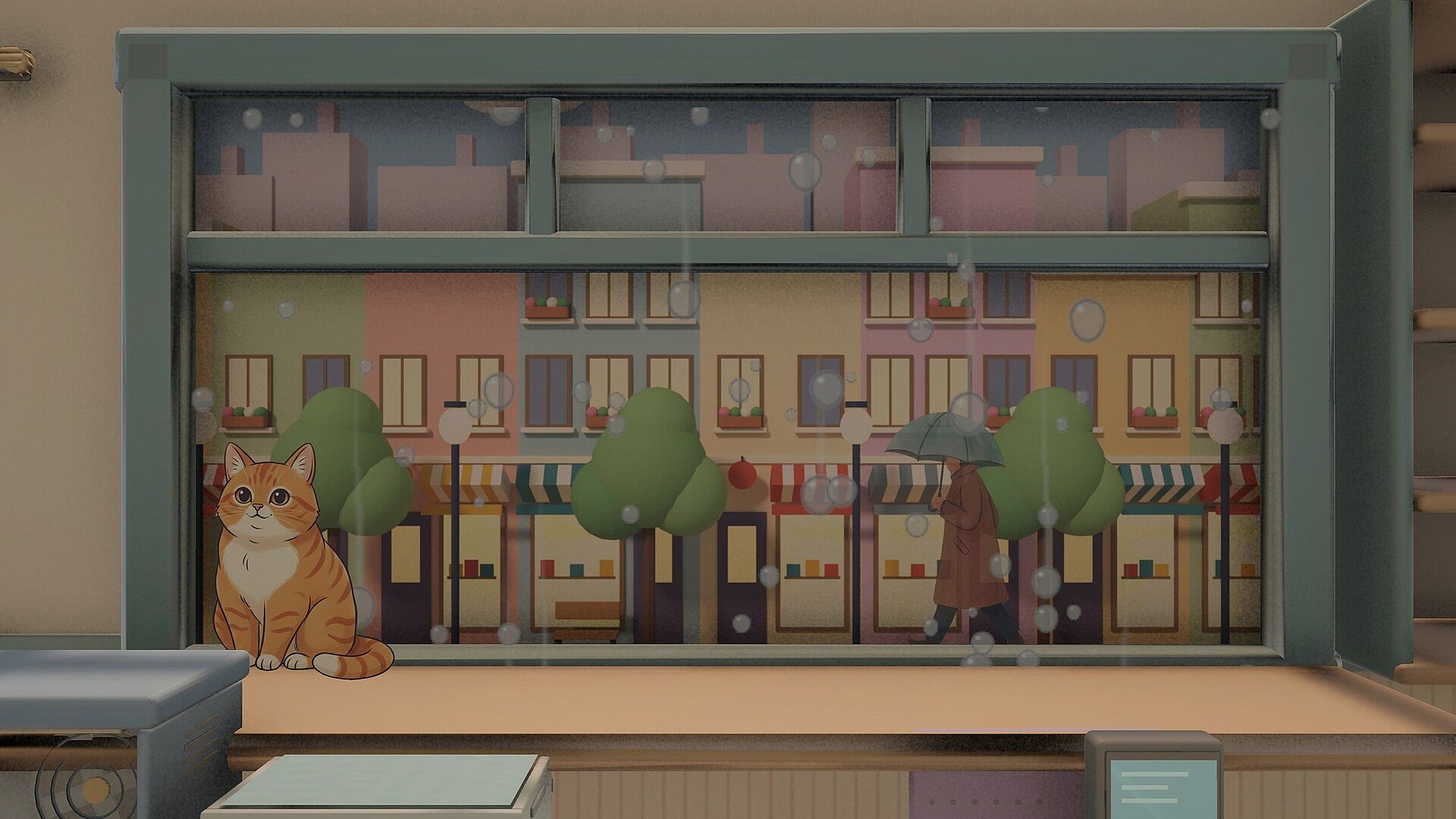
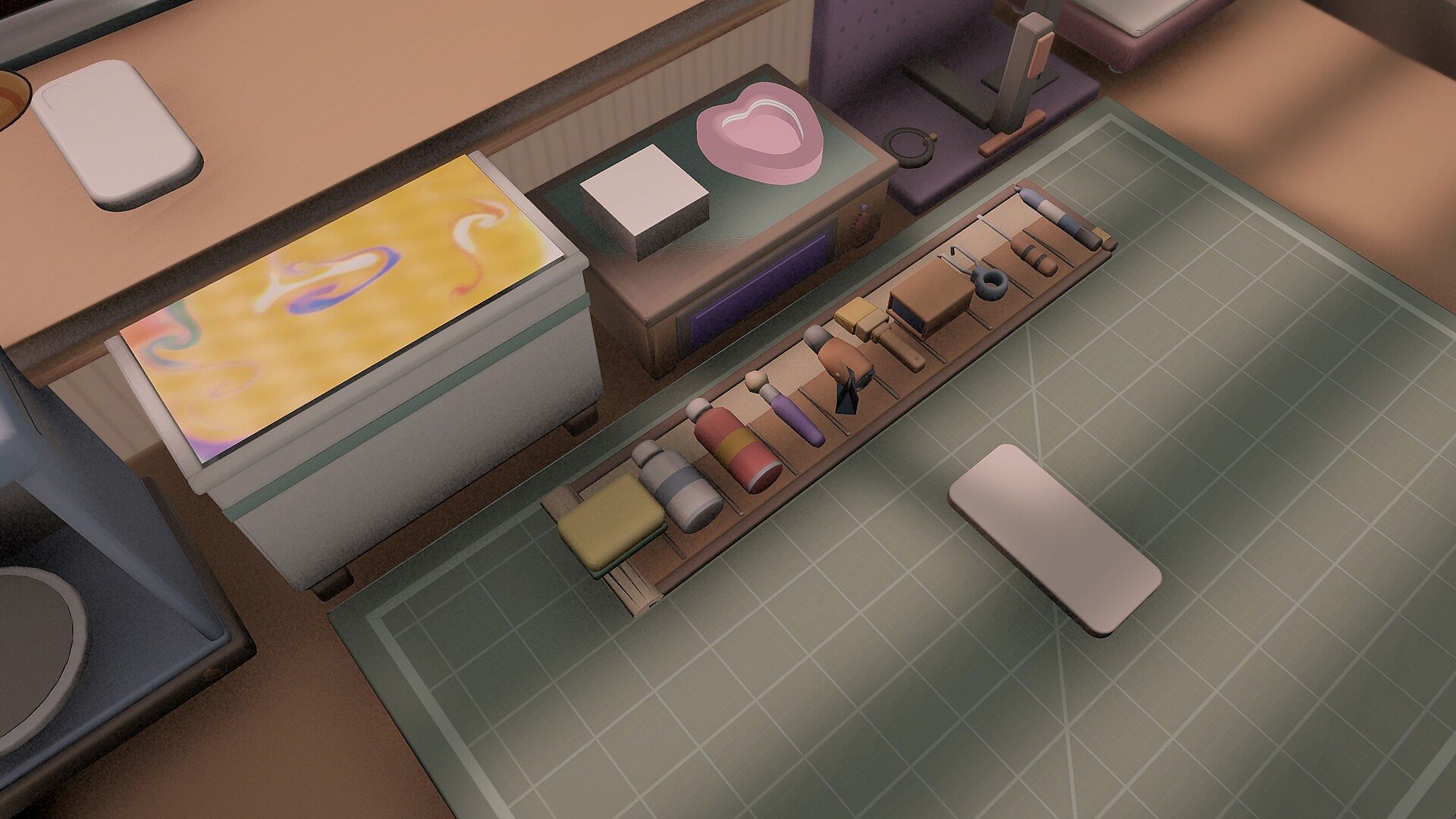
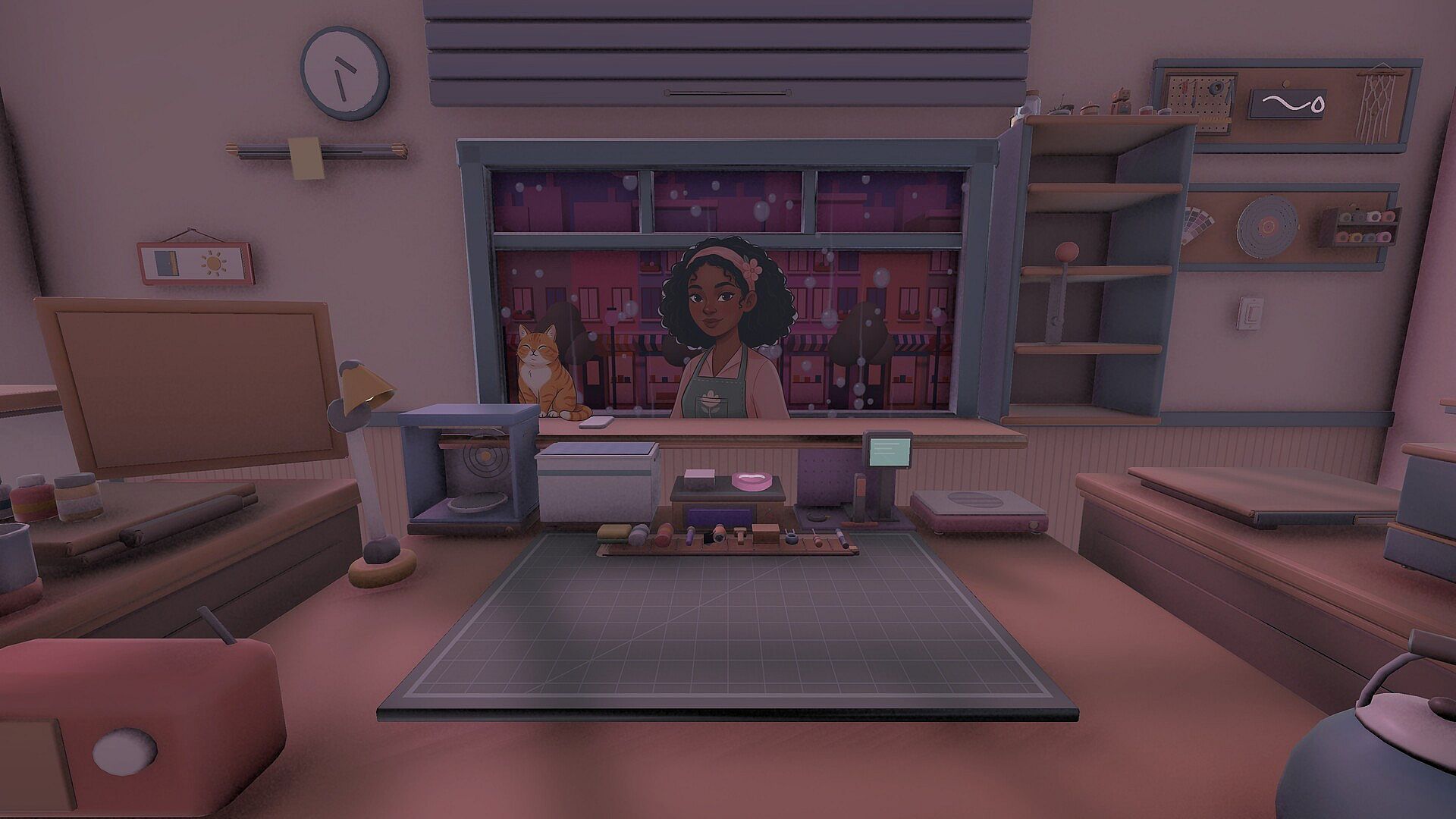
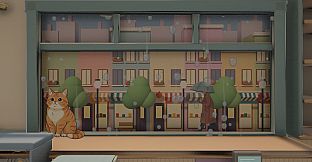
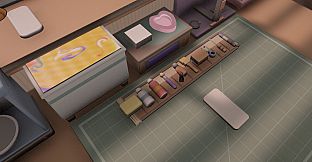
Shop decoration forms a steady loop alongside customer work. Shelves and walls gain new items as reputation grows from New to Legendary. Light shifts naturally from morning tones to evening hues, while ambient sounds include rain, passing trams, and a street cat resting on the sill. An in-shop radio plays original tracks that players can influence through choices.
Game Modes
The game operates as a continuous single-player loop built around daily shop operations. Each session starts with opening the window to customers, fulfilling requests through the listed customization steps, and closing at the player's chosen time. Reputation and shop upgrades provide progression without separate competitive or multiplayer modes.
Core activities blend order fulfillment with freeform decoration and inventory management. Regular customers bring personal stories that influence repeat visits and reviews, while online orders and the second-hand market add variety to the daily rhythm. No distinct named modes exist beyond this unified experience of customization, customer service, and shop building.
Shop Customization and Atmosphere
Decoration extends beyond basic placement. Players arrange items on shelves, adjust wall and floor details, and maintain overall tidiness to support reputation growth. The environment responds with changing light and consistent ambient details like the radio playlist and street sounds. These elements reinforce the sense of a lived-in space that evolves at the player's pace.
Three distinct product lines keep the work varied. Phone cases focus on surface treatments and added charms. Keyboards emphasize modular swaps and group painting. Controllers combine mechanical disassembly with functional testing. All techniques remain available from the start, with skill shown through neat execution rather than locked progression gates.
Is It Worth Playing?
Tiny Touches suits players who enjoy slow-paced creative simulation games focused on tactile customization and gentle customer interactions. The absence of timers, failure states, or resource loss makes it accessible for relaxed sessions where the goal is personal satisfaction in the finished items and shop appearance.
Early Access version includes the full set of three product families, all listed stations, customer systems, online orders, second-hand market, decoration options, and reputation progression. Planned updates aim to expand customer stories, add seasonal neighborhood events, introduce more product types and techniques, and increase decoration and radio variety. The game launches in Early Access on November 16, 2026, with community feedback shaping further development.
Those drawn to cozy indie titles that reward careful hand work and atmospheric details will find a consistent match here. The single-player focus keeps attention on individual creativity rather than competition or complex systems.