








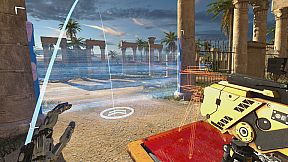
The Talos Principle VR is a first-person puzzle adventure game developed for virtual reality on PC. Players awaken in a world blending ancient ruins with advanced technology and must solve intricate challenges while confronting questions about existence and purpose.
Gameplay
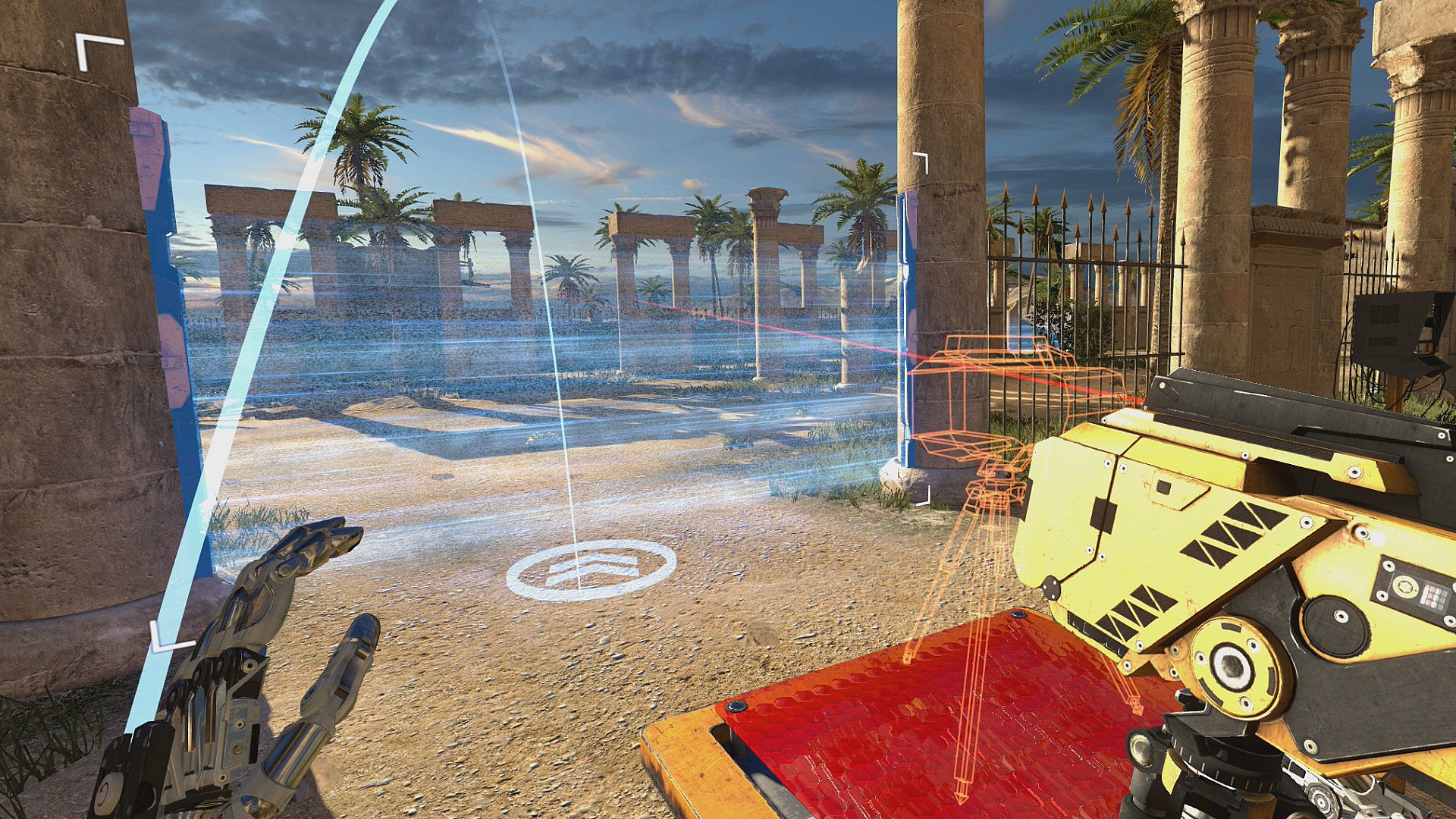
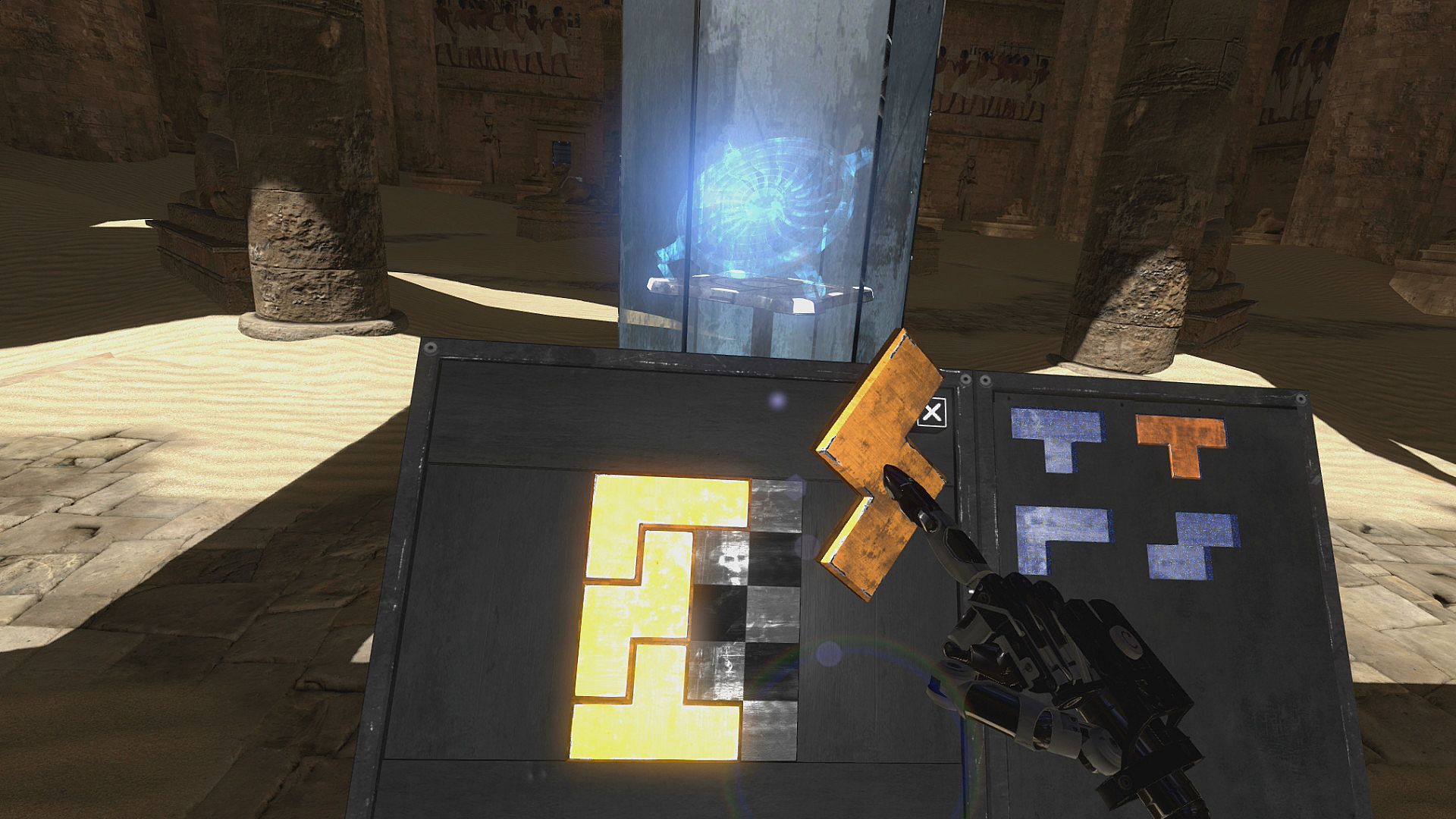
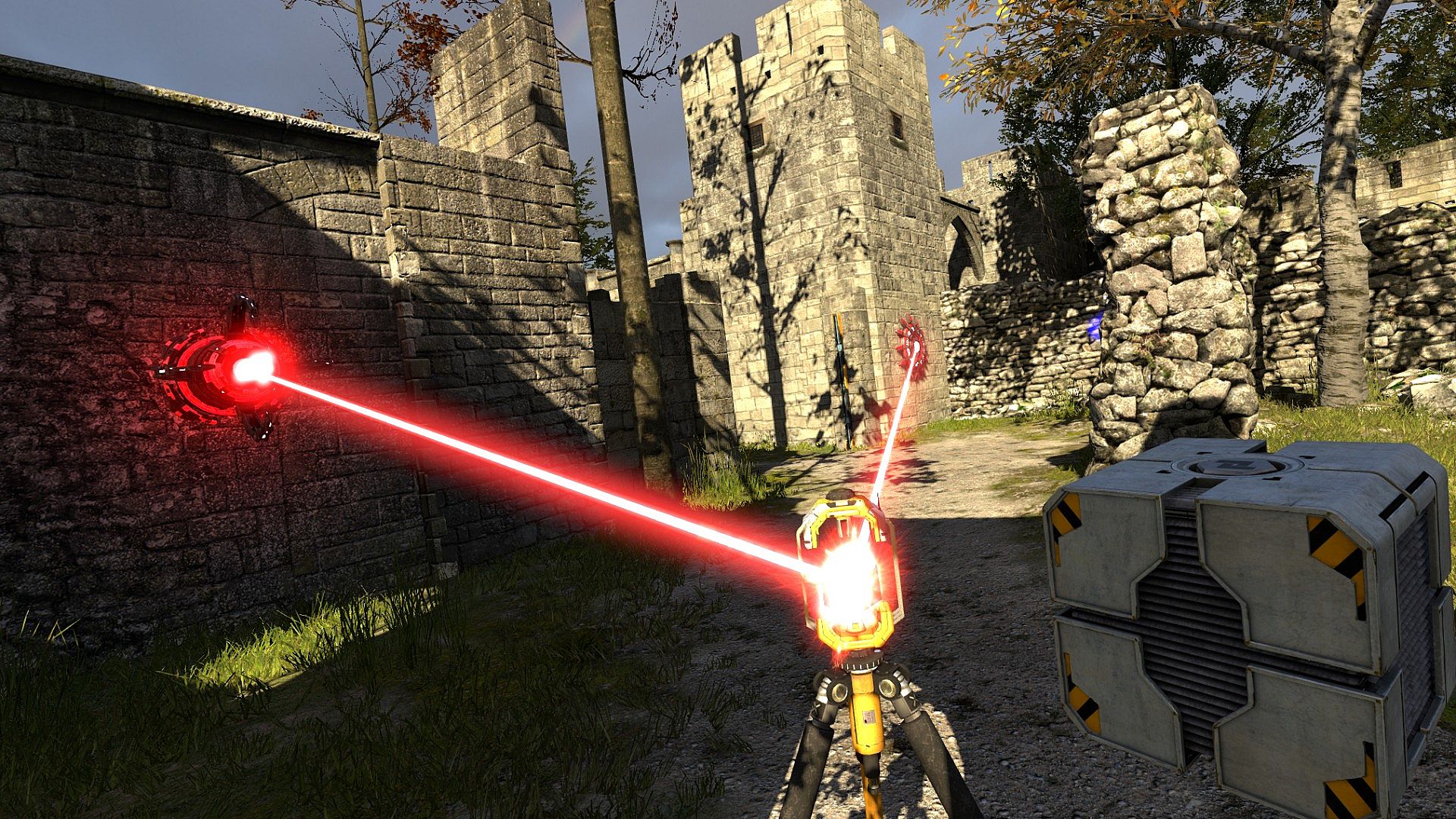
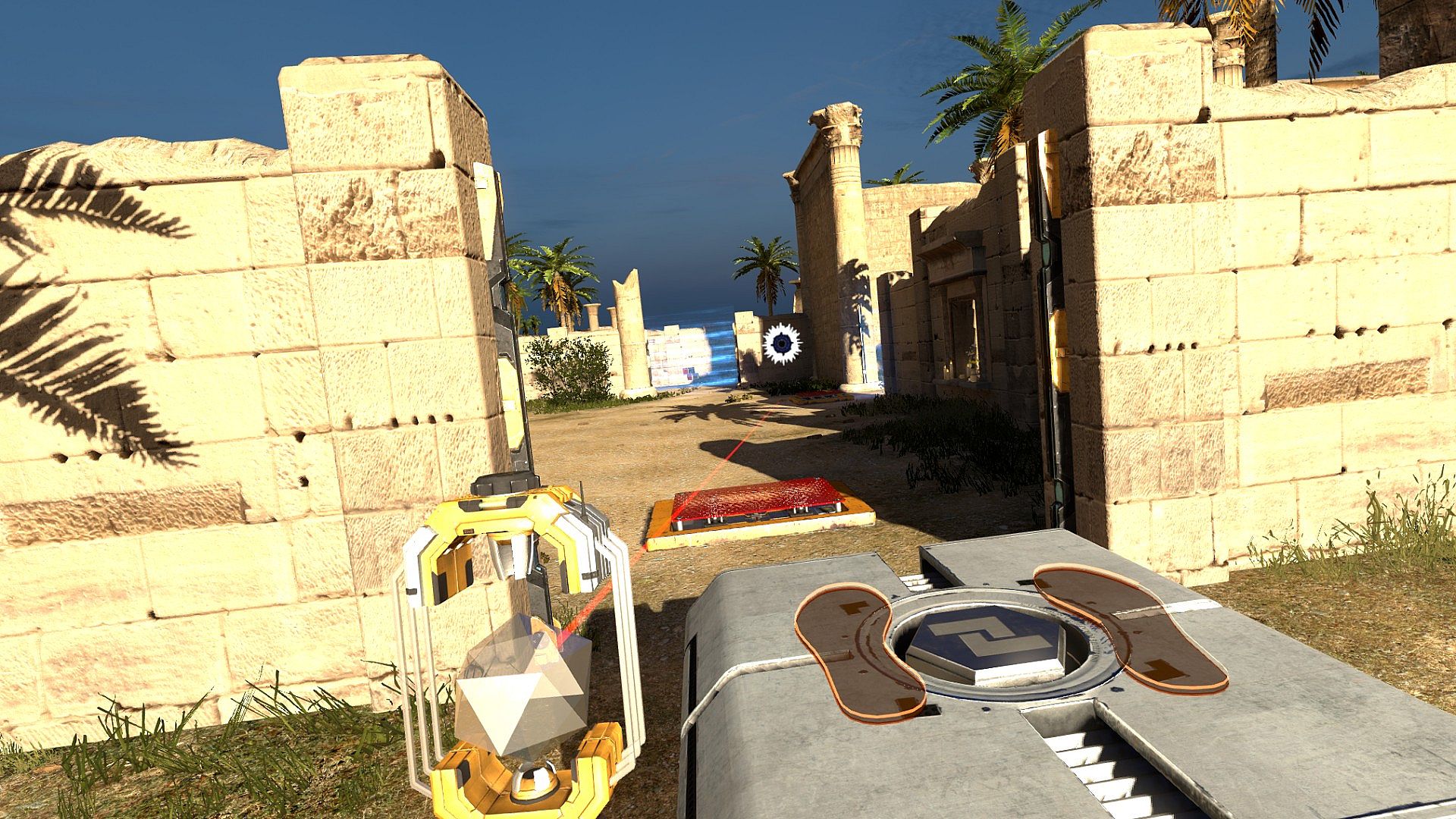
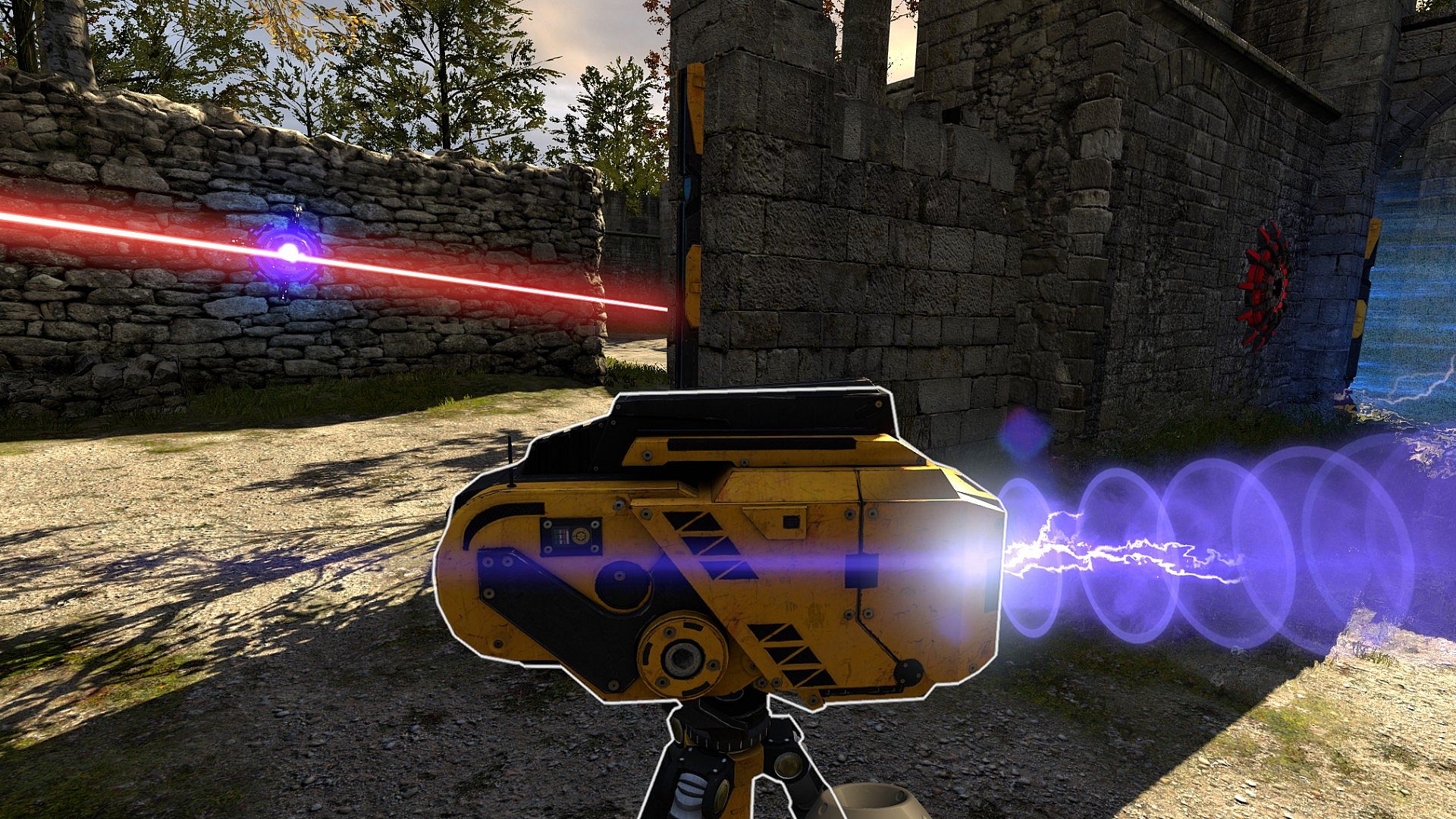
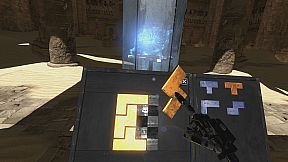
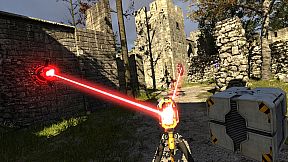
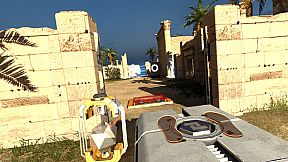
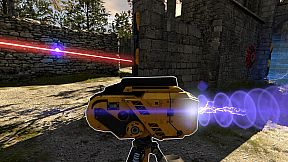
Core gameplay revolves around navigating interconnected environments filled with ruins and technological elements. Puzzles require collecting sigils shaped like tetrominoes by overcoming obstacles such as patrolling drones that detonate on proximity, wall-mounted turrets, energy barriers, and laser systems. Tools include signal jammers to disable threats, beam reflectors to redirect lasers to receivers, portable boxes for crossing gaps, and a recording device that captures player actions for later playback to interact with past versions of oneself.
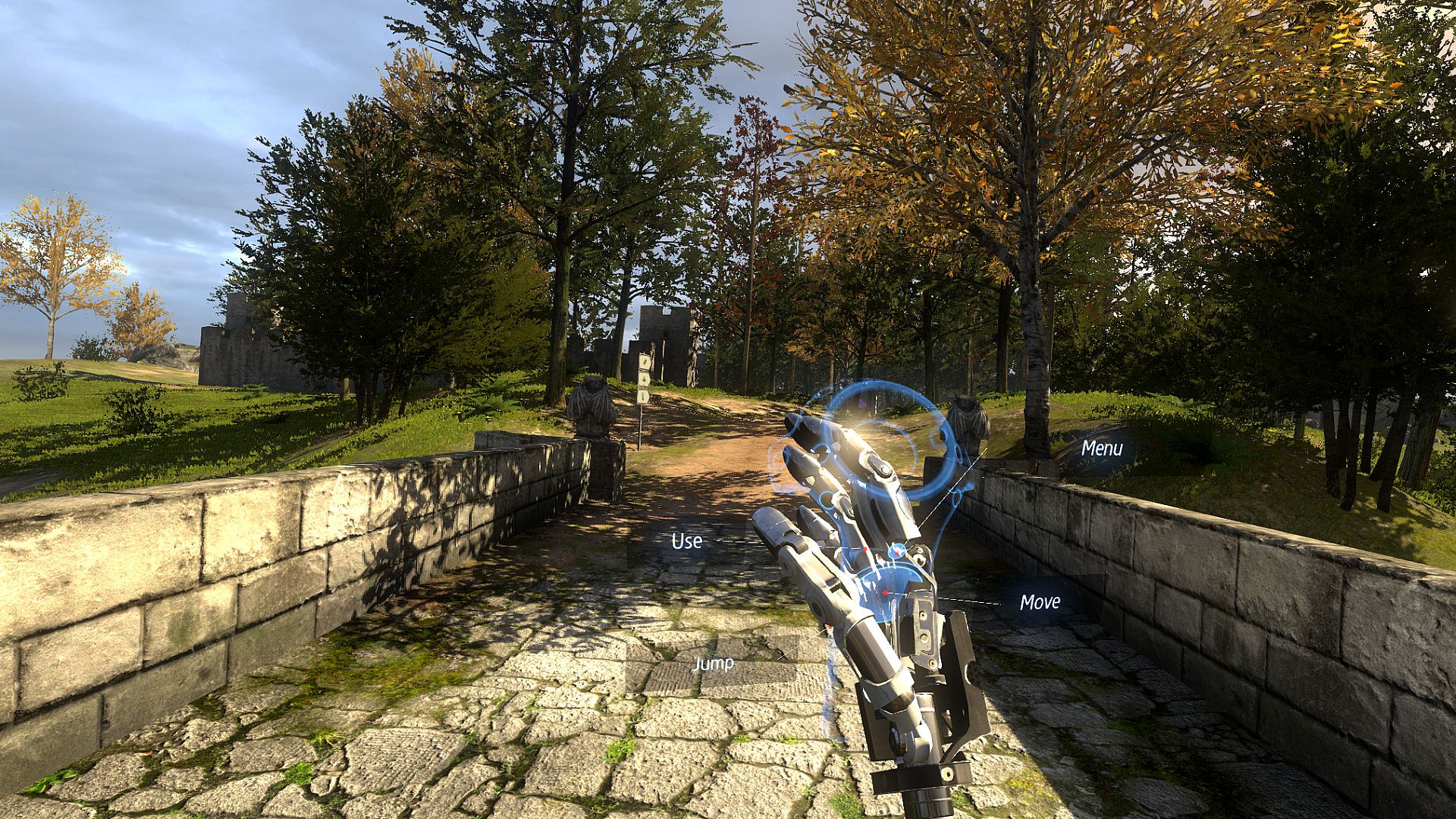
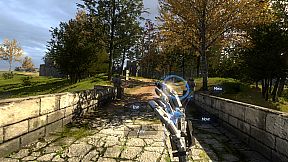
Interaction happens directly through motion controllers, allowing players to manipulate objects, position reflectors with precise line-of-sight adjustments, and handle time-replication mechanics in three-dimensional space. The non-linear structure lets individuals tackle areas in preferred order, backtracking as needed once new tools become available. Multiple locomotion options support different preferences, including various teleportation methods like instant or blink variants alongside classic full movement with optional comfort settings for reduced motion discomfort. Room-scale tracking enables physical movement within the play area to explore as if present in the environment.
Progress involves arranging collected sigils into specific patterns to unlock gates or new abilities, with each puzzle building on prior logic and spatial reasoning. The experience emphasizes deliberate pacing suited to VR, where traversal and object handling feel more tactile than in flat-screen versions.
Game Modes
The game operates entirely in singleplayer mode, focusing on a cohesive campaign that blends the original puzzle sequences with an expanded narrative arc. Road to Gehenna adds four distinct episodes featuring some of the most demanding puzzles in the title, integrated directly into the VR experience for a continuous story thread.
Exploration remains open within the game's worlds, allowing players to select paths through different themed areas without strict linear progression. Puzzle completion drives advancement, with sigil collection serving as the primary objective across all sections. No competitive or cooperative elements exist, keeping the focus on individual problem-solving and personal interpretation of events.
Story and Themes
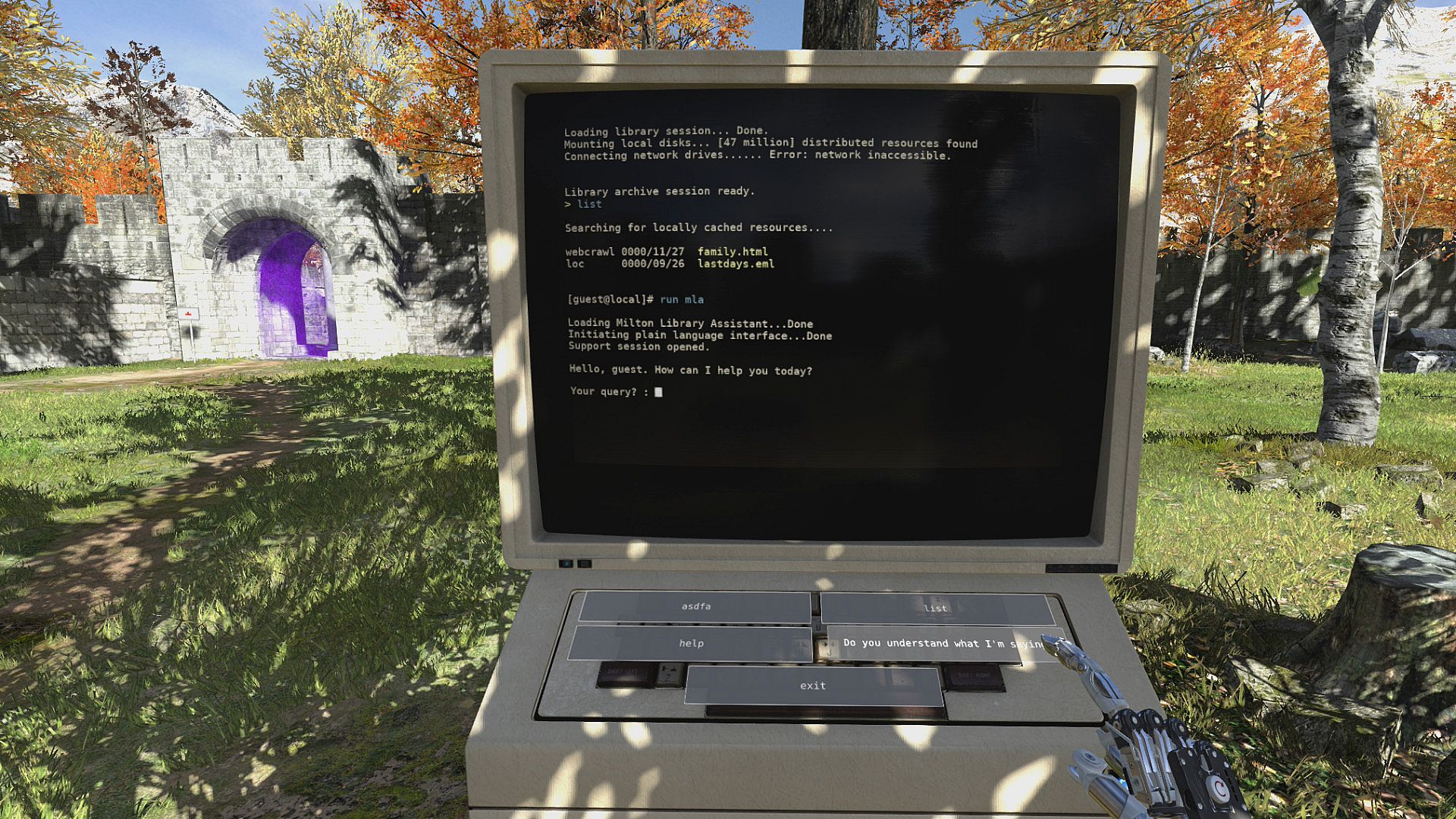
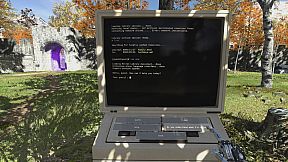
A philosophical narrative unfolds through environmental clues, audio logs, and terminal entries scattered throughout the ruins. Themes center on humanity, technology, and civilization, prompting players to question their role as a created being following directives from an unseen entity. Decisions arise around obedience versus inquiry, with multiple endings possible based on choices made during exploration.
The contradictory setting of classical architecture mixed with futuristic machinery reinforces the central conflict. Players uncover layers of the world gradually, forming theories about the simulation-like nature of their surroundings without explicit guidance on interpretation.
Technical Features in VR
Built specifically for VR, the title supports room-scale play alongside seated options, with extensive customization for controls and movement comfort. Hand presence allows natural gestures for puzzle interactions, such as grabbing and positioning items or activating mechanisms. Visuals emphasize detailed lighting and shadows that enhance the sense of presence in large, open puzzle spaces.
Performance accommodates various headsets through adjustable settings, maintaining clarity during extended sessions. The design avoids reliance on traditional menus by integrating objectives and tools into the arm display and environmental cues.
Is It Worth Playing?
This title suits players who enjoy methodical puzzle-solving combined with thoughtful storytelling in a virtual environment. The integration of physical interaction and flexible movement options makes the challenges feel more engaging than comparable flat experiences, particularly for those comfortable with VR locomotion adjustments.
Reception highlights the strong narrative delivery and puzzle variety, with many noting the satisfying progression through increasingly complex spatial and logical tasks. The inclusion of the Road to Gehenna content extends playtime with additional high-difficulty episodes. It appeals most to fans of singleplayer adventures that reward careful observation and creative tool use over action or competition.
Availability on PC through standard VR platforms ensures broad access for compatible headsets. Those seeking a contemplative experience with tangible mechanics in VR will find consistent value in its design and depth.