























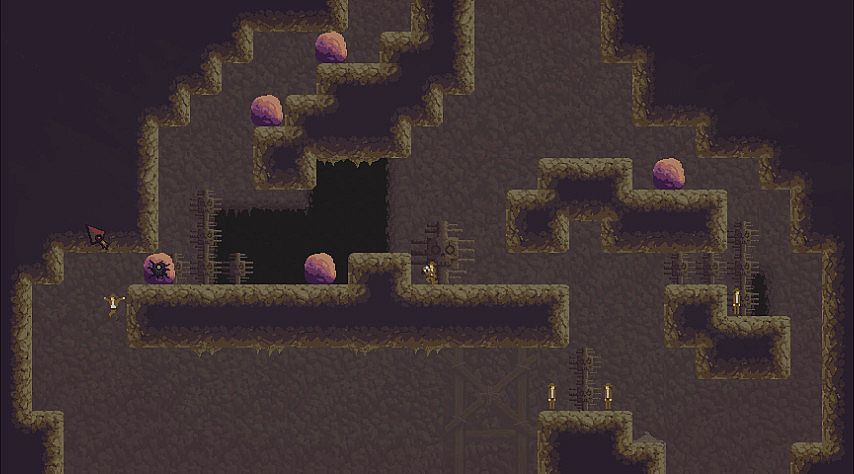
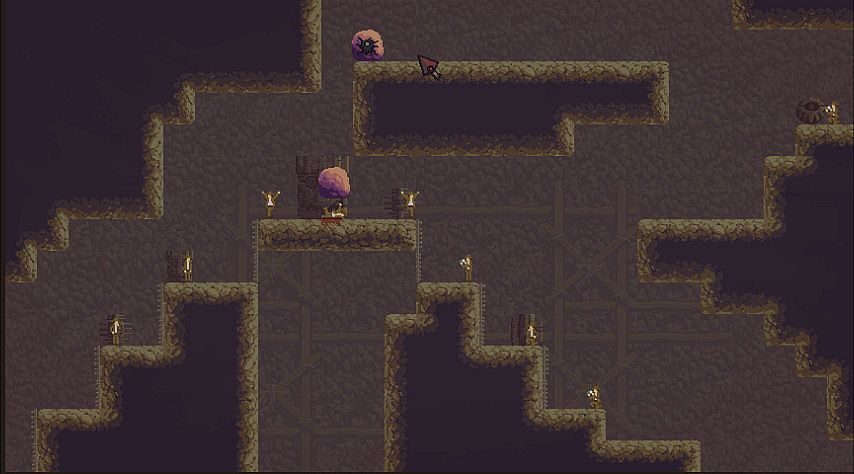
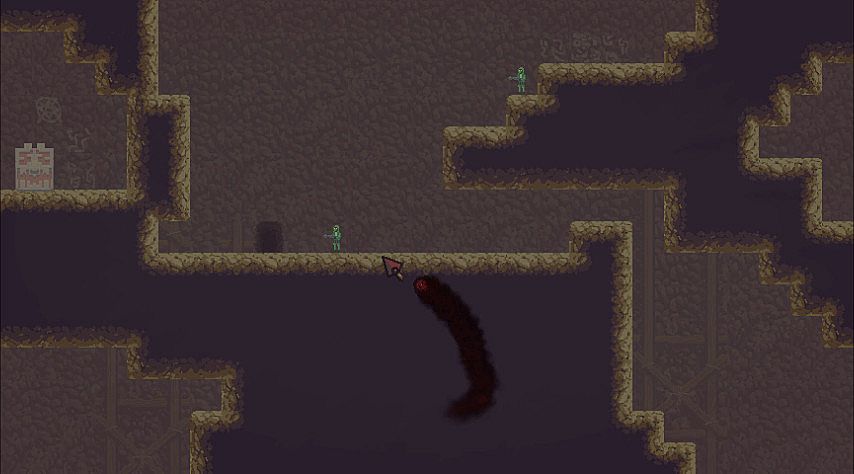
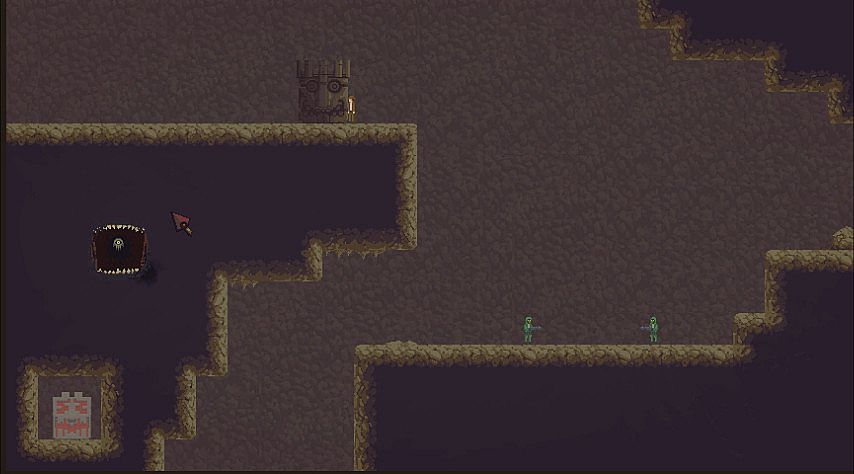
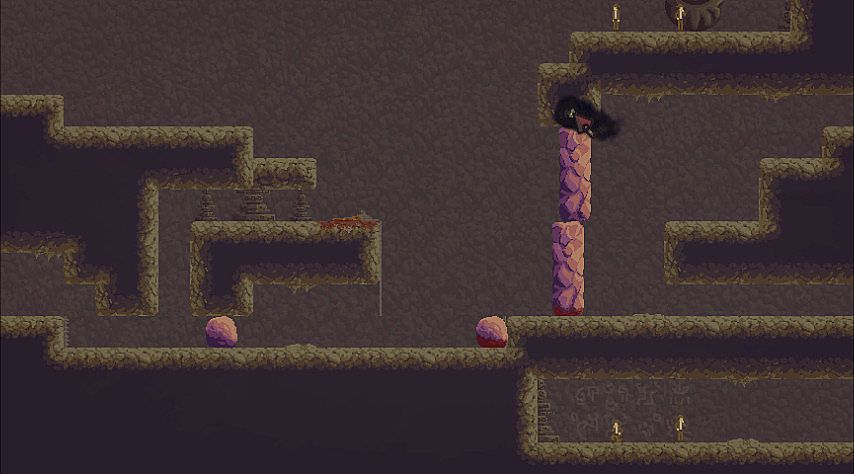
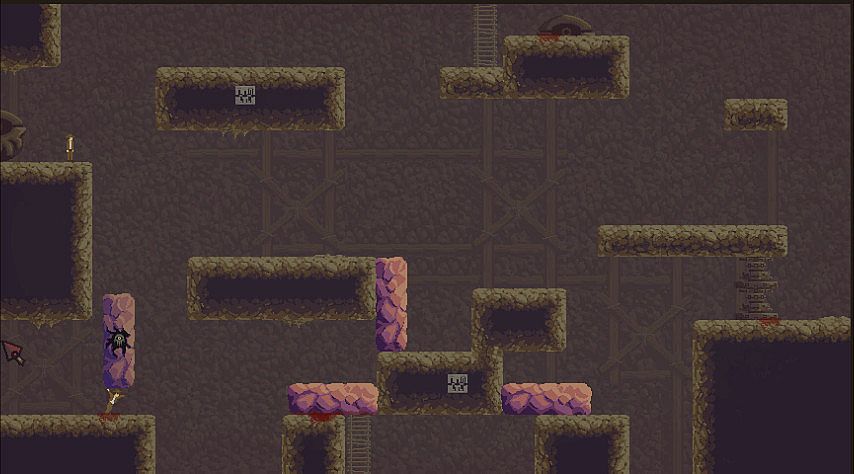
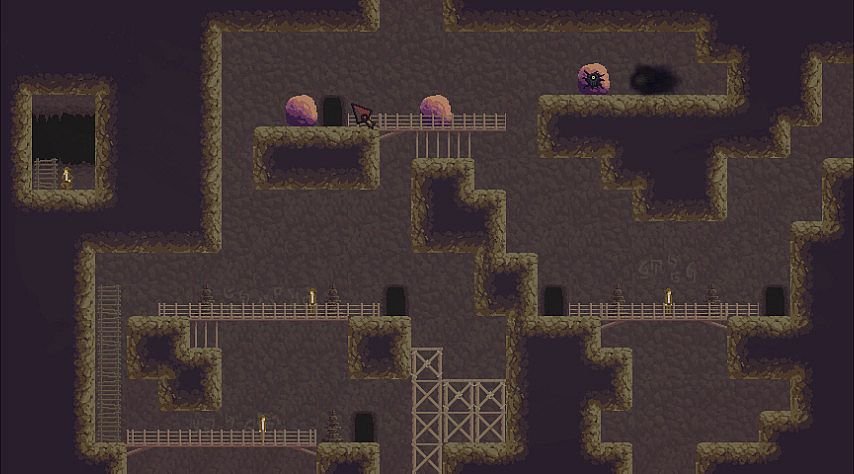
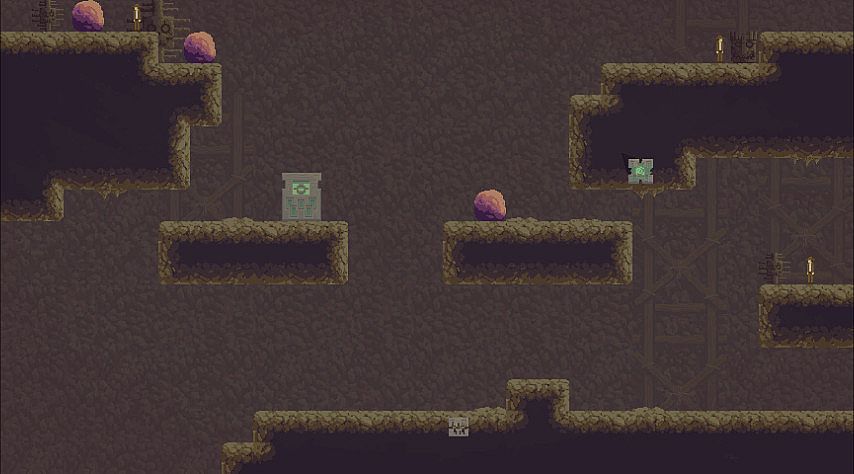
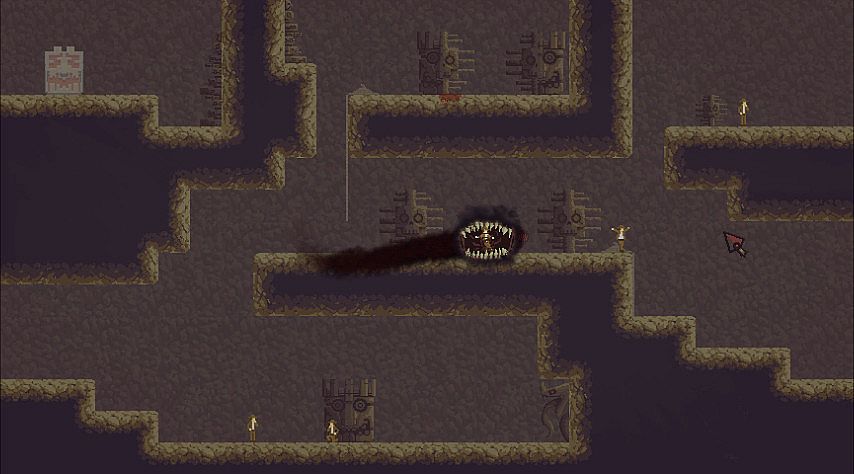
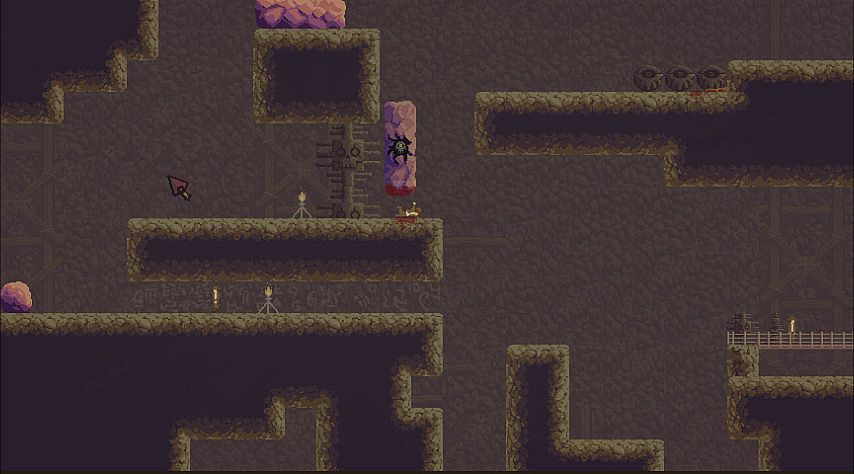
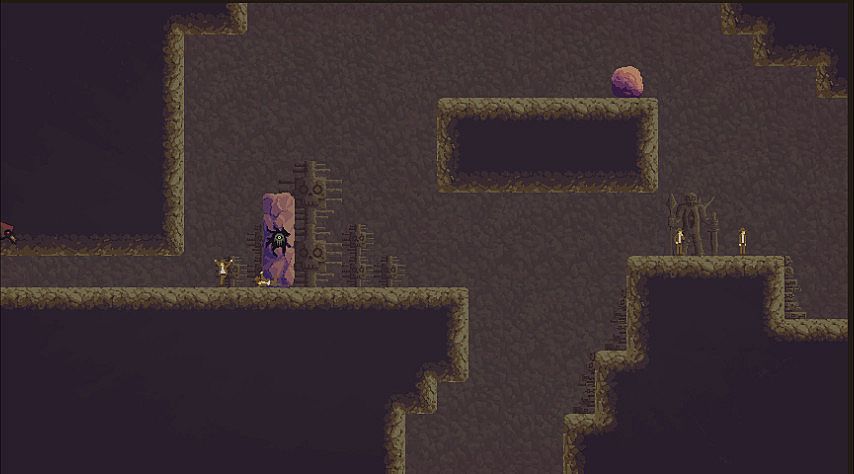
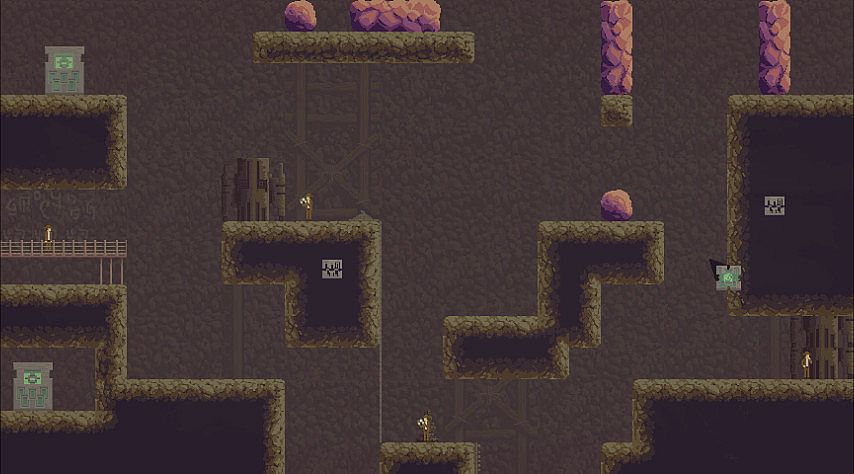
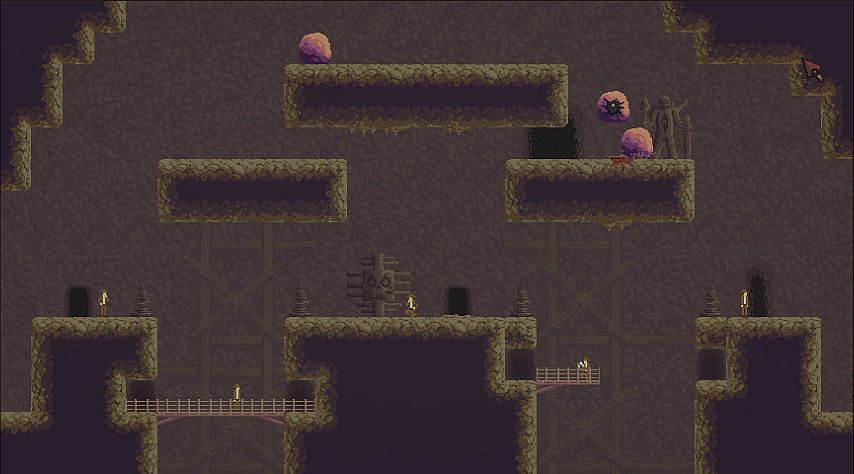
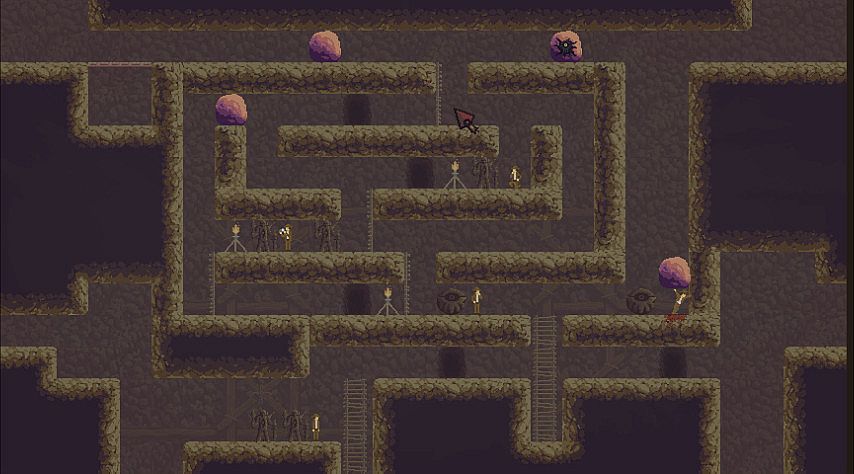
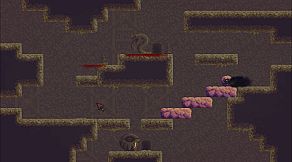
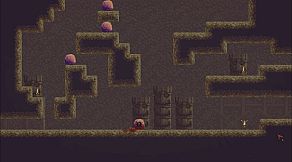
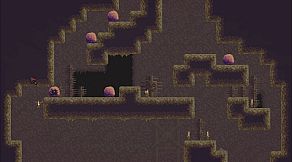
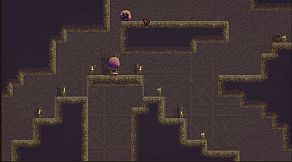
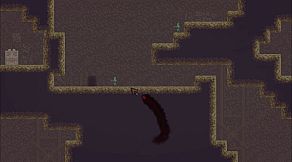
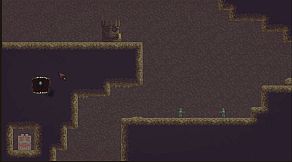
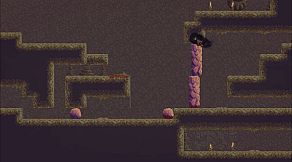
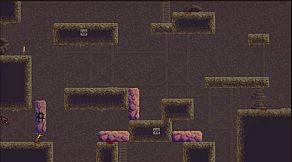
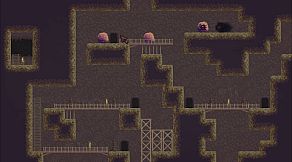
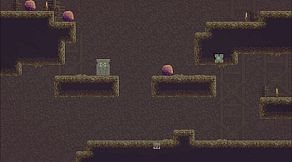
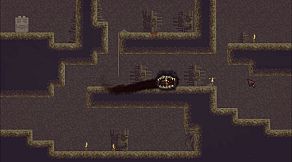
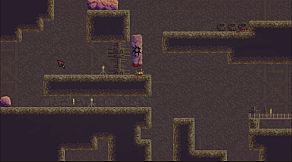
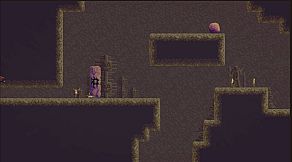
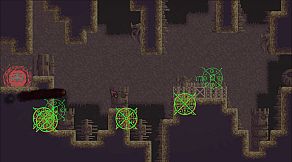
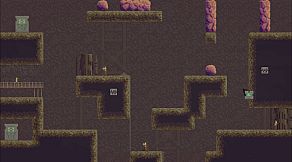
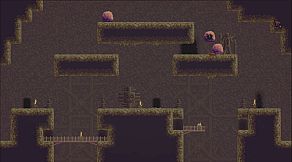
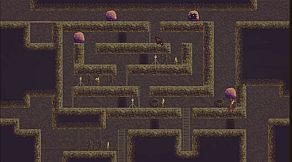
The Dweller is a single-player puzzle game that places you in the role of an ancient monster awakened in an underground ruin. Archaeologists have disturbed your domain, and your task is to remove every intruder from each stage using limited movement and environmental tools. The experience blends strategy and simulation elements in a compact indie package focused on clever spatial reasoning rather than combat or exploration in the traditional sense.
Gameplay
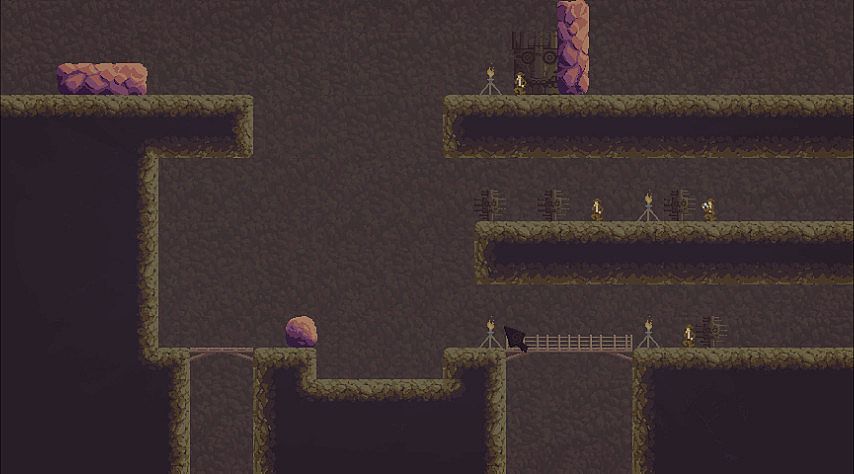
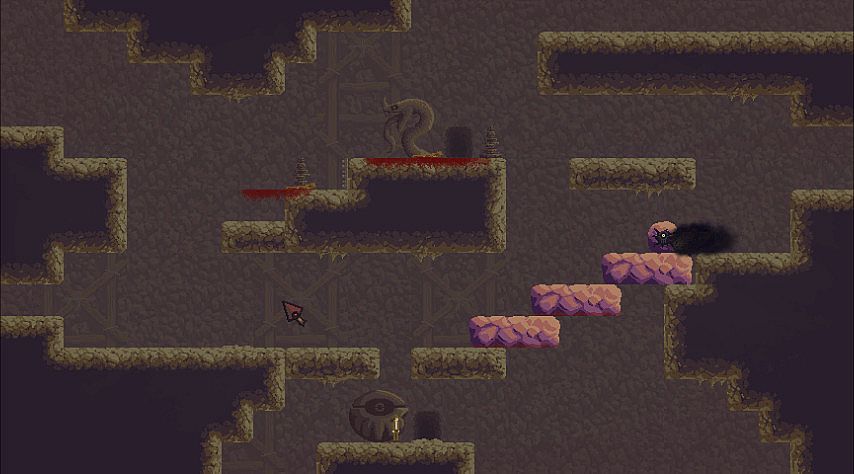
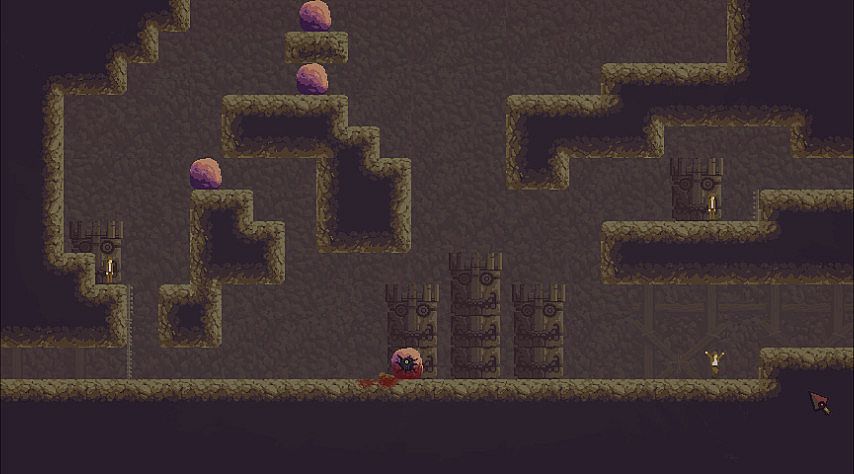
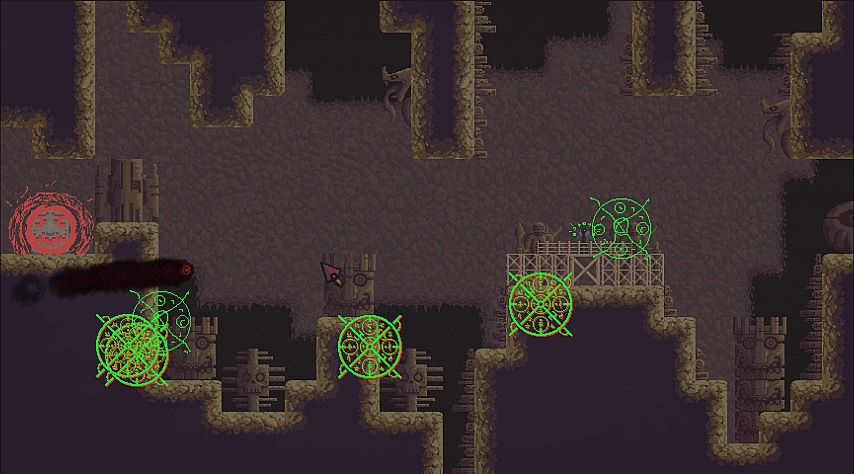
Movement stays confined to solid rock surfaces, forcing players to plan routes around gaps and obstacles. Boulders scattered throughout the caverns serve as the primary means of navigation and elimination. Rolling or positioning these rocks lets the monster reach new areas or crush targets directly. Later stages introduce teleportation as an additional tool that expands options for crossing distances or repositioning quickly. Each level presents a single-screen layout where the goal remains consistent: clear the area of all archaeologists without leaving any survivors. Difficulty ramps through tighter spaces, more complex boulder interactions, and the need to chain multiple actions in precise sequences. The non-linear map allows players to tackle stages in varying orders once unlocked, encouraging experimentation with different approaches to the same puzzle.
Game Modes
The game operates entirely in a single-player format centered on its campaign of puzzle levels. There are no separate competitive or cooperative modes. Progression follows a straightforward structure of completing levels to advance, with the ability to revisit any previously cleared stage at any time. The map design supports flexible routing rather than a strictly linear path, though each stage still demands a specific solution to succeed. This setup keeps the focus on individual problem-solving across dozens of challenges without branching into other play styles.
Story and Progression
Beating levels gradually unlocks story notes that piece together the background of the ruins and its inhabitants. These documents cover the archaeologists' expedition, hints at a secretive group operating behind the scenes, and fragments about the monster's own origins. The narrative unfolds passively through collection rather than cutscenes or dialogue, rewarding completion of tougher puzzles with additional context. Over fifty levels provide the bulk of the content, supported by more than twenty-five notes that expand the lore without requiring extra gameplay systems.
Is It Worth Playing?
Players who enjoy deliberate, logic-heavy puzzles will find the core loop satisfying due to its emphasis on spatial manipulation and incremental discovery of mechanics like boulder physics and teleportation. The challenge level stays consistently high, with many stages requiring repeated attempts and precise timing. Reception highlights the game's focused design and the satisfaction of solving its devious setups, though some note its brevity as a complete package. It suits those seeking a self-contained indie experience rather than ongoing content updates or multiplayer elements. Availability on PC makes it accessible for anyone interested in short-session puzzle solving with a unique monster perspective. The combination of verified mechanics and story delivery through notes gives it lasting appeal for fans of the genre who appreciate tight, inventive level design over expansive worlds or frequent patches.














