
















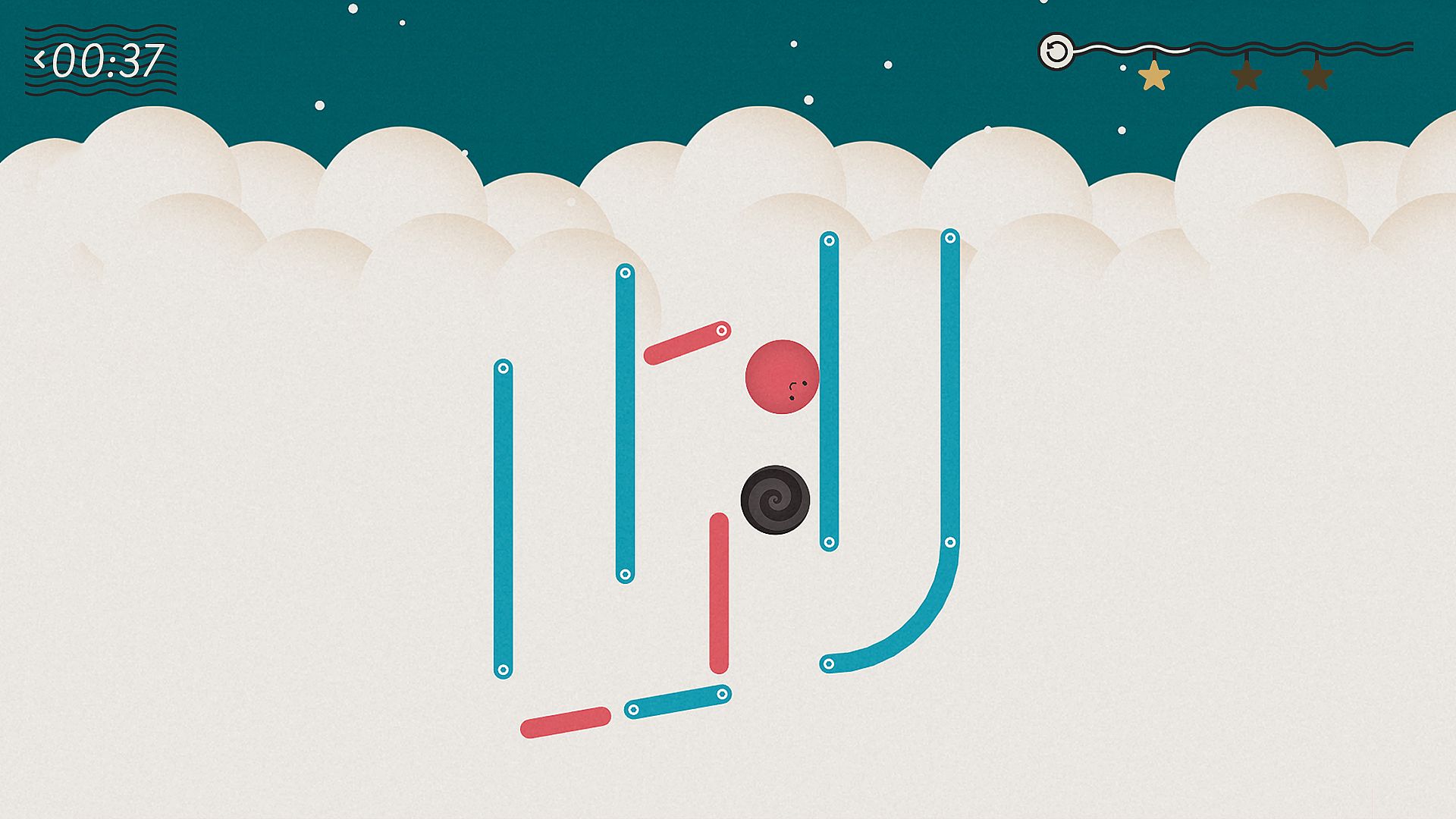

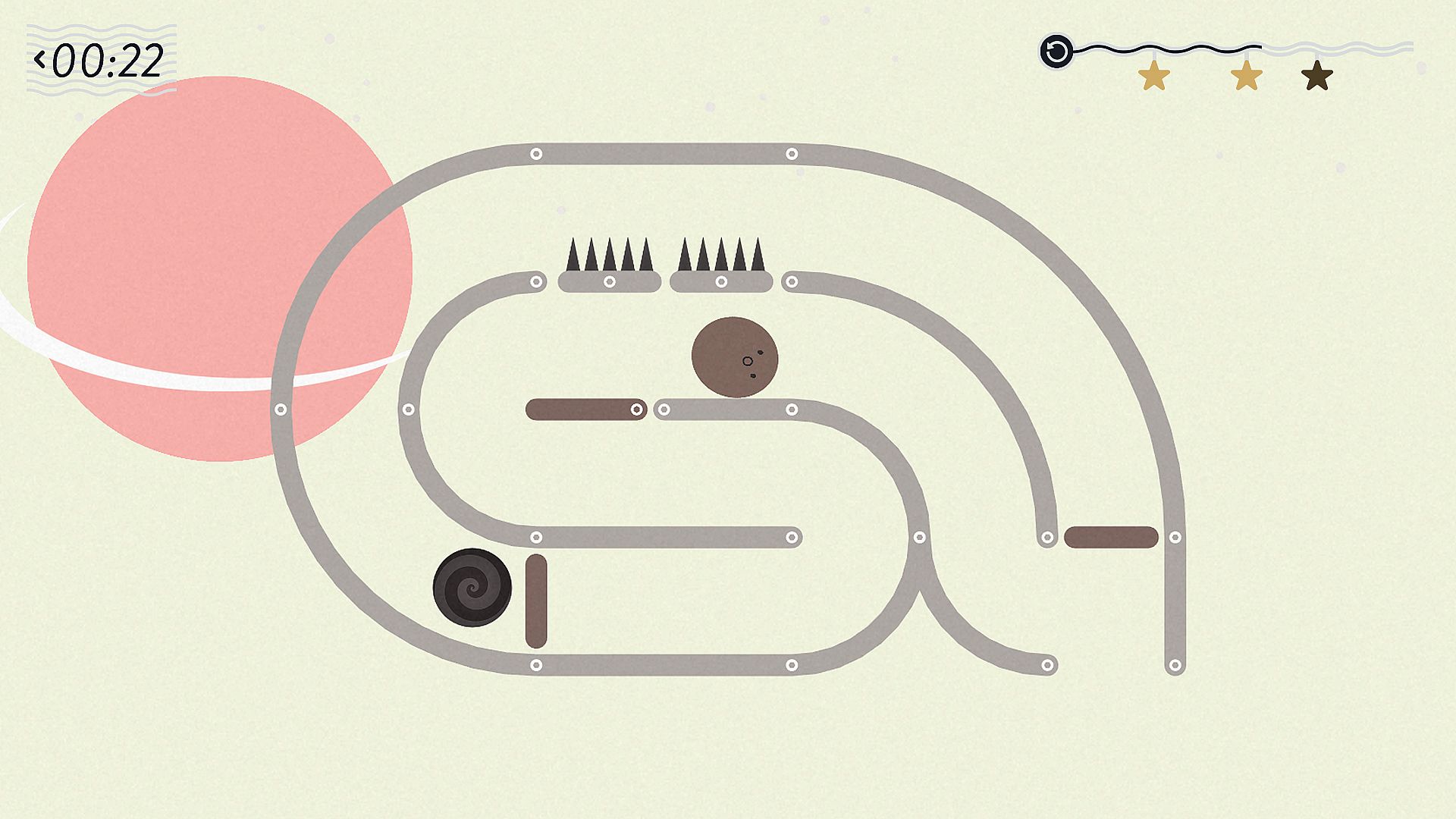
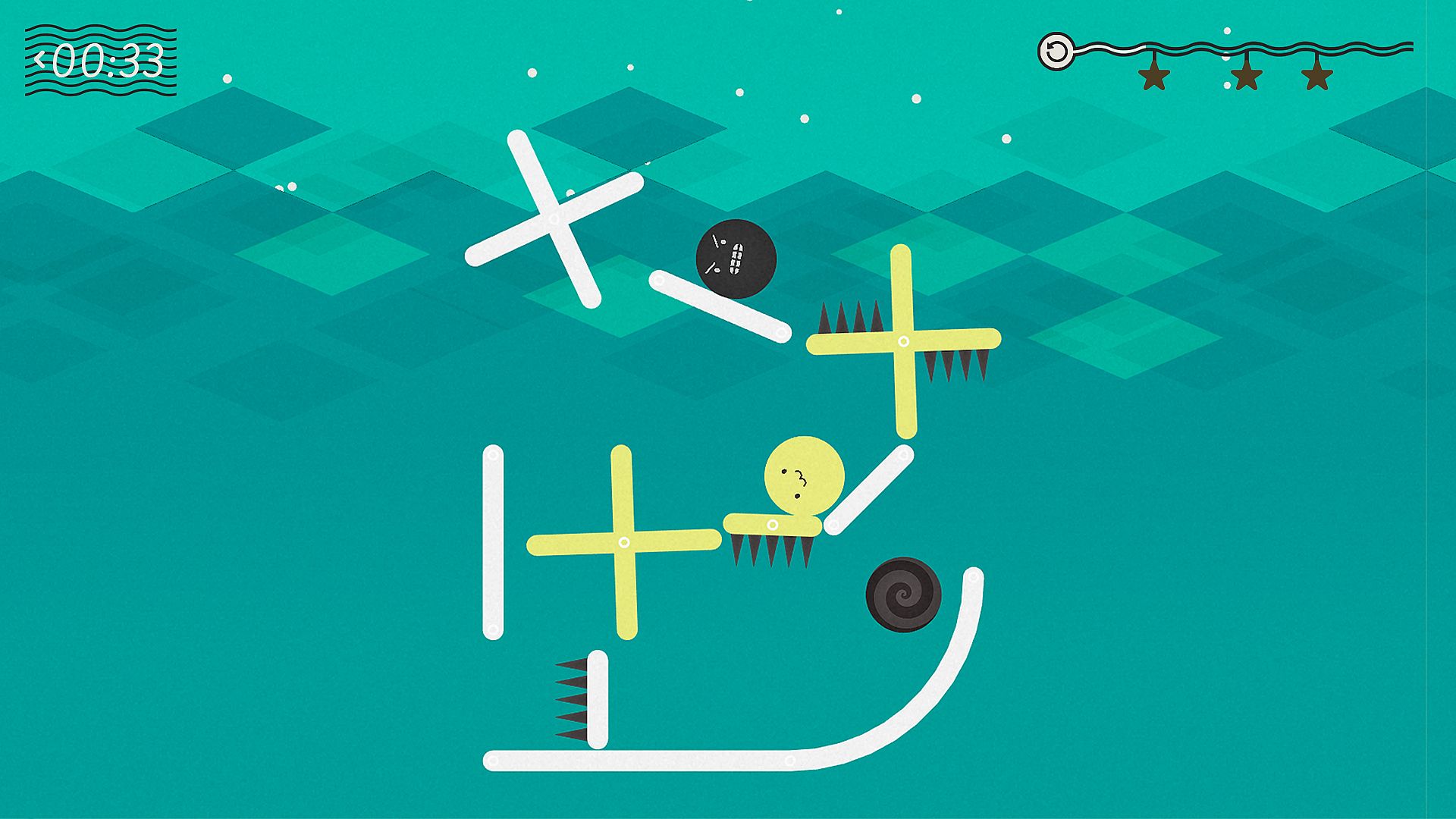

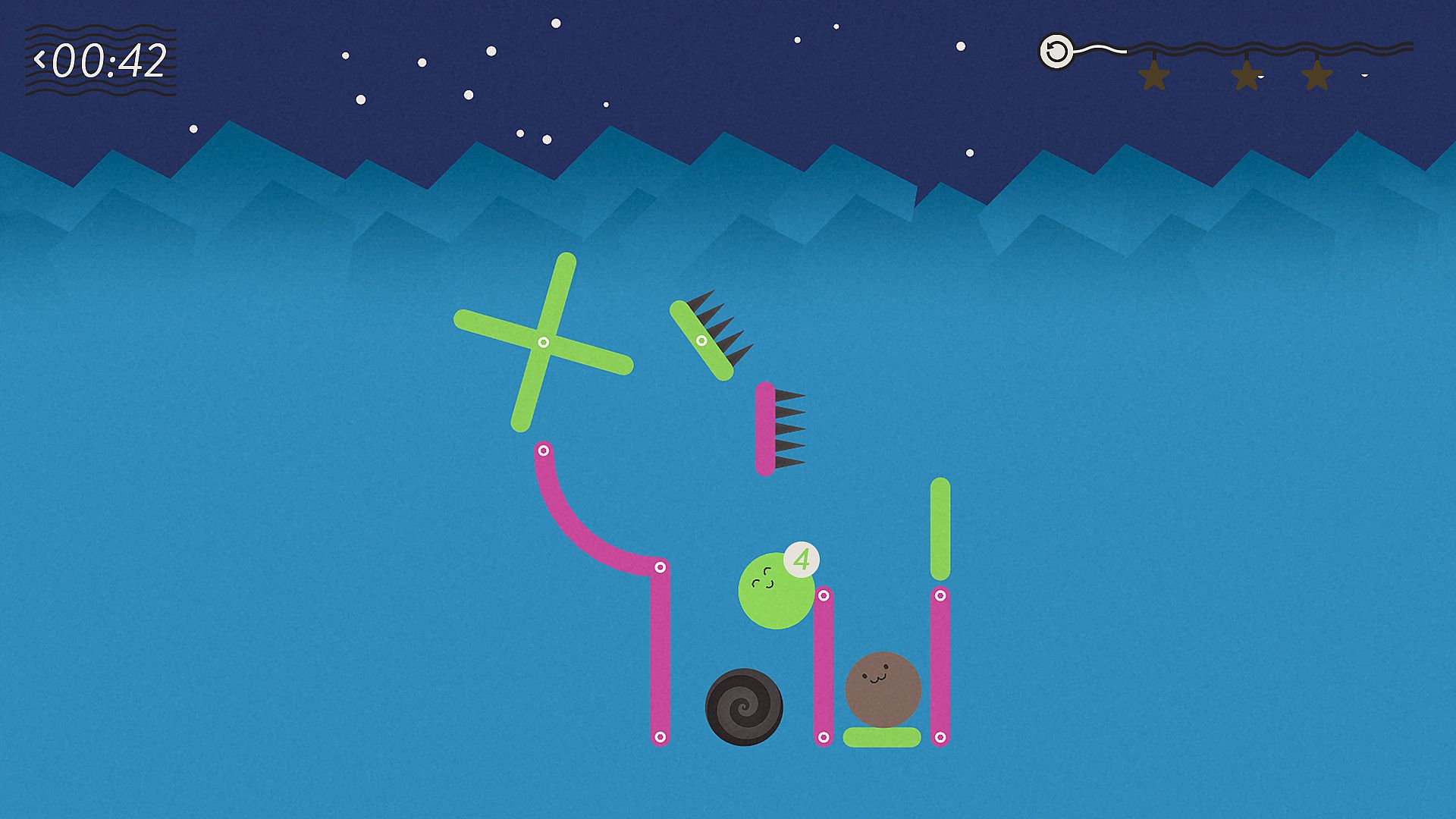
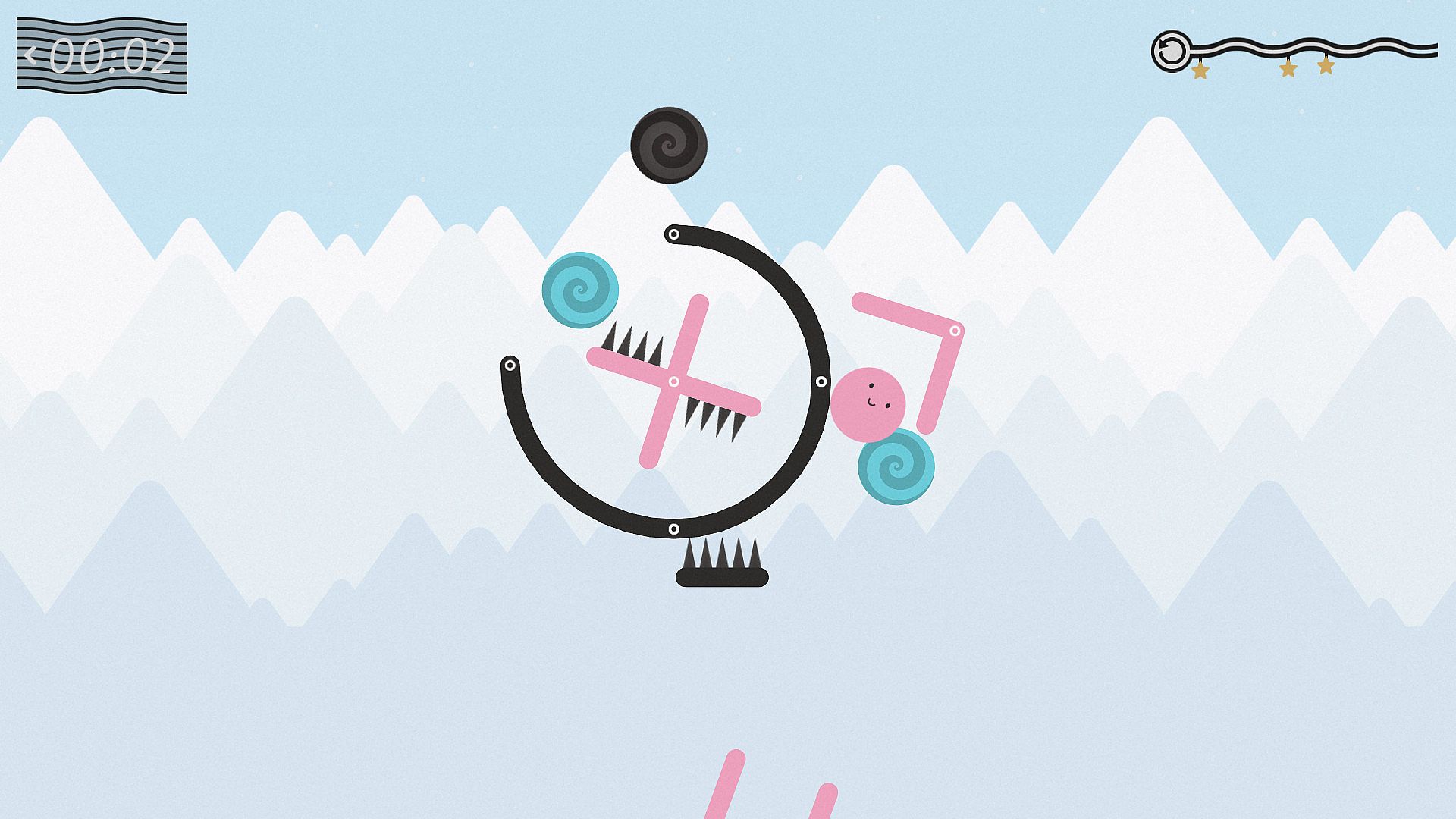
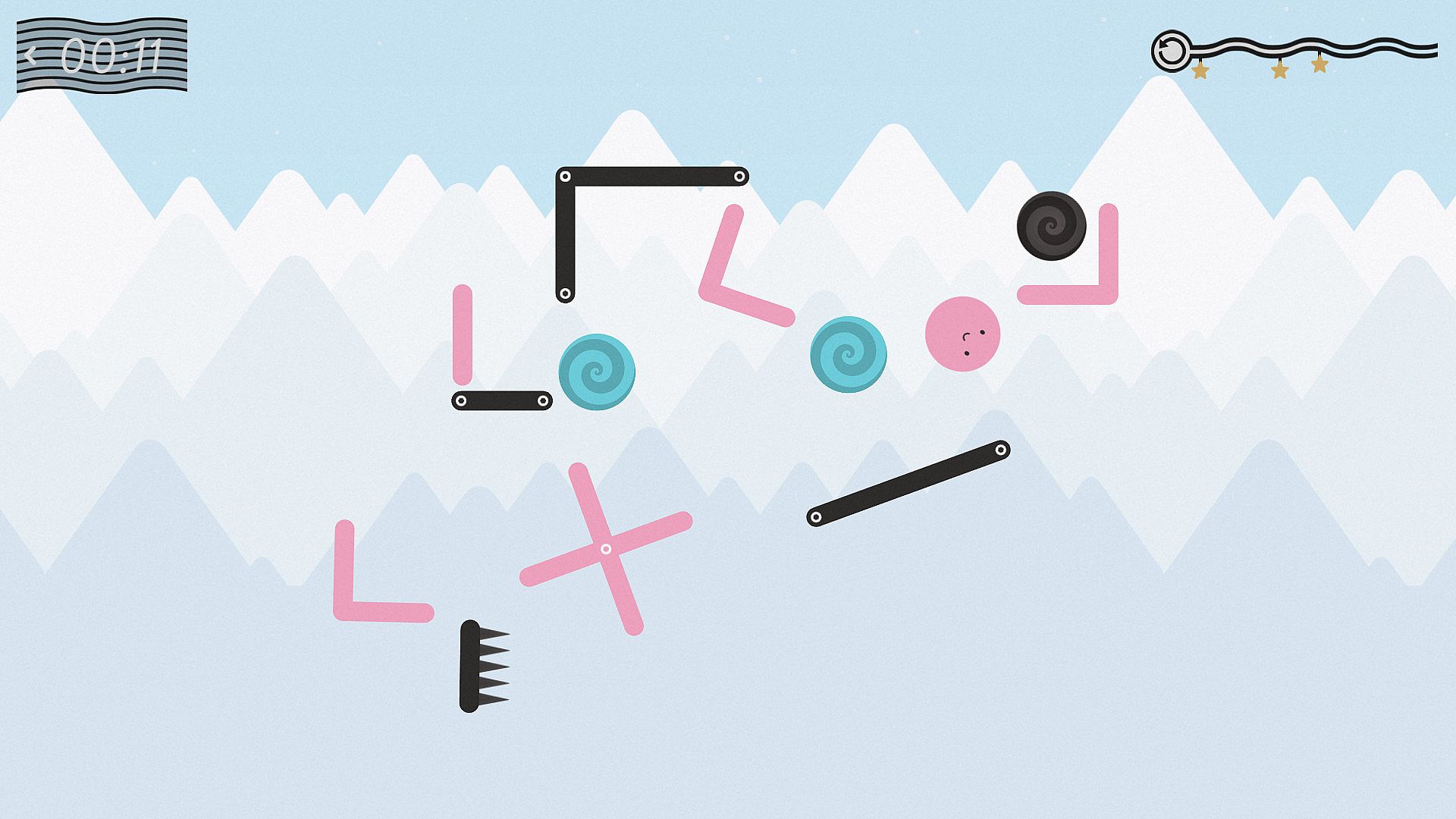
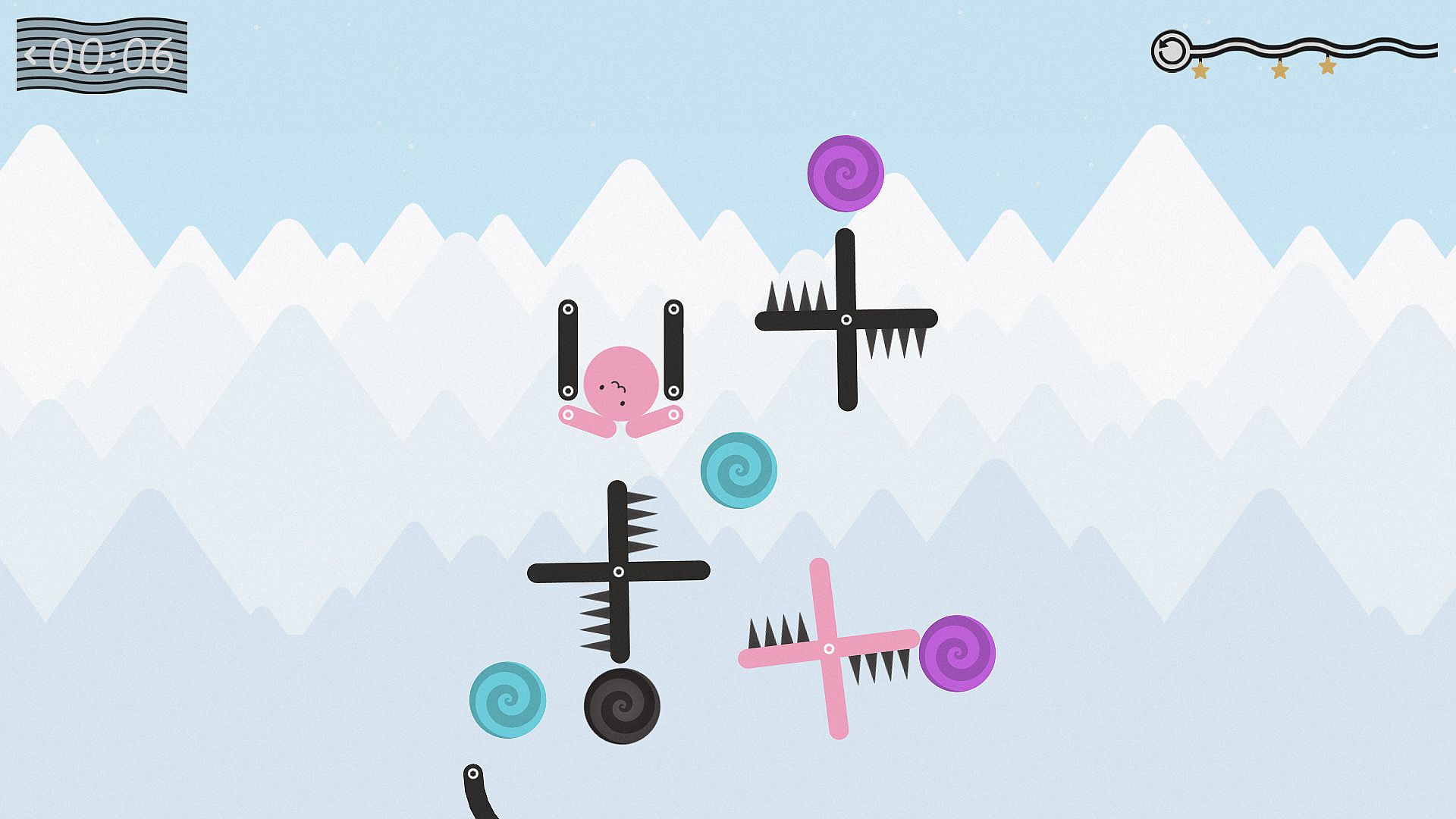






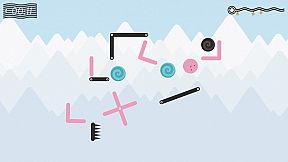
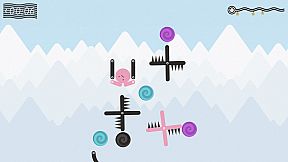
Tales of the Tiny Planet is an indie casual adventure game built around physics-based puzzle mechanics on PC. Players guide a small planet through space by activating mechanisms that alter the environment, helping it reunite with lost friends scattered across galaxies. The core loop relies on precise timing rather than complex controls, as a single button activates groups of devices to propel the planet safely toward portals.
Gameplay
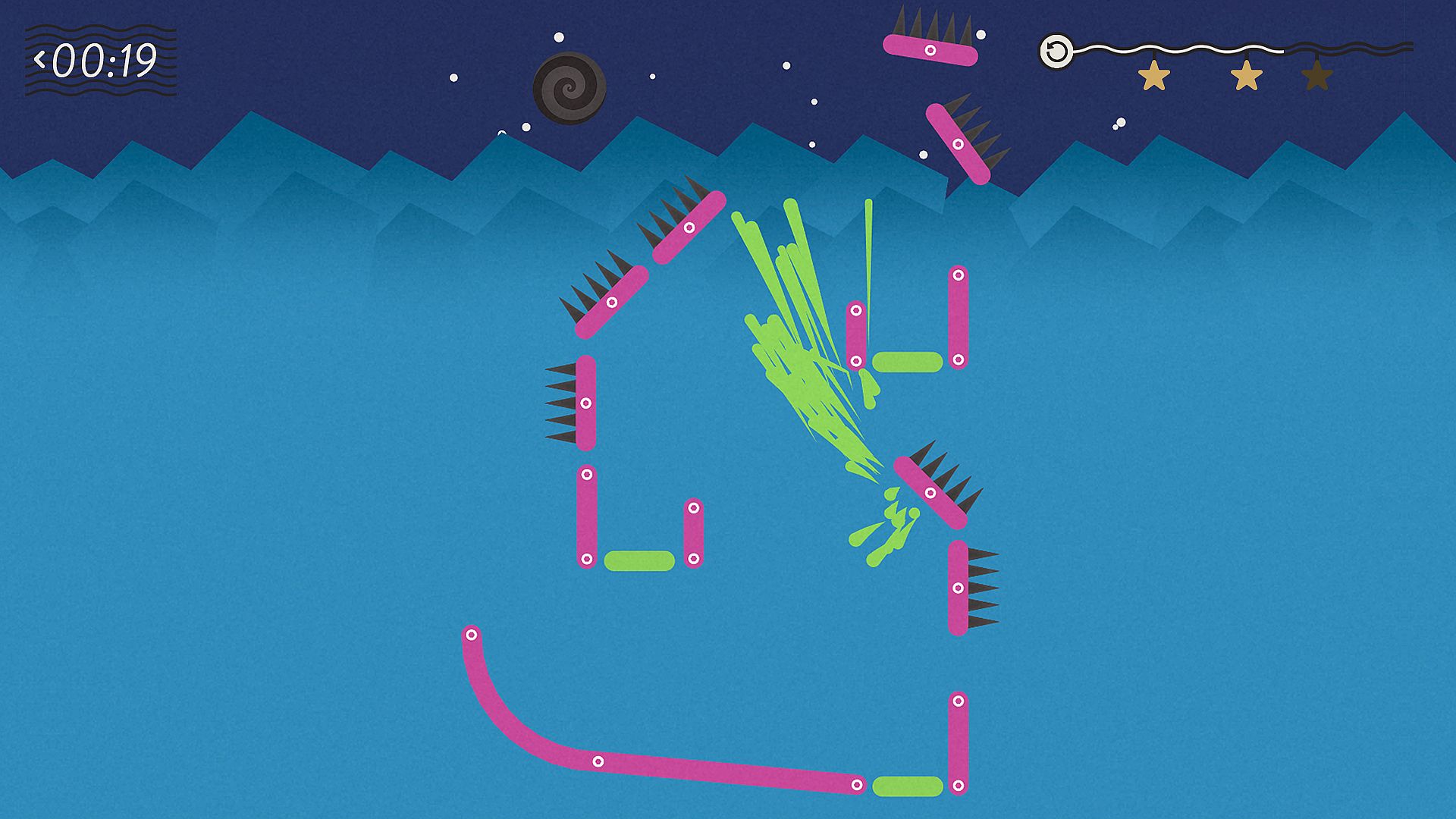
The central mechanic involves one button that triggers multiple environmental interactions at once. Pressing it at the right moment launches the planet, rotates platforms, or activates gravity shifts to navigate hazards and reach the exit portal. Levels demand careful observation of how each mechanism affects the planet's path, since mistimed inputs send it off course or into obstacles.
Each of the six worlds introduces fresh elements such as moving platforms, force fields, and variable gravity. These additions build on the basic timing challenge without overwhelming the player. Progress comes from completing levels quickly to earn stars, which unlock additional stages and hidden content. The 72 standard levels plus 12 secret ones spread across the worlds provide a steady increase in complexity while keeping sessions short and focused.
Local cooperative play lets two players share control of the same mechanisms, requiring coordination on when to press the button. This mode adds a layer of communication to the otherwise solitary puzzle solving. Achievements track star collection and completion milestones, while rankings allow comparison of completion times with others.
Game Modes
The primary experience centers on story-driven puzzle levels where the goal is simply reaching the next portal. Players experiment with button timing to solve each stage, often retrying sections to find the optimal sequence of activations.
Time-attack elements appear through the star system. Faster completions yield more stars, which serve as keys to later worlds and secret levels. This encourages repeated playthroughs of earlier stages to improve performance.
Local cooperative mode supports two players working together on the same set of levels. Both participants influence the shared mechanisms, turning solo timing puzzles into joint efforts that reward synchronized button presses.
Progression and Content
Advancement follows a linear path through the six worlds, with new mechanics appearing gradually. Stars collected from quick clears open the full roster of levels, including the twelve secret stages that offer extra challenges and surprises.
Additional features include a collection of achievements for various completion goals and leaderboards for time-based competition. The game emphasizes short, repeatable sessions over long campaigns, suiting players who enjoy refining solutions across multiple attempts.
Is It Worth Playing?
Player feedback highlights the game's accessible yet precise controls and charming presentation. Reviews describe it as relaxing for brief play sessions while still offering meaningful challenge in later worlds. With only a modest number of user reviews available, the overall sentiment remains positive, particularly among those who appreciate one-button physics puzzles.
The title suits casual players seeking bite-sized puzzle experiences and those who enjoy local cooperative play with a friend. Its straightforward structure and focus on timing make it approachable without requiring prior experience in the genre. Availability on PC allows easy access for anyone interested in this style of adventure.