






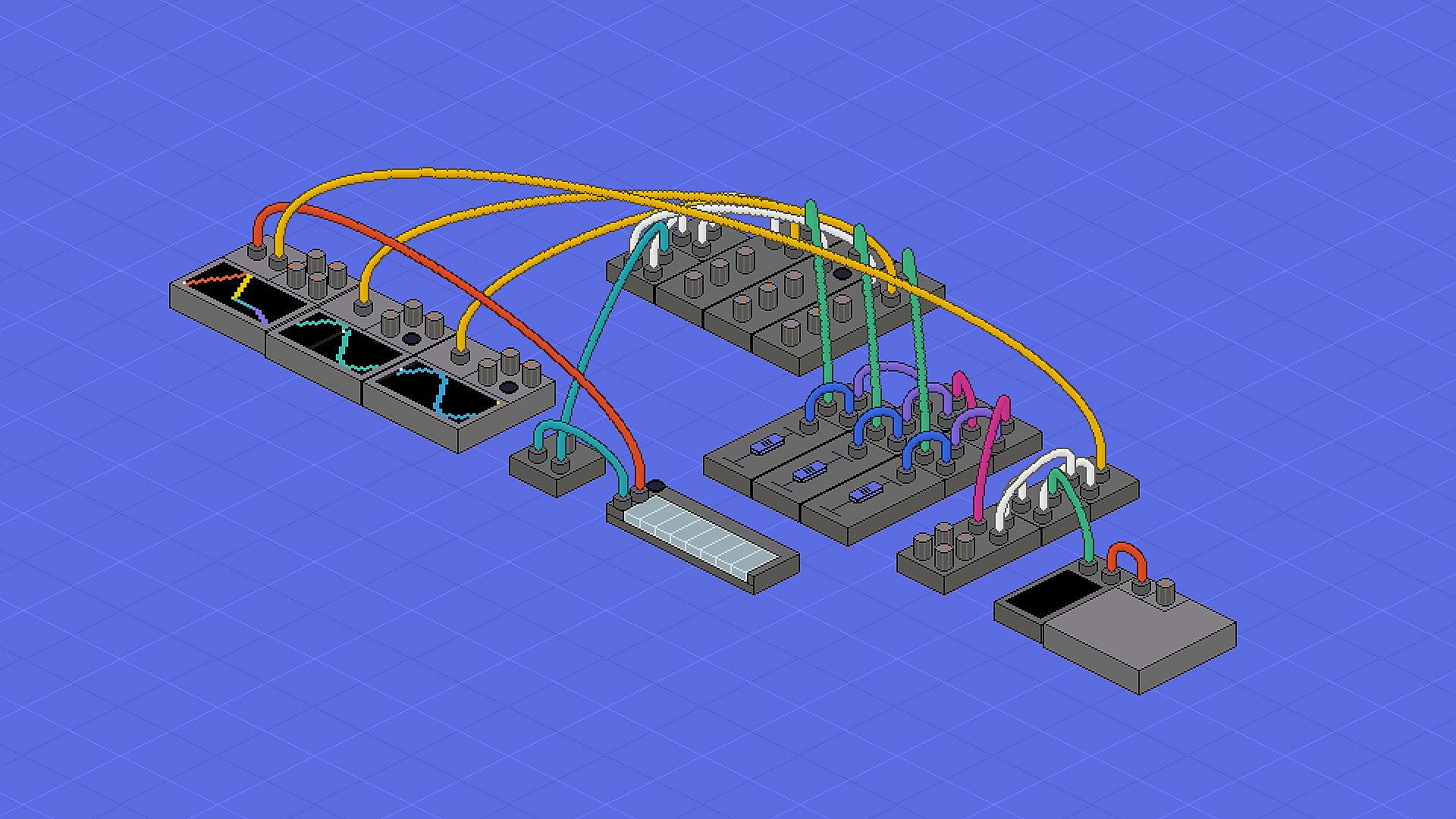
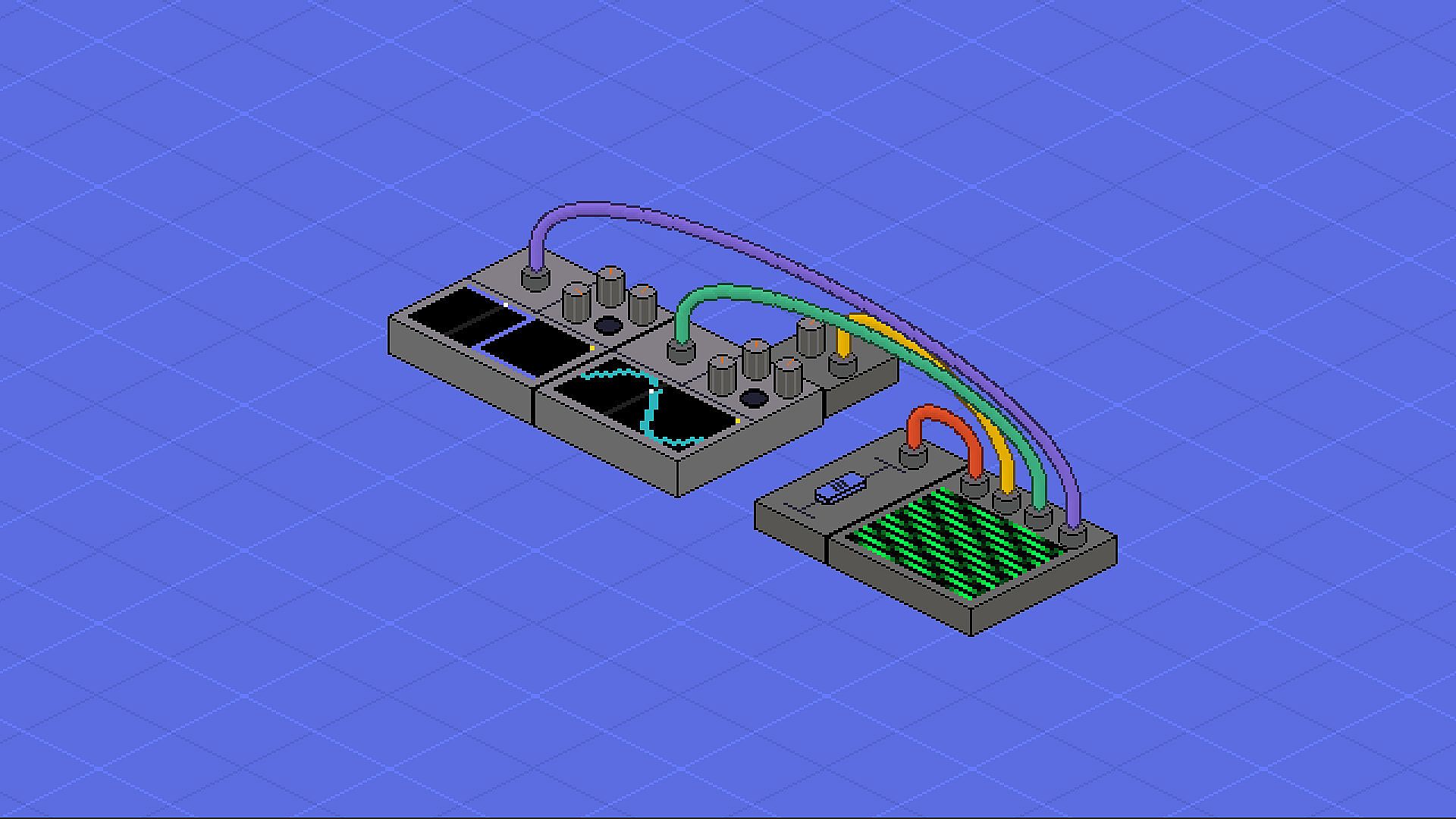
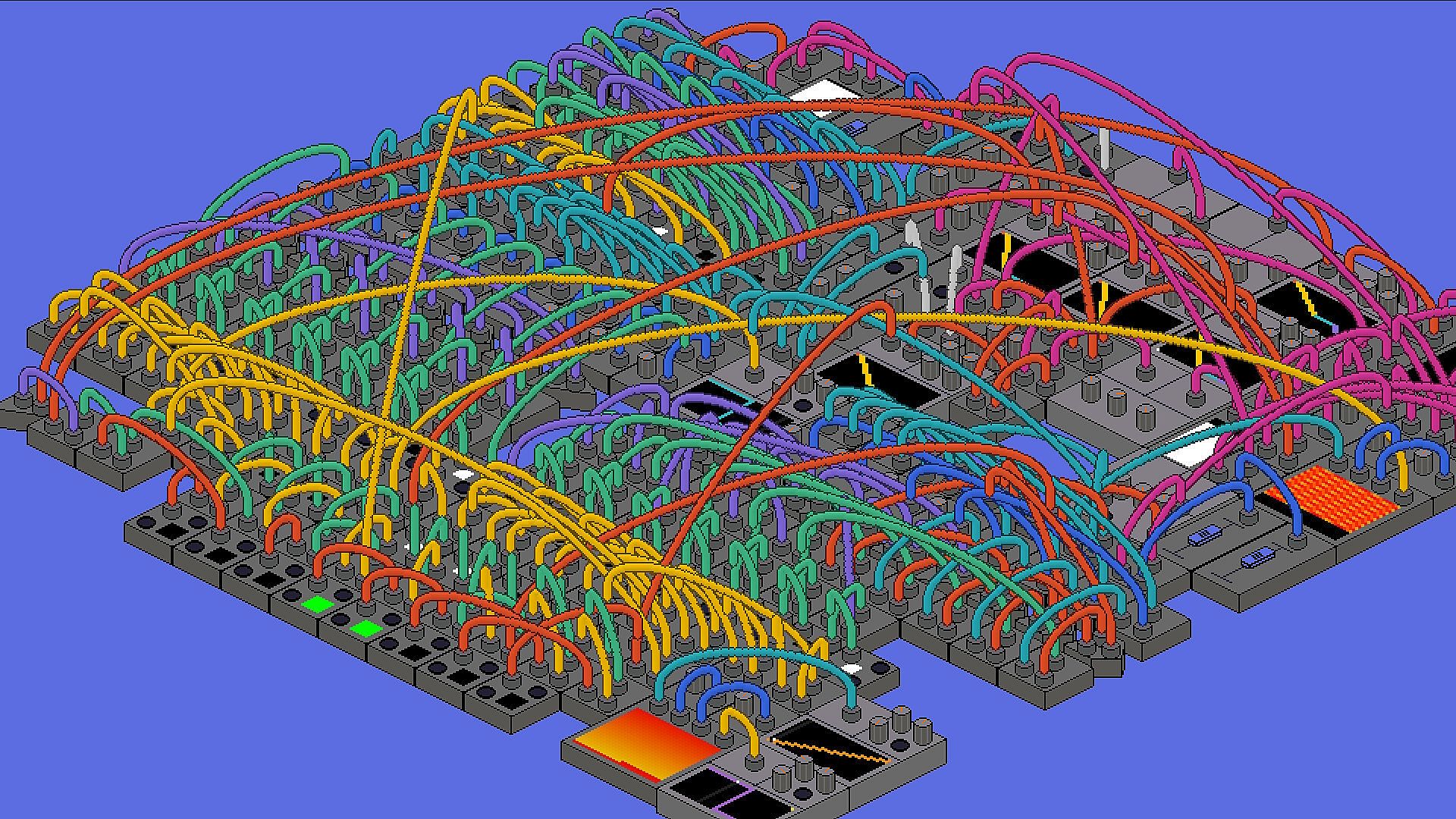
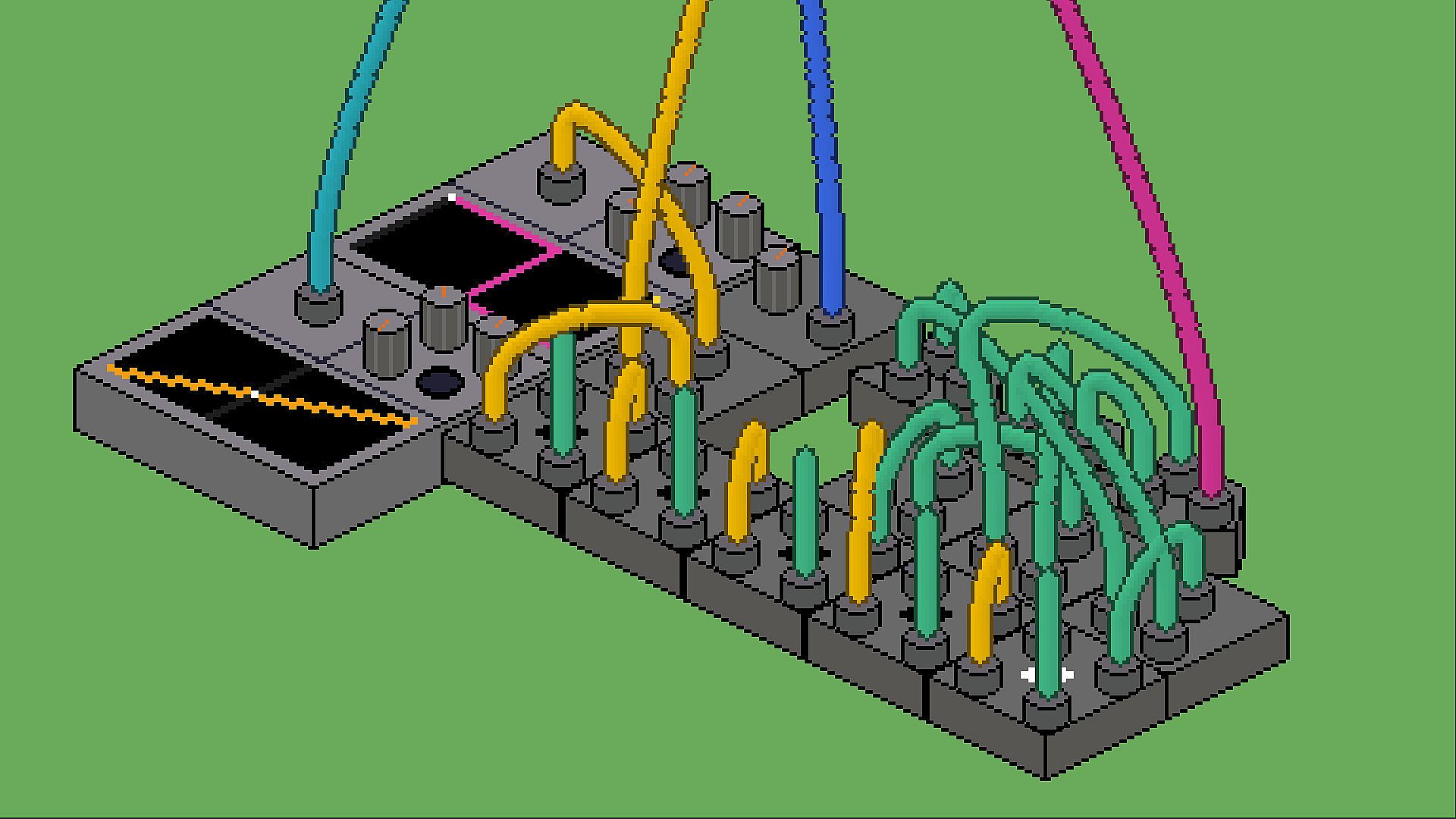
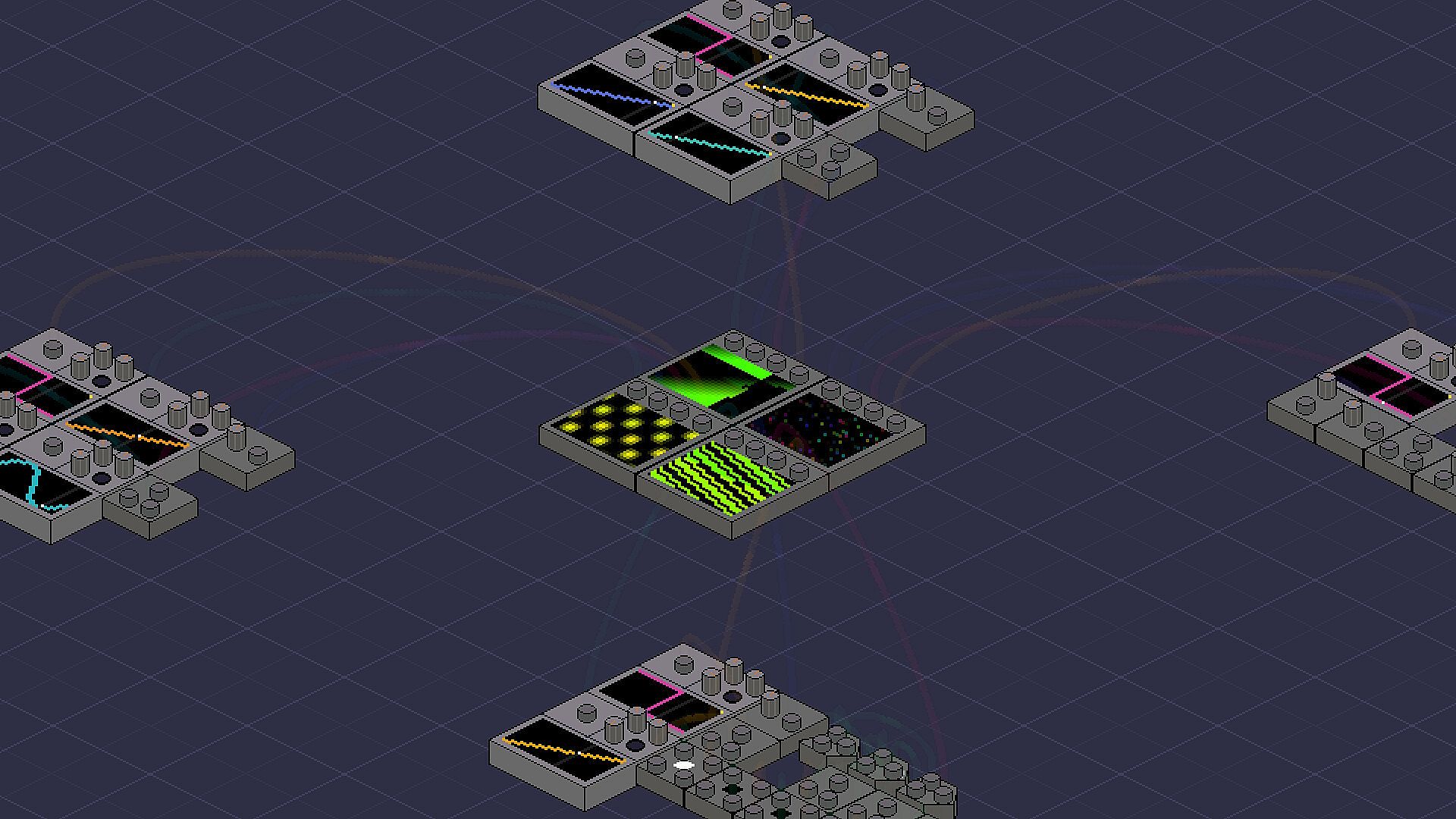
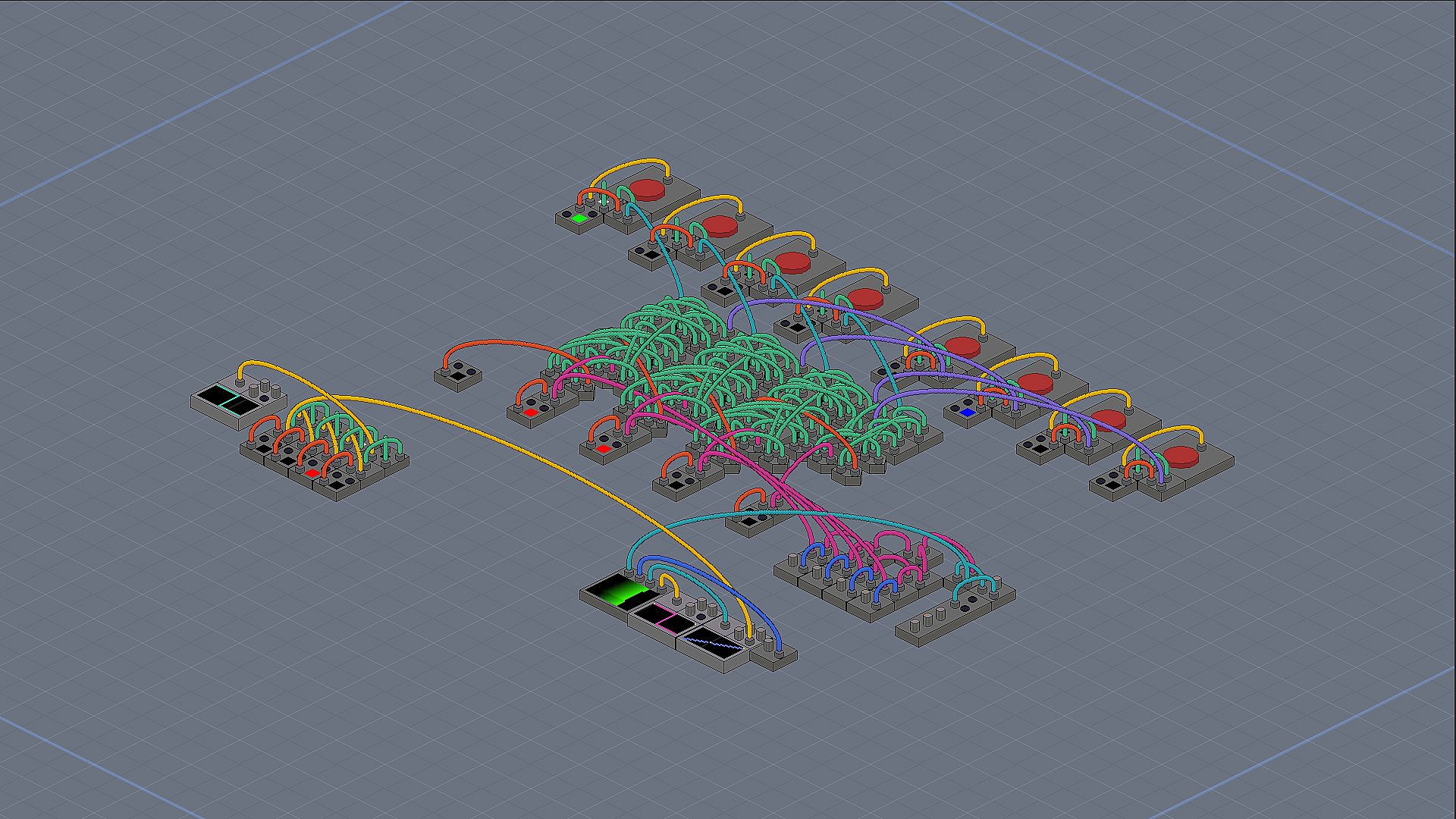
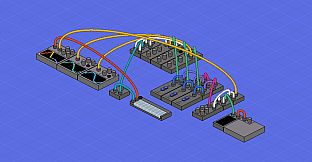
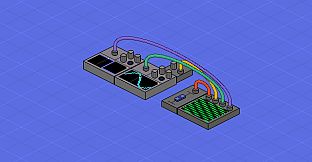
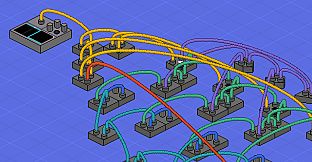
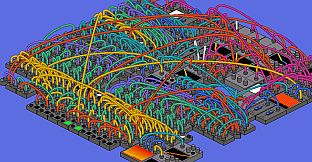
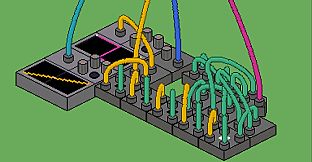
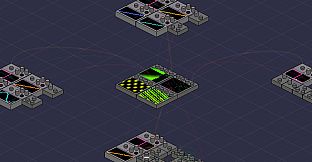
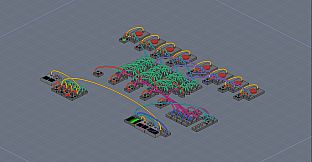
Signal Sandbox is an indie casual simulation game focused on analog electronics and creative construction. Players assemble contraptions from modular components in a pixel-art environment backed by a full analog simulation engine. The experience centers on connecting elements like buttons, knobs, faders, oscillators, screens, and logic gates to produce visible and audible results, from digital displays to working computers or synthesizers.
Gameplay
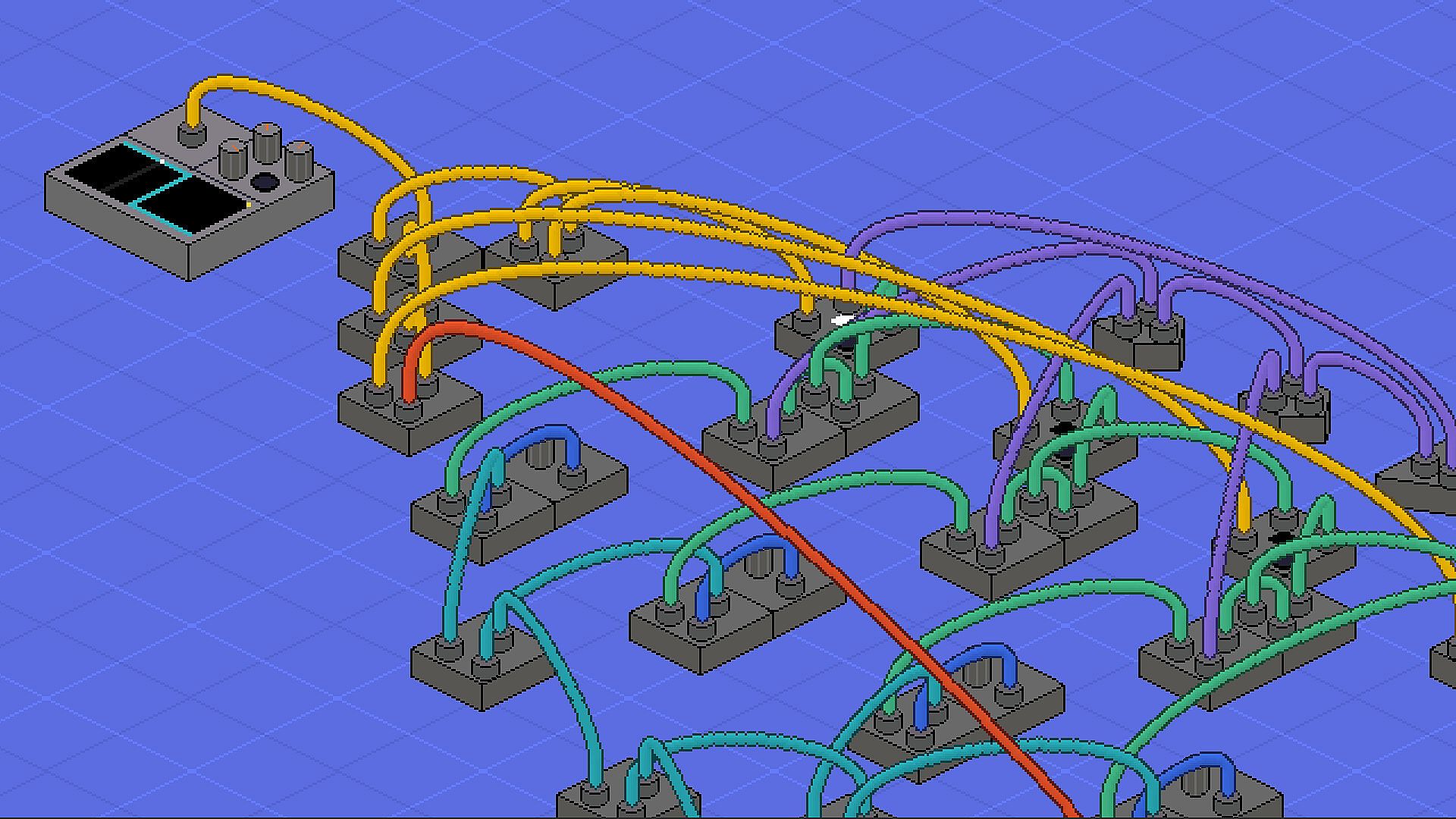
The core loop involves selecting from over 50 premade modules across categories such as music, logic, and electronics. Each module behaves according to realistic analog principles, and connections use a single wire type that carries any signal type. This design allows nearly any output to feed into any input, enabling chains that range from simple switches to complex audio synthesis or boolean operations.
Visual feedback appears on screens and indicators while audio emerges directly from hooked-up speakers or oscillators. The simulation runs at high fidelity, supporting real-time changes without predefined rules or failure states. Builders experiment freely, adjusting parameters on the fly to observe immediate effects in both sight and sound.
Pixel graphics emphasize clarity for small modules, making dense arrangements readable at a glance. The engine handles timing and signal propagation accurately enough to support projects like sequencers or basic computational circuits alongside purely musical setups.
Game Modes
Players work alone in a personal sandbox to prototype ideas at their own pace. Real-time multiplayer lets friends join the same session, where everyone manipulates modules simultaneously and sees changes reflected instantly for all participants.
Workshop integration provides access to community creations. Users load published builds to interact with them, test functionality, or modify the original design before saving personal versions. This sharing system supports both discovery of new contraptions and iterative collaboration without requiring live sessions.
Multiplayer sessions emphasize joint tinkering, whether refining a single large machine or splitting tasks across different sections of a build. The shared environment removes barriers between individual and group play, allowing seamless transitions between solo refinement and group input.
Creative Possibilities
Projects span audio-focused work such as synthesizers and effects chains to logic-driven displays or mechanical simulations. One wire system simplifies experimentation because signal compatibility never restricts connections. Builders often start with basic oscillators and expand outward, adding controls or outputs as ideas develop.
The absence of scoring or win conditions keeps attention on the act of assembly itself. Modules respond consistently to inputs, rewarding careful wiring and parameter tuning with predictable yet satisfying outcomes. This approach suits players who enjoy open-ended construction over structured objectives.
Is It Worth Playing?
Signal Sandbox suits anyone drawn to electronics tinkering, modular synthesis, or collaborative building in a low-pressure setting. Its Early Access status means the feature set continues to expand through updates, with the current analog engine and module library already supporting substantial projects.
Those who value precise simulation and immediate feedback will find the systems rewarding, especially when sharing sessions with others or browsing community examples. The game appeals most to creative problem solvers comfortable with trial-and-error wiring rather than narrative or competitive elements.
Availability on PC makes it accessible for players with an interest in analog-style design tools presented through satisfying pixel visuals. Continued development keeps the experience fresh for returning builders who want to explore new modules or refine existing techniques over time.











