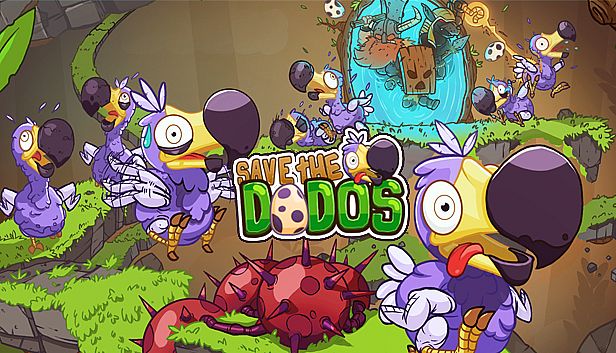













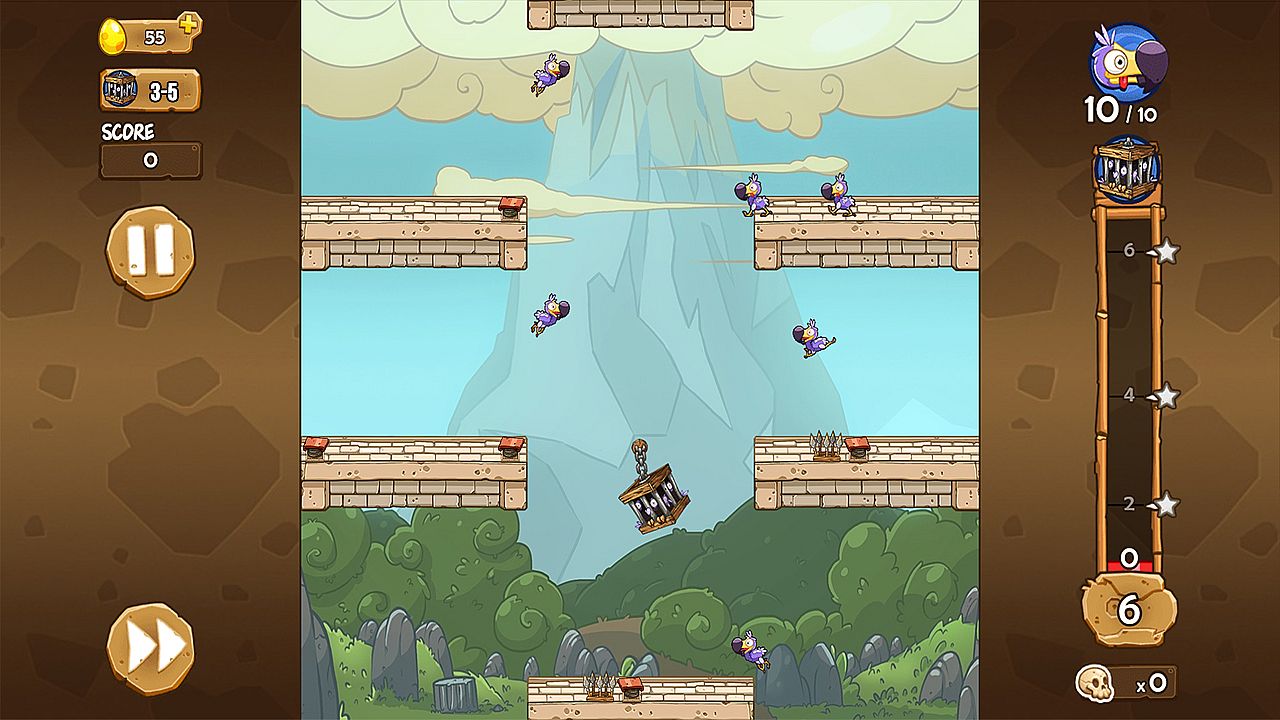
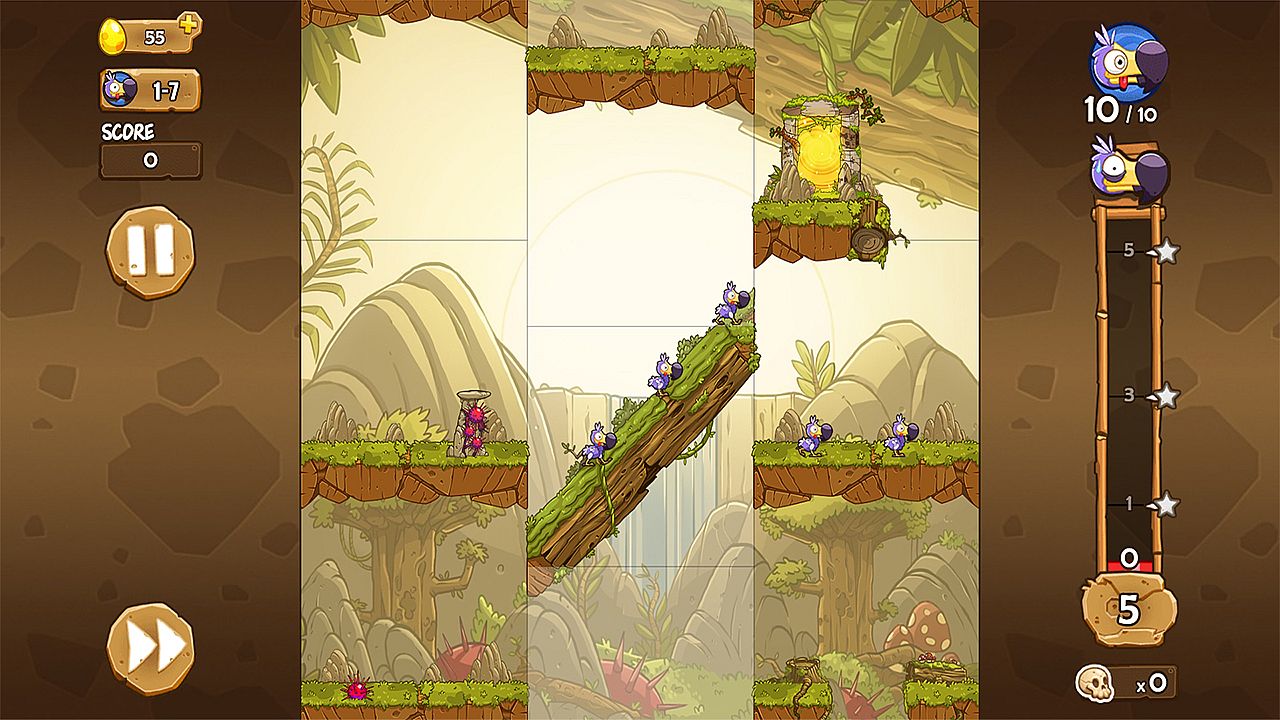
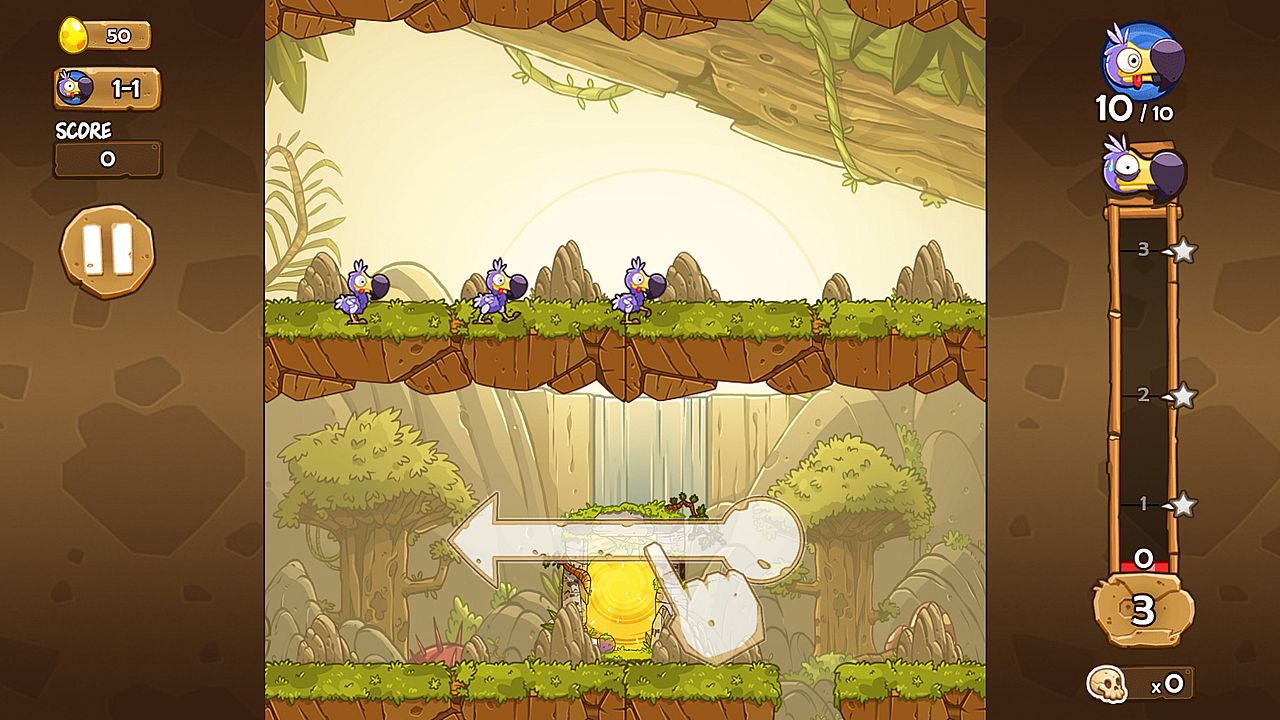


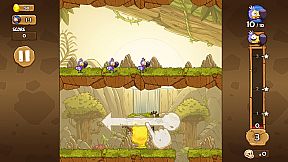
Save the Dodos is a casual indie puzzle game for PC in which players reshape terrain to guide groups of dodos to safety across 100 levels. The premise draws from the historical extinction of the dodo bird, but the focus stays on puzzle solving rather than narrative. Dodos move on their own once levels begin, so direct control is impossible. Instead, the core loop centers on editing platforms, ramps, and obstacles with the mouse to create safe paths and prevent the birds from falling or getting stuck.
Gameplay
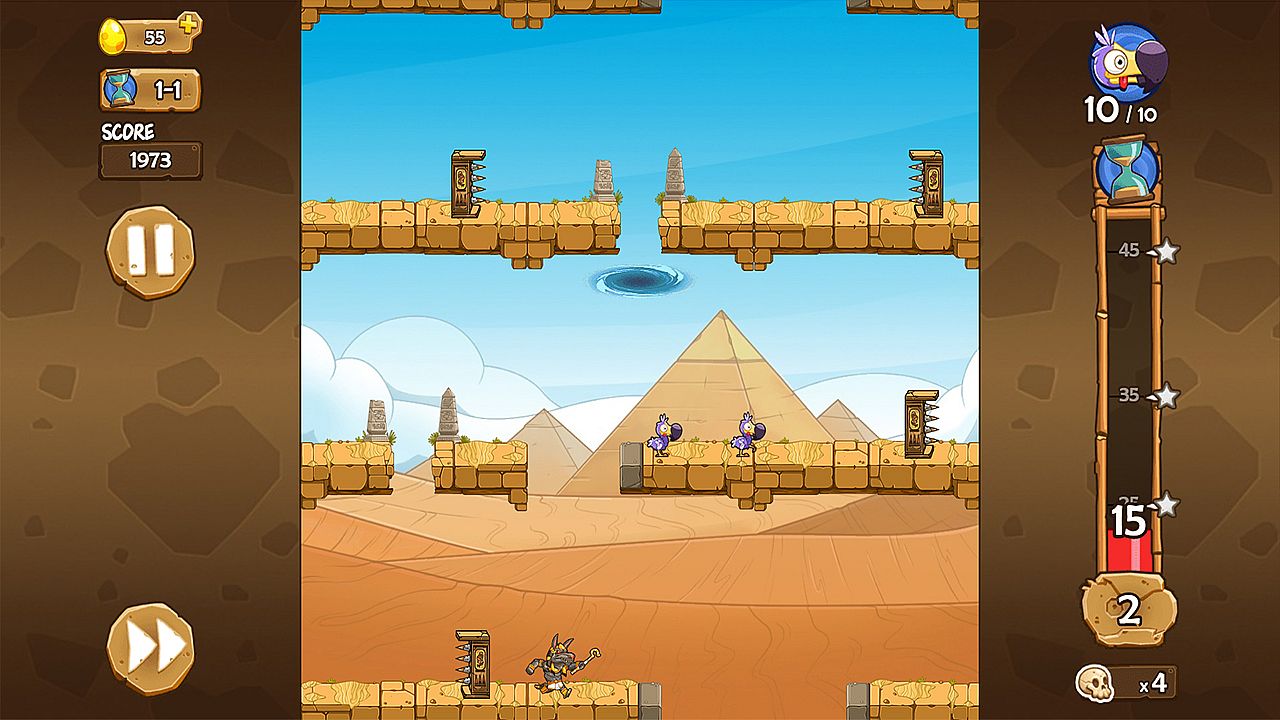
The mechanics emphasize careful planning and iterative adjustments. Levels begin with dodos entering from a starting point and heading toward an exit. Players observe their movement patterns and then modify the environment in real time or between attempts. This creates a loop of observation, modification, and testing that rewards patience and spatial reasoning. Four distinct worlds provide visual variety and increasing complexity: a prehistoric setting, ancient Egypt, classical antiquity, and a Viking north region. Four special dodos appear across the levels, each with unique traits that influence how paths must be arranged around them.
Progression moves through these themed areas with puzzles that grow more intricate as new obstacles and terrain types are introduced. The game runs at a relaxed pace suited to short sessions, and the low system requirements make it accessible on a wide range of PCs. Achievements track completion milestones and creative solutions without adding pressure.
Game Modes
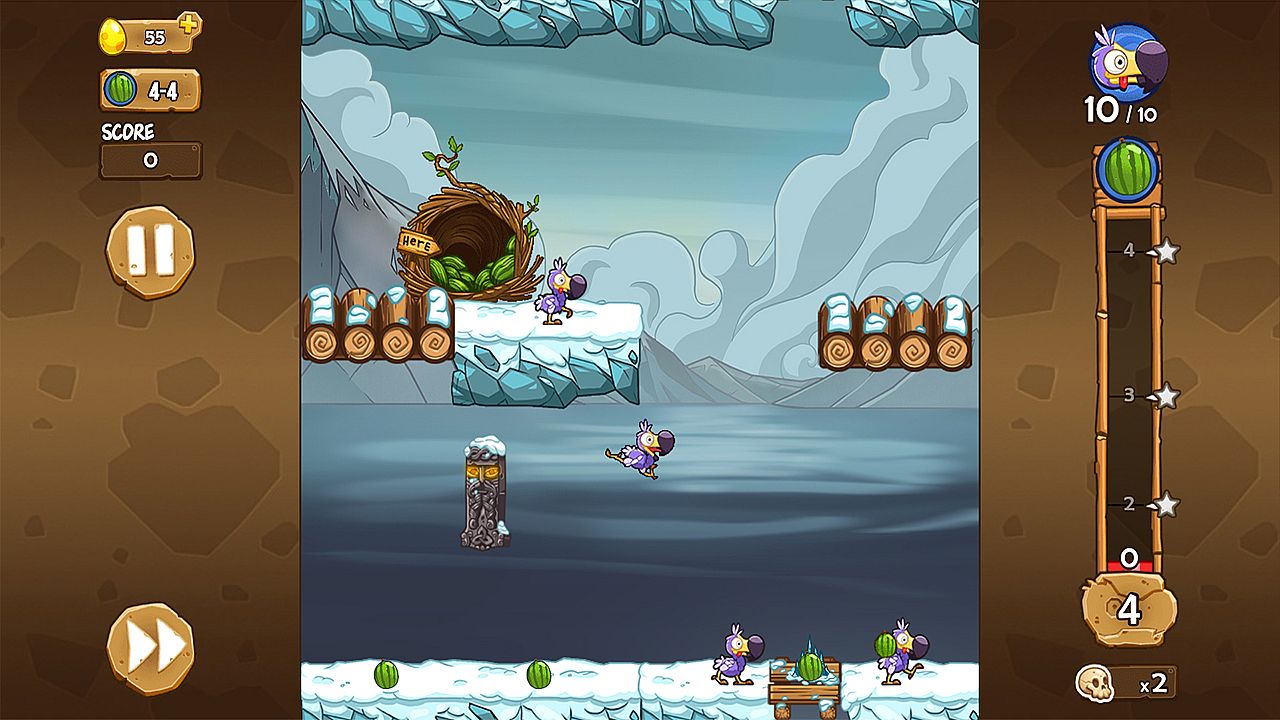
Four distinct modes expand the challenge beyond the standard campaign. Classic mode focuses on guiding every dodo to the exit in each level. Survival mode adds time pressure and requires keeping as many dodos alive as possible under stricter conditions. Rescue mode introduces specific targets that must be reached or protected. Collection mode shifts the goal toward gathering items scattered throughout the level while still ensuring dodo survival. These modes reuse the same core terrain-editing tools but alter win conditions and difficulty curves to encourage repeated play on familiar stages.
Worlds and Progression
The four worlds deliver themed backdrops that change the look of platforms and hazards without altering the fundamental rules. Early levels in the prehistoric world introduce basic ramp and bridge placement. Later stages in the Viking region incorporate ice, wind, and narrower paths that demand more precise edits. The 100 levels are divided across these areas, with gradual increases in the number of dodos and the complexity of required terrain changes. Special dodos appear at key points to force players to adapt routes around their particular behaviors.
Is It Worth Playing?
Player reception on Steam stands at Very Positive based on 153 reviews with an 88 percent approval rating. The game suits anyone who enjoys puzzle titles that reward observation and incremental problem solving rather than fast reflexes or combat. Its short levels and clear feedback make it approachable for casual players, while the multiple modes and special dodos provide enough variety for those seeking extra challenges. Released in 2016, it remains available as a complete single-player experience with no ongoing updates required. Those who like Lemmings-style mechanics or relaxed environmental puzzles will find consistent satisfaction in its straightforward design and steady progression.