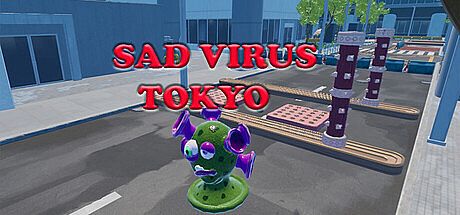



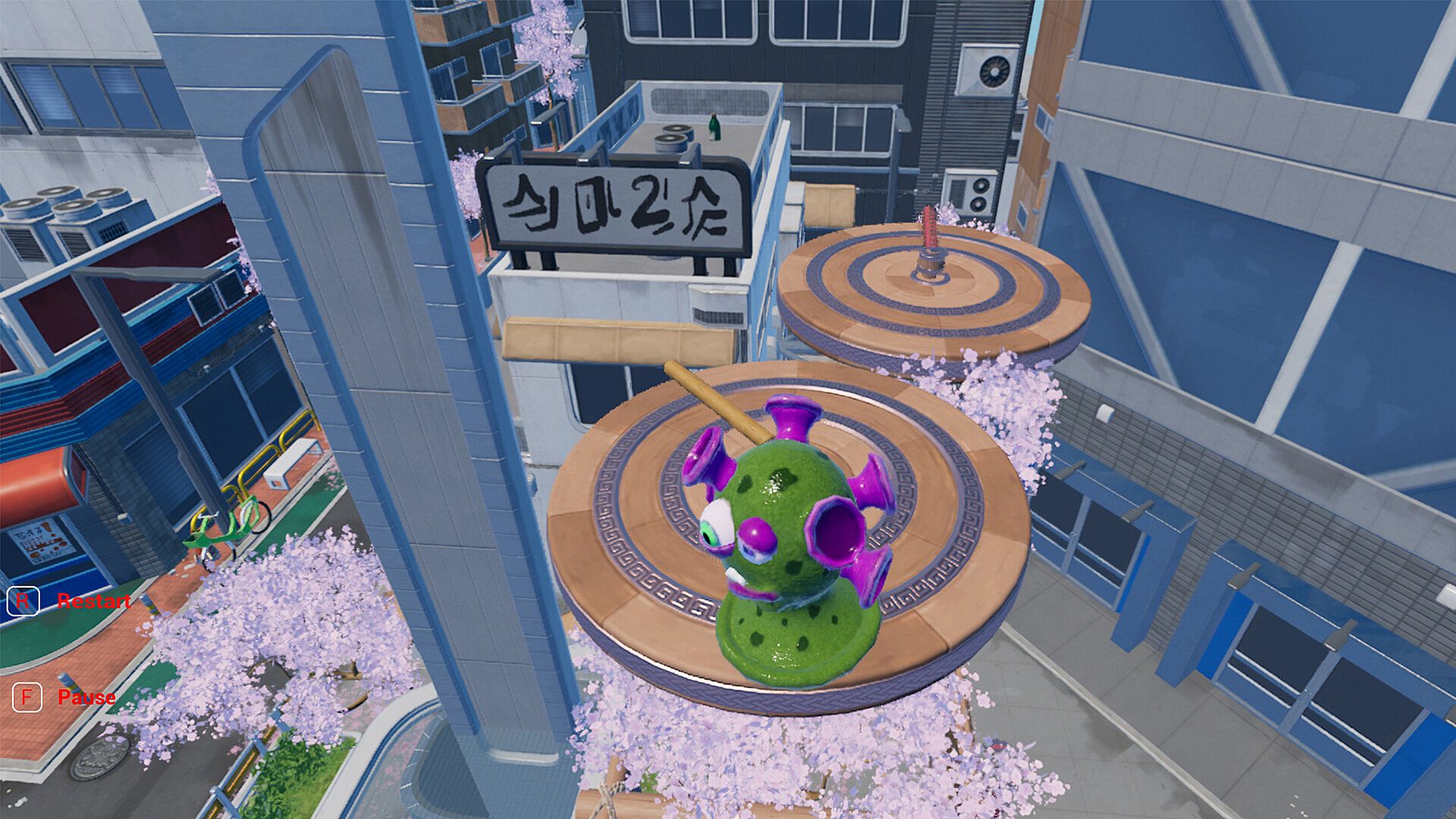
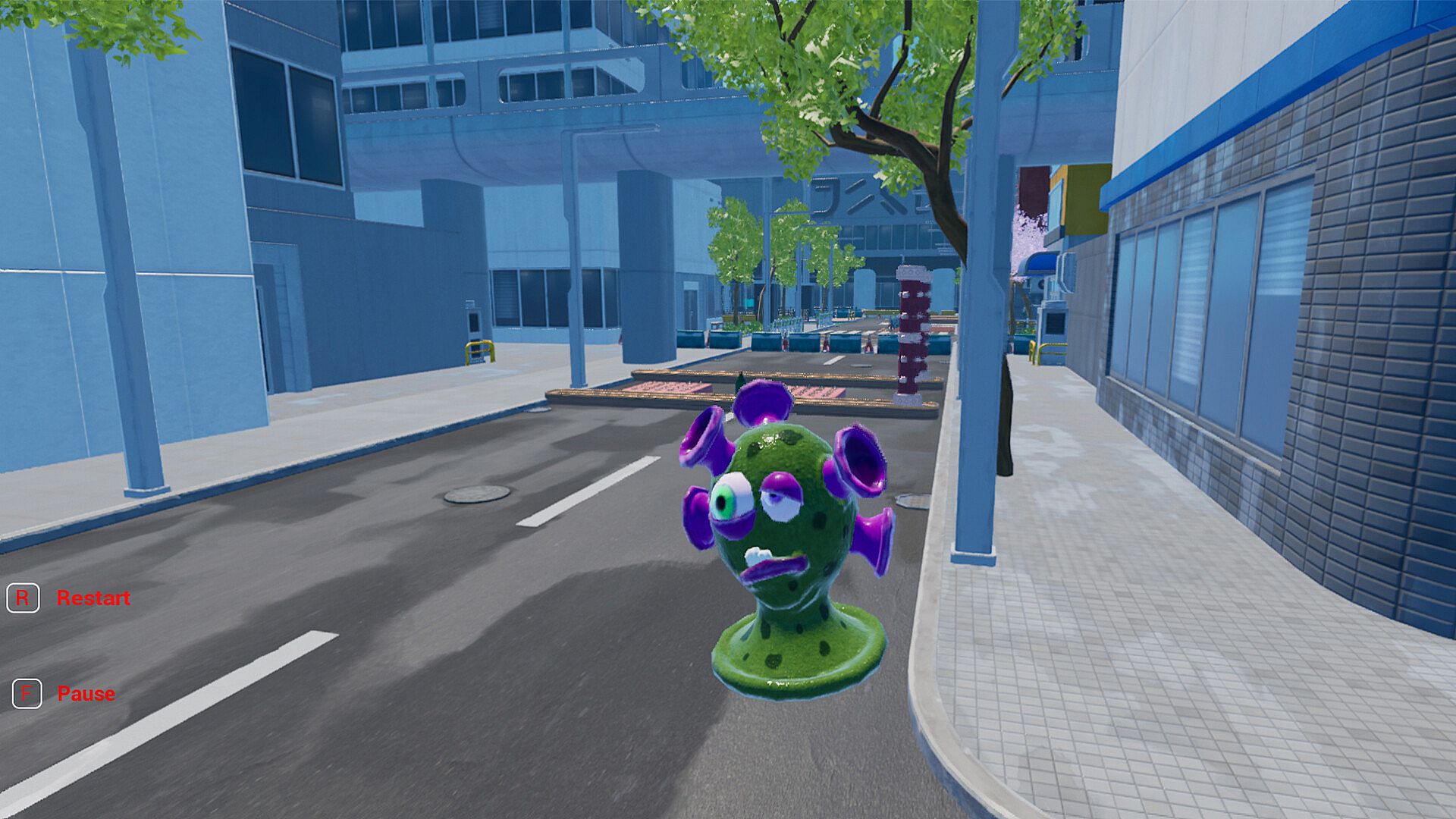
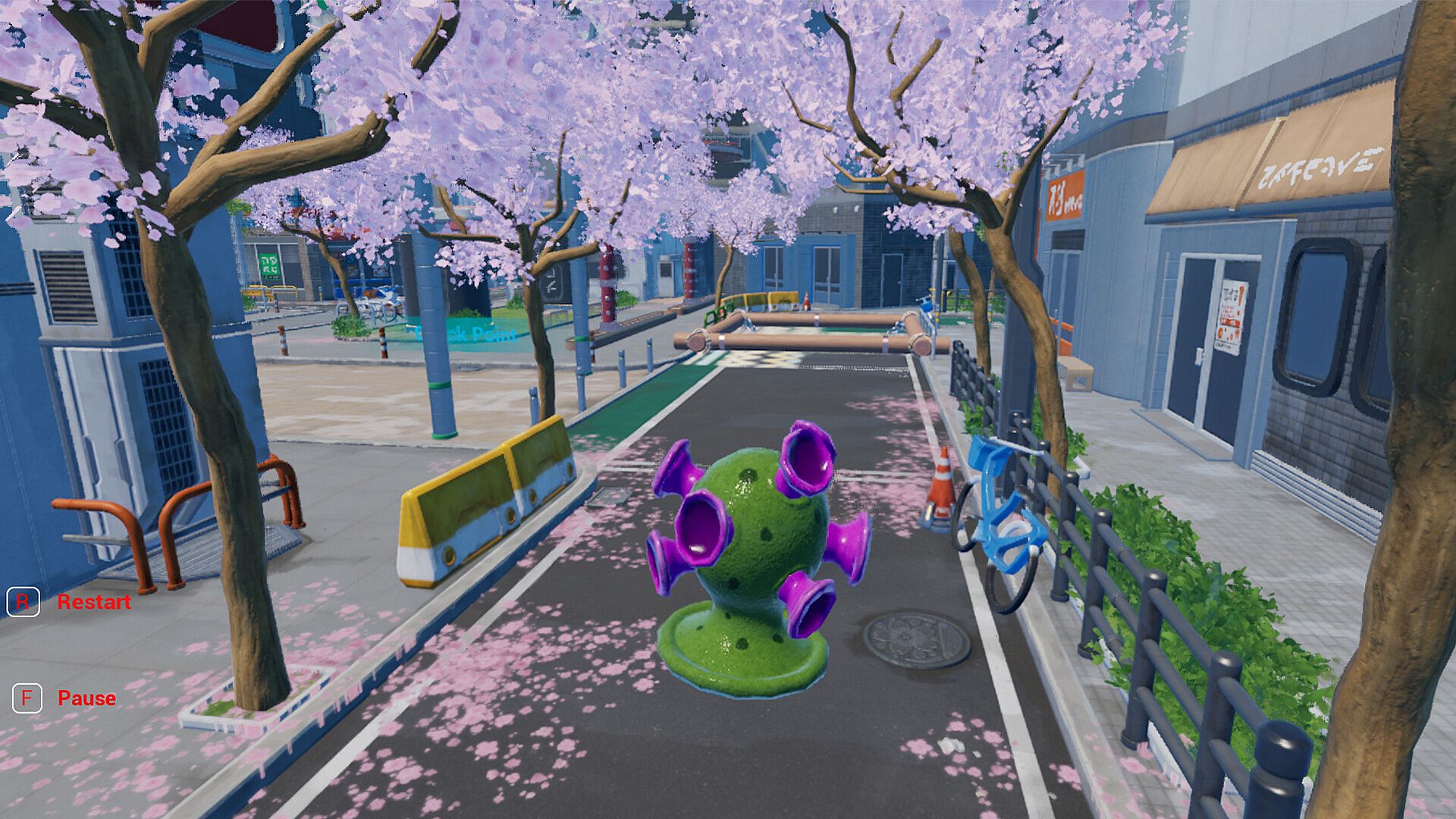
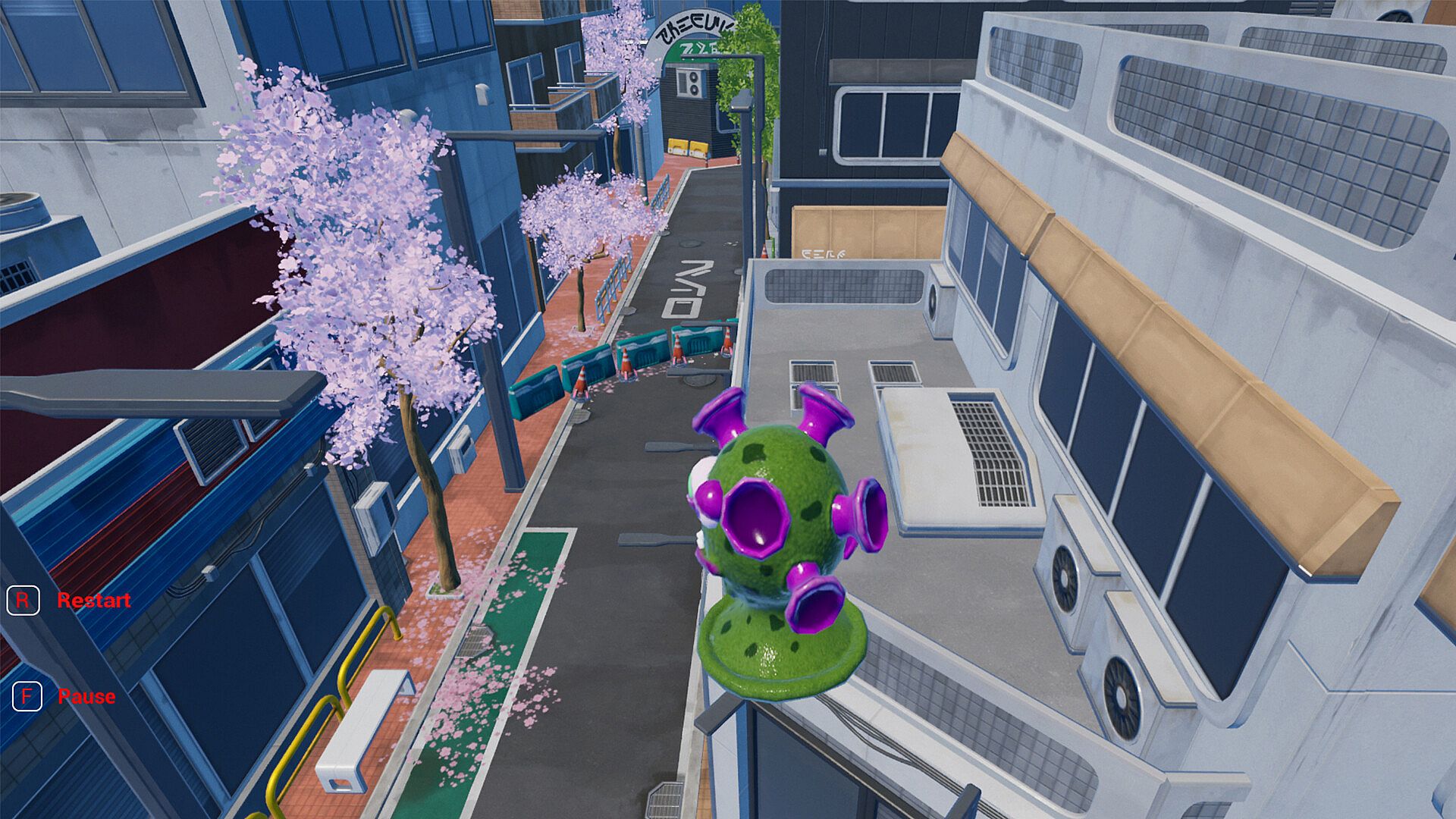
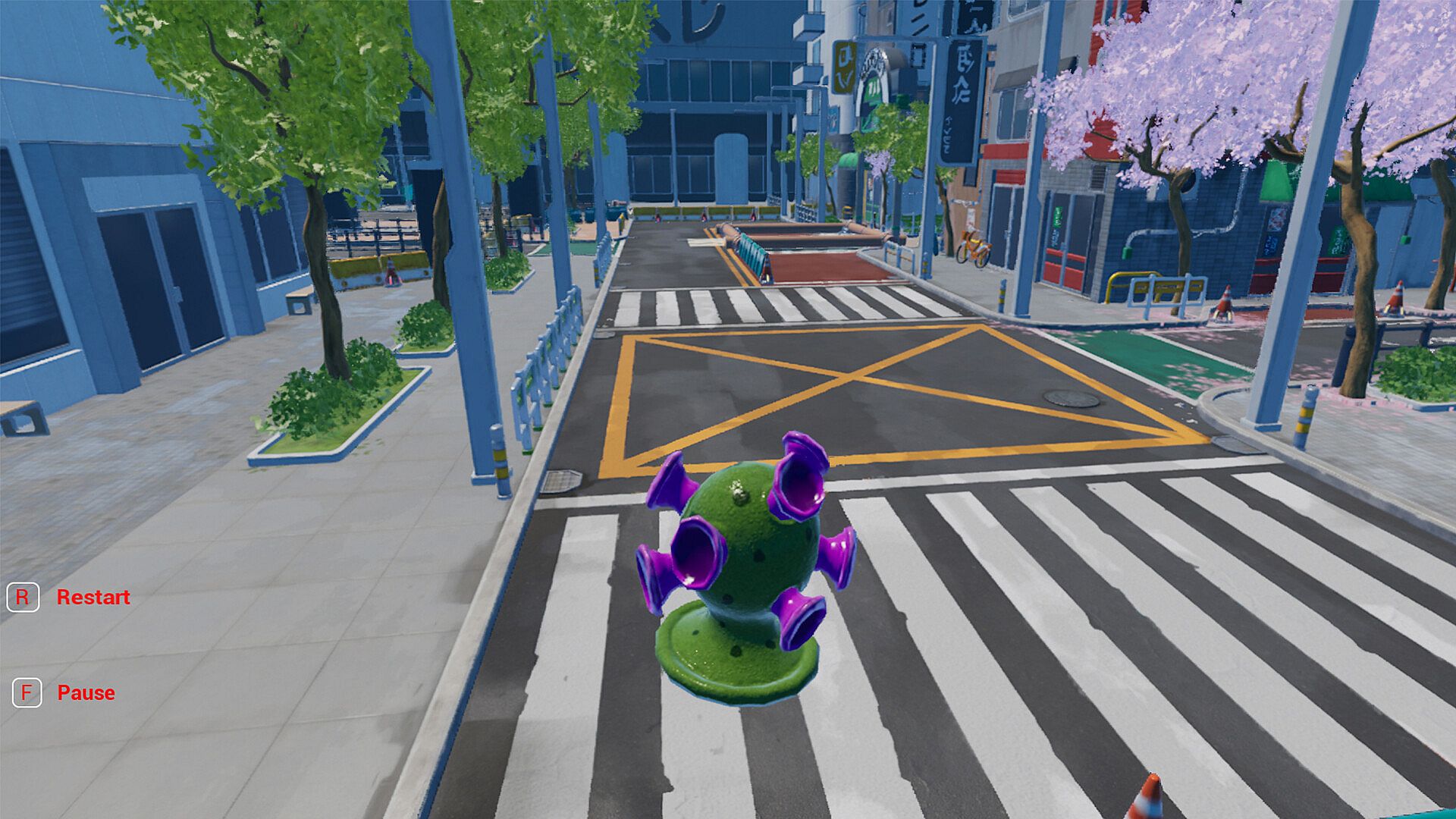
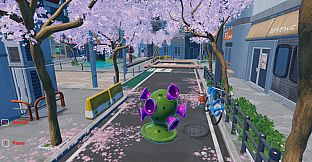
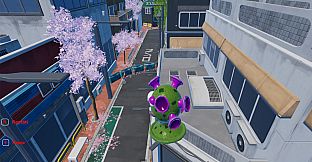
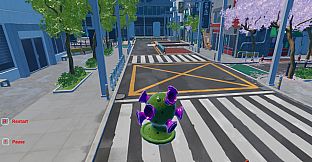
Sad Virus Tokyo is an indie casual simulation and adventure title developed for PC that blends walking simulation elements with light platforming. Players take control of a sad virus character navigating a city environment inspired by Tokyo, with the central objective of locating nine hidden beer bottles scattered across various locations.
Gameplay
The core experience unfolds in third-person perspective as players guide the virus character through urban spaces filled with platforms and obstacles. Movement focuses on walking and precise jumping to traverse elevated sections and reach collection points. Traps appear in the form of moving spikes and rolling balls that require careful timing and positioning to avoid during exploration.
A checkpoint system supports progress by allowing players to resume from designated save points after setbacks, reducing frustration in longer traversal sequences. The collection task encourages thorough searching of the environment, combining straightforward navigation with occasional platforming challenges to access out-of-reach areas.
Steam achievements provide additional goals tied to completing the bottle hunt and navigating hazards successfully. The overall loop emphasizes patient exploration over high-speed action, suiting players who enjoy methodical movement through a contained city setting.
Game Modes
Sad Virus Tokyo operates as a single-player experience with no separate multiplayer components or alternate modes. The entire session revolves around the primary collection objective within the Tokyo-named city, supported by the checkpoint and platforming mechanics described in the core design.
Progression follows a linear structure centered on locating all nine bottles while managing encounters with traps. There are no branching paths, competitive elements, or cooperative features confirmed in the available details, keeping the focus on individual exploration and completion of the stated mission.
Story and Setting
The narrative places the sad virus character in a city environment referred to as Tokyo, where the mission centers on recovering the nine beer bottles. Limited story context appears beyond this objective, allowing the gameplay systems of walking, jumping, and trap avoidance to drive the session forward.
The setting functions primarily as a backdrop for the platforming and collection activities rather than a deeply detailed world. Players interact with the environment through movement and hazard navigation, with the virus character's journey defined by the search across different hidden locations.
Is It Worth Playing?
This title targets players interested in casual indie experiences that combine walking simulation with basic platforming and item collection. The straightforward mechanics of locating bottles while dodging moving spikes and balls, supported by checkpoints and jump platforms, deliver a focused session without overwhelming complexity.
With single-player availability and Steam achievements for completion tracking, it appeals to those seeking short, self-contained adventures in the simulation and adventure genres. As an upcoming release scheduled for August 2026 with no user reviews available yet, its value depends on individual preference for relaxed exploration and light puzzle-like navigation in a compact urban environment.
The game runs on modest hardware requirements, making it accessible for a wide range of PC setups. Those who enjoy methodical third-person traversal and achievement hunting in small-scale indie titles may find the bottle collection loop engaging, while players seeking deeper narratives or varied modes should consider the limited scope confirmed in the design.