







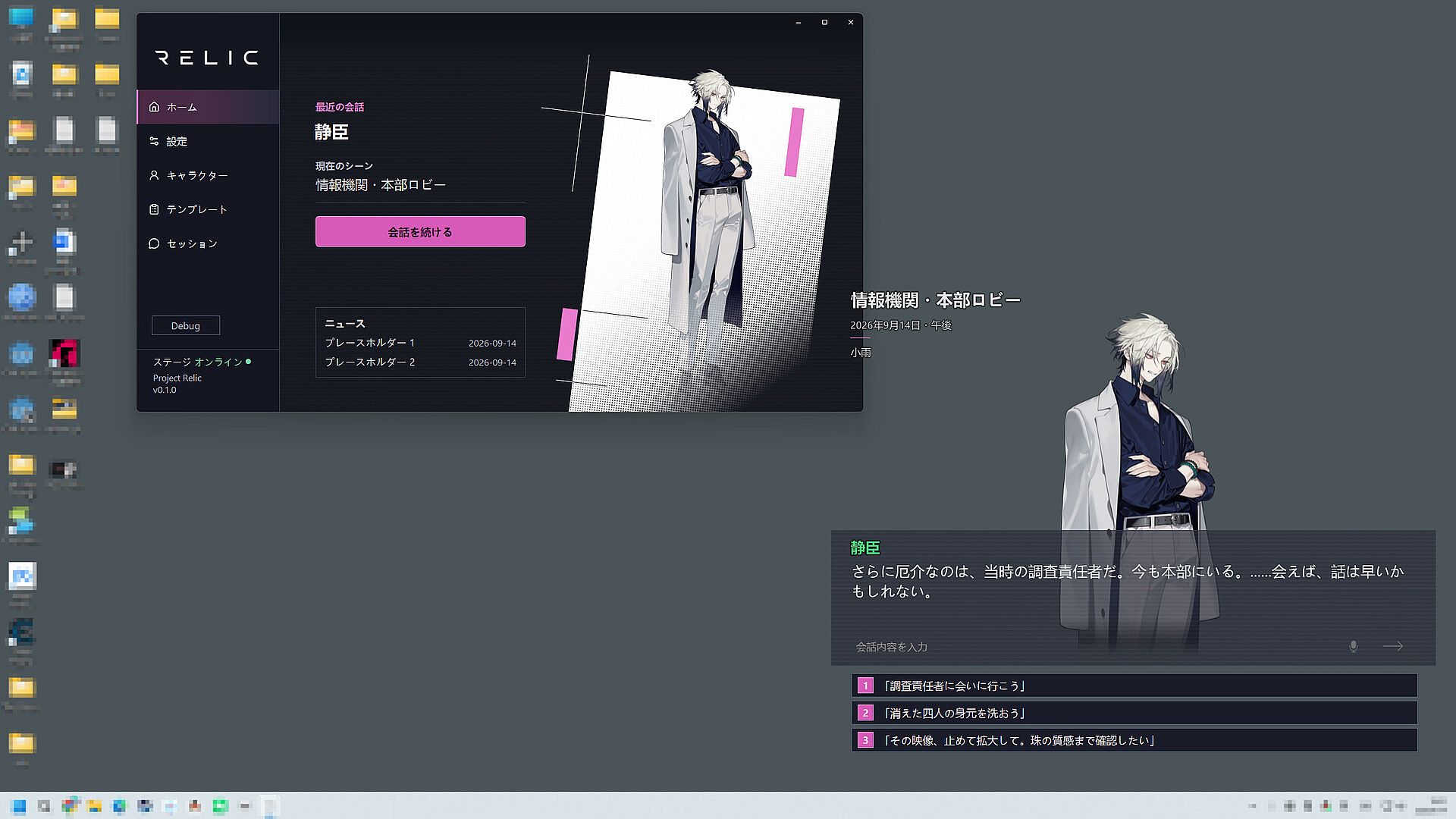




Project RELIC is an indie simulation and RPG title built around AI-driven character creation and ongoing conversation on PC. Players define personalities, backgrounds, and starting scenarios for custom characters, then engage through text or voice to shape evolving stories and relationships. The experience emphasizes persistent memory, shifting emotional states, and visual-novel presentation with changing sprites and optional voice synthesis.
Gameplay
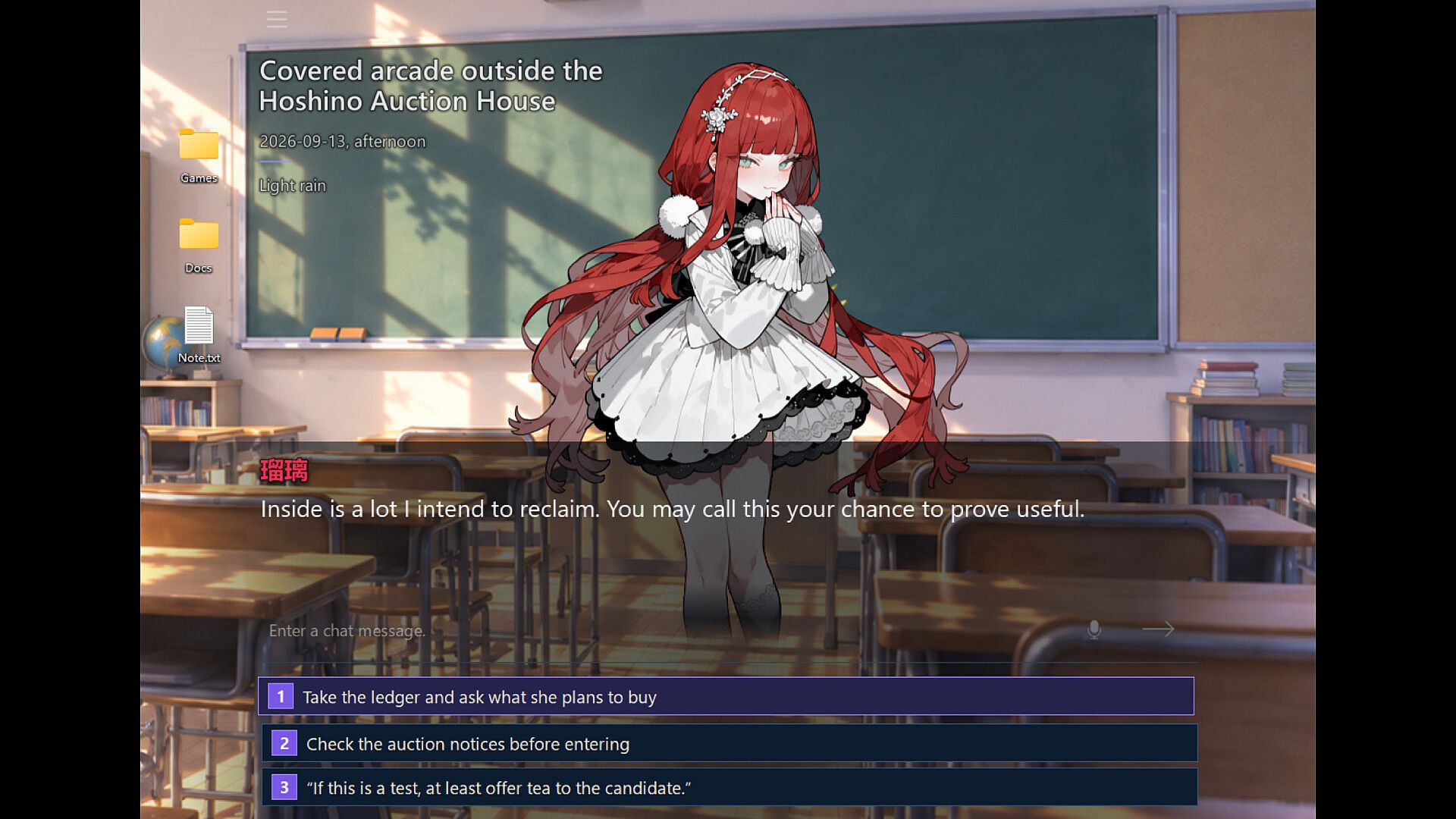
Core play centers on building and maintaining individual characters within a dedicated desktop interface. Users set personality traits, backstories, speaking styles, and initial situations before beginning exchanges. Responses draw from configured language models, with options to select AI-suggested replies or type custom input. A separate Stage window displays sprites that update expressions and poses in real time, alongside voice output when compatible models are set up.
Interactions feed into long-term memory systems that store scenes, emotions, and key events permanently within a save file. The system retrieves relevant past moments during new conversations, prioritizing promises and relationship shifts while allowing everyday details to fade. Players can reference prior events directly, such as asking a character about something discussed earlier, to maintain continuity across sessions.
Character states track multiple emotional and relational factors simultaneously. Trust, attachment, respect, and security sit alongside stress, confidence, loneliness, happiness, and resentment. These elements influence response tone, initiative, and openness, with short-term fluctuations and longer-term development that mirrors gradual psychological patterns. Editing tools allow adjustments to profiles, sprites for different expressions, voice parameters, stage positioning, and effects at any time.
Game Modes
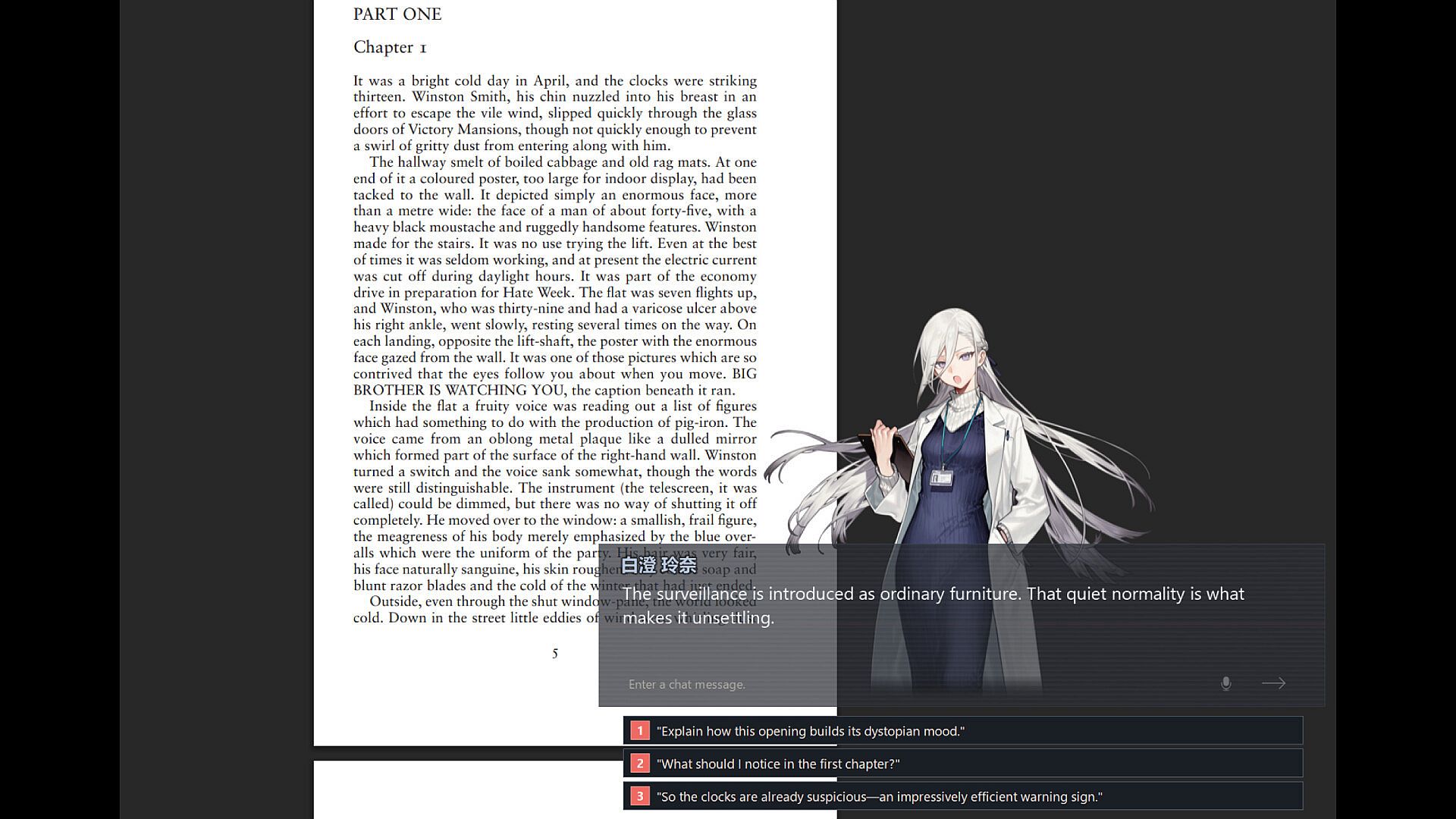
Scene Mode supports story-focused exchanges between the player and one or more characters, emphasizing narrative progression and dramatic beats. Assistant Mode shifts toward practical, everyday dialogue, with an optional screen-recognition feature that lets the character reference visible text or images on the user's desktop for context-aware replies.
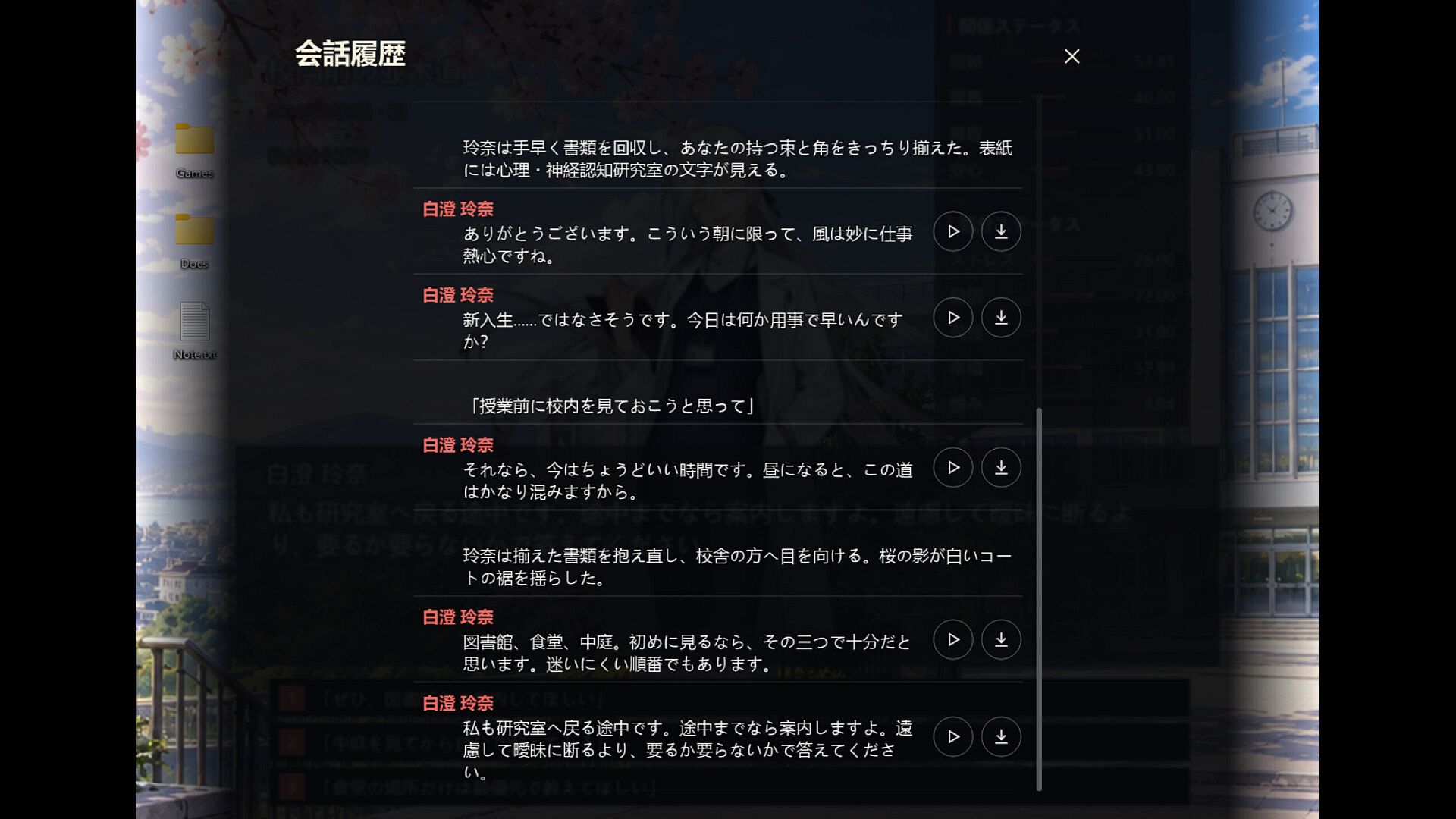
Both modes operate within the same character save, allowing seamless switches while preserving shared history and emotional development. Language settings separate the interface display from the character's spoken or written responses, currently supporting English, Simplified Chinese, Traditional Chinese, and Japanese.
Character Creation and Customization
Creation begins with detailed profile setup covering background, personality, and opening circumstances. Imported sprites receive descriptions for varied expressions and poses, while voice configuration pairs a model with reference audio for synthesis. Display adjustments cover position, effects, and parameters, giving creators control over presentation. The process supports original designs, figures from personal projects, or entirely conceptual ideas, with all data stored locally on the user's system.
Requirements include a user-provided LLM service for generating responses and compatible voice tools for audio. No bundled credits or models come with the application, and performance of local features depends on individual hardware and chosen configurations.
Is It Worth Playing?
Project RELIC targets users interested in persistent AI companions and customizable narrative tools rather than traditional gameplay loops. Its strength lies in the memory and state systems that allow relationships to develop organically over repeated sessions without resetting. The Early Access phase focuses on refining single-character interactions, with planned expansions including multi-character support and additional presentation options.
Because the title remains in development and relies on external AI services, results vary with model quality and user setup. Those comfortable configuring third-party tools and seeking long-term conversational depth may find value in the evolving emotional dynamics and visual feedback. No player reviews or aggregate scores exist yet, as the release is upcoming. The experience suits single-player creative or companionship-focused play on Windows systems meeting the specified hardware needs.











