







Planets in a Box is a single-player physics simulation game focused on real-time planetary collisions and gravitational interactions. Players manipulate thousands to millions of particles representing rock and iron to observe how worlds form, deform, and interact under gravity.
Gameplay
The core loop centers on setting up initial conditions for celestial bodies and then running the simulation to watch outcomes unfold. Every planet consists of particles that exert gravitational pull on one another, collide, generate heat, and flow like fluids. Users adjust parameters such as mass, impact angle, velocity, core size, and spin before launching a run. The simulation runs entirely on the graphics card using smoothed-particle hydrodynamics combined with self-gravity, allowing real-time performance even with large particle counts.
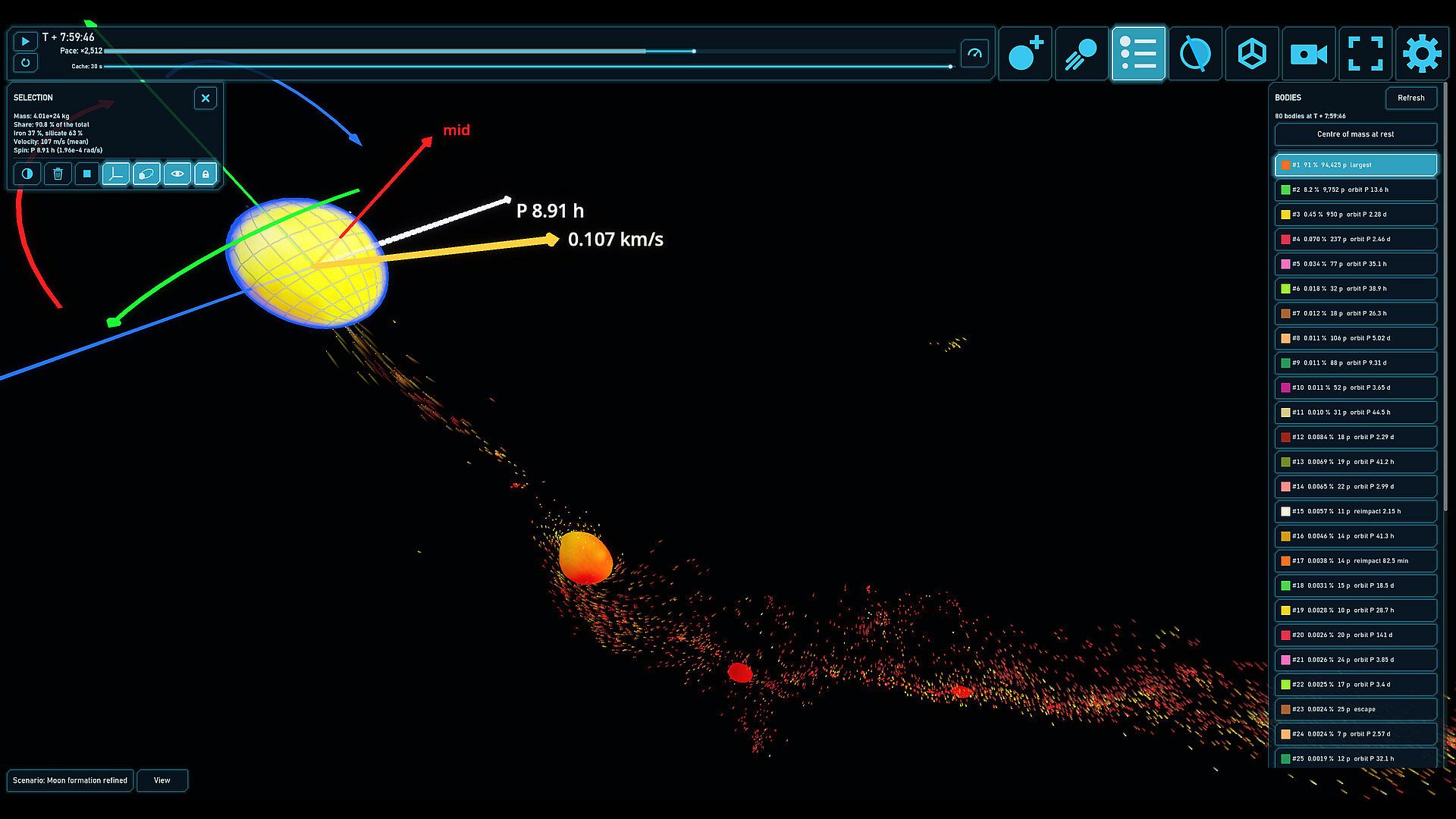
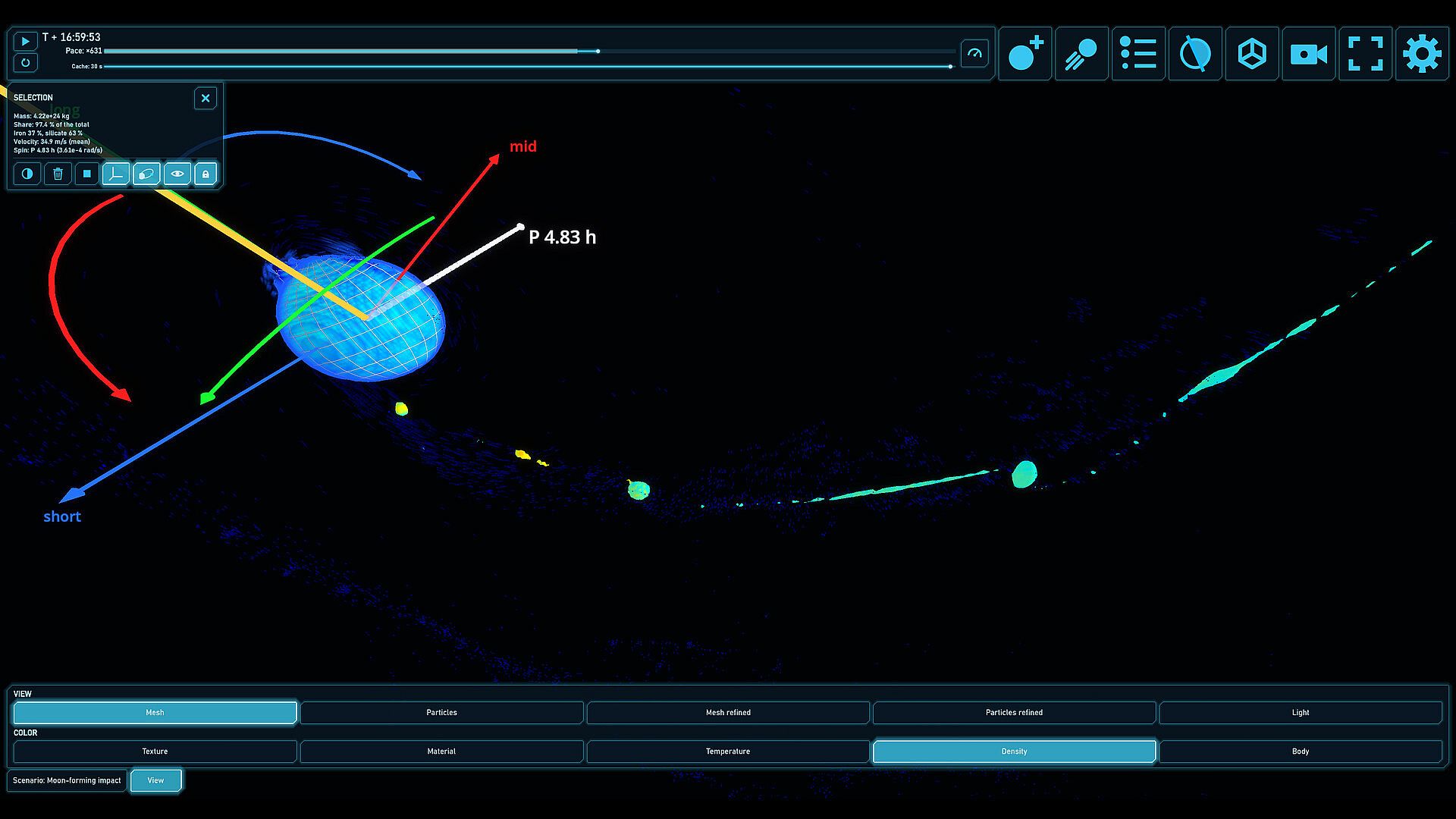
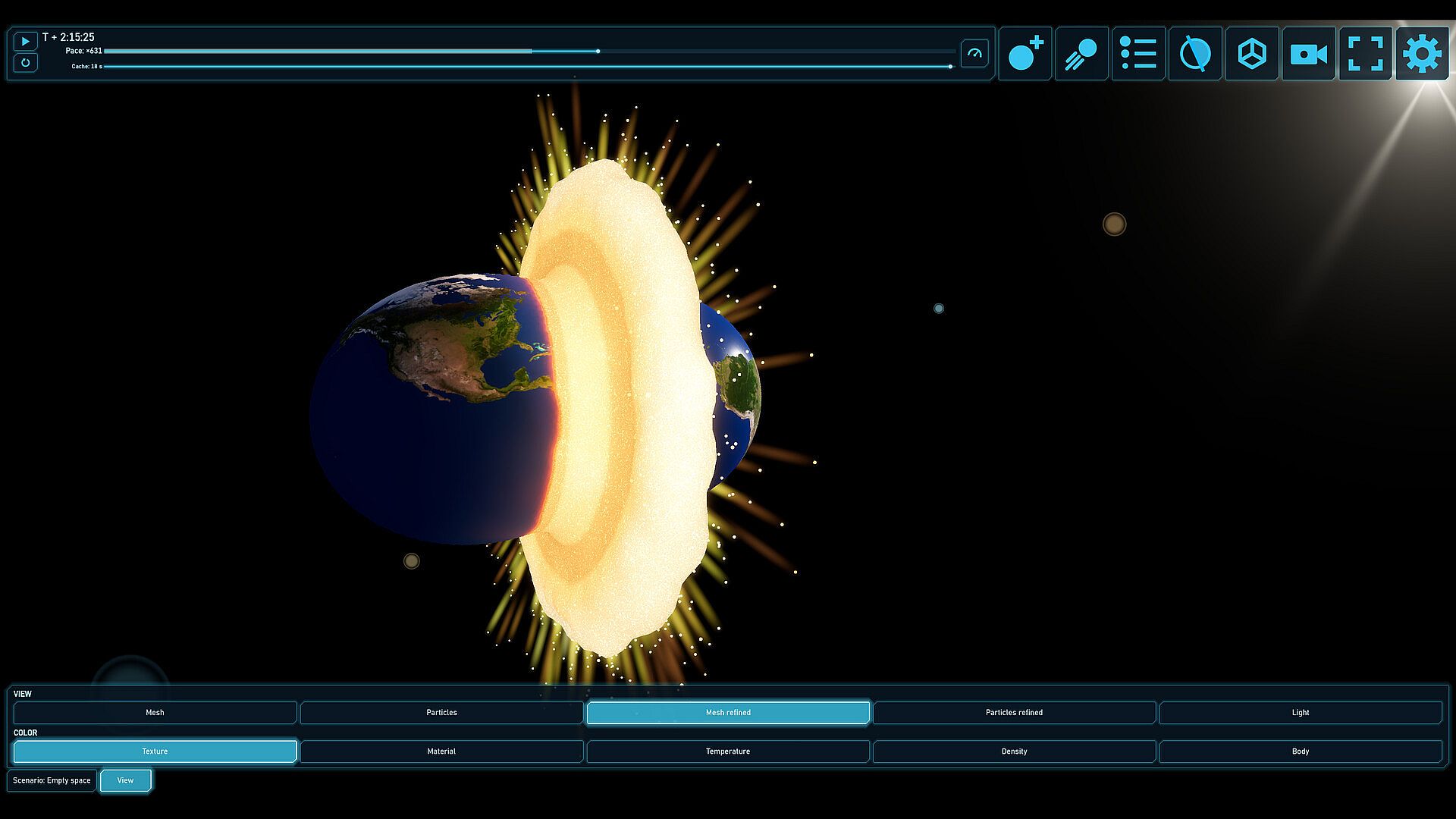
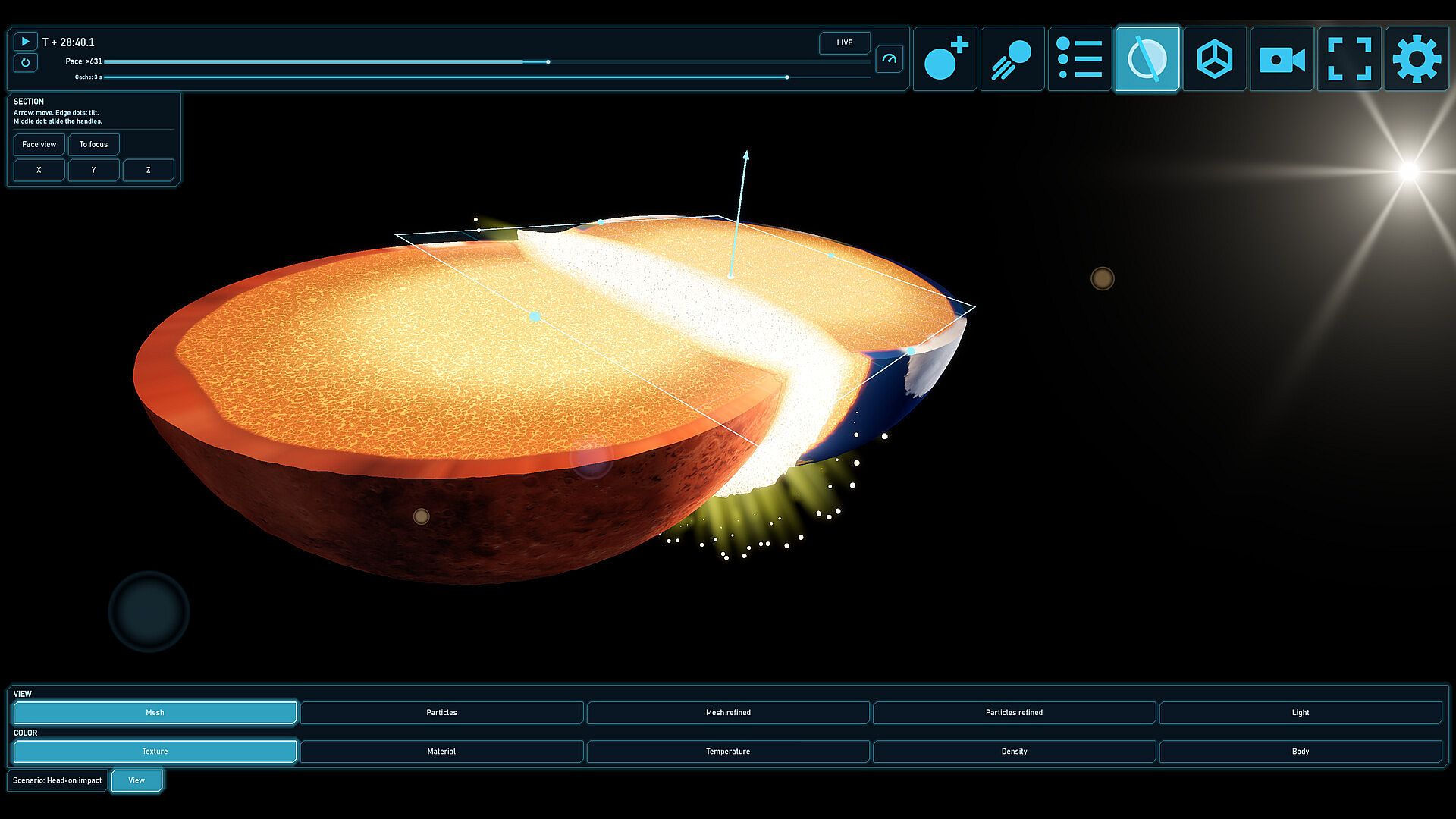
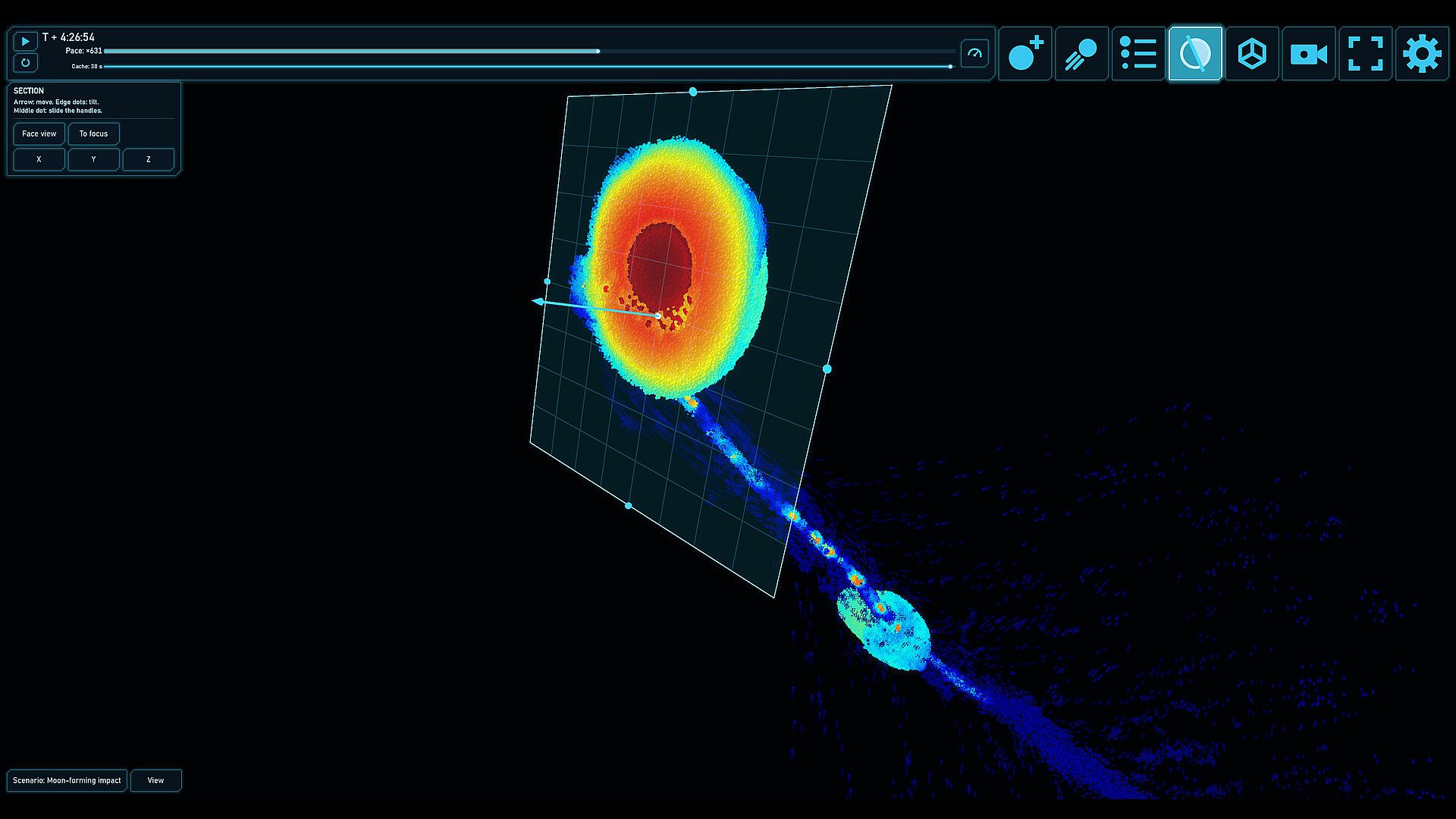
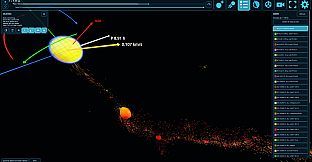
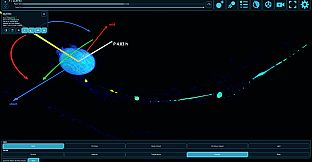
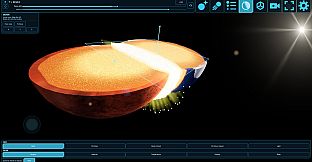
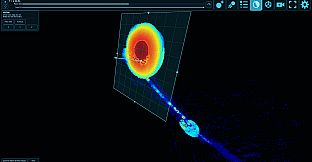
Visual tools enhance observation. A section plane slices through bodies to reveal internal structure, showing the iron core and surrounding mantle. Material can be colored according to type, temperature, or density, and realistic planet textures are available as an alternative view. Selecting any clump displays its current mass, speed, and spin. Time controls include pause, rewind of recent moments, and variable playback speeds to study fast or slow events in detail.
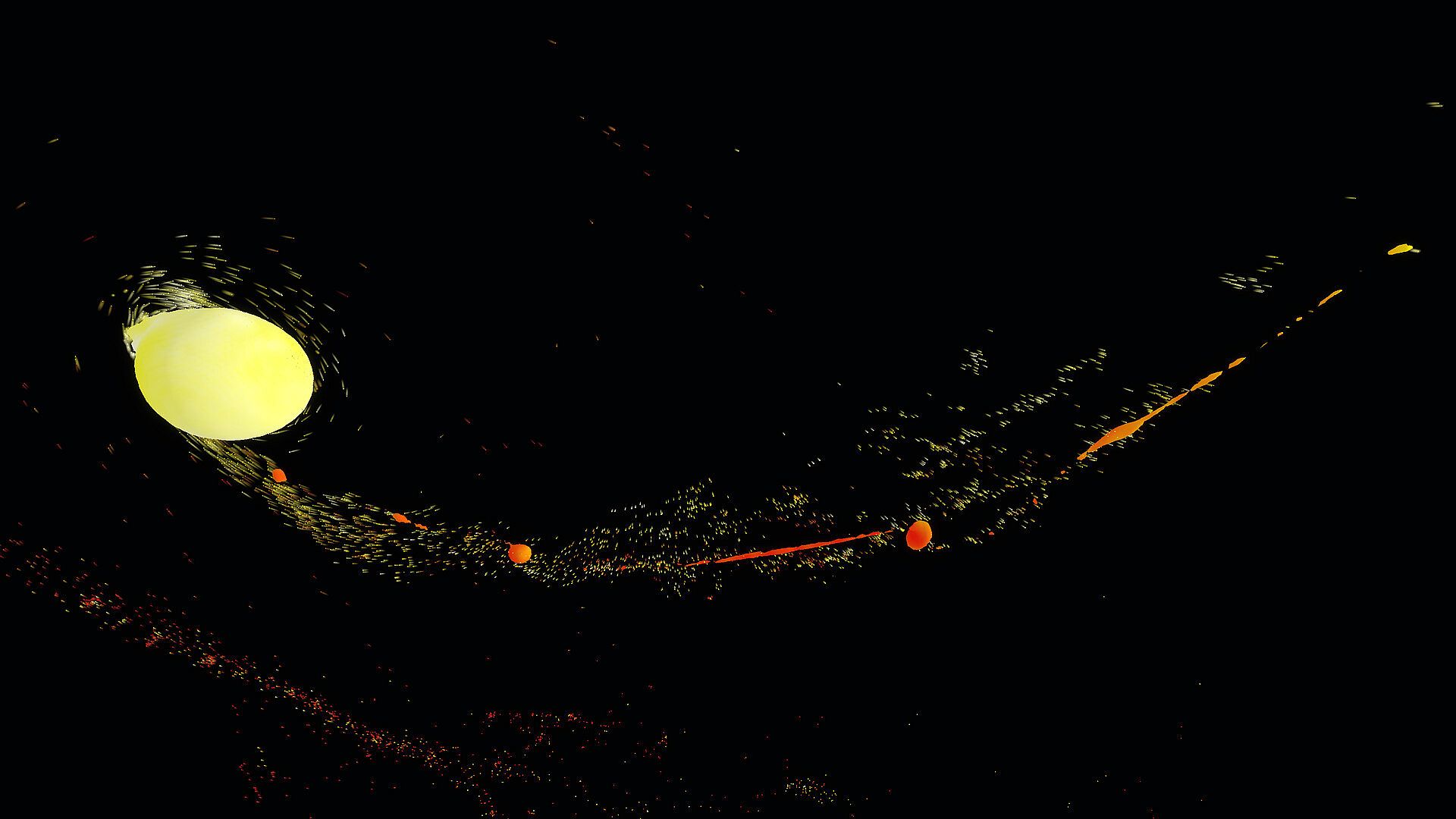
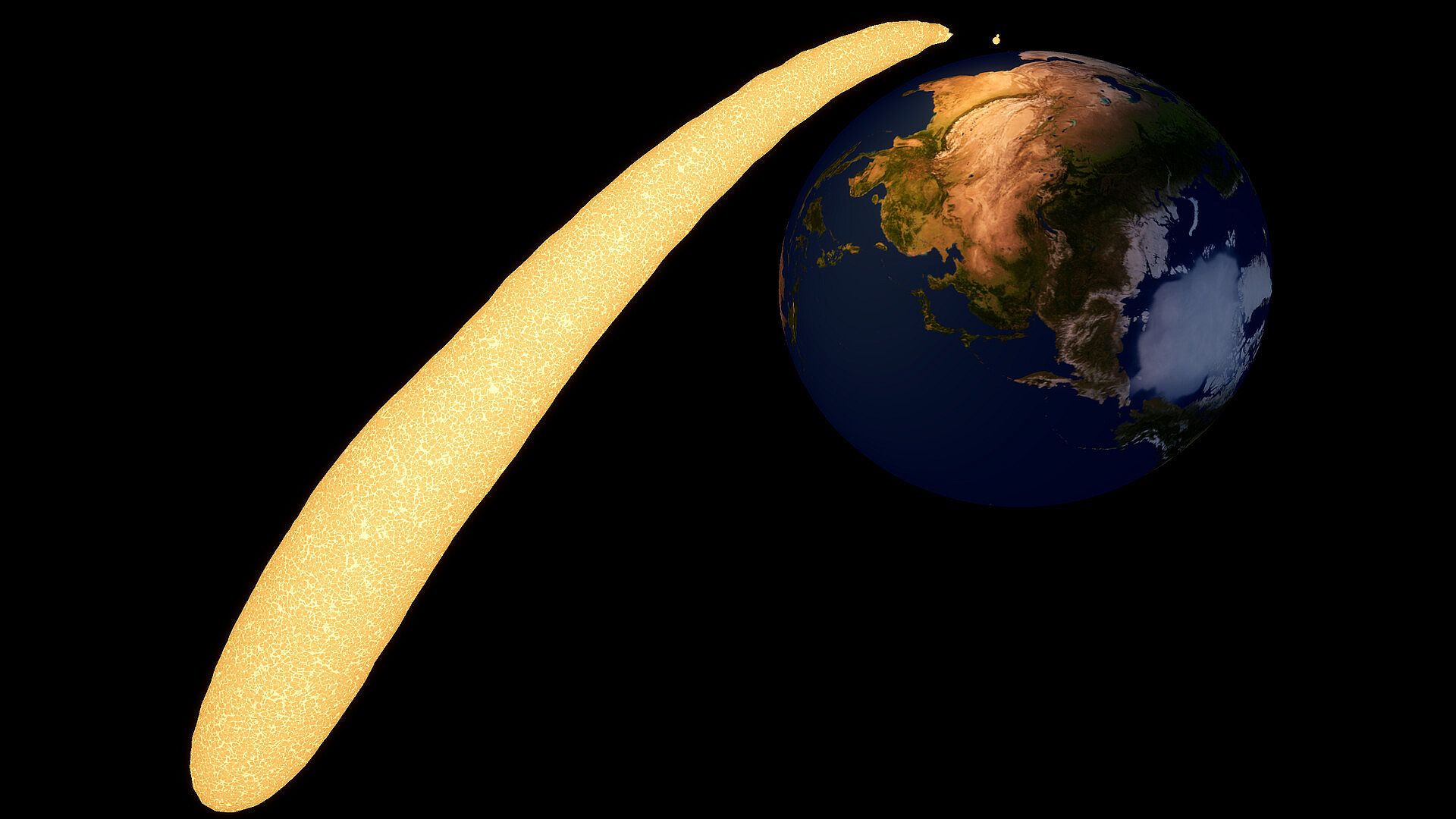
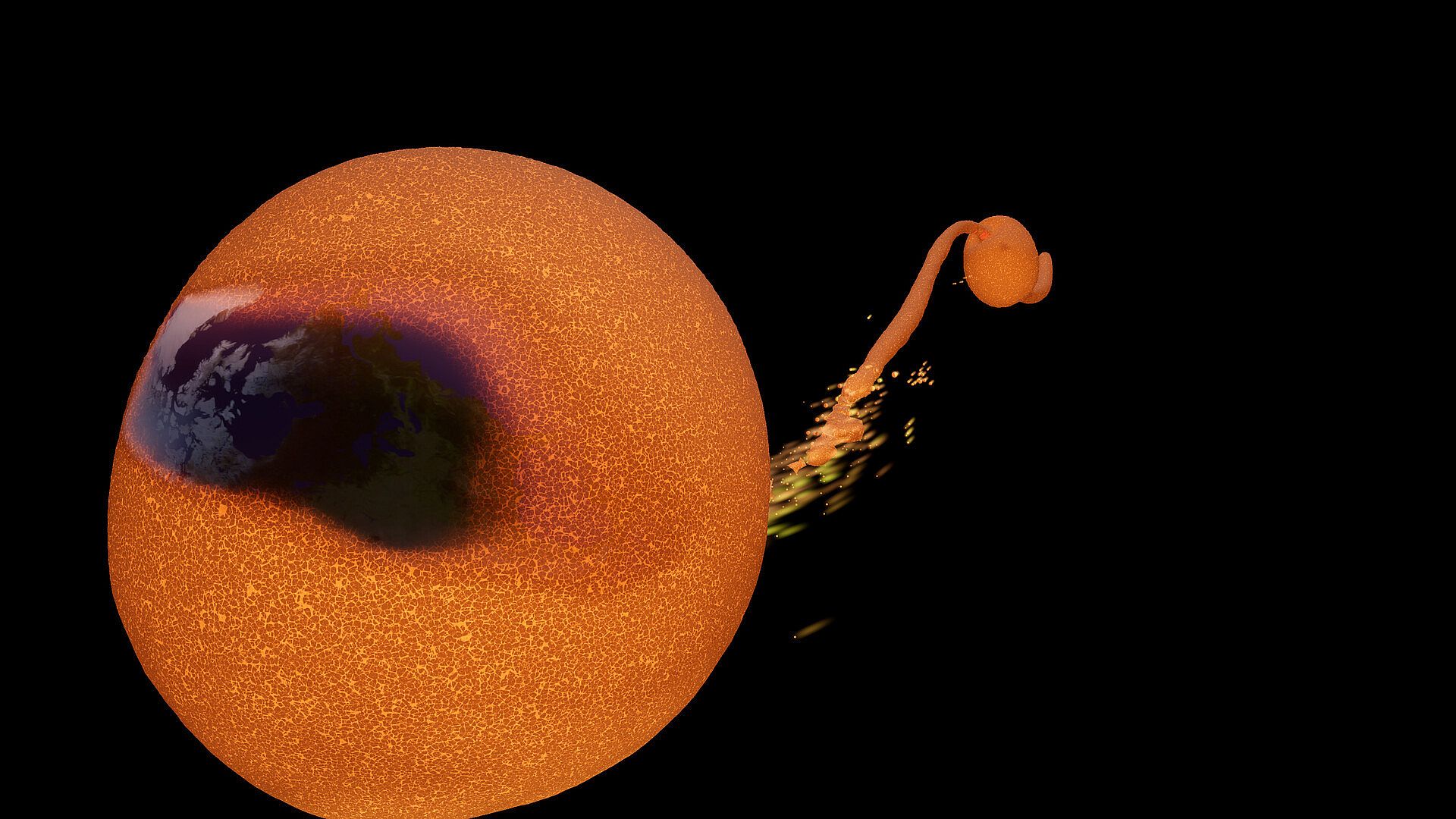
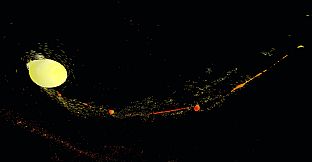
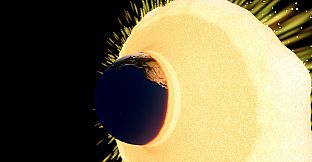
Tidal effects emerge naturally from the particle-based gravity. Close flybys stretch planets into elongated shapes, impart spin, or cause tidal locking where a moon always faces its parent body. Bodies venturing too near a larger mass can be torn into debris streams. These behaviors require no separate toggles because they arise directly from the underlying physics model.
Game Modes
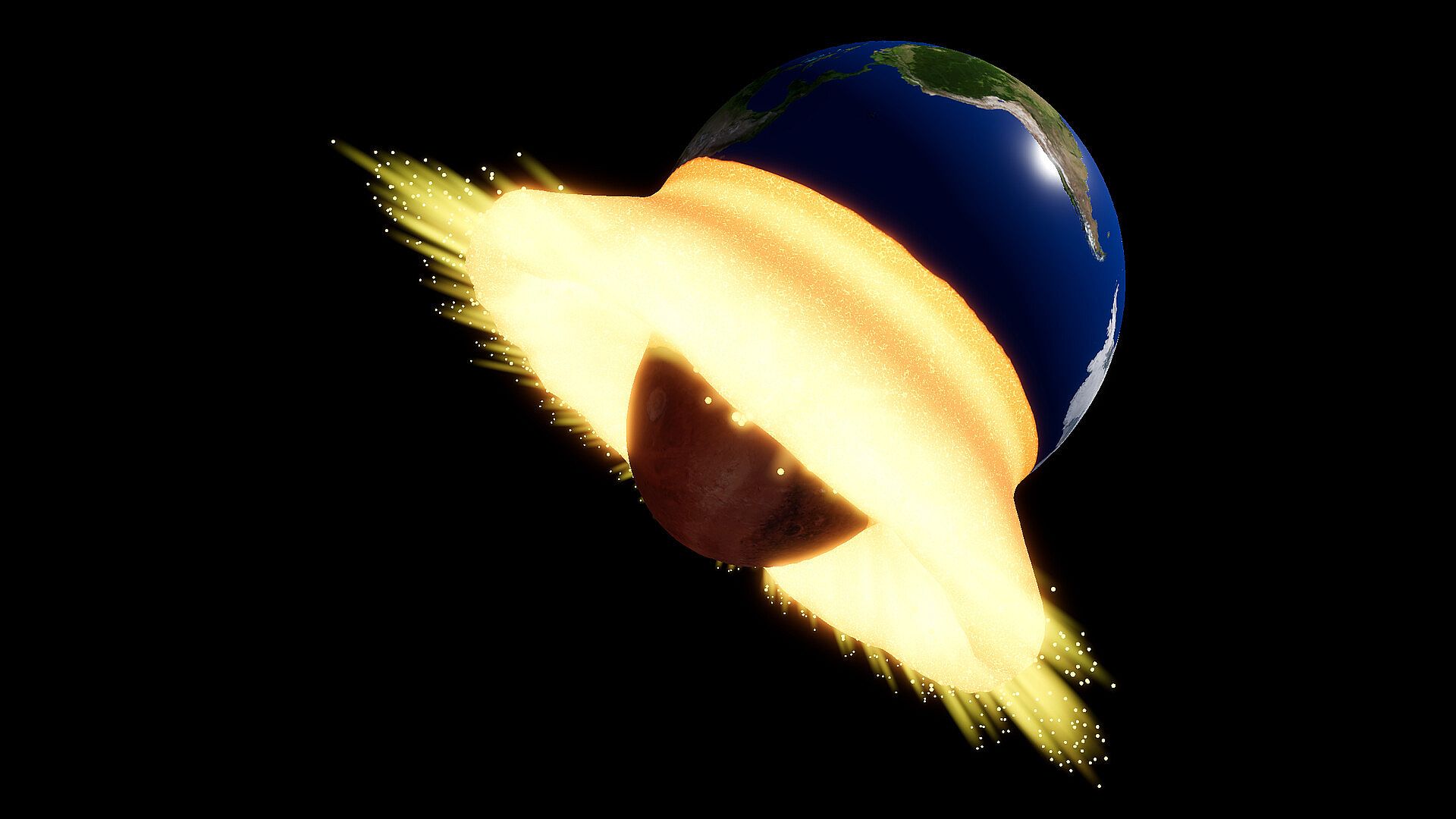
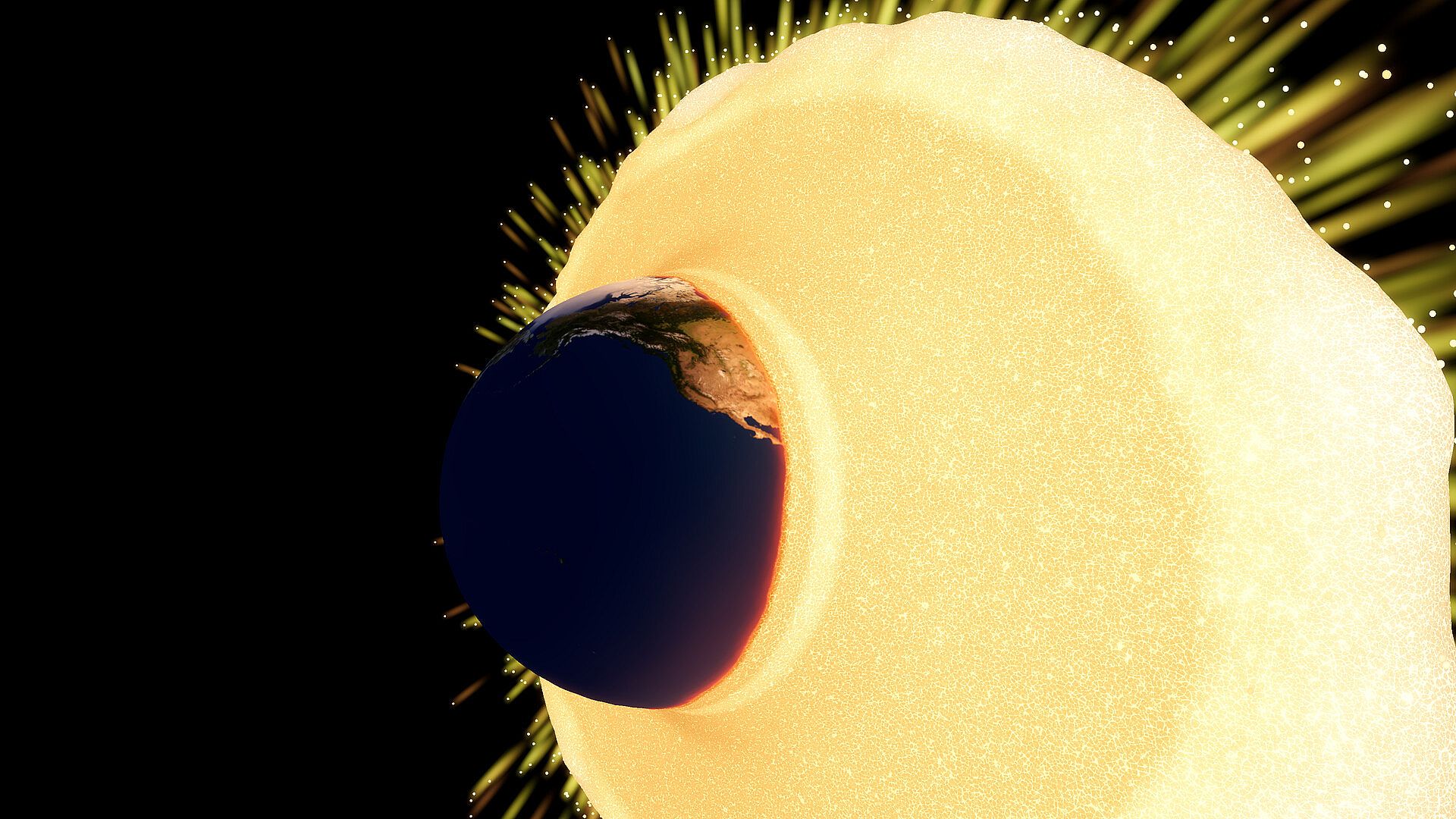
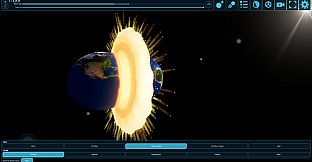
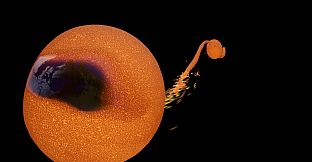
The experience functions as an open sandbox without predefined win conditions or linear progression. Players recreate specific historical scenarios or invent their own setups from scratch. One prominent starting point is the giant-impact scenario that models the formation of the Moon, where a Mars-sized body strikes a young Earth at an oblique angle, producing a debris disk from which a satellite accretes.
Other ready options include grazing hit-and-run encounters, direct head-on collisions, and the gravitational collapse of a cold rotating dust cloud that forms a central planet with orbiting clumps. From empty space, users add custom planets, moons, or arbitrary bodies, place them in orbit, or impart new velocities and spins by dragging directional arrows. Particle counts range from a few thousand for quicker tests up to two million for higher-resolution runs, with the system scaling detail to available hardware.
Recording and Analysis Tools
Full simulation data, including every particle across all frames, can be recorded even in high-particle runs. Replays support free camera movement, variable speeds, and arbitrary viewing angles to examine impacts, debris evolution, or moon formation from any perspective. Finished recordings export as videos up to 4K resolution or as individual high-resolution images. These tools turn exploratory runs into shareable or reviewable sequences without requiring additional software.
Offline operation, absence of accounts or transactions, and straightforward controls keep the focus on experimentation. The simplified equations of state for rock and iron enable compression, heating, and fluid-like behavior while maintaining real-time responsiveness on consumer GPUs.
Is It Worth Playing?
Planets in a Box targets users interested in gravitational physics, planetary formation, and interactive simulations rather than traditional gameplay loops with objectives or competition. Its Early Access release is scheduled for November 2026, with the core collision and visualization systems already functional as described. The developer plans to expand materials such as water and ice, add further preset scenarios, refine visuals and performance, and incorporate community feedback during the roughly one-year Early Access period.
Those who enjoy adjusting variables to observe emergent tidal, collisional, and accretion effects will find substantial depth in the particle system and replay capabilities. The single-player sandbox nature suits repeated personal experiments, from quick low-resolution tests to detailed high-particle recordings. Because no user reviews exist yet and the title remains in development, prospective players should evaluate the listed mechanics against their interest in real-time SPH-based astronomy visualizations. The absence of microtransactions or required online features keeps the experience self-contained once purchased.











