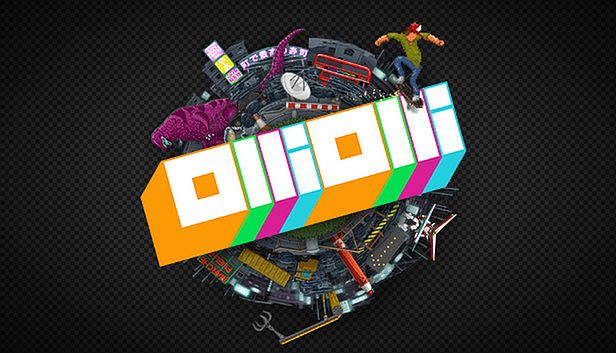















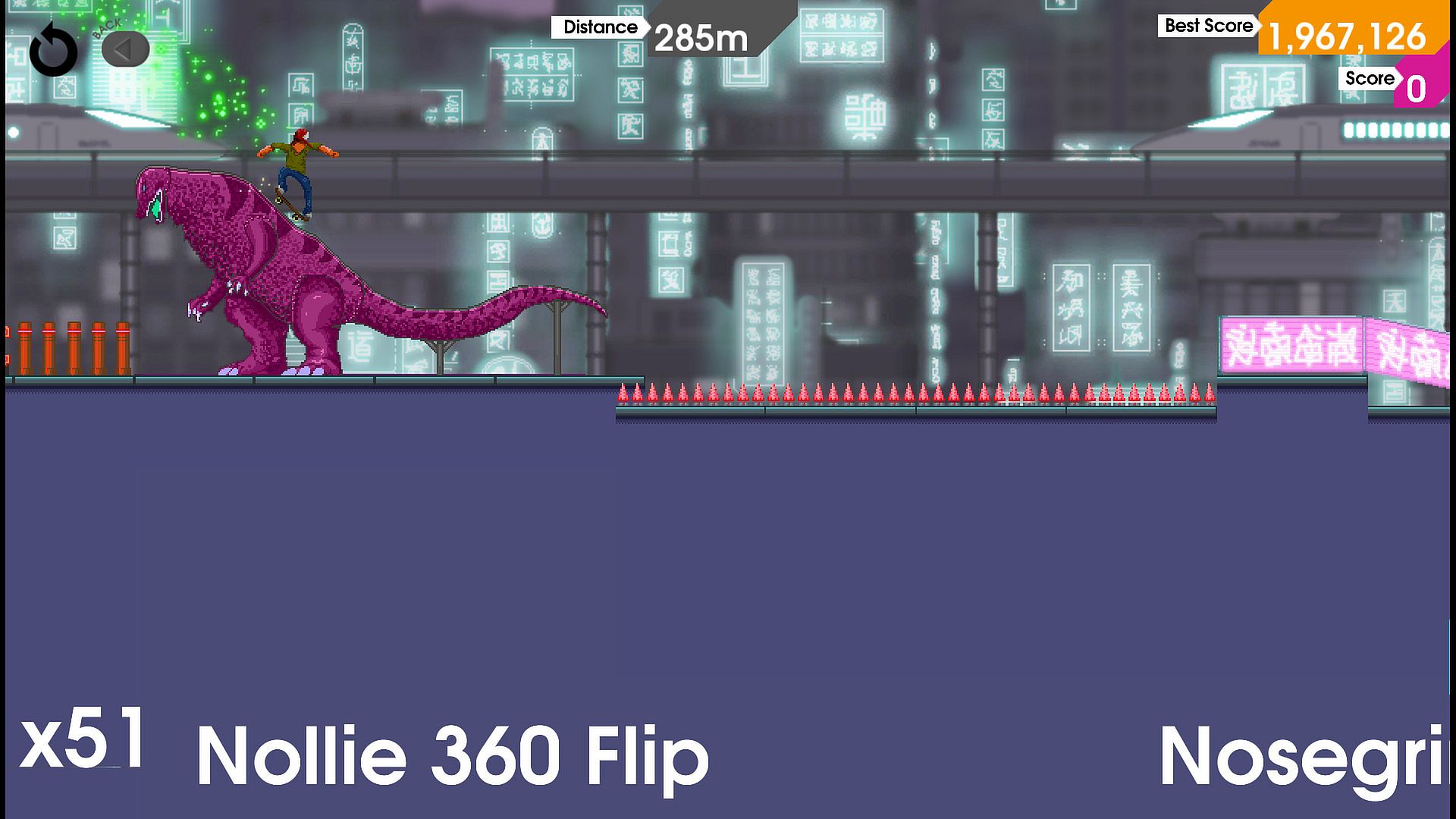
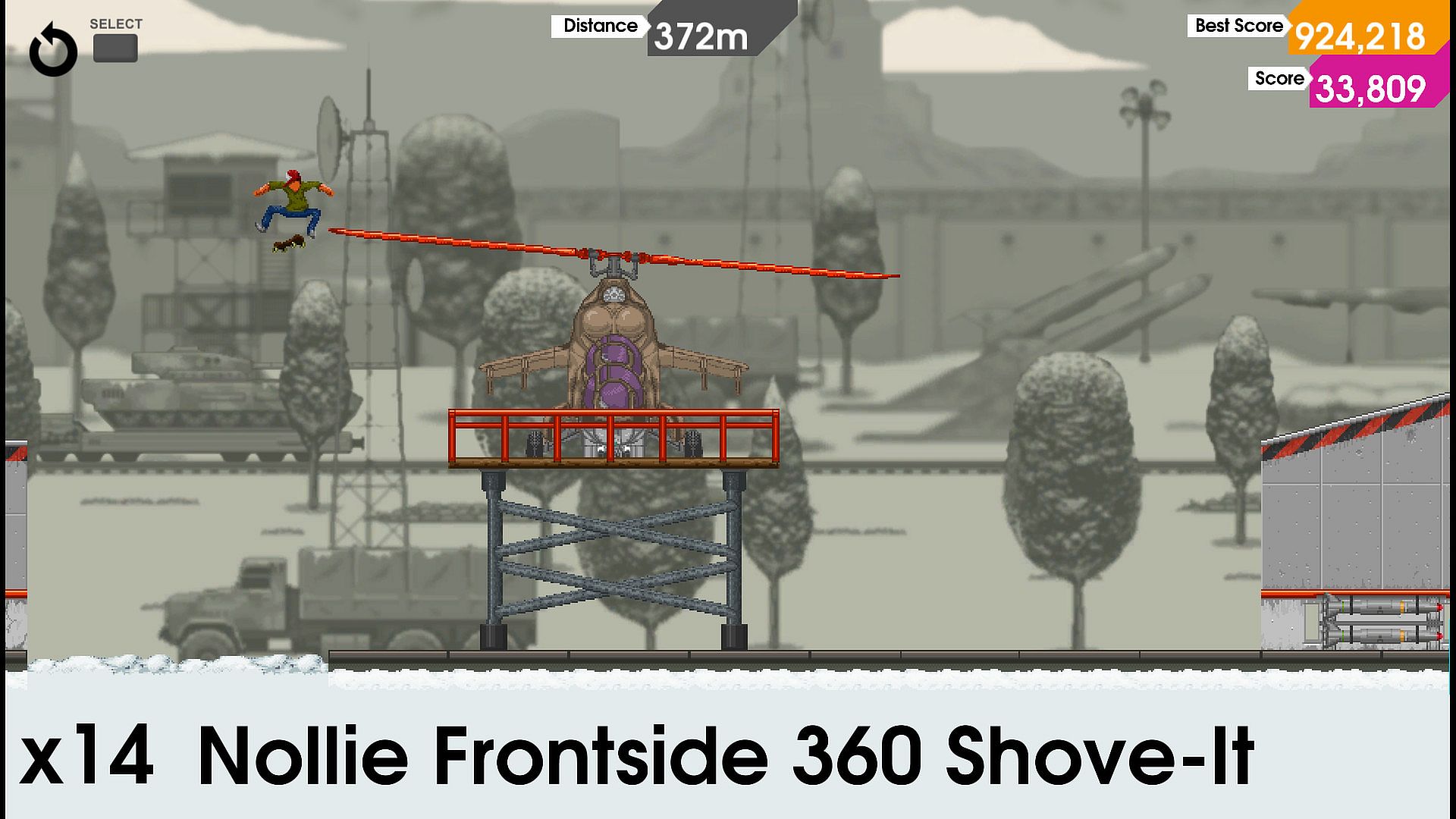
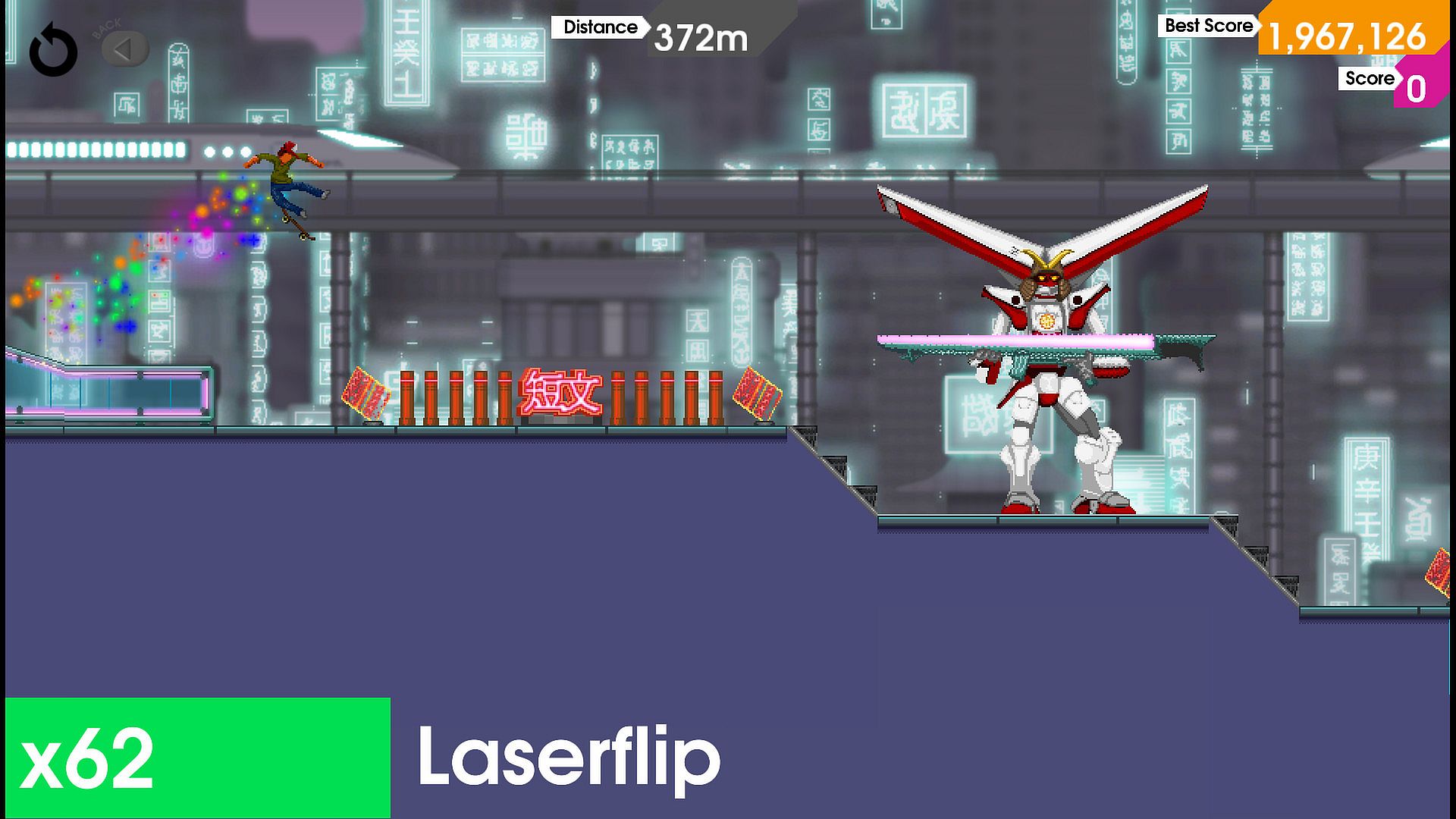
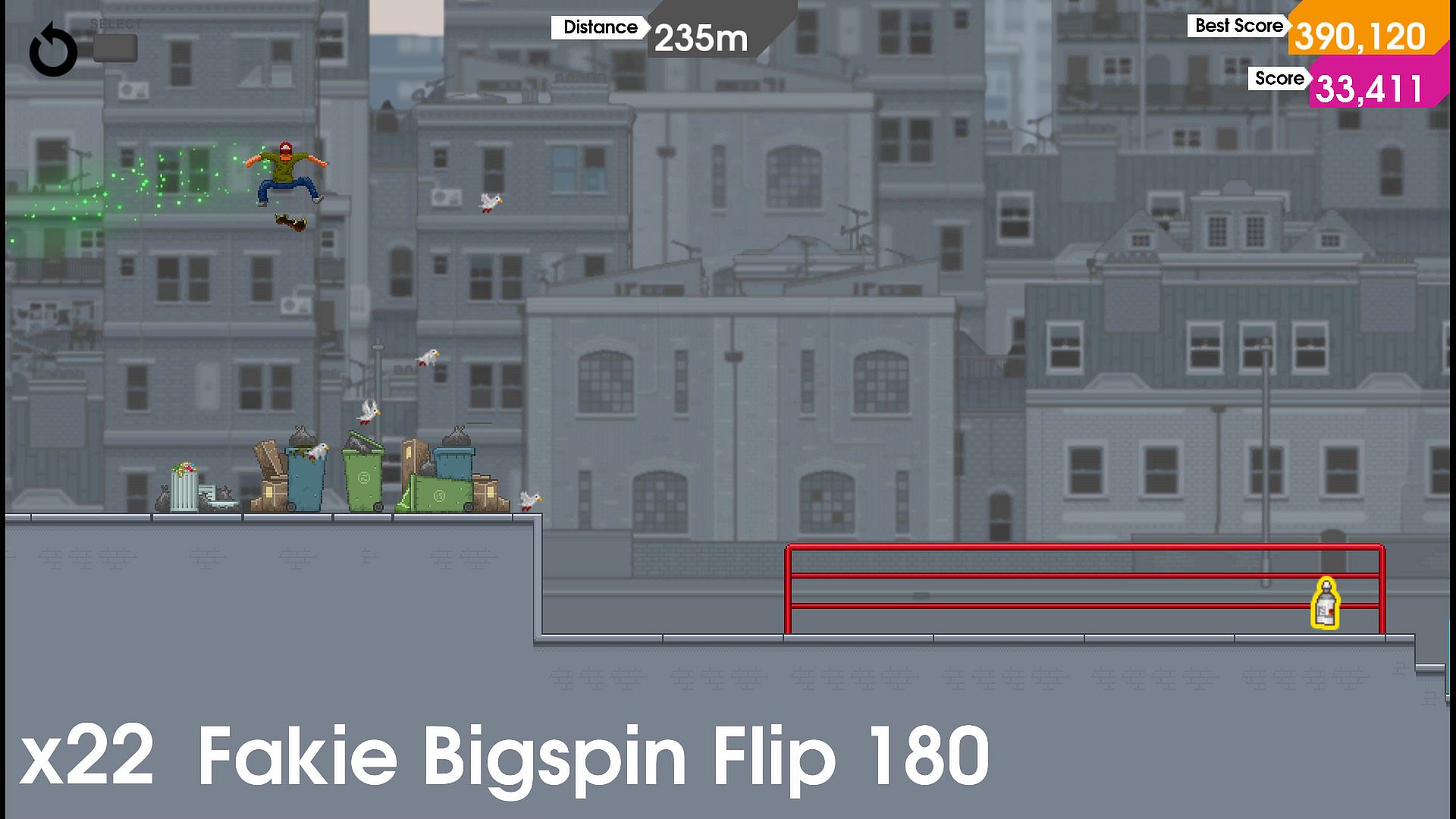
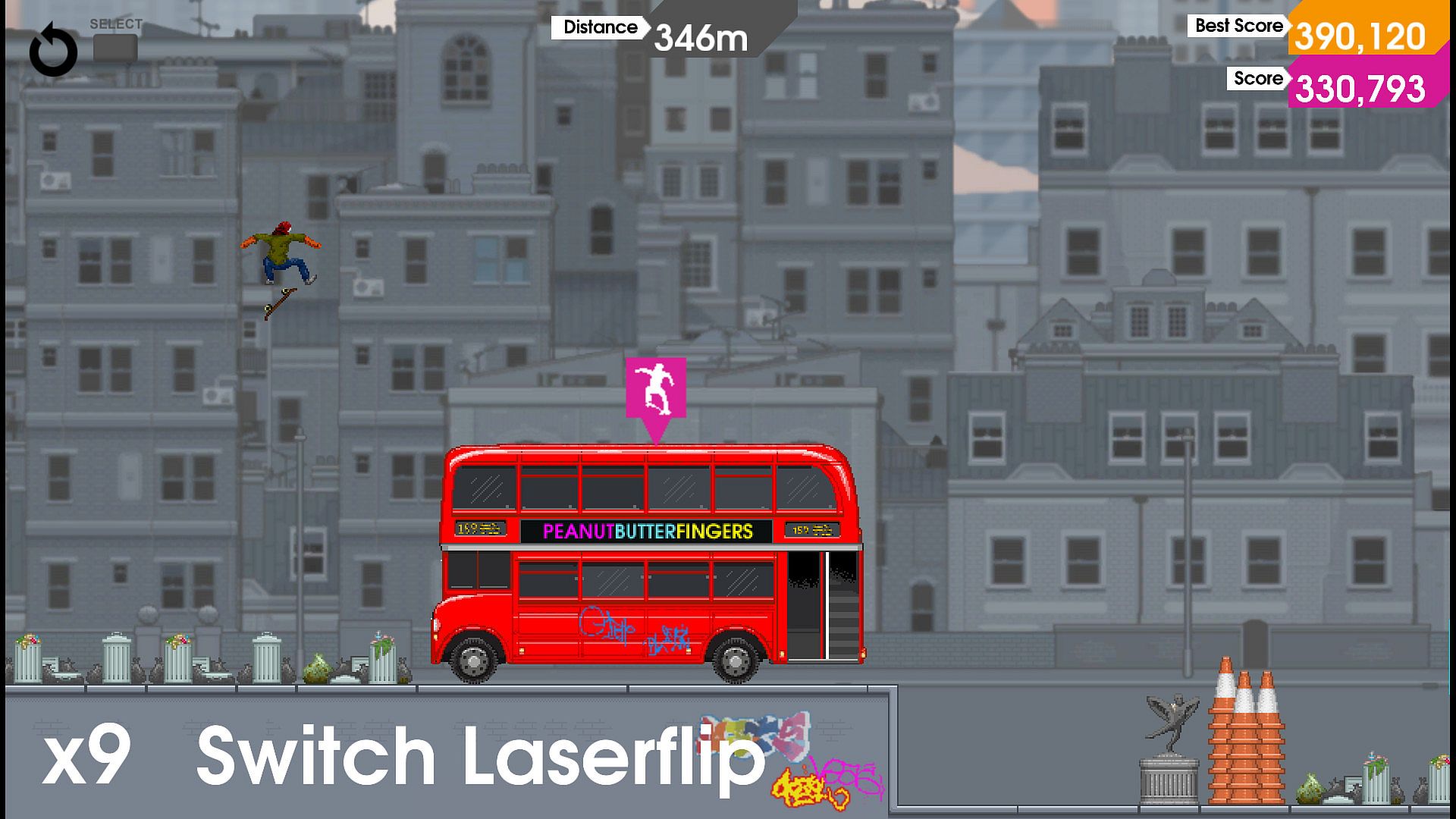
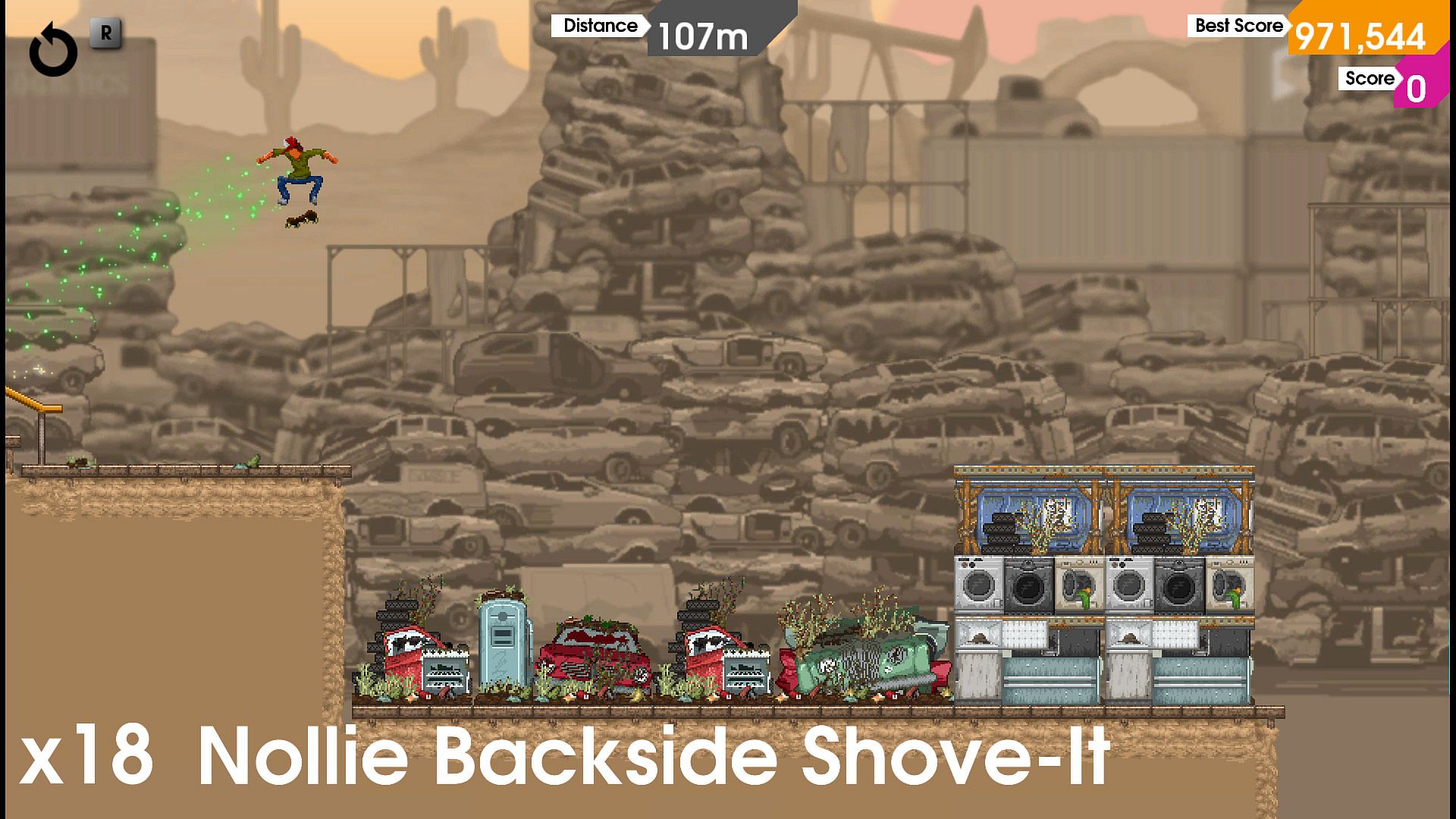
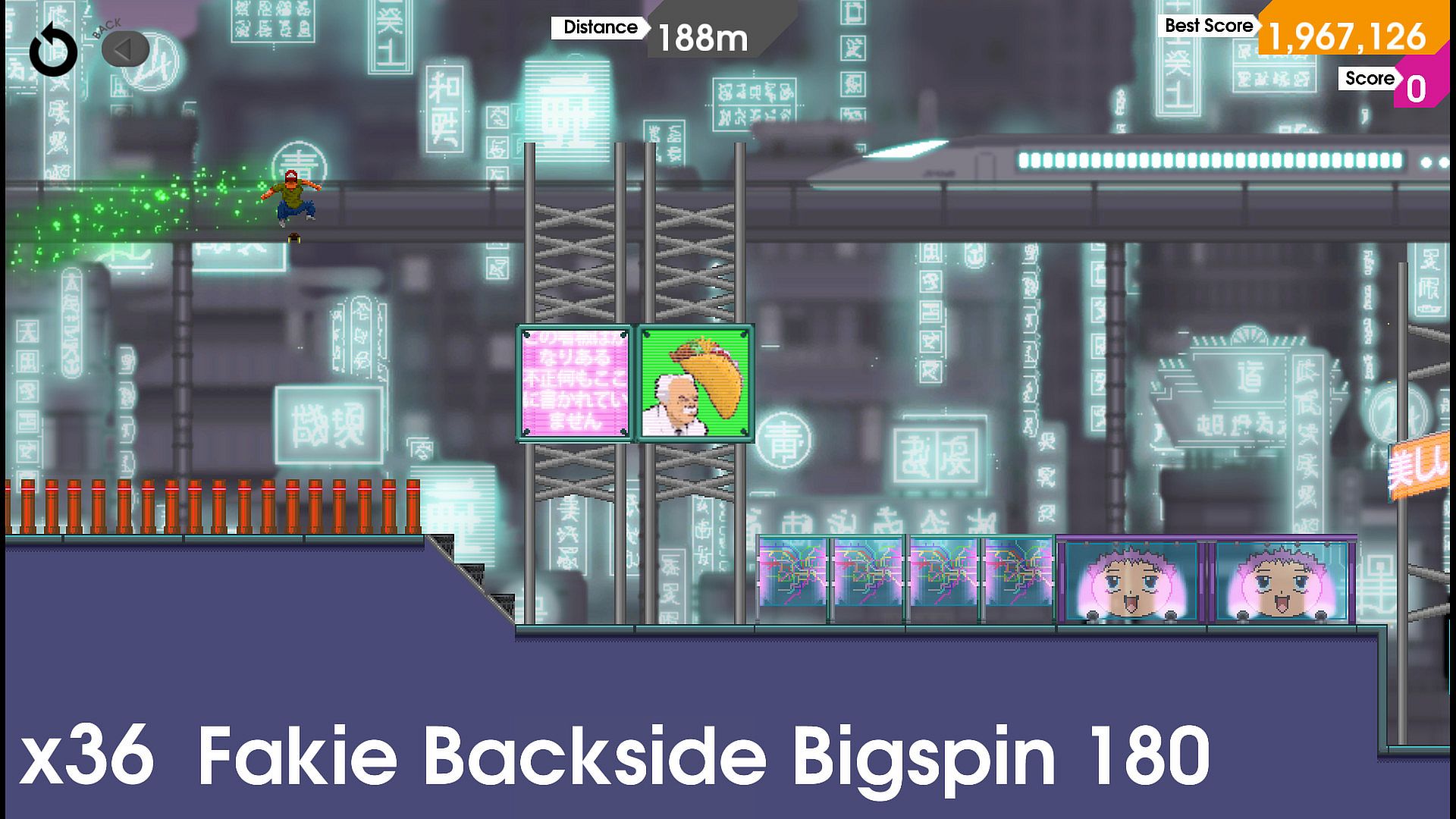
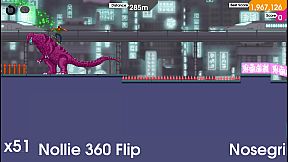

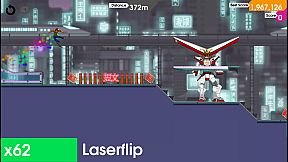


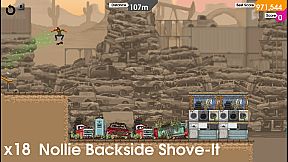
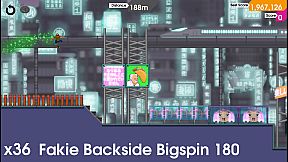
OlliOlli is an indie sports game centered on skateboarding. Players control a skater through side-scrolling runs that emphasize precise timing and combo building across fixed levels.
Gameplay
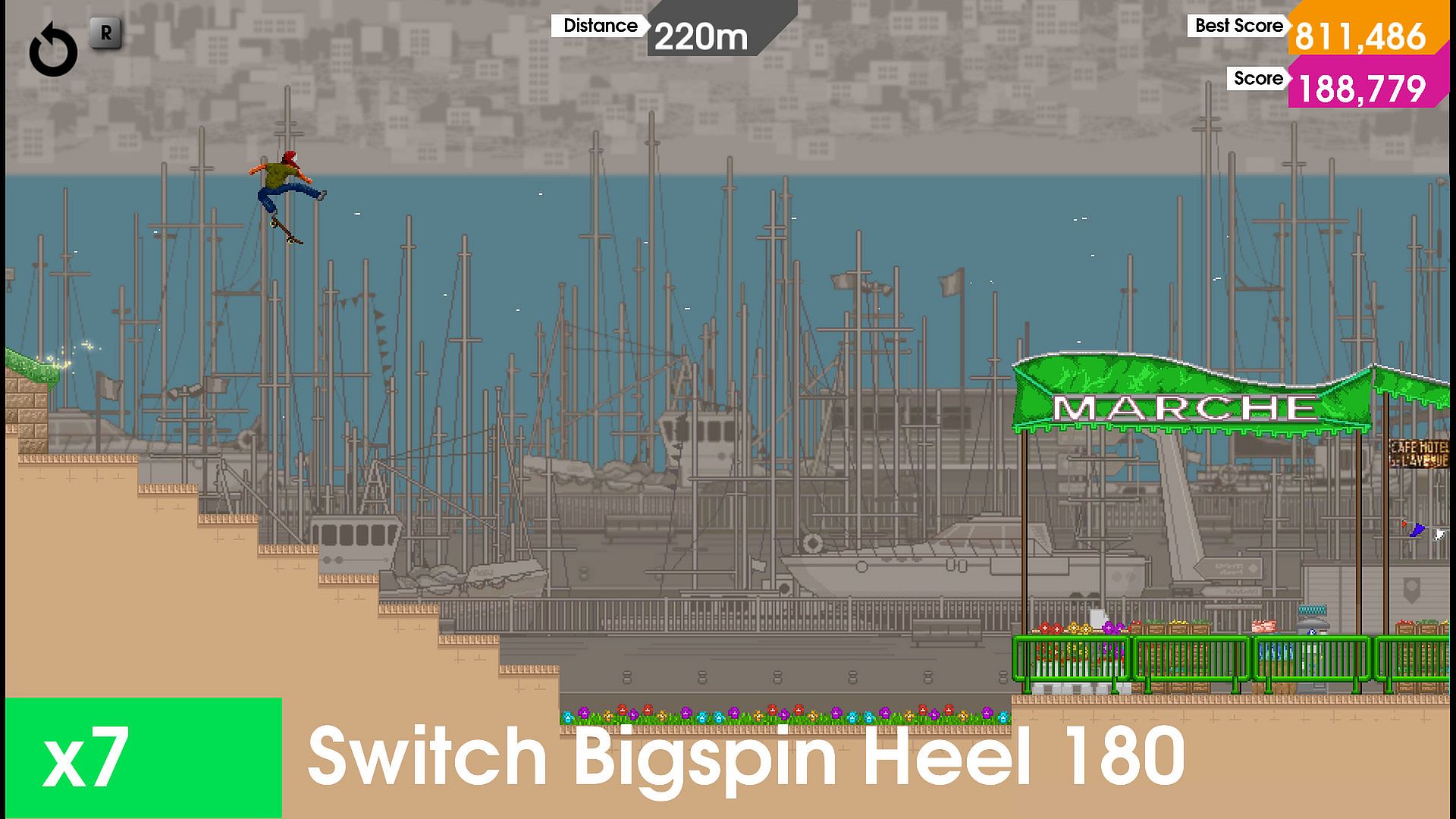
The core loop revolves around one-life attempts on each level. A single mistake ends the run, which forces players to master the timing of tricks, grinds, and landings. The press-to-land system rewards exact inputs at the end of aerial maneuvers, turning successful runs into a rhythmic flow that builds longer combos.
Over 120 distinct tricks and grinds are available, including boardslides, nosegrinds, kickflips, and impossibles. These moves chain together on 50 levels spread across five stages with distinct obstacles such as construction equipment and themed environments. The game runs on PC with controller support that mirrors the feel of console versions.
Game Modes
Four primary modes structure the experience. Career mode guides players through progressive levels and objectives. Spots mode focuses on individual locations for high-score runs. Daily Grind presents a new randomly selected spot each day with a single attempt to post a score after unlimited practice. RAD mode unlocks after completing all challenges and raises the difficulty with stricter requirements.
Leaderboards track performance across every mode and level, encouraging repeated attempts to climb global rankings. The structure keeps sessions short yet demands repeated refinement of routes and timing.
Challenges and Progression
Two hundred fifty unique challenges push players to experiment with specific tricks, routes, and scoring thresholds. Completing these awards medals that serve as permanent markers of progress. The system gradually introduces new mechanics while reinforcing earlier skills through increasingly demanding targets.
Five stages each contain multiple levels with unique layouts. Progression feels deliberate because every new obstacle set builds directly on the timing and combo techniques learned before.
Is It Worth Playing?
OlliOlli suits players who enjoy precise, high-skill arcade sports games with a strong emphasis on mastery rather than open exploration. The one-life structure creates tension that rewards practice and pattern recognition over casual play.
Reception on the primary PC platform stands at Very Positive from hundreds of user reviews. Critics highlighted the satisfying landing mechanic and depth of the trick system. The game remains available with its original content intact and no additional seasons or live-service elements.
Those drawn to tight feedback loops and leaderboard competition will find consistent value in refining runs. Players seeking narrative or multiplayer lobbies may find the focused single-player design less appealing. The soundtrack, featuring tracks from artists such as The Qemists, Dorian Concept, and Flako, complements the gameplay without overpowering it.