


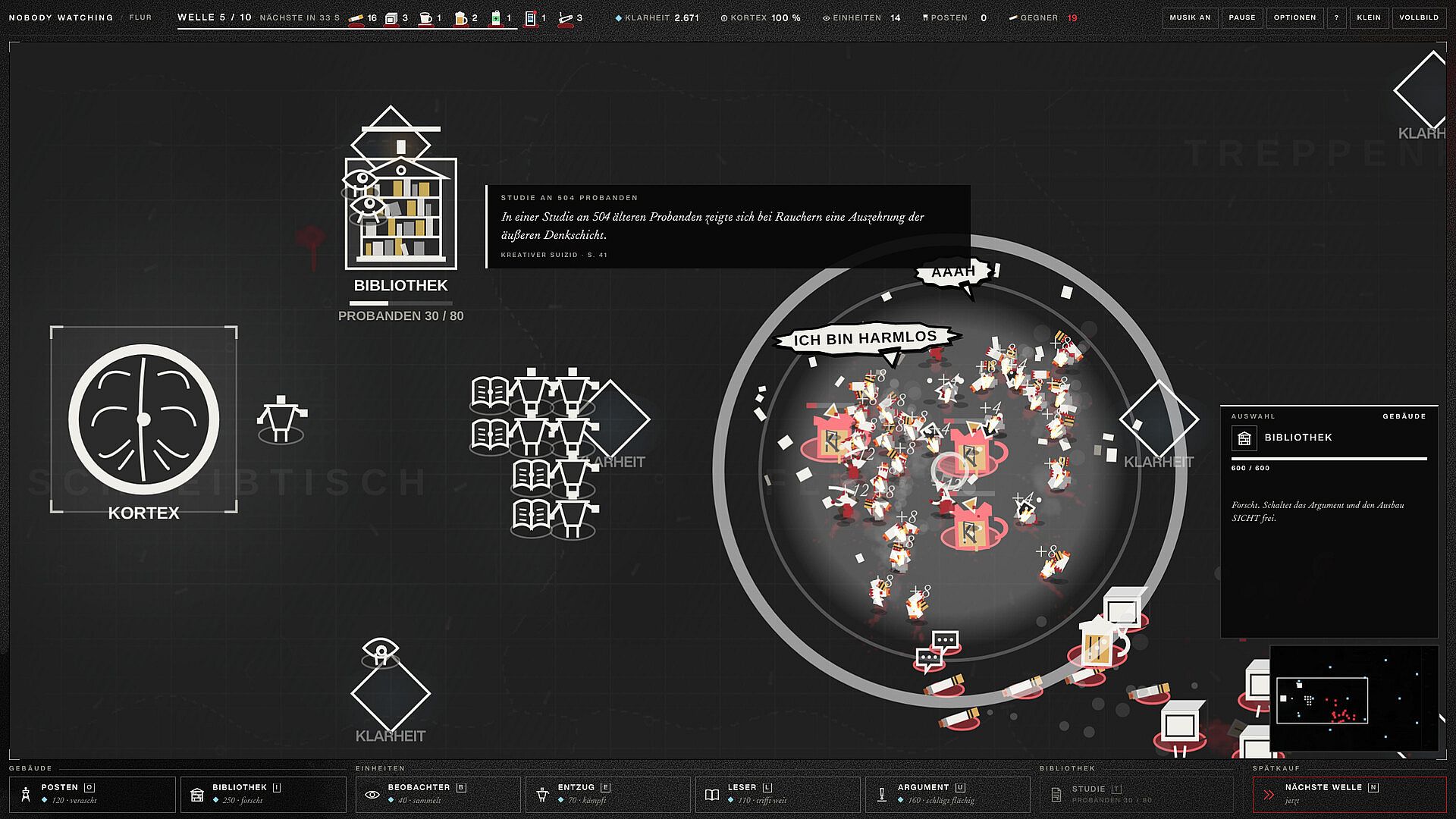
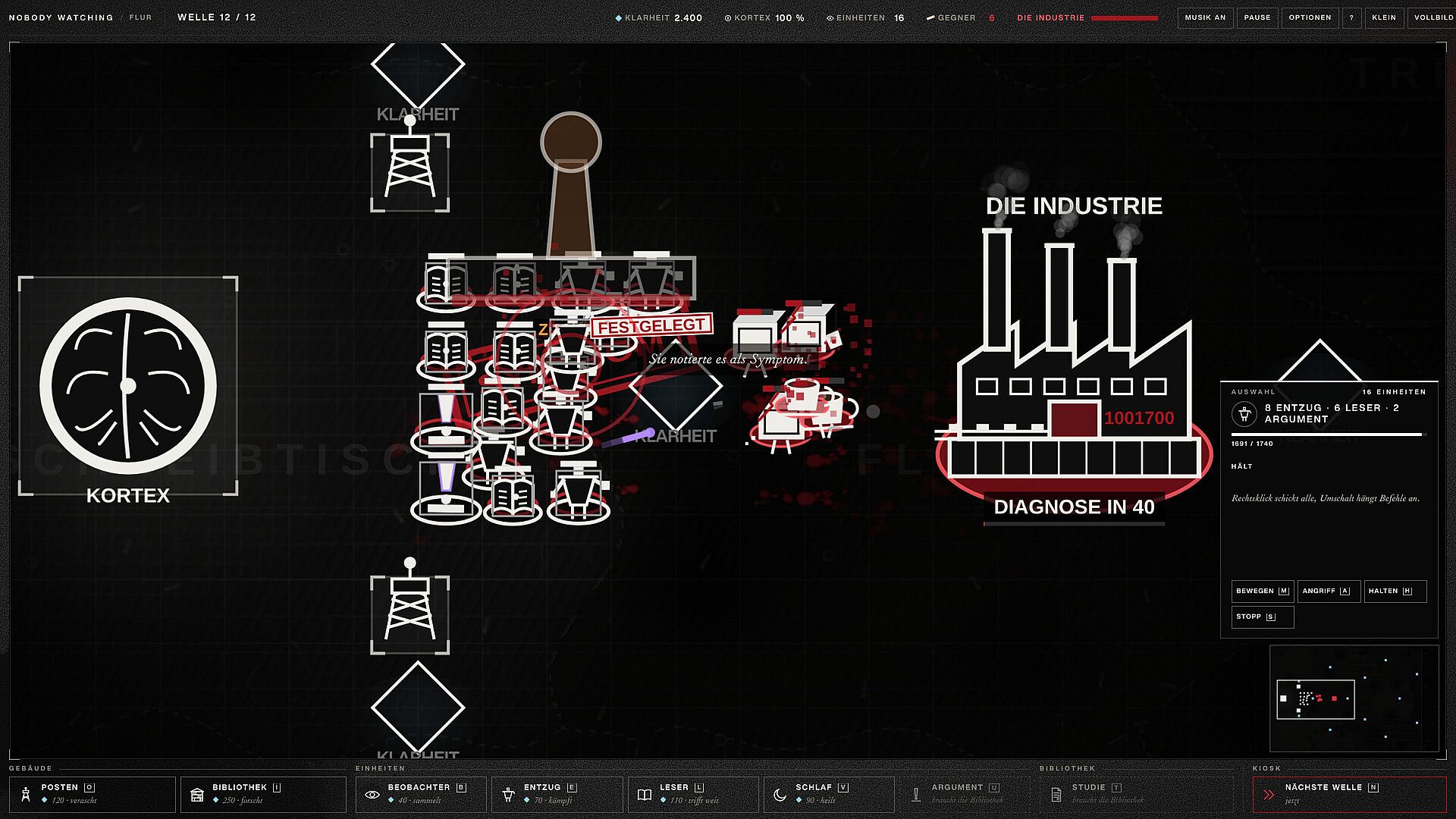
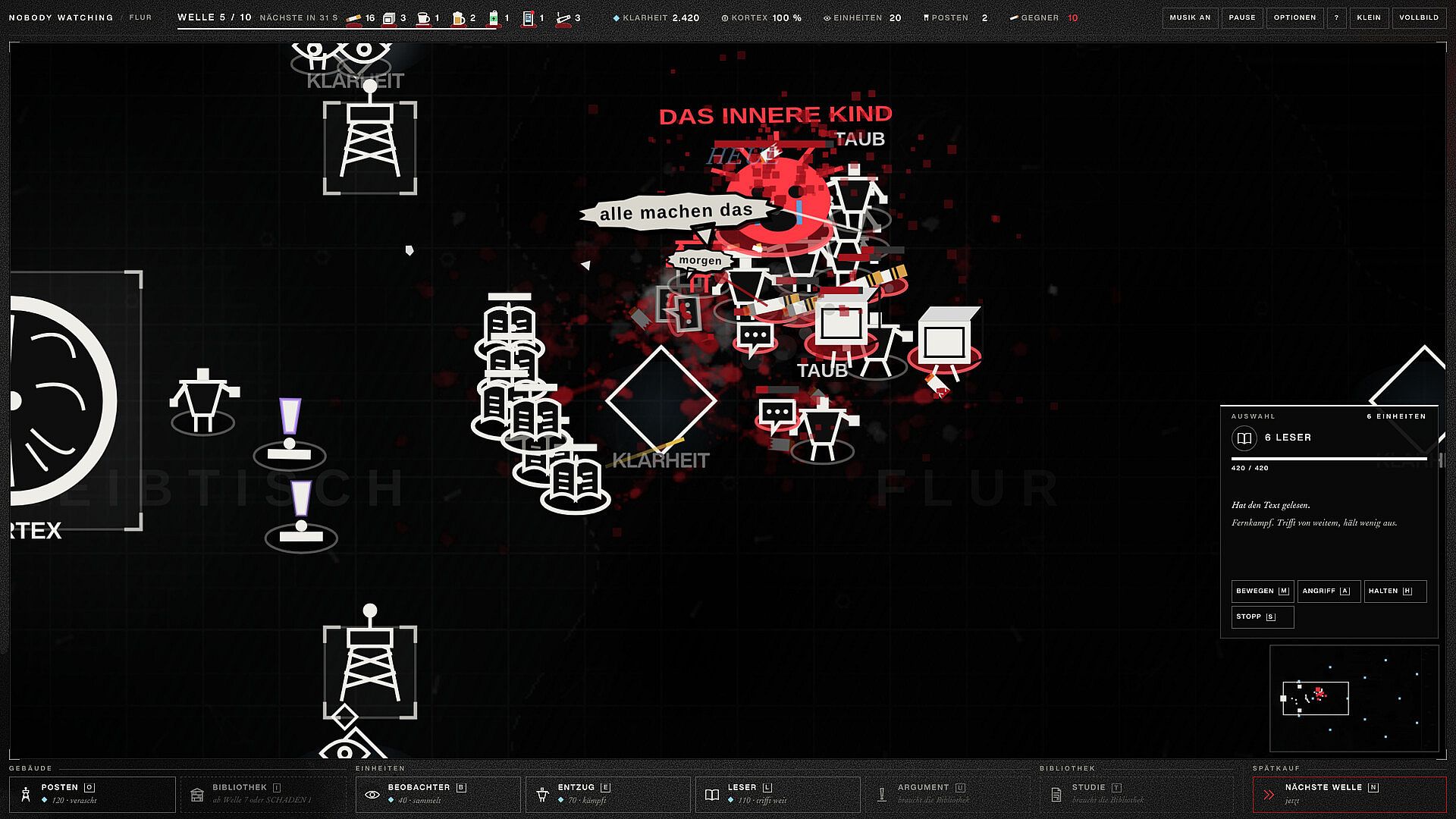
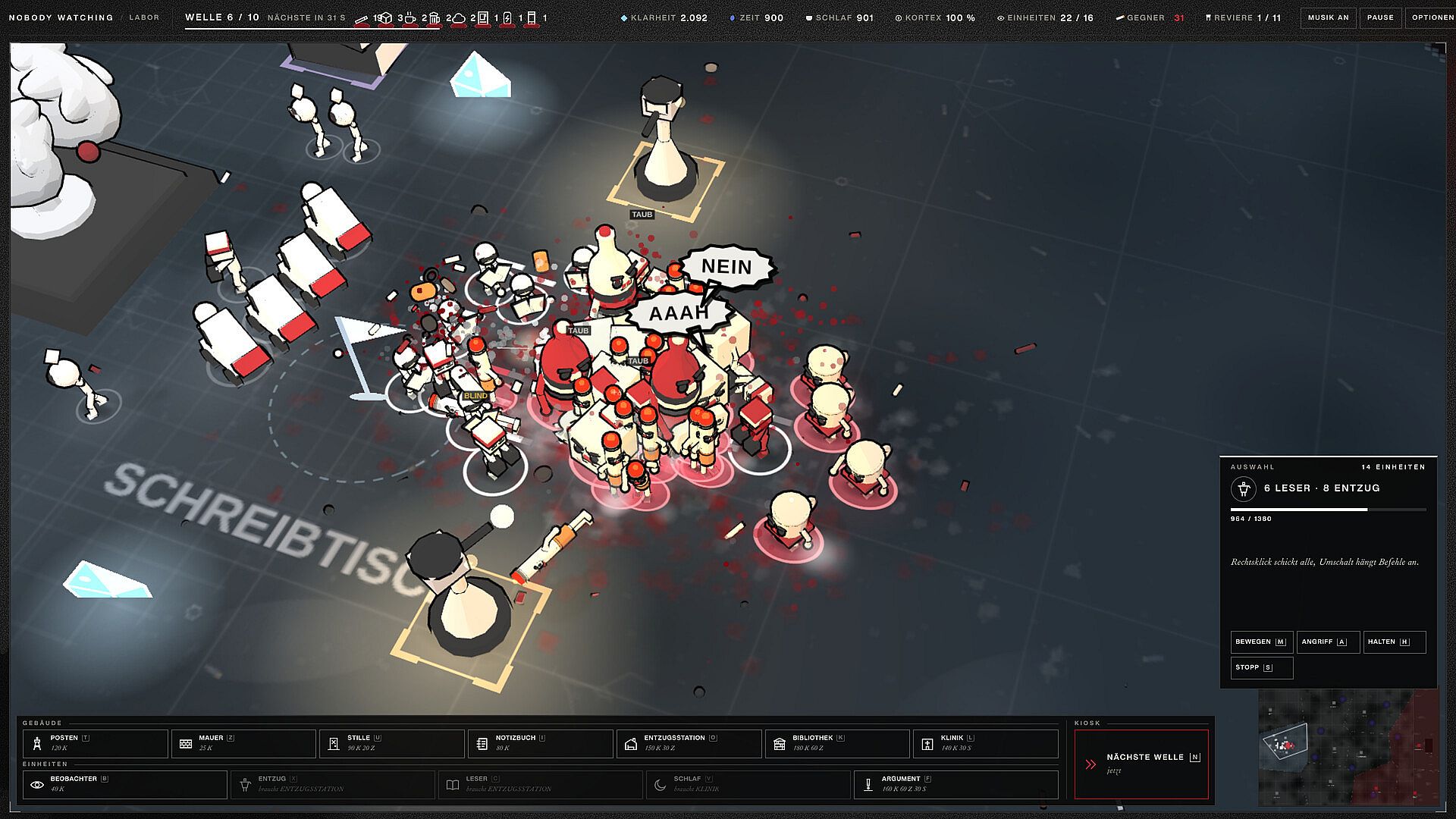
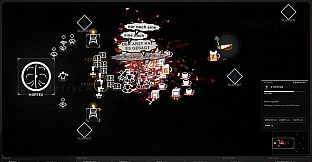
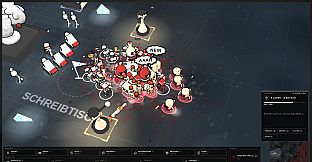
Nobody Watching is a strategy game on PC that puts players in command of defensive forces protecting a vulnerable cortex from waves of addictive enemies. Released as a free to play title in the indie and casual categories, it emphasizes resource management, unit deployment, and forward pressure across matches that last around fifteen minutes or longer campaigns spanning several hours.
Gameplay
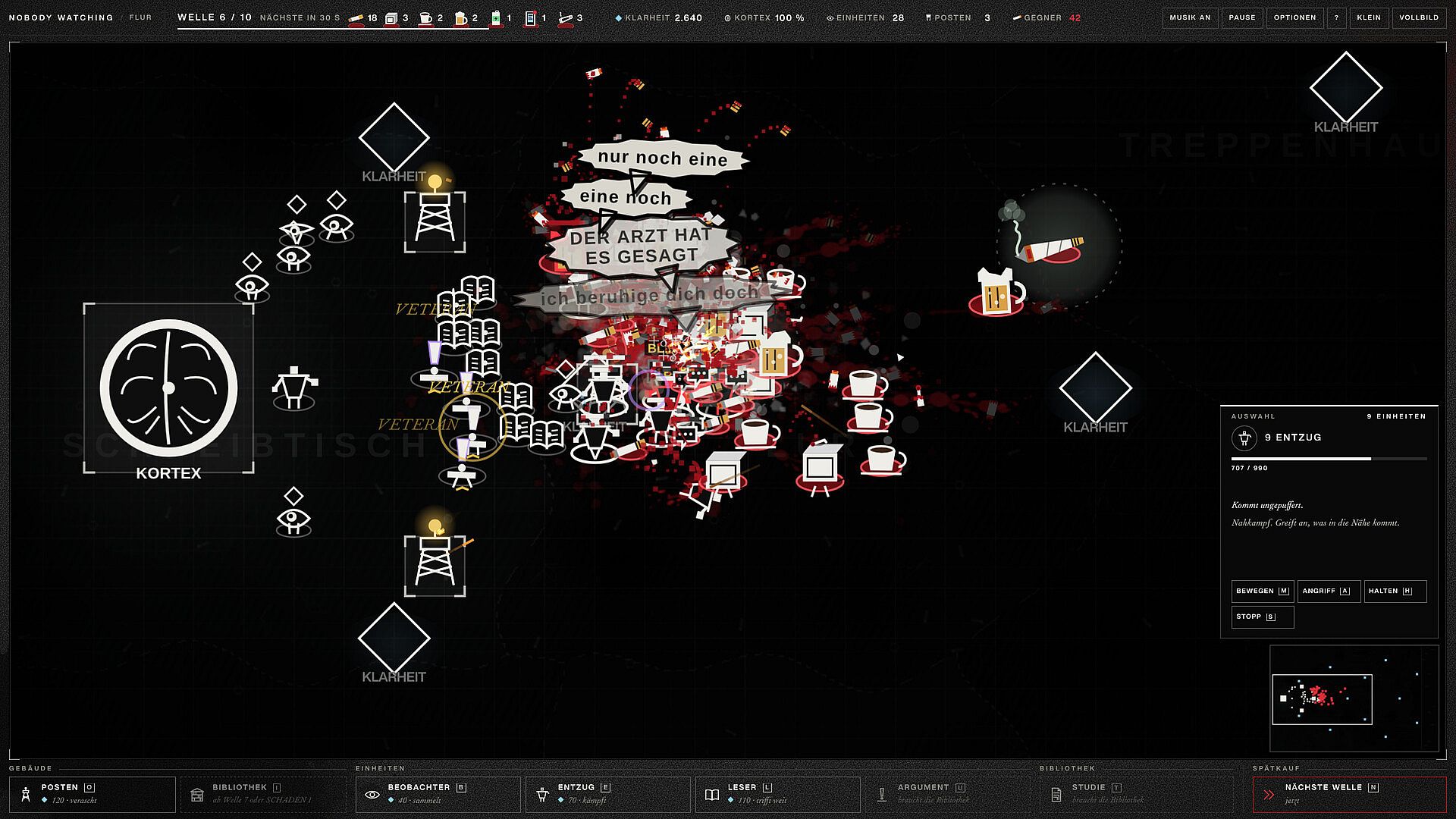
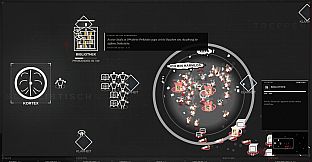
The core loop revolves around surviving successive waves while gathering and spending clarity crystals. Observers collect these resources from the map and return them to the cortex, where they fund unit training, outpost construction, and research. Crystals deplete over time, forcing players to advance into enemy territory to secure new sources before the next wave arrives. Units fill distinct roles that require careful positioning and timing. Observers focus on gathering and repairs, Withdrawal units engage in close combat, Readers provide ranged attacks with limited durability, and Argument units deliver slow but powerful area damage. Fixed posts create burning zones that damage anything entering their radius. The library serves as a central research hub that unlocks Argument and additional upgrades.
Enemies arrive in themed groups representing cigarettes, sugar, coffee, beer, energy drinks, and phones, each applying unique pressure through debuffs or direct attacks. Excuses can paralyze units in place, while brain failures inflict conditions such as blindness, deafness, or uncontrolled twitching. Matches conclude with a detailed reckoning that tallies points, rank progression, and the specific losses incurred. Surviving units advance through ranks from Veteran to Veteran II and finally Mushin, where lost limbs regenerate. First-time defeats of enemies add entries to a lexicon for future reference.
Game Modes
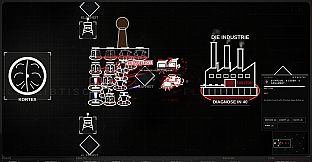
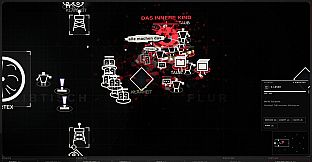
Four distinct modes support different play styles and session lengths. The Match delivers a focused experience of twelve waves including two bosses, the inner child and the Relapse. Campaign mode follows a fixed sequence of nine acts, each featuring a unique time of day, starting conditions, and enemy sets such as Body Positivity, Joint, Red Wine, and Diagnosis. Victories in this mode award commandments from an in-game book, building toward a finale against the Industry. Free Choice allows custom combinations of time of day options including morning, noon, after work, and night with starting situations like credit, cold turkey, weekends only, family doctor, or nobody is watching. Endless mode removes the wave limit entirely, introducing the Study mechanic that treats every field death as a test subject for ongoing analysis and adaptation.
Progression and Systems
Rank advancement rewards consistent survival and shapes long-term strategy. Higher ranks restore capabilities lost in battle, encouraging players to experiment with aggressive pushes. The lexicon system rewards exploration of enemy behaviors, turning repeated encounters into accumulated knowledge that informs future decisions. Research through the library expands tactical options beyond the initial unit roster, while outpost placement and crystal management create branching paths within each map. The single-player focus keeps attention on precise execution rather than external competition.
Is It Worth Playing?
Players who enjoy deliberate strategy games with clear resource loops and wave-based defense will find a cohesive system here. The free to play model removes any upfront barrier, and the variety of modes accommodates both short sessions and extended campaigns. The thematic presentation of enemies as everyday substances and habits adds a distinctive layer without requiring prior familiarity. Because the game remains in a pre-release state with no accumulated player data available, expectations should center on the verified mechanics of unit roles, crystal economy, and mode structure rather than community metrics. Those drawn to indie strategy experiences that reward forward momentum and adaptive research will likely appreciate the focused design.