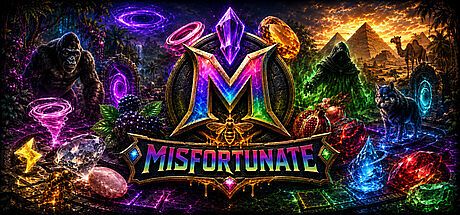


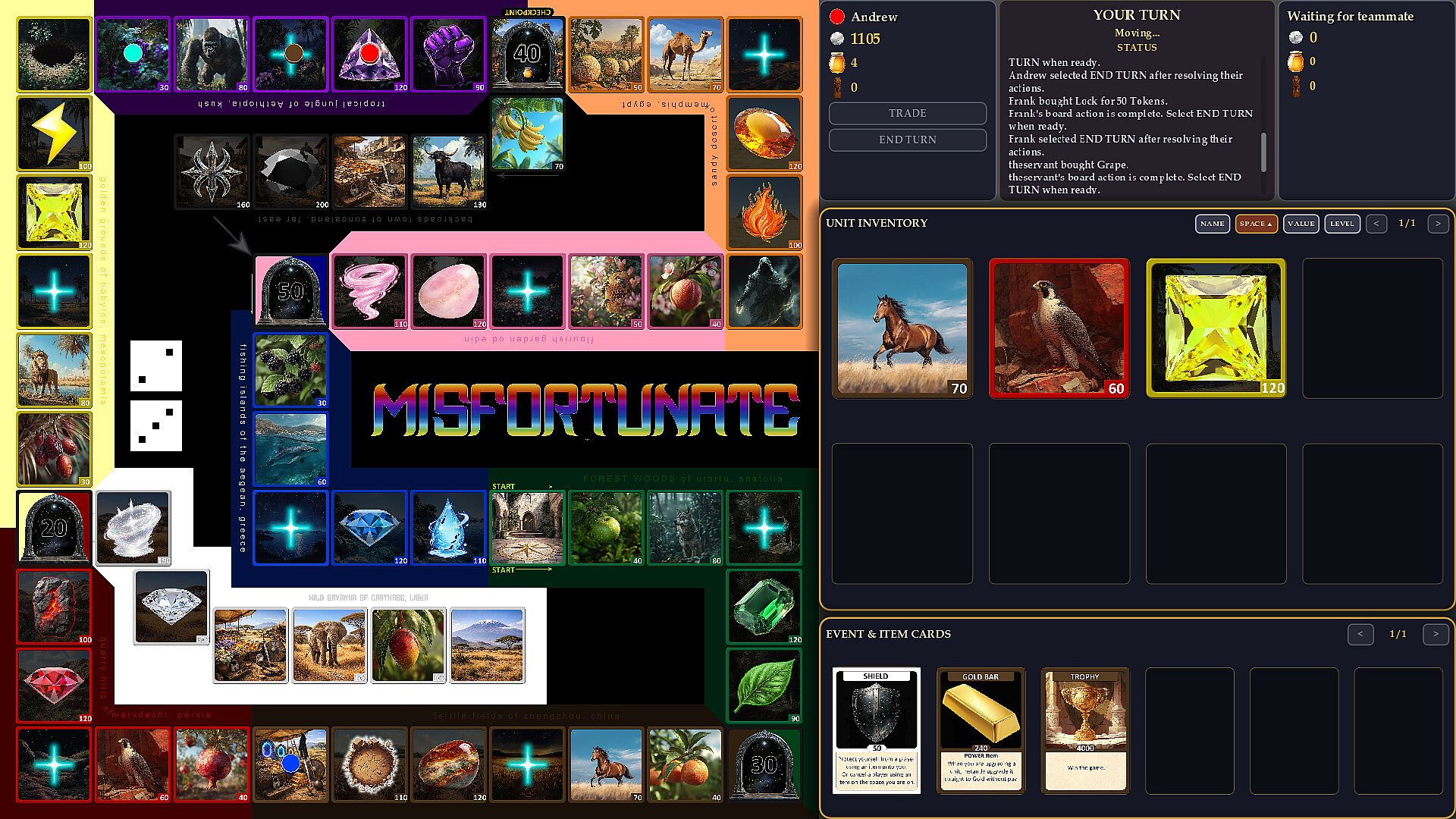
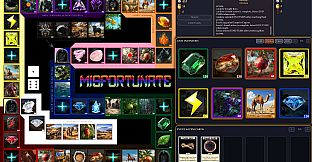
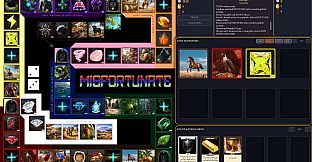
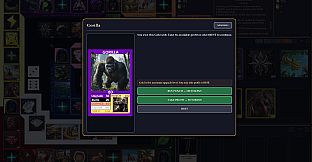
MISFORTUNATE is a turn-based strategy board game that combines economic management with competitive player elimination on a shared playing surface. Players move across an illustrated board, gather assets, claim units, and upgrade them while adapting to shifting conditions that can reward or punish aggressive or cautious play. The experience centers on resource allocation and positioning, where every choice influences the ability to outlast rivals in matches that emphasize both planning and flexibility.
Gameplay
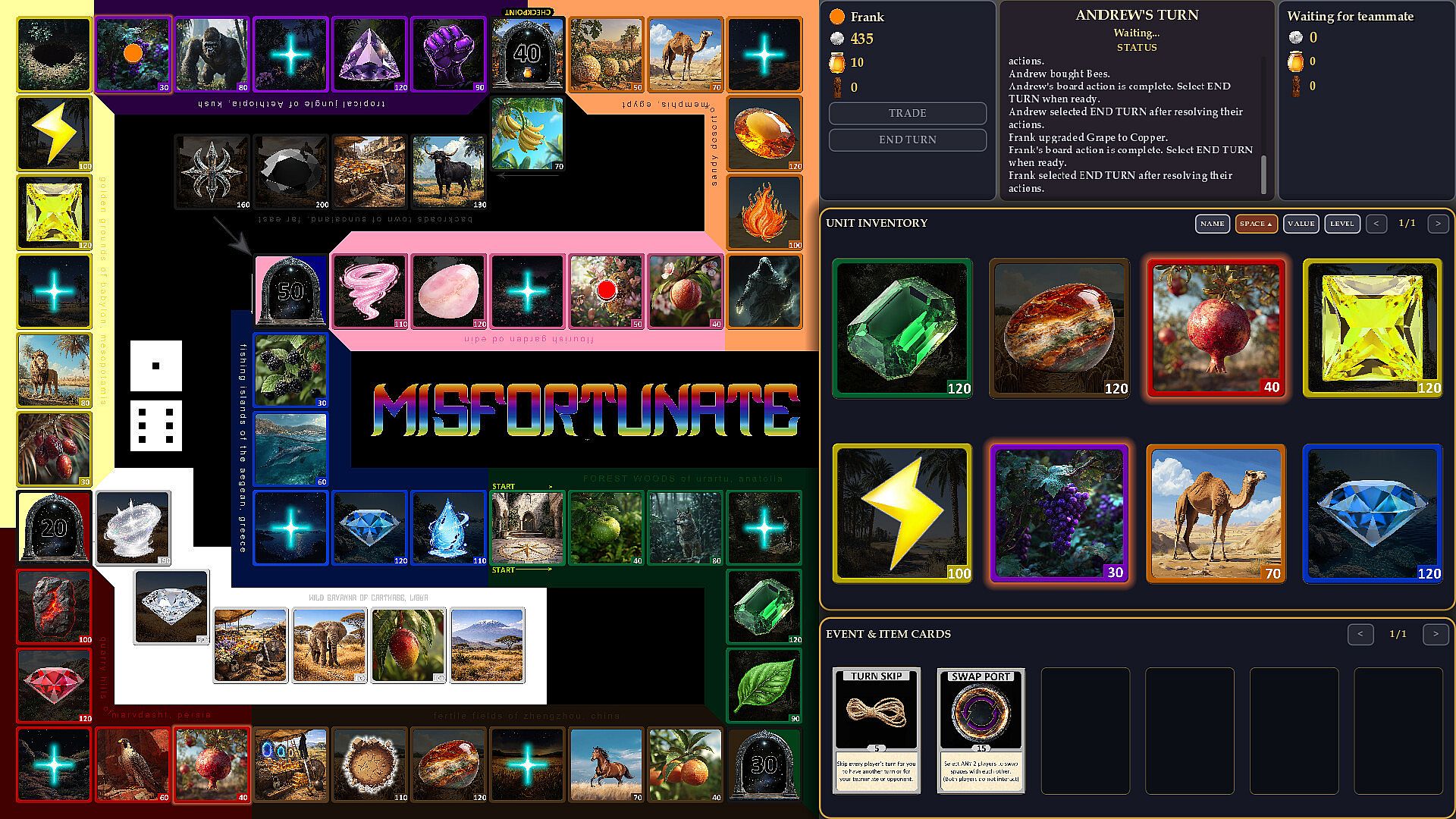
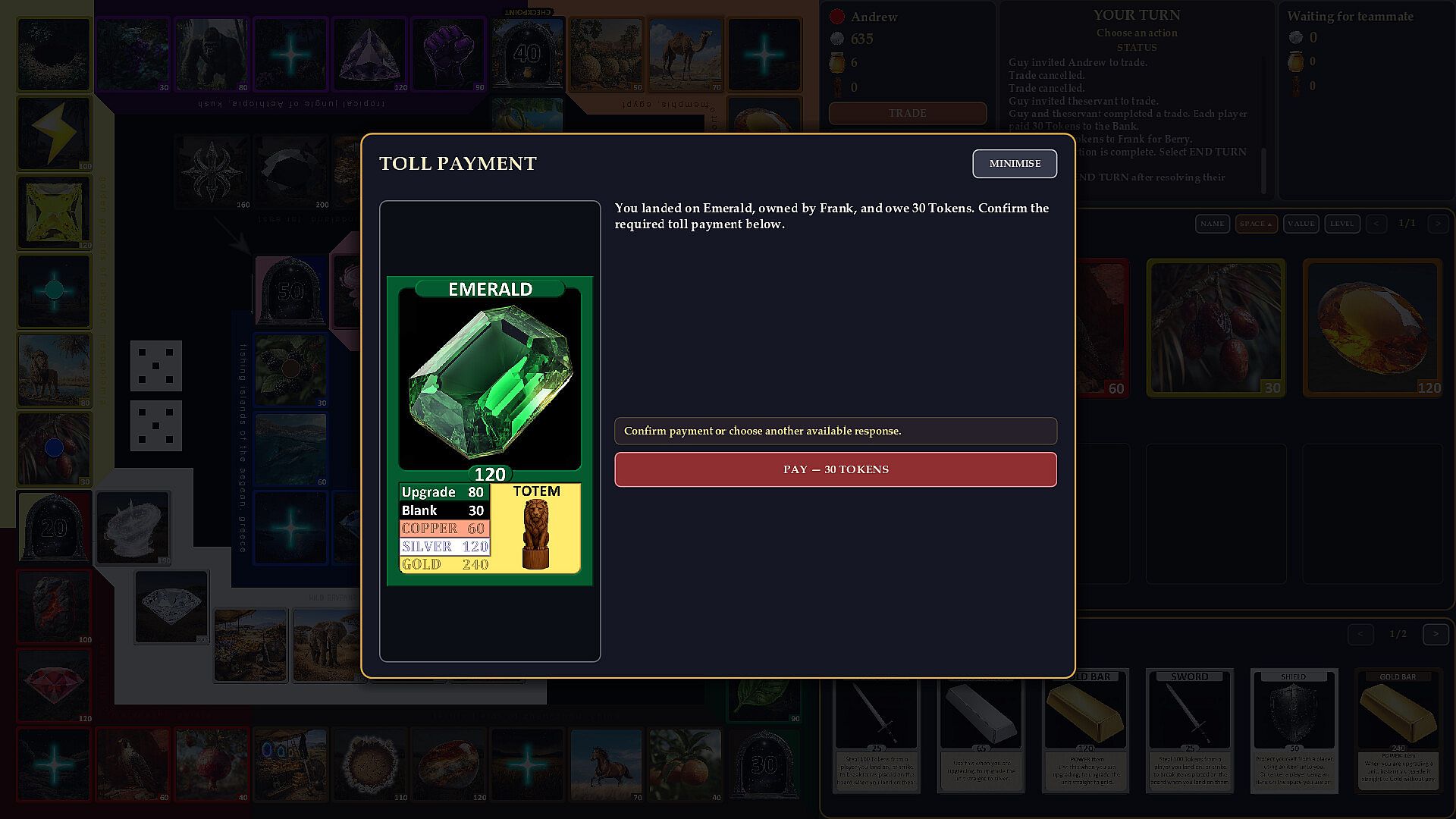
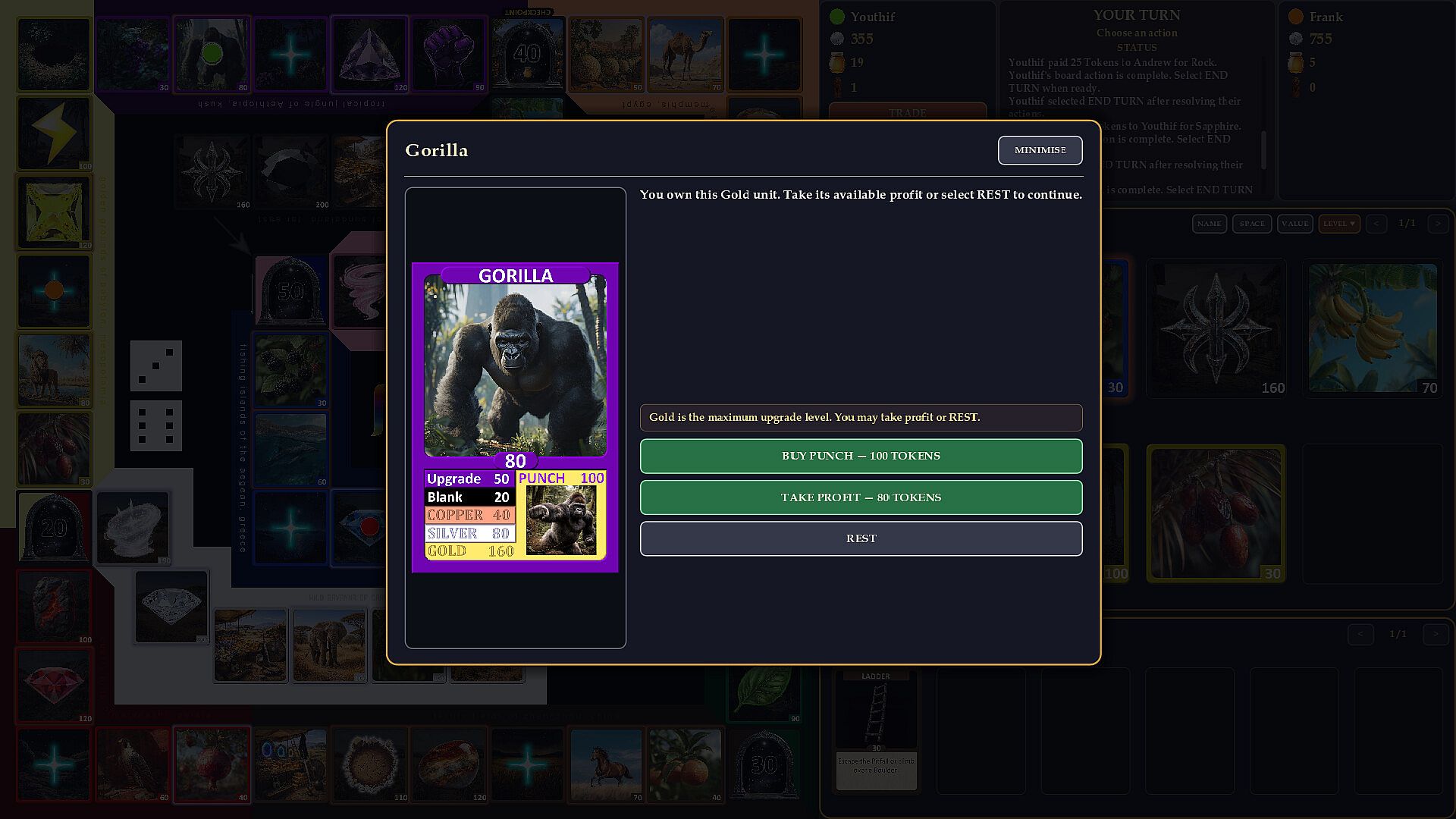
The core loop revolves around traveling the board to secure units and assets before opponents can claim them. Resources such as tokens, honey, and totems accumulate through movement and positioning, then get spent on purchases, upgrades, or defensive reserves. Upgrading units progresses through distinct levels that increase the cost imposed on any player who lands on them, turning owned spaces into ongoing sources of pressure.
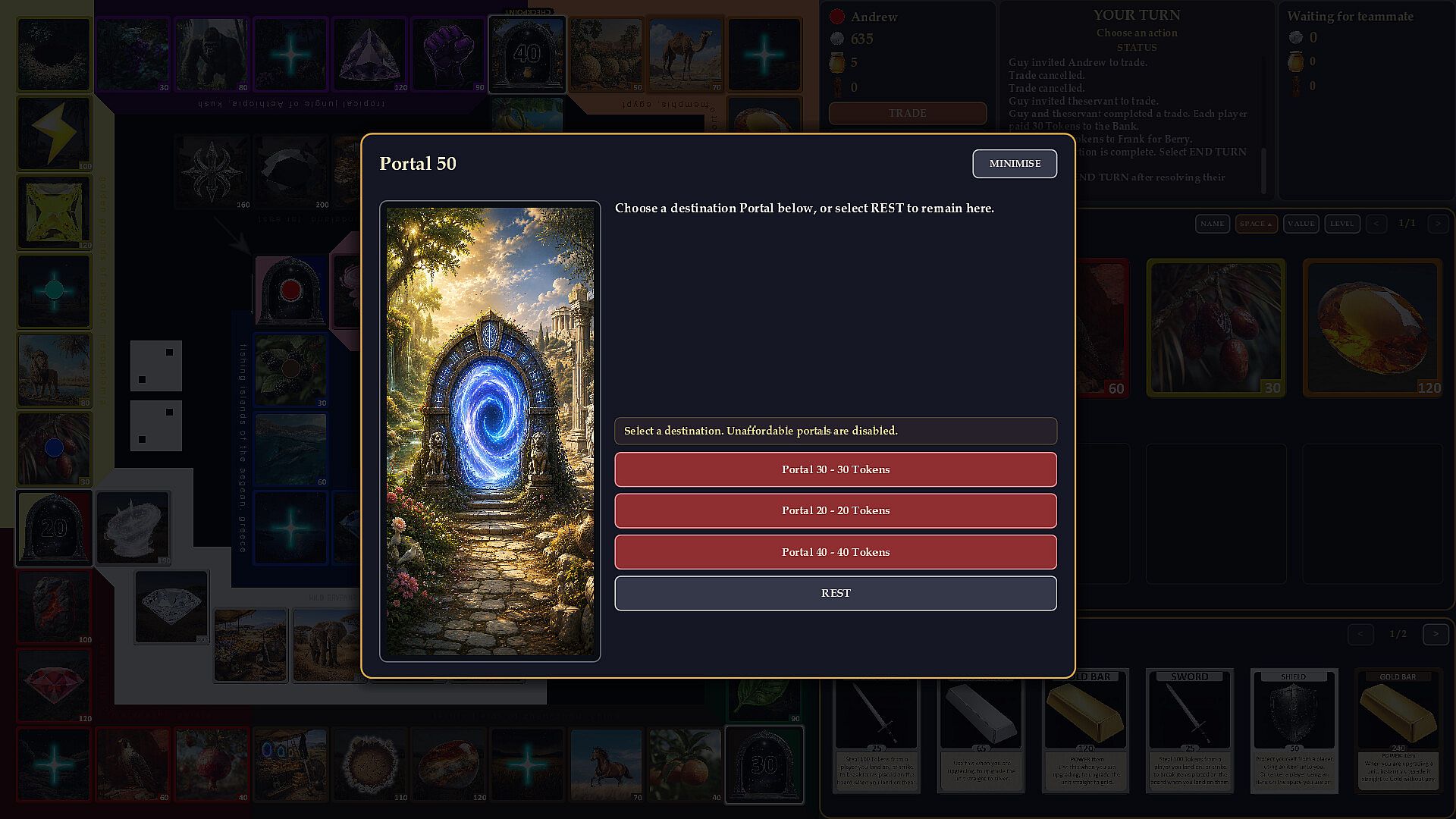
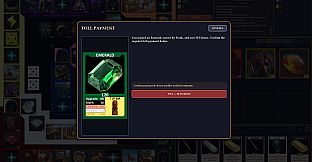
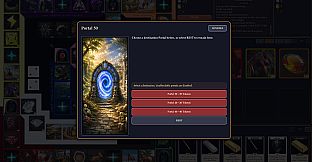
Branching paths and special regions add layers to movement decisions, as certain destinations require specific event cards or deliberate route choices to access. This setup encourages players to weigh short-term gains against long-term board control. Event cards introduce variability by relocating pieces, adjusting resource totals, or creating new opportunities that force immediate tactical adjustments without invalidating prior planning.
Resource management demands constant attention to spending priorities. Expansion competes with upgrades and emergency buffers, and running low leaves a position vulnerable to sudden costs or forced payments. The visual presentation uses a grounded, historically inspired style with high-resolution, hand-crafted board artwork that supports clear readability of spaces and connections during extended sessions.
Game Modes
Matches take place in competitive multiplayer formats where participants compete simultaneously on the same board. The structure supports multiple players engaging in the same turn sequence, with actions resolving one after another until only one remains. No separate single-player or cooperative variants appear in the available details, keeping the focus on direct confrontation and elimination.
Each session follows the same fundamental rules regardless of participant count, scaling naturally as more players increase the frequency of interactions and the complexity of resource competition. The emphasis stays on outlasting others through combined economic strength and opportunistic strikes rather than on separate rule sets for different match types.
Strategic Elements
Ownership of units forms the foundation of pressure, yet it requires ongoing investment to maintain effectiveness. Players must decide when to push for additional claims and when to consolidate existing holdings through upgrades that raise the stakes for opponents. Alternate routes and event-driven changes mean that no single path or asset allocation guarantees dominance across an entire match.
Adaptation becomes essential because events can redistribute resources or reposition players without warning. Successful approaches balance proactive expansion with contingency reserves, recognizing moments when aggressive play risks overextension and when restraint preserves options for later turns. The elimination goal rewards those who reduce opponents' recovery potential while protecting their own positions from similar disruption.
Is It Worth Playing?
MISFORTUNATE suits players who enjoy turn-based strategy experiences built around economic decisions and gradual board control rather than fast-paced action. The combination of unit upgrades, resource scarcity, and event variability creates matches where outcomes depend on reading the current state and adjusting plans accordingly. Early Access status means the game continues to receive refinements, which may expand or polish existing systems over time.
Those drawn to board-game-style competition with a digital implementation will find the core loop consistent with the described mechanics of claiming, upgrading, and surviving misfortune. The absence of extensive review data at this stage leaves room for personal evaluation once more players have engaged with the title in its current form.