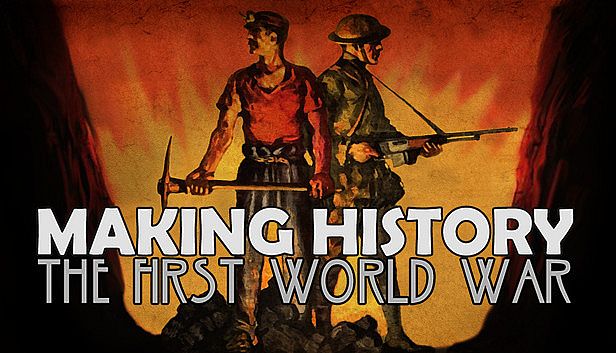














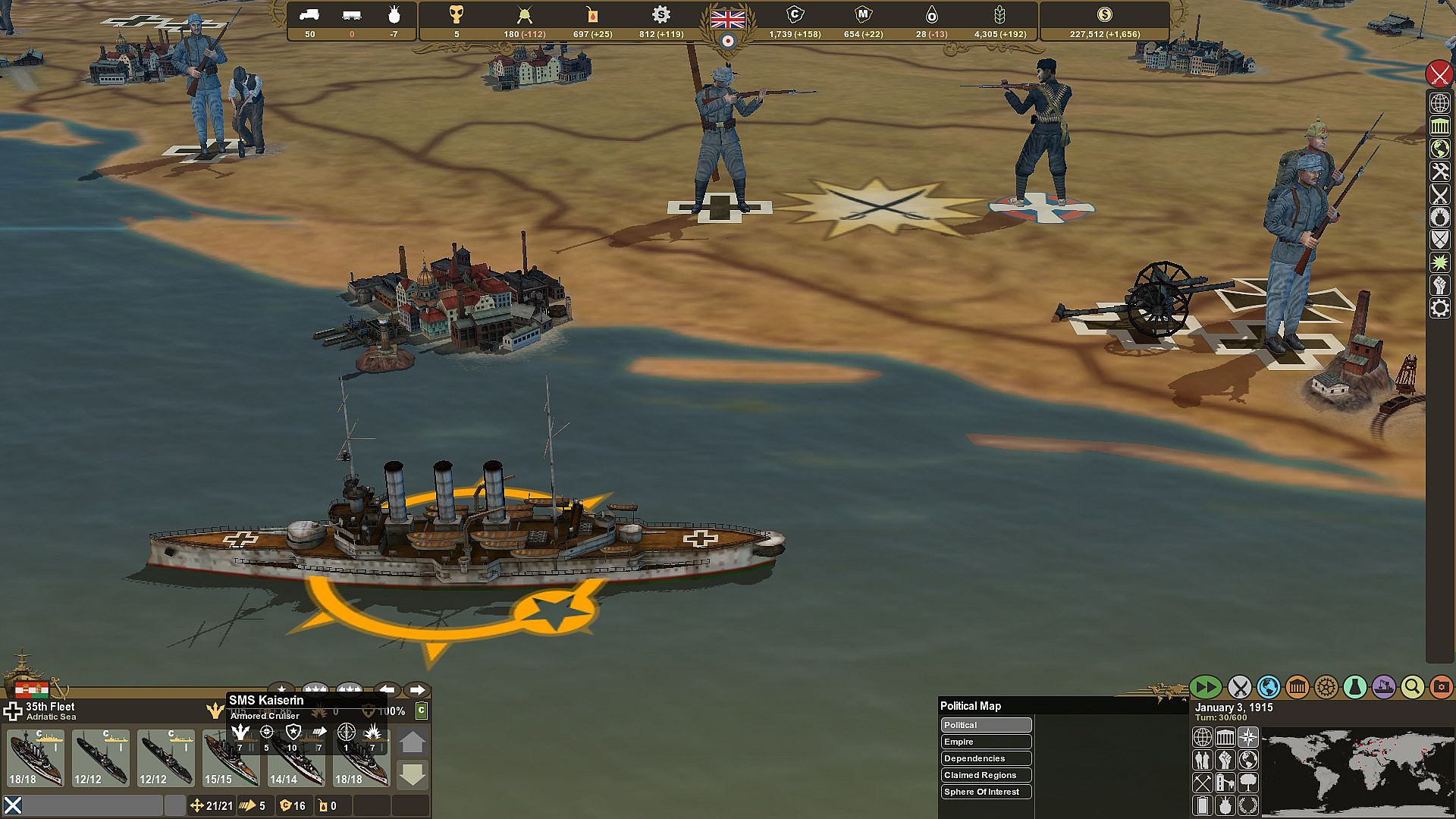
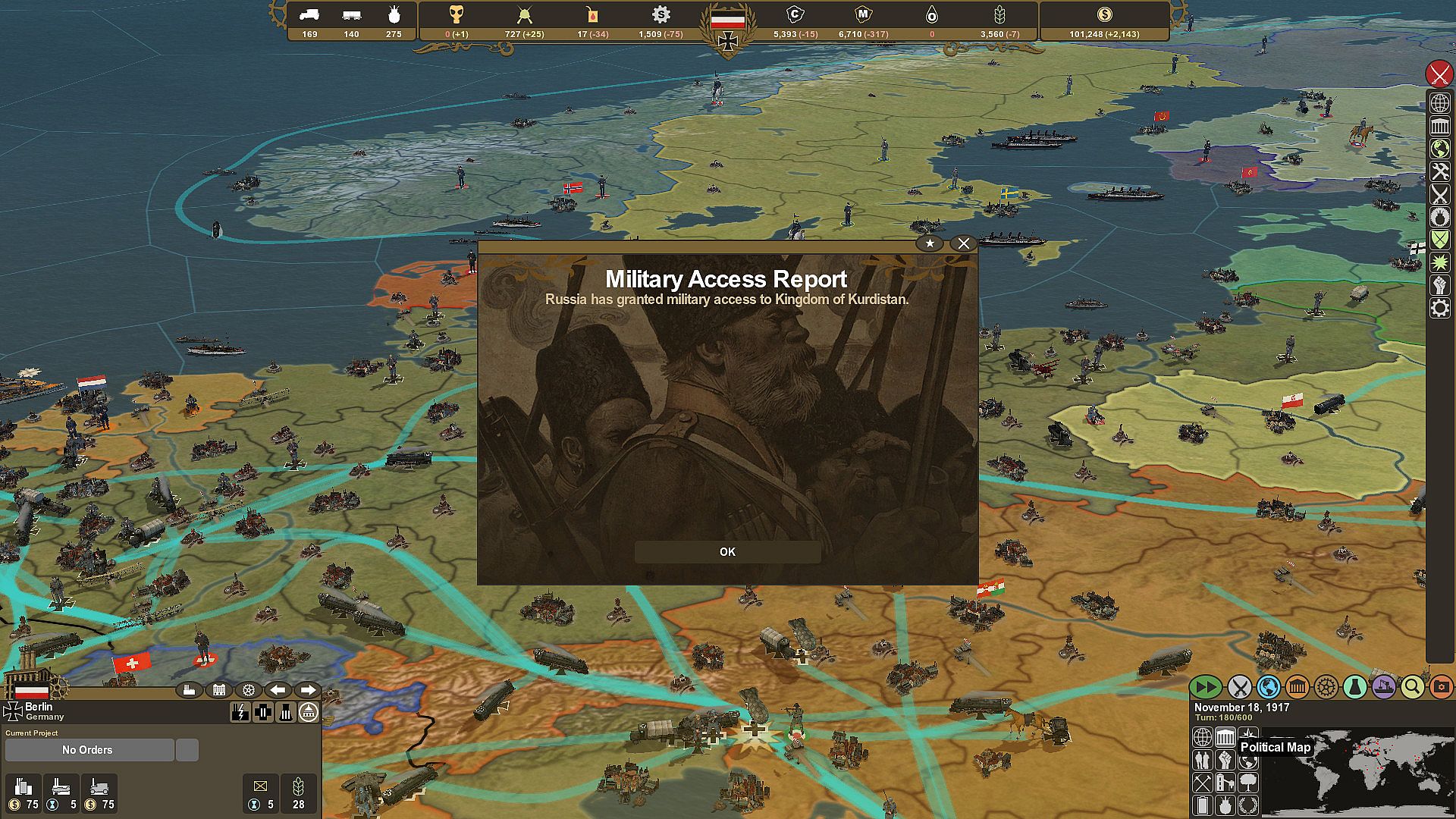
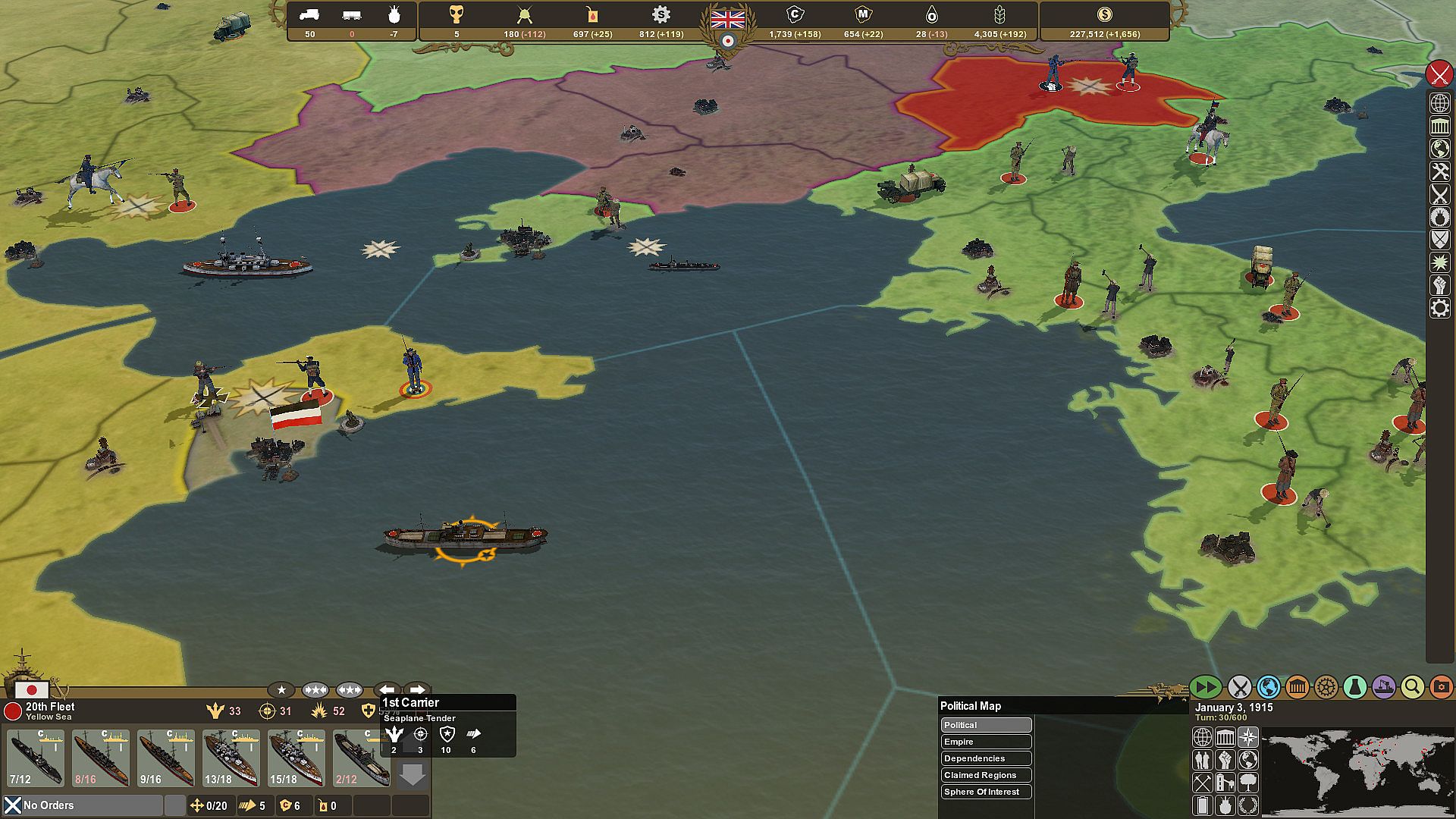
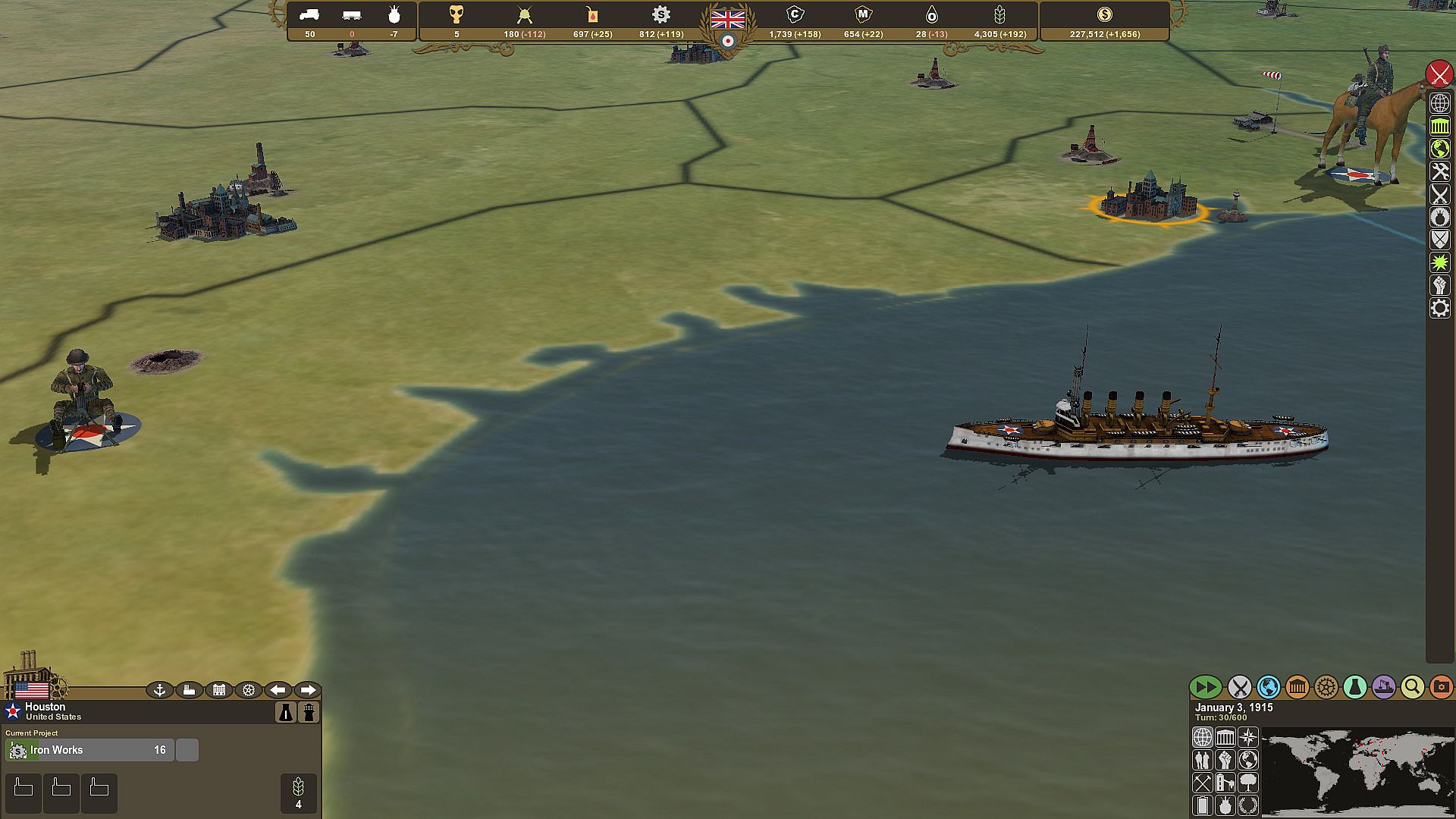
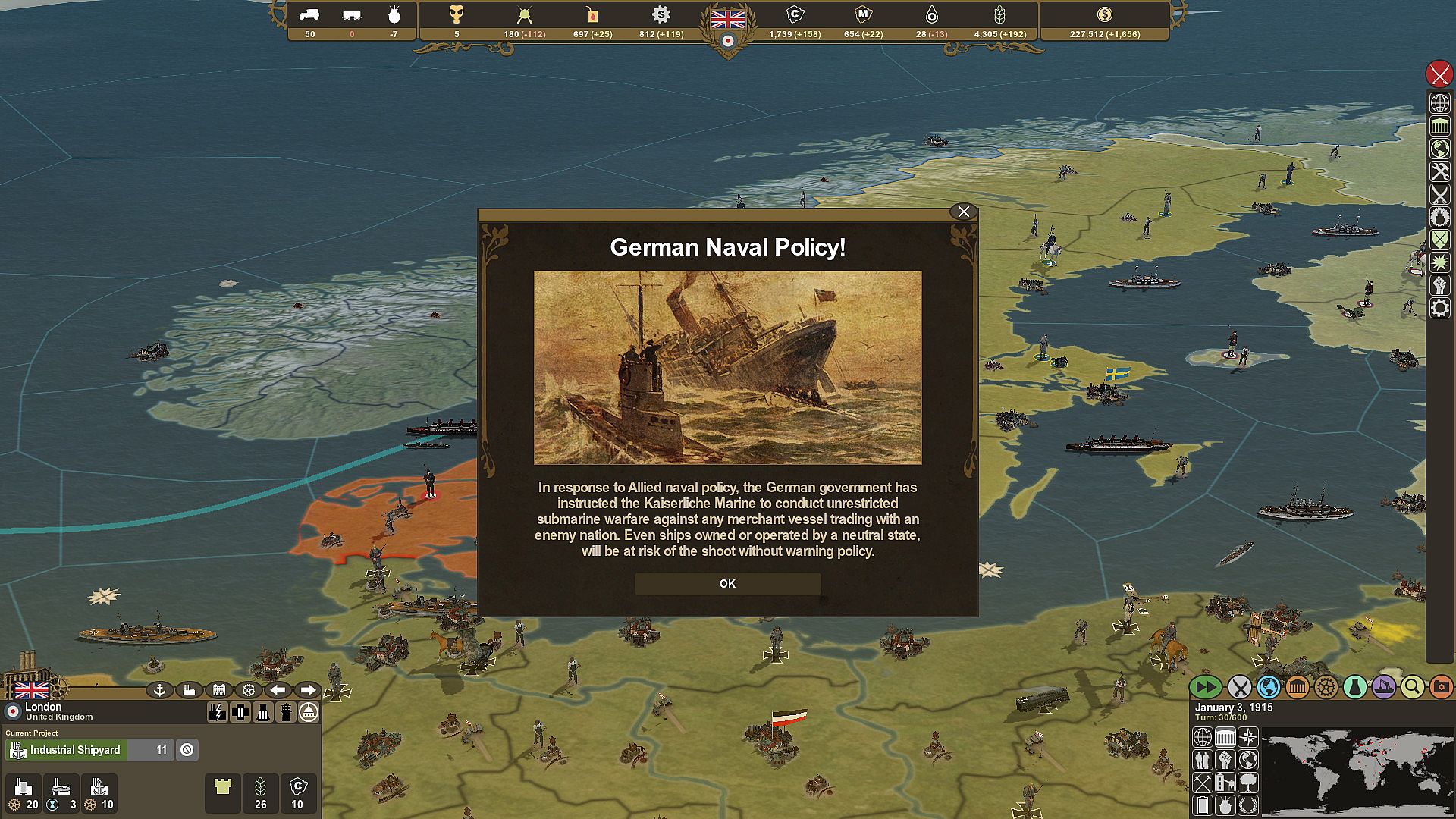
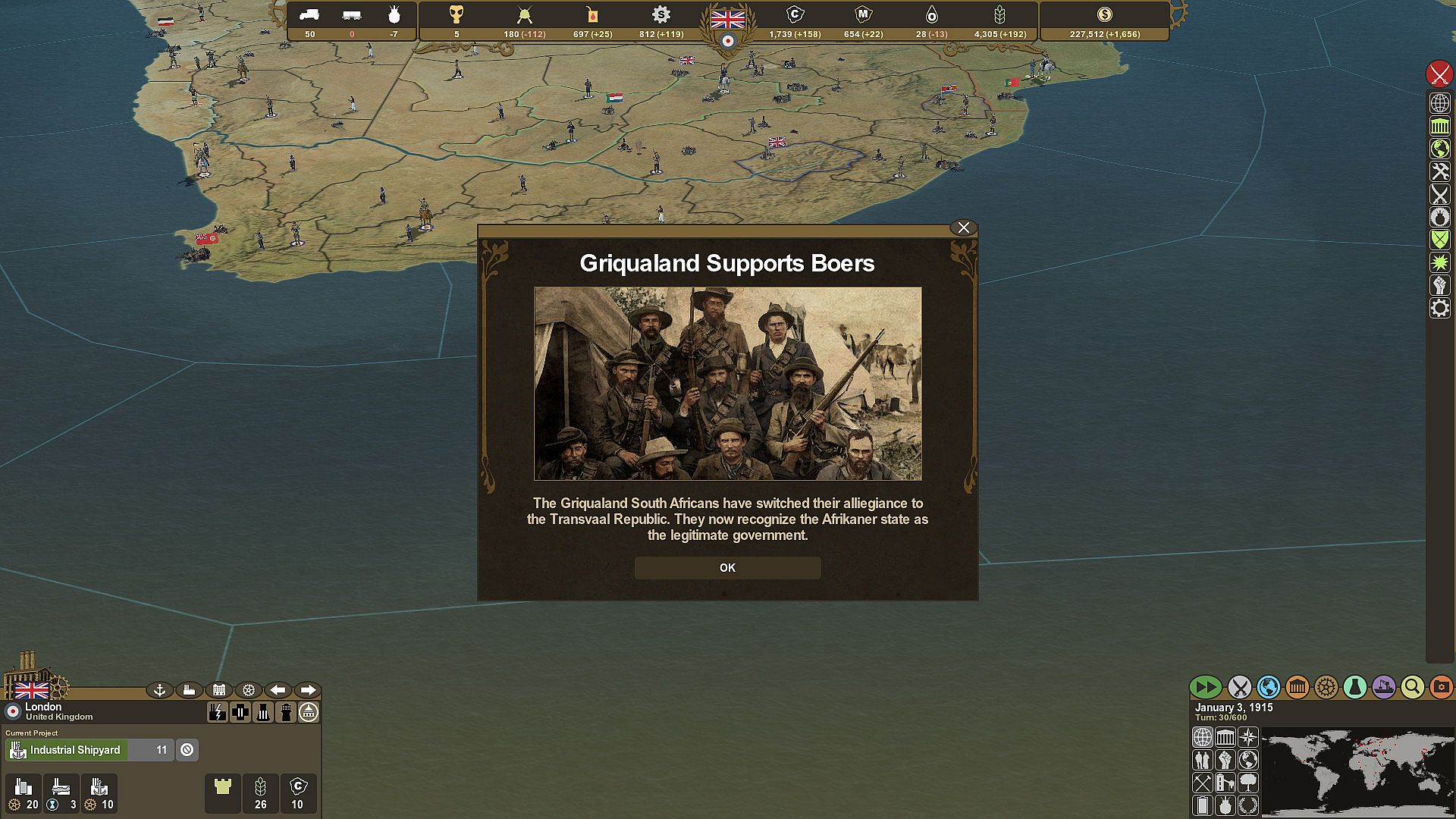
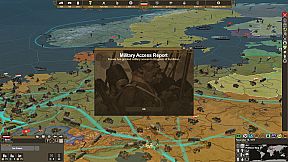
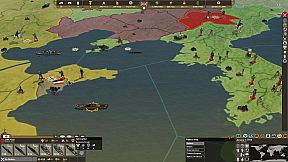
Making History: The First World War is a turn-based strategy and simulation game set during the global conflict of 1914 to 1918. Players assume leadership of one of the era's independent nations and manage its economy, military forces, domestic policies, and diplomatic relations across a detailed world map. The experience emphasizes grand strategy at the national level, where decisions on industrialization, resource allocation, and territorial control determine outcomes in a setting defined by machine-age warfare and total mobilization.
Gameplay
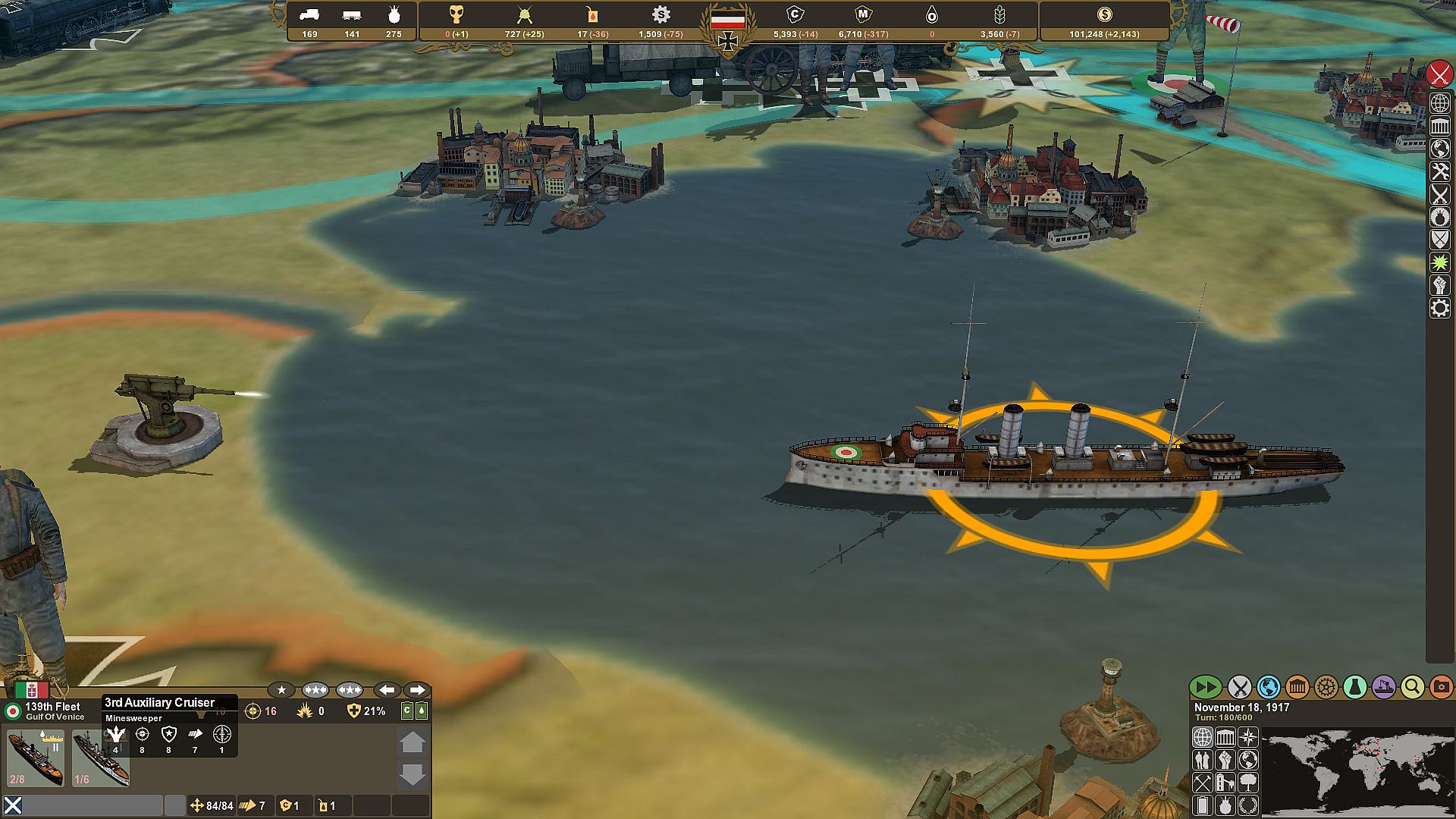
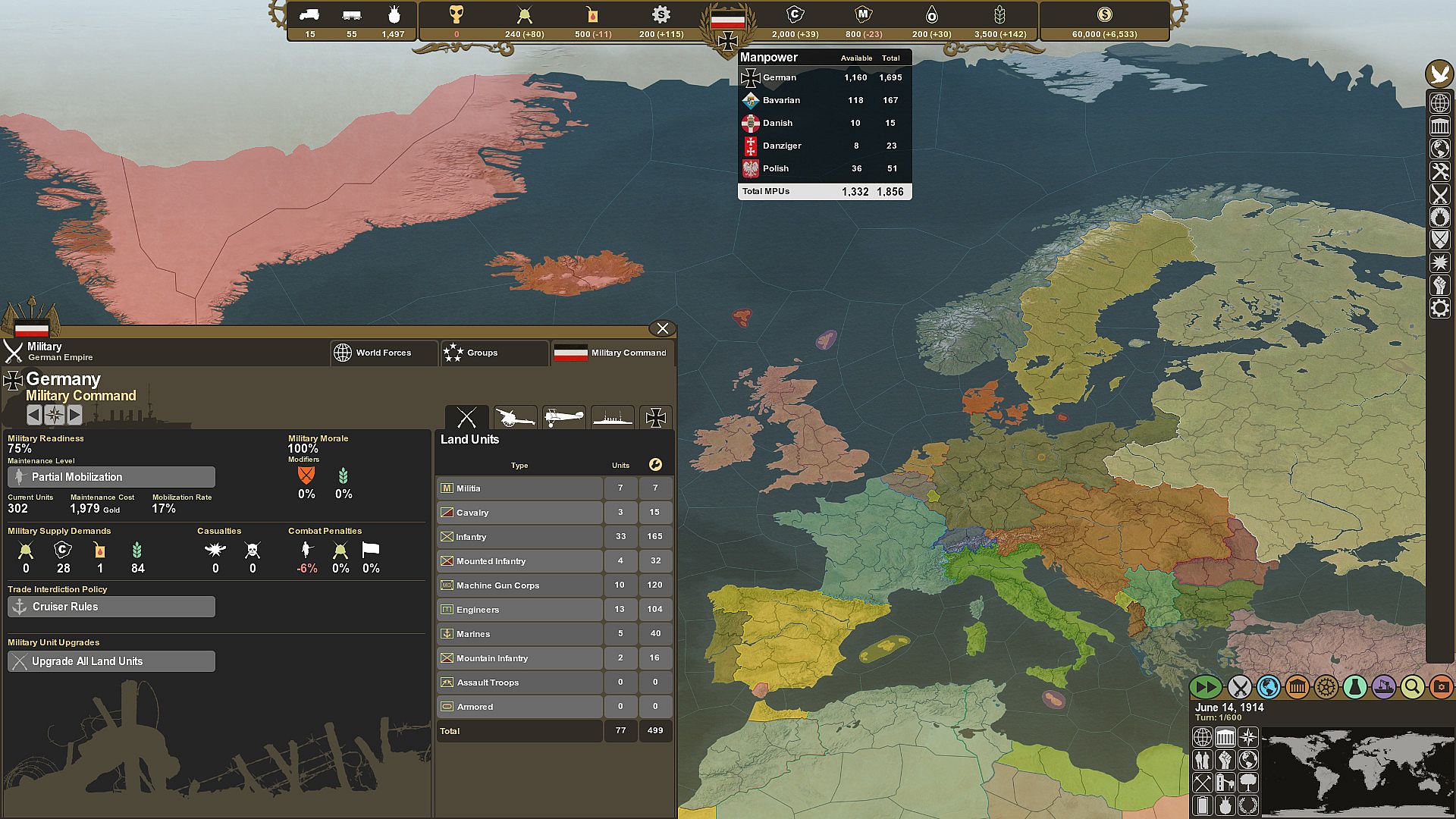
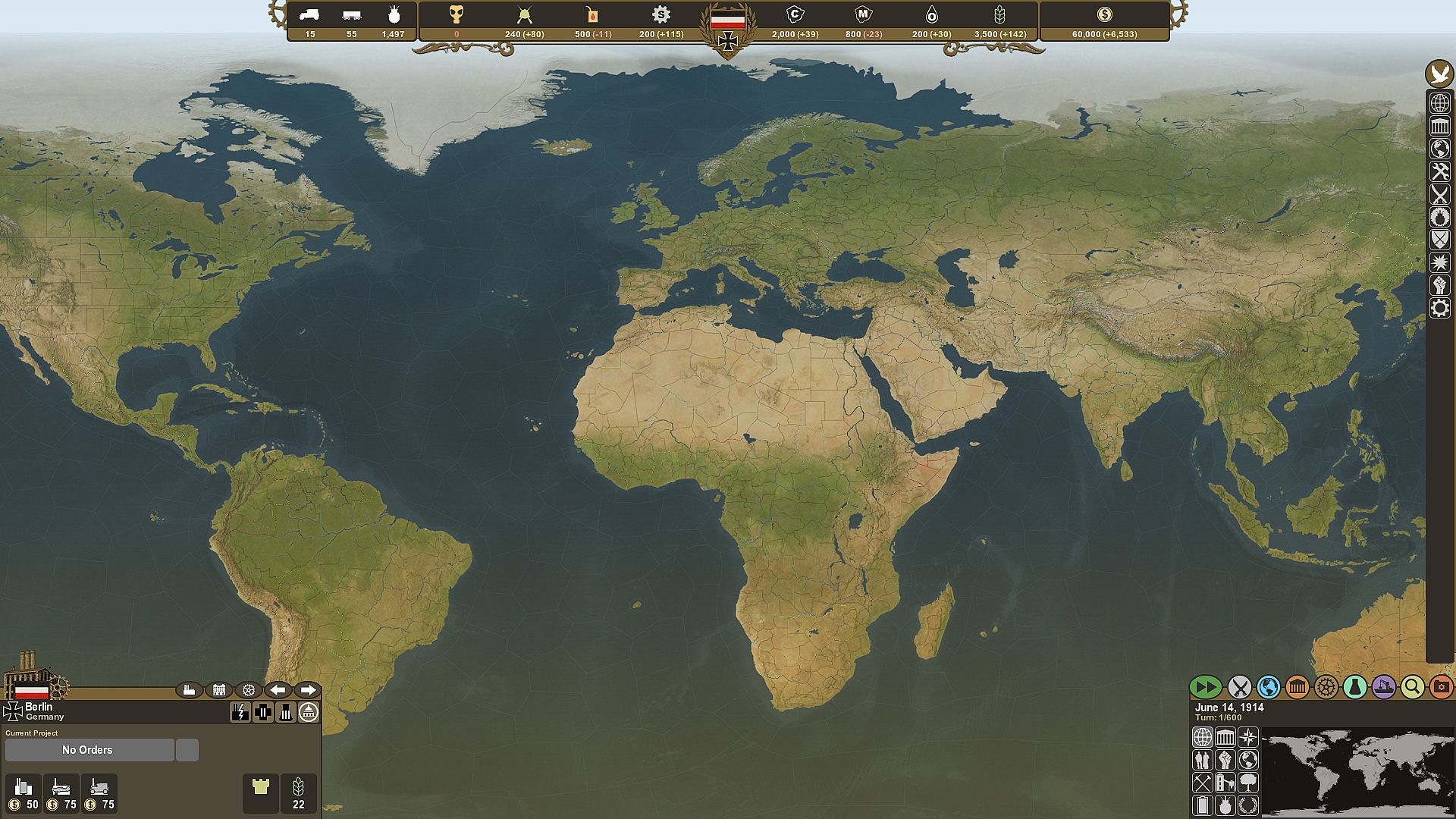
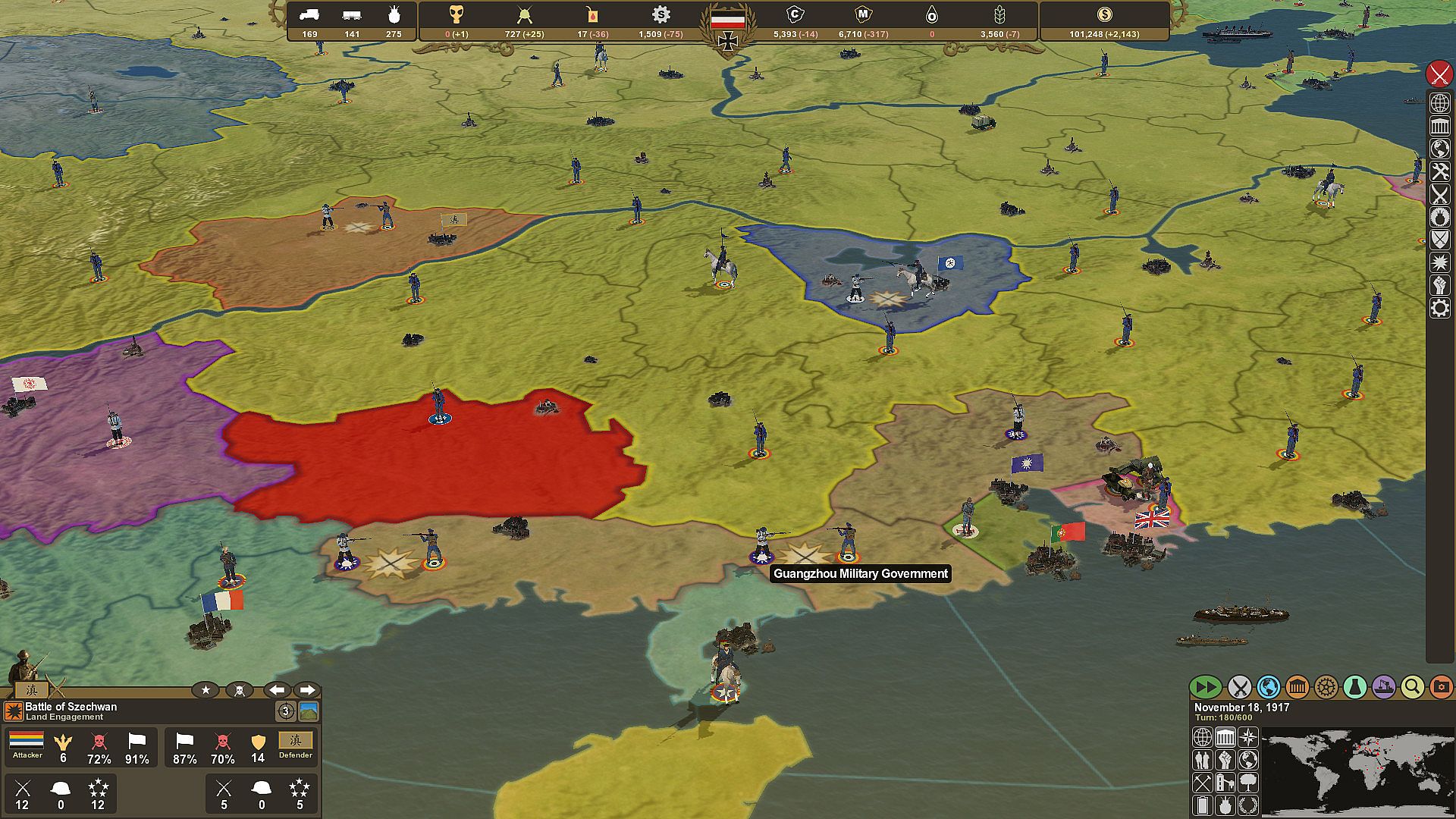
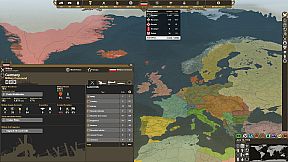
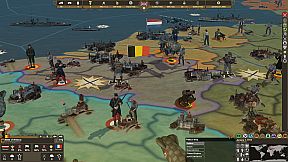
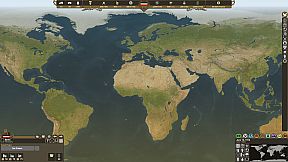
The core loop revolves around governing a nation through successive turns that advance the timeline from the pre-war period into the height of the fighting. The world map divides into more than two thousand land and sea regions, allowing control over every continent and major body of water. Each turn involves balancing production in cities that simultaneously generate wealth, civilian supplies, and military materials while expanding factories, research centers, and infrastructure such as railroads that speed troop movements and commodity transport.
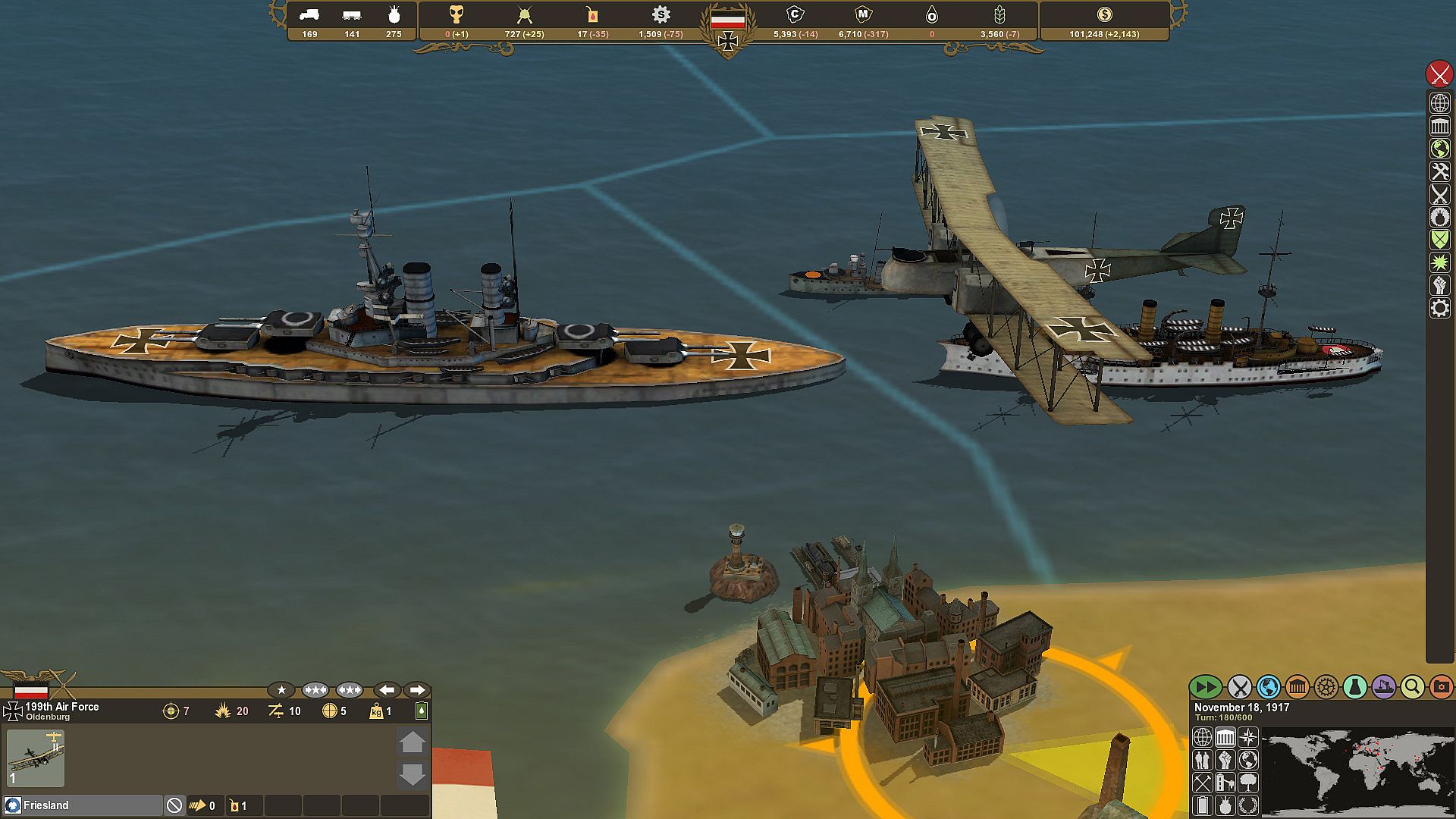
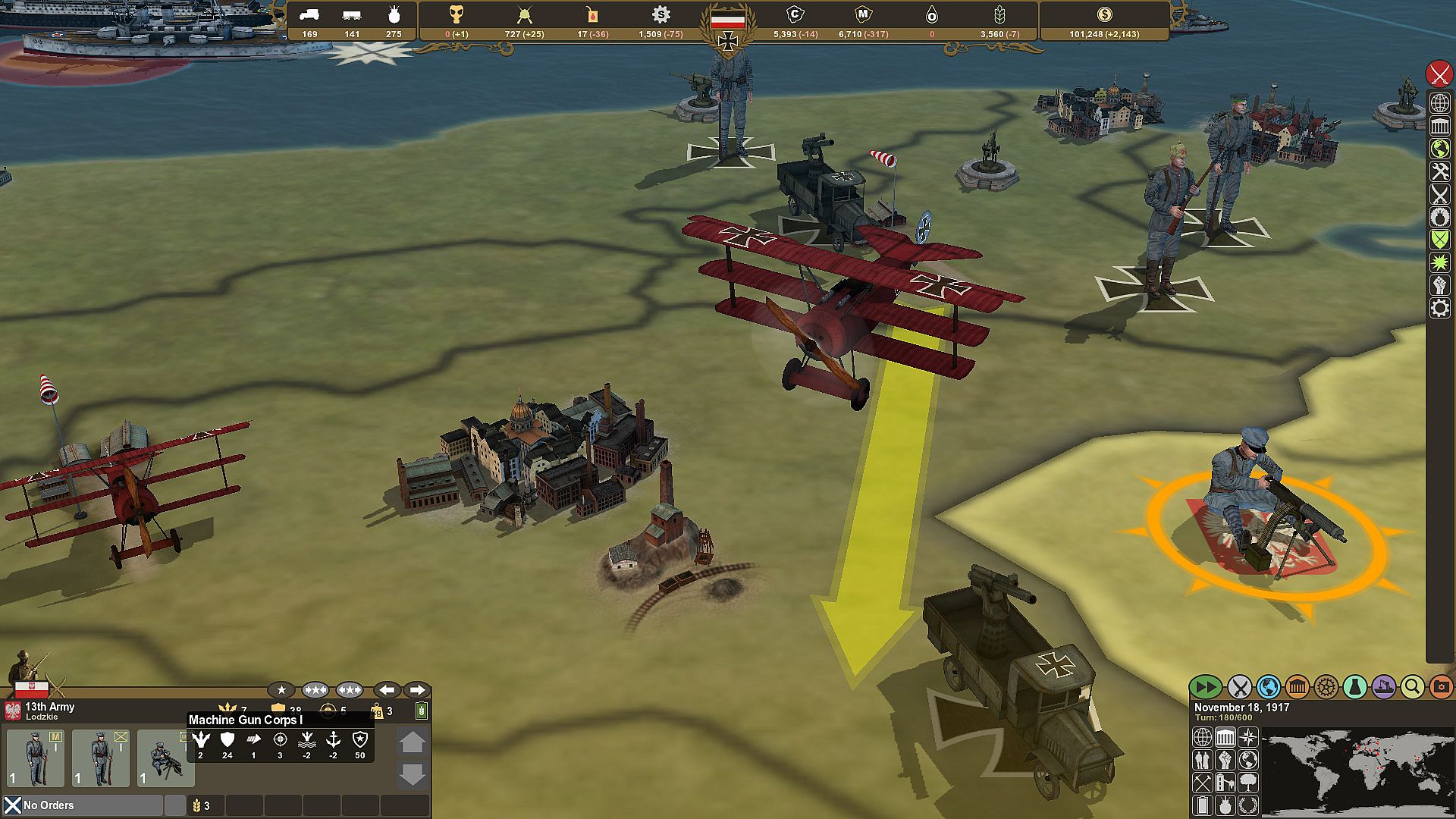
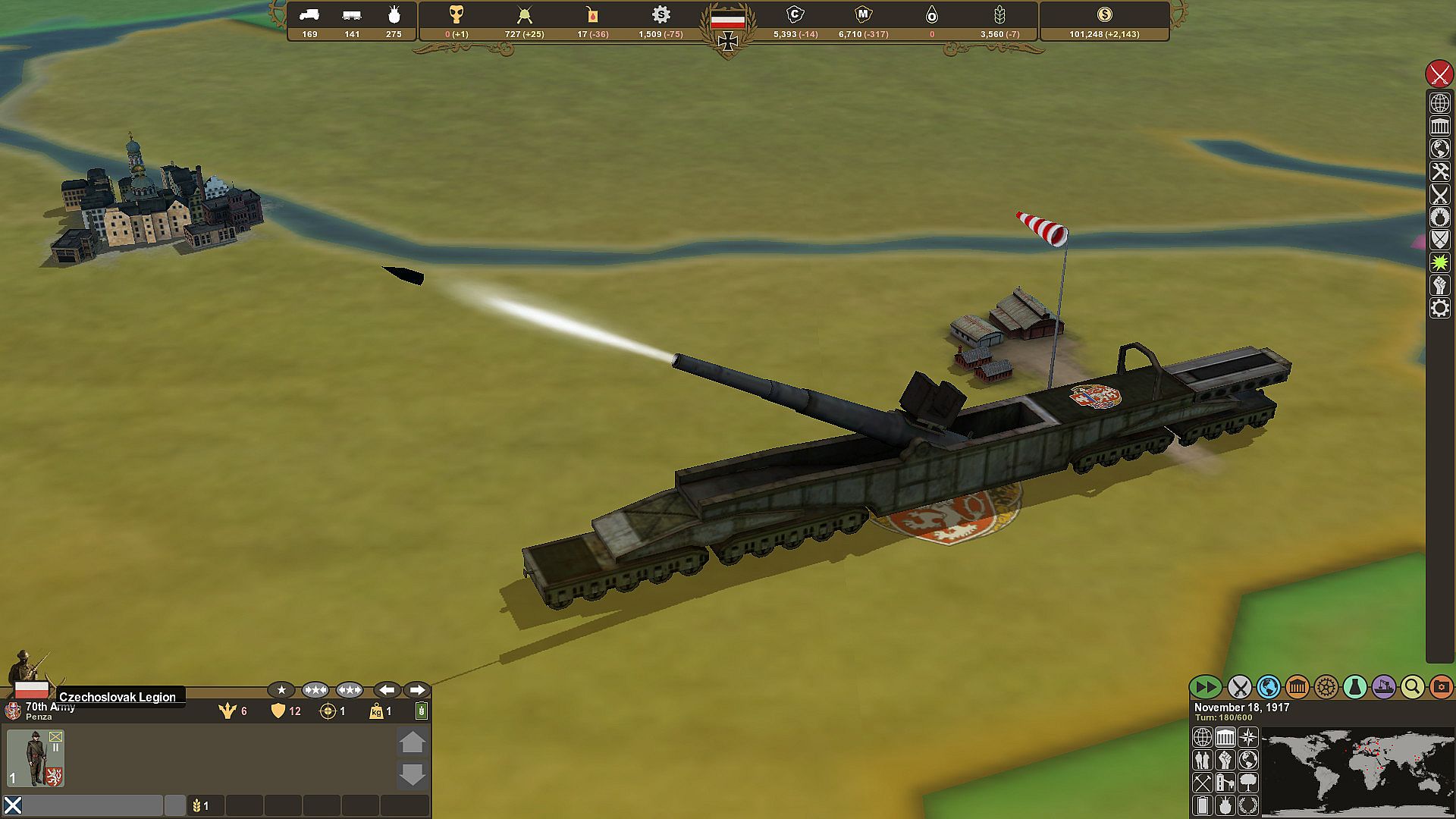
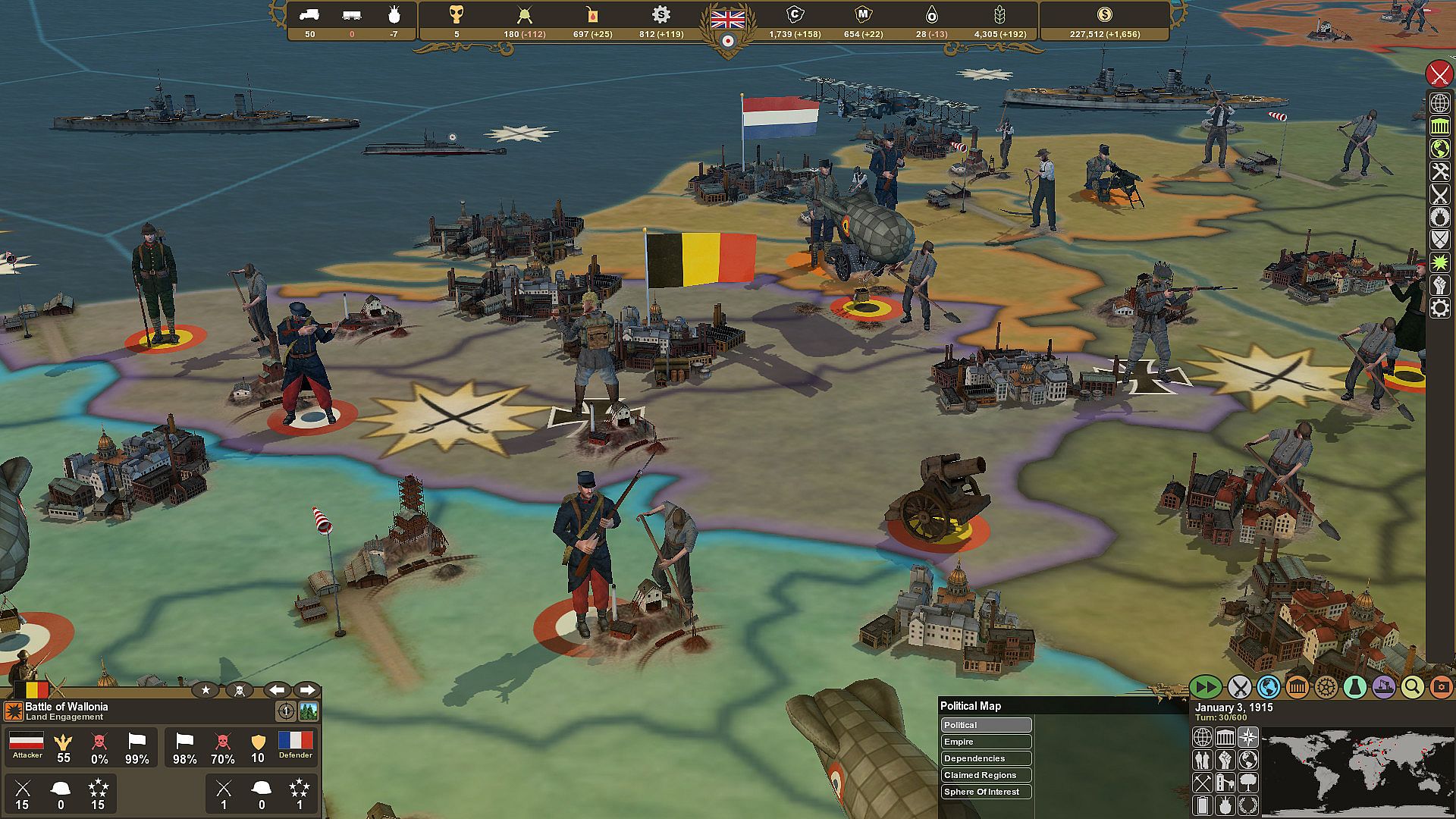
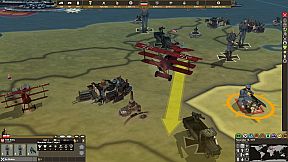
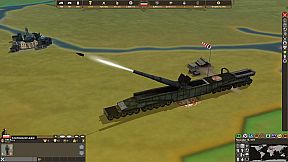
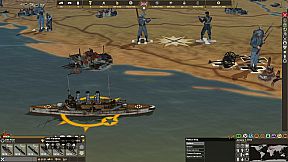
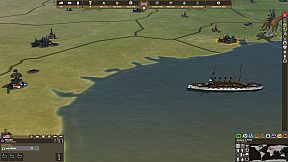
Strategic resources must be prospected and exploited to sustain an industrialized war effort. Fortifications, trench networks, and coastal batteries provide defensive options, while mobilization systems let players train reserves in peacetime and call them up for combat advantages before demobilizing units once fighting subsides. Combat combines long-range artillery bombardment supported by observation balloons and aircraft with infantry and armor advances, alongside naval elements that include submarines and mines to disrupt enemy fleets.
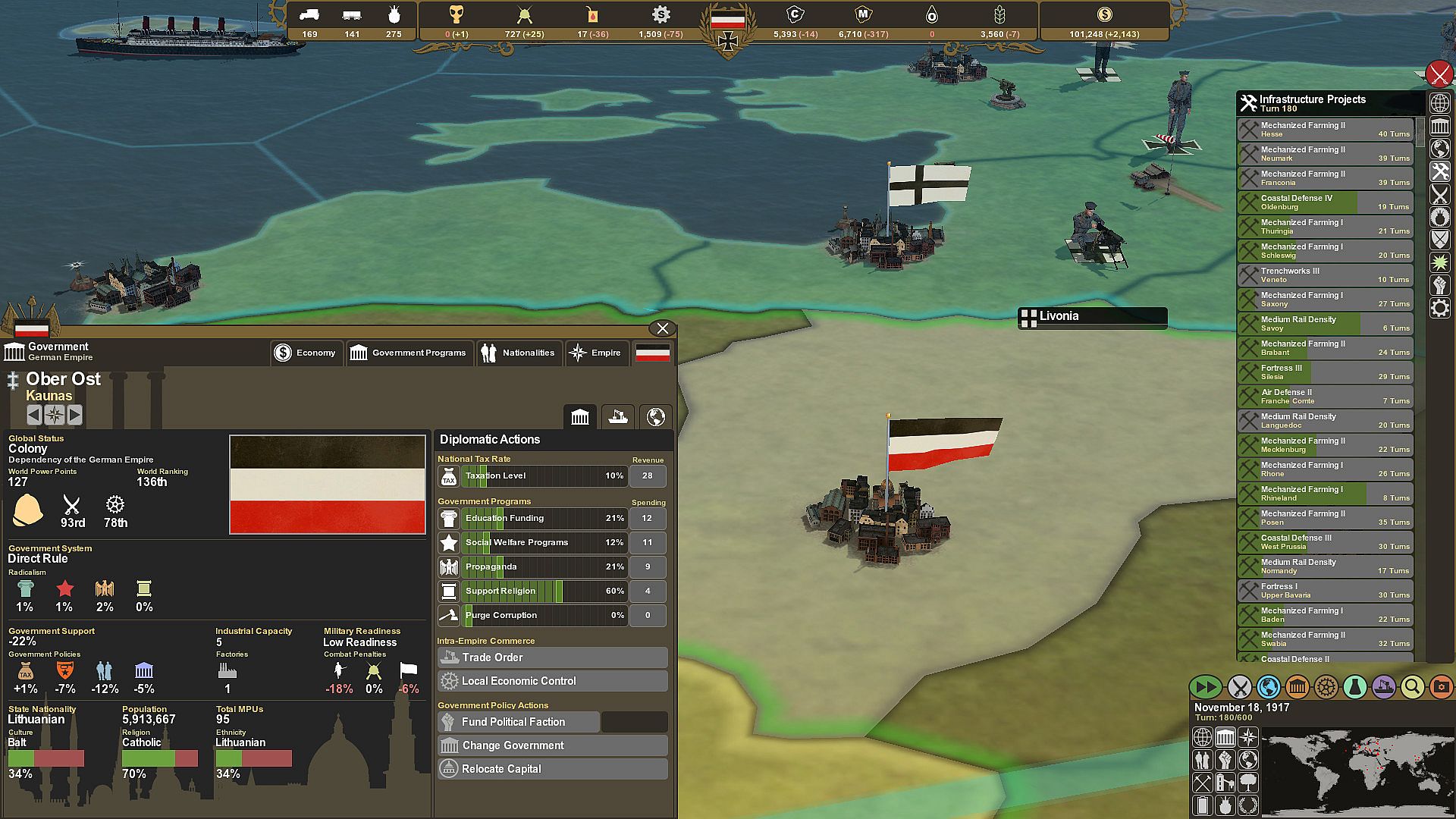
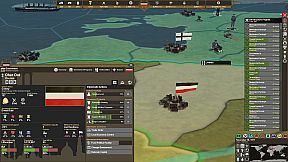
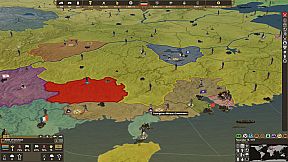
Regional populations carry defined nationalities, cultures, religions, and ethnicities that influence government support. Policies and ideology shape radicalism levels, which can trigger unrest or revolutions if left unchecked. Global trade operates through a world market for buying supplies and selling commodities, with options to interdict enemy merchant shipping. A research tree covers advancements from pre-industrial foundations through machine-age military and industrial capabilities, while diplomacy covers treaty negotiations, financial aid, and influence building with other nations.
Each playable country starts with distinct challenges tied to its historical position. France must counter German continental pressure, Germany can pursue early exits for Russia through internal disruption, the United Kingdom relies on naval supremacy to protect colonial holdings, and the Ottoman Empire or Austria-Hungary face risks of partition or fragmentation from ethnic nationalism.
Game Modes
The game operates as a single-player grand strategy experience without separate competitive or cooperative modes. Players select a starting nation and era, then guide it through scripted historical events that provide context while allowing divergence into alternate outcomes. Scenarios typically begin in 1912, 1914, or 1917 and continue until the conflict resolves or the player's objectives are met through conquest, economic dominance, or political survival.
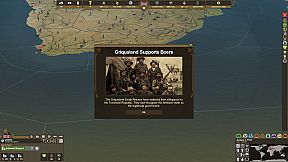
Empire management forms the central activity, including the establishment of colonies, protectorates, and puppet states alongside decisions to liberate conquered territories. National units reflect period-specific uniforms and equipment, and hundreds of events tied to real wartime moments create branching paths that reward experimentation with different policy choices and military priorities.
Historical Context and Alternate Paths
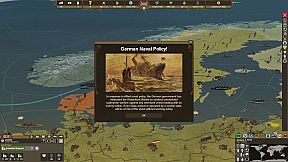
Scripted events anchor the simulation to the documented timeline of the First World War while permitting players to explore what-if scenarios. These moments range from major diplomatic crises to smaller domestic developments and help maintain the sense of an industrialized total war that mobilized entire societies. Technology progression and infrastructure decisions interact with these events, so choices about research focus or trade policy can alter the course of alliances or internal stability.
Demographic modeling adds depth by linking population characteristics to political support. High radicalism in any region risks revolts that can reshape borders or create new independent states in Central Europe or elsewhere. Naval and air elements extend the conflict beyond land fronts, requiring attention to merchant interdiction and reconnaissance support for artillery accuracy.
Is It Worth Playing?
Player reception on the primary distribution platform stands at mixed, with 67 percent positive ratings from over one hundred reviews. The title suits those seeking a detailed single-player simulation of national-level decision making during the First World War rather than tactical battlefield action. Its emphasis on economic management, infrastructure development, and policy trade-offs appeals to fans of grand strategy who enjoy long campaigns focused on one nation at a time.
Current support appears limited to the original release without documented seasonal content or major post-launch expansions. Availability remains through standard PC digital storefronts, and the absence of multiplayer keeps the focus squarely on solo play. Those drawn to the combination of historical events, resource logistics, and alternate-history branching will find the most value, while players preferring faster-paced or multiplayer formats may find the pace and depth less engaging.