

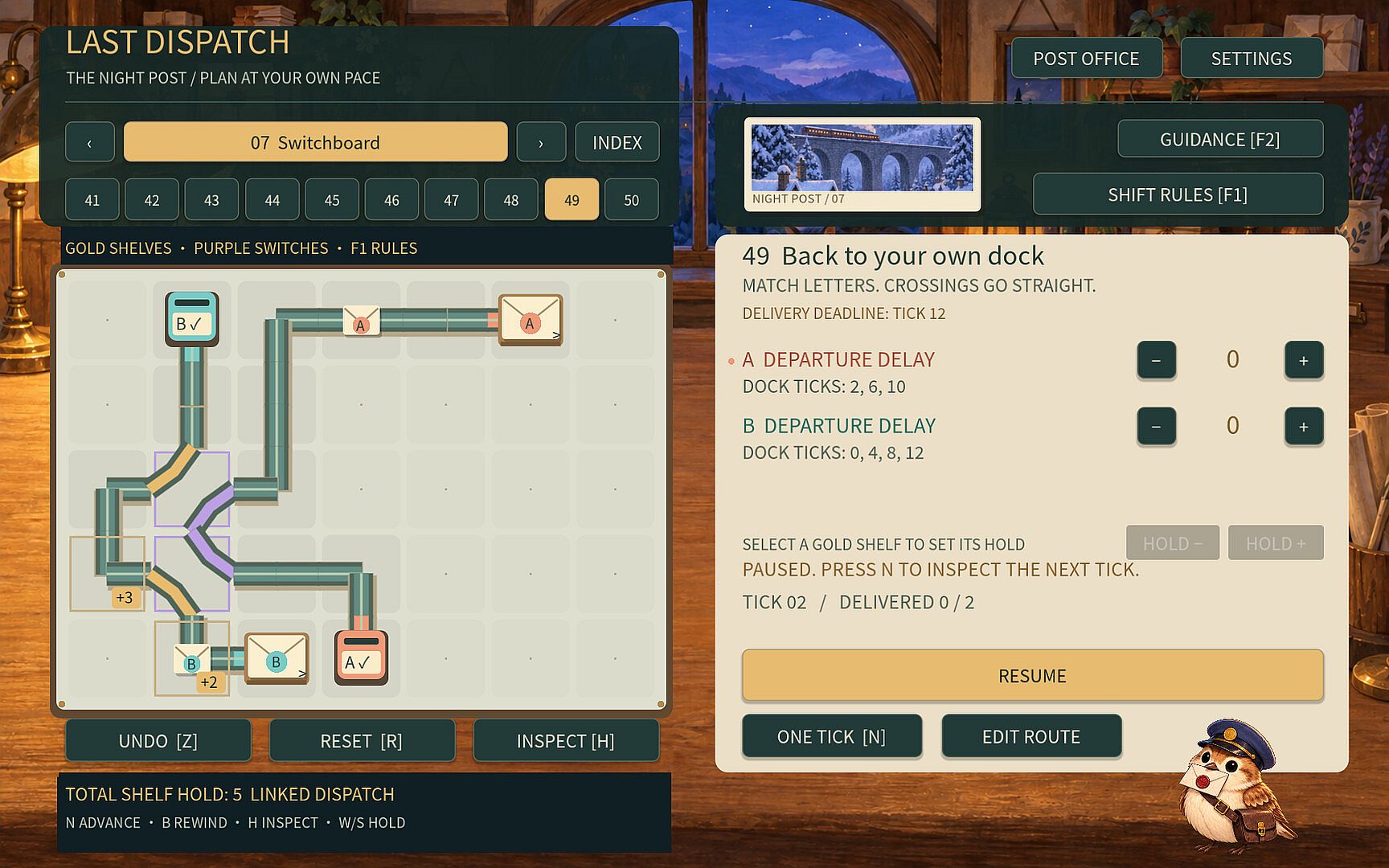
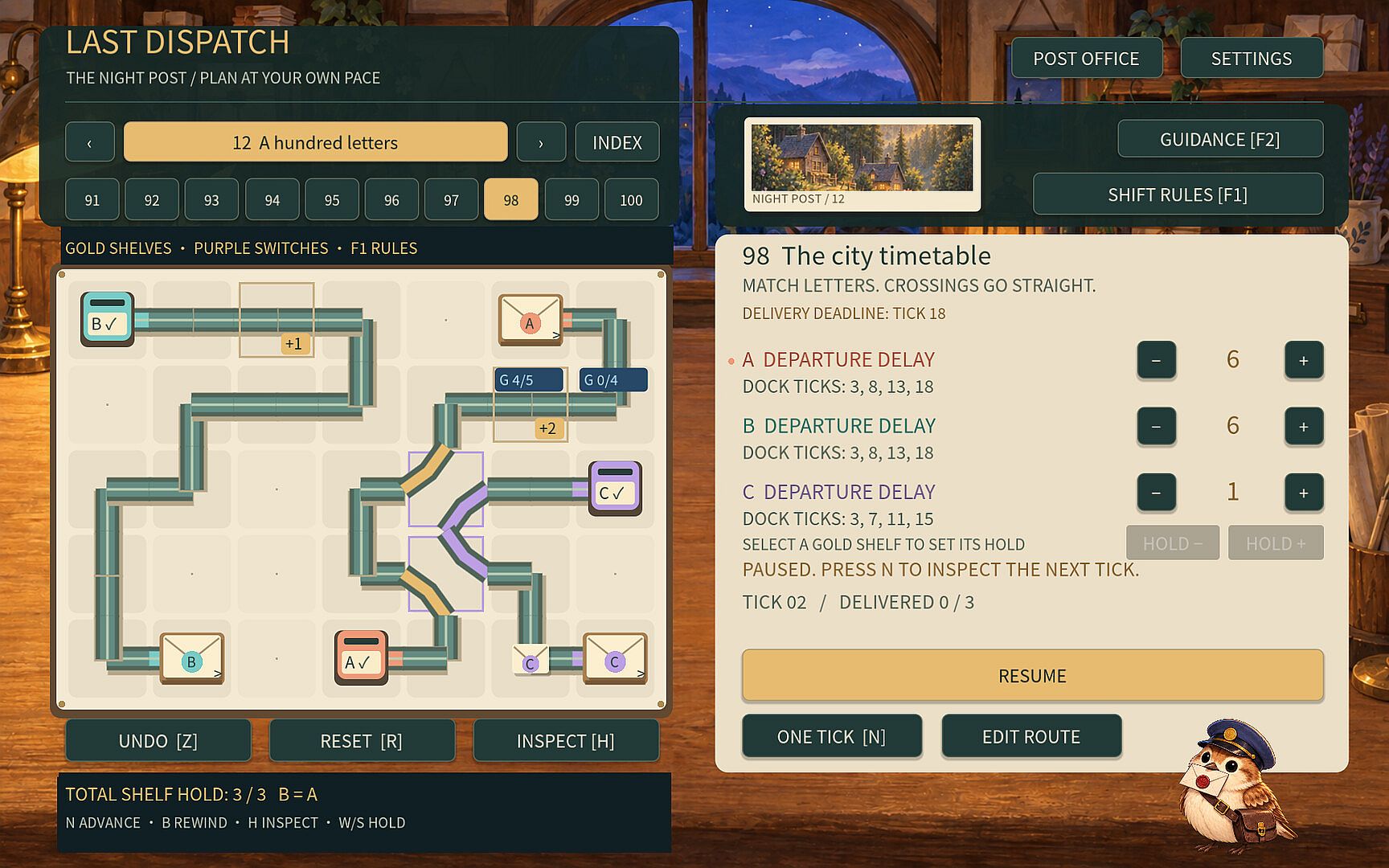
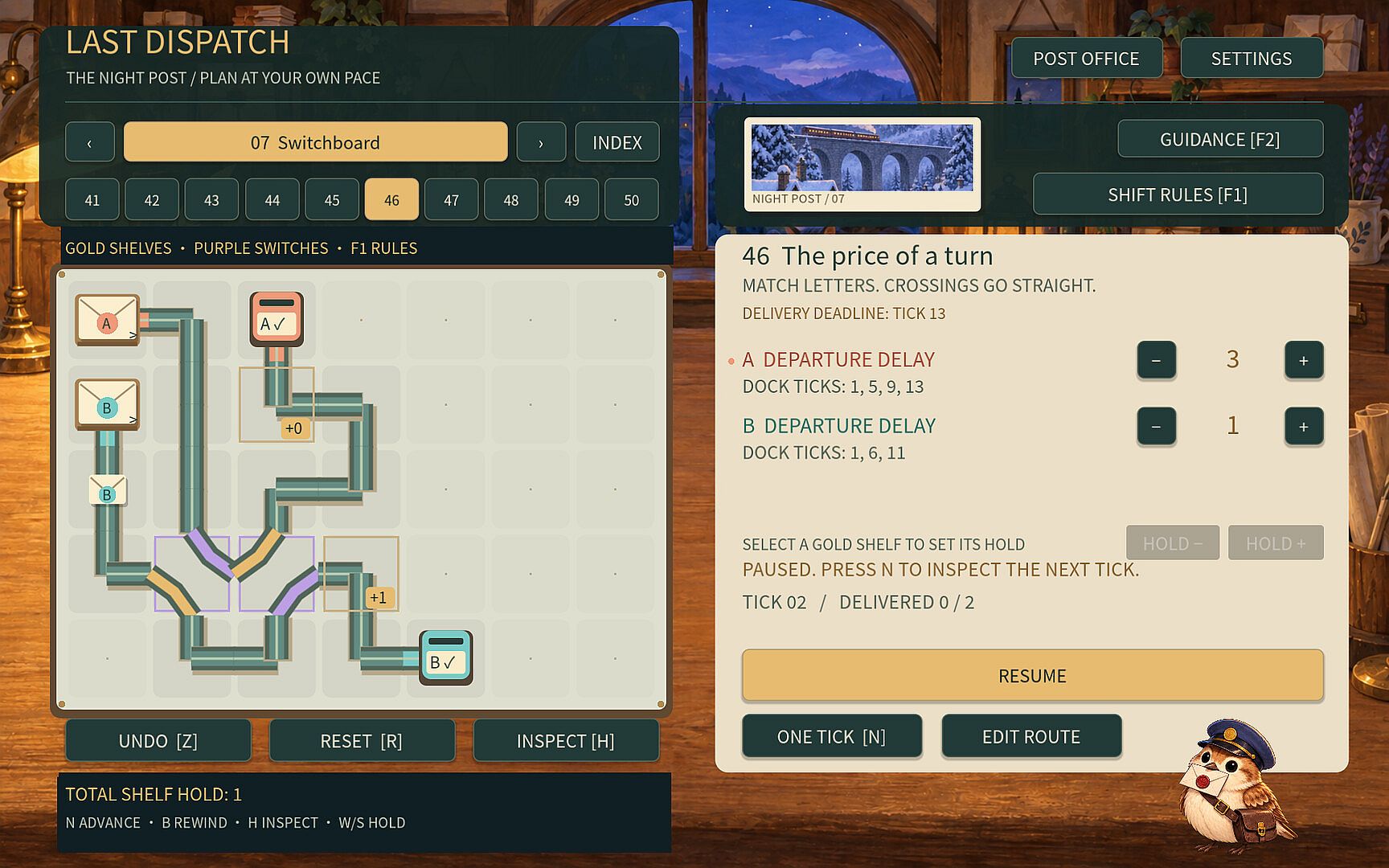
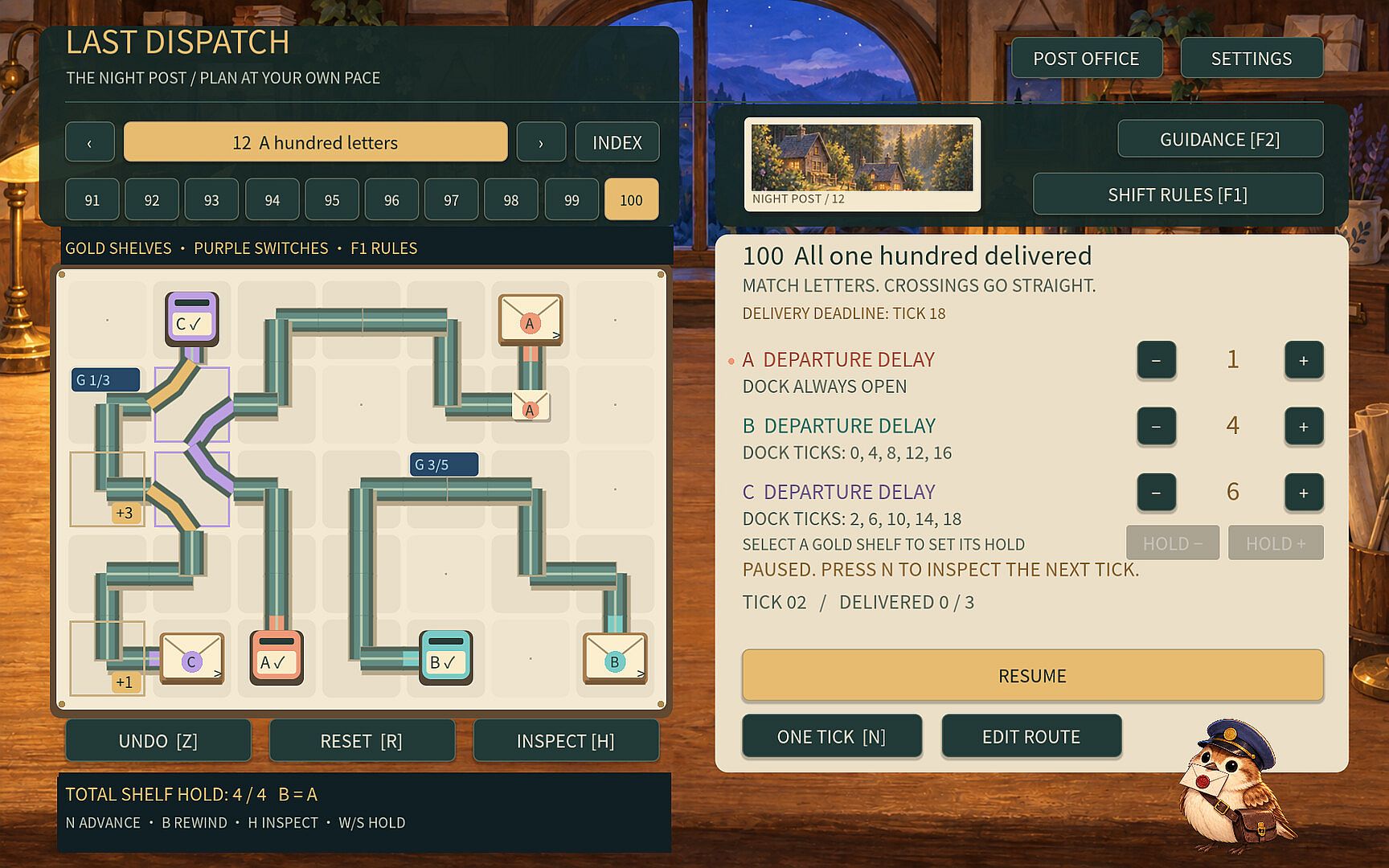
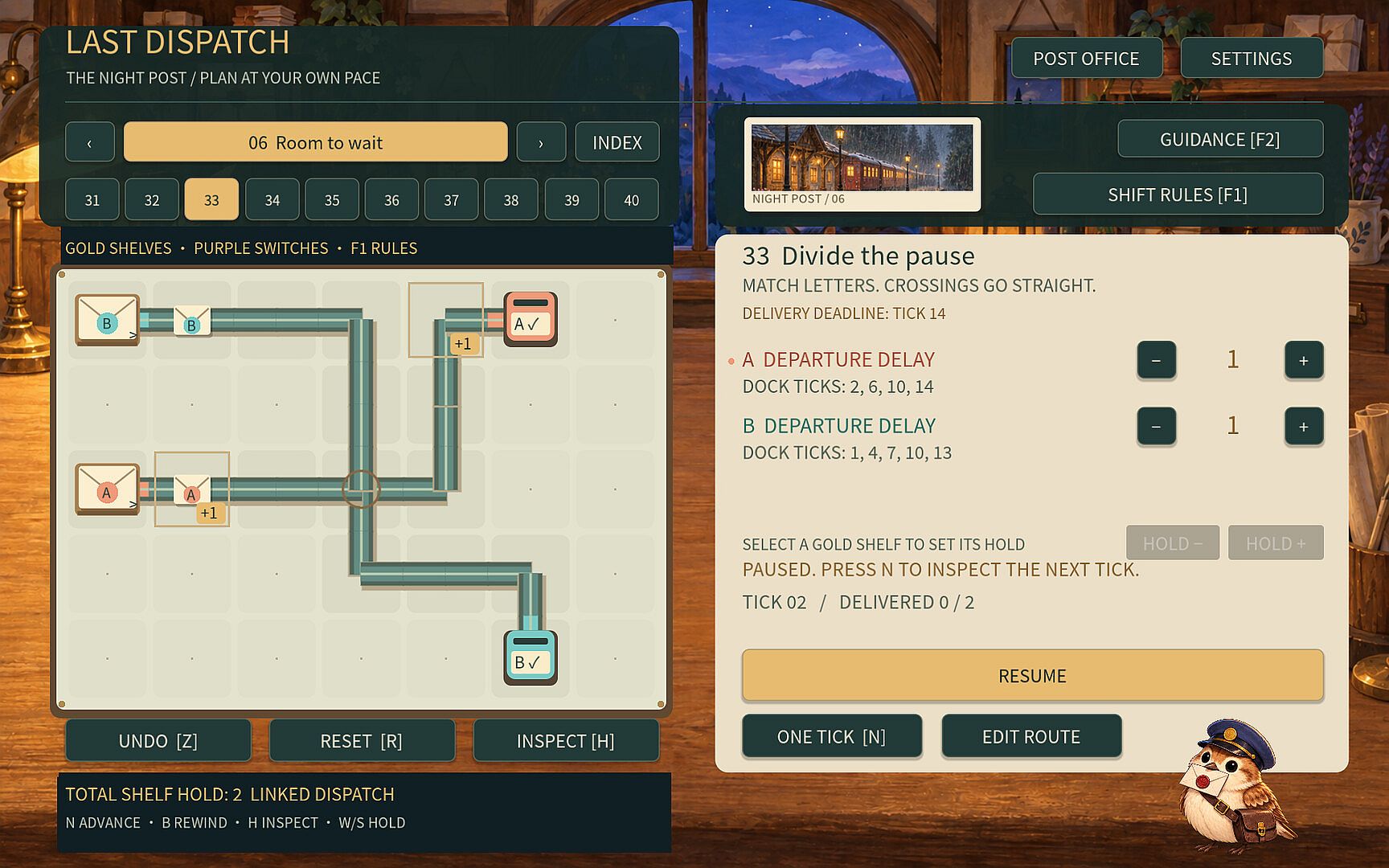
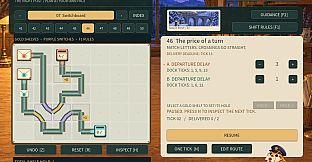
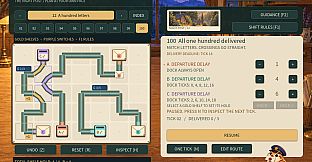
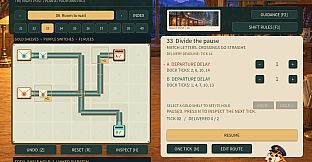
Last Dispatch is a single player strategy puzzle game that places players in the role of a night shift postal worker managing the flow of mail through a quiet city post office. Built as an indie casual title for PC, it emphasizes careful planning and timing over speed or reflexes. Players connect conveyor belts, set departure schedules for groups of letters, and resolve conflicts when multiple items compete for the same path or crossing point. The experience unfolds across one hundred distinct scheduling puzzles divided into twelve chapters, each introducing fresh rules such as timed docks, holding shelves, switches, and gates that alter how letters must reach their destinations.
Gameplay
The core loop revolves around routing letters labeled A, B, and C through a network of belts and mechanisms. Players decide departure times and priority when paths overlap, ensuring each letter arrives on schedule as docks open at precise intervals. Route length, waiting periods, and delays all influence final arrival, turning every puzzle into a test of foresight rather than quick reactions. Because the game advances one tick at a time with full rewind support, players can test ideas, observe outcomes, and refine plans without pressure from a countdown timer.
New challenges appear gradually across the twelve chapters. Early puzzles focus on basic belt connections and simple timing, while later ones layer in holding shelves that store letters temporarily, switches that redirect flow, and gates that open only during specific windows. Optional route diagnostics highlight potential bottlenecks, and two tiers of hints provide guidance without spoiling solutions. The postal bird offers light encouragement after successful deliveries or gentle motivation after setbacks, adding a touch of personality to the otherwise methodical process.
Game Modes
Last Dispatch operates entirely as a single player campaign of progressive puzzles. There are no separate competitive or cooperative modes. Instead, the twelve chapters function as structured stages that build complexity by adding new mechanics and stricter delivery conditions. Players work through the full set of one hundred puzzles at their own pace, with automatic saving of routes, completion records, and settings between sessions. Accessibility options such as separate volume sliders for music and effects, a reduced animation toggle, and support for English along with Traditional and Simplified Chinese further tailor the experience to individual preferences.
Controls and Presentation
Keyboard and mouse controls handle all interactions, keeping the focus on planning rather than precise input timing. Gentle background music and subtle sound effects create a calm atmosphere suited to extended puzzle sessions. The game tracks progress automatically, allowing players to resume exactly where they left off or revisit completed puzzles to experiment with alternative routes.
Is It Worth Playing?
Last Dispatch suits players who enjoy deliberate, logic driven puzzles that reward careful observation and iteration. Its turn based structure and rewind feature remove time pressure, making it accessible for those who prefer to think through solutions step by step. The progressive introduction of mechanics across chapters keeps the experience fresh while the hint system and diagnostics support learning without frustration. With its emphasis on scheduling and routing in a single contained setting, the game appeals to fans of indie strategy titles that prioritize thoughtful planning over action or narrative complexity. Those seeking a relaxed yet mentally engaging puzzle campaign will find the one hundred puzzles provide substantial content to work through at a comfortable pace.