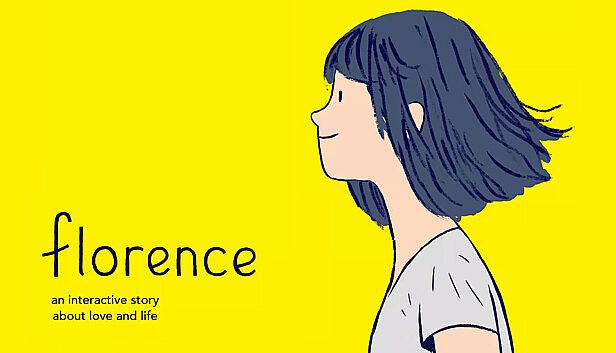


























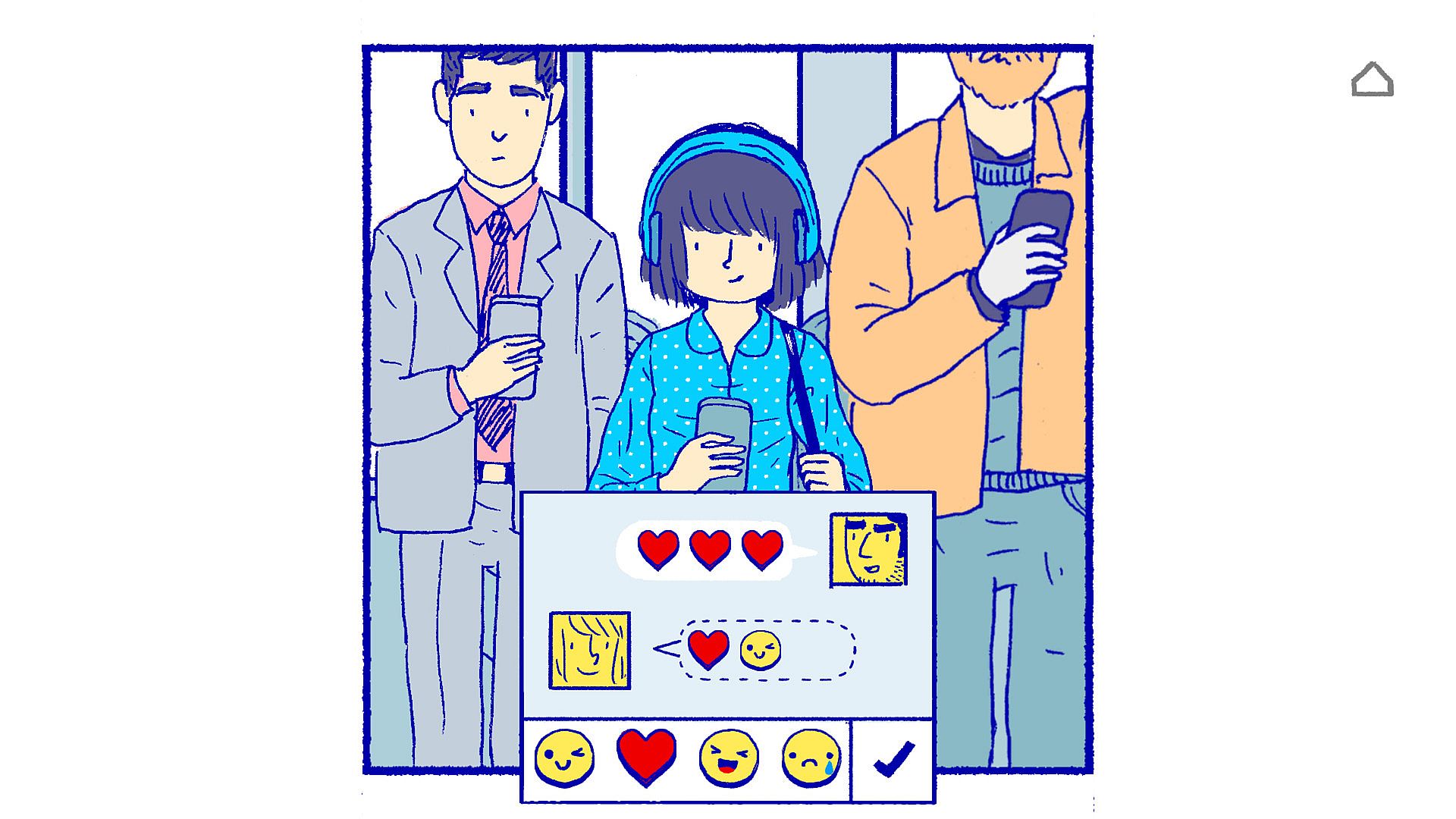







Florence is an indie casual adventure game that tells the story of a young woman navigating the routines of daily life and the unexpected shifts that come with a new relationship. The experience centers on Florence Yeoh, who at 25 finds herself caught in repetitive patterns of work, rest, and scrolling through social media until she encounters a cello player named Krish. Through a series of short interactive sequences, players follow the progression of their connection from initial meeting to deeper involvement and eventual changes.
Gameplay
The core loop relies on simple, symbolic interactions that mirror emotional states rather than traditional challenges or objectives. Early sequences involve completing everyday tasks such as brushing teeth or filling in shapes, which represent the monotony of Florence's schedule. As the story advances, players engage with dialogue fragments arranged as puzzles, where the number of pieces and their fit reflect how easily conversations flow at different stages of the relationship. Conflict appears through mechanics that disrupt familiar patterns, requiring adjustments to restore or alter the flow. These vignettes draw from graphic novel influences, keeping each segment brief and focused on personal growth or tension without combat, exploration, or resource management.
Progression moves linearly through key moments in the relationship, with each interaction building on the previous one to show how small actions accumulate into larger shifts. The original soundtrack accompanies these sequences, providing an auditory layer that underscores the intimate tone. The entire playthrough fits into roughly 30 minutes, emphasizing concise storytelling over extended sessions or replay incentives tied to new endings.
Game Modes
Florence offers a single narrative experience with no separate game modes or variations in structure. Players advance through the fixed sequence of vignettes that cover the relationship arc, from early connection to later strains and resolution. There are no branching paths, competitive elements, or alternative scenarios to select. The design stays consistent across the full duration, relying on the same style of tactile interactions to convey the story without introducing new systems or multiplayer options.
Story and Themes
The narrative explores themes of routine versus change, personal development within a partnership, and the process of moving forward after shifts occur. Florence begins in a state of feeling stuck, and her encounters with Krish introduce new perspectives that influence how she views her surroundings and herself. The game avoids explicit dialogue in many sections, instead using visual and mechanical cues to communicate feelings and growth. This approach creates an intimate portrayal of everyday emotions, drawing from slice-of-life inspirations to keep the focus on relatable human experiences rather than dramatic plot twists.
Supporting elements like the included soundtrack enhance the personal atmosphere without overpowering the interactive sequences. The short length allows the story to land with precision, highlighting specific beats such as flirting, shared challenges, and the adjustments that follow when paths diverge.
Is It Worth Playing?
Florence suits players seeking a focused, story-driven indie adventure that prioritizes emotional resonance over length or complexity. Its verified appeal lies in the thoughtful use of mechanics to represent relationship dynamics, making it a strong choice for those who enjoy narrative experiences similar to graphic novels or webcomics. The game remains available as a complete, self-contained title with no ongoing seasons or major updates required for the core content. Reception highlights the meaningful impact packed into its brief runtime, particularly for audiences interested in personal stories about growth and connection. If the premise of following one character's journey through everyday interactions resonates, the experience delivers a cohesive and reflective session without unnecessary extensions.