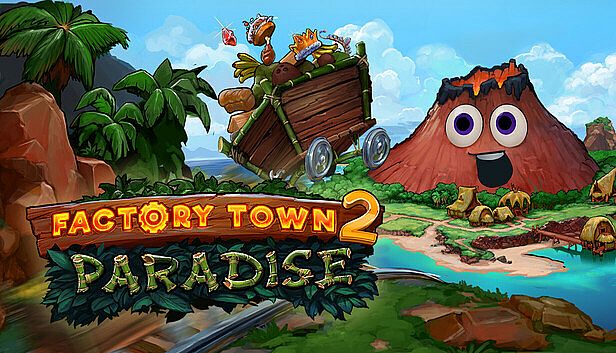



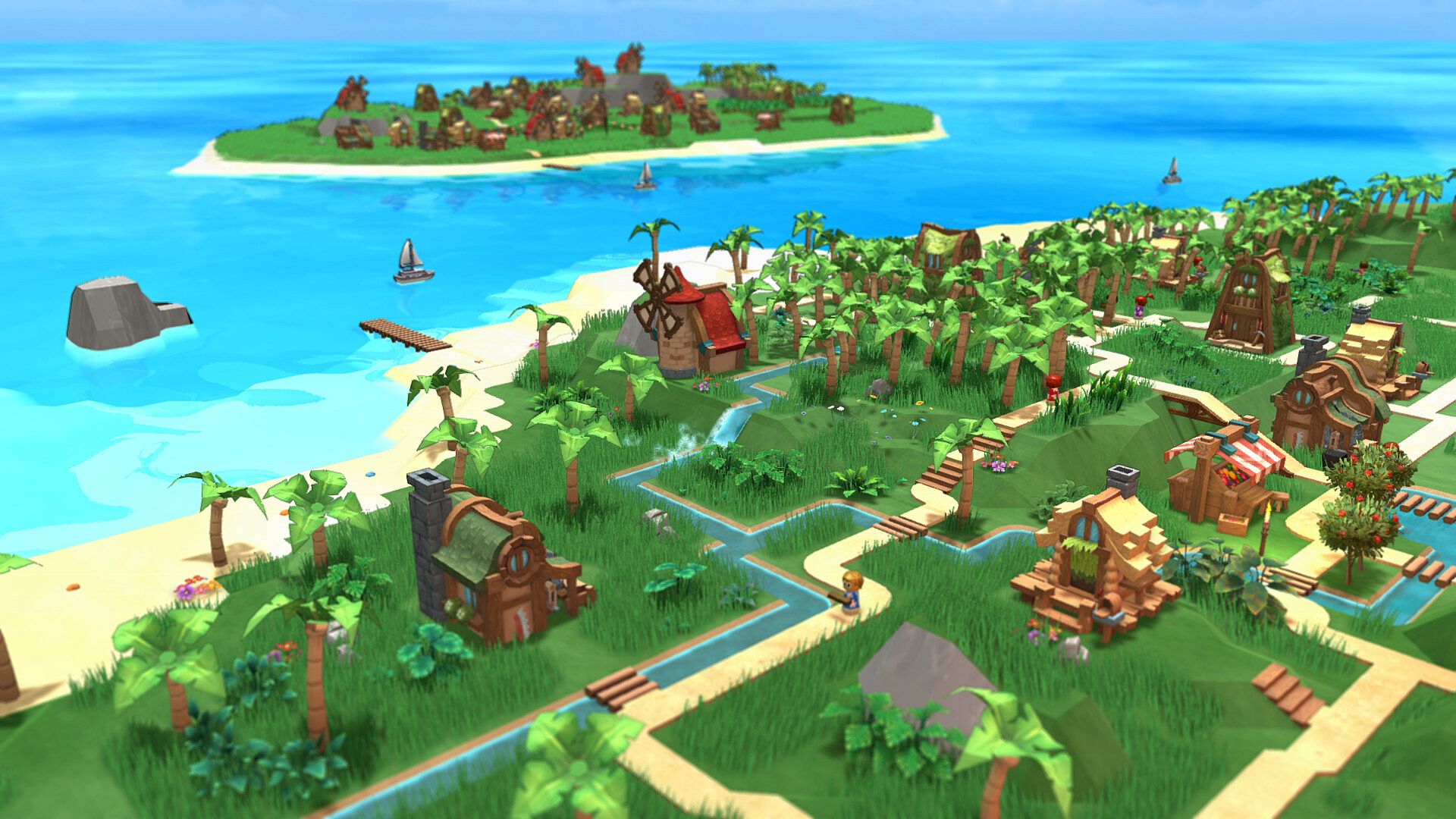
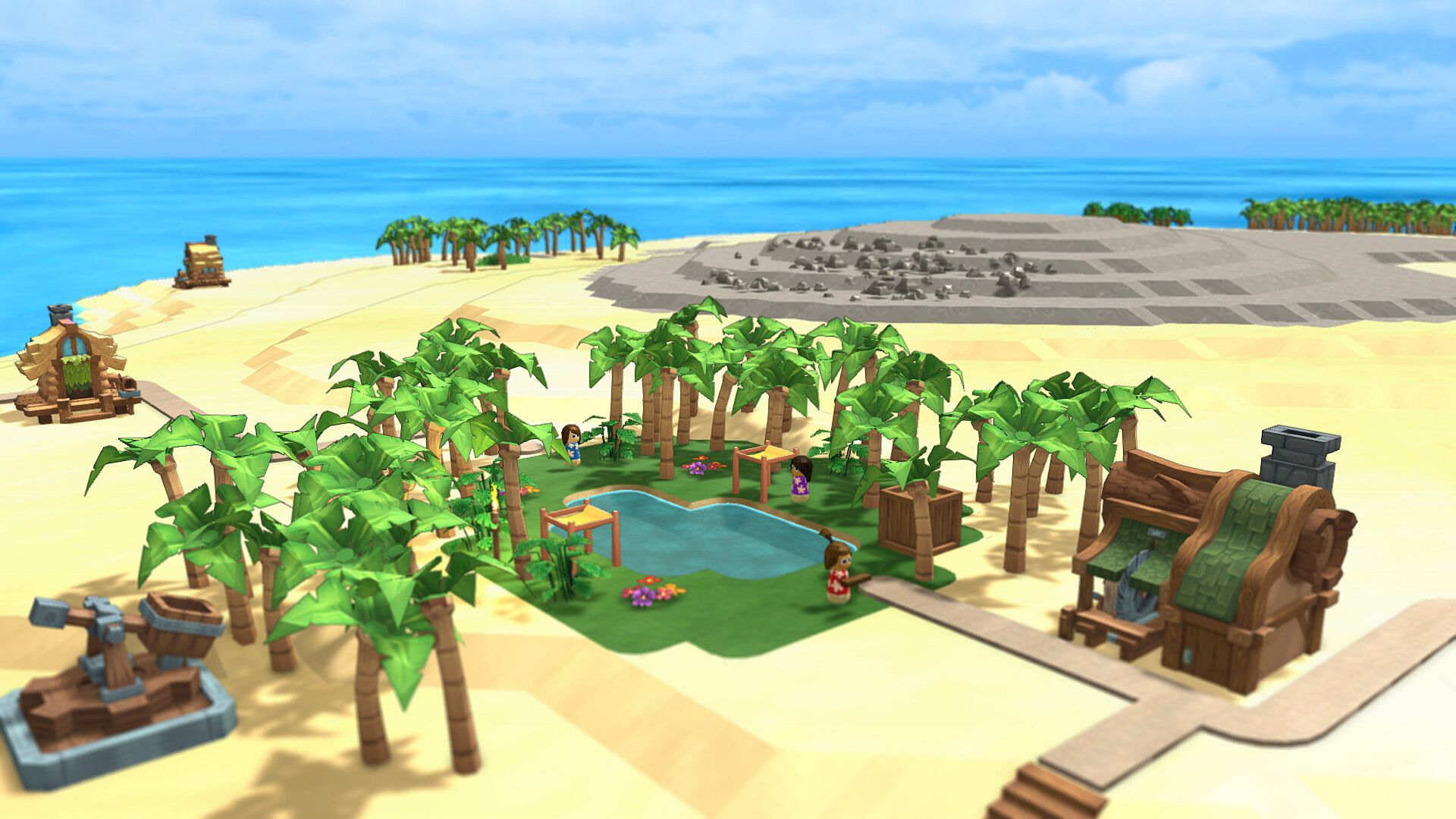
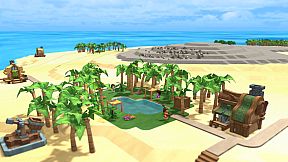
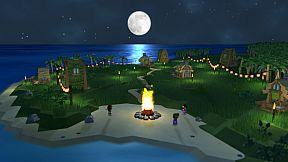
Factory Town 2: Paradise stands out as a strategy simulation game where you construct and automate a thriving village on a tropical island. This indie title builds on its predecessor by introducing fresh mechanics tied to a volcanic setting, blending resource management with creative building in a relaxed environment.
Gameplay
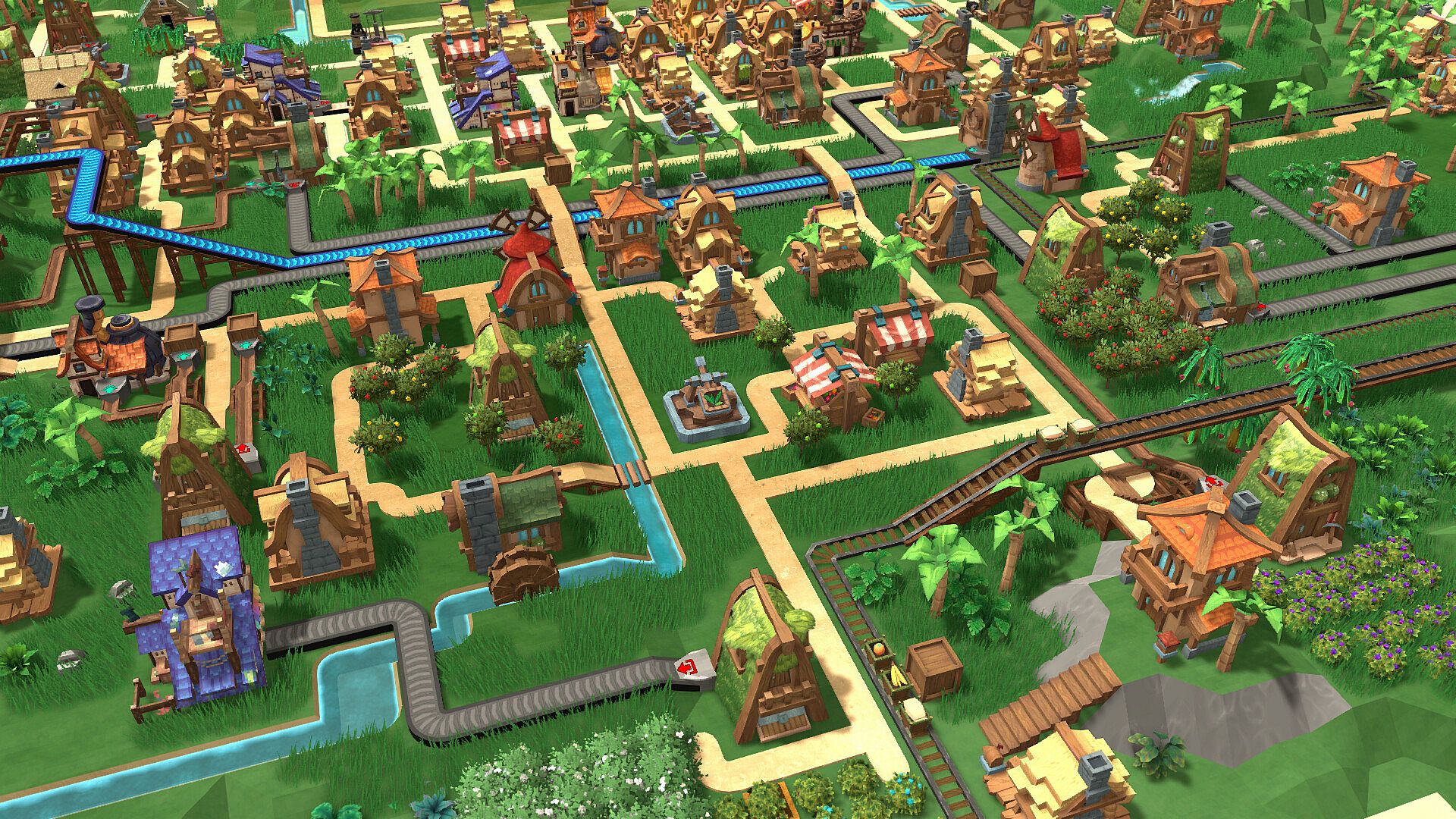
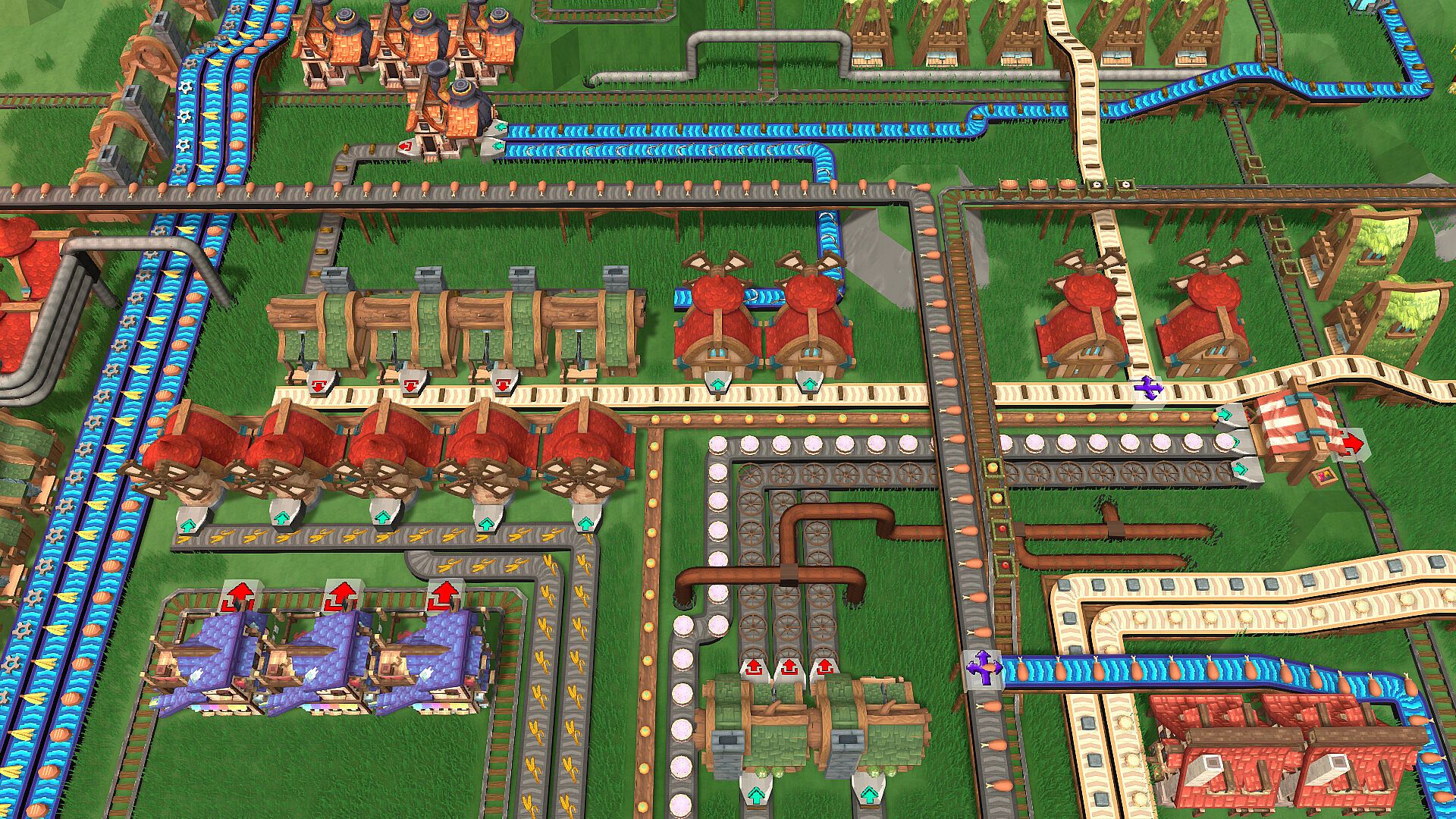
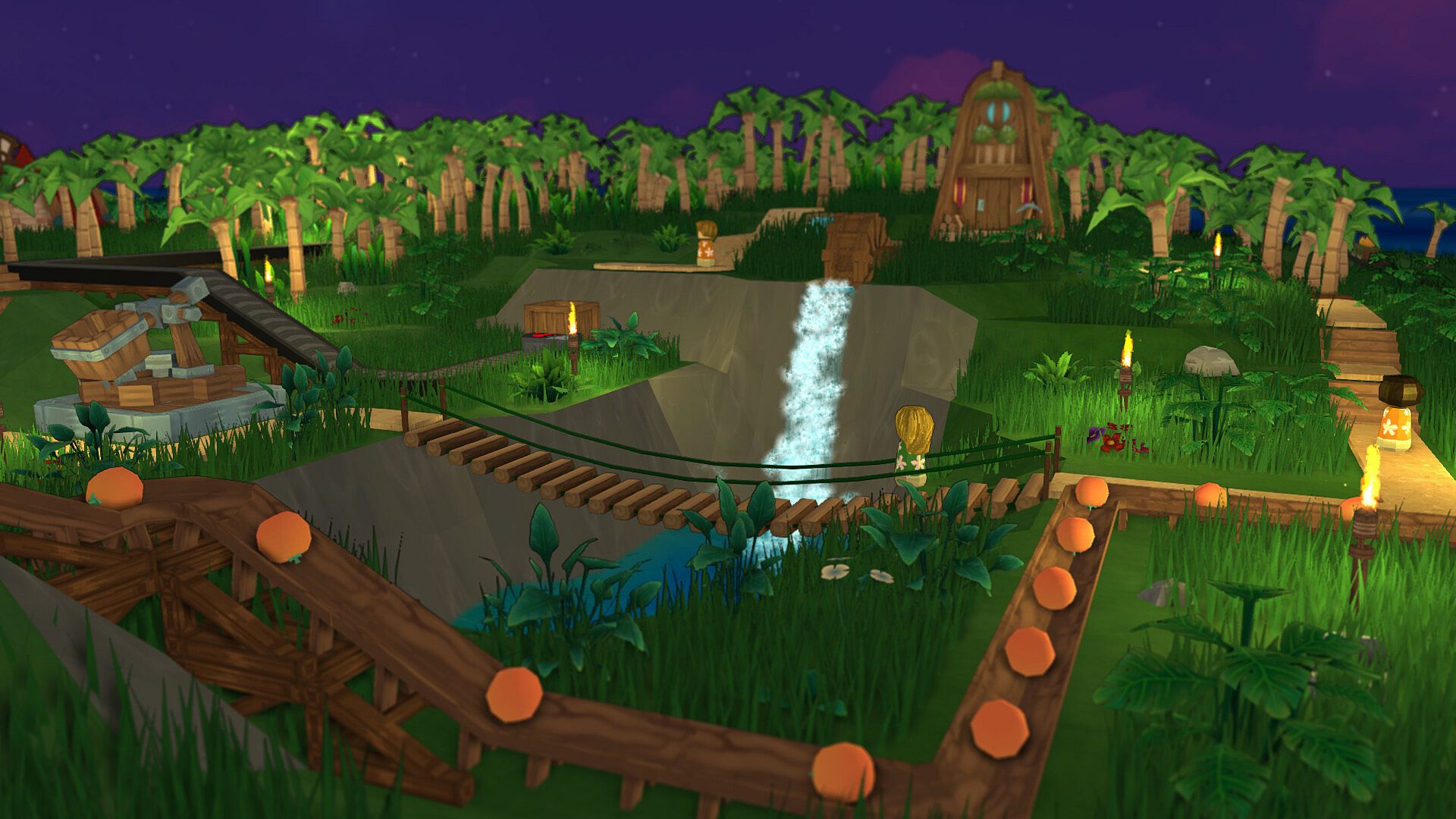
In Factory Town 2: Paradise, you begin on a deserted island and gradually develop it into a bustling metropolis. Core mechanics revolve around placing structures like houses, farms, production buildings, and shops to meet the needs of incoming townspeople. These residents automatically handle tasks, allowing you to focus on optimizing supply chains with tools such as roads, bridges, trains, conveyor belts, boats, catapults, and ziplines.
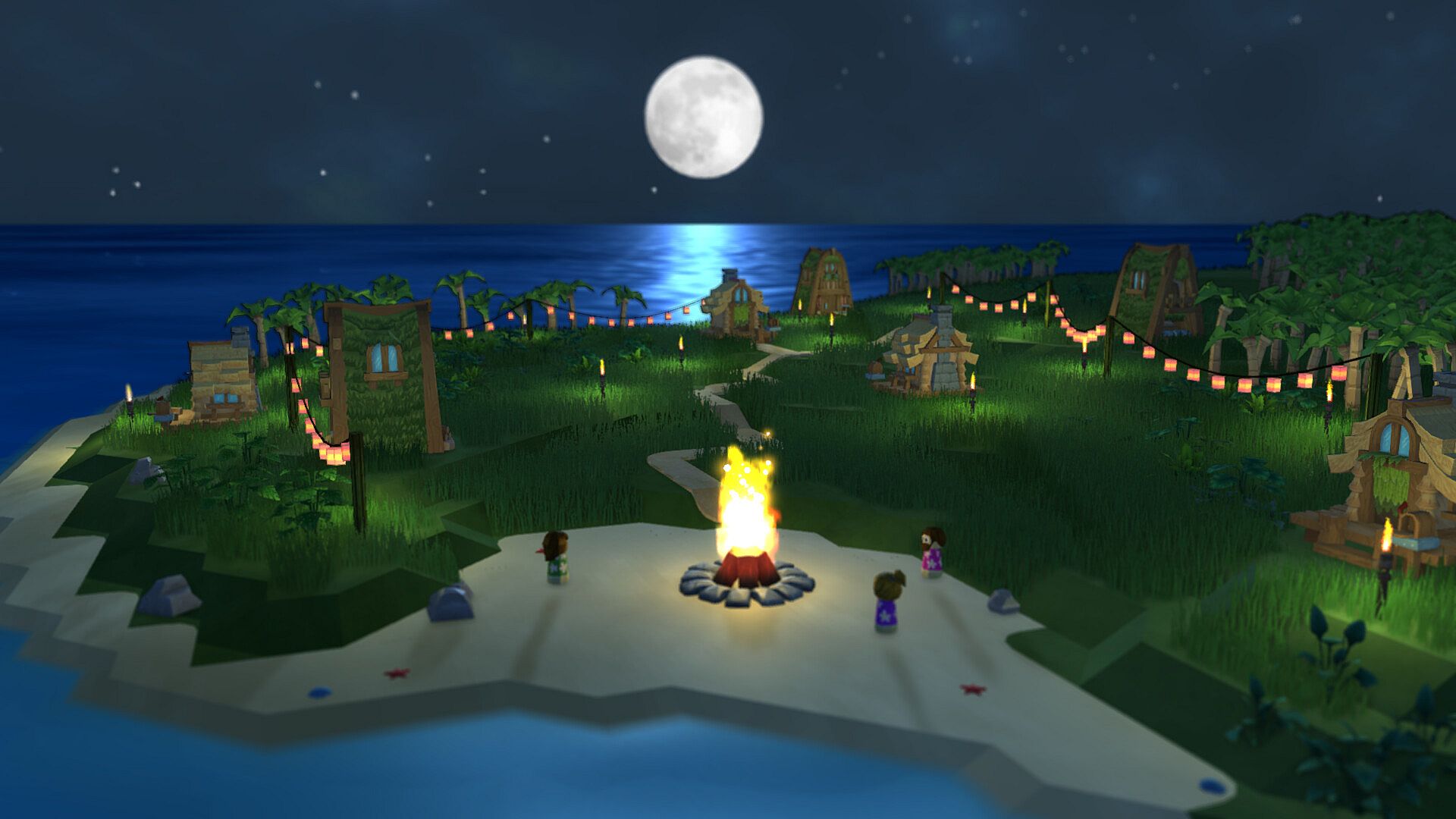
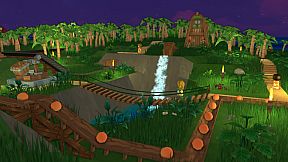
Resource management plays a central role, as you must supply essentials like food, water, clothing, and luxuries to keep the population's stats balanced. The game incorporates a day/night cycle and volumetric water physics, where you dig trenches and build dams to direct water from mountain springs to farms and reservoirs. Power generation comes from waterwheels and windmills that drive shafts for processing boosts or generate electricity via power lines to operate devices like furnaces.
A unique element is the volcano deity overlooking your island. By offering items to the volcano, you earn its favor, unlocking new recipes, technologies, and upgrades. This system even allows the volcano to raise new islands from the ocean, expanding your territory as the town grows across multiple landmasses.
Production involves creating a variety of items, including tropical drinks, pastries, ice cream, cooked meals, coffee, clothes, jewelry, books, medicine, and potions. Each item offers specific boosts to workers, so decisions hinge on available resources and town requirements. The overhauled town simulation includes a controllable avatar and new transportation options, enhancing the automation experience without strict penalties for mistakes.
Game Modes
Factory Town 2: Paradise emphasizes an open-ended single-player experience centered on town building and automation. It lacks distinct multiplayer components or predefined campaigns, instead providing a sandbox-style setup where you progress at your own pace through experimentation and expansion.
Key Mechanics and Features
The game's automation systems encourage solving bottlenecks in supply chains, with dozens of items to produce and distribute. Water management requires careful planning to hydrate farms, while power mechanics add layers to resource processing. Interactions with the volcano introduce progression tied to offerings, rewarding strategic item production with technological advancements.
Transportation options stand out, including conveyor belts for efficient item movement and ziplines for quick traversal. The absence of time pressure or failure states makes it ideal for players who enjoy iterative building without high stakes.
Is It Worth Playing?
For enthusiasts of strategy simulations focused on automation and resource optimization, Factory Town 2: Paradise offers a compelling setup with its tropical theme and volcano-based progression. The relaxed pace suits those who prefer creative experimentation over competitive challenges. If you appreciate games that let you build intricate systems without fear of setbacks, this title aligns well with that style, building on the foundation of its predecessor to deliver an evolved experience.