




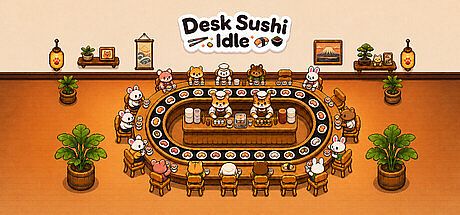


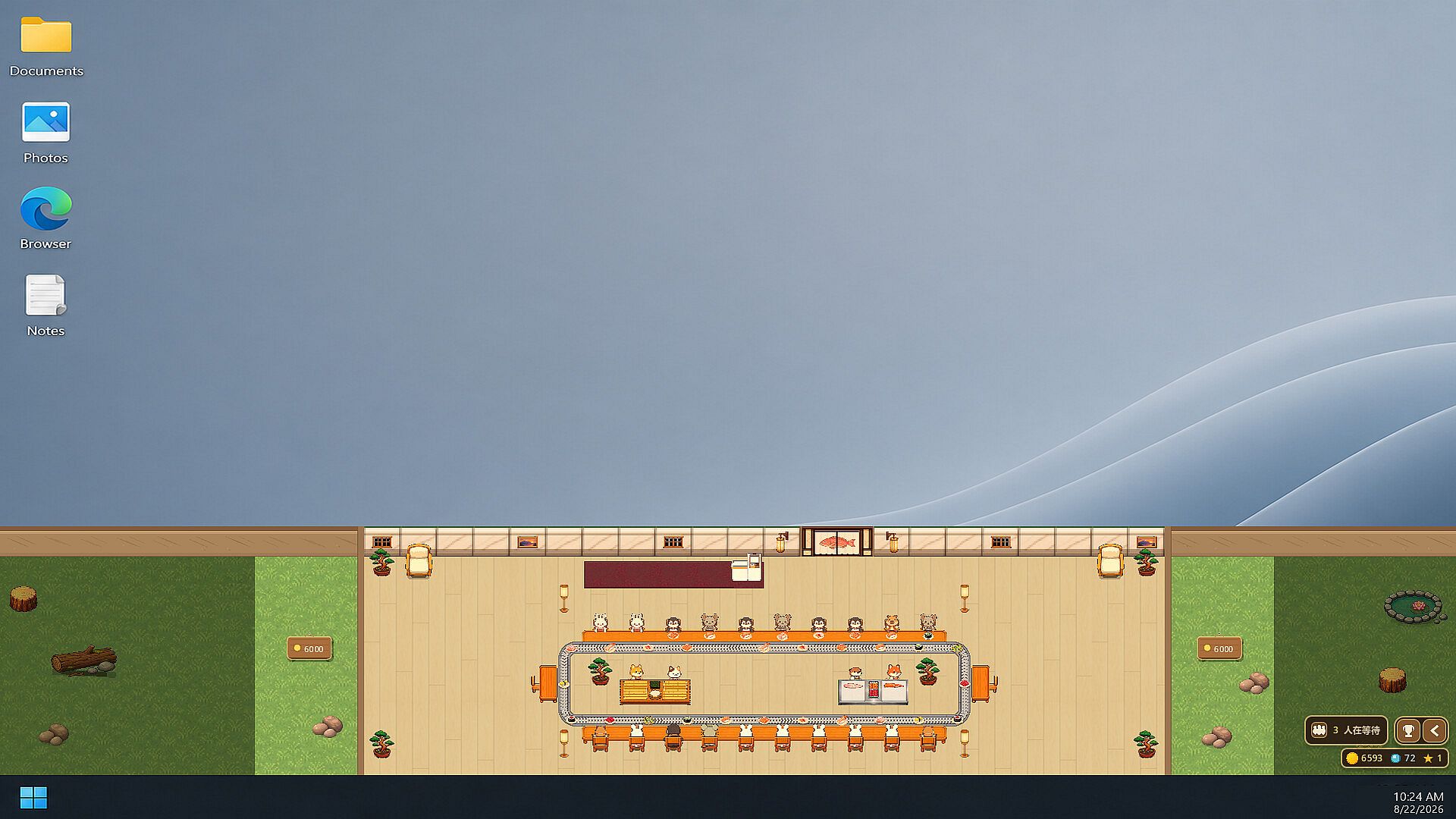
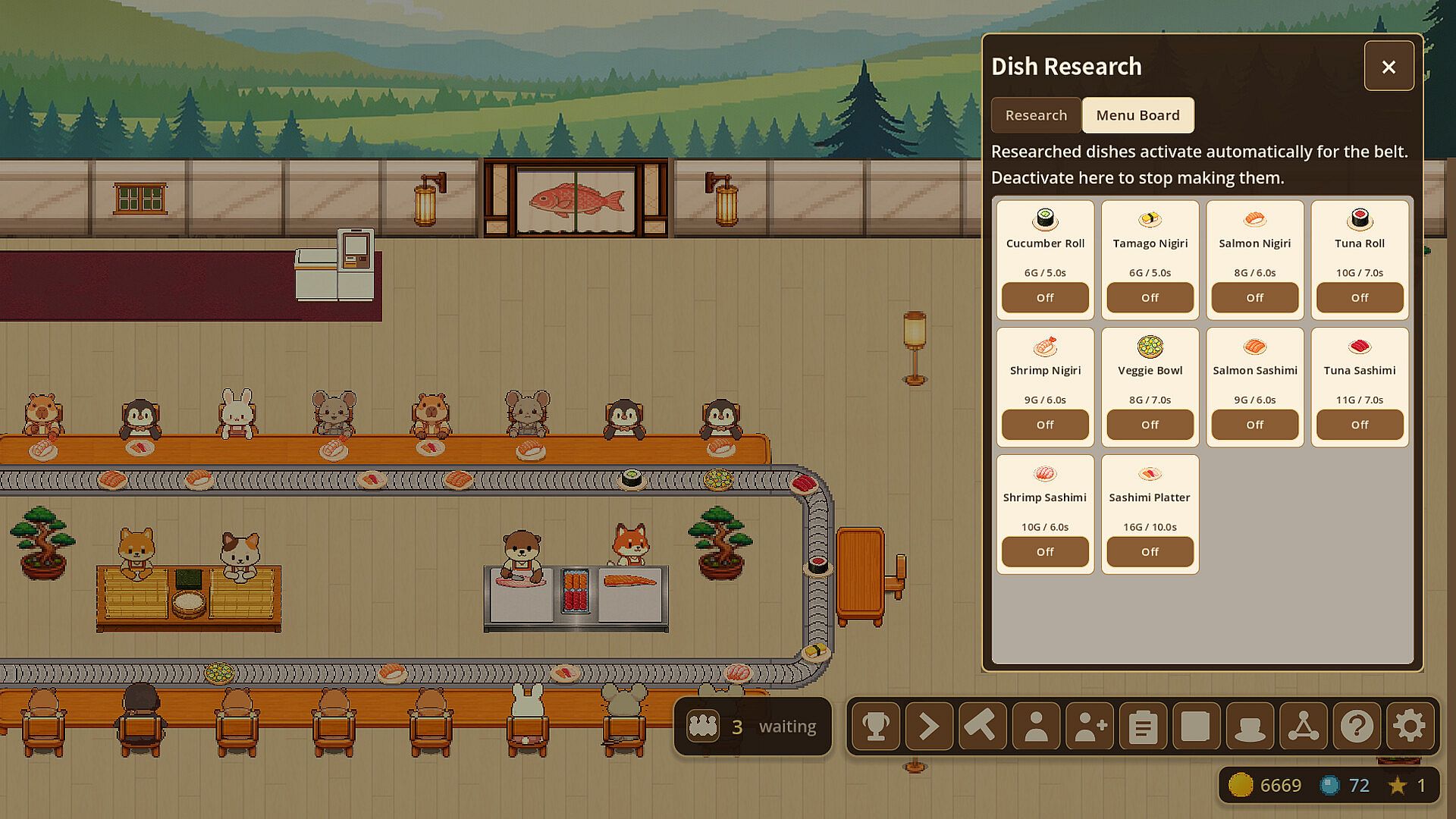
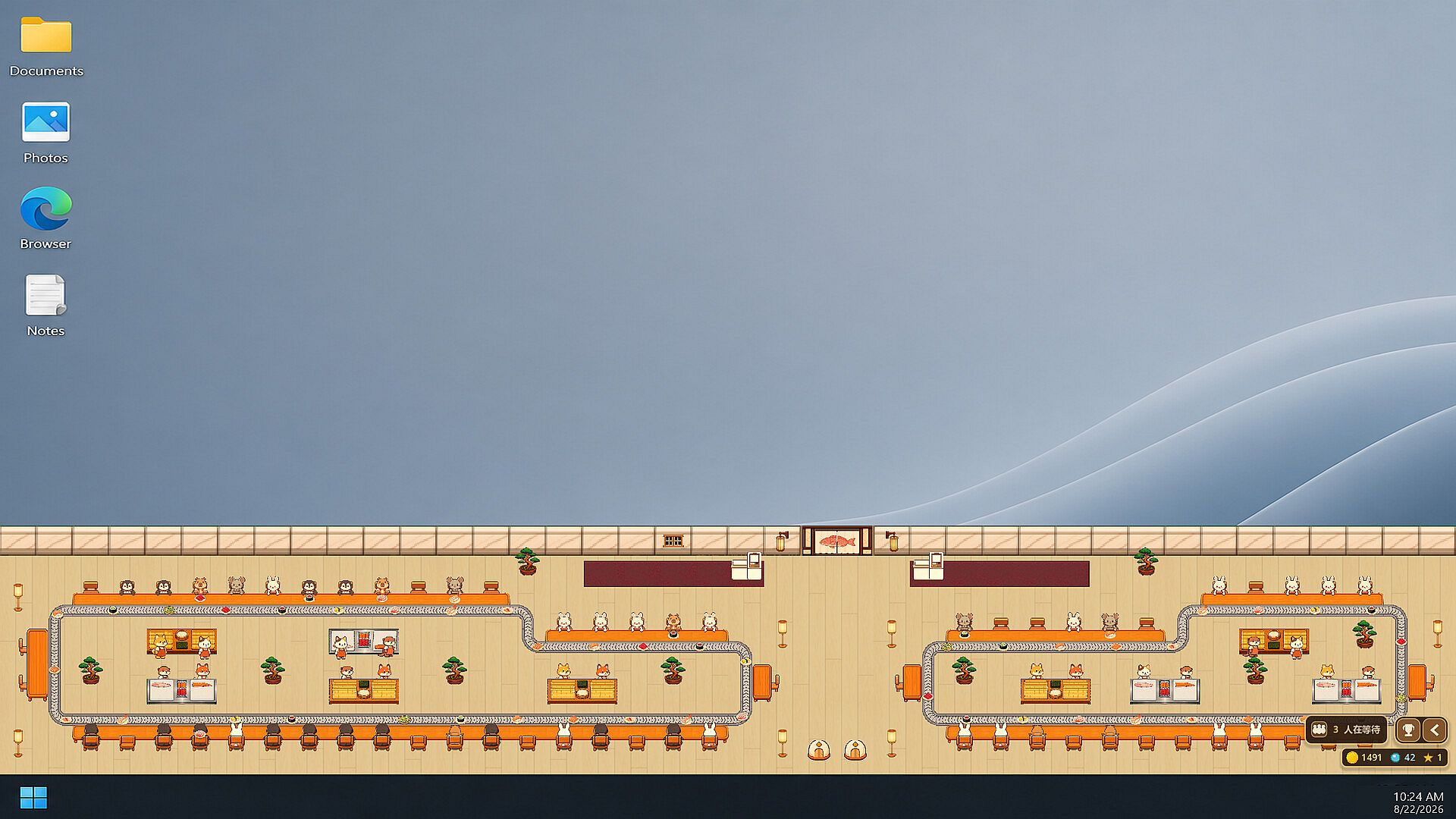
Desk Sushi Idle is an indie casual simulation game built around idle progression on PC. It places a compact sushi restaurant directly on the desktop edge, where the shop operates independently while the player handles other tasks. The experience centers on watching a small conveyor belt system serve animal customers, with staff handling daily operations without constant input.
Gameplay
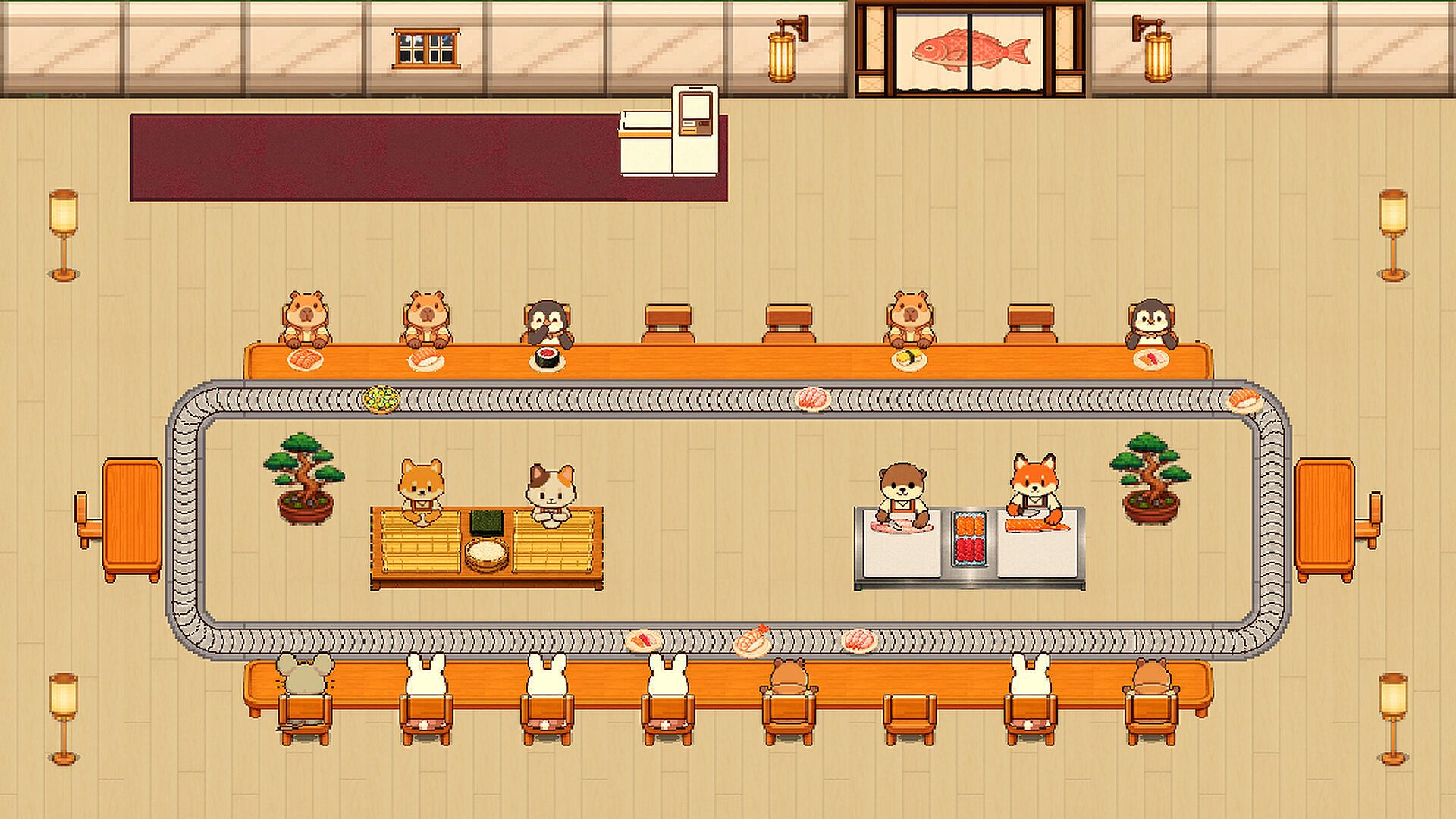
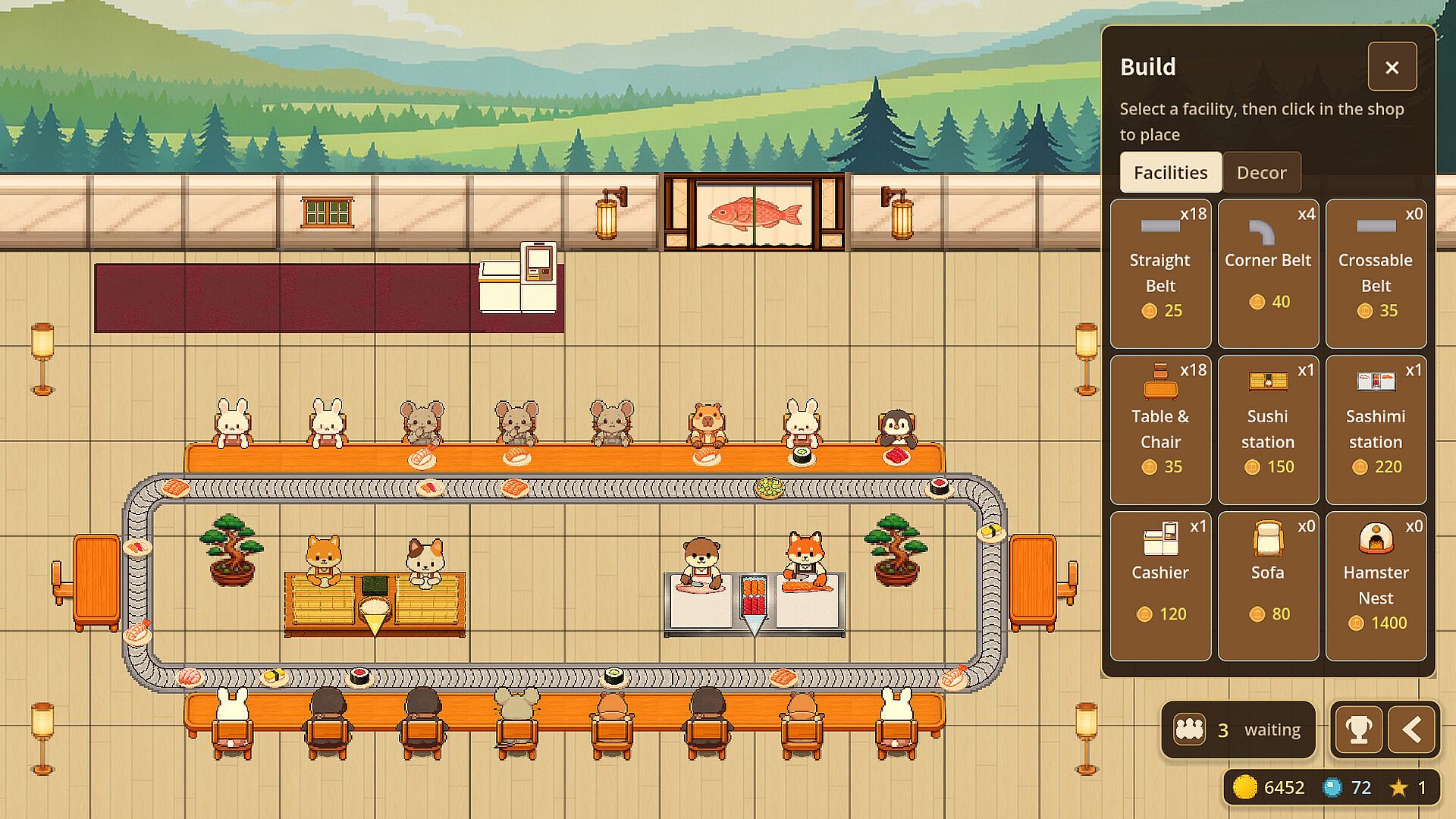
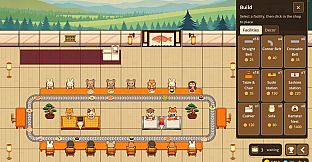
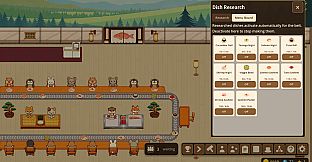
The core loop revolves around a looping conveyor belt that carries plates past seated guests. Animal staff members cook dishes, deliver plates, and manage checkout automatically. Players observe the flow from their main workspace, noting when belts need extension or stations require upgrades to handle more traffic. Expansion involves placing additional belt segments, cooking stations, and seating areas as the shop gains levels through steady sales. Research elements unlock new menu items and crew members, while periodic challenges push toward higher revenue targets. The system supports true idle advancement, with earnings and growth continuing even when the player steps away from the computer entirely.
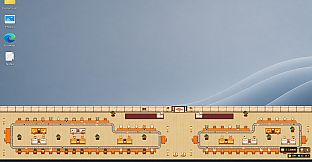
Animal characters bring personality to the automation. They handle preparation and service on their own, freeing the player to focus elsewhere until a quick glance or adjustment feels necessary. The borderless strip format keeps everything visible yet unobtrusive, allowing the restaurant to function as a persistent background element rather than a full-screen commitment.
Game Modes
Play centers on a single persistent idle experience that blends passive growth with occasional hands-on decisions. The shop advances through sales volume and upgrades whether the player is actively watching or working on other applications. When desired, direct control lets users rearrange layouts, prioritize certain research paths, or respond to immediate customer demand spikes. This structure suits short check-ins during a workday or longer sessions spent optimizing the belt network and crew assignments for faster scaling.
Progression feels steady rather than rushed. Early stages focus on basic belt loops and simple seating, while later stages introduce more complex station combinations and expanded menus. The absence of strict timers or competitive pressure keeps the pace relaxed, encouraging players to let the system run in the background and return when they want to refine the setup.
Building and Progression
Shop growth follows a clear path of incremental improvements. Each new belt section or station increases throughput, and successful service cycles generate the resources needed for further expansion. Research trees open fresh dish options that appeal to different customer preferences, while crew upgrades improve efficiency across cooking and serving roles. Challenges appear as sales milestones or specific layout goals, providing short-term targets without disrupting the overall idle flow.
The desktop integration adds a unique layer. Because the window stays visible at the screen bottom, players can monitor progress in real time alongside spreadsheets, documents, or other applications. This setup rewards both minimal intervention and deeper optimization sessions, depending on individual preference.
Is It Worth Playing?
Desk Sushi Idle appeals most to players who enjoy low-pressure idle simulations and desktop companions. The animal staff and conveyor mechanics create a steady visual rhythm that feels satisfying to watch during brief breaks. Those who prefer active, high-intensity gameplay may find the automation too hands-off after the initial setup phase. The game runs entirely on PC and supports the described idle and building systems without requiring constant attention. For anyone seeking a cozy, persistent restaurant sim that fits alongside daily computer use, the title delivers a focused and relaxing experience.












