






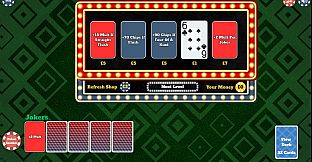
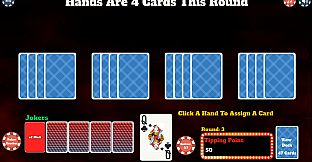
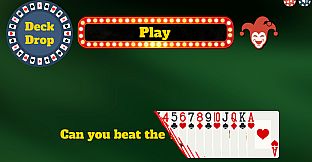
Deck Drop is a single player roguelike deckbuilder that blends poker hand construction with strategic card management on PC. Players build and refine decks across runs while chasing rising score targets in a system that punishes weak plays by burning cards outright.
Gameplay
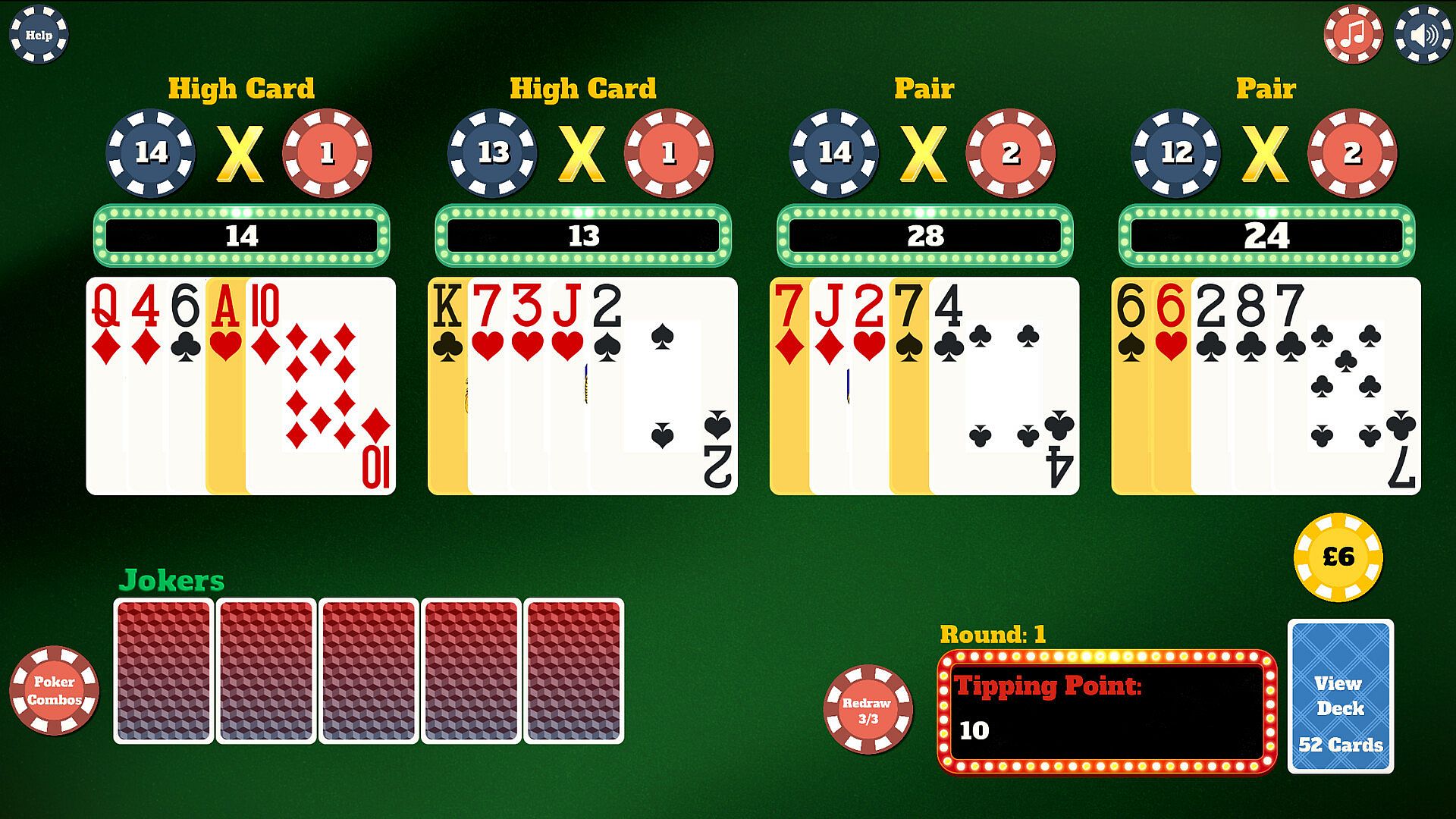
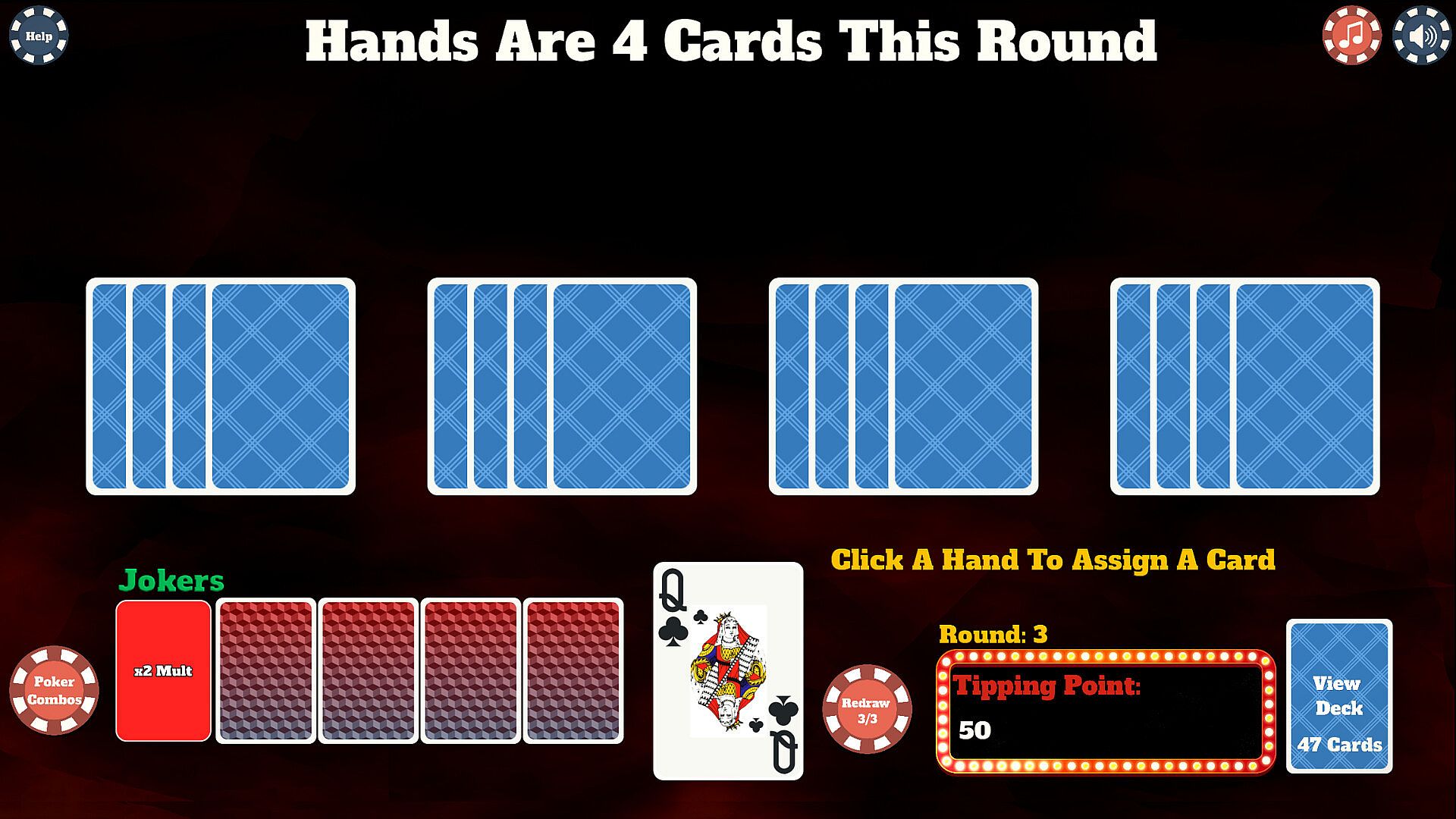
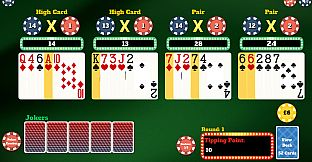
The core loop centers on dealing cards and assigning them to one of four hands. Each hand must form the strongest poker combination possible to meet or exceed the current target score. Stronger hands advance the run while weaker ones are removed from play through burning. This creates constant pressure to optimize every assignment and anticipate future draws.
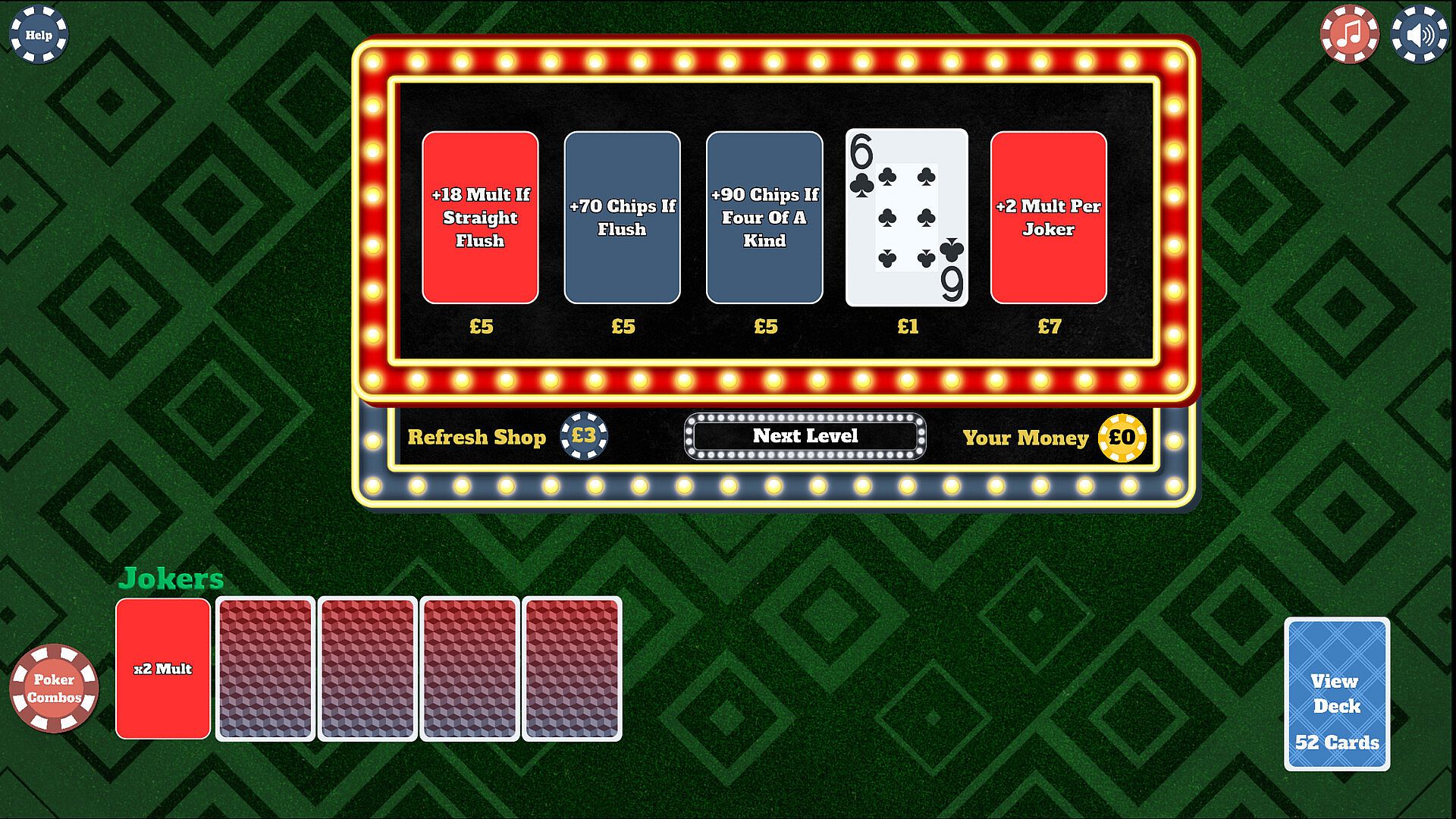
Between hands, players spend resources on upgradable Jokers that alter card values or effects, Enchant Cards that add permanent modifications, and other upgrades that improve scoring potential or deck consistency. The roguelike structure means each run starts fresh, with choices in upgrades and enchantments shaping how the next sequence of targets unfolds. The inspiration from Chinese Poker appears in the multi hand layout, while Balatro influences show in the Joker driven multipliers and escalating challenge.
Success depends on recognizing poker hand rankings quickly and deciding when to push for higher combinations or settle for safer scores that preserve cards for later rounds. The burning mechanic adds tension because lost cards cannot be recovered within the same run, forcing players to balance aggression with preservation.
Game Modes
Deck Drop focuses on an endless score chasing format where targets increase steadily until a run ends. Players aim to survive as many rounds as possible by consistently clearing the tipping point with strong hands. The single player structure keeps attention on personal improvement and deck experimentation rather than competition.
Within this framework, the game emphasizes replayability through different upgrade paths and Joker combinations that change how hands are evaluated. No separate named modes exist at this stage, but the core system supports varied strategies based on which enchantments and upgrades players prioritize during a run.
Key Mechanics and Progression
Card assignment to four simultaneous hands forms the foundation of every decision. Jokers can be upgraded multiple times to create powerful synergies, while enchantments provide targeted boosts to specific card types or hand rankings. Upgrades purchased during runs offer immediate or lasting advantages that help push further into higher target scores.
The roguelike elements encourage trying new combinations on each attempt. Failed runs reset progress but allow players to carry forward lessons about effective Joker placements and enchantment priorities. This loop rewards careful observation of how different poker hands interact with the chosen upgrades.
Current State and Development
Deck Drop is scheduled for Early Access release in Q4 2026. The developer, a solo indie studio, has outlined plans to expand the experience with additional decks, difficulty levels, permanent upgrades across runs, and achievements. The current version already includes the core hand assignment system, upgradable Jokers, card enchantments, and the endless target score challenge.
A free demo is planned to let players sample the mechanics before committing to the full release, which will remain at an affordable price point without increases after Early Access concludes.
Is It Worth Playing?
Deck Drop suits players who enjoy poker themed strategy games and roguelike deckbuilders that emphasize careful resource management and risk assessment. The burning mechanic and four hand layout create a distinct challenge that differs from standard single hand poker or traditional deckbuilders.
Those drawn to Balatro style Joker synergies or Chinese Poker multi hand tactics will find familiar elements combined with roguelike progression. The single player focus and score chasing loop reward repeated attempts to optimize runs and discover stronger upgrade combinations.
With no user reviews available yet and the game still in development, prospective players should consider the free demo once released to test whether the hand assignment and burning systems match their preferences. Fans of deliberate, planning heavy card games rather than fast paced action will likely appreciate the depth available even in the initial version.











