

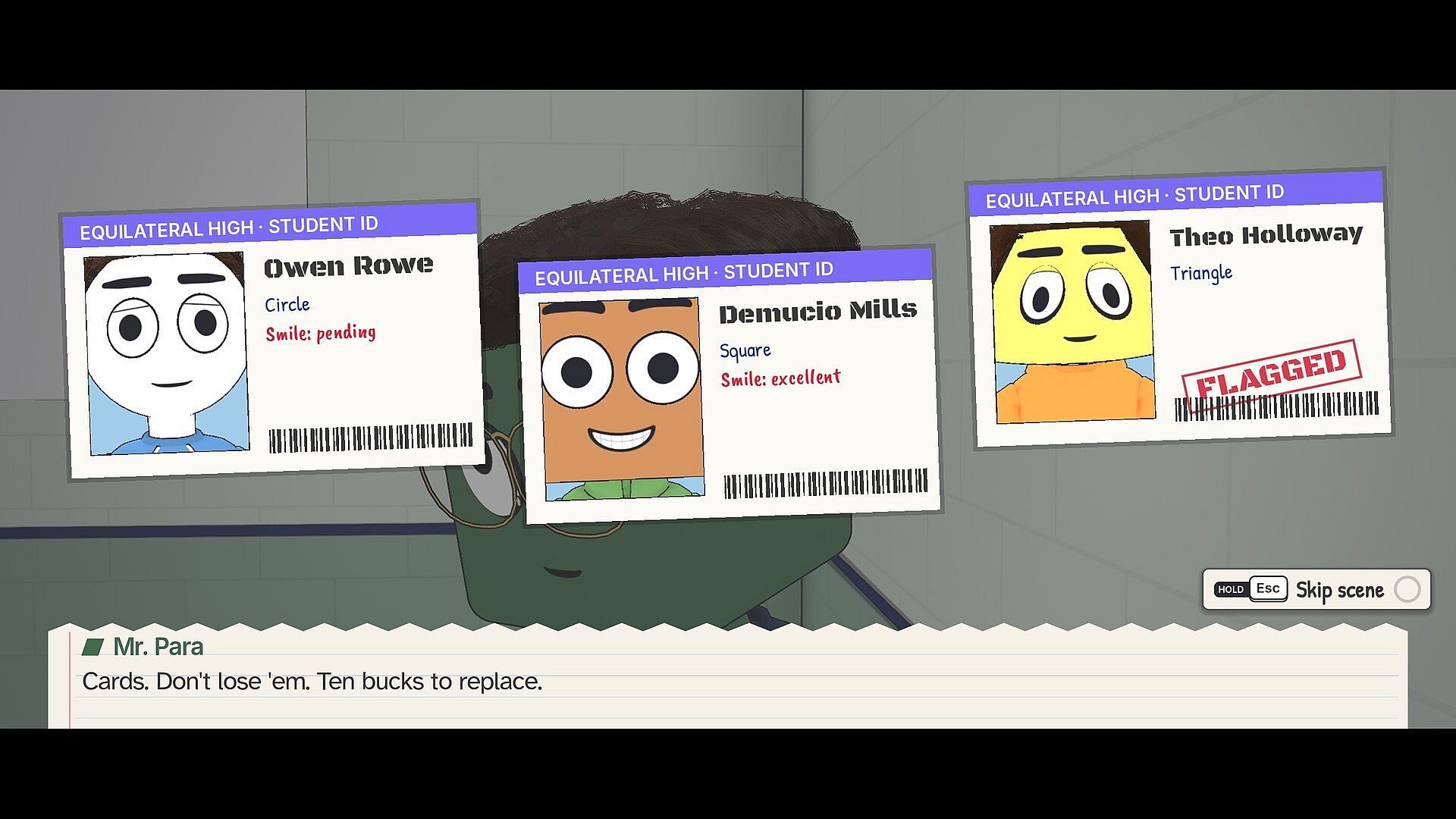
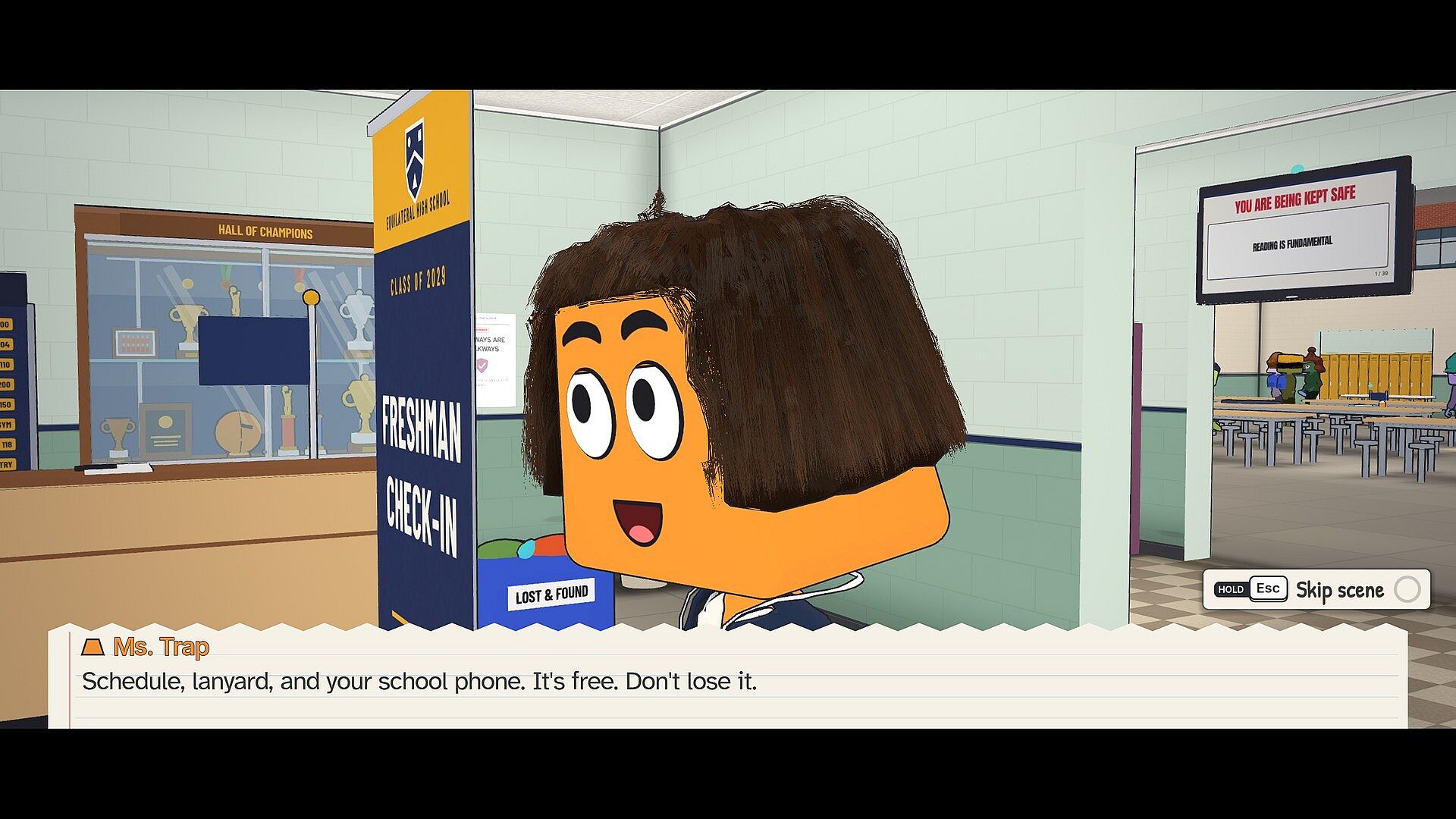
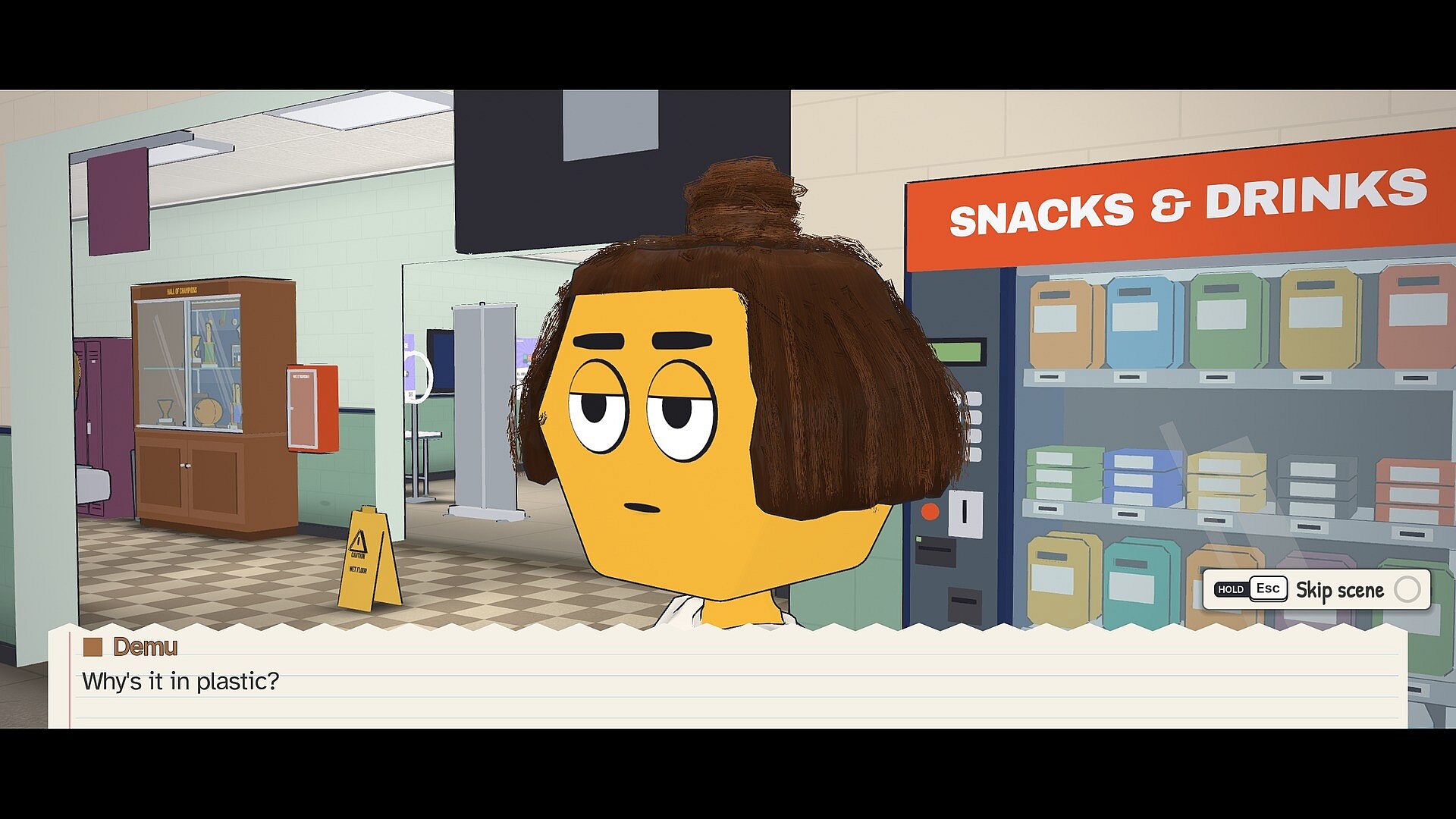
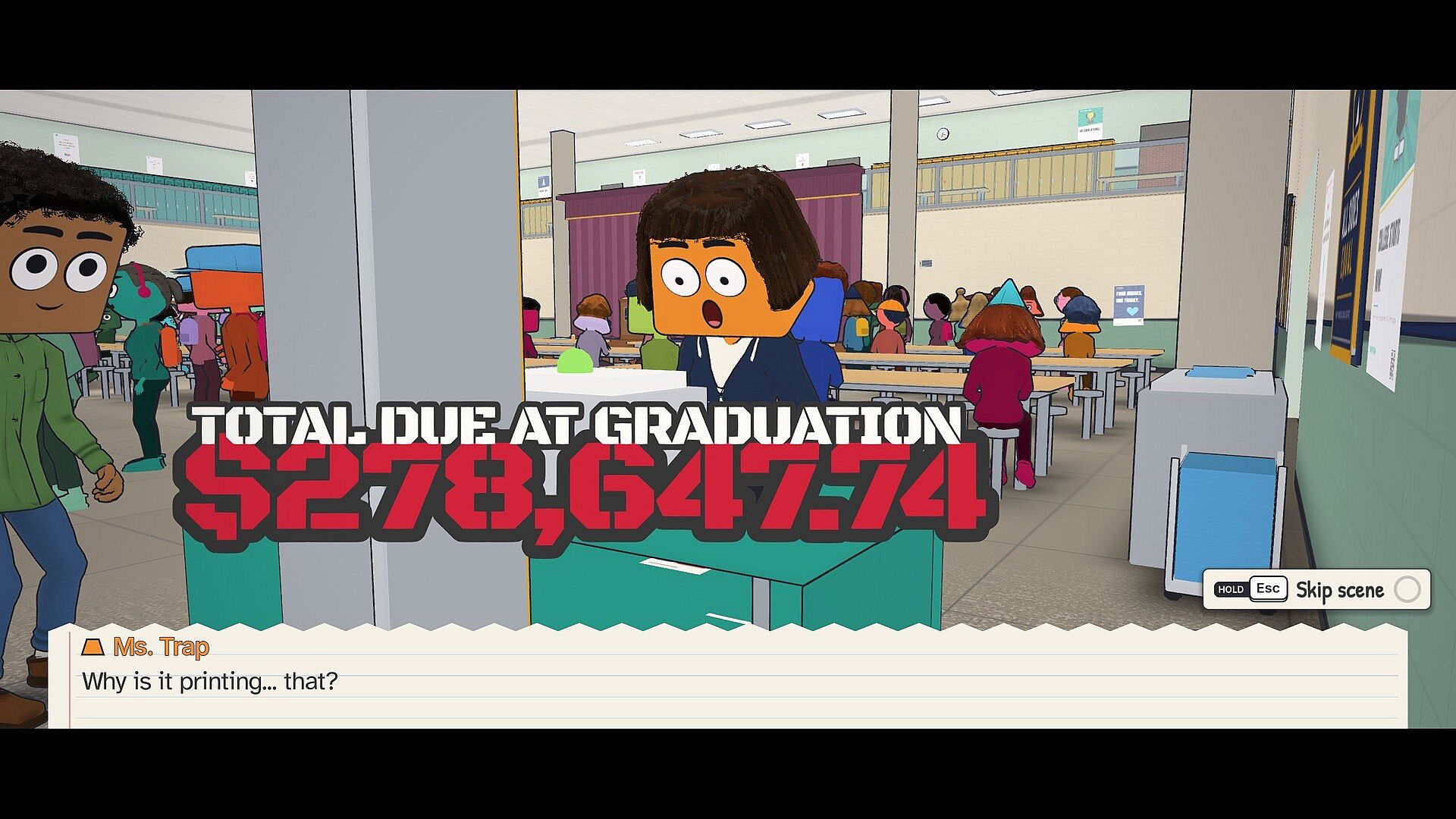
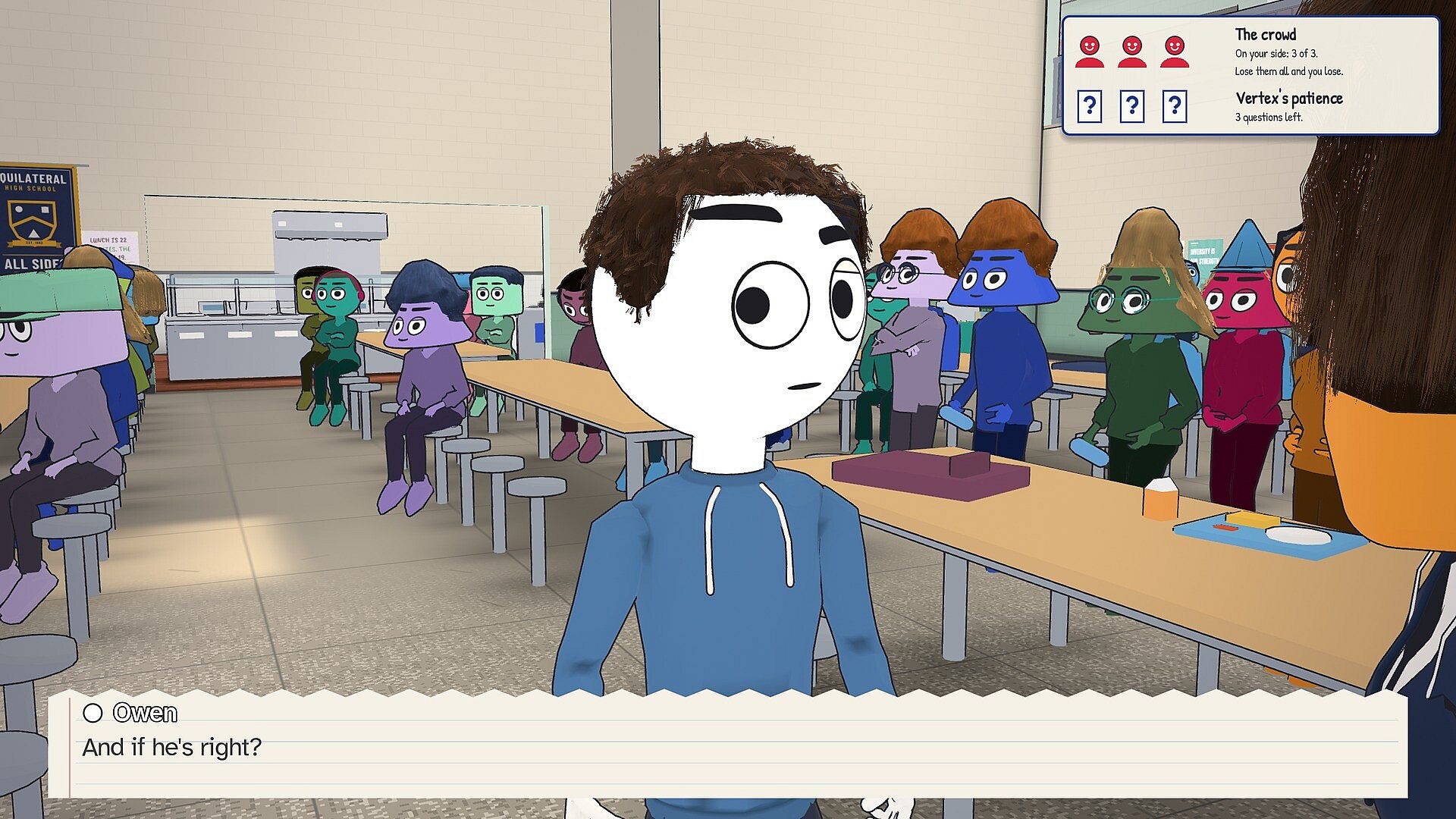
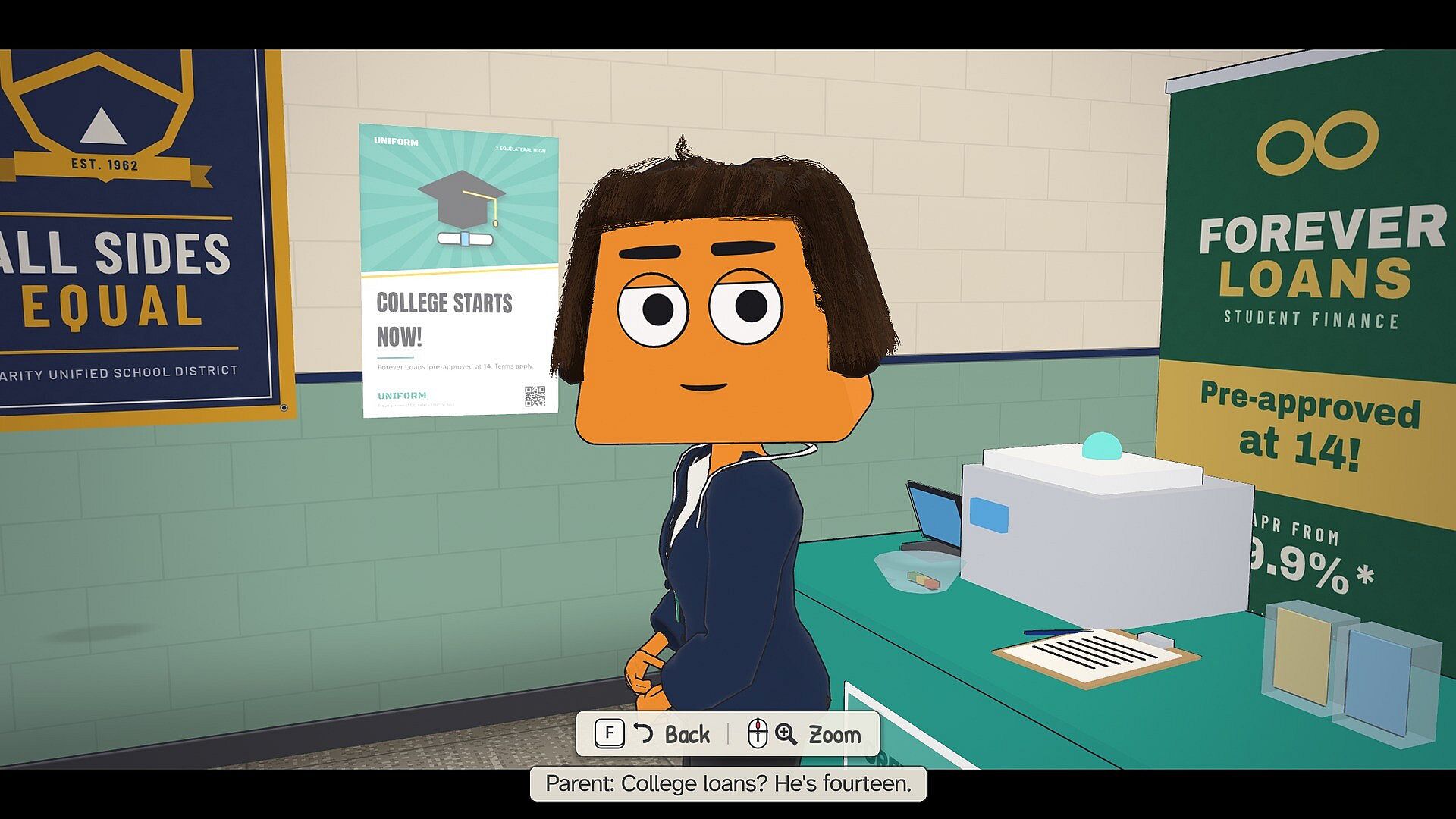
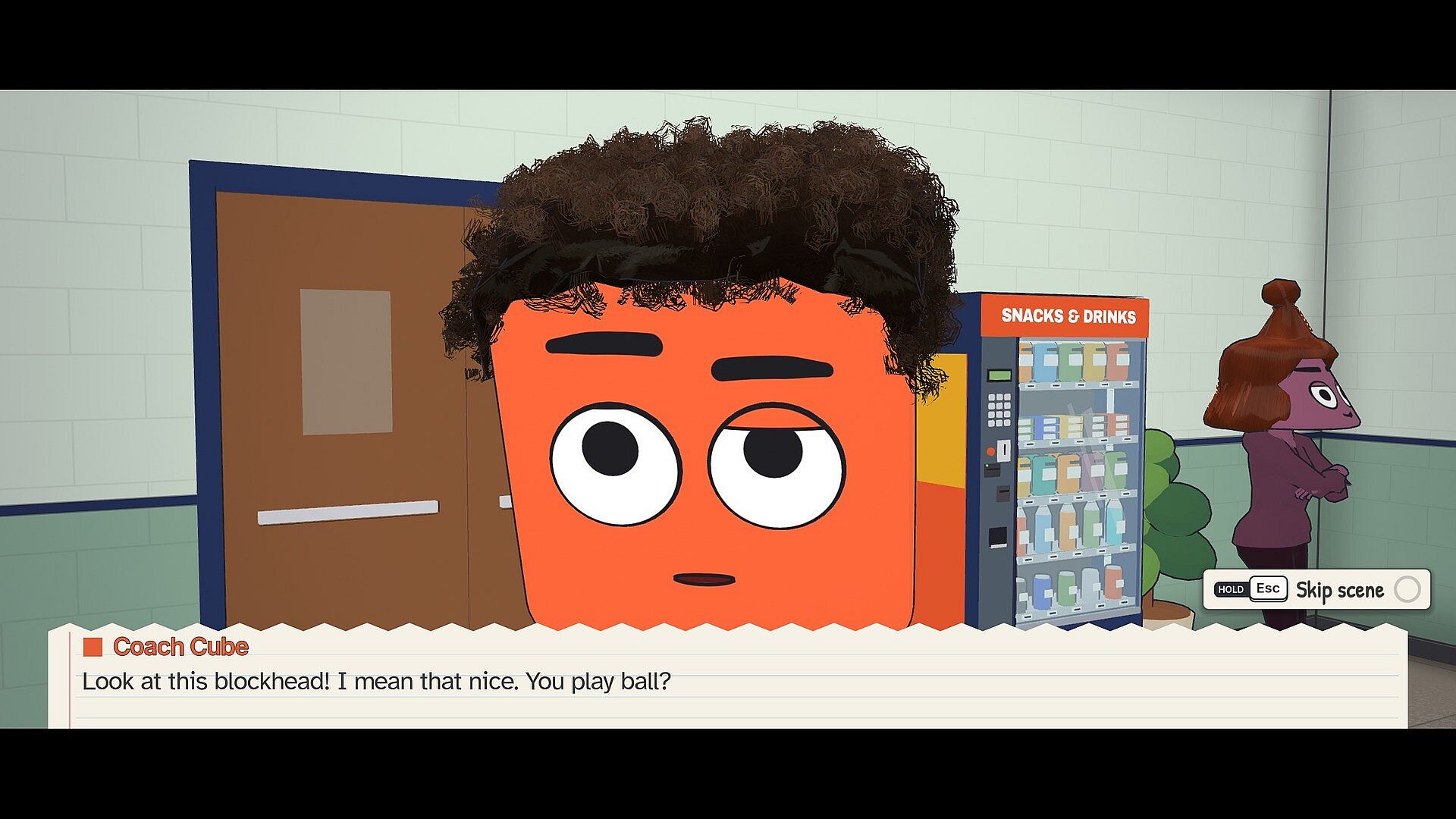
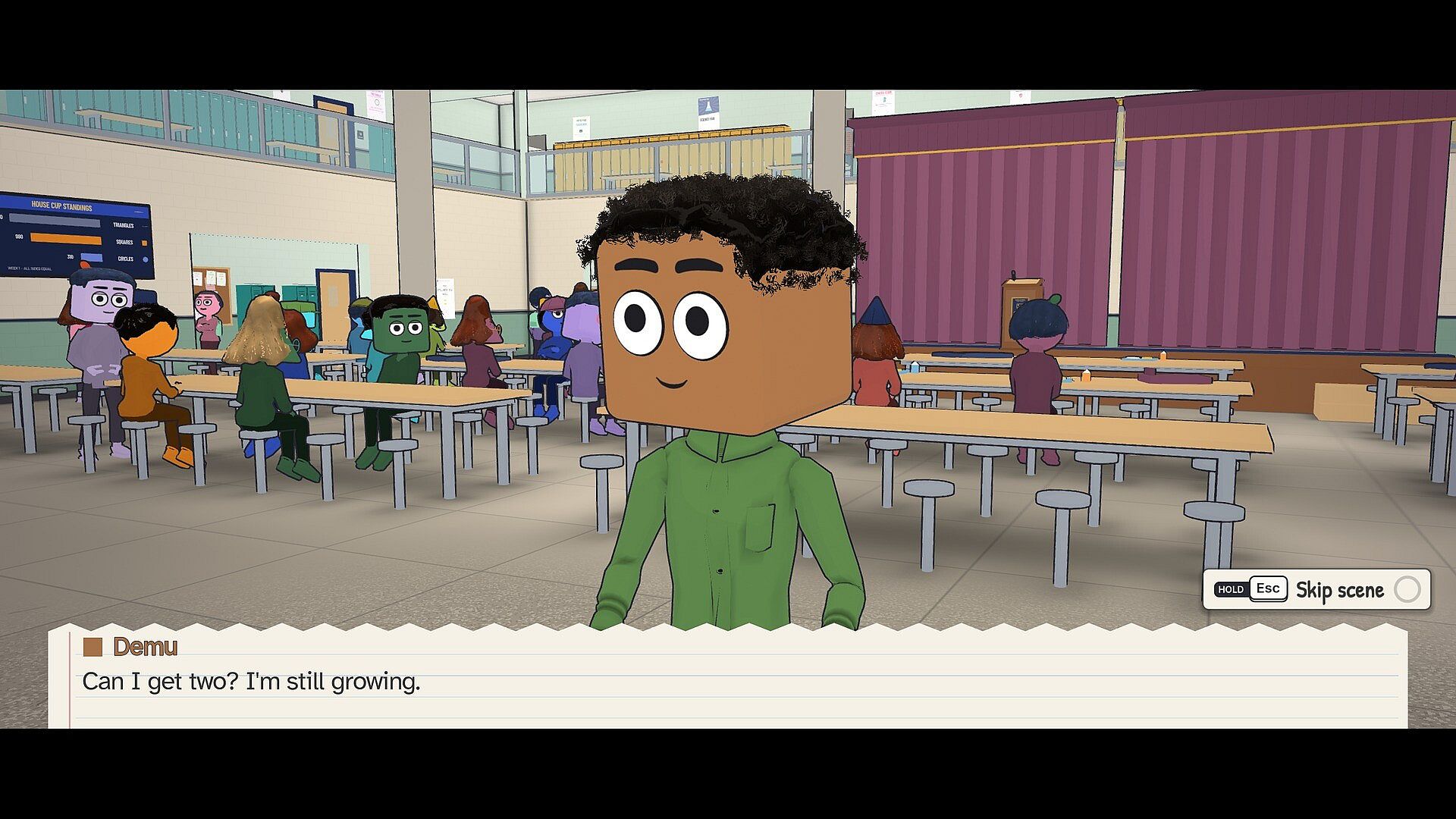
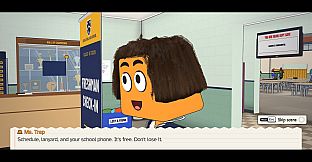
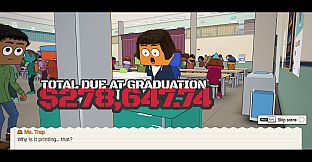
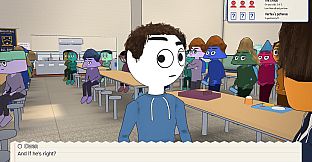
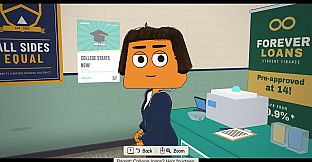

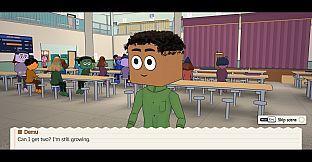
Conaganda is an indie adventure game set in a satirical high school where every student is a geometric shape. Players take on the role of Owen, a circle navigating senior year at Equilateral High, a place that claims all sides are equal yet sorts, grades, and markets students by their shape. The experience blends narrative choices with light stealth, hacking, and debate mechanics across a full school year.
Gameplay
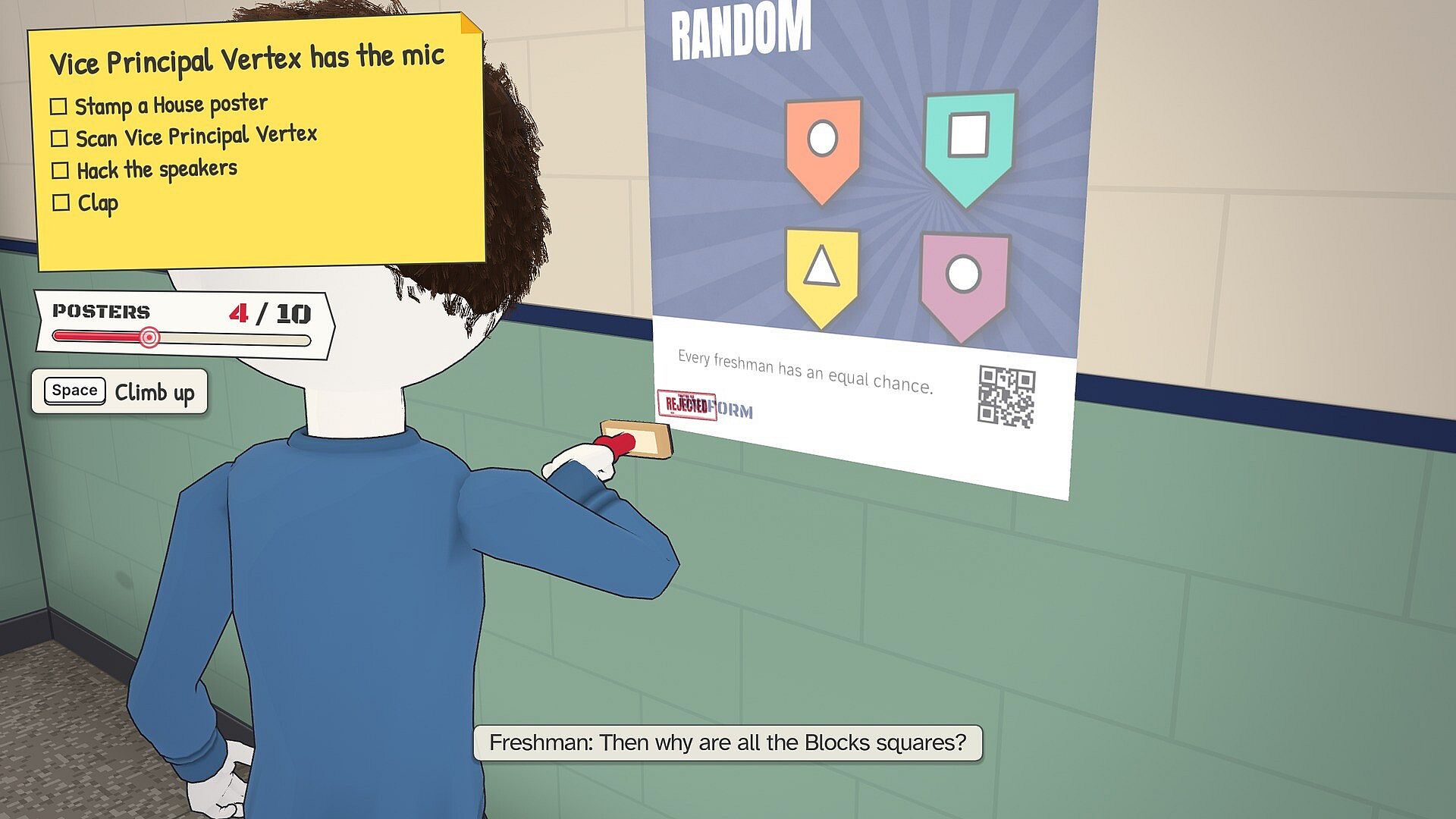
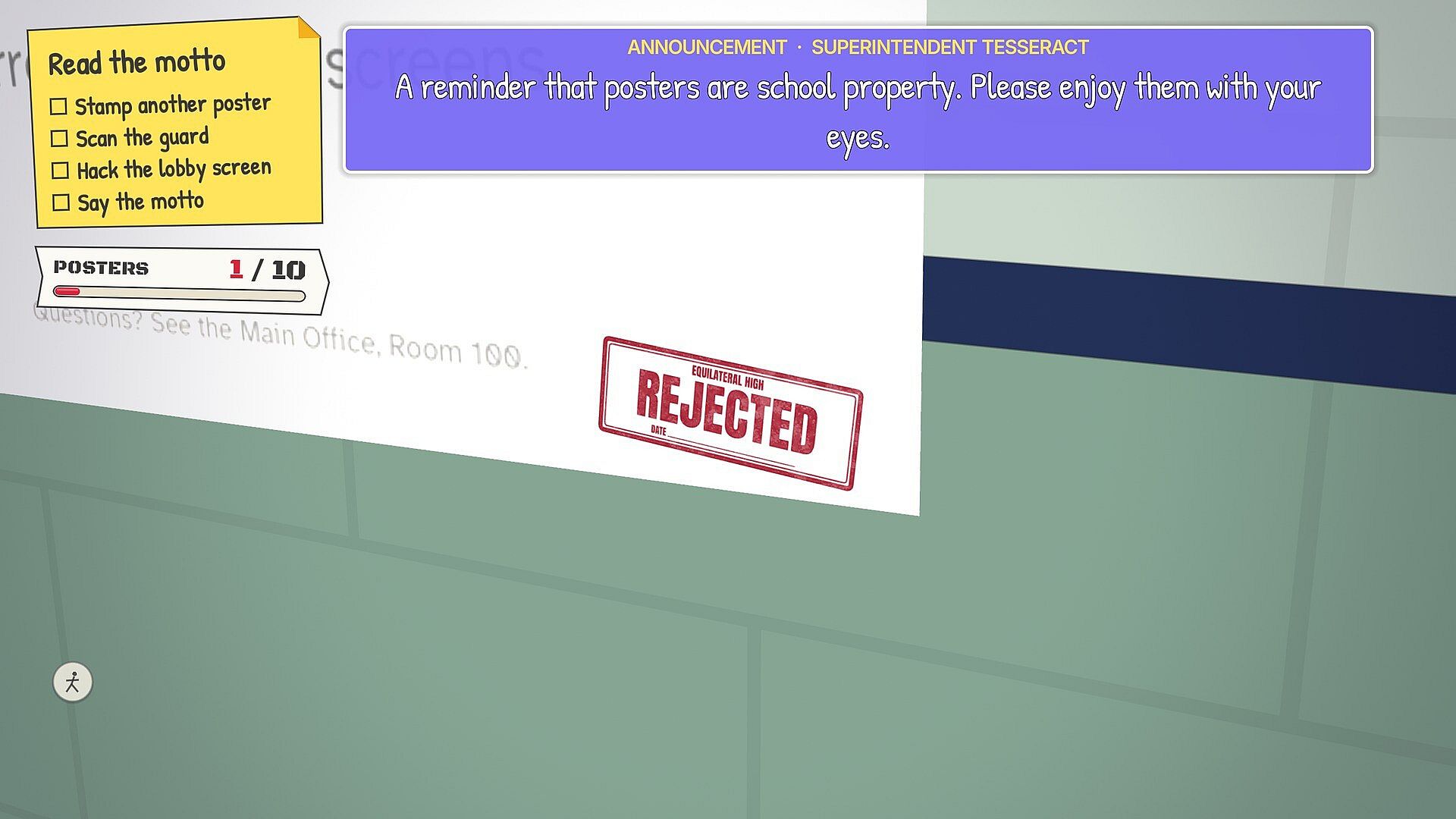
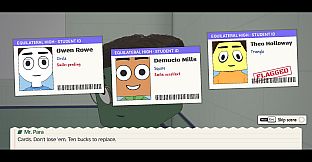
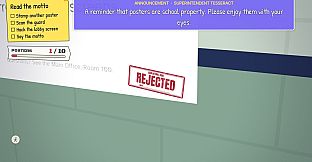
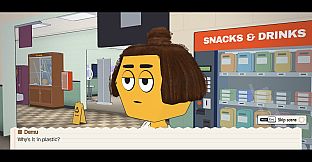
The core loop centers on daily decisions that shape Owen's perspective. Stamping propaganda appears on posters, textbooks, forms, and the school feed, with verdicts like approved, rejected, sponsored, or context that influence the story. Sneaking past prefects, looping security cameras, ringing bells, and hijacking displays add tension during certain sequences. Tier-list debates require players to argue against teachers, panels, and tribunals using collected receipts to support positions. Outside these systems, players handle part-time shifts at Shape Burger, participate in Field Day events, attend prom, and manage relationships with family and friends whose situations evolve based on prior choices.
Progress unfolds across sixteen chapters that cover the academic year plus a summer epilogue. A yearbook records the outcomes of major decisions, reflecting how Owen's stamps, arguments, and actions affect the world around him. The game emphasizes personal interpretation rather than prescribed morals, roasting every faction and viewpoint equally.
Game Modes
Conaganda operates as a single-player narrative adventure with no separate competitive or cooperative modes. The primary experience is the full campaign featuring multiple paths through the school year. A free demo titled Conlogue covers orientation day and leads to five distinct report-card endings, introducing the stamping and choice systems in a shorter format. Streamer-focused options include Chat Plays, where viewers vote on decisions, and a Streamer Mode that keeps all dialogue safe for broadcast by allowing tone adjustments for stronger language or humor.
Narrative Structure and Choices
Twelve endings emerge from the combination of stamps, debate results, and interpersonal decisions. These outcomes tie into the yearbook system, which replays key moments based on player history. The story explores themes of propaganda, institutional sorting, and personal truth without directing the player toward any single conclusion. Side activities such as work shifts and social events provide additional context and branching opportunities that feed into the larger narrative.
Is It Worth Playing?
Conaganda suits players who enjoy choice-driven adventure games with satirical elements and light puzzle or stealth segments. The free demo offers a substantial introduction with multiple endings, allowing potential buyers to test the stamping and debate systems before the full release. With sixteen chapters, twelve endings, and built-in streamer tools, the game targets those interested in replayability through different perspectives rather than high-score competition or open-world exploration. Its focus on deciding personal truths in a shape-sorted school environment provides a focused, opinionated experience for fans of narrative indies.