











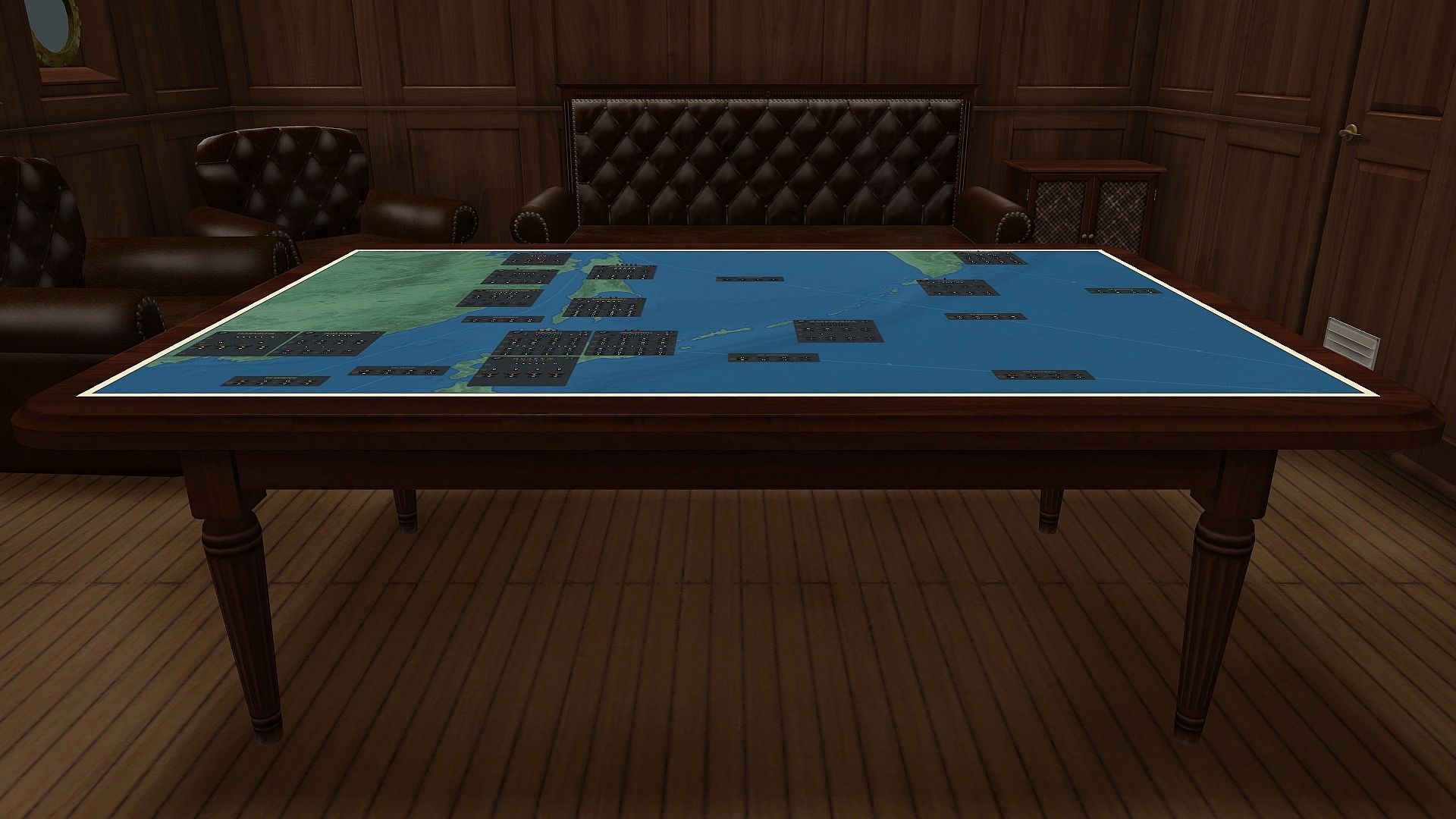
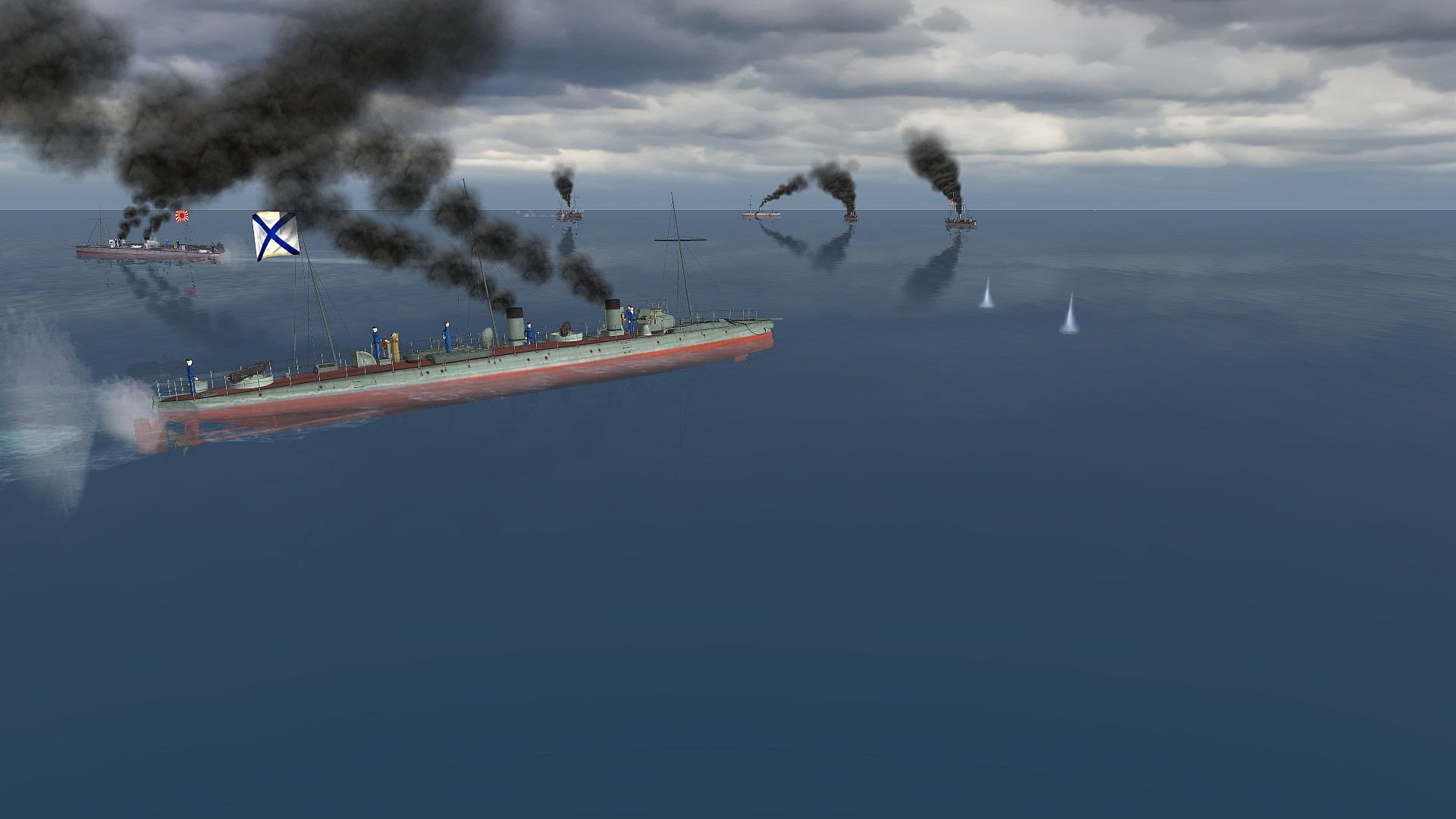
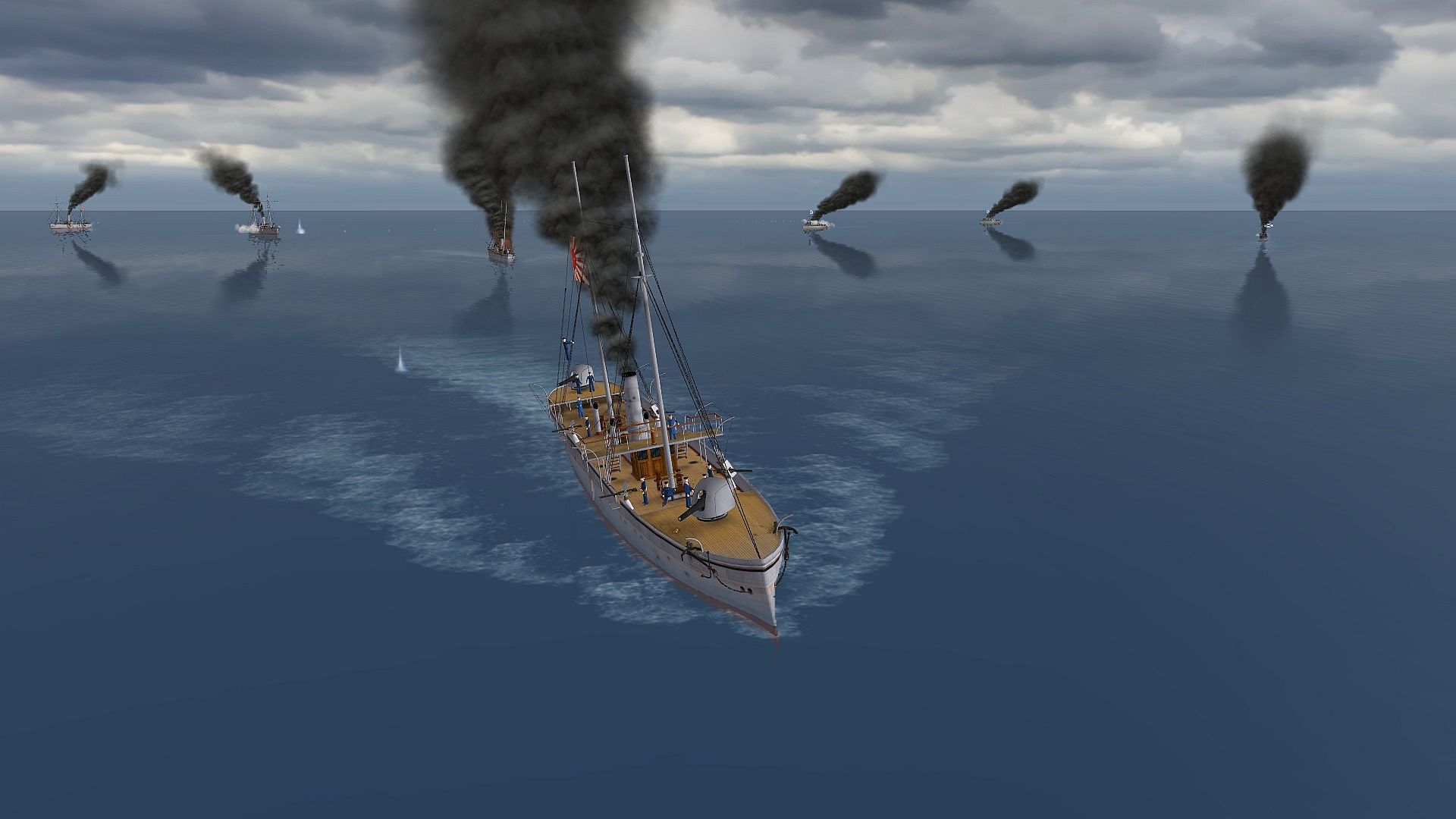
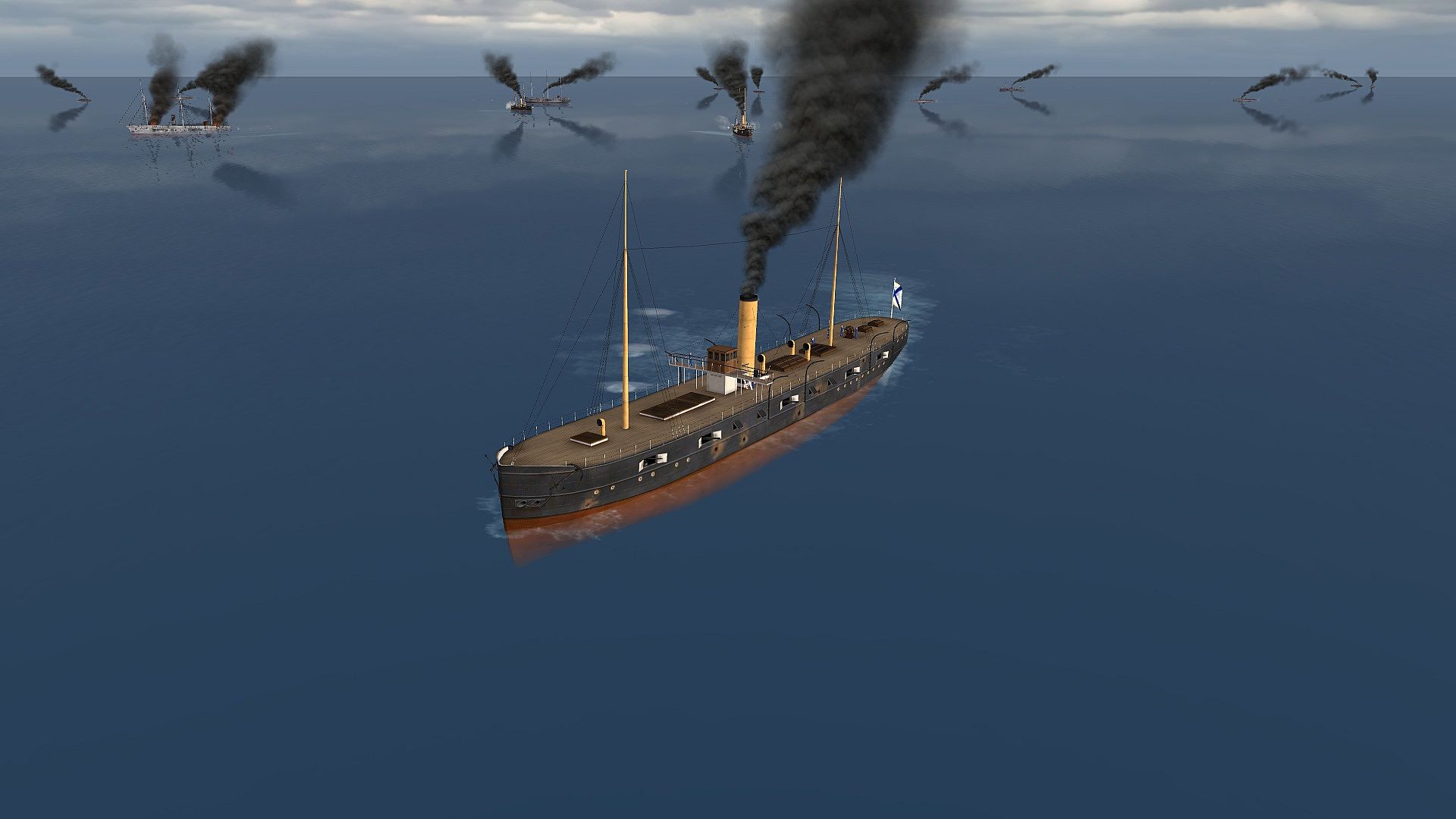
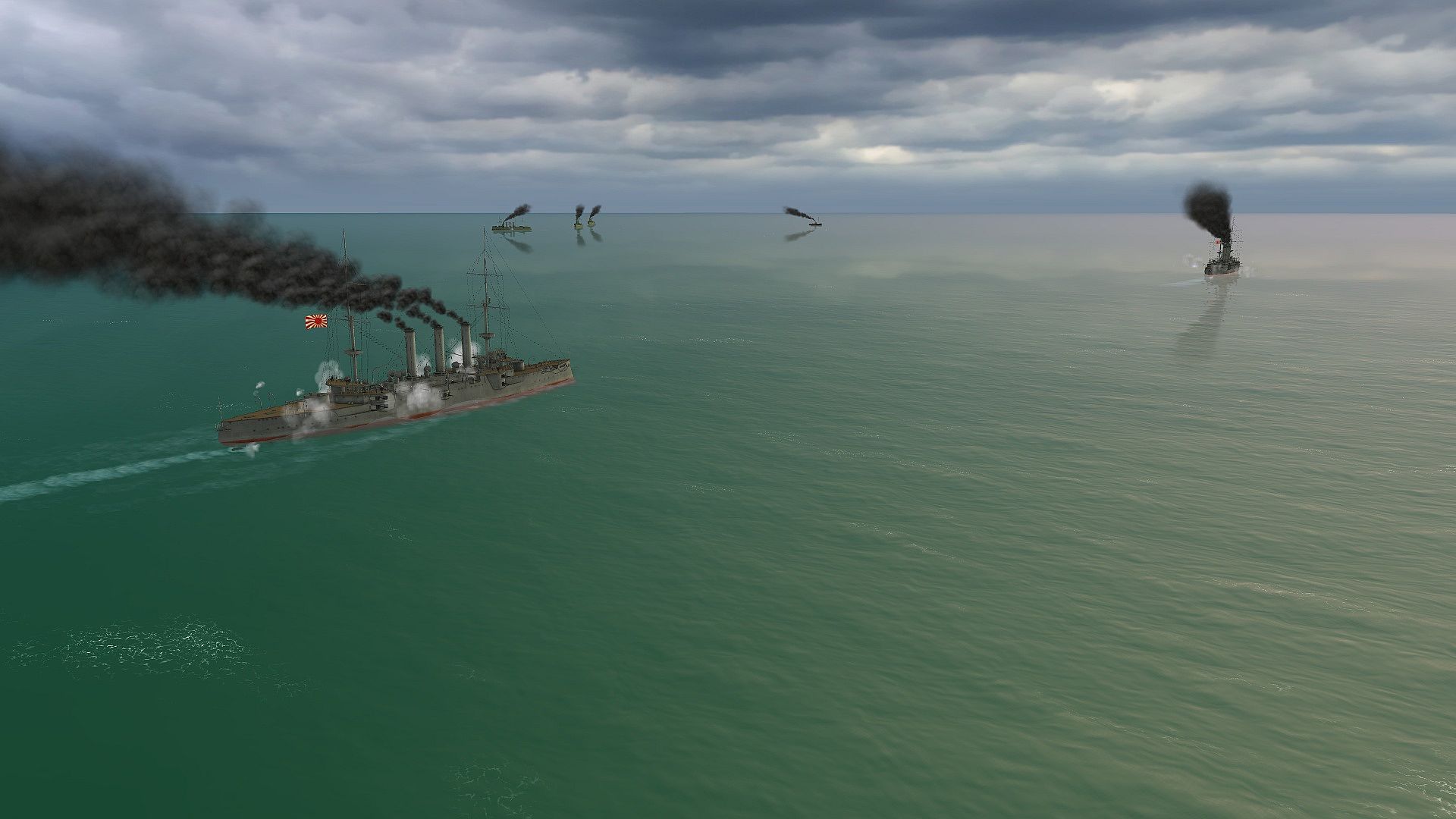
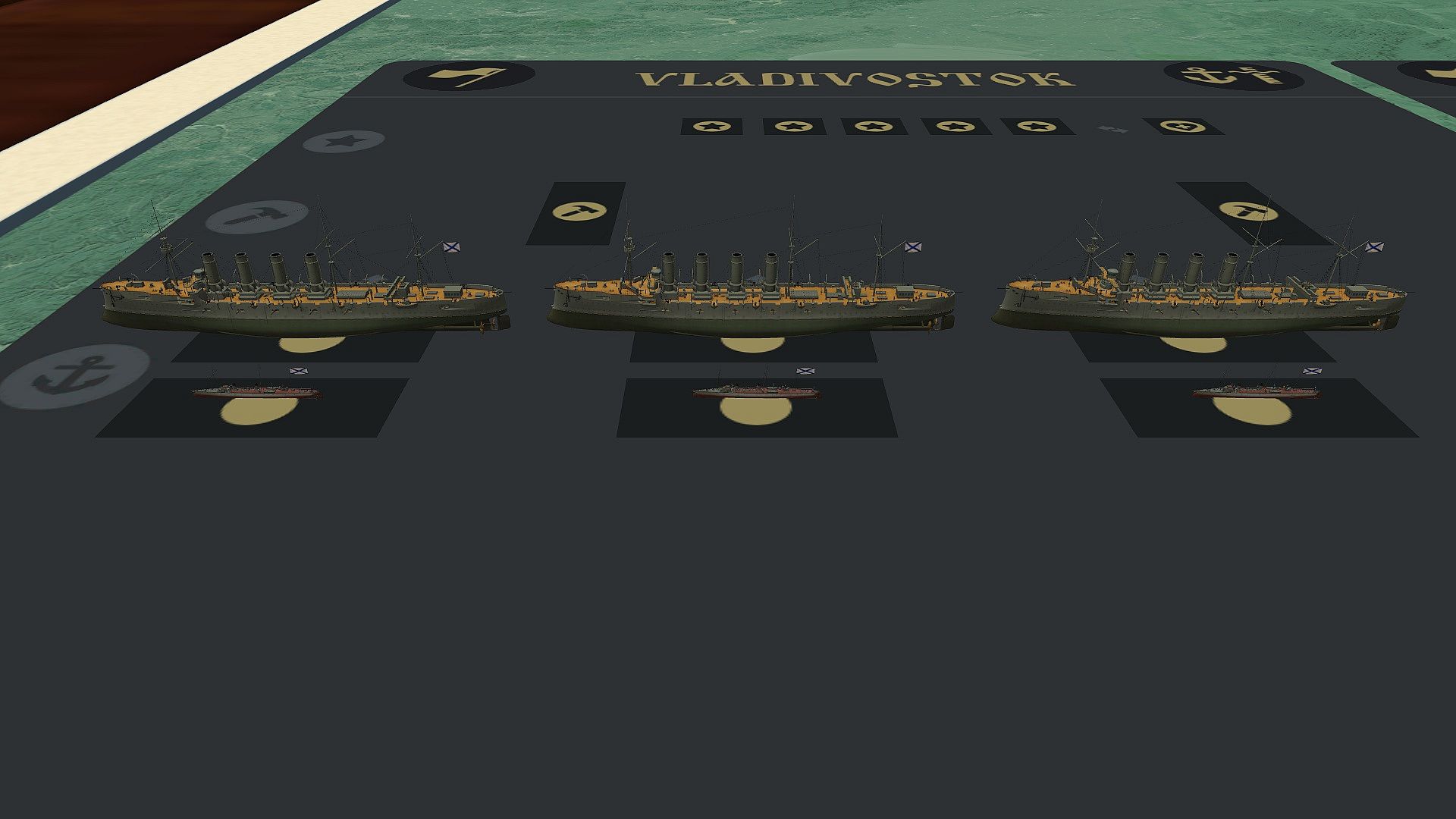
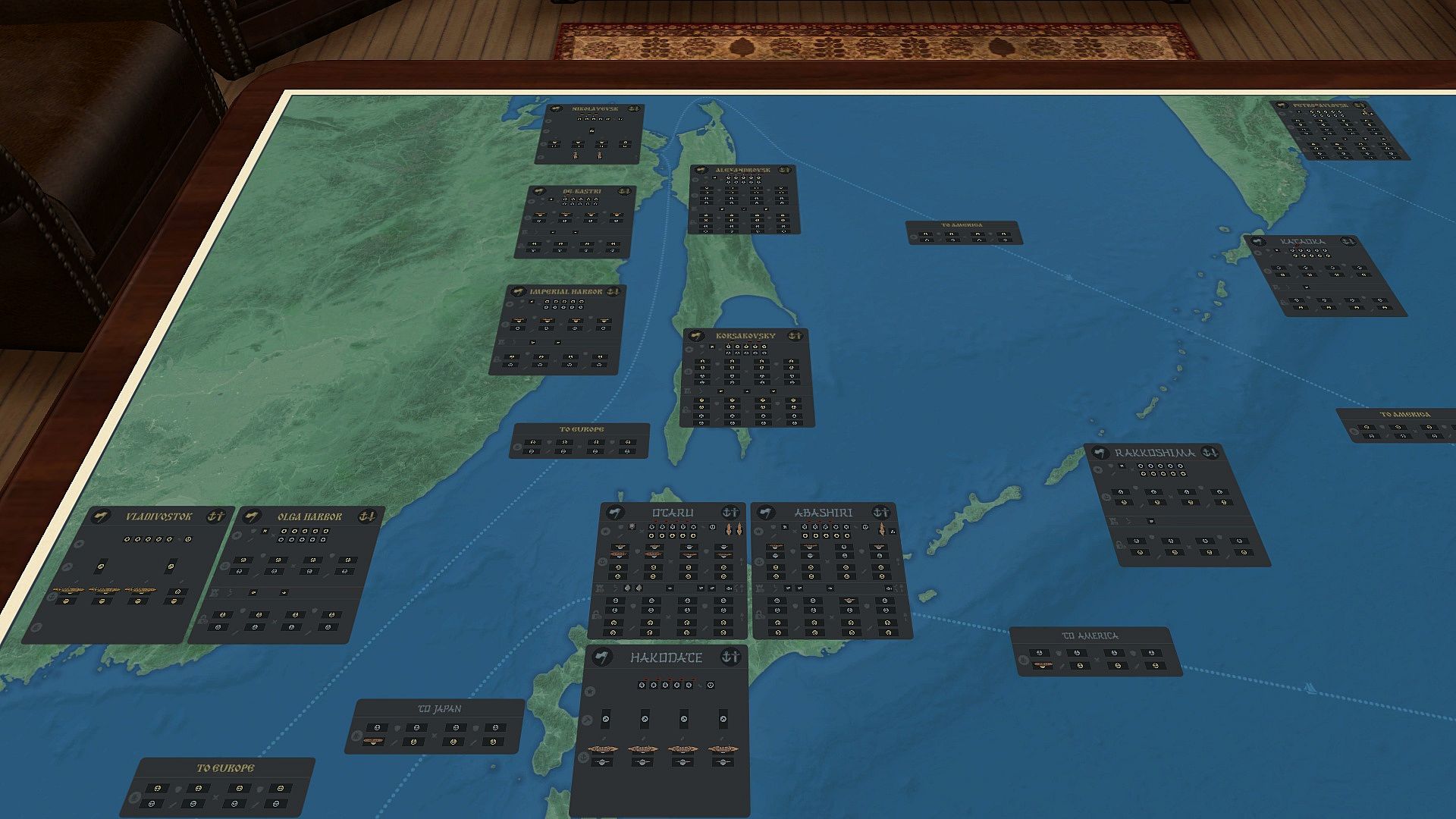
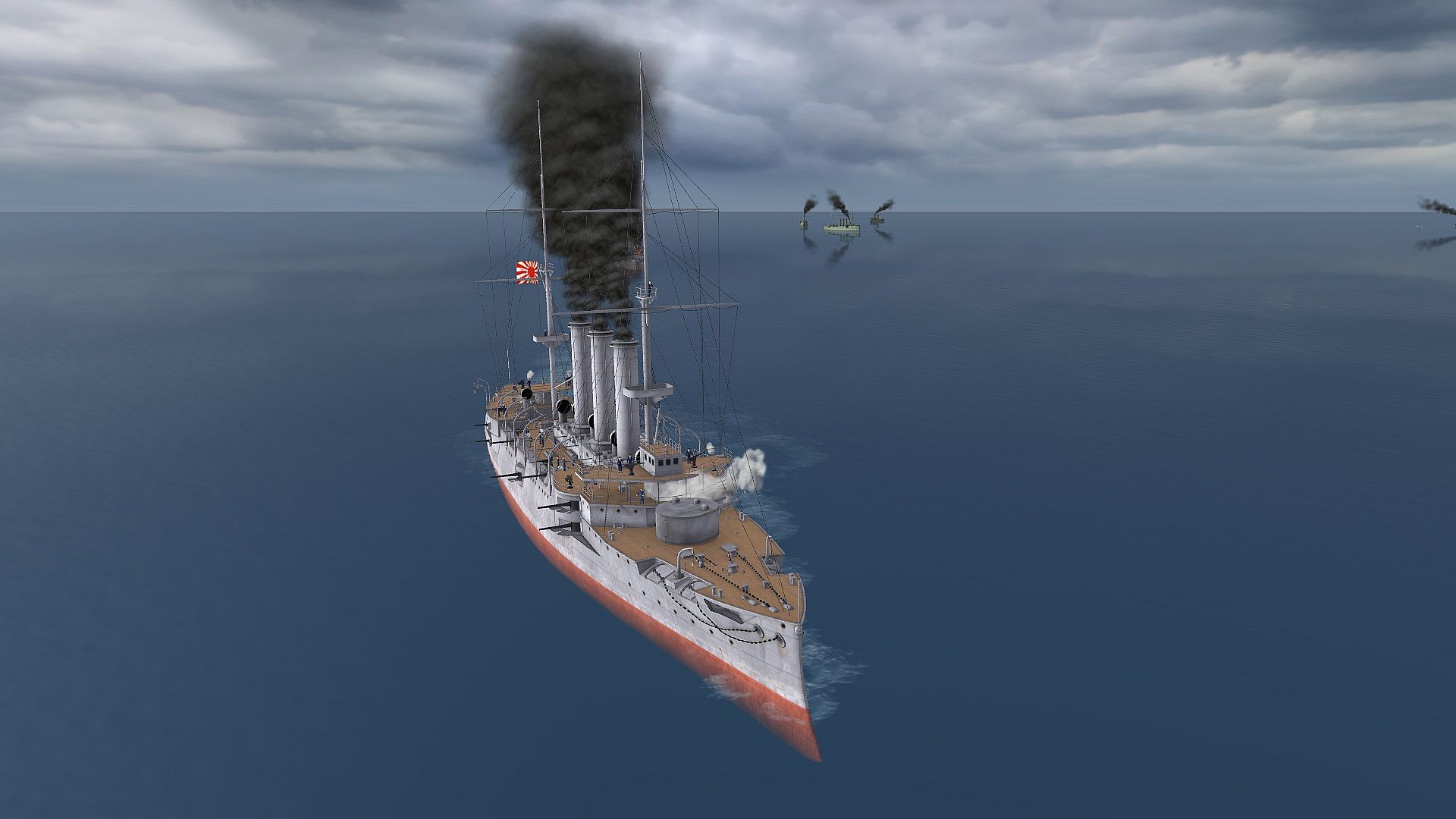
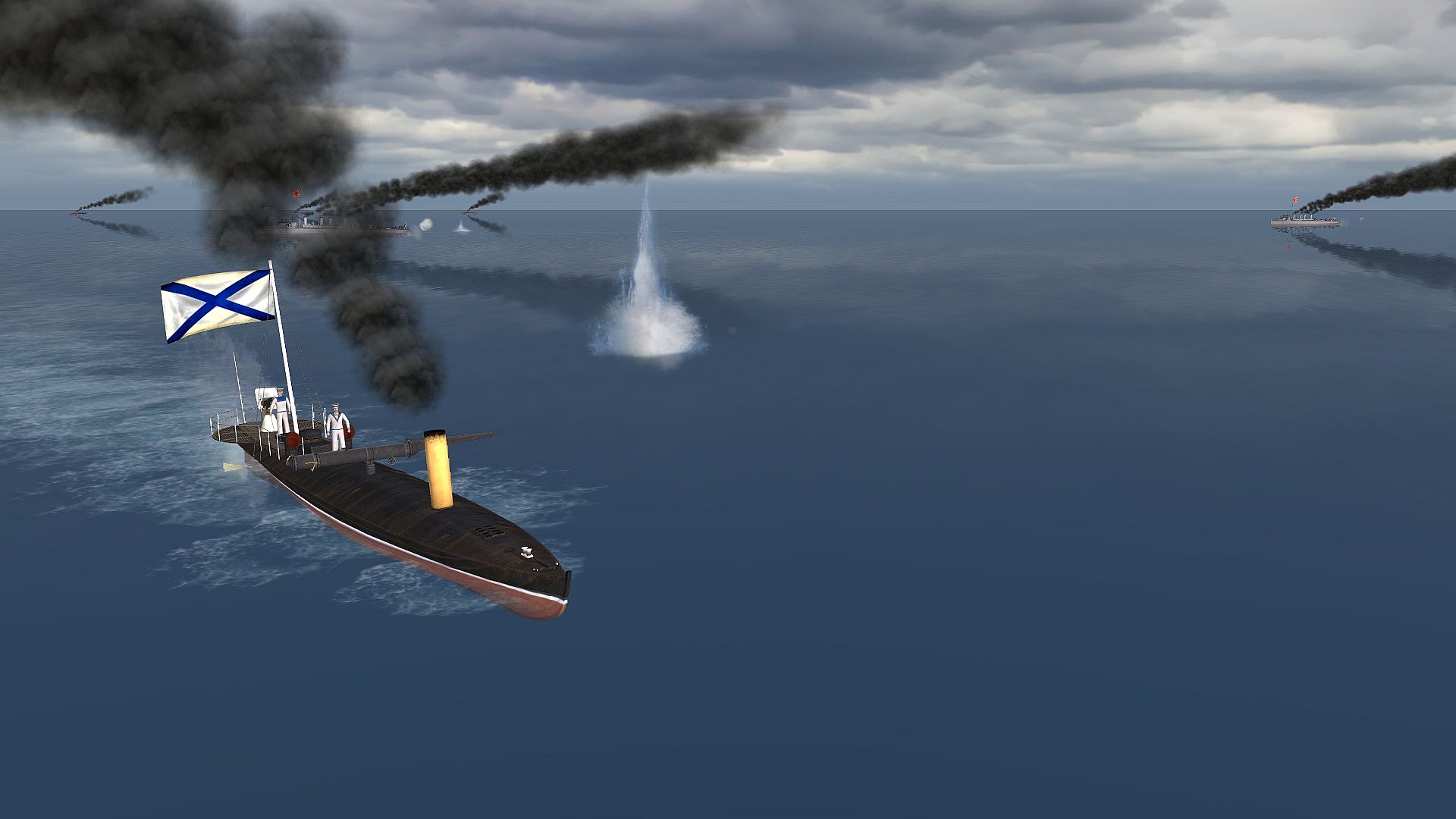
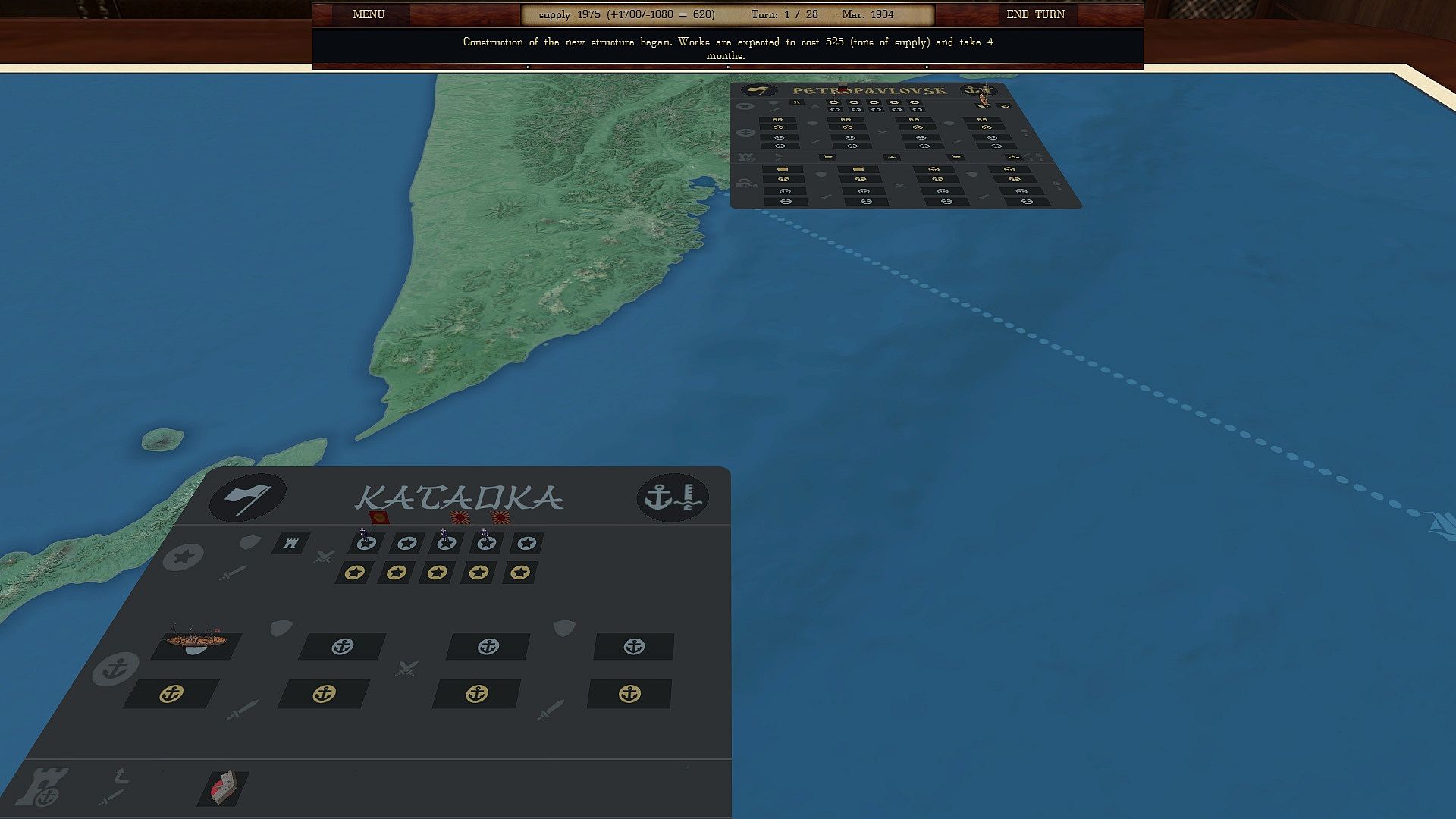
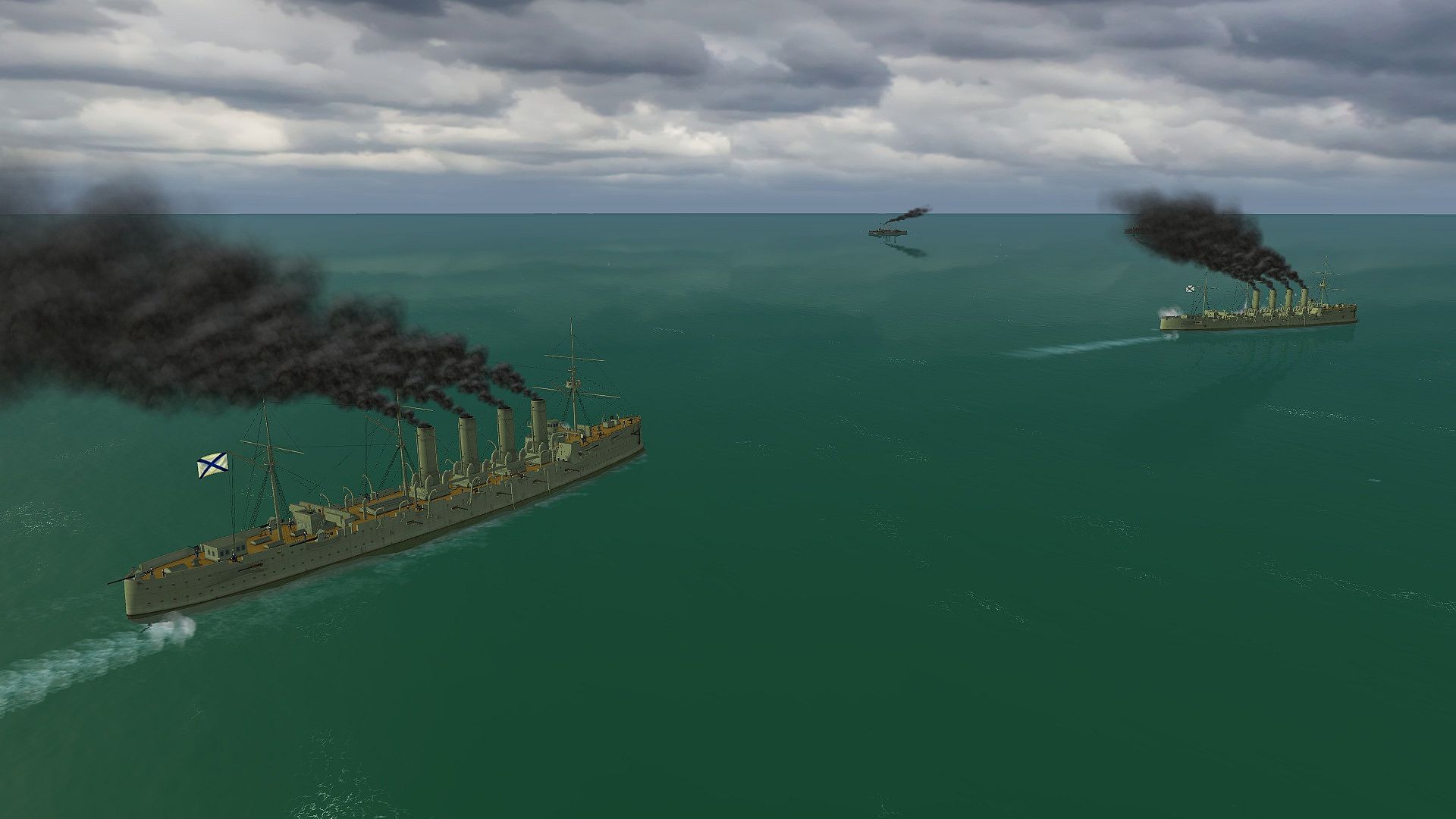
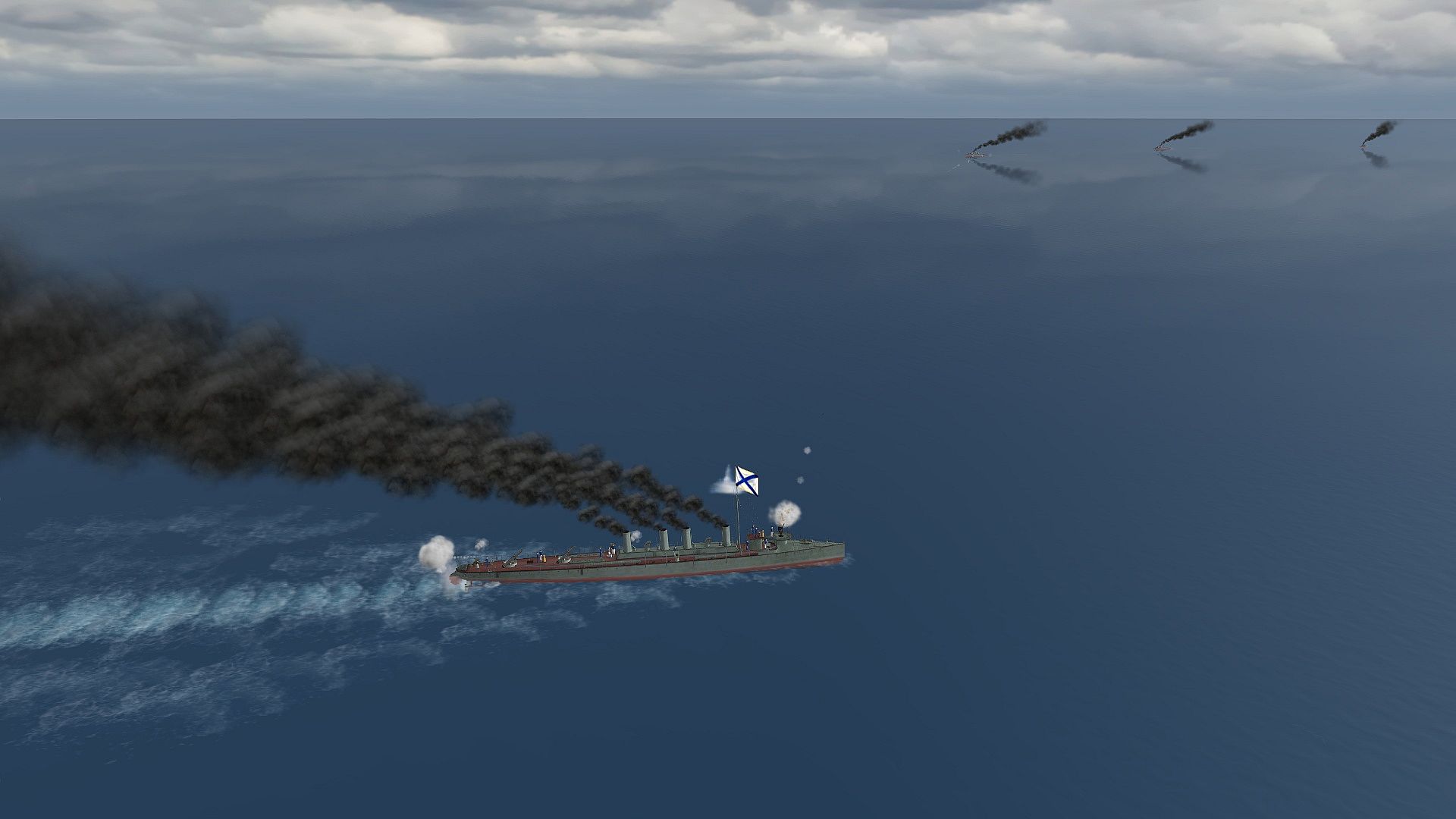
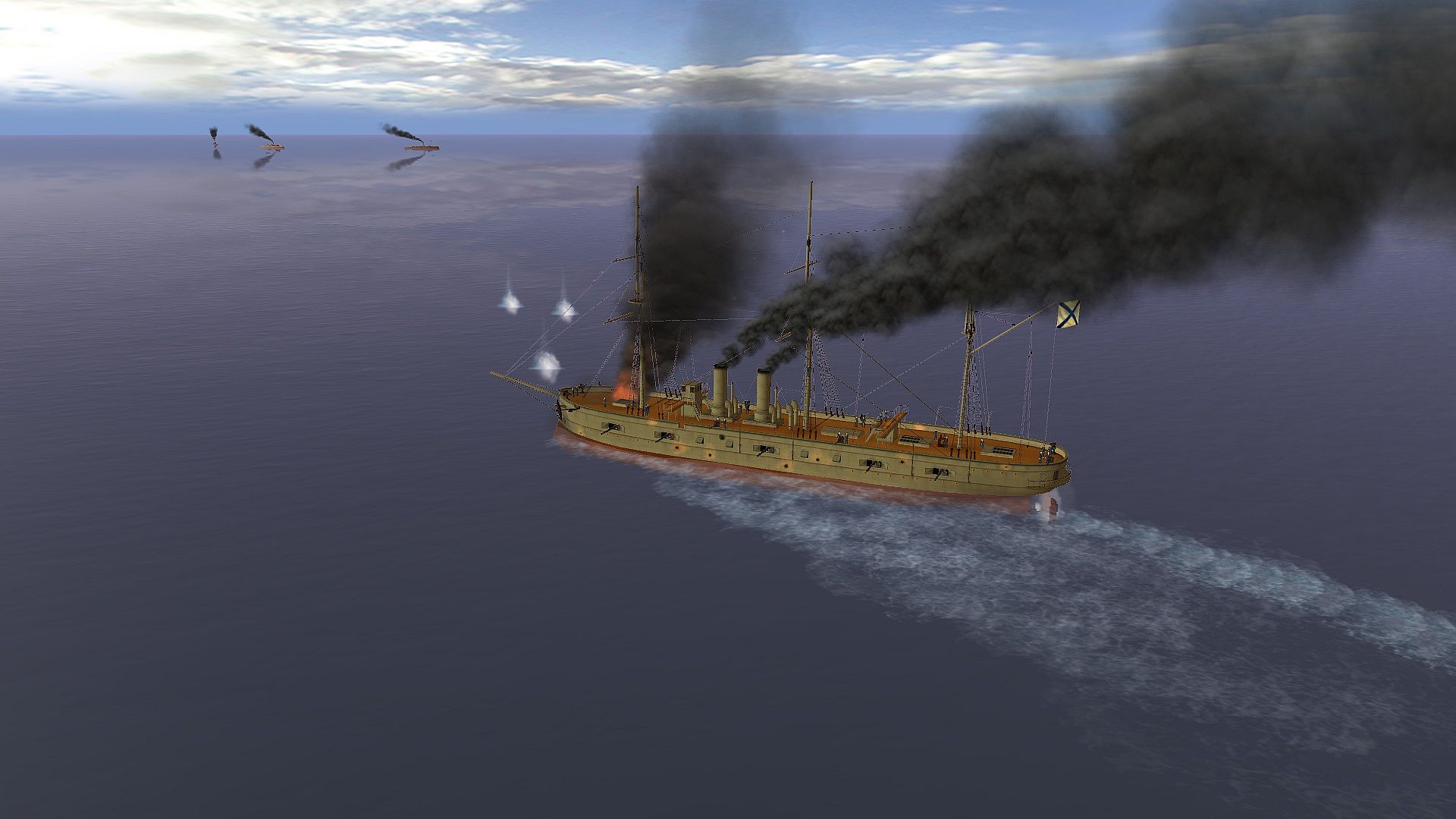
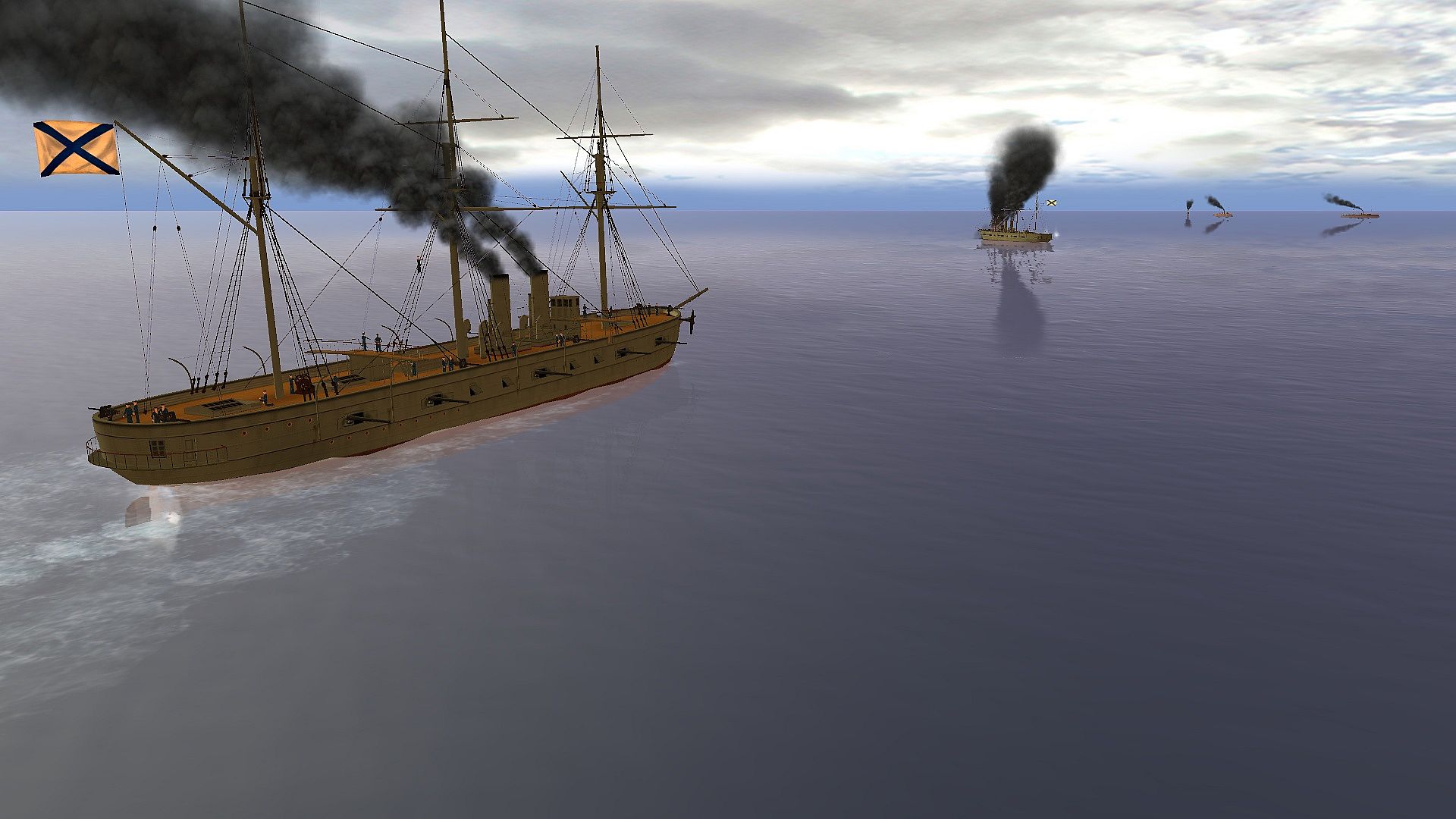
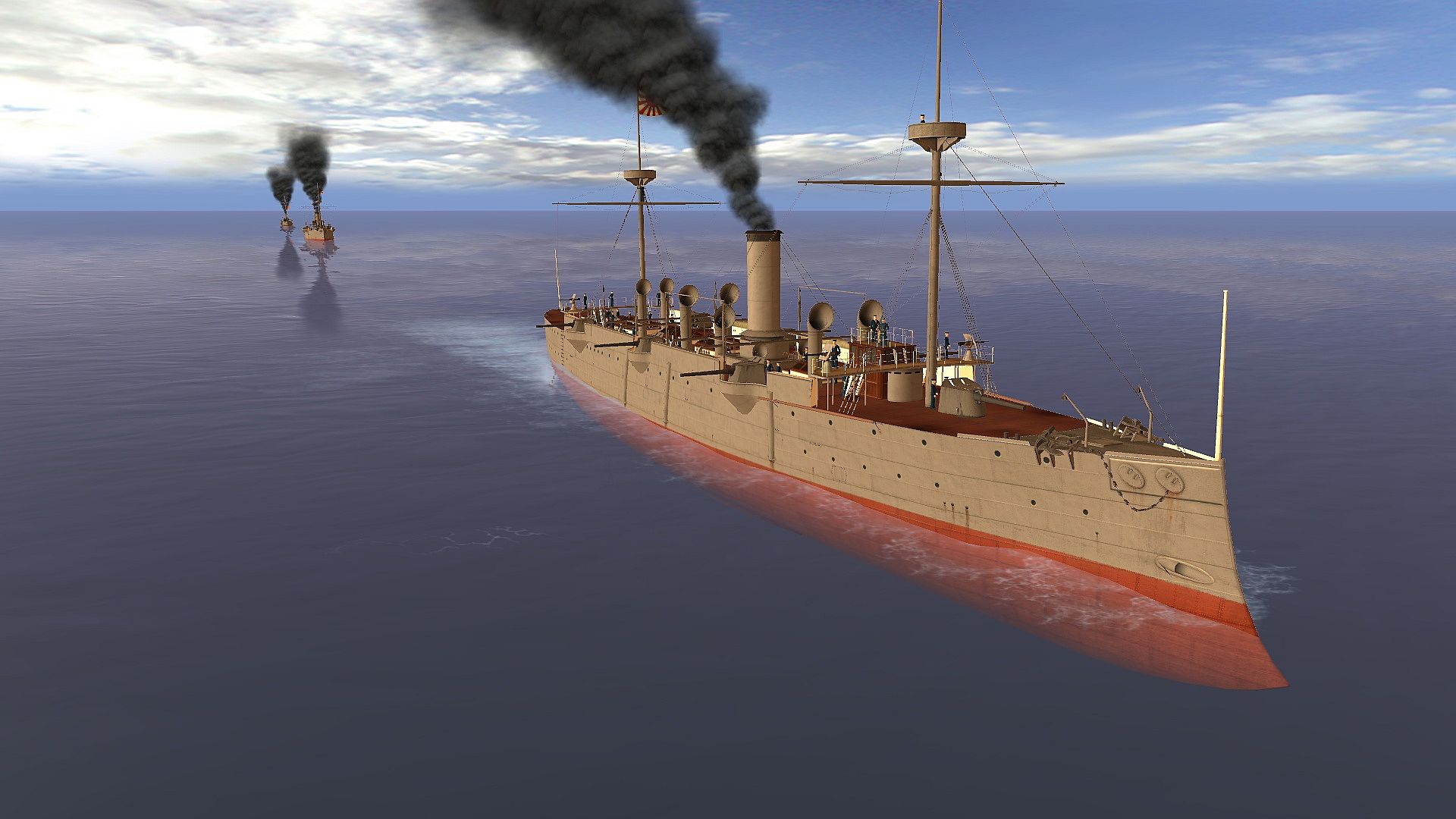
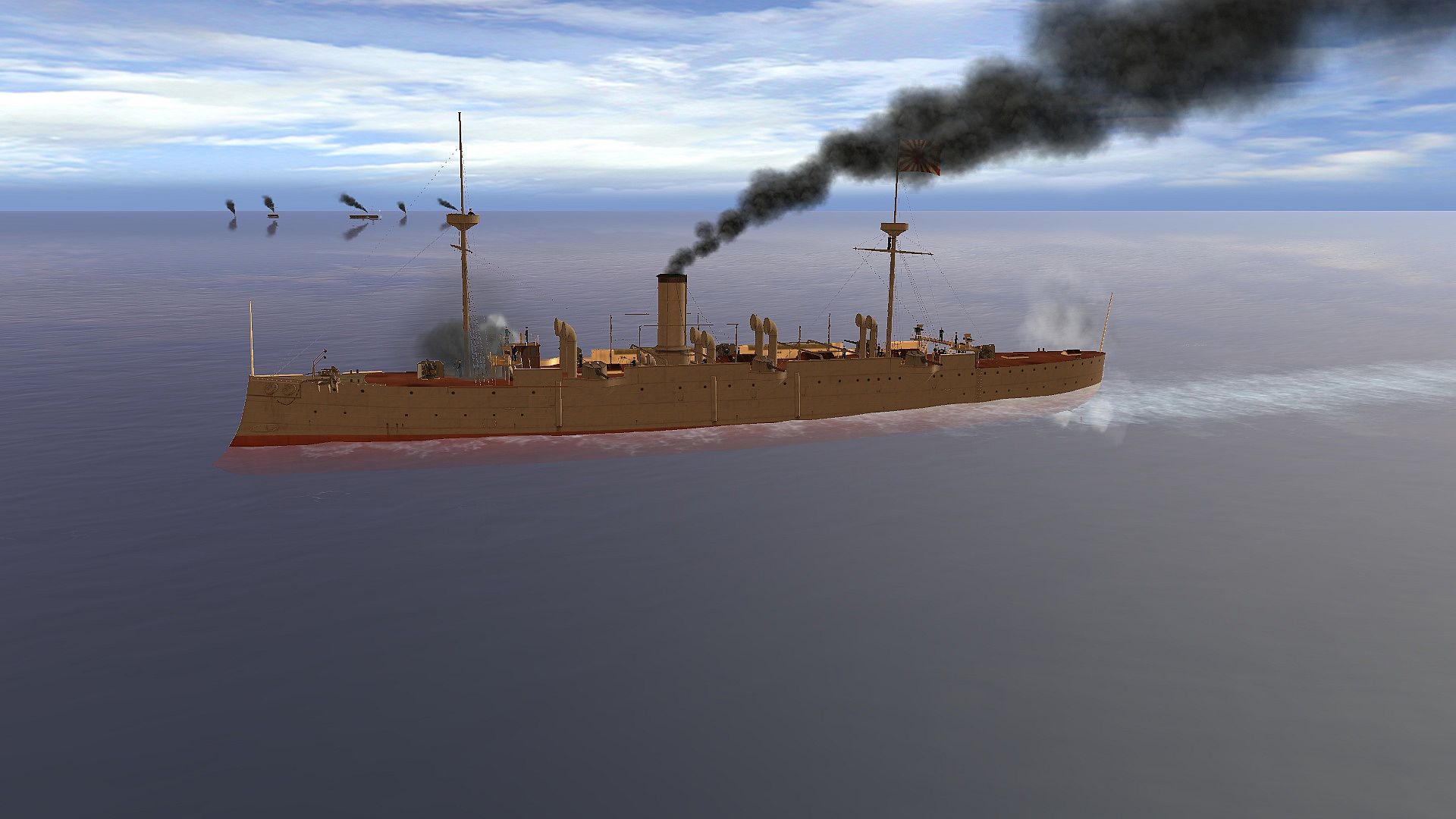
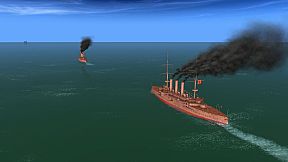
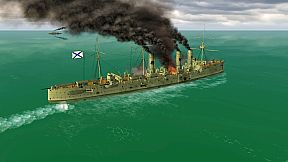
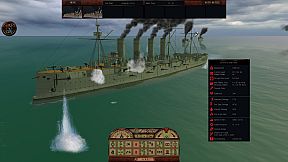
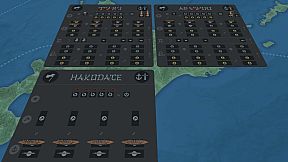
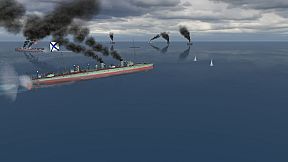
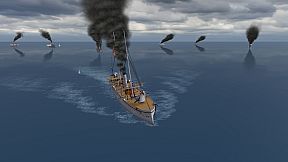
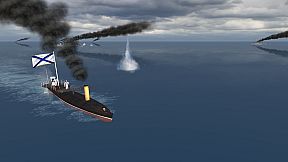
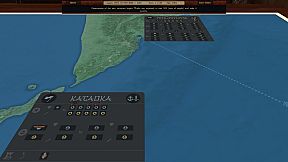
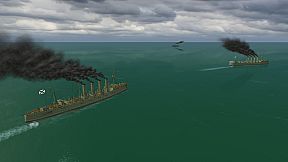
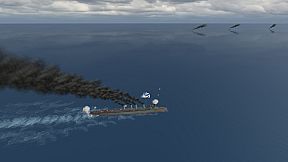
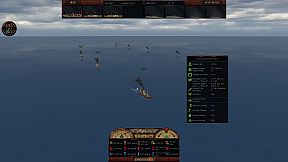
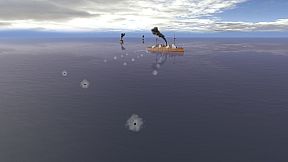
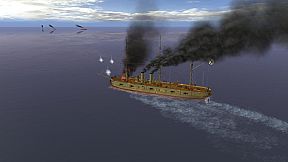
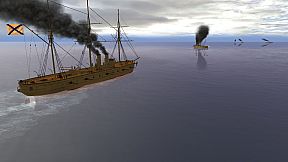
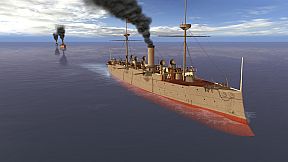
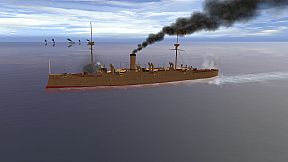
Clad in Iron: Sakhalin 1904 is a singleplayer strategy and simulation game that places players in command of naval and ground forces during the 1904 phase of the Russo-Japanese War. Set in the Sea of Okhotsk region, the title centers on the struggle for control of Sakhalin Island and the surrounding waters between Russian and Japanese forces. It combines a turn-based strategic layer with real-time tactical battles, allowing players to direct fleets, conduct operations against enemy shipping, and manage amphibious movements across a historical map.
Gameplay
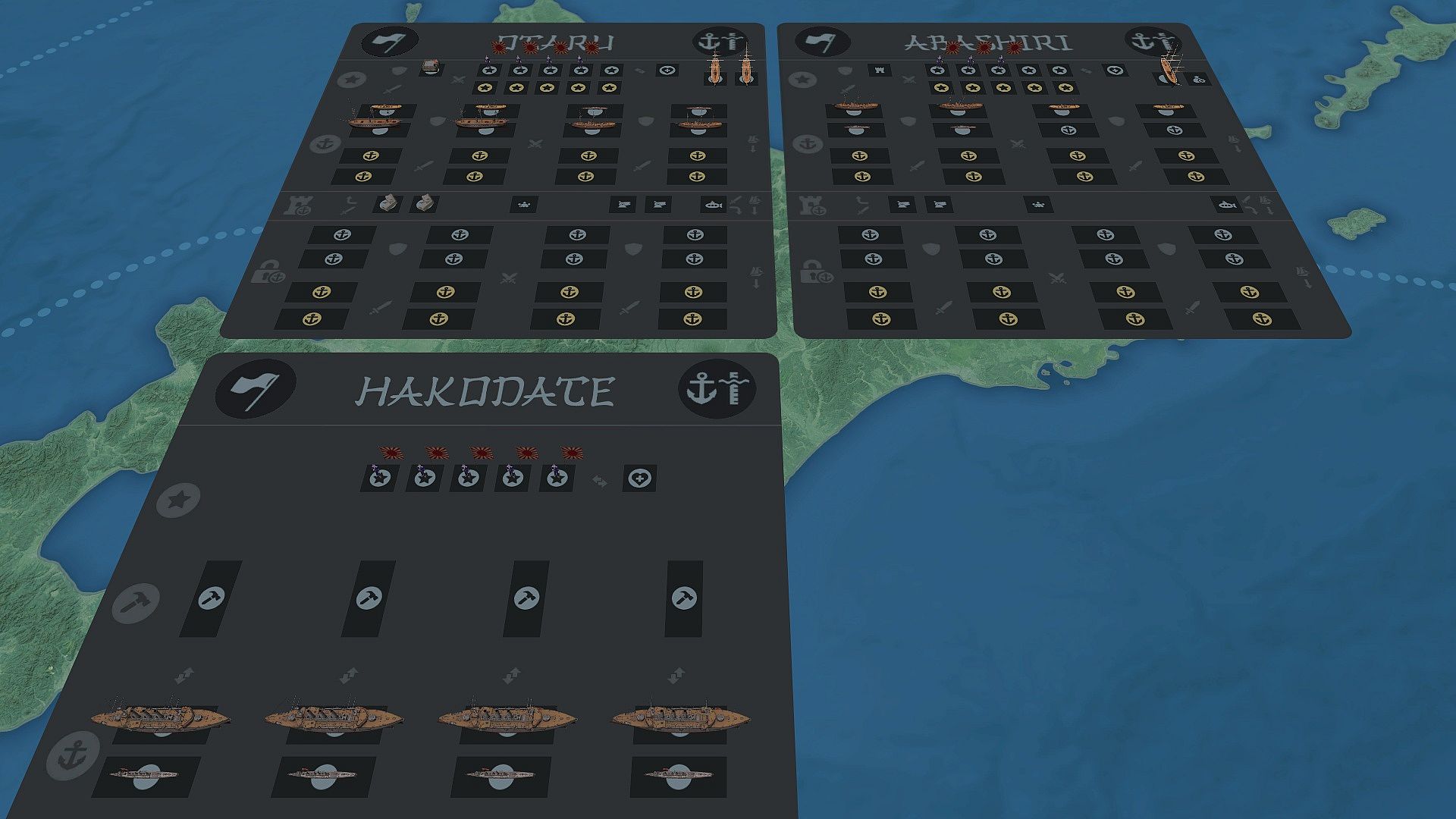
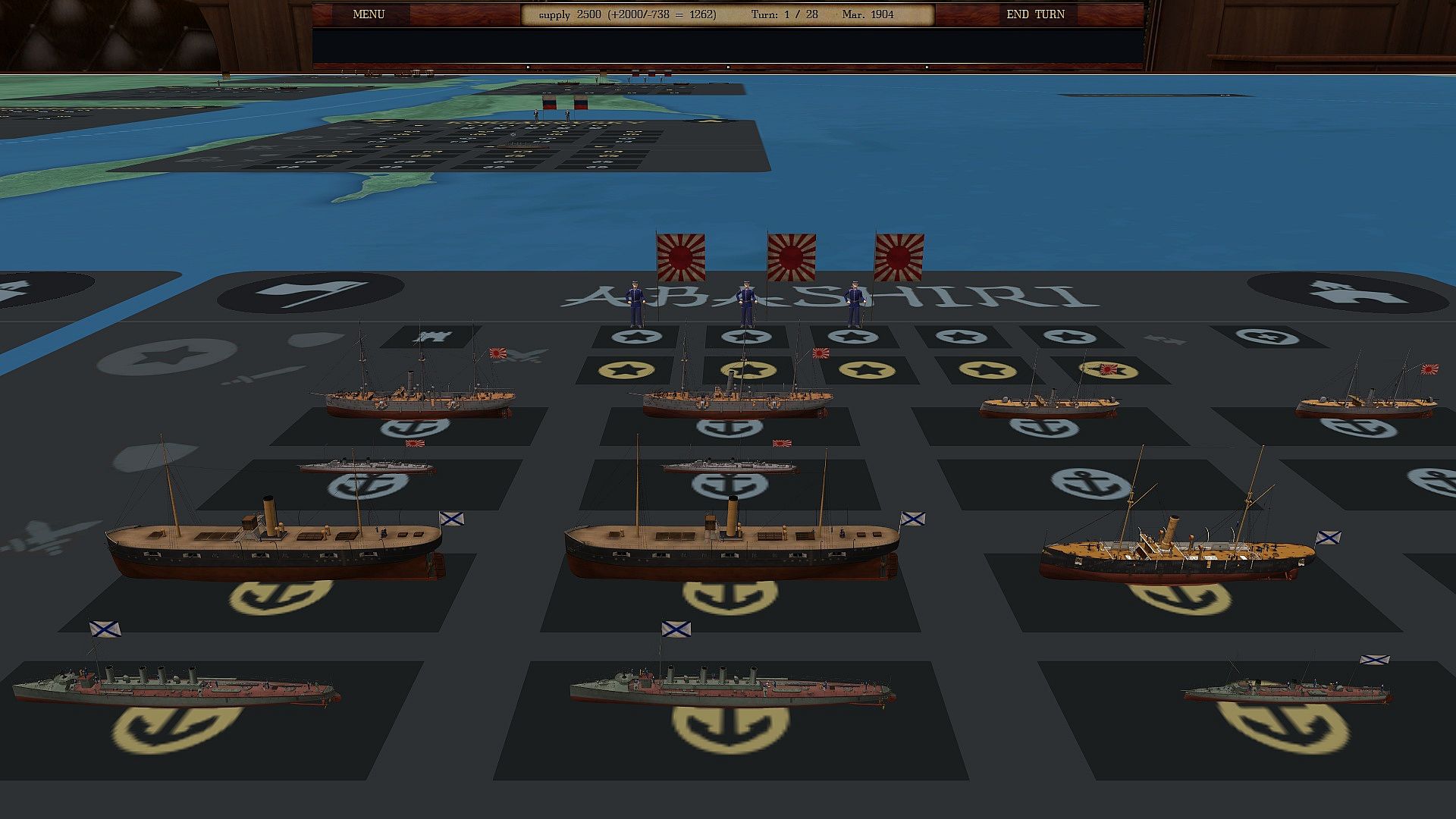
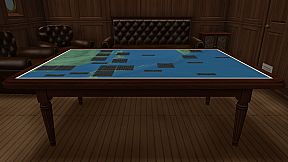
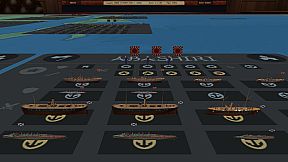
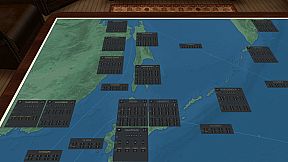
The core loop revolves around managing fleets and supporting army units on a strategic map where each turn represents one month. Players position squadrons to hunt opposing vessels, protect trade routes through blockades, and prepare for landings or defensive actions around key ports. Weak units can be held in safe harbors while awaiting reinforcements, and the overall objective involves securing dominance in the Far East theater through a combination of naval superiority and coordinated ground operations.
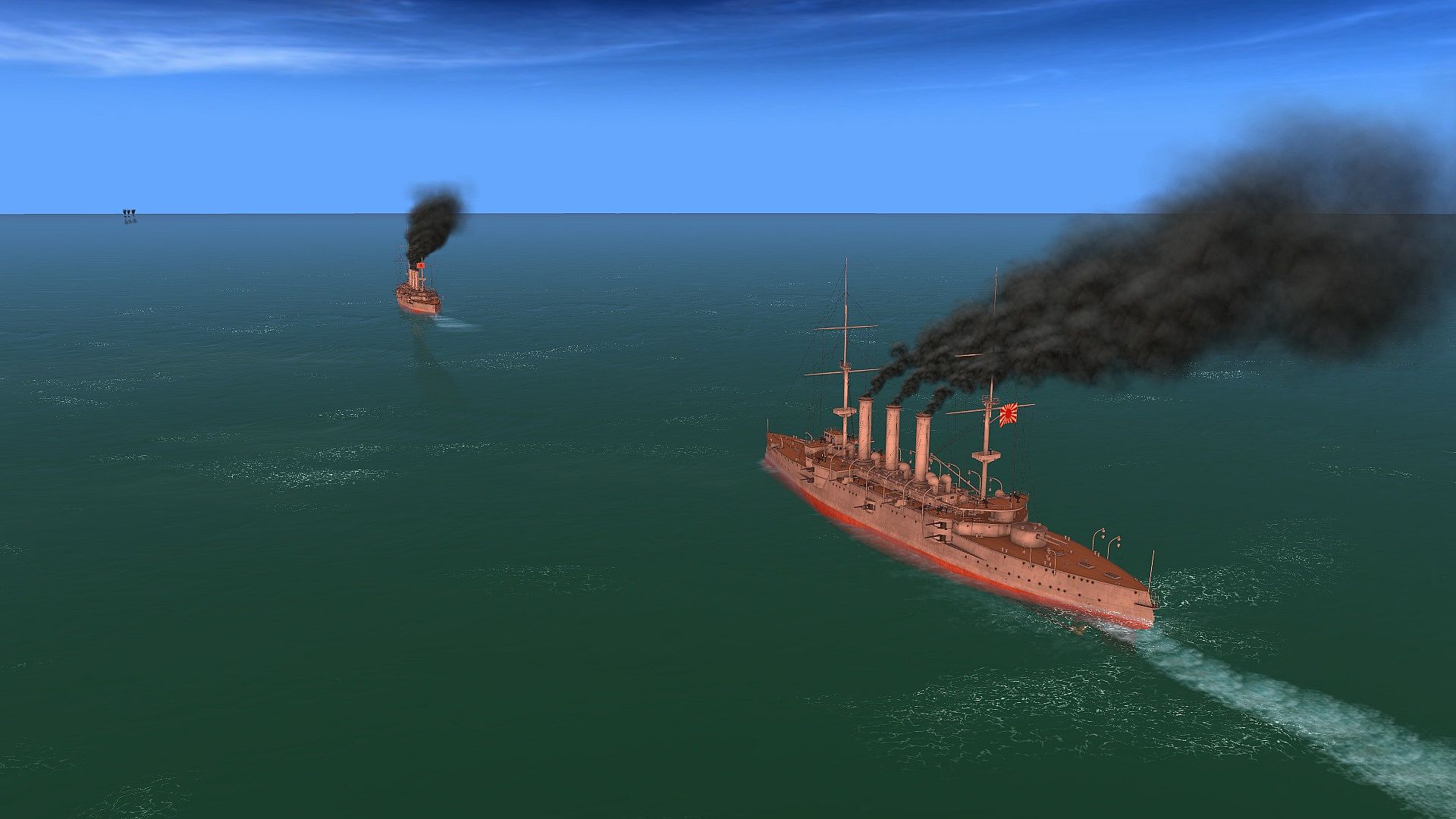
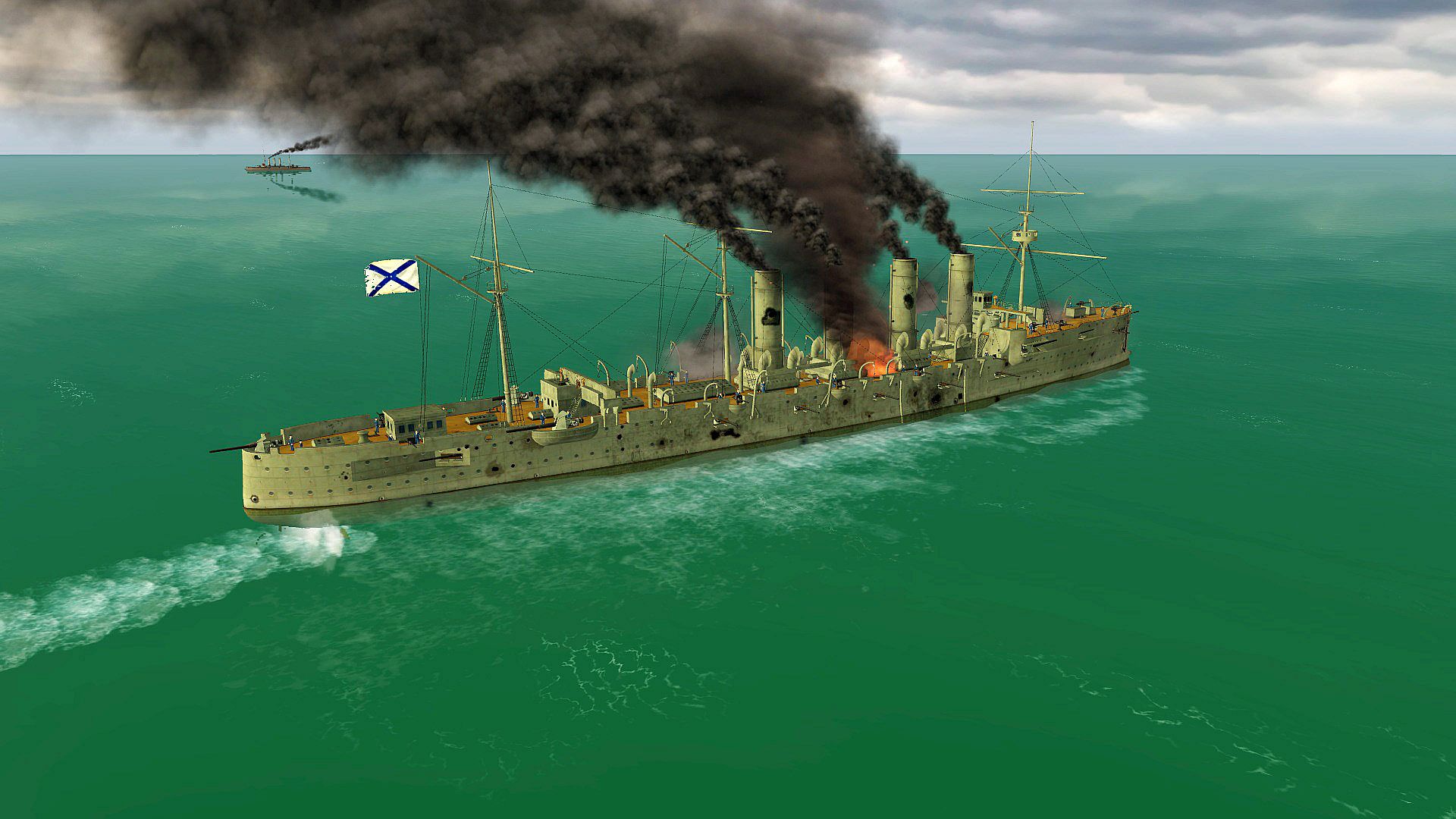
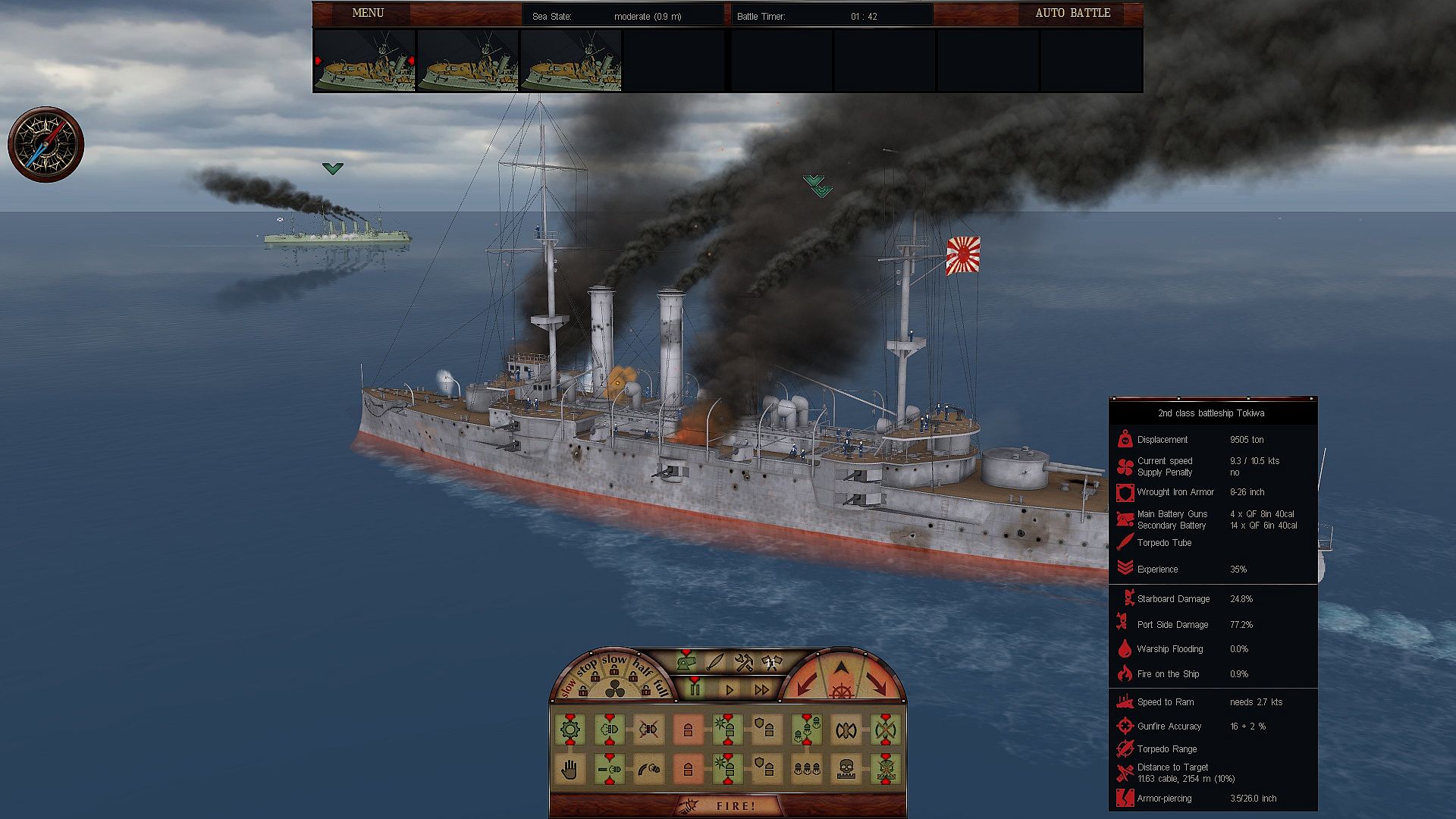
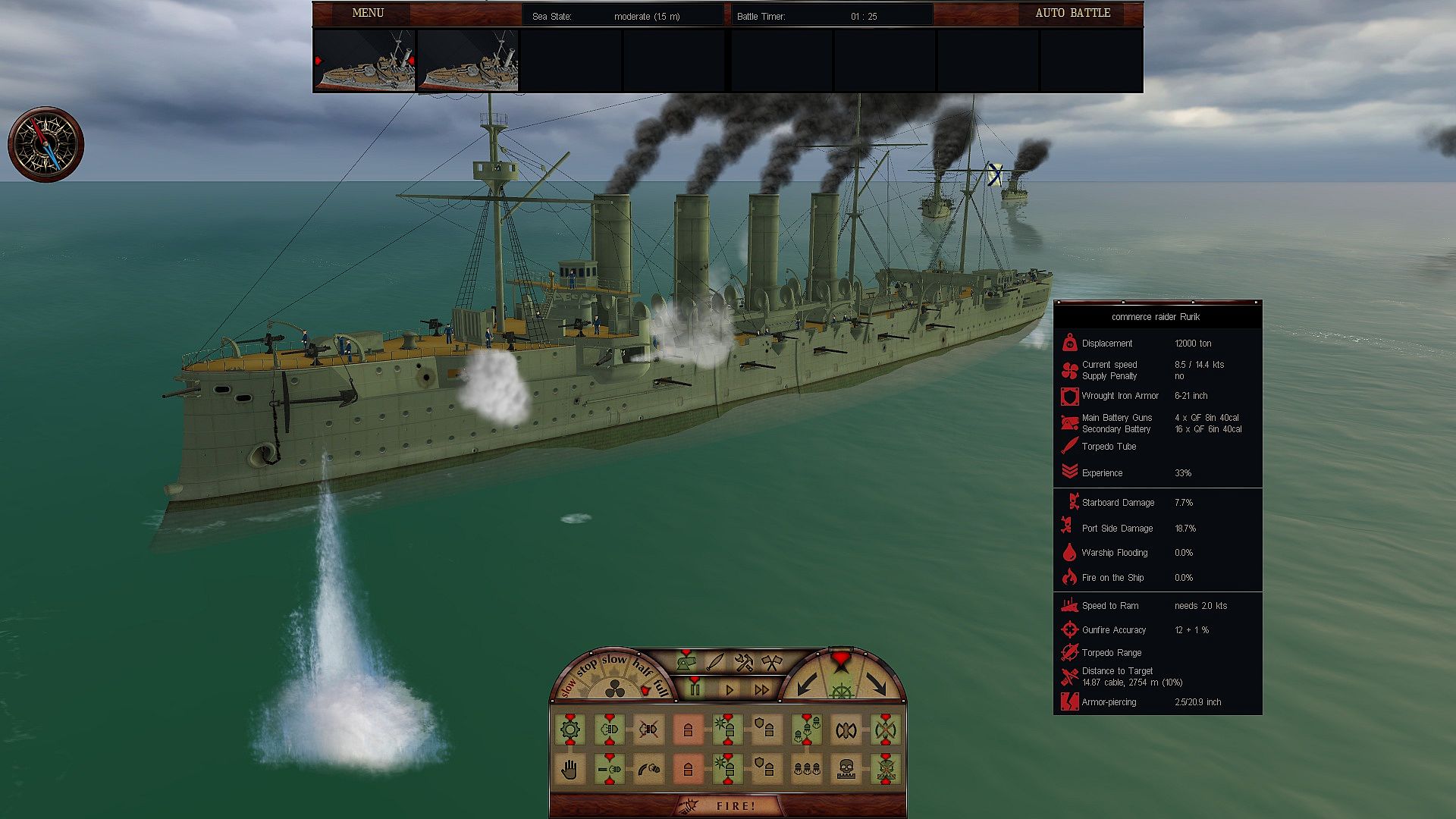
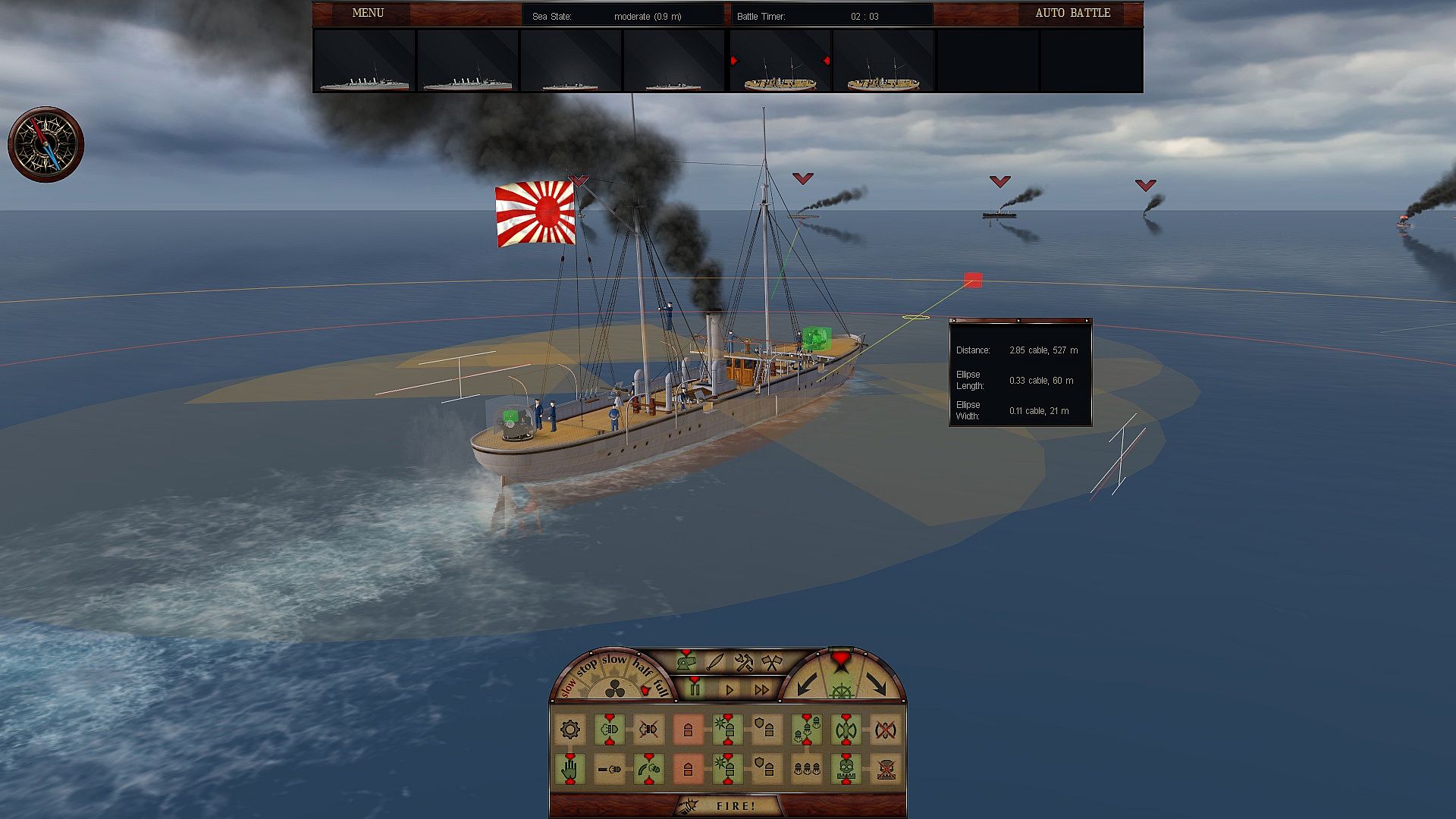
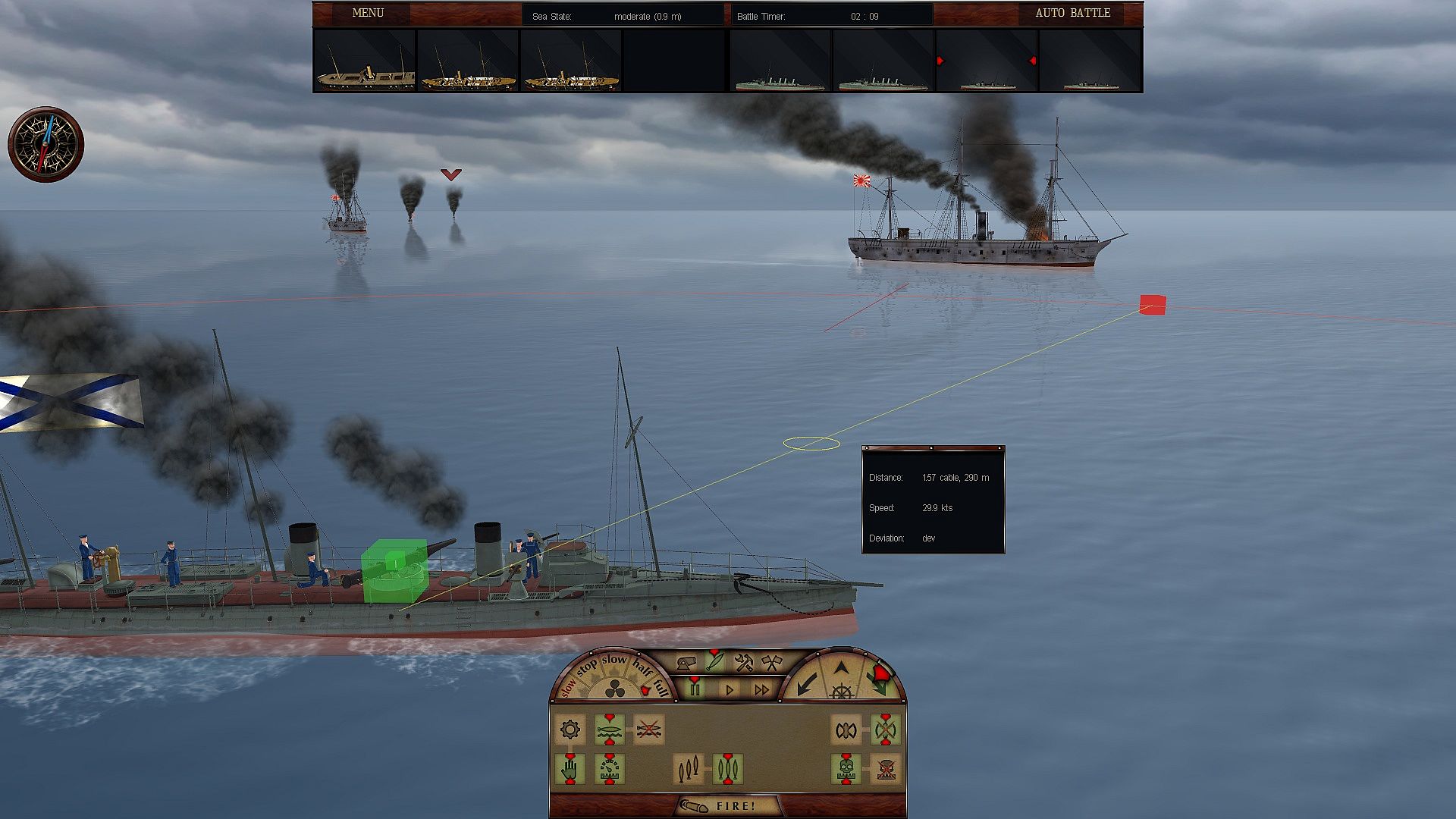
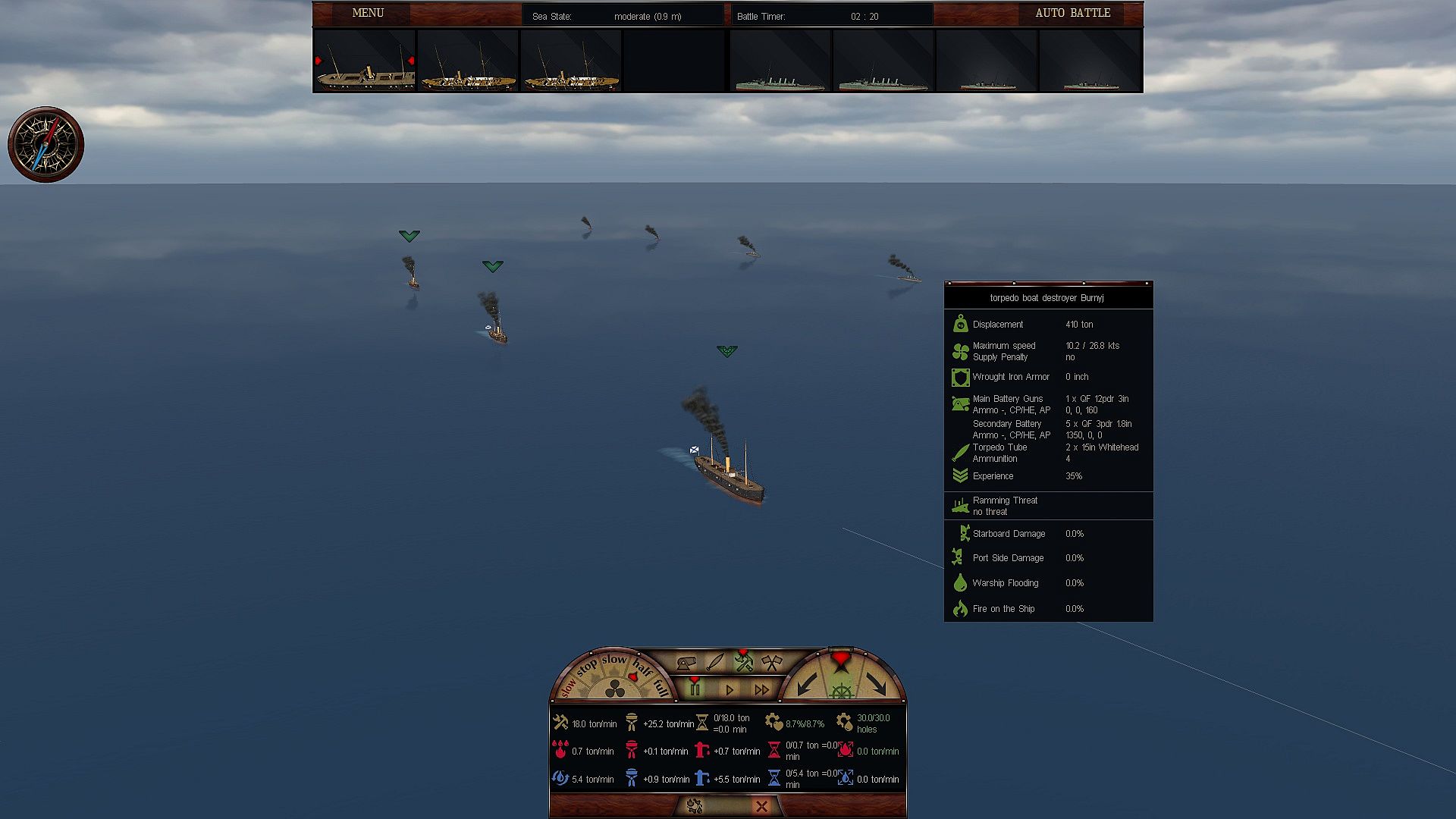
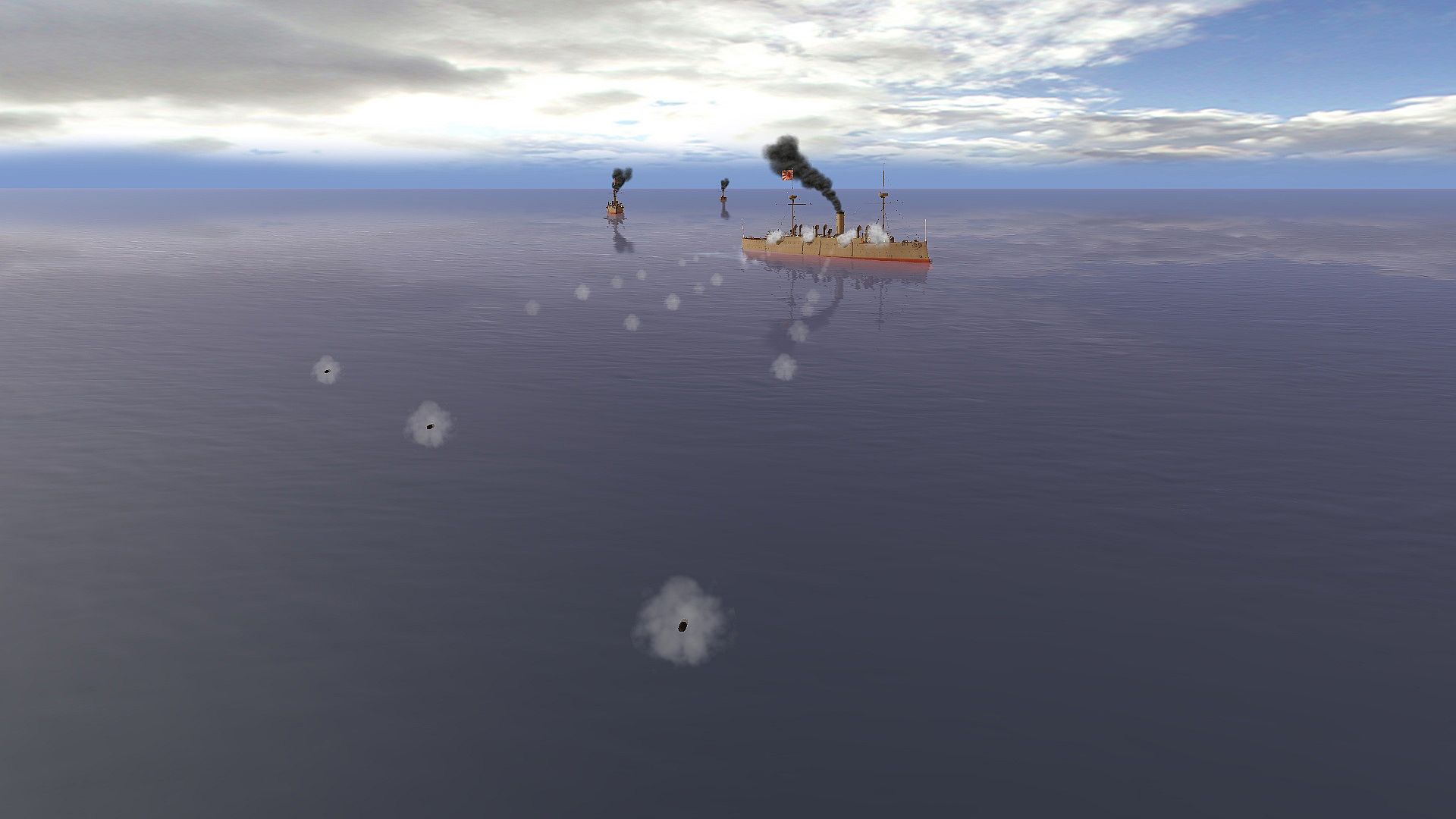
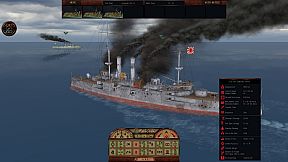
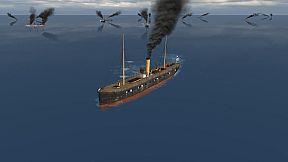
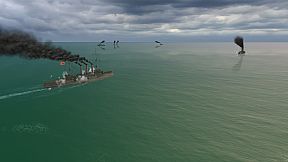
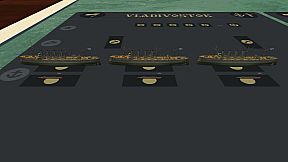
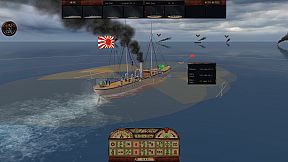
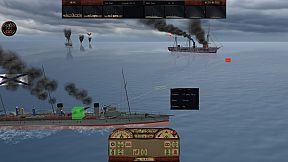
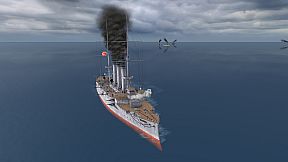
Ship selection draws from historical models with accurate characteristics for speed, armor, and armament. Crew experience grows through successful engagements, improving performance in subsequent actions. On the tactical layer, battles unfold in real time with detailed ballistics modeling that accounts for range, shell trajectories, and damage effects on individual vessels. Formations can be adjusted to optimize firing arcs or defensive positioning before committing to combat.
Game Modes
Strategic gameplay occurs entirely in turn-based mode on an overhead map. This layer handles campaign progression, fleet movements, resource allocation for repairs and reinforcements, and planning for larger operations such as harbor sieges or amphibious assaults. Players issue orders that resolve over the course of each monthly turn, creating a deliberate pace suited to long-term planning.
Tactical engagements shift to real-time simulation once opposing forces meet. Here, squadrons are arranged into formations, and direct control governs ship movements and targeting during the fight. The system emphasizes realistic weapon behavior and damage application rather than abstracted resolution, requiring careful positioning to maximize broadside effectiveness while minimizing exposure to enemy fire.
Historical Setting and Factions
The scenario draws from the early stages of the Russo-Japanese conflict, with Russia defending Sakhalin and adjacent territories while Japan seeks to expand influence in the region. Both sides field period-appropriate ironclad and pre-dreadnought vessels, reflecting the technological transition toward steam-powered warships. Campaign outcomes hinge on naval control of the Sea of Okhotsk, with secondary considerations for Kuril Islands security and supply line protection.
Mechanics encourage asymmetric approaches: the Russian player may focus on defensive concentrations and port protection, while the Japanese side can leverage faster raiding elements to disrupt commerce and isolate outlying positions. No additional factions or alternate campaigns appear in the title.
Is It Worth Playing?
The game appeals primarily to enthusiasts of historical naval wargames who value detailed ship modeling and the interplay between campaign strategy and individual battles. With only a textual manual provided and no interactive tutorial, it demands patience and willingness to experiment with the interface. Steam user reviews stand at 93 percent positive from a modest sample of 29 ratings, with praise centered on the absorbing nature of the naval combat and the faithful recreation of early 20th-century fleet tactics.
Support for the title has remained limited since its 2018 release, with no documented seasons, major expansions, or ongoing content updates. It suits players comfortable with niche simulation titles that prioritize historical accuracy over accessibility features. Those seeking a focused singleplayer experience in turn-based naval strategy paired with real-time resolution will find the systems rewarding once the learning curve is cleared, while broader audiences may prefer titles with more guided onboarding.